Compound Movements and Why You Should Do Them

Compound Movements and Why You Should Do Them

What are Compound Movements? 

What if I told you that doing compound movements in the gym burned more calories during your workout; would you know which exercises to do?  

What if I also told you that compound movements burn more calories postworkout than any other exercise, would you believe me? 

Imagine learning that this type of movement maximizes your time in the gym, helps you lose weight, and helps you burn more fat; would you do more?  

Compound Movements, also known as Compound Exercises, are multi-joint movements that work several muscle groups at one time, compared to isolation movements that work one muscle at a time.  

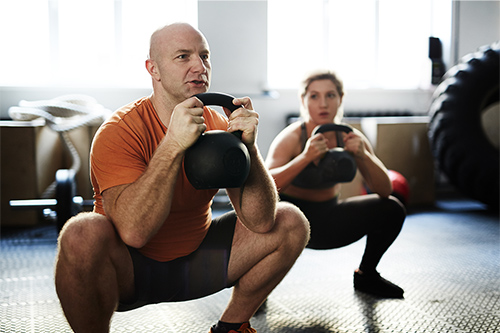
An example of a compound movement would be a squat. A squat works your quadriceps, glutes, hamstrings and core. An example of an isolation movement is a bicep curl, which only works the bicep. See the difference? One muscle versus many muscles. The more muscles you are working at one time the more calories and fat you will burn. Cool, right?  

Compound movements are not only for the gym but also can be a great home workout. You don’t necessarily need heavy weights. You just need a little bit of time and a little bit of space to get in some good compound exercises. 

Benefits of Compound Movements

One of the biggest benefits of compound movements is that they make effective use of your time. When you are short on time but want to put in a quick weighttraining workout, think compound movements. Other benefits include:  

+ more calories burned 

+ improved coordination 

+ improved flexibility and range of motion 

+ gaining more muscle  

+ improved strength

Best Compound Movements 

The following list is derived from an article by the American College of Sports Medicine. While these 7 items are personally my favorite, there are unquestionably other compound movements that might work better for you. It all depends on your level of fitness. Give them a try! 

  1. Squats 
    • Areas of Focus – quadriceps, glutes, hamstrings and core 
  2. Deadlifts 
    • Areas of Focus – almost the entire body but especially the hamstrings, glutes, arms, core, and back (trapezoids)  
  3. Bench Press 
    • Areas of Focus – chest, shoulders and triceps 
  4. Pull-ups 
    • Areas of Focus – entire back region (emphasis on lats), forearms and biceps 
  5. Bent-over barbell rows (reverse grip) 
    • Areas of Focus – back region (emphasis on upper back; rhomboids, trapezoids), and biceps 
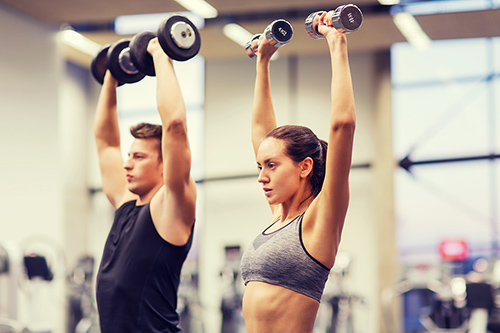
  6. Shoulder Presses 
    • Areas of Focus – entire deltoid region: front, medial and rear (emphasis on front deltoids) 
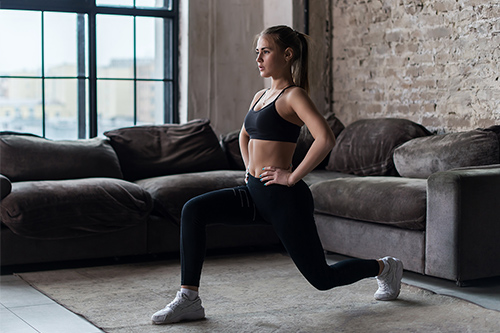
  7. Lunges (static) 
    • Areas of Focus – entire leg region (emphasis on glutes and hamstrings) 

Combine Compound Movements with Isolation Movements

Combining both types of movement makes for a great workout. For example, a squat to a bicep curl or a squat to a bicep curl to a shoulder press.

It’s important to keep good form while performing exercises. Squatting may seem safe but when weights are added and the exercise is done improperly, it could result in injury.

Always consult your doctor before starting an exercise program. Have an LA Fitness Pro Results® trainer help you with the basic principles of weightlifting and proper form when exercising.  

Bottom Line  

Next time you are in the gym or doing a home workout, incorporate a few compound movements. Get your heartrate up and boost your metabolism. Since compound movements engage several muscles at one time, it requires more energy from you. In turn, you burn more calories by spiking your metabolism and increasing your heart rate, which make you stronger.  

Check out this workout routine “The 2 Week Workout Finale for the Your Best Beach Body Ever!” This 2 week workout routine combines plyometrics, compound movements and integrated intervals so you can strut your stuff with confidence. For more articles like this one, subscribe to our newsletter to receive monthly highlights from the Living Healthy Blog.

Understanding Yoga and Meditation – Podcast Ep. 37

Understanding Yoga and Meditation – Podcast Ep. 37


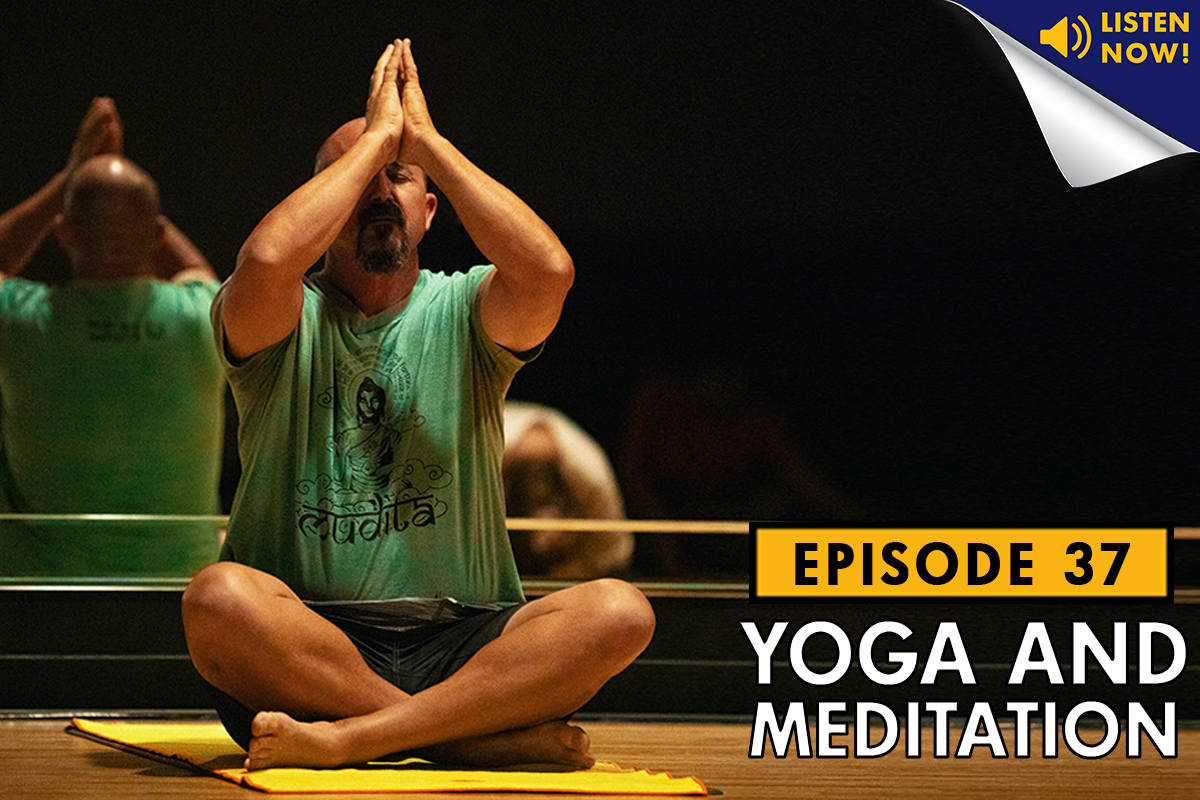
Welcome to the 37th episode of the Living Healthy Podcast, presented by LA Fitness.  

Most people who haven’t tried Yoga or Meditation aren’t sure how they feel about it or what the intention behind the breathing and movement really is. John was a skeptic who, after 2 yoga sessions, found how mentally freeing the practice could be. He has spent the last 10 years not only practicing yoga but teaching classes here at LA Fitness! 

So, what turned John from being a skeptic who thought Yoga made no sense, into an instructor dedicated to sharing the experience? Click to listen in and hear his story! 

How Are We Doing? 


This podcast should not replace any exercise program or restrictions, any dietary supplements or restrictions, or any other medical recommendations from your primary care physician. Before starting any exercise program or diet, make sure it is approved by your doctor.

Timecard Markers – Understanding Yoga and Meditation – Podcast Ep. 37 

Meditative Intro 

 0:01 

Introduction of Your Hosts: Andrew Gabell and Brittany Welch 

2:20 

Introduction of LA Fitness Yoga Instructor: John Lyman 

3:17 

About John – What Introduced Him to Yoga? 

4:58 

What is the Ultimate Goal of Yoga? 

7:56 

Do You Have Any Tips for Beginners or People Who Struggle with Stillness? 

9:24 

How Does Yoga Help You Organize Your Thoughts? 

11:57 

What’s Your Approach in Your Class? 

13:47 

What’s the Best Way for Someone New to Experience Yoga? 

16:30 

Brittany’s Mythical Moment –  

Does Yoga or Meditation Increase Your Extra Sensory Perception? 

20:24 

Using Visualization to Get to a Meditative State 

24:14 

What Other Ways Has Yoga Impacted Your Life? 

25:42 

How Long Does It Take to See the Benefits of Yoga? 

29:13 

Have Any of Your Class Members Felt That Yoga Has Significantly Impacted Their Life? 

31:01 

Actionable Advice 

36:17 

Outro 

38:10 


Recommended Podcast Episodes 

Body Composition and How to Track it

Body Composition and How to Track it

Have you ever compared your body to your best friend’s body? You may wonder how your best friend is tall and thin and you are short and round, but you weigh the exact same. How can that be? How can two people, same gender, look completely different but weigh the same? That’s because humans all have different body compositions.  

What is Body Composition?

It’s best described as what bodies are made of. Human bodies are made up of varying percentages of water, fat, bone and muscle. Don’t let body composition be confused with body mass index (BMI). Body mass index is a measurement of weight-for-height.   

When you step on a scale, the number tells you how much you weigh, but it doesn’t tell you what your body is made up of. Body composition refers to everything in your body and how much you have of each component. For example, a person’s body could be composed of 36% muscle, 12% essential fat, 15% non-essential fat, 12% bone and 25% other (organs, etc.) Let’s take this breakdown and work our way up to make it easier to understand, taking the five example percentages and putting them into two groups; fat mass and fat-free mass1 

>> Fat mass refers to fat tissue in your body and fat-free mass includes everything else (like muscle, bone, fluid and organs) 

What the Scale Really Tells You

Stepping on the scale will show you one number, your weight. What you don’t see are the other numbers in your body and how they affect your body composition.  

For example, if you start an exercise program you may gain one pound of muscle and lose one pound of fat. Since your fat mass decreased and your fat-free mass increased at the same time, your body weight won’t change. See how frustrating this can be for someone who thinks they are putting in a lot of effort at the gym and eating healthy but not seeing the weight change on the scale? This is why the scale is misleading and that’s why knowing your body composition is much more useful than knowing your body weight.

How to Measure Body Composition

Track with a Tape Measure

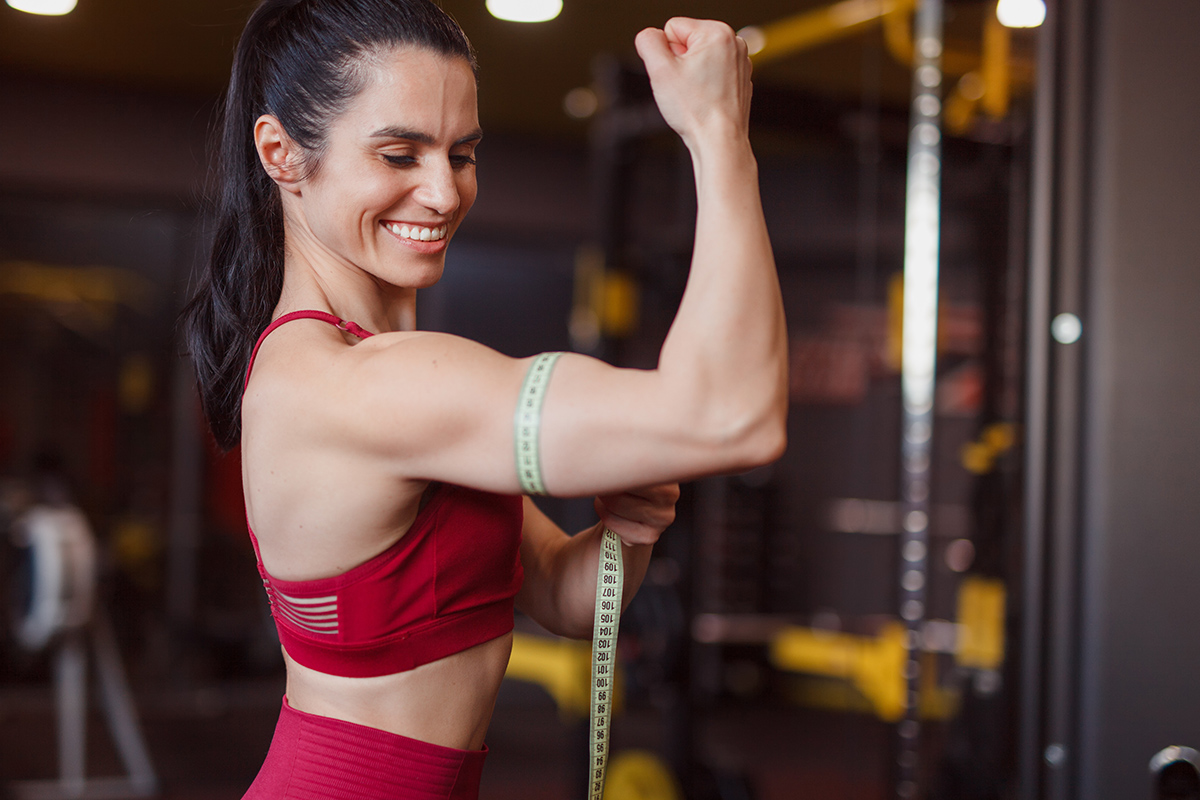
So, what can you use to measure your body composition? The first way would be to track and measure different body parts2. Purchase a flexible tape measure and track the circumference of your waist, hips, arms, legs and chest.

If you track your measurements for a period of six months, for example, and your waist circumference decreases, it’s a sign that you are probably losing belly fat. Here’s another example: if your exercise program involves weights and your arm circumference is increasing, it’s a sign that you are probably gaining muscle in your arms. The second way to track your body composition would be to take pictures.  

Track with Images

Progress pictures are a very popular way to physically see the changes in your body over time. These pictures are typically known as ‘transformation pictures’ and can be very helpful when looking at your body composition. We often do not notice changes in our body from day to day, but we do notice changes in our body when looking at progress pictures.

There are devices that measure body composition, like a bioelectrical impedance analysis (BIA). BIA sends small electrical currents through your body to see how much the body resists the current. This information is used to predict your body fat percentage3 but these devices are not always accurate.  

If you’re interested in knowing your body fat mass percentage, have an LA Fitness ProResults® Trainer help you. A ProResults® trainer can help you with basic principles of physical activity and nutrition to help you improve your body composition.  

A Quick Recap

It’s nothing new; exercise and good nutrition are critical for improving body composition. Exercise and weight training help with fat loss and increased muscle mass. Stepping on the scale will only tell you how much you weigh but there are other factors that need to be considered, like age and genetics. Before you start an exercise and nutrition program, please consult your doctor.  

What’s the bottom line? We are all different. No two people are the same, therefore, we all lose and gain (fat, muscle or both) differently. Don’t just step on the scale. The best ways to track body composition is by measuring the circumference of different body parts and taking progress pictures. Grab a notebook and write down your measurements and take your pictures at regular intervals. Give yourself patience and time to see changes.  

If you would like to learn more about Body Mass Index (BMI) and the difference between BMI and Body Composition, you can read about it here 

Sources

  1. PubMed Central. National Institutes of Health. Application of standards and models in body composition analysis. November 2015 
  2. PubMed Central. National Institutes of Health. Reference values for body composition and anthropometric measurements in athletes. May 2014
  3. PubMed Central. National Institutes of Health. Bioelectrical impedance analysis–part I: review of principles and methods. October 2004 

Beverages and Your Body – Podcast Ep. 36

Beverages and Your Body – Podcast Ep. 36


Welcome to the 36th episode of the Living Healthy podcast, presented by LA Fitness. We’re back and we’re kicking off the new year with a host of fresh new topics! 

When we think about our nutrition plan, we often focus on what we eat. What we drink is just as important! Today we’re talking about everything from your daily water intake to what you drink before and after your workout. We even get into some myth busting during “Brittany’s Mythical Moment.”

Is cow’s milk still a necessary staple? Are recovery drinks actually doing anything for you? What is kombucha and what does it taste like? Tune in now to soak up all the good info! 

How Are We Doing? 


This podcast should not replace any exercise program or restrictions, any dietary supplements or restrictions, or any other medical recommendations from your primary care physician. Before starting any exercise program or diet, make sure it is approved by your doctor.

Timecard Markers – Beverages and Your Body – Podcast Ep. 36   

Intro 

 0:01 

Introduction of Registered Dietitian, Debbie James 

2:54 

WATER 

How Much Water Should We Be Drinking Daily? 

3:34 

How Does Drinking Water Affect Our Health? 

6:05 

What Happens When You Don’t Get Enough Water? 

6:57 

Should You Have Water or Gatorade Before a Workout? 

9:33 

COFFEE 

Can You Fit Coffee into a Healthy Lifestyle? 

11:28 

What are the Best Additives for Your Coffee? 

12:53 

Coffee Later in the Day 

14:37 

TEA 

Is Green Tea a Metabolism Booster? 

16:38 

How to Tell if Your Beverage is Too Hot to Drink 

20:01 

Brittany’s Mythical Moment – Is Carbonation Weakening Your Bones? 

20:54 

MILK 

When are Non-Dairy Milks Good Alternatives to Dairy Milk? 

24:56 

What is the Benefit of Non-Dairy Milk? 

25:45 

Is Cow’s Milk Still Important? 

27:24 

SODA AND ENERGY DRINKS 

What Happens When You Drink Soda Every Day?  

29:10 

Are Diet Soda Additives Bad? 

31:01 

How Do Energy Drinks Work in Our Body? 

34:03 

What are Some Tips to Help Cut Back on Soda and Energy Drinks? 

35:35 

KOMBUCHA 

What’s in Kombucha? 

37:32 

Taste Test 

38:14 

Why Drink It? 

38:37 

Why Drink It? – Recap for Andrew Who Wasn’t Paying Attention 

41:18 

EXERCISE AND HEALTH DRINKS 

42:24 

Pre-workout Drinks – Drink it or Steer Clear? 

42:42 

Is it Bad for You or for Your Heart? 

43:30 

Recovery Drinks – Do They Help or is it Just Marketing? 

44:44 

MEAL REPLACEMENT DRINKS 

46:08 

Which Ingredients to Look for 

 48:25 

Actionable Advice 

49:33 

Outro 

50:27 


Recommended Podcast Episodes 

Your Resting Heart Rate and Why It’s Important

Your Resting Heart Rate and Why It’s Important

Your resting heart rate is the number of times your heart beats per minute (BPM) while at rest.  

Why is Heart Rate Important?

Considering your heart is the most important muscle in your body, it is important to know that it’s functioning properly. You want your heart to beat in a rhythm; not too fast, not too slow, and not too erratic.  

Typically, an adult’s resting heart rate is between 60-100 beats per minute1. Monitoring your heart rate from time to time is a good idea to know your normal heart rate and to take measures if it becomes abnormal.  

Resting heart rate is an indicator of physical fitness. When you first start a training program, it’s likely that you will want to know your resting heart rate. A lower resting heart rate may indicate a sign of good health and a higher degree of being physically fit.  

Depending on your age, gender, or medications you are taking, your resting heart rate changes. People who are physically fit generally have a lower resting rate than those who do not exercise regularly. Resting heart rate will typically increase as you age and will be much faster in infants. 

The best time to find your resting heart rate is in the morning after a good night’s sleep and before you get out of bed1 

  • The best places to find your pulse are the wrists, inside of your elbow, the side of your neck or the top of your foot. 
  • To get the most accurate reading, put your finger over your pulse and count the number of beats in 60 seconds. 

If your range is outside the typical resting heart rate, consult a doctor. Although there is a wide range of normal, an unusually high or low resting heart rate may indicate an underlying problem.  

How to Improve Heart Rate

Make Time for Regular Exercise

  • Make time for exercising every day, even if it’s just walking. Getting regular exercise stimulates your heart and lowers your heart rate. Aim for aerobic activities like; swimming, cycling, or dancing.

Avoid Sitting for Long Periods of Time

  • Studies have found that sitting too long is just as harmful to your body as smoking2. Take more breaks, get up and walk around, stretch your legs, just move your body. Keep yourself active as much as possible to stimulate your heart. 

Avoid Smoking

  • First of all, we know that smoking is bad and can potentially lead to lung cancer and other diseases, but it also increases the resting heart rate. Quitting can lower your blood pressure and heart rate almost immediately3. 

Reduce Stress

  • This is the one that is sometimes out of our control, but if you have a lot on your mind, such as work, family, money, you’re probably stressed. If you are mindful of the stress in your life it’s a good idea to do things for yourself that reduce stress like; meditation, yoga, exercise, massage, and deep breathing. Find ways to calm yourself down to reduce stress and your heart rate.

Take measures to improve your heart rate by exercising or leading an active healthy lifestyle. Keep your heart happy! 

For more on heart health, listen to our podcast on 5 Simple Ways to Improve Your Heart Health. To access our monthly blog post highlights, subscribe to our newsletter today! 

SOURCES 

1. American Heart Association. Getting Active How do I calculate my heart rate? October 2016 

2. The Active Times. Sitting is the New Smoking – 7 Ways a Sedentary Lifestyle is Killing you The research on the sitting epidemic and the results aren’t good. September 2014  

3. Smokefree.gov Benefits of Quitting The health benefits of quitting smoking can help most of the major parts of your body: from you brain to your DNA