Fruits and Veggies – Part 2 – Podcast Ep. 32

Fruits and Veggies – Part 2 – Podcast Ep. 32


Welcome to the 32nd episode of the Living Healthy podcast, presented by LA Fitness.

On this episode of the Living Healthy Podcast, we continue our discussion with Debbie James, RDN, to dish out the details on super-fruits and veggies. We talk about how to incorporate more into your daily diet, whether they can help you bulk up or trim down, and how you can actually alter your taste buds so they taste better!

Listen in now!

How Are We Doing? 


This podcast should not replace any exercise program or restrictions, any dietary supplements or restrictions, or any other medical recommendations from your primary care physician. Before starting any exercise program or diet, make sure it is approved by your doctor.

Timecard Markers – Fruits and Veggies, Part 2 – Podcast Ep. 32   

Intro 

0:01 

Brittany’s Story 

0:34 

Jumping into Part 2 with Debbie James, RDN 

3:41 

Are There Certain Fruits/Veggies That Help You Bulk Up or Lose Weight? 

2:54 

Is it Better to Eat Locally Sourced Fruits and Veggies? 

4:38 

Is There a Better Time of Day to Eat Fruits and Veggies to Bulk Up? 

5:48 

Which Ones Are the Super-Fruits and Super-Veggies? 

8:03 

Can You Change Your Taste buds to Like Veggies? 

10:00 

Are There Any Tips to Get Kids to Eat Veggies? 

12:00 

Cooking with Olive Oil versus Coconut Oil 

15:11 

Does Juicing Hold Long-Term Benefits? 

17:05 

Actionable Advice 

18:20 

Outro 

19:24 


Recommended Podcast Episodes 

Fruits and Veggies – Part 1 – Podcast Ep. 31

Fruits and Veggies – Part 1 – Podcast Ep. 31


Welcome to the 31st episode of the Living Healthy podcast, presented by LA Fitness.

On this episode of the Living Healthy Podcast, Debbie James, RDN, answers some questions about fruits and veggies. Can they lose nutrients if they’re frozen? Is there a difference between organic and non-organic? We even get to hear the Drake story Brittany teased us about at the end of Episode 30. 

Listen in to learn the answers to these questions and many more. Then, don’t forget to come back for Part 2! We’ll be talking about super-fruits and veggies, giving you some cooking tips, and discussing whether you can change your taste buds to make veggies taste better! You don’t want to miss it!

How Are We Doing? 


This podcast should not replace any exercise program or restrictions, any dietary supplements or restrictions, or any other medical recommendations from your primary care physician. Before starting any exercise program or diet, make sure it is approved by your doctor.

Timecard Markers – Fruits and Vegetables – Podcast Ep. 31, Part 1 

Intro      

Begins at 0:01 

Introduction of Registered Dietician – Debbie James 

3:15 

What Do Fruits and Vegetables Contain That Our Bodies Need? 

3:45 

Are Any of These Nutrients More Important Than Others? 

4:34 

In General, How Many Servings Should We Eat Per Day? 

6:03 

Is There a Difference Between Organic and Non-Organic Produce? 

9:40 

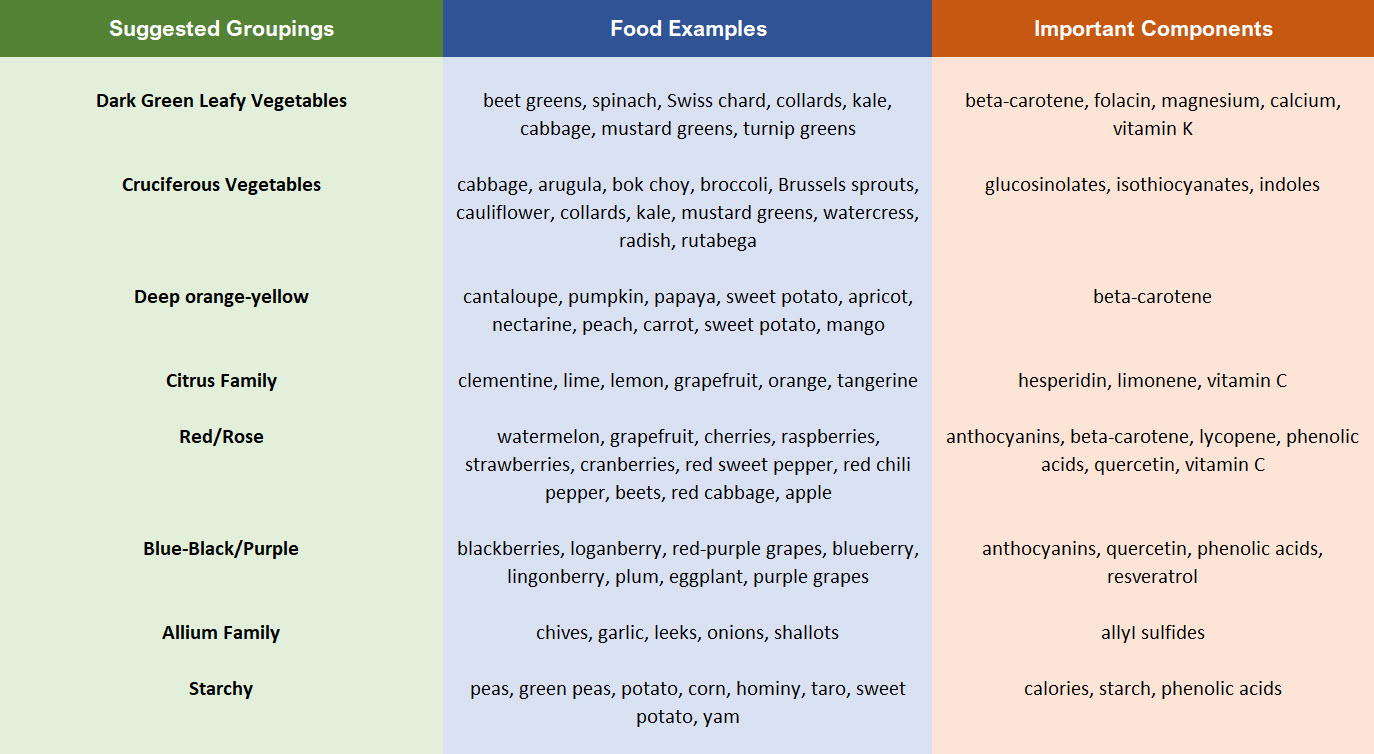
Nutrional Value of Different Types of Fruits and Veggies – See Chart* 

11:22 

Do Fruits and Vegetables Lose Nutrients if They’re Not Consumed Whole? 

14:56 

Do Fruits and Vegetables Lose Nutrients if They’re Frozen? 

16:20 

Are There Certain Veggies You Can Eat to Lose Weight or Bulk Up? 

18:29 

Fruits and Vegetables – What You Can Expect in Part 2 

18:51 

Outro 

19:55 

* Image Source: The contents of this chart were originally published in the IARC Handbooks of Cancer Prevention, Volume 8, Fruits and Vegetables. They have been edited and updated from the original for brevity and relevance. For the complete and original chart, please see the following citation: “Chapter 1: Definitions and Classifications for Fruit and Vegetables.” IARC Handbooks of Cancer Prevention, Volume 8, Fruit and Vegetables, by Harri Vainio, IARC Press, 2003, pp. 20–21.


Recommended Podcast Episodes 

What You’ve Been Wanting to Know About Fad Diets (Paleo, Keto, and More) – Podcast Ep. 30

What You’ve Been Wanting to Know About Fad Diets (Paleo, Keto, and More) – Podcast Ep. 30


Welcome to the 30th episode of the Living Healthy podcast, presented by LA Fitness.
We’re kicking off Season 2 and we’ve got some exciting content lined up! 

On this episode of the Living Healthy Podcast, Debbie James, RDN, answers some frequently asked questions about some of the most popular fad diets: Paleo, Whole 30, Keto, Anti-Inflammatory, and Intermittent Fasting. She delves into each one to discuss the recommended foods, the Pros and Cons, and how it effects the body.

How Are We Doing? 


This podcast should not replace any exercise program or restrictions, any dietary supplements or restrictions, or any other medical recommendations from your primary care physician. Before starting any exercise program or diet, make sure it is approved by your doctor.

Timecard Markers – What You’ve Been Wanting to Know About Fad Diets (Paleo, Keto, and More) – Podcast Ep. 30

Intro      

Begins at 0:01     

   Season 1 Recap  

0:10 

 Introduction of New Co-host – Brittany Welch 

1:16 

 Fad Diets – Paleo, Whole 30, Keto, Anti-Inflammatory, Intermittent Fasting 

2:04 

Introduction of LAF Registered Dietician, Debbie James 

3:09 

  How Does the Word “Diet” Mean? 

3:36 

  Are Diets Approached as Long-Term or Short-Term Changes?   

4:19 

 What is the Paleo Diet?  

5:02 

Why Do People Participate in the Paleo Diet? What Foods Should/Shouldn’t You Eat? 

5:55 

  What are the Pros of Paleo?  

6:58 

What are the Cons of Paleo?   

8:31 

Is There a Way to Incorporate Paleo into a Traditional Diet? 

9:02 

Who Would be a Good Candidate for Paleo? 

9:53 

What is the Whole 30 Diet? What Foods Should/Shouldn’t You Eat? 

10:48 

Would Paleo/Whole 30 be More Appropriate for a Body Cleanse?  

12:24 

Who Would be a Good Candidate for Whole 30? 

14:09 

What is the Ketogenic (Keto) Diet?  

14:46 

 What Foods Should/Shouldn’t You Eat While Doing Keto? 

17:15 

Can the Keto Diet be Sustained Long-Term?  

18:02 

 Can Keto be Used to Help Treat Epilepsy?  

19:46 

 Who Would be a Good Candidate for Keto?  

21:03 

 What is the Anti-Inflammatory Diet? What Foods Should/Shouldn’t You Eat? 

21:40 

 What are the Health Benefits of the Anti-Inflammatory Diet?  

23:45 

   Is the Anti-Inflammatory Diet a Prescribed Diet? 

24:45 

What is Intermittent Fasting? 

26:12 

 Rebound Eating Associated with Diets 

29:08 

Pros of Intermittent Fasting 

30:13 

Does Intermittent Fasting Have a Similar Effect on the Body as Keto? 

31:15 

Who Would be a Good Candidate for Intermittent Fasting? 

32:45 

 Actionable Advice  

33:51 

  Outro  

34:43 


Recommended Podcast Episodes 

Muscle Building and Fat Burning Myths Debunked

Muscle Building and Fat Burning Myths Debunked

Muscle Building and Fat Burning Myths Debunked

Most of us have been told a lie in the gym at some point. The real question is, did you believe it? If someone has helped you or given you tips, did you ever research what they said or did to see if it was true? There’s a chance that it was completely wrong.

We’re going to go over and debunk a handful of myths surrounding the ideas of muscle building and fat burning.

01.

MYTH: We burn more fat during extended moderate exercise compared to shorter high intensity exercise.

When we exercise moderately, it’s true that more fat can burn compared to carbohydrates. However, this type of training burns fewer total calories and takes significantly longer. High intensity exercises like HIIT (high intensity interval training) can burn more calories in a shorter amount of time and can cause an “after-burn” effect fueled by fat that can last a day or longer. I personally found success with HIIT training.  HIIT by LAF is great for those interested in high intensity workouts looking to burn some calories!

02.

MYTH: Don’t eat after a certain *time at night*.

“Don’t eat late at night.” “Eat dinner earlier.” “No carbs before bed.” These seem to be some common statements we hear for losing weight and they couldn’t be more inaccurate. Calories are calories and if you eat too many of them you’ll gain weight, regardless of what time it is. According to a  , overweight people lost more weight eating carbohydrates at night compared to throughout the day. The late-night eaters had better hormone levels that control satiety and hunger. The Human Growth Hormone (HGH) is a powerful hormone produced by the human body that regulates the amount of body fat you burn and the amount of muscle you build. HGH levels peak while you’re sleeping so if you eat right before bed, your body could utilize those nutrients to build muscle and burn fat at the same time.

03.

MYTH: We must do cardio for at least 20 minutes to burn fat.

What’s going to burn more fat calories in 20 minutes: watching TV, walking, or interval sprinting? If you think it’s TV or walking, you’re wrong. Just because you burn a higher percentage of fat from moderate exercise doesn’t mean you’ll burn as many total fat calories. Interval sprinting burn a less percentage of fat but a much higher total calorie loss, which actually results in more fat calories burned than walking for 20 minutes.

04.

MYTH: When you eat more protein, you build more muscle.

A family member of mine went on a diet a while ago to try and lose weight. She was told to double her protein intake and eat less carbohydrates. She ended up miserable and weighing more than she did before her diet. We’re not saying protein doesn’t build muscle, but there’s a point where protein can hurt compared to help. For every pound of body weight, consuming about Any protein consumption over the 1.25g per pound of bodyweight can get broken down in to amino acids and nitrogen which can either store in your body or excrete your body.

If someone is trying to give you a fitness tip, listen to what they have to say but do your own research and come up with your own opinion. Everybody has a different body and genetic makeup. What works for one person might not work for another. Know what works best for you and own your workouts!


References


Recommended Reading

Caffeine vs. Naps – Which is the Healthier Option?

Caffeine vs. Naps – Which is the Healthier Option?

The society we live in is seeing a reduction in sleep. Why? A possible factor is the endless amount of technological and digital content we’re consuming on a daily basis. There are quite a few ways to solve this problem, but we’re going to look at two of the most popular options, drinking caffeine or taking a nap.

Caffeine vs. Naps

Caffeine and naps are opposites of each other. One is a stimulant that revs the body up and the other allows us to rest in a state of unconsciousness. Caffeine is great for keeping you awake when you’re sleep-deprived, but naps can help your brain function better and reduce fatigue.

Effect of Caffeine and Naps

A study1 showed that while on caffeine, verbal and motor skills decreased but napping enhanced verbal, motor, and visual skills. And naps that involved rapid eye movement (REM) increased creativity by 40%.

It’s important to note, however, that REM sleep occurs 90 minutes after falling asleep, and the first period of REM is about 10 minutes. So, if you’re willing to nap for over an hour and a half, you could potentially wake up more creative.

The Verdict

These types of longer naps are not as healthy or beneficial as a 20-30-minute power nap. Michael Grandner, Ph.D., director of the Sleep and Health Research Program at the University of Arizona, stated that, “if you nap for over 60 minutes, it’s a sign that’s something’s wrong with your sleep or your health.”

If you’re willing to settle for less than 60-minute naps, you’ll benefit from it. But taking a 20-minute nap can be a better way to avoid the grogginess you can get after a long nap. Overall, naps are a much healthier alternative to an energy drink or a couple shots of espresso.


References


Recommended Reading