From Craving Chocolate to Paving New Roads
Waleska is a mom with 2 part-time jobs who had a love for chocolate. Despite the time constraints and sweet temptations, she lost over 60 pounds!


Mason Jars became popular in 1858 when John Landis Mason invented an alternative for food preservation that was easier and more effective than the current methods.1
Before these versatile glass containers became used for everything from food storage to decorative flower vases, they were the hottest new design that simplified your kitchen creations.
The biggest innovations were the airtight lid that kept air, bacteria, and bugs out of your food, and the clear glass that allowed you to view the contents without having to break the seal.1
Today, these jars have more uses than we can count. In observation of National Mason Jar Day, we’re giving you a list of 10 ideas to put your mason jars to good use.

Nightlight
A simple string of lights can be bundled and placed inside a mason jar for a DIY nightlight. The result of this easy project is a warm household addition that is reminiscent of catching fireflies in a jar.
Don’t be fooled by the utility of a nightlight either! They can be great tools for better sleep because they disrupt your circadian rhythm less than a light of regular brightness.

Candle Holder
Use these jars without the lid to craft some rustic candle holders. All you need are a few tealight candles to take these jars from ordinary to beautifully functional.
Use them for a romantic evening in, as evening party decorations, or as accents on your holiday table setting.
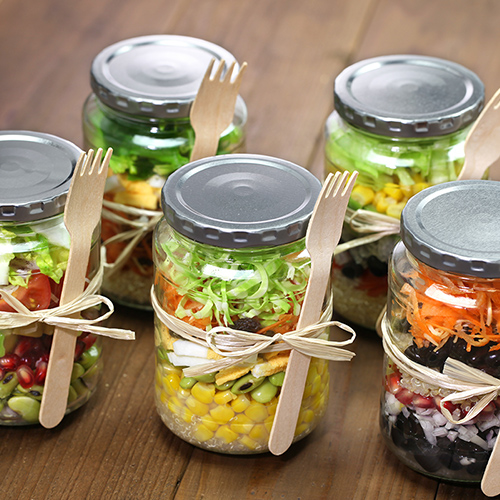
Salads
When building a salad in a jar, the results can be colorful and appetizing, but does it work? Our guess is that it can be helpful to have a glass jar, especially if you like to use acidic salad dressings. The glass won’t absorb and pass along the flavors to your next meal and the airtight seal can help keep your veggies fresh.
When putting together your ingredients, you’ll want to pour the dressing first and add your heaviest ingredients next. Beans, corn, and other non-absorbent ingredients help separate your dressing from lighter ingredients that can wilt. When it’s time to enjoy your creation, shaking the contents out into a bowl helps distribute the dressing across the contents.

Infused Water
Water is necessary for our bodies and for some reason we can be very good at depriving ourselves of it. Fortunately, someone decided it would be a good idea to infuse water with the fresh, crisp flavors of different fruits and herbs.
Now that we’ve been enlightened, we can enjoy the refreshing relief of a cool drink of water in dozens of flavorful ways. Mason jars are, again, a great way to infuse your water because they are compact and can also serve as your drinking glass.

Iced Coffee and Tea
Iced tea is made even simpler by using a mason jar because it can be prepared overnight. You can steep a tea bag in cold water, refrigerate it the night before, and it’ll be ready for your grab-and-go morning.
Cold brew coffee concentrate can be diluted with water and then mixed with cream, sugar, and any spices you like to customize your drink. This one may not taste the same if prepared the night before but using a glass mason jar is a fun way to show off your expert coffee making skills.
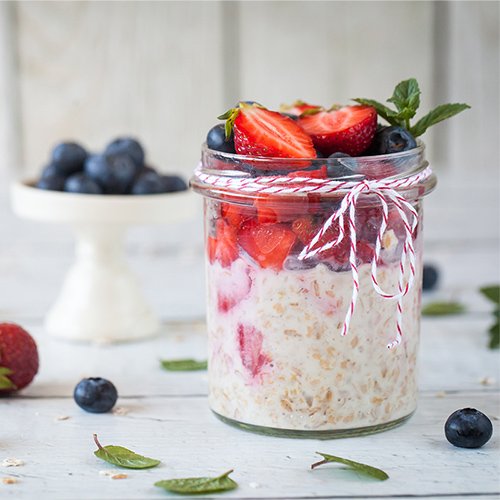
Oatmeal and Parfaits
While we’re on the subject of overnight prep, overnight oats are another great option. Not only do they have a lot of great health benefits, you can take their flavor in so many different directions. You can also layer some fruit, yogurt, and granola for another tasty morning meal.

Preserves and Pickled Foods
We can’t talk about mason jars and ignore what they were initially invented for. Take “homemade” to the next level and try making your own pickled fruits and vegetables, and toast-worthy jams.
If you “quick pickle,” you’re essentially soaking your chosen fruits or veggies in a mixture of vinegar, water, and salt. This method requires you to refrigerate the jars. To properly pickle, the process is more labor intensive and requires a lot of boiling, transferring, and testing. This step-by-step instruction by Epicurious can help you pickle pickles that can be stored up to 1 year without refrigeration.
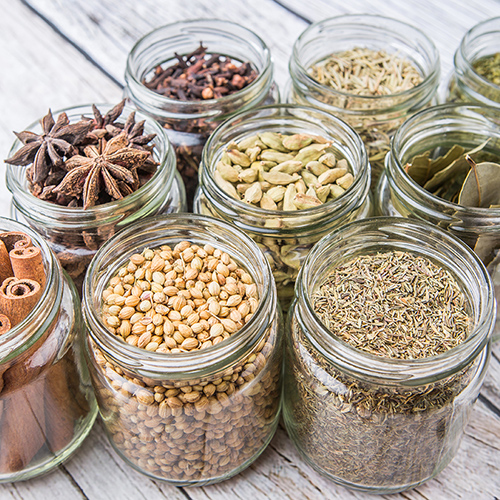
Dry or Fresh Herbs and Spices
Dry herbs are great to buy in bulk because they will keep for a long, long time. Store them in small to medium sized mason jars to easily see what you have on hand and for simplified stacking in your pantry or cupboard.
You can also use the jars as mini planters where you can keep fresh herbs to grow in your kitchen. Be careful not to over water them because, as you know, mason jars don’t have holes for water drainage. You don’t want to risk root rot and you probably don’t want to try creating your own holes in the jar.
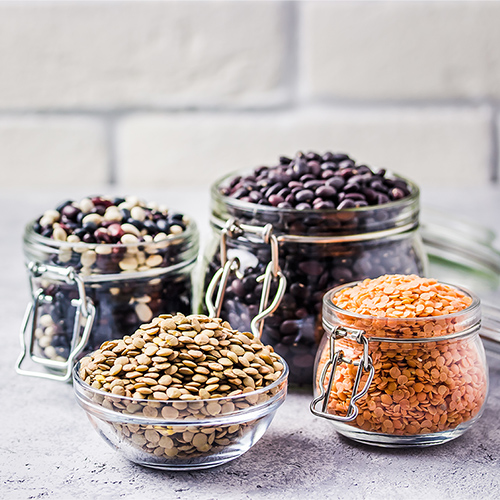
Nuts, Seeds, Rice, and Beans
Preserve the crunch of nuts and seeds and the freshness of rice and beans by storing them in a mason jar. These can also be purchased in bulk, and if you’re trying to minimize your impact on the environment, you may already have reusable grocery bags. Make sure your grocery bags are available for your next shopping trip by storing your previous purchases in mason jars!

Original Gift Giving
Do you have a recipe everyone loves, and you’d like to gift the tasty treat without giving away your secret recipe? Assemble a festive mason jar complete with all the ingredients for your famous hot cocoa, brownies, cookies, or other baked good.
This works best when you have dry ingredients because you won’t need to refrigerate your gift. Making these yourself, as opposed to buying the store-bought versions, is also great because you can substitute high calorie ingredients and sugar for other components. You can still gift the flavors of the season but without compromising your own or the health-conscious lifestyle of your recipient.
For more snack time ideas for your mason jar, check out our dietitian’s suggestions to this reader’s question about energy-boosting snacks. To access our monthly blog post highlights, subscribe to our newsletter today!
Sources


Body Mass Index (BMI) is an indicator of the amount of body fat for the average person. It’s used as a tool to identify if an adult is at a healthy weight and healthy body fat level.
Before we dive into BMI, let’s first review the benefits of maintaining a healthy weight:
These are just a few of the benefits of maintaining a healthy weight, but what does BMI have to do with your weight and what does it mean?
For years, BMI has been used by healthcare providers as a measurement to define if a person has too much body fat, and if so, whether it “presents a risk to health.”1
Since we know maintaining a healthy weight is beneficial for your health, let’s take a look at how to calculate body fat by just using your weight and height.
Calculation: Divide a person’s weight in pounds, by their height in inches. Divide the answer by height in inches. Multiply the answer by 703 (703 is the conversion factor to change units from metrics (meters and kilograms) to imperial (inches and pounds).
Example: Weight is 140lbs and Height is 5’7” or 67in
140lbs / 67in = 2.089
2.089 / 67in = .0311
.0311 x 703 = 21.9
BMI = 21.9

BMI is not a perfect measure and everyone’s body composition is different. BMI is a simple tool of weight-for-height and everyone’s height and weight varies. Therefore, this means BMI is not directly measuring body fat.
Muscle and bone are denser than fat, which means BMI is not accurately addressing body fat. If an athlete or a muscular person calculated their BMI, their BMI might be high because they have more muscle.
According to BMI calculations they would be considered overweight, however, they don’t have too much fat on their body. Since most people are not athletes, BMI might be a good gauge for body fat.

So, what does this mean for you? The World Health Organization states that a healthy BMI range for adults is between 18 and 24.9. Overweight range for BMI is between 25 and 29.9, and obesity range for BMI is 30 or higher.1 These BMI ranges in adults are the same for men and women, regardless of their age.
How should you use BMI? Use it as a gauge or a measure. Our very own LA Fitness Registered Dietitian has some helpful tips on lowering BMI; read about it here.
If you would like to take your health and body composition to the next level, let us help you achieve your goals with our Pro Results® certified personal trainers. Pro Results® trainers can help identify your personal fitness goals and design a customized workout plan to reach those goals.
When you make an appointment to start your fitness assessment, it will cover:
SOURCES

November 25th is the International Day for the Elimination of Violence Against Women.
As a health and fitness blog, our usual focus is on physical health, giving you the resources to feed your body in healthy ways and engage in heart and brain-healthy work outs. To a lesser but equally important extent, we also break into mental, social, and emotional health.
Today we touch each of these elements of total wellbeing by talking about what happens when women are exposed to violence. Not only is it a matter of physical safety, but a matter of psychological, emotional, and social welfare.
Observing this day affords us the opportunity to recognize a problem that affects an alarming number of women worldwide, and to express our solidarity with all victims of violence.

Consider that women who experience violence may need medical care and/or mental health services. Now consider that they may have children who witnessed or were affected in other ways by this violence who are now also in need of care to address trauma, behavior issues, and other potential concerns. This builds a harmful cycle of violence and trauma that can continue for generations.
In addition to perpetuating this cycle, violence against women is significant enough to have an impact on systems like healthcare and social services.
Looking strictly at the economic side of things, the impact on health and social services amounted to over $8.3 billion as a result of domestic violence in 2003.6

To help focus our discussion, we will narrow our attention down to domestic violence. It is not strictly violence within an intimate relationship but can also refer to violence within families.
Additionally, because it is not just women who are on the receiving end of domestic violence, we would like to offer information than can benefit everyone by looking into the signs and symptoms of a potentially toxic relationship.
According to PsychCentral, these are some of the potential indicators of psychological abuse within a relationship:
If you, or someone you know, needs help, you can browse through resources by state, here.
The National Coalition Against Domestic Violence offers more diverse resources, including information about the National Domestic Violence Hotline the National Dating Abuse Hotline, the National Sexual Assault Hotline, and the National Suicide Prevention Hotline, to name just a few.

Don’t blame the victim, even if they flat out say “It was all my fault.” Remember that signs of abuse often include feelings of guilt or responsibility for the situation. Instead, make sure they know it’s not their fault.
Be a safe space for them. Leave your judgement at the door and simply listen.
Offer to call a helpline with them.
Create a safety plan. A safety plan can consist of a meeting place, agreeing on a safe word, a specific number of phone calls to alert you that something is wrong, and more.
For more thought provoking posts, look for topics like our article on Mental Health Stigma or, help calm anxiety and ease stress by reading our 5-Minute Guided Relaxation post. To access our monthly blog post highlights, subscribe to our newsletter today.
SOURCES

There are a lot of reasons for dry eyes at this time of year. Dry outside air, your heater at home or in your car, the dry circulated air in nearly every public building, and windy days kicking irritants into your eyes. Add to that the dry air of airplanes, trains, and other modes of transportation for your holiday travels, and your eyes will be screaming for moisture.
Our eyes are irreplaceable, so we should care for and protect them as best as we can. The same way you’d use lotion on your skin, conditioner on your hair, and Chapstick on your lips, you should give the same attention to the health of your eyes.
Here are some ways you can help care for your vision:

01. Adjust and Limit Screen Use
Have you ever noticed that we tend to blink less when watching T.V, when using a computer, and when using our phones? Blinking helps our eyes distribute their natural moisture. The less we blink, the dryer our eyes will feel.
The remedy we’ve heard that is our least favorite, is the suggestion to remind yourself to blink more. It feels so unnatural to consciously blink and it’s not likely to be the most effective solution if you can’t remember to do it.
A more reasonable option would be to instill one or two eye drops into your eyes on television commercial breaks, to wear blue light glasses to filter the emissions from your phone or computer screen, or to place a protective screen on your device that blocks harmful light from getting to your eyes.
You can also simply take more breaks from screen-time to limit the amount of eye strain and dryness you feel.

02. If Possible, Limit Antihistamines
While they combat allergy symptoms, they can actually cause additional dryness to your eyes. They work by blocking your body’s response to allergens. Unfortunately, a typical response to allergens is watery eyes, so antihistamines can cause more discomfort if you tend to suffer from eye dryness.
Other Medications Cause Dry Eyes
According to an article by WebMD, other medications, that you may not be able to limit, can also cause dry eyes. Some of these include:

03. Do Eye Exercises
How often do we use the full range of motion our eyes are capable of? Probably not as often as we should. You can increase your exposure to bad puns and dad jokes to get some eye rolling in, or you can do some intentional eye exercises.
Eye exercises can help comfort your eyes when they have been focused on a single object (like a computer) for a long time. Here are just a few simple ones that you can commit to memory for later use:
Exercise 1: Pick out the farthest object in the room (or out the window) that you can see. Focus on it briefly, then move your eyes to something about half as far away. Focus on that for a few seconds before you shift your focus to something close to you. Do this exercise a few times.
Exercise 2: Use the 20-20-20 rule. Every 20 minutes of eye-straining work should be paused for 20 seconds so you can look at something 20 feet away.
Exercise 3: Without turning your head, use only yours eyes to look to your far left, then look to your far right. Then look all the way up and then all the way down. Repeat this a few times. Follow this with rolling your eyes 3 times to the left then 3 times to right.
Some free smartphone apps can send you notifications after a certain amount of phone use, or according to a timer if you want to monitor your computer or television time. This will help remind you that it’s time to rest your eyes and do some exercises. Some will even walk you through various eye muscle movements.

04. Turn Off Your Heater & Bundle Up
Running the heater creates a toasty and comfortable space in these cooler months, but it can wreak havoc on your hair, skin, hydration, and of course your eyes! Save your body and save on your electric bill by bundling up in blankets or warmer clothes instead of running the heater.
Another option is to run the heater before going to bed to warm up your space, and then turning it off so it doesn’t run all night.
If it’s just too cold to do without your heater, or perhaps you’re a “fan” of running the fan year-round, consider investing in a humidifier. You can also wear an eye mask to bed to help keep air flow from making direct contact with your eyes and drying them out during the night.
05. Keep Eye Drops Handy
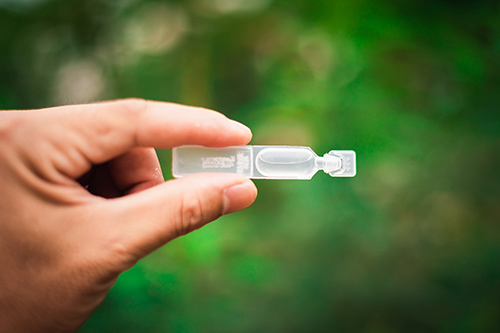
Artificial tears or lubricating eye drops are a life saver for people with dry eyes. You can choose between the individually packaged vials that are usually preservative-free and disposable, or you can buy small bottles for extended use. There are also gel-like drops that can provide longer-lasting relief, but because they’re thicker, they may blur your vision temporarily. It may be preferable to reserve these for nighttime before you go to sleep.
Pro Tip: Try refrigerating your eye drops for an extra refreshing burst of relief.

06. Eat a Balanced Diet
Nutrients in your food can help give your eyes what they need to create tears and keep your eyes feeling fresh.
Vitamin A, which is known for being good for your eyes, can be found in carrots, eggs, and dairy.
Vitamin C is great for the blood vessels in your eyes.1 Increase your intake by eating oranges, kale, lemons, and broccoli.2
Omega-3’s are fatty acids that aid in your visual development and support your retina health. They also combat dry eyes.1 Find Omega-3’s in fish, avocado, flax seeds, chia seeds, walnuts, and soybeans.3
Vitamin E is an antioxidant that can help protect your eyes by fighting off free radicals. You can find Vitamin E in almonds, sunflower seeds, hazelnuts, and peanuts.1

07. Avoid Rubbing Your Eyes
It can be tempting to rub your eyes when they feel itchy and dry, but the best thing you can do is to avoid doing exactly that. Try to find relief in some of these other ways and keep hydrated to give your body the moisture it needs from the inside out.
For information on how to care for your eyes and your sinuses this season, read our article on How to Manage Autumn Allergens at Home. To learn more about the nutrients in your produce and whether freezing them strips their nutritional value, listen to our Podcast on Fruits and Veggies. To access our monthly blog post highlights, subscribe to our newsletter today!
Sources:

“There’s an entry level for everyone…Unless you’ve got doctor’s orders, you’ve got to start with something. Don’t let your head tell you, you can’t.”
Dave Ruby is a fierce athlete with an impressive drive and an even more impressive attitude. At age 59 and having competed in and conquered Triathlons all over the world, he is certainly a force to be reckoned with.
To give you some perspective, Dave Ruby has raced in Ironman and Xterra Triathlon Championship Competitions on 6 continents and has earned World and National Champion titles in addition to claiming multiple first place wins.
While his accomplishments are staggering, Ruby sets his focus on the enjoyment of his lifestyle and the benefits of cultivating a healthy body and mind. We interviewed him to find out how he manages his training and stays physically and mentally dialed in. After all, before he was Dave Ruby the Triathlete, he was a surfer, cyclist, and regular LA Fitness gym-goer.
To show you that the willingness to put in the work, and the enjoyment of that work, can take you from ordinary to extraordinary, allow us to take you into the life of Triathlete, Dave Ruby.

Where Ruby’s Fitness Journey Began
Before he started competing in Triathlons, Ruby enjoyed running, surfing, and cycling. One year, he decided he would enter his first Ironman run. As he ran, his body protested, and his mind told him this was something he should never do again. He has competed every year since.
We asked Ruby what many of you are probably thinking now. What got you back out there after that first punishing experience?
He responded that he learned to listen to the aches and pains in his body and take breaks to recover. Yes, that first experience was physically and mentally taxing, but caring for his body is what made the difference. It probably also helps that he is surrounded by others who also love the active lifestyle. In fact, his wife also happens to be a Triathlon champion!

The Transition to Competitive Training
Transitioning from training for the sake of living a healthy lifestyle, to competitive training for advanced challenges like Triathlons, was another turning point. Ruby reminds us that this isn’t an overnight change and that the body gets faster and more fit the more you continue to workoutwork out and test your limits.
There seems to be no active intention to give a little more to each training session because he genuinely enjoys the process. Race day is, in his mind, another (but more challenging) workout. We think this is likely the key to it all. The mindset doesn’t sit in the idea that this is just hard work; it revels in the process and enjoys the moment.
It’s true that for Ruby, sometimes it’s about setting a personal record and seeing himself outperform his prior abilities, but his favorite thing about competing is actually the travel and comradery! He enjoys the landscapes, the wildlife, and the people wherever he goes.
“I absolutely love traveling to far off places, seeing a new part of the world, [and experiencing] the heart of the area,” says Ruby. You are sure to find him “wandering like a local and experiencing the heart and soul of the cultures” when he’s not competing.

Preparing for Competition Day
All year long, Ruby keeps a base in terms of physical activity. “I put in 5 to 6-mile bike rides to train and do a lot of off-road bike rides,” he says. “While I’m out there, I look for wildlife, and enjoy it too. I enjoy the work. I strength train 3 to 4 times a week at the gym and swim,” he explains. Essentially, he strengthens the swimming, running, and cycling muscles so that they are conditioned for the type of work they need to do in competition.
His mental preparation looks a little different. There’s really no preparation beforehand because “running is a form of meditation” in and of itself, he says; “you get into a zone.” Perhaps the only thing he does differently, is the way he focuses his mental state before competition. He recognizes that “I’m out there to do the best I can for that day. A win isn’t a guarantee, anything can happen” (like a mechanical issue, an injury, etc.). He acknowledges the lack of control over certain environmental, mechanical, and chance-based circumstances and can simply focus on giving the best he has to offer.
It’s also important not to overdo your preparation before a big race, he notes. “You’re better off going into a race 10% undertrained than 1% over trained,” Ruby says, and we completely agree.

Ruby’s Advice
If you’re skeptical of your own ability to live an active lifestyle or accomplish a challenge you’ve set your eyes on, Ruby reminds us that “there’s an entry level for everyone.” Everyone’s starting point will be different and even the best athletes were beginners at some point.
“Unless you’ve got doctor’s orders, you’ve got to start with something,” says Ruby. “If you think you can’t do it, that’s an excuse. If it’s doctor’s orders that’s different, but don’t let your head tell you that you can’t.”

Closing Thoughts
In the end, whether you are a serious athlete, you exercise for your health, or you’ve struggled to get started, what you can take away from Ruby’s story is this:
To hear straight from the man himself, listen to Episode 35 of our Podcast and listen to our discussion with Dave Ruby. Do you have an inspirational story you’d like to share with us? Email us at blog@lafitness.com for a chance to be featured in an upcoming post!

For length, and clarity, minor edits – none of which alter the original or intended meaning – have been made to the quotes provided.
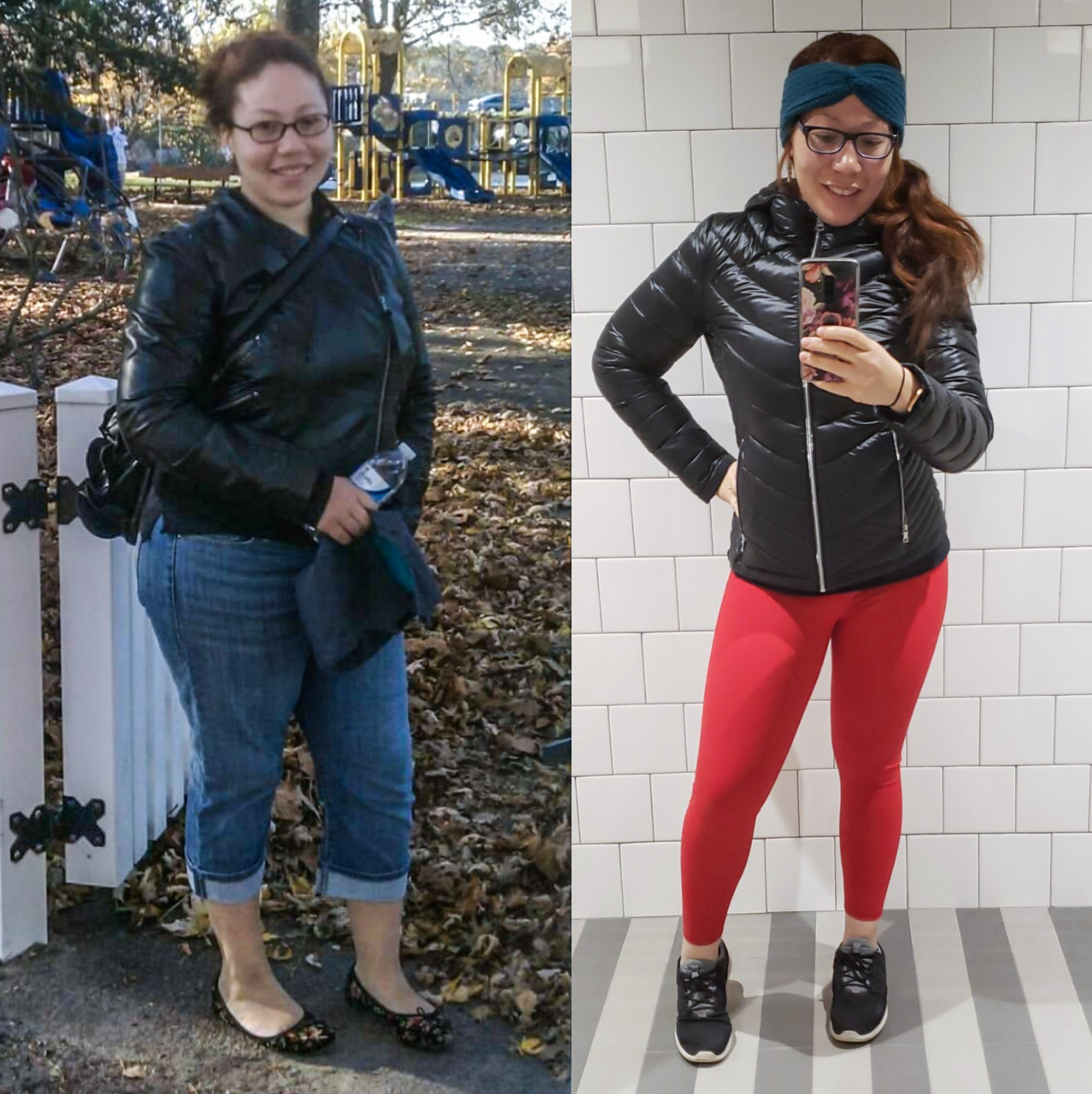
Waleska is a mom with 2 part-time jobs who had a love for chocolate. Despite the time constraints and sweet temptations, she lost over 60 pounds!

Many of us pair the idea of aging with decreased mobility and various aches. Yet, Patricia’s story shows us just how wrong that notion can be.

Ann shares how, despite back problems, strokes, and surgeries, she is well on her way to achieving her goal of losing 90 to 100 pounds!