How to Stay Fit When Pregnant

How to Stay Fit When Pregnant

It’s one of the happiest moments of every soon-to-be parent’s life: that moment when you first realize you’re going to be bringing a little you into the world – and then comes the planning.

Between baby books, baby-proofing the home, and making sure your diet is as healthy as can be for your little tummy bunny, it’s important not to forget to maintain your fitness routine.

However, you’re going to want to change things up a bit.

While exercise is important to sustain the health of you and your little one, it may be hard finding the motivation if you’re experiencing common pregnancy symptoms like exhaustion, nausea, swollen ankles or back pain.

The good news is, there are exercises that can help ease the extremity of some of these issues.
Aqua Fit

Before rolling your eyes at the thought of attending an Aqua Fit class, hear us out. Water exercises can be great for soon-to-be mamas because they are low impact and can help alleviate some of the added weight that brings on the aches and pains. Not only will you feel lighter, but you’ll get your cardio in without the high-intensity or added pressure on your ankles.

Find an Aqua Fit class near you here.

Yoga

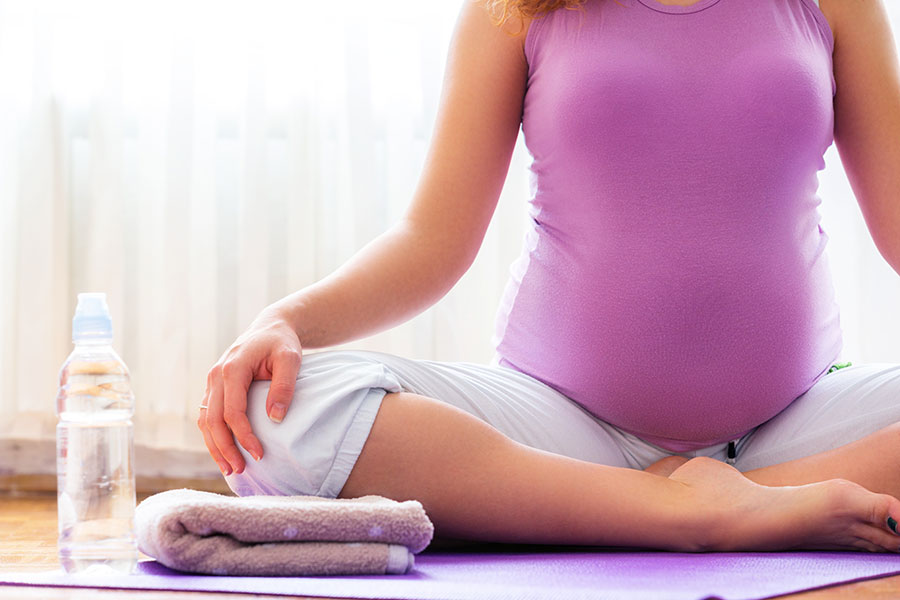
Breathe in. Breathe out. Practice your breathing techniques before the big day arrives! Yoga classes are known for helping promote relaxation, improving balance and strengthening core muscles. Not only that, but according to an article1 published in WebMD research has shown that Yoga may even make labor shorter and more comfortable, and who wouldn’t want that?

!! FYI – Try to avoid hot yoga after your first trimester2, or laying on your back3, as the weight of the uterus can compress a major blood vessel, disrupting blood flow.

Indoor Cycling

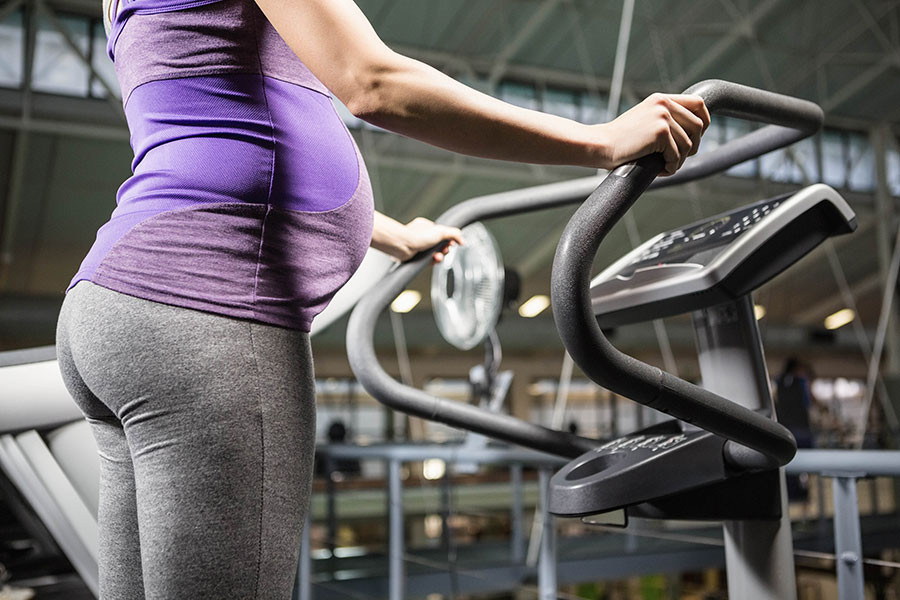
Much safer than the outdoor alternative and a great way to get your heartbeat up and those calories burned! Another benefit of taking an indoor cycling class when pregnant is that you can go at your own pace, and when the belly starts growing, you can easily adjust the handles bars to make for an easier and more comfortable ride.

Walking

Let’s get back to the basics! Sometimes an exercise as seemingly simple as walking can work wonders for your body. The combination of fresh air, getting your daily steps in, and switching up the distance, incline, and pace of your walk is a great way to get in your cardio while not overexerting your body.

Another benefit of exercising while carrying your soon-to-be bundle of joy is the flow of endorphins! Exercise helps boost the body with “feel-good” chemicals like dopamine and serotonin and can help ease symptoms of depression and anxiety. Plus, exercise had been known to help improve self-esteem and can help you stay within a healthy weight gain limit while pregnant.


Here’s the Best Part

Research has shown that “healthy pregnant women who exercise during pregnancy may have less risk of preterm delivery and shorter labor, are less likely to need pain relief, and recover from childbirth faster.”6 We say those benefits alone make exercising during pregnancy worth it.

Stay healthy, mamas to be! We look forward to seeing you in the gym soon and wish you and your little one(s) a great start!

DID YOU KNOW?

Even though you may be feeling exhausted, exercise can help increase your energy and stamina. Sounds kind of counterintuitive, right? Well, living an active lifestyle helps the body get stronger and improves cardiovascular health, thus giving the body more stamina. When you feel better, you have more energy.


Here are some tips for having a safe workout:

  1. Whatever activity you choose, don’t overdo it. Listen to your body and rest if you feel tired. Any sharp, shooting or stabbing pain means you should stop. You should be able to carry on a conversation during any activity.
  2. Avoid dehydration by drinking extra water before, during, and after exercise.
  3. Eat plenty of food so that you don’t run low on glucose.
  4. Avoid overheating. During hot weather, exercise indoors and in an air-conditioned space.
  5. Avoid high-risk and contact sports; any activity where there’s a risk of falling or getting hit in the stomach. If you’re not sure whether something is safe or not, don’t do it.


We spoke with Dr. Rhonda Smalls, Chief of Service, Obstetrics and Gynecology, at Kaiser Permanente Los Angeles Medical Center, who helped offer some helpful advice for our pregnant moms-to-be out there.

Q: How does exercising impact both the mother-to-be and baby in a positive way?


Dr. Rhonda Smalls: Exercising during pregnancy can help the mother-to-be maintain muscle strength, avoid excess weight gain, lower the risk of certain pregnancy-related complications – gestational diabetes and preeclampsia – and shed unwanted pounds after the baby is born.  During pregnancy, the muscles in the lower abdomen, lower back, and around the birth canal come under great strain.  Moderate exercise helps reduce backaches, constipation and bloating.  It can also improve circulation and minimize swelling and prepares the body for labor and delivery.


Q: What are some exercises you would recommend for moms to be?

RS: Walking. It’s safe and easy for most women from the moment they find out they’re pregnant until the final weeks. I encourage expecting moms to sneak in some extra steps into their day by parking their car at the far end of the lot or taking the stairs instead of the elevator.  Remember to use the handrail when walking up or downstairs.

Swimming or water aerobics. Both are gentle on the joints and provide a feeling of weightlessness (a welcome break in the later months of pregnancy).

Stretching or yoga. Stretching eases back pain and helps maintain flexibility, while yoga can help expecting moms better cope with everyday stress.  Look for prenatal yoga classes or videos designed for pregnant women.

Low-impact dance or aerobics. Moving to music is fun for moms.  Be careful when doing movements that require balance like jumps, kicks, leaps, and bouncing.


Q: Are there varying degrees of exercise difficulty that pregnant women can participate in depending on the trimester they’re in?


RS: First and foremost, it’s important that all pregnant women check with their primary obstetric provider before starting any exercise routine. If they’re already physically active most days, great! If not, this is a good time to start. Begin slowly, build up gradually, and try to exercise at least 30 minutes per day.

During the first trimester, pregnant women should be able to continue their exercise routine as long as they’re having a normal, healthy pregnancy.  I encourage expecting moms to try a combination of aerobic, strength, and flexibility exercises.

During the second and third trimester, most women will have to vary their routine slightly.


This article should not replace any exercise program or restrictions, any dietary supplements or restrictions, or any other medical recommendations from your primary care physician. Before starting any exercise program or diet (particularly when pregnant), make sure it is approved by your doctor.

Sources:

  1. “Safe Exercise During Pregnancy: Running, Weights, & More in Pictures.” WebMD, WebMD, www.webmd.com/baby/ss/slideshow-pregnancy-fitness-moves.
  2. Ibid
  3. “Can I Still Sleep on My Back While I’m Pregnant?” Parents, Parents, 18 Sept. 2015, www.parents.com/advice/pregnancy-birth/my-pregnant-body/can-i-still-sleep-on-my-back-while-im-pregnant/.
  4. “Safe Exercise During Pregnancy: Running, Weights, & More in Pictures.” WebMD, WebMD, www.webmd.com/baby/ss/slideshow-pregnancy-fitness-moves.
  5. BabyCenter Medical Advisory Board. “Great Pregnancy Exercise: Weight Training.”BabyCenter, 9 Mar. 2018, www.babycenter.com/0_great-pregnancy-exercise-weight-training_7878.bc.

Recommended Reading

Advice for A Balanced Protein Shake

Advice for A Balanced Protein Shake

Question:

I am trying to gain mass. If I like doing post-workout protein shakes, what is an effective way to get carbs into the shake? Also, what is a good ratio of carbs to protein?

– Joe O.

Answer:

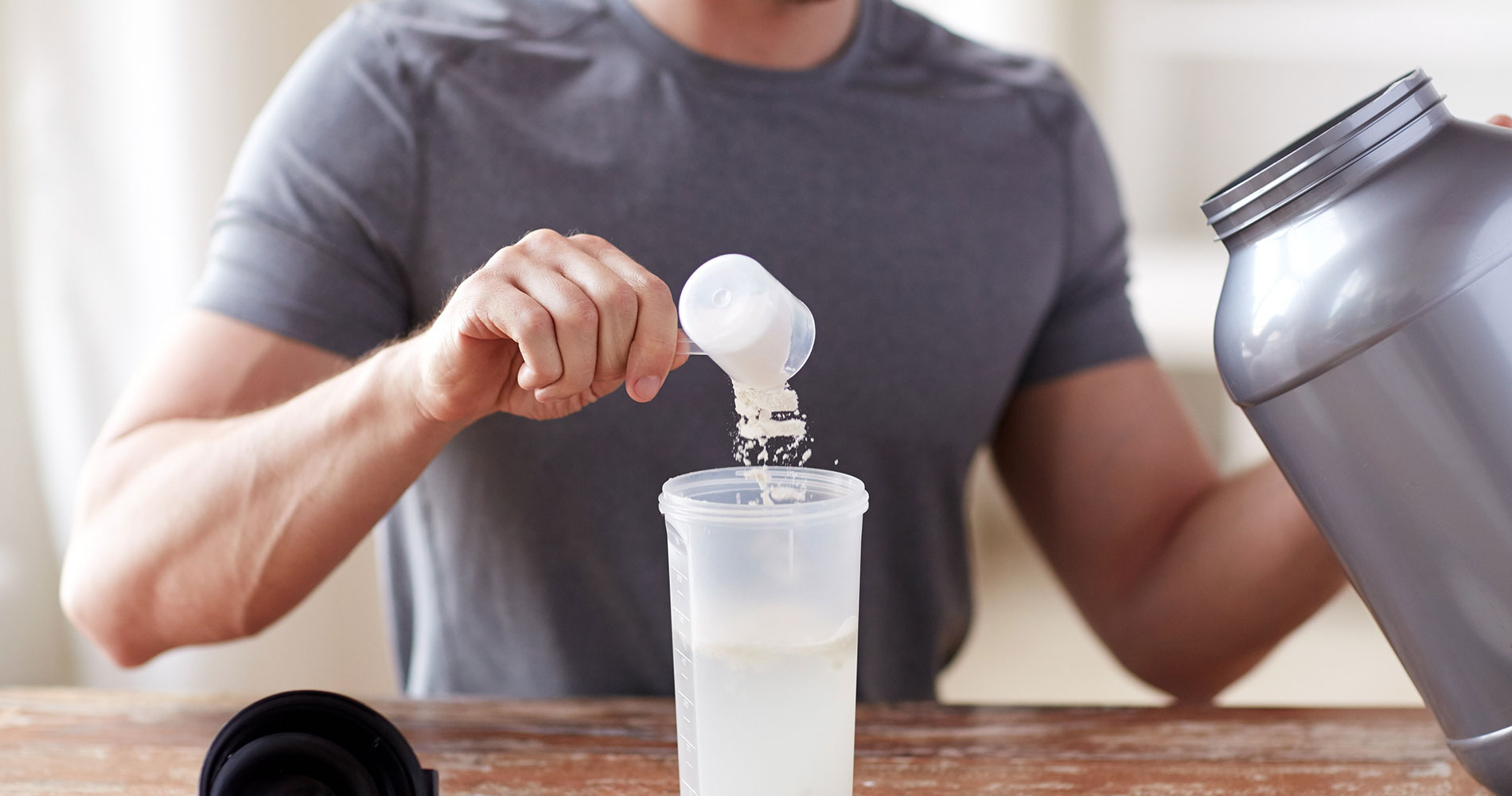
If your protein shake choice doesn’t include carbohydrates, you have a few options. Sugar is easy to dissolve and table sugar is cheap. Agave nectar or honey won’t be gritty. Non-fat milk powder or fruit juice both provide naturally occurring sugars. If using a blender, a banana or ground oats will work fine.

Trying to avoid sugar and go for a more complex carbohydrate may result in a pasty, bland shake if using household ingredients like a couple tablespoons of fine sifted flour or boiled mashed potato. If not using a blender, you’d best find a supplement carbohydrate that mixes in well. I’d suggest a simple maltodextrin that costs less than $5 per pound.

Of course, if you want to skip the hassle, just switch to a recovery shake with carbohydrates included. Ideally in the ratio of 2-3 grams carbohydrate for each gram of protein for strength training and mass gain. The National Strength and Conditioning Association recommends a general 4:1 carbohydrate to protein ratio, which is supported by endurance exercise. Of course, as caloric nutrients, the absolute amount of carbohydrate and protein should be bodyweight dependent.

– Debbie J., MS, RD

This article should not replace any exercise program or restrictions, any dietary supplements or restrictions, or any other medical recommendations from your primary care physician. Before starting any exercise program or diet, make sure it is approved by your doctor.

Some questions have been edited for length and/or clarity.

Ask our Dietitian

Have a nutrition question? Our registered dietitian is ready to help!


Email nutrition@lafitness.com or submit your question below and it may be featured in an upcoming article!

14 + 8 =


Recommended Reading - Q+A

The Top 5 Nutrition Myths – Podcast Ep. 1

The Top 5 Nutrition Myths – Podcast Ep. 1


Welcome to the 1st episode of the Living Healthy Podcast, presented by LA Fitness!

Welcome to the launch of the Living Healthy Podcast presented by LA Fitness! We’re excited to have you join us as we speak with experts in the fields of fitness and nutrition and share with you some incredible member stories. On this episode of Living Healthy, we talk with registered dietitian Debbie James and discuss the TOP 5 Myths of Nutrition that you may be surprised to learn about.

Timecard Markers

  • Skip Intro:
    • Podcast Begins at 1:05
  • Our nutrition expert Debbie James, RDN, joins the show.
    • Starts at 1:55
  • Myth #1: Sugar causes type 2 diabetes.
    • Starts at 2:57
  • Myth #2: You have to eat every 3-4 hours to lose weight.
    • Starts at 5:23
  • Myth #3: It takes a lot of protein to build muscle.
    • Starts at 8:49
  • Myth #4: Stimulant drinks give you energy.
    • Starts at 12:05
  • Myth #5: Fat is bad for you.
    • Starts at 15:20
  • Product Password
    • Begins at 18:18

How Are We Doing? 


This podcast should not replace any exercise program or restrictions, any dietary supplements or restrictions, or any other medical recommendations from your primary care physician. Before starting any exercise program or diet, make sure it is approved by your doctor.


Recommended Podcast Episodes 

AAT: Ep. 21 – What Are the Best Machines for Chest, Arms, and Abs?

AAT: Ep. 21 – What Are the Best Machines for Chest, Arms, and Abs?

Ask A Trainer: Featured Question of the Week

LA Fitness Pro Results® Master Trainer, Stone T., gives his expert advice on which machines best help train and target the chest, arms, and abs. Get ready to get swoll.


Do you have a fitness question? Ask one of our certified Pro Results® trainers here! Your question may be featured in an upcoming Ask Our Trainer video.**

15 + 7 =

**Selected submissions will be featured on the LA Fitness blog and possibly other LA Fitness digital media entities & websites. By making a submission, you hereby grant LA Fitness a non-exclusive, perpetual, worldwide, irrevocable license to use and make copies of the contents of such submission for any purpose and in any medium whatsoever, and you hereby waive and relinquish any copyright or other intellectual property right you may have in the contents of such submission and your right to pursue any claim for LA Fitness’s violation of those intellectual property rights.


Recommended 'Ask A Trainer' Videos

Is Distilled Water Healthy for You?

Is Distilled Water Healthy for You?

Question:

Is drinking distilled water bad for you? What type of water should I drink?

– Danisha O.

Answer:

Distilled water is one form of purified water and it is safe to drink, but not exclusively. The thing with removing impurities is that the natural minerals like calcium and magnesium are also removed. This is desirable for household appliances like hot irons, but your blood has sodium and other solutes in it. In summary, distilled water may not be as beneficial for your body as other forms of water.

The water used for intravenous injection is sterile but still contains solutes to match blood concentration and pH. Tap water impurities and micronutrients vary based on the local source, as do those for spring waters and bottled waters. Filtered water removes contaminants like heavy metals and pesticides but some can also lower the mineral content. Carbon block filters allow the mineral salts to remain. Specialty waters that are ionized, reverse-osmosis or alkaline are promoted for various reasons but overall for proper hydration, an adequate volume of fluids is key. Having affordable, good-tasting water means you’ll drink more of it. In the end, there is not an absolute consensus on the type of water you should drink.

A special note: for exercise, sports drinks are actually ideal as they have the proper concentration of glucose and electrolytes to enhance absorption and promote fluid balance.

– Debbie J., MS, RD

This article should not replace any exercise program or restrictions, any dietary supplements or restrictions, or any other medical recommendations from your primary care physician. Before starting any exercise program or diet, make sure it is approved by your doctor.

Some questions have been edited for length and/or clarity.

Ask our Dietitian

Have a nutrition question? Our registered dietitian is ready to help!

Email nutrition@lafitness.com or submit your question below and it may be featured in an upcoming article!

13 + 8 =


Recommended Reading - Q+A