Warm Comfort Foods Made Healthy(ish)
Most comfort foods we turn to are heavily laden with fat, starch and calories. There are healthier ways to enjoy down-home classics by making a few tweaks.



In my recent blood test, my triglycerides were borderline high. How do I get my triglycerides down to acceptable levels?
– Anthony C.

Triglycerides in the blood are basically free-floating fats that are not bound to cholesterol. A lab value showing hypertriglyceridemia is an indication of increased risk for stroke, heart attack, and heart disease, or maybe a sign of other medical conditions. Dietary factors that increase triglyceride levels include alcohol, excess carbohydrate, sugars, and calories.
Here are tips for lowering blood triglycerides:
Sources:
– Debbie J., MS, RD
This article should not replace any exercise program or restrictions, any dietary supplements or restrictions, or any other medical recommendations from your primary care physician. Before starting any exercise program or diet, make sure it is approved by your doctor.
Some questions have been edited for length and/or clarity.
 Have a nutrition question? Our registered dietitian is ready to help!
Email nutrition@lafitness.com or submit your question below and it may be featured in an upcoming article!

Most comfort foods we turn to are heavily laden with fat, starch and calories. There are healthier ways to enjoy down-home classics by making a few tweaks.

Good nutrition is all about variety! Browse through our list of unusual fruits and veggies and give yourself a chance to try something new.

Does liberally salting your food help you pump more iron in the gym? Registered Dietitian, Debbie James, investigates the claims!

Welcome to the 12th episode of the Living Healthy Podcast, presented by LA Fitness.
On this episode of Living Healthy, we speak with Matt Harrison, LA Fitness member and elite athlete, who shares how you too can become an elite athlete with just a few changes made to your lifestyle.
Hey there! Is there something you’re interested in hearing about? Do you have a fitness topic of interest? How about nutrition? Or maybe you have a fitness success story (or know someone else who does) and want to share it with us? Tweet, message or email us your thoughts and opinions. We love hearing from our listeners and thank you for being a member of the Living Healthy Podcast community!
How Are We Doing?
This podcast should not replace any exercise program or restrictions, any dietary supplements or restrictions, or any other medical recommendations from your primary care physician. Before starting any exercise program or diet, make sure it is approved by your doctor.

Intro
Begins at 0:01
Elite Athlete, Matt Harrison, joins the show
Begins at 0:23
What Does Elite Athlete Even Mean?
0:28
Have You Always Been an Athlete?
0:56
What is the Foundation Someone Needs Before Becoming an Elite Athlete?
1:18
What Changed Your Mindset?
2:18
What Sparked the Change?
3:09
How Do You Find the Time to Train and Balance Life?
4:40
The 3 Personal Commitments
5:50
On Living More in the Moment
6:53
What Are the Causalities of Having Laser Focus?
8:36
On His First Ever Spartan Race
9:34
Nutritional Component of an Elite Athlete
12:11
On Getting Cravings
14:20
Snapshot of Daily Nutrition
15:50
On His Workout Regiment
17:45
What Does a Rest Day for You Look Like? And Cutting-Edge Technology
19:36
What Was the Hardest Adjustment to Make?
21:15
On Setting Goals
22:08
Actionable Advice
24:07

The Down Syndrome Ironman Chris Nikic attempts to be the first to complete an Ironman event with Down Syndrome. Welcome back to the Living Healthy Podcast! Today we’re going to be talking to an inspirational young man named Chris Nikic - The Down Syndrome...

Welcome to today's episode about "Your Relationship to Food." It's the 46th episode of the Living Healthy Podcast. On today's episode, we are discussing how you can honestly assess your relationship to food and how you can create a positive relationship to food...

We're "Trimming the Fat and Keeping the Muscle" on today's episode of the Living Healthy Podcast! On this episode of the Living Healthy Podcast, just in time for Thanksgiving, we learn about trimming or "cutting" the fat after you finish the bulking phase. This is...

On this episode of ‘Ask A Trainer’ we speak with LA Fitness Pro Results® trainer Morgan C., and get her expert advice on building muscle, protein, and what not to do.

Do you have a fitness question? Ask one of our certified Pro Results® trainers here! Your question may be featured in an upcoming Ask Our Trainer video.**
**Selected submissions will be featured on the LA Fitness blog and possibly other LA Fitness digital media entities & websites. By making a submission, you hereby grant LA Fitness a non-exclusive, perpetual, worldwide, irrevocable license to use and make copies of the contents of such submission for any purpose and in any medium whatsoever, and you hereby waive and relinquish any copyright or other intellectual property right you may have in the contents of such submission and your right to pursue any claim for LA Fitness’s violation of those intellectual property rights.
On this episode of ‘Ask A Trainer’ we speak with LA Fitness Pro Results® trainer Morgan C., and get her expert advice on how to properly maintain muscle mass.
On this episode of ‘Ask A Trainer’ we speak with LA Fitness Pro Results® trainer Morgan C., and get her expert advice on which machines offer a full body workout.
On this episode of ‘Ask A Trainer’ we speak with LA Fitness Pro Results® trainer Morgan C., and get her expert advice on whether or not strength training or cardio should come first when it comes to weight loss.
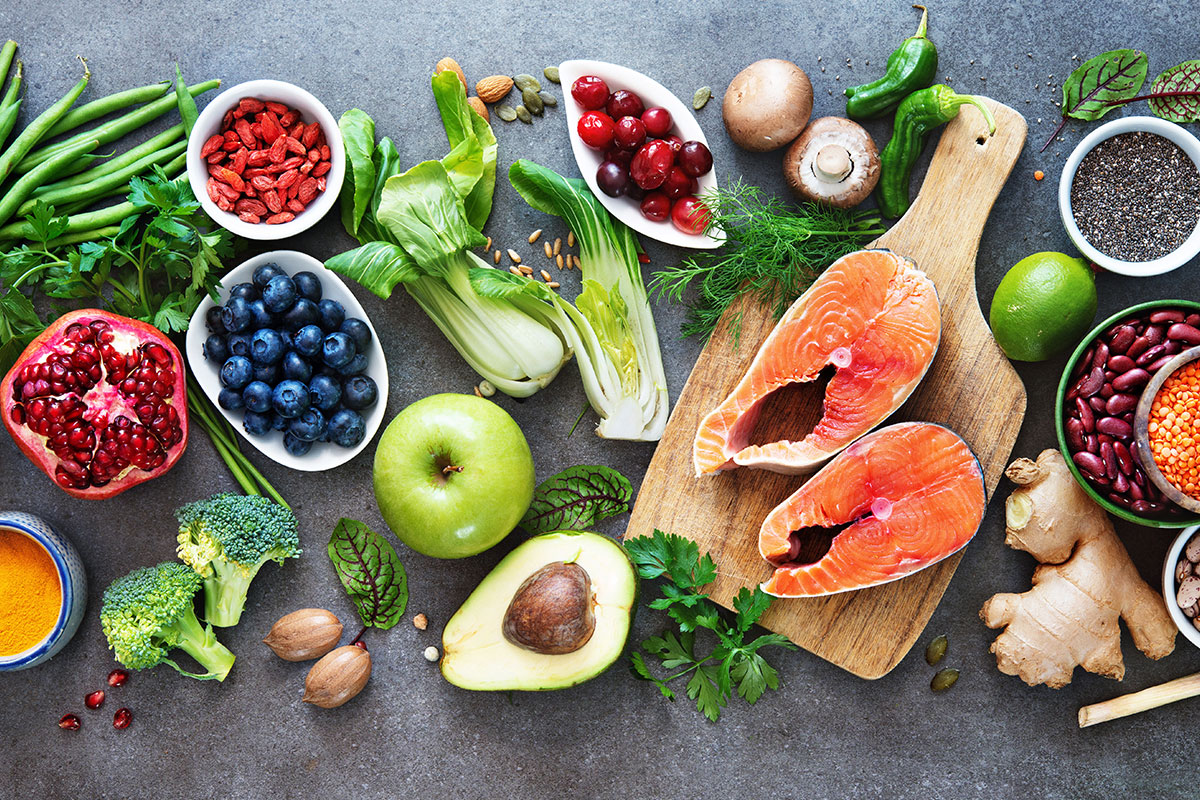
Hi, my name is Allison and I joined LA Fitness this summer. My very basic question is, what ARE the nutrient needs of a basic adult? (I’m female, 5’4″, 135 lbs. and trying to shed 5 -10 lbs., work out 3-4x/ week and walk on off days). I just want to know what the basic categories of things are a person needs. I’ve heard about nutrients being macros (fat protein carb) and micro (vitamins and minerals) but I’ve also heard nutritionists online say to get fiber and leafy greens and antioxidants and others say lots of veggies and lean meat – and I know they’re all related and many of them overlap- so I guess I’m just confused about what to seek out in my diet. Thank you SO much.
– Allison T.
Allison, based on your anthropometrics and level of exercise your daily nutrient needs may fall into the following ranges (provided for a 30-year-old woman):
Please see the Institute of Medicine’s Dietary Reference Intake tables for vitamins and minerals for your intake targets of 29 micronutrients. Antioxidant action is an important function of certain micronutrients and phytochemicals (beneficial compounds found in plants), so we call those antioxidants.
As far as basic nutrients, you just need to add one thing to your list of fat, protein, carbohydrate, vitamins, and minerals – water! It is a macronutrient since we need such large volumes of it. Since it doesn’t provide calories, water is not often regarded the same as the 3 energy-yielding macronutrients. Exact requirements are not specified by the Institute of Medicine’s Food and Nutrition Board, but the adequate intake of water is 3.7 liters per day for men and 2.7 liters per day for women, including beverages and water derived from solid food.
You can look at nutrient numbers specifically now and then, but to ease the confusion just focus on your dietary habits and overall consumption to obtain sources of those nutrients. What you should seek out in your diet are plant-based protein sources, raw produce of every color, the most wholesome grains, the leanest animal foods, and unsweetened beverages… in amounts that just satisfy you. Those recommendations can be suited to every culture and worldly food belief. Sounds a lot simpler to me!
– Debbie J., MS, RD
This article should not replace any exercise program or restrictions, any dietary supplements or restrictions, or any other medical recommendations from your primary care physician. Before starting any exercise program or diet, make sure it is approved by your doctor.
Some questions have been edited for length and/or clarity.
Have a nutrition question? Our registered dietitian is ready to help!
Email nutrition@lafitness.com or submit your question below and it may be featured in an upcoming article!
Most comfort foods we turn to are heavily laden with fat, starch and calories. There are healthier ways to enjoy down-home classics by making a few tweaks.
Good nutrition is all about variety! Browse through our list of unusual fruits and veggies and give yourself a chance to try something new.
Does liberally salting your food help you pump more iron in the gym? Registered Dietitian, Debbie James, investigates the claims!
Hello. Both of my cholesterols are borderline, and my doctor and I agreed not to start on any medication. Instead, a low-carb, low-fat diet is what I’m looking forward to doing. What should I look for in food labels? Fat grams? Total fat? Carbs? Trans fat? There’s so much info. I’m confused. How much do I need of what? Thanks.
– Patricia D.
Hi Patricia! Exact nutrition targets would depend on your full lipid profile, so you should consider taking your lab results to a Registered Dietitian Nutritionist for a personalized prescription. You’re right that there is so much information – because it is such a complex situation with multiple factors. While I can’t clarify how much YOU need, I can explain which fats and carbs impact each lipid, and what are the major sources of those macronutrients.
TOTAL FAT – The daily reference value for total fat in a 2,000-calorie diet is 65 grams per day, representing a limit of 30% calories. Major sources are fried foods, animal products including dairy products, nuts, seeds, avocados, and olives. Oils and butter and pure fat. Some desserts and condiments are nearly all fat calories.
SATURATED FAT – The daily reference value for saturated fat in a 2,000-calorie diet is 20 grams, representing a limit of 10% calories. Saturated fat is the type which is solid at room temperature. Mainly from animal sources, palm and coconut. Major sources include cheese, butter, cream, ground beef, bacon, fatty cuts of meat and foods fried in lard or sautéed in butter.
TRANS FAT – Created during the hydrogenation of vegetable oils, this very harmful fat is found primarily in processed foods and animal products. No known safe amount. In 2015 the FDA stated, “…there is no longer a consensus among qualified experts that partially hydrogenated oils, which are the primary dietary source of industrially-produced trans fatty acids are generally recognized as safe (GRAS) for any use in human food.”
UNSATURATED FAT – Monounsaturated and polyunsaturated fats are liquid at room temperature and are predominantly found in plant foods. Avocados, olives, vegetable oils, nuts, and seeds are major sources.
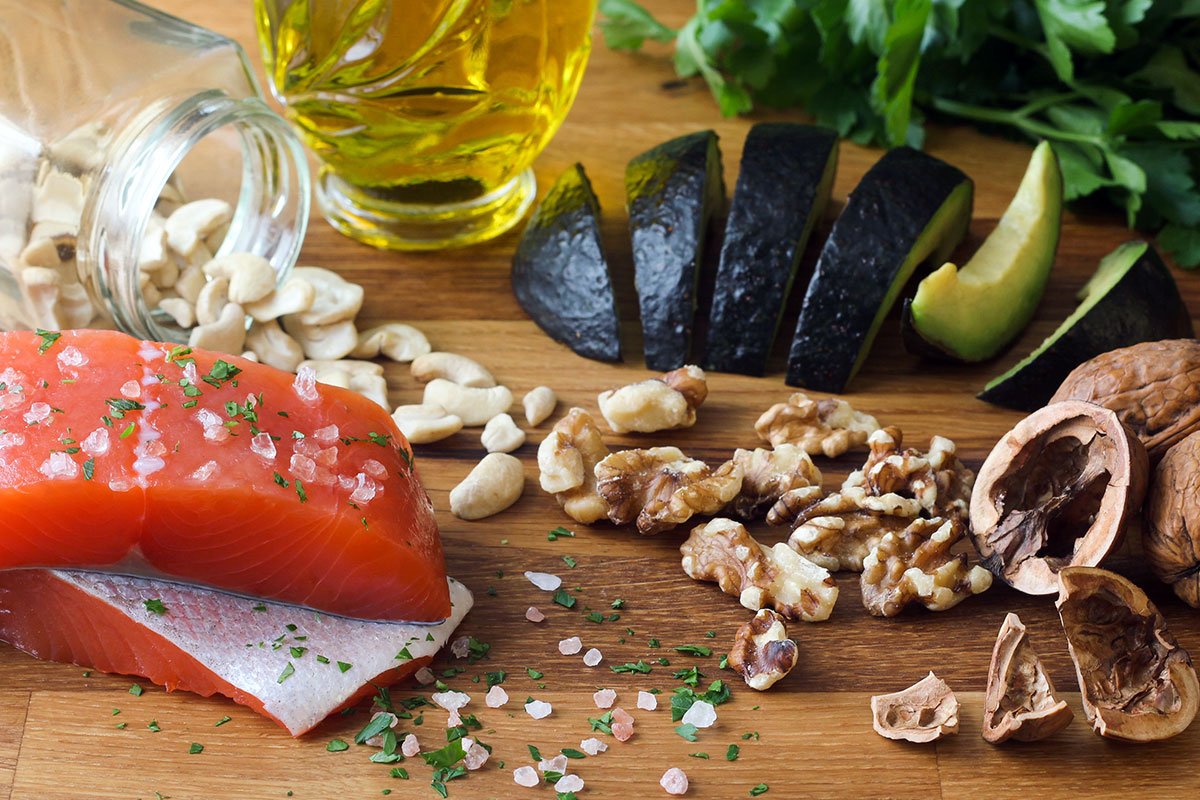
OMEGA-3 FAT – A particular kind of polyunsaturated fat that is predominantly from mackerel, herring, tuna, salmon and trout. Notable sources include other fish and seafood, walnuts, flaxseed, and canola oil.
FIBER – The daily reference value for dietary fiber in a 2,000 calorie diet is 25 grams, representing a minimum of 1.5 grams per 100 calories. Soluble fibers are the type that directly help to reduce cholesterol. Major sources include oats, beans, peas, lentils, apples, pears, barley, and prunes.
REFINED CARBOHYDRATES – Albeit from natural sources, white flour and added sugars are not the same as their wholesome counterparts. Refined carbs include pastries, many cereals, flour tortillas, breading on fried foods, regular pasta, pretzels, and the ingredient maltodextrin. Added sugars should comprise no more than 10% calories according to the 2015 Dietary Guidelines for Americans. Added sugars can come from sugars (any kind; usually end in “ose”), syrups, glazes, honey, fruit juice concentrate, and molasses in products such as candy, desserts, soft drinks, and sweetened cereals.
ALCOHOL – A moderate consumption of ethanol-containing beverages means 1 drink per day for men and no more than 2 drinks per day for women. A serving size depends on the beverage’s alcohol percentage: 1.5 oz liquor (80 proof = 40% alcohol); 5 oz wine (12% alcohol); 12 fl oz beer (5% alcohol).
Sources:
American Heart Association
Web MD
Mayo Clinic
– Debbie J., MS, RD
This article should not replace any exercise program or restrictions, any dietary supplements or restrictions, or any other medical recommendations from your primary care physician. Before starting any exercise program or diet, make sure it is approved by your doctor.
Some questions have been edited for length and/or clarity.
Have a nutrition question? Our registered dietitian is ready to help!
Email nutrition@lafitness.com or submit your question below and it may be featured in an upcoming article!
Most comfort foods we turn to are heavily laden with fat, starch and calories. There are healthier ways to enjoy down-home classics by making a few tweaks.
Good nutrition is all about variety! Browse through our list of unusual fruits and veggies and give yourself a chance to try something new.
Does liberally salting your food help you pump more iron in the gym? Registered Dietitian, Debbie James, investigates the claims!