Muscle Building and Fat Burning Myths Debunked
Debunking fitness myths surrounding the ideas of muscle building and fat burning.



Question:
Hello, I’m a male, age 37, my height is 5’11”, and I weigh 263 pounds. I’ve been sticking to a 1,400-calorie plan pretty strictly with a calorie counter app and weight scale, and I have lost about 32 pounds. This past month I’ve noticed that the weight loss has slowed significantly and is fluctuating much more than the months prior.
Now that I’m 32 pounds lighter, how can I calculate a new BMR?
Along with the weight loss, I am significantly more active as well. I do work an office job 9 hours/day, 5 days a week. But I also get to the gym 6 days/week and do somewhere between 30-45 minutes of strength training and 30-45 minutes of cardio, as well as 6 personal training sessions a month. I usually finish my eating for the day around 8/8:30 pm, and fast until 10 am the next day, sometimes waiting until lunch at 12:30 pm.
I’m kind of lost on if I should keep going with what I’ve been doing, or adjust my nutrition routine? And if I should adjust it, what’s the best route to go? Keep fasting? Bump up my calories? More protein? Thanks for your help.
– Steven M.

You’re doing great on your own, Steven! Weight reduction exceeding 2 pounds per week is not considered solely fat loss but also lean and water weight. If your rate of loss has slowed after a couple of months, that’s expected. You don’t really reach a “plateau” until you’ve not lost for several weeks. As you gain muscle the scale may not reflect any change. How has your body composition changed? You’ll want to look at both your body fat % and circumference measurements to get a sense of true progress.
Based on your stated anthropometric measures and physical activity, I estimate your energy needs to be about 2350 calories for weight loss; a fair jump from your 1,400 per day limit. Rather than use basal metabolic rate, I’d recommend using resting metabolic rate (RMR) which includes bodily functions as your base level of calories to consume. That figure is closer to 2100 calories per day, based on Mifflin-St. Jeor equation. Still a bit greater than your current intake.
To answer your last questions, I’d recommend initially bumping up your calories to 1,600/day by adding nutrient-rich whole foods (think veggie salad, beans and avocado), continue your routine and track your changes for the next month before deciding on next course of action.
– Debbie J., MS, RD
This article should not replace any exercise program or restrictions, any dietary supplements or restrictions, or any other medical recommendations from your primary care physician. Before starting any exercise program or diet, make sure it is approved by your doctor.
Some questions have been edited for length and/or clarity.
 Have a nutrition question? Our registered dietitian is ready to help!
Email nutrition@lafitness.com or submit your question below and it may be featured in an upcoming article!

Debunking fitness myths surrounding the ideas of muscle building and fat burning.

Foods that promote weight loss are rich in micronutrients, low in saturated fat and full of phytochemicals and fiber. Vegetables are perfect!
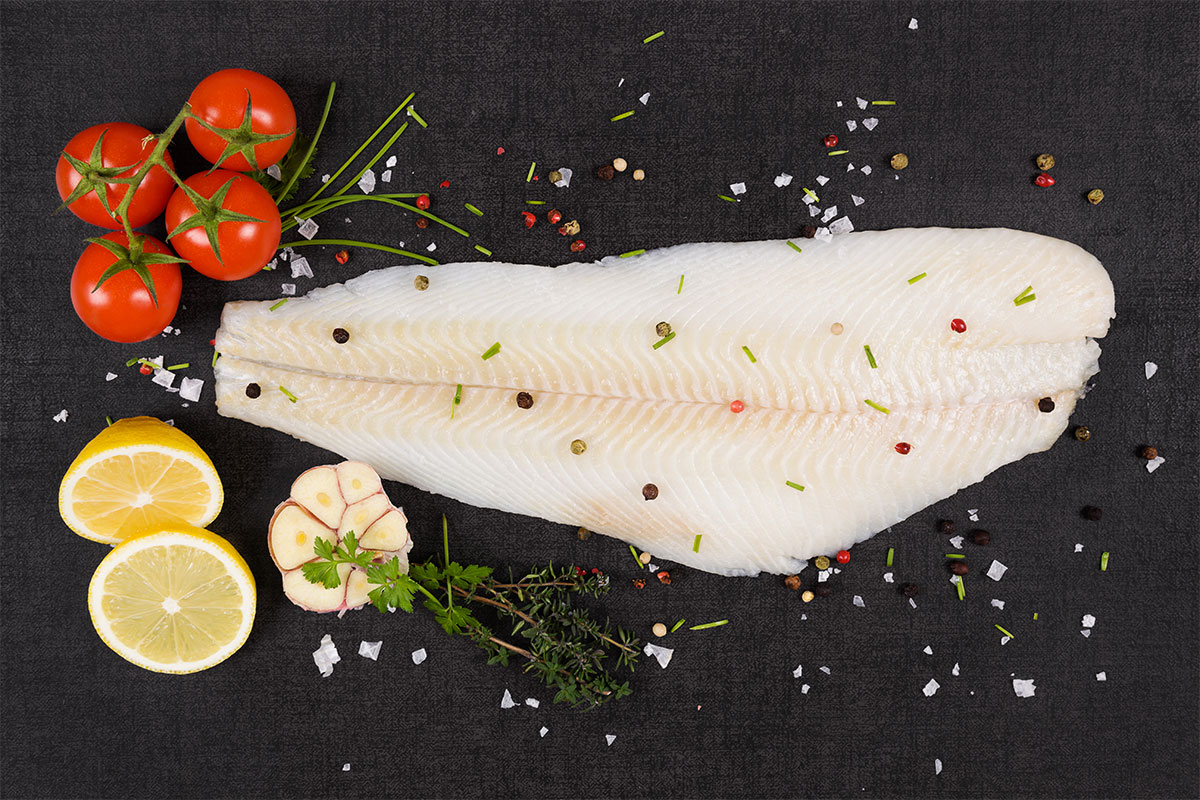
For structure, you could follow a moderate diet plan providing no fewer than 1500 calories a day. We offer a sample daily diet plan.

Hi. I’m a member at LA Fitness. I started this weight loss journey 6 months ago. I weighed 287 pounds. I’m currently 210 pounds. I have been eating under 20 grams carbs per day and 1-3 grams of sugar per day. It’s like a version of keto. But I don’t do high fat. No cheat days. I work out daily. I’ve hit a plateau with my weight. What can I do?
– Stephanie S.
My question is: How has your body composition changed during your journey the last 6 months? Have you kept track of your measurements in addition to the scale? With a significant weight loss of 27% either you’ve lost some lean body mass (reduces metabolism), retained it, or have gained lean mass (hides fat loss on scale).
Strength training is a critical component of your exercise routine. You say you work out daily. Remember that the workload must be progressive – your body is stronger now than last year, so more resistance is needed for the same effect. The idea is called the overload principle. When you continue the same routine for your workouts after your body has adapted, you fail to make further progress.
Stress and lack of sleep can also contribute to rising cortisol levels which may impact metabolism and weight.
With very low carbohydrate, high protein and moderate fat intake it’s just as likely that you’re under-consuming calories now as it is you are overconsuming calories. Eating too little suppresses metabolism while eating more than you need prevents fat burning. Seemingly healthy keto foods like bone broth are higher in sodium which may cause you to retain water weight. Remember to focus on real, whole foods and avoid processed food products.
Breaking through a plateau may take a few weeks and everybody is different, so you will experience a shorter or longer duration of plateau than another person. If you still don’t see a change in body composition after a month of progressive exercise and fine-tuning your diet, consider starting over from where you are at now using the Body Weight Planner to determine calorie needs. Plan for only a 1-2 pound loss per week to avoid rapid weight loss (greater than 2 lbs./week) which contributes to muscle, water, and bone density loss.
– Debbie J., MS, RD
This article should not replace any exercise program or restrictions, any dietary supplements or restrictions, or any other medical recommendations from your primary care physician. Before starting any exercise program or diet, make sure it is approved by your doctor.
Some questions have been edited for length and/or clarity.
Have a nutrition question? Our registered dietitian is ready to help!
Email nutrition@lafitness.com or submit your question below and it may be featured in an upcoming article!
Debunking fitness myths surrounding the ideas of muscle building and fat burning.
Foods that promote weight loss are rich in micronutrients, low in saturated fat and full of phytochemicals and fiber. Vegetables are perfect!
For structure, you could follow a moderate diet plan providing no fewer than 1500 calories a day. We offer a sample daily diet plan.
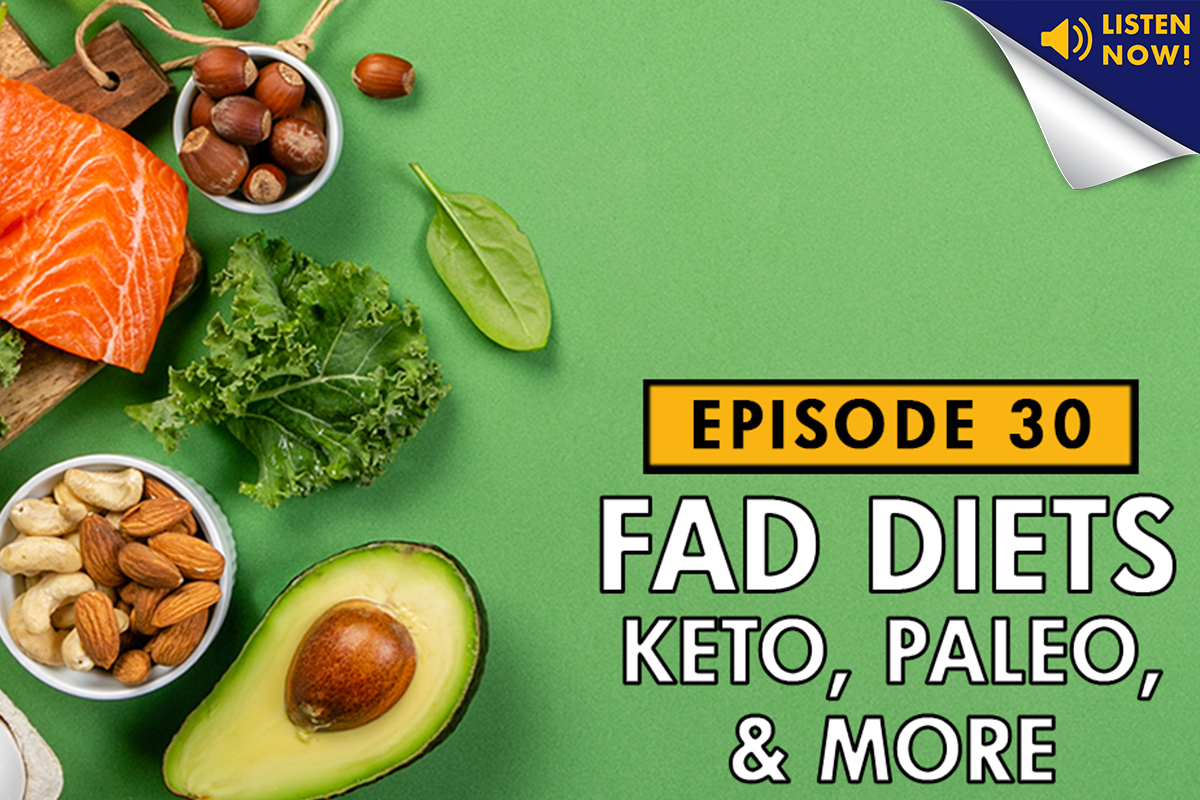
Welcome to the 30th episode of the Living Healthy podcast, presented by LA Fitness.
We’re kicking off Season 2 and we’ve got some exciting content lined up!
On this episode of the Living Healthy Podcast, Debbie James, RDN, answers some frequently asked questions about some of the most popular fad diets: Paleo, Whole 30, Keto, Anti-Inflammatory, and Intermittent Fasting. She delves into each one to discuss the recommended foods, the Pros and Cons, and how it effects the body.
How Are We Doing?
This podcast should not replace any exercise program or restrictions, any dietary supplements or restrictions, or any other medical recommendations from your primary care physician. Before starting any exercise program or diet, make sure it is approved by your doctor.
Intro
Begins at 0:01
Season 1 Recap
0:10
Introduction of New Co-host – Brittany Welch
1:16
Fad Diets – Paleo, Whole 30, Keto, Anti-Inflammatory, Intermittent Fasting
2:04
Introduction of LAF Registered Dietician, Debbie James
3:09
How Does the Word “Diet” Mean?
3:36
Are Diets Approached as Long-Term or Short-Term Changes?
4:19
What is the Paleo Diet?
5:02
Why Do People Participate in the Paleo Diet? What Foods Should/Shouldn’t You Eat?
5:55
What are the Pros of Paleo?
6:58
What are the Cons of Paleo?
8:31
Is There a Way to Incorporate Paleo into a Traditional Diet?
9:02
Who Would be a Good Candidate for Paleo?
9:53
What is the Whole 30 Diet? What Foods Should/Shouldn’t You Eat?
10:48
Would Paleo/Whole 30 be More Appropriate for a Body Cleanse?
12:24
Who Would be a Good Candidate for Whole 30?
14:09
What is the Ketogenic (Keto) Diet?
14:46
What Foods Should/Shouldn’t You Eat While Doing Keto?
17:15
Can the Keto Diet be Sustained Long-Term?
18:02
Can Keto be Used to Help Treat Epilepsy?
19:46
Who Would be a Good Candidate for Keto?
21:03
What is the Anti-Inflammatory Diet? What Foods Should/Shouldn’t You Eat?
21:40
What are the Health Benefits of the Anti-Inflammatory Diet?
23:45
Is the Anti-Inflammatory Diet a Prescribed Diet?
24:45
What is Intermittent Fasting?
26:12
Rebound Eating Associated with Diets
29:08
Pros of Intermittent Fasting
30:13
Does Intermittent Fasting Have a Similar Effect on the Body as Keto?
31:15
Who Would be a Good Candidate for Intermittent Fasting?
32:45
Actionable Advice
33:51
Outro
34:43

On this episode of the Living Healthy Podcast, we speak with running expert, Greg McMillan, to learn what it takes to start running and enjoy the journey.
On this episode of the Living Healthy Podcast, Debbie James, RDN, answers some frequently asked questions about some of the most popular fad diets: Paleo, Whole 30, Keto, Anti-Inflammatory, and Intermittent Fasting. What are the Pros and Cons? How do they compare?

On this episode of the Living Healthy Podcast we cover the basics of health, fitness, and nutrition with three outstanding guest experts!
“I love having someone push me past where I would go by myself and showing me new workouts.”
David’s Story
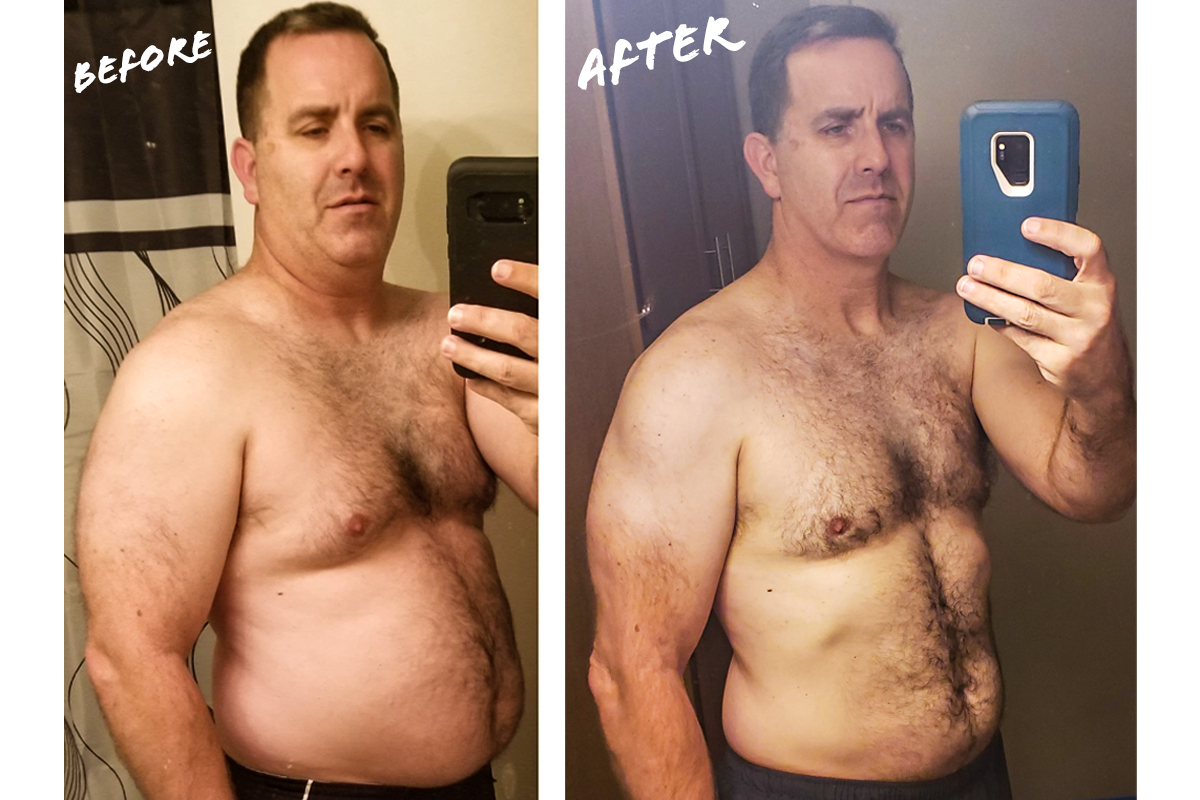
At 245, I was much heavier than I had ever been. My changing job schedule was always an excuse to not go to the gym. [When] my dad had a stroke, I decided I needed to get my butt back in shape. I [used to] run marathons in 2000 and 2001.
I joined LA Fitness in Round Rock, went a few times, and then my work schedule changed again so I didn’t go for a while.
Somewhere around January of last year, the manager called and says, “I noticed you haven’t been in in a while. Would you like to modify or maybe cancel your membership?” Well, that was all the motivation I needed. After a couple of weeks, I signed up for training and the rest is history!
What are your current fitness goals?
I hit the first, which was to get down to 196 lbs. from 245 lbs. My next goal is to get down to 15% body fat.
How has personal training impacted or changed your fitness routine?
I love having someone push me past where I would go by myself and showing me new workouts.
If you could give others one piece of advice, what would it be?
Keep it up! Make it a point to go to the gym.
Before: January 2018 | After: May 2019

After: February 2019
Ever struggled with wanting to lose weight but haven’t found the results you’ve been looking for? Personal training might be the best way for you to go.

Meet Jordan L., LA Fitness member, and inspiring weight loss success story! Jordan lost 121 lbs. in one year by making a small series of changes to his diet and fitness routine.

LA Fitness is committed to making a difference in its communities, and recently donated $1,000 to the Fountain Valley Schools Foundation. This donation will help provide enrichment activities, such as computer...
“Seeing the changes that I’ve made already has just helped me make sure I never ever want to go back to the person I used to be and am so much happier and more confident in my own skin.”
After high school, I accepted a soccer scholarship to a big university to play soccer, and early on in my freshman year, I ripped my rotator cuff, basically ending any chance I had of playing. I lost my scholarship and eventually left the school with no backup plan because it had always just been “sports”.
While the injury healed I didn’t have a chance to work out or stay active and began to gain weight, and by the time my shoulder was fixed I had no desire to stay in shape at all and just kept sliding further and further up the weight chart.
Eventually, I just accepted that this was me now and gave up on caring. My diet was mainly fast food and whatever junk I thought sounded good from the store, but hardly ever anything proportioned or healthy.
At the beginning of 2018, I woke up and realized I couldn’t even put my own shoes on and knew something had to stop. With the help of one of my good friends, who is an actual fitness nut, I began researching new diets and exercise routines and we hatched a plan.
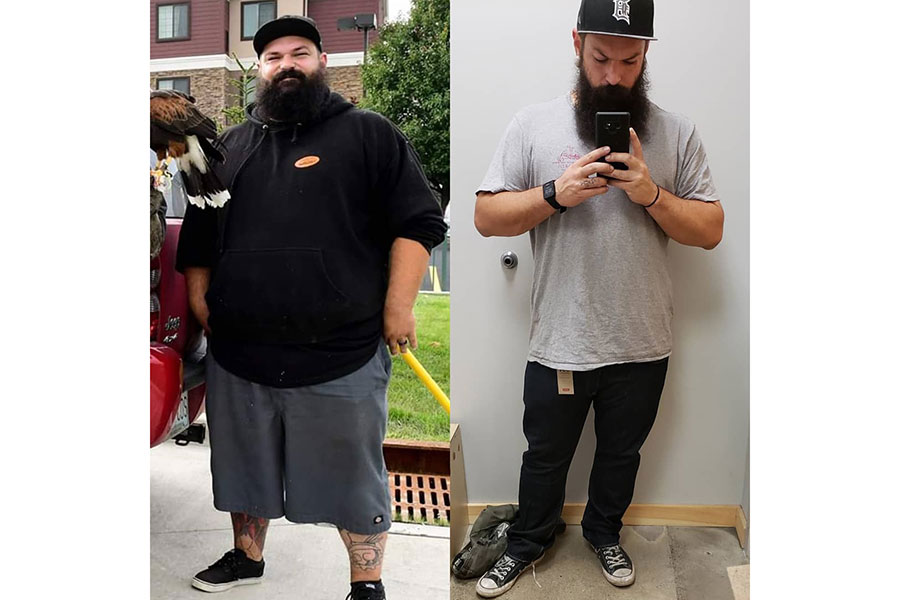
On May 1st, 2018, I stepped on the scale and saw it said 378.6 lbs. I nearly fell over.
I knew I was heavy but to see a number that high instantly put true fear into me. I was worried about life, longevity, health issues, and multitudes of other things. So on May 1st, the journey began, and I prepped my first few days of meals and then everything else so that I couldn’t be tempted to have just a quick little snack or anything else.
It was about this time that my fiancé had gastric bypass surgery and was on a limited food intake as well, so we thought it would help both of us. The weight came off fast, and I nearly threw a party when I lost my first 50 lbs.

By this time my clean strict diet was 2nd nature and I rarely had urges to cheat. Every 3-5 weeks I would go have sushi, a big steak, or Korean BBQ of some kind as a reward meal, but for the most part, I was content with the diet I was eating.
I would (and still am) eating two meals a day consisting mainly of lean ground beef, chicken, eggs, turkey bacon, avocados and organic peanut butter for a snack. It is insanely strict, but I look at it like this: I had fun eating whatever-whenever I wanted, and it got me overweight. So it was time to do whatever was required to get it off and get myself back to a place where I was happy with who I was.
In October of 2018, I ran my first Tough Mudder in Northern California. I was running about 8-10 miles a week on the treadmill at the gym and lifting weights 5 days a week and I felt phenomenal. But I very quickly became aware that I was still too heavy and had much progress still to achieve when I was on the course. I ran the race with my best friend and fiancé, and together we crossed the finish line in a little under 4:30. It was an amazing experience and sort of re-lit my desire to push harder and farther in my training.
I kept up with the training and increased to 12-18 miles a week running, but this time I was doing it outside on trails and in the hills to incorporate realistic elevation changes and to get some fresh air. Many people dislike treadmill miles and once I began to run outside I understood why.
I live a little over a mile and a half from my local LA Fitness so I started to wake up and run to the gym, sit in the sauna and stretch out for 20 minutes, and run back every morning. It was the perfect split that I needed and combined with 6 nights of weights per week I went solo into my second Tough Mudder in April of 2019 and managed a race time of 2:56 on one of the tougher courses in the Tough Mudder line up in the country.
The race is at Glen Helen off-road park and the hills there are absolutely insane. My Garmin tracker registered almost 2,600 feet of elevation gain over the 9-mile course. It definitely pushed me to my limit.
On May 1, 2019, with 1 year of life change under my belt, I stepped on the scale and it read 257.7 lbs. I had lost 121 lbs. in a year and had gone from a size 54 “loose fit” Dickies to size 36 501 Levi’s and from 4XL-Tall t-shirts to XL t-shirts.
I felt accomplished but knew that I had so much more to go. I’ve kept up on everything and plan to for as long as I possibly can. Seeing the changes that I’ve made already have helped me make sure I never ever want to go back to the person I used to be and I’m so much happier and more confident in my own skin.
I would still like to lose another 30-50 lbs. I don’t necessarily have a goal weight, but more of a performance goal. I am fairly hooked on running obstacle course races (mainly the Tough Mudder series) and for now, I know that I will need to be down closer to 200 lbs. to be able to run the time and distances I want.
My short-term goal is to be able to run either the 8-hour “Tougher Mudder” race and complete somewhere in the area of 17-20 miles in those 8 hours. Or to be able to run the 10 miles “classic” race both Saturday and Sunday in one weekend with both race times being under 3 hours.
My long-term goals include a sub 1-hour 10K on road, as well as completing the 24 hours “World’s Toughest Mudder” and managing 50 miles.

The training was really the missing part of my routine, and I feel what has helped me stick to my diet and help achieve my goals. When I started this journey, I changed my diet and not really my activity level. I started eating really clean, whole foods that were calorie deficient and since my job has me working mostly on my feet, I didn’t really need to train much.
I was walking 5-6 miles per day at work, so my activity levels were already fairly high. But after about 3 months, I realized I was getting soft and had no muscle development and that my skin wasn’t really shrinking. And the thought of looking deflated scared me, so I stopped on the way home from work one day and signed up at the gym.
I started with a 3 day per week routine just to get everything used to moving and working again and eventually ended up in the gym 6 days per week. Once I started to see muscle growth and my body actually changing shapes rather than just shrinking, I was hooked. I used the gym as the place to go whenever I was craving something off-diet, or down on myself about something, or thinking I should have been making more progress.
It turned into the place I went when I just needed everything to go right, and because of that some of my initial weight and performance goals got knocked down quicker than I expected. When I ran my first Tough Mudder I was on course for almost four and a half hours, and while I never stopped moving on course it was clearly a snail’s pace. Once I dove harder into my training my race time dropped to 2:56!

Don’t give up, anyone can do it. Honestly, I think the hardest part of everything was to get started. Not cheating on your diet or giving up when you’re having a rough week is obviously a challenge. But one of the biggest and hardest things to overcome is that fitness and diet advice is usually given by people with single digit body fat, cut physiques, and years of discipline and dedication under their belt.
While it is easy to think this is motivation, it really was intimidating at first. A few friends that have jumped on the get healthy bandwagon said it best. A lot of the advice or influencers or even coaches don’t understand that you can’t just “stop being fat”, and it’s hard to take advice from someone who looks like they’ve never had the same struggle or barrier of entry that you are currently facing.
Changing your life and body is a long-distance race, not a sprint. But so much on social media makes it seem like if you don’t lose 150lbs in 6 months that you’re a failure and clearly weren’t drinking enough of their special cleanse they’re promoting.
I have a friend who helped me a lot the first few months and made me check in every day. He said it didn’t matter if there was progress or not. As long as I had a better day eating/exercise wise than I had been having, it was a good day, and that really is what pushed me through until I was able to stand on my own and be my own motivation.
I’ve had people reach out to me on social media after posting my story that said they were also too intimidated by a lot of the people in the fitness world to start, and that seeing my story had helped them want to get back at it. I’ve helped them the best I could, but I think the biggest problem for heavy people currently is that there just aren’t enough not-perfect-physique people in the industry to ask for advice.

Ever struggled with wanting to lose weight but haven’t found the results you’ve been looking for? Personal training might be the best way for you to go.
Meet Jordan L., LA Fitness member, and inspiring weight loss success story! Jordan lost 121 lbs. in one year by making a small series of changes to his diet and fitness routine.
LA Fitness is committed to making a difference in its communities, and recently donated $1,000 to the Fountain Valley Schools Foundation. This donation will help provide enrichment activities, such as computer...