10 Thanksgiving Ideas to Revive Your Celebrations
The Holiday Season can get stressful, so we may stick to a routine for the sake of easy planning. Try any of these 10 simple ideas to bring new life to your Thanksgiving celebrations.


Who said fitness can’t be fun? Finding the right physical activity for you can make a world of difference. Did you know LA Fitness offers Club Leagues on top of Group Fitness classes? This means finding the right workout for you may simply be a matter of sampling all the club has to offer before finding where you fit in. For those of you who enjoy some friendly competition, consider signing up for Club Leagues racquetball. What makes the leagues so great is that they are broken down into different levels, allowing members of all skill sets to play in a fun and well-structured format.
The easiest way to sign up for a league is at the front desk of your local club, or you can sign up for a league online here!



At the most recent racquetball Club League finals, at the Irvine Crossroads location, we spoke with the eight finalists who were competing for the sought-after title of Racquetball Champion. Four teams of two were matched against one another, playing best 2 out of 3. Whomever obtained a score of 11 first then moved on to the next round, until it was down to the final two: Rajesh vs. Ashish. Both men were neck-at-neck, sweat-laden, and refused to go down without a fight. Three rounds of well-played racquetball later, Ashish was victorious!
Ashish was first introduced to Club Leagues racquetball when he witnessed others playing at his LA Fitness. At the time, he was studying abroad for his Masters degree and was looking for ways to stay active and socialize. Ashish shared, “I got involved playing racquetball watching others play in LA Fitness. It’s [a] fast sport, which got me into [the] game. Joining the LA Fitness league definitely boosted my racquetball game.” Now, about five years later from when he first started competing, Ashish is a racquetball champion – way to go!
Participation in Club Leagues requires the payment of an additional fee. League availability and amenities vary by club.


The Holiday Season can get stressful, so we may stick to a routine for the sake of easy planning. Try any of these 10 simple ideas to bring new life to your Thanksgiving celebrations.

By now, you may have seen some donation boxes at your local LA Fitness. If you haven’t been entirely sure what those boxes are all about, you’re in the right place!

Most comfort foods we turn to are heavily laden with fat, starch and calories. There are healthier ways to enjoy down-home classics by making a few tweaks.

LA Fitness Pro Results® Master Trainer, Geoff F., talks about how often you should be working out per week. What’s your guess? 1-2 times per week? 3-4 times per week? More? Watch below!

Do you have a fitness question? Ask one of our certified Pro Results® trainers here! Your question may be featured in an upcoming Ask Our Trainer video.**
**Selected submissions will be featured on the LA Fitness blog and possibly other LA Fitness digital media entities & websites. By making a submission, you hereby grant LA Fitness a non-exclusive, perpetual, worldwide, irrevocable license to use and make copies of the contents of such submission for any purpose and in any medium whatsoever, and you hereby waive and relinquish any copyright or other intellectual property right you may have in the contents of such submission and your right to pursue any claim for LA Fitness’s violation of those intellectual property rights.
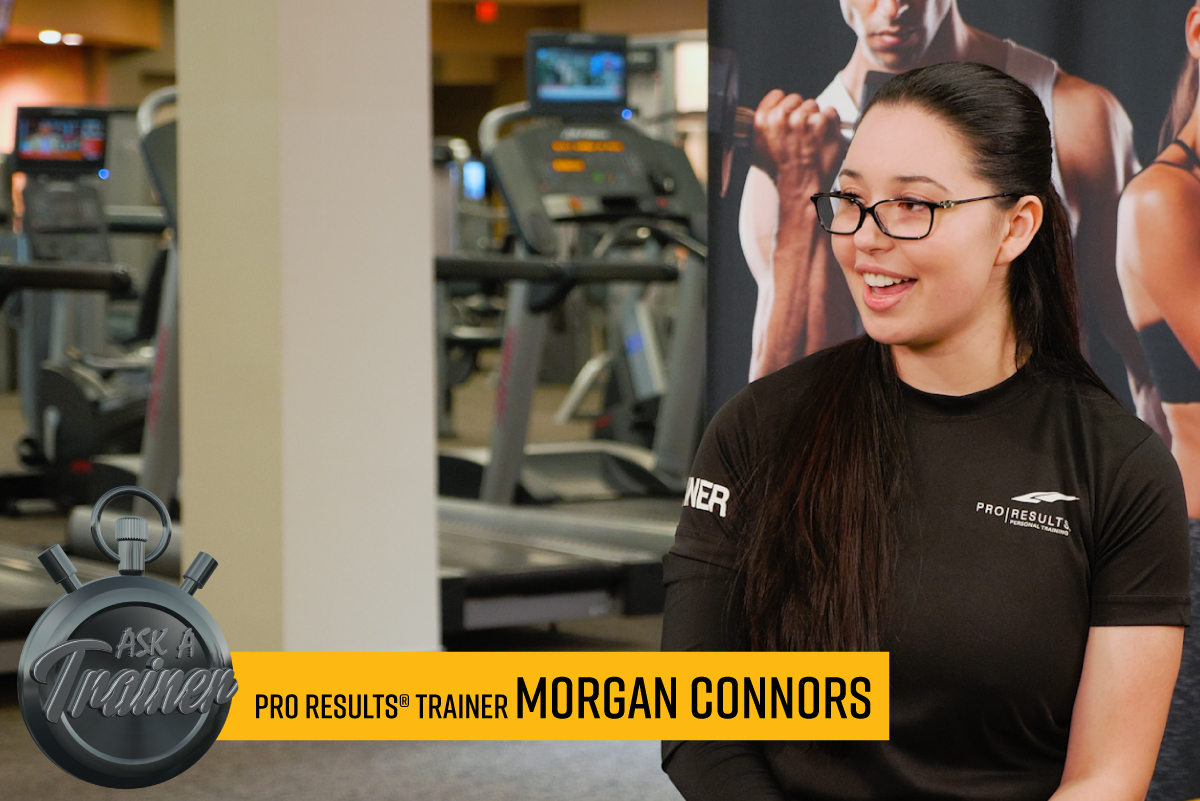
On this episode of ‘Ask A Trainer’ we speak with LA Fitness Pro Results® trainer Morgan C., and get her expert advice on how to properly maintain muscle mass.
On this episode of ‘Ask A Trainer’ we speak with LA Fitness Pro Results® trainer Morgan C., and get her expert advice on which machines offer a full body workout.
On this episode of ‘Ask A Trainer’ we speak with LA Fitness Pro Results® trainer Morgan C., and get her expert advice on whether or not strength training or cardio should come first when it comes to weight loss.

How can I have a good diet on very low budget? I work two jobs and I am a reservist in the Marine Corps.
– Joseph E.

It just takes a little planning and perhaps your local grocer’s weekly savings guide for a low-cost healthy diet. Not wasting food is key. If you can buy more, cook it once, then make leftovers, you’ll not only spend less but save on preparation time later. Casseroles, stir fries and crock pot meals are simple one dish meals that you can make in a large quantity and have less to clean after.
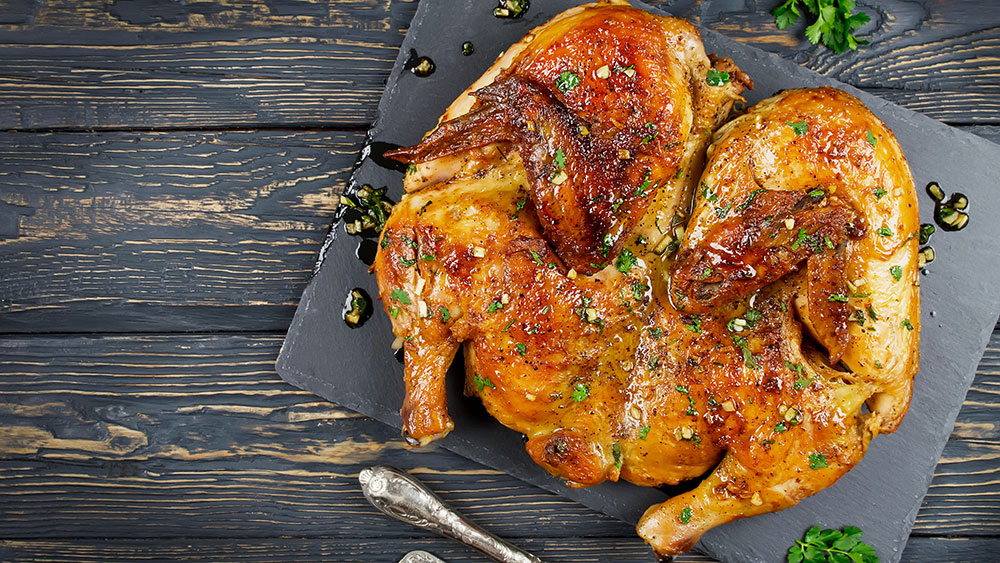
Sample savings: A $8 whole chicken can make 3-4 servings for an active man: roast chicken on day 1; chicken tacos on day 2; and cold chicken salad on day 3. Compare with $3-6/lb for precooked, skinless chicken breast.
Dry starches are cheap! Get larger bags of beans, rice and pasta to cook 1-2 cups at a time. By purchasing shelf-stable or frozen goods on sale and stocking up, you’ll spend less. Getting produce in season (e.g. stone fruit like peaches, plums and apricots in summer) saves dough. When it makes sense, it’s fine to use canned (rinsed) or frozen produce without sauce.
Your real challenge will be to cut back on prepared foods since I assume you’re tight on time with working two jobs. But it can be done! Pencil out your weekly meal plan, grab those coupons & your grocery list and shop smart.
– Debbie J., MS, RD




Want more? SUBSCRIBE to receive the latest Living Healthy articles right in your inbox!
This article should not replace any exercise program or restrictions, any dietary supplements or restrictions, or any other medical recommendations from your primary care physician. Before starting any exercise program or diet, make sure it is approved by your doctor.
Some questions have been edited for length and/or clarity.
 Have a nutrition question? Our registered dietitian is ready to help!
Email nutrition@lafitness.com or submit your question below and it may be featured in an upcoming article!
Most comfort foods we turn to are heavily laden with fat, starch and calories. There are healthier ways to enjoy down-home classics by making a few tweaks.

Good nutrition is all about variety! Browse through our list of unusual fruits and veggies and give yourself a chance to try something new.

Does liberally salting your food help you pump more iron in the gym? Registered Dietitian, Debbie James, investigates the claims!

There’s a lot of talk out there about the importance of exercise and maintaining a proper diet to develop good health and fitness – but what about stretching? It may seem like a simple concept, which is why it tends to be overlooked; however, stretching can play an important role in your body’s overall wellness and performance.
Dynamic stretching – This type of stretching involves a full range of motion to engage all your muscles.
Suggested: Pre-Workout
Some examples include:

Static stretching – This type of stretching involves holding the muscle in a position to induce lengthening.
Suggested: Post-Workout
A few static stretches include:

It is suggested that dynamic stretching should be done before any workout or performance because it may help “increase muscle temperature and decrease muscle injury.”1 This specific type of stretching could help improve speed, agility and acceleration, and get the body where is needs to be before engaging in a workout. Granted, each person’s body is different, so if you find yourself questioning whether dynamic stretching before an athletic event is right for you, consult your physician.
Static stretching can be good for you post-workout because it can help “dull the nervous system,”2 calm the muscles down and give them a good cool-down. Plus, static stretching usually feels good! You may find yourself doing it midday, just to help loosen up tight muscles.
Stretching can help benefit the body in the following ways3:
Ballistic stretching has become a popular topic of conversation as a new form of stretching to add to your routine – but is it safe? While it remains popular among athletes, The American Academy of Orthopedic Surgeons advises against it for most people. Ballistic stretching consists of “bouncing movements to push your body beyond its normal range of motion.”5 It is not recommended because there is risk of straining or pulling a muscle. This type of stretching can also can damage the soft tissue around the joints, which could potentially develop into tendonitis.6
Want more? Check out our article Stretch Your Potential, Stretch Your Muscles for some added stretching info and tips!
Sources:
The Holiday Season can get stressful, so we may stick to a routine for the sake of easy planning. Try any of these 10 simple ideas to bring new life to your Thanksgiving celebrations.
By now, you may have seen some donation boxes at your local LA Fitness. If you haven’t been entirely sure what those boxes are all about, you’re in the right place!
Most comfort foods we turn to are heavily laden with fat, starch and calories. There are healthier ways to enjoy down-home classics by making a few tweaks.

I tore my meniscus in March and it is healing. My cartilage is thin on one side. What supplements should I be taking and for how long?
– Barbara H.
Barbara, your question intrigued me. Glucosamine chondroitin was the first thing that came to mind for joint health. Glucosamine chondroitin or glucosamine sulfate/chondroitin sulfate is known to stimulate cartilage regeneration, improve joint function and reduce pain. It is generally used for osteoarthritis, the breakdown of the articulate cartilage. A meniscus is a C-shaped pad made of fibrous cartilage that absorbs shock in the knee. Each knee has two menisci. Articular cartilage is present at the end of the femur.
Theoretically knee injuries may benefit from higher levels of antioxidants, anti-inflammatory agents and compounds involved in cartilage formation. According to the International Cartilage Repair Society (who knew?), “glucosamine, chondroitin, S-adenosylmethionine (SAMe) and avocado soybean unsaponifiables (ASU) have been the most carefully assessed with considerable amount of scientific and clinical usage data, as well as safety profile.” Suggested beneficial food compounds and supplements also include: olive oil, fish oil (for EPA + DHA), undenatured type II collagen, MSM (methylsulfonylmethane), curcumin, flavonoids, and ginger.
For selection and dosing recommendations, be sure to discuss with your physician what treatment is appropriate for you.
References:
Nutraceutical Supplements in the Management and Prevention of Osteoarthritis. P Castrogiovanni, et al. International Journal of Molecular Sciences 2016 Dec 6; 17(12): pii E2042
– Debbie J., MS, RD
Want more? SUBSCRIBE to receive the latest Living Healthy articles right in your inbox!
This article should not replace any exercise program or restrictions, any dietary supplements or restrictions, or any other medical recommendations from your primary care physician. Before starting any exercise program or diet, make sure it is approved by your doctor.
Some questions have been edited for length and/or clarity.
Have a nutrition question? Our registered dietitian is ready to help!
Email nutrition@lafitness.com or submit your question below and it may be featured in an upcoming article!
The Holiday Season can get stressful, so we may stick to a routine for the sake of easy planning. Try any of these 10 simple ideas to bring new life to your Thanksgiving celebrations.
By now, you may have seen some donation boxes at your local LA Fitness. If you haven’t been entirely sure what those boxes are all about, you’re in the right place!
Most comfort foods we turn to are heavily laden with fat, starch and calories. There are healthier ways to enjoy down-home classics by making a few tweaks.