10 Thanksgiving Ideas to Revive Your Celebrations
The Holiday Season can get stressful, so we may stick to a routine for the sake of easy planning. Try any of these 10 simple ideas to bring new life to your Thanksgiving celebrations.

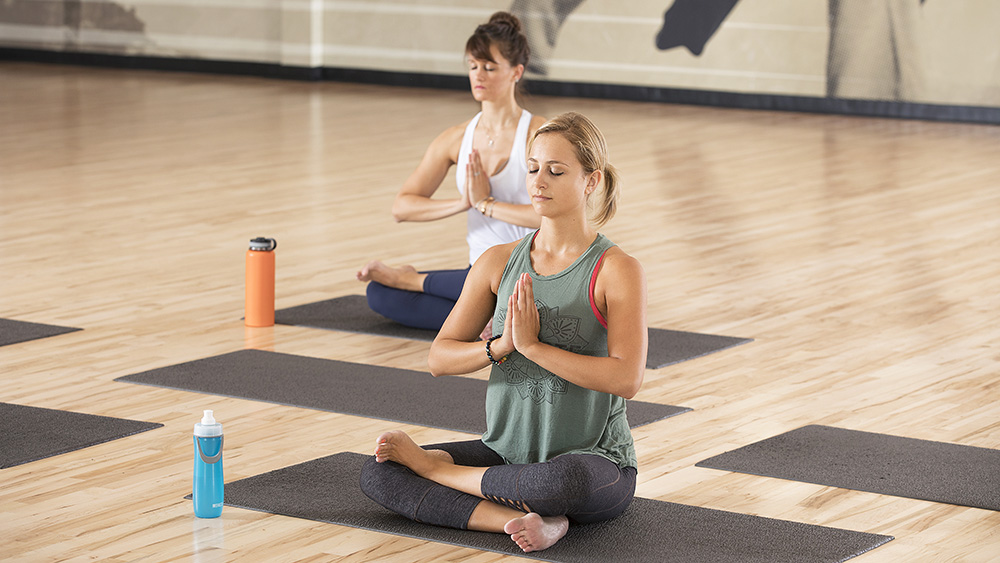
Leg day and chest day and arm day… oh my! When you’re making it a priority to get your body feeling and looking its greatest, you may find yourself pushing harder than ever to achieve your goals. However, all work and no rest can do the body more harm than good. When you’re putting in the extra time and commitment, don’t waste those epic workouts and tough dietary restrictions by overexerting your body. By not allowing the body enough adequate rest and recovery time, a string of unhealthy issues could start to ensue.
Consider the benefits of rest days below:
Things to consider:
Tip Takeaway: Don’t worry about taking a day off, “in general, it takes your body almost two weeks of non-activity before you start losing a noticeable amount of your progress or performance level”.2 How do you choose to spend your rest days? Share in the comments below!
Sources:

The Holiday Season can get stressful, so we may stick to a routine for the sake of easy planning. Try any of these 10 simple ideas to bring new life to your Thanksgiving celebrations.

By now, you may have seen some donation boxes at your local LA Fitness. If you haven’t been entirely sure what those boxes are all about, you’re in the right place!

Most comfort foods we turn to are heavily laden with fat, starch and calories. There are healthier ways to enjoy down-home classics by making a few tweaks.

I am a male 6-foot tall and 180lbs. I upped my protein to 180 grams a day and lowered my fat intake to 35 grams a day but I am gaining more weight now than I was before dieting or eating clean with no change in diet. Any advice on eating habits I should have or why this is happening?
– Taylor F.

Sorry, Taylor – My crystal ball is a little foggy since your full diet and exercise routine aren’t described. So many things could be coming into play… alcohol, low physical activity, less sleep, undereating, and/or poor meal timing and volume. Perhaps make a list of the changes you’ve made to identify what you might have been doing before that was helpful and prevented gain.
I suspect your intake of 35 grams of fat may be a bit low. Fat at meals slows digestion and increases satiety, helping to reduce appetite. For reference, with a 2000 calorie diet, 60 grams of fat provides 27% of your total energy, well within a desirable heart-healthy weight-maintenance diet.
Look at where your calories are distributed. Giving up snacks between meals might make sense to reduce calories, but not if eating larger meals from rebound hunger is the result. Breakfast should be a larger meal than dinner unless you work out at night or keep late hours. I’d also suggest you look at how you eat, not just the grams you eat. See our article on Think Your Way Thin.
– Debbie J., MS, RD
This article should not replace any exercise program or restrictions, any dietary supplements or restrictions, or any other medical recommendations from your primary care physician. Before starting any exercise program or diet, make sure it is approved by your doctor.
Some questions have been edited for length and/or clarity.

Want more? SUBSCRIBE to receive the latest Living Healthy articles right in your inbox!
 Have a nutrition question? Our registered dietitian is ready to help!
Email nutrition@lafitness.com or submit your question below and it may be featured in an upcoming article!

If you’re new to strength training, you’ll want to know about newbie gains and the factors that determine how fast and how much your new muscles grow.

A diet rich in nutrients and antioxidants shields your skin from wrinkles and preserves its youthfulness. Debbie James, RDN, gives us the details.

Don’t let excuses derail you from your goals. Keep moving forward with these reasons to ditch those common workout excuses.
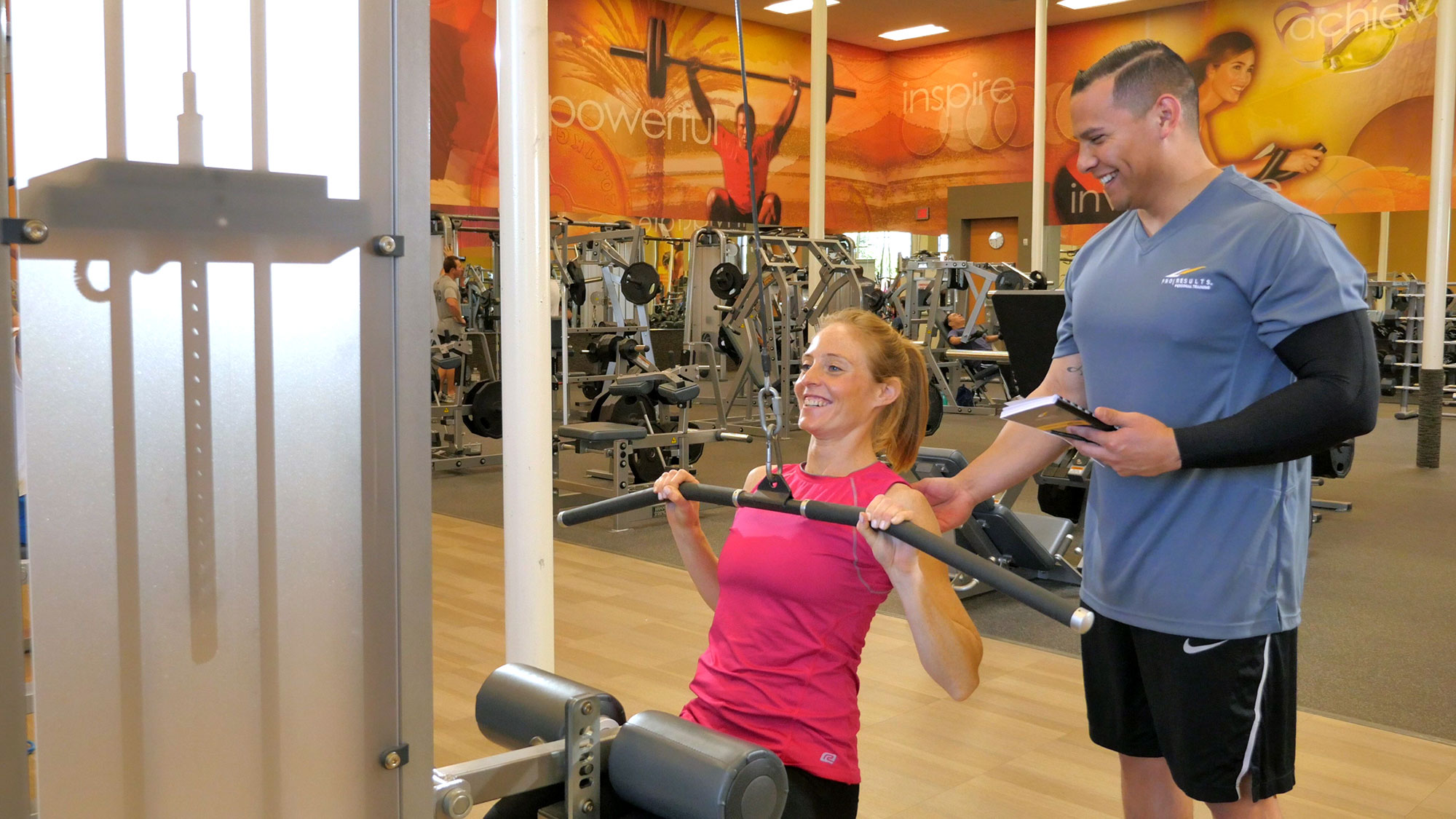
LA Fitness Pro Results® Master Trainer, Geoff F., helps answer LA Fitness member, Sunny V.’s, question on how to start seeing results. Short and simple? You’re going to want to start increasing intensity. Find out how by watching the video below!

Do you have a fitness question? Ask one of our certified Pro Results® trainers here! Your question may be featured in an upcoming Ask Our Trainer video.**
**Selected submissions will be featured on the LA Fitness blog and possibly other LA Fitness digital media entities & websites. By making a submission, you hereby grant LA Fitness a non-exclusive, perpetual, worldwide, irrevocable license to use and make copies of the contents of such submission for any purpose and in any medium whatsoever, and you hereby waive and relinquish any copyright or other intellectual property right you may have in the contents of such submission and your right to pursue any claim for LA Fitness’s violation of those intellectual property rights.
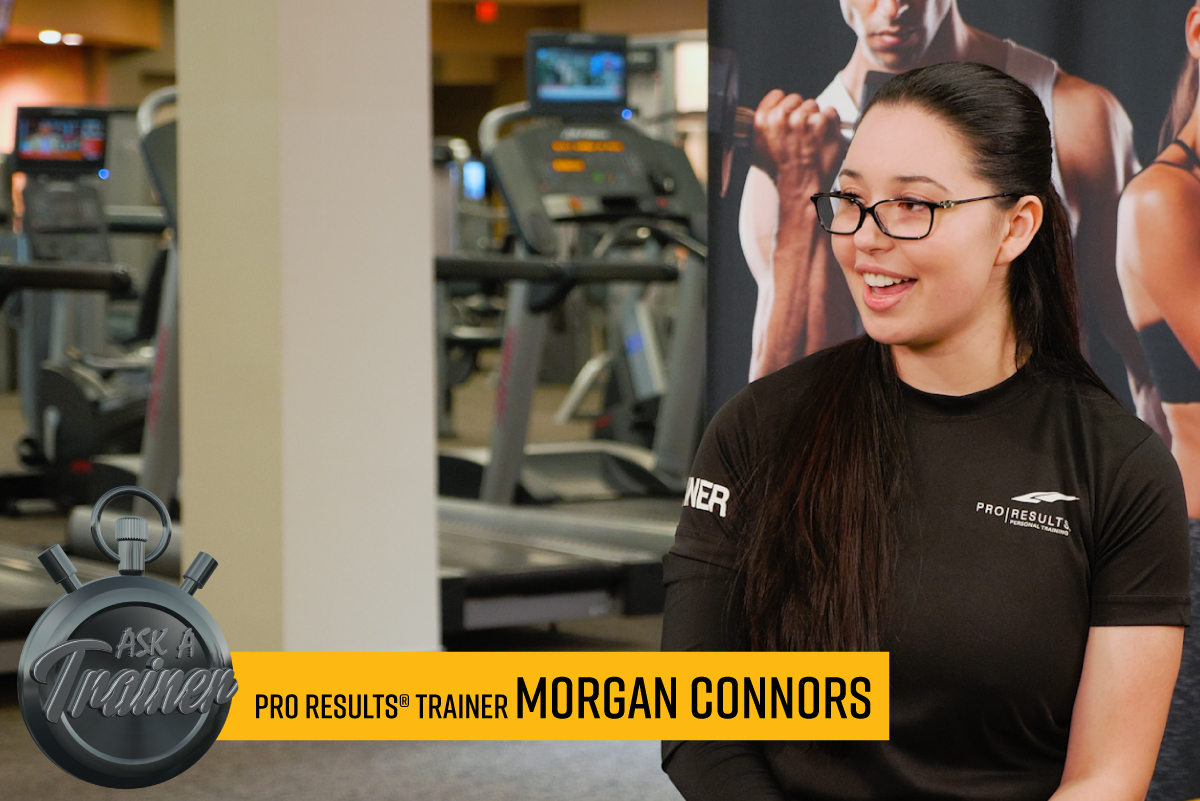
On this episode of ‘Ask A Trainer’ we speak with LA Fitness Pro Results® trainer Morgan C., and get her expert advice on how to properly maintain muscle mass.
On this episode of ‘Ask A Trainer’ we speak with LA Fitness Pro Results® trainer Morgan C., and get her expert advice on which machines offer a full body workout.
On this episode of ‘Ask A Trainer’ we speak with LA Fitness Pro Results® trainer Morgan C., and get her expert advice on whether or not strength training or cardio should come first when it comes to weight loss.
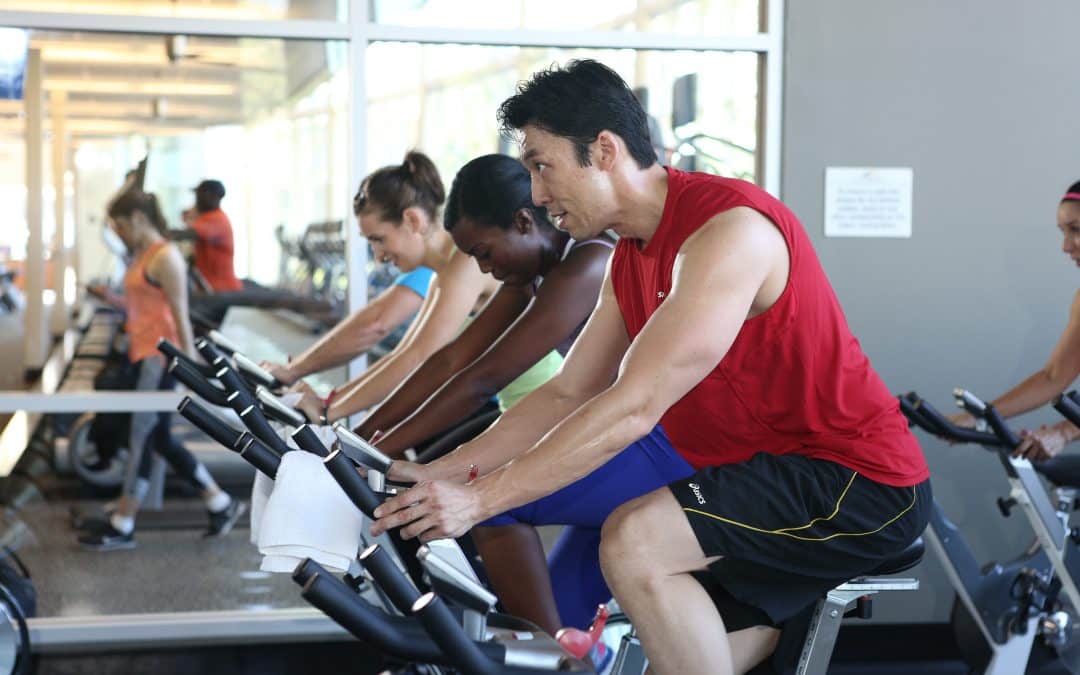

I am 6’2″ and about 215 lbs. and average build. I started working out the last two weeks after long time. I am doing 20 minutes of Stairmaster and 15 minutes of treadmill. Along with that, I’m doing push/pull/legs alternative days. My goal is to build muscle and lose fat. I think I have large/moderate amount of belly fat. I’m wondering whether doing cardio will help to get rid of belly fat and what my caloric intake should be. Thanks for your help.
– Prabhu M.
Yes, it takes at least 30 minutes of moderate intensity aerobic exercise to increase fat burning. This is because of the body’s use of available fuels in metabolism processes. There are other sources of energy burned before body fat and these reserves last approximately 30 minutes. There are a series of reactions and hormones that kick in after the first half-hour of exercise that allow stored fat to be accessed. Abdominal fat is both under the skin (subcutaneous) and between organs (visceral), necessitating a diverse nutrition approach beyond just caloric restriction.
Am I doing the right things with my diet and exercise to lose belly fat?
Your estimated energy need is about 2000 calories daily, but you will need at least a 500 calorie energy deficit between actual intake and expenditure. In a study of 768 overweight or obese individuals following diets that represented a deficit of 750 calories, at 6 months the average waist circumference reduction was 5-6 cm, and at 2 years an average 4-6 cm loss in circumference was maintained. That’s about a 2-inch reduction, with the best results from the group consuming 20% fat, 25% protein and 55% carbohydrate.
Weight-Loss Diets, Adiponectin, and Changes in Cardiometabolic Risk in the 2-Year POUNDS Lost Trial. Ma W, Huang T, Zheng Y, et al. The Journal of Clinical Endocrinology and Metabolism. 2016;101(6):2415-2422.
– Debbie J., MS, RD

This article should not replace any exercise program or restrictions, any dietary supplements or restrictions, or any other medical recommendations from your primary care physician. Before starting any exercise program or diet, make sure it is approved by your doctor.
Some questions have been edited for length and/or clarity.
Want more? SUBSCRIBE to receive the latest Living Healthy articles right in your inbox!
Have a nutrition question? Our registered dietitian is ready to help!
Email nutrition@lafitness.com or submit your question below and it may be featured in an upcoming article!
If you’re new to strength training, you’ll want to know about newbie gains and the factors that determine how fast and how much your new muscles grow.
A diet rich in nutrients and antioxidants shields your skin from wrinkles and preserves its youthfulness. Debbie James, RDN, gives us the details.
Don’t let excuses derail you from your goals. Keep moving forward with these reasons to ditch those common workout excuses.

Whether you’re new to fitness or a seasoned vet, most likely you once experienced the feeling of walking into a gym and not knowing where to begin. With all the various cardio and weight equipment, how do you know where to start? Is it with cardio? How many days a week should you weight train? What type of training is right for your body? A lot of questions tend to flood the mind and can oftentimes scare people away from returning to the gym. Let’s break things down a bit, starting with: what is vertical training vs. horizontal training?
Vertical training can be viewed as anything that involves ascension (i.e. rising/climbing), whether actual or simulated. Examples of vertical training could be climbing on the Stairmaster, an inclined walk or run on the treadmill, or mountain climbing.


Horizontal training, on the other hand, refers to exercises that would keep your form parallel to the ground. Some typical exercises include using the rowing machine, running (without incline), or working out on a stationary bike.


Now that you know the differences– which form of training is best?
If you guessed both, you are correct. Neither is necessarily “better” for you than the other. It’s up to personal preference and which part of the body you are looking to train. Some machines may better benefit those recovering from an injury, while others training specific skills or for a competition may want to use others. The best thing to do before questioning what type of training is right for you or getting overwhelmed by all of your options is this: come up with a clear and defined list of goals.
Knowing your goals may seem pretty obvious, but it’s a lot more than simply knowing you want to lose weight, or you want to get stronger. Break down your overall goal into smaller ones. If you want to lose weight, ask yourself where you want to lose the weight. Is it from the stomach area? Maybe you want to tone your arms? Knowing the muscles you would like to strengthen will help you narrow down which machines to use and what type of exercise you should be engaging in.
If you have your “baby goals” written down, but you’re still unsure where to begin, it’s perfectly acceptable to ask for help. More often than not, people enjoy helping others who are looking to better themselves. Making your health a priority is an admirable goal, and many share that goal. Everyone starts somewhere, so ask a friend or fellow gym-goer how to use a machine you’re unsure of. Better yet, ask an employee to help you out. If extra assistance is needed, consider signing up for personal training to get a deeper, more personalized plan for you.
Once the “scariness” of the gym goes away, you will be surprised how much easier going seems to be. Don’t be afraid to try new machines, attempt a new class or make a new friend. As author Jack Canfield once put it, “everything you want is on the other side of fear.” So, where will you begin? Is vertical training better than horizontal? In the battle between the two, both win. Train the way that best fits you, and watch all you can accomplish!
The Holiday Season can get stressful, so we may stick to a routine for the sake of easy planning. Try any of these 10 simple ideas to bring new life to your Thanksgiving celebrations.
By now, you may have seen some donation boxes at your local LA Fitness. If you haven’t been entirely sure what those boxes are all about, you’re in the right place!
Most comfort foods we turn to are heavily laden with fat, starch and calories. There are healthier ways to enjoy down-home classics by making a few tweaks.