Warm Comfort Foods Made Healthy(ish)
Most comfort foods we turn to are heavily laden with fat, starch and calories. There are healthier ways to enjoy down-home classics by making a few tweaks.



How do I cut out cheese in my diet? Almost every dish is cheese, grains, and meat. How can I get that flavor in a healthier way?
– David N.

I agree that typical American fare is heavy in the cheese department. You’re right that it seems to be everywhere. What goes in your mouth is under your control, though. Peel off that slice! Or better yet, ask for a substitute like avocado, pesto or sundried tomato spread. If the cheese is melted in, you’ll have to find an alternative item altogether (e.g. marinara sauce instead of alfredo sauce, roasted potato instead of potatoes au gratin).
The flavor of cheese is unique because of the enzymes utilized and the particular dairy source (cow, goat, sheep). The creamy mouthfeel is largely attributable to the fat content, which you can get from vegan alternatives. A soy or nut-based cheese substitute works well in combination with prominent flavors like smoked turkey and arugula on toasted rye.
One simple single ounce of sandwich cheese has 100-120 calories and 6-10 grams of fat. Compare that with the 600+ calories and 30+ grams of fat from two slices of large cheese pizza or 2 cups of macaroni and cheese. Turn away from these cheese-based dishes period. When using cheese as a topping or flavor enhancement, opt for the strongest dry cheese for the most flavor punch, as it requires much less volume and saves calories and fat. Avoid cheese flavoring powder though, as it is high in salt and artificial color.
– Debbie J., MS, RD


This article should not replace any exercise program or restrictions, any dietary supplements or restrictions, or any other medical recommendations from your primary care physician. Before starting any exercise program or diet, make sure it is approved by your doctor.
Some questions have been edited for length and/or clarity.
 Have a nutrition question? Our registered dietitian is ready to help!
Email nutrition@lafitness.com or submit your question below and it may be featured in an upcoming article!

Most comfort foods we turn to are heavily laden with fat, starch and calories. There are healthier ways to enjoy down-home classics by making a few tweaks.

Good nutrition is all about variety! Browse through our list of unusual fruits and veggies and give yourself a chance to try something new.

Does liberally salting your food help you pump more iron in the gym? Registered Dietitian, Debbie James, investigates the claims!

At the young age of 29, Lewis C., of Atlanta, GA, feared he may never walk properly again. After a tough tumble down a flight of stairs, Lewis was confined to crutches for a week and a boot for 7 weeks, after learning he had broken his fifth metatarsal in his right foot. He was unable to walk, let alone work out. Being confined to having his foot elevated 12 hours a day, Lewis was quickly gaining weight and noticed his overall demeanor began to change. It was a long, and rough, 7 weeks.
Maybe it was being confined indoors, maybe it was the lack of exercise– whatever it was, something ignited in Lewis over these 7 weeks. With a broken foot, and a rough recovery, Lewis decided he was going to run the Chicago Marathon in celebration of his 30th birthday. Lewis was determined to not let the injury define him or make him lose sight of his fitness goals. After all, he had always been committed to fitness in his adult life and was active in sports like swimming and track when in high school.
The Training Begins
After a sufficient recovery period, Lewis began his training program in June of 2017, five months after his foot injury had occurred. Lewis knew he needed a place to train and realized the incredible resources offered at his local LA Fitness. With the proper equipment he was able to condition his legs, core and overall body for the race. He paired indoor and outdoor running, along with the assistance of his LA Fitness coach, Lisa, and was able to get the job done in an unbelievable 18 week training period.
Lewis successfully crossed the finish line in Chicago, Illinois, on October 9th 2017.


Q: Have you always been in shape?
Lewis C.: Like most people I have had weight fluctuations due to inconsistent eating habits brought on by a job in the airline industry with variable hours. Since 2007, I had more or less worked out 5-6 days a week and do my best to take protein supplements regularly. It’s what keeps me sane, I have to get a workout in and LA Fitness has been the best gym experience I have had since I joined in 2016. I have been to and worked at many other health clubs and the resources included in the LA Fitness membership are vast. I didn’t know it until I really needed people to help me execute the extensive cardio conditioning required for training for your first marathon at age 29.
Q: Have you learned anything about yourself since joining LA Fitness?
LC: Yes. That it’s OK to not know something and ask somebody for help. LA Fitness has staff and members from all walks of the active world: former athletes, current ones, trainers, beginners, body builders, etc. that all have a perspective and voice you can use as a resource and pool to get new fitness ideas, completely change your life, and smash the snot out of goals you never thought possible. I never dreamed I would actually go through with running the Chicago Marathon last October until I finally just paid the registration and bought marathoner shoes.
Also, I think people think running a marathon is an individual sport. It is really a team sport, which I learned, as I had to rely and lean on all different perspectives and advice and change my way of thinking. That’s where LA Fitness is more than just a gym to me; it’s a blackboard where new and dynamic fitness goals are conceived and executed.
Q: How has living an active lifestyle changed your life?
LC: I have had great health and happiness in my 30 years, which I think is primarily due to my staying active. I am the kind of person who needs structure and a tangible goal to reach and a place where I can ask questions of like-minded people. My father always taught me “to be one, ask one”. This is where the structured training plan of a marathon challenged me and a place like LA Fitness nurtured my curiosity and helped shepherd me through the process.



Future Goals
Lewis is back to training 6 days a week in an effort to be in his best shape by summer 2018. With travelling also on the horizon for Lewis, including a trip to Budapest in May, and Shanghai in July, with his best friend Michael, Lewis joked that since he’ll be in a lot of pictures he looks to “LA Fitness to keep [him] camera ready 24/7.”
Lewis’ next big fitness goal is to complete an Ironman race by his 40th birthday.
A Special Message
Lewis would like to recognize his LA Fitness trainer Lisa, and member services representative, Yolanda, who Lewis credits as the reason he joined LA Fitness.
This article should not replace any exercise program or restrictions, any dietary supplements or restrictions, or any other medical recommendations from your primary care physician. Before starting any program or diet, make sure it is approved by your doctor.
Member responses have been edited for length and clarity.
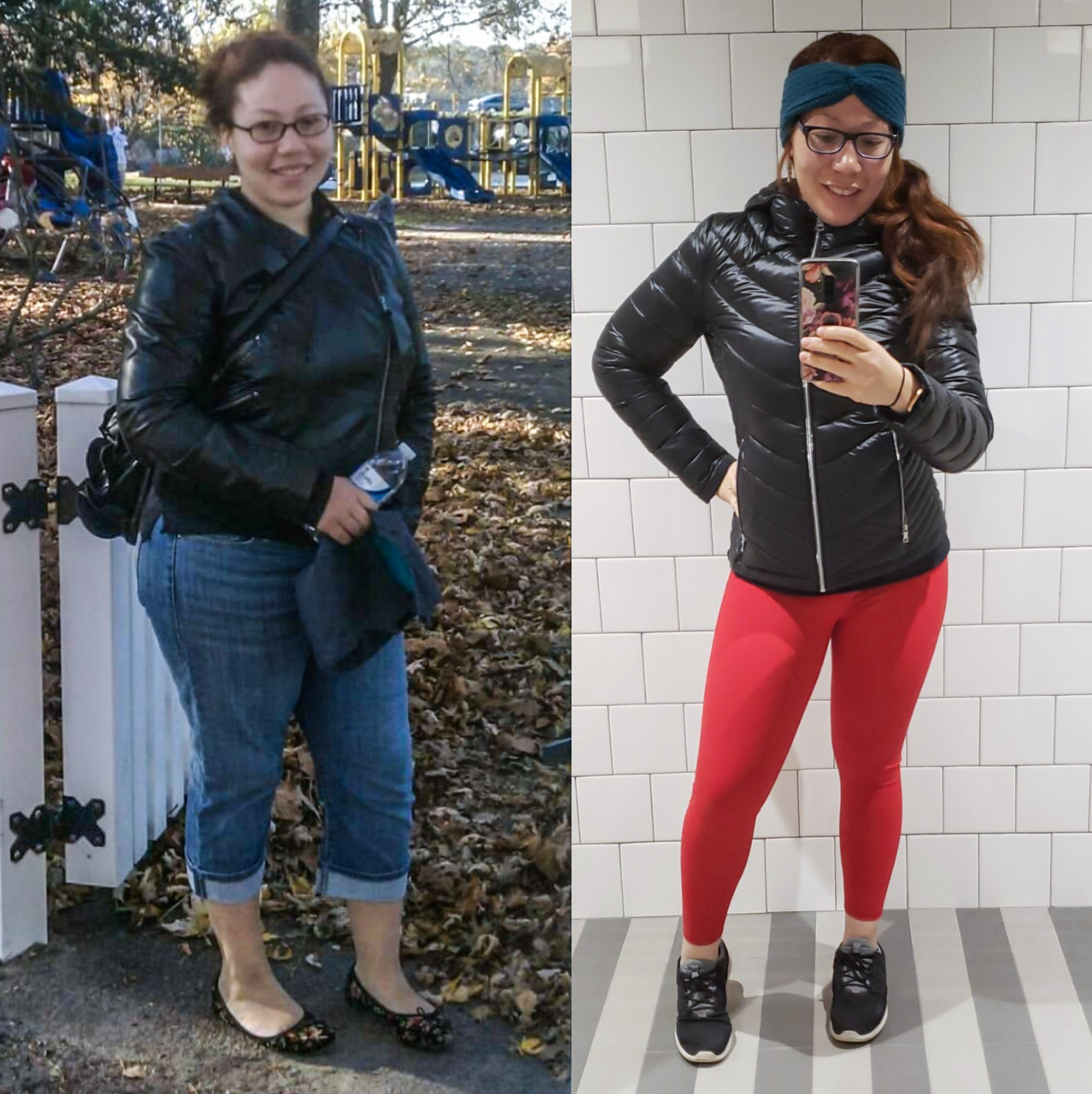
Waleska is a mom with 2 part-time jobs who had a love for chocolate. Despite the time constraints and sweet temptations, she lost over 60 pounds!

Many of us pair the idea of aging with decreased mobility and various aches. Yet, Patricia’s story shows us just how wrong that notion can be.

Ann shares how, despite back problems, strokes, and surgeries, she is well on her way to achieving her goal of losing 90 to 100 pounds!

I’m hungry all the time, what can I do?
– Charlotte S.
As opposed to a specific craving or passing desire, true hunger is uncomfortable and is a strong message for our bodies to seek food. If you experience hunger throughout the day, it may be that you are not consuming enough calories. The easy answer is to eat more food.
If you have been maintaining weight or wish to lose, then modifying your diet to include satisfying foods at regular mealtimes may drive down hunger:
When to Eat
Your body uses energy throughout the day, so you need to fuel it regularly. Having consistent meals and snacks ensures that your fuel tank doesn’t go empty. Most people eat too little in the morning and consume the bulk of their calories in the evening when they’re less active. By having a substantial breakfast, medium lunch and smaller dinner, you’d better match your body’s energy use. A small snack to support your workout is also ideal.
What to Eat
Foods high in fiber, protein, fat and physical volume are the most satisfying. For example, a slice of 7-grain toast with almond butter, half a grapefruit, an egg, and a glass of milk would stave off hunger better than two toaster waffles with syrup, a cup of orange juice and mug of coffee. Including a healthy plant fat at each meal helps to lock in the complex carbohydrates and lean proteins eaten so they are digested more slowly. Vegetables are the most notable source of bulk and fiber with the least calories so they should fill up your plate!
Consult a physician if hunger is unabated, you’re also experiencing weakness or observe unintentional weight loss, as these may be due to an underlying medical condition.
– Debbie J., MS, RD
This article should not replace any exercise program or restrictions, any dietary supplements or restrictions, or any other medical recommendations from your primary care physician. Before starting any exercise program or diet, make sure it is approved by your doctor.
Some questions have been edited for length and/or clarity.
Have a nutrition question? Our registered dietitian is ready to help!
Email nutrition@lafitness.com or submit your question below and it may be featured in an upcoming article!
Most comfort foods we turn to are heavily laden with fat, starch and calories. There are healthier ways to enjoy down-home classics by making a few tweaks.
Good nutrition is all about variety! Browse through our list of unusual fruits and veggies and give yourself a chance to try something new.
Does liberally salting your food help you pump more iron in the gym? Registered Dietitian, Debbie James, investigates the claims!

I am lactose intolerant. Is whey protein bad for me? Is whey protein bad for people with lactose intolerance?
– Dan
“Whey protein” is a catch-all term referring to several proteins found in the whey of milk after solid caseins and moisture are removed. Whey protein is generally okay for those with mild lactose intolerance. Depending on the form, whey protein contains less than 5 gram of lactose per 100 grams dry product, which provides 80-90 of grams protein.* Compare this to the 12 grams of lactose per 245 grams (a cup) of fluid cow’s milk for 8 grams of protein or 1 gram of lactose per 30 grams (an ounce) of some cheeses for 7 grams of protein.
Whey protein as an ingredient or by itself as a supplement is usually found in concentrate or isolate form. Here’s the difference: the highest whey protein concentrate still includes some fat, cholesterol and lactose particles (up to 20%), whereas whey protein isolate has usually undergone microfiltration leaving only 10% as those particles.
Pure whey protein isolate may be tolerated by those with lactose intolerance, but individual response varies. Some whey protein isolates are further processed to be lactose-free. Keep in mind that if the final whey protein supplement product is a shake powder or bar, it has other ingredients that may contribute lactose.
For those with a very severe lactose intolerance much like an allergy, it is best to avoid all milk-derived products.
* From U.S. Dairy Export Council’s Reference Manual for U.S. Whey and Lactose Products. Composition of whey protein concentrate with 80% protein is typically 4%-8% lactose by weight. Composition of whey protein isolate with at least 90% protein is typically 0.5%-1% lactose by weight.
– Debbie J., MS, RD
This article should not replace any exercise program or restrictions, any dietary supplements or restrictions, or any other medical recommendations from your primary care physician. Before starting any exercise program or diet, make sure it is approved by your doctor.
Some questions have been edited for length and/or clarity.
Have a nutrition question? Our registered dietitian is ready to help!
Email nutrition@lafitness.com or submit your question below and it may be featured in an upcoming article!
Most comfort foods we turn to are heavily laden with fat, starch and calories. There are healthier ways to enjoy down-home classics by making a few tweaks.
Good nutrition is all about variety! Browse through our list of unusual fruits and veggies and give yourself a chance to try something new.
Does liberally salting your food help you pump more iron in the gym? Registered Dietitian, Debbie James, investigates the claims!

What causes inflammation?
– Sandra
Inflammation is a situation where localized tissues of the body are swollen after the immune system kicks into gear. Most conditions ending in “itis” reflect an inflammatory condition such as gastritis and tendonitis. For acute inflammation, the instigators are usually an injury or infection and the inflammatory response is a defensive mechanism that we need to begin healing. For chronic inflammation, the culprits might be autoimmune disease, arthritis, or persistent foreign pathogens, and the inflammatory response occurs over a number of months or years instead of ending when it should.
Nutritionally, some foods may play a role in the development of chronic inflammation, while others help to prevent or resolve it. According to the Arthritis Foundation, sugar, saturated fat, trans fat, omega-6 fatty acids, refined carbohydrates, monosodium glutamate (MSG), gluten and casein are all notable food ingredients that can cause inflammation1. The publication Medical News Today recently advised that fried foods, white bread, pastry, soda and sugary drinks, red meat, margarine, and lard are foods that aggravate inflammation2.
Knowing what to avoid is half the battle in preventing chronic inflammation. Including these foods in your diet may help reduce the risk of inflammation: olive oil, tomatoes, nuts, green leafy vegetables, fatty fish (such as salmon and mackerel), and fruit.
References:
– Debbie J., MS, RD
This article should not replace any exercise program or restrictions, any dietary supplements or restrictions, or any other medical recommendations from your primary care physician. Before starting any exercise program or diet, make sure it is approved by your doctor.
Some questions have been edited for length and/or clarity.
Have a nutrition question? Our registered dietitian is ready to help!
Email nutrition@lafitness.com or submit your question below and it may be featured in an upcoming article!
Most comfort foods we turn to are heavily laden with fat, starch and calories. There are healthier ways to enjoy down-home classics by making a few tweaks.
Good nutrition is all about variety! Browse through our list of unusual fruits and veggies and give yourself a chance to try something new.
Does liberally salting your food help you pump more iron in the gym? Registered Dietitian, Debbie James, investigates the claims!