10 Thanksgiving Ideas to Revive Your Celebrations
The Holiday Season can get stressful, so we may stick to a routine for the sake of easy planning. Try any of these 10 simple ideas to bring new life to your Thanksgiving celebrations.


When it comes to working out, our bodies are grateful no matter the time of day! However, if you choose to exercise in the morning you may get some additional benefits. A morning workout can help influence you to choose better food options throughout the day. That’s right, pushing yourself early on may help you to be more conscious of the nutrition choices you make over the course of the day.1 By making healthier food choices, you’ll save calories overall!
Aside from eating healthier, when we exercise, our bodies are blasted with feel-good hormones known as endorphins.2 And who wouldn’t want to feel a bit happier in the morning? A good morning mindset kickstarts the rest of your day. If you’re feeling happy, that mood carries with you as your day progresses.
Understandably, a rise and grind attitude may be hard for some of us to adhere to consistently. It’s easy to want to stay in bed for that extra precious bit of sleep. But, it’s possible to achieve better long-term results if you can manage an early morning workout. Our bodies become used to routine and develop habits, which can take an average of about 66 days to develop.3 If you motivate yourself to get through the tough times, you can develop a healthy new behavior that will benefit you long-term.
Oftentimes, as the day progresses our schedules get busy, making it hard to find time to workout. If you get it done early you save yourself from the distractions that can arise throughout the day. As Cedric X. Bryant, PhD, Chief Exercise Physiologist of the American Council on Exercise once said, “by doing the bulk of exercise first thing in the morning, you get your exercise in before other distractions can intrude…because once the day gets going, it’s hard to get off the treadmill called life.”4
And for those of you coffee enthusiasts out there, a morning workout could help you cut back on caffeine by improving brain function naturally.5 However, it’s important to note that not everyone’s daily exercise ritual is going to be the same, or affect them in the same way. What is important is that you’re up and moving on your way to becoming a better, and healthier, you.
This article is sponsored by Belvita Breakfast bars. Good Morning, Energy. For a list of hours to visit your favorite LA Fitness gym, click here.


This article should not replace any exercise program or restrictions, any dietary supplements or restrictions, or any other medical recommendations from your primary care physician. Before starting any exercise program or diet, make sure it is approved by your doctor.
Sources:

The Holiday Season can get stressful, so we may stick to a routine for the sake of easy planning. Try any of these 10 simple ideas to bring new life to your Thanksgiving celebrations.

By now, you may have seen some donation boxes at your local LA Fitness. If you haven’t been entirely sure what those boxes are all about, you’re in the right place!
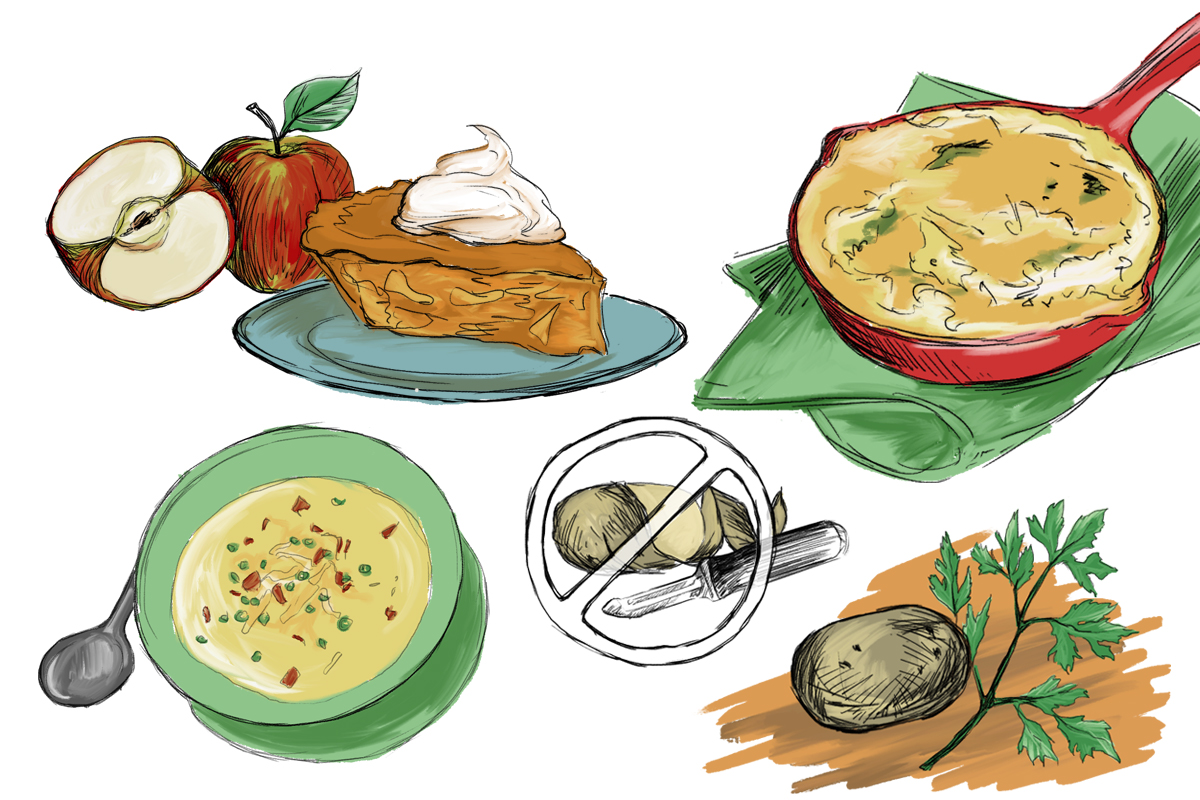
Most comfort foods we turn to are heavily laden with fat, starch and calories. There are healthier ways to enjoy down-home classics by making a few tweaks.


I am currently 5’10”, 164 lbs., 16.5% body fat, and not toned. I have been a runner and I am training for a half marathon in 7 weeks. I want to tone up and lose the body fat in my abs / midsection area. What calorie type and number do I need to take in to have ideal toning and fat loss?
– Cory D.

Based on your anthropometrics, Cory, you are at an acceptable weight for your height (BMI 23.5) and you are not far off from a typical male runner’s body fat range (5-12% for 30-39 years old, 6-15% for 40-49 years old). By subtracting the amount of body fat you have, you have138 lbs. of lean mass. Keeping that stable and dropping 5-10 pounds of body fat would put you in the 11-14% body fat range. In order to tone up and shed belly fat down to a such a goal, you’re going to need to go from good to great.
However, cutting calories while ramping up your training may negatively impact your performance more than a lighter weight would benefit your performance. I’d suggest a modest reduction in calories for now, then tightening up your diet after the half-marathon. Not knowing what your current diet is like, I can share what a runner’s diet looks like for an estimated need of 2700 calories (3000 calories – 300 for mild fat loss). 60% calories (1670) should be from carbohydrate = 405 grams
20% calories (540) should be from protein = 135 grams This equals 11.8 gm protein/kilogram your body weight which is suitable for endurance running with modest caloric deficit.
20% calories (540) should be from fat = 60 grams You could attain these targets with 8 ounces lean protein, 3 servings plain milk or yogurt, 11 ounces grain, 4 cups vegetables, 4 cups fruit, and 2 tablespoons (6 teaspoons) of added fat. Making sure that you choose great options in each food group*, in order to maximize both macronutrient targets and micronutrient delivery for the best muscle and cardiovascular functioning. Here is one example of a day’s meals that hit these numbers:
*See www.ChooseMyPlate.gov/_____ with the extension: Fruit; Vegetables; Grains; Protein-Foods; Dairy; or Oils for descriptions of serving size and healthy choices in each group.
– Debbie J., MS, RD
This article should not replace any exercise program or restrictions, any dietary supplements or restrictions, or any other medical recommendations from your primary care physician. Before starting any exercise program or diet, make sure it is approved by your doctor.

Have a nutrition question? Our registered dietitian is ready to help!
Email nutrition@lafitness.com or submit your question below and it may be featured in an upcoming article!

Want more? SUBSCRIBE to receive the latest Living Healthy articles right in your inbox!
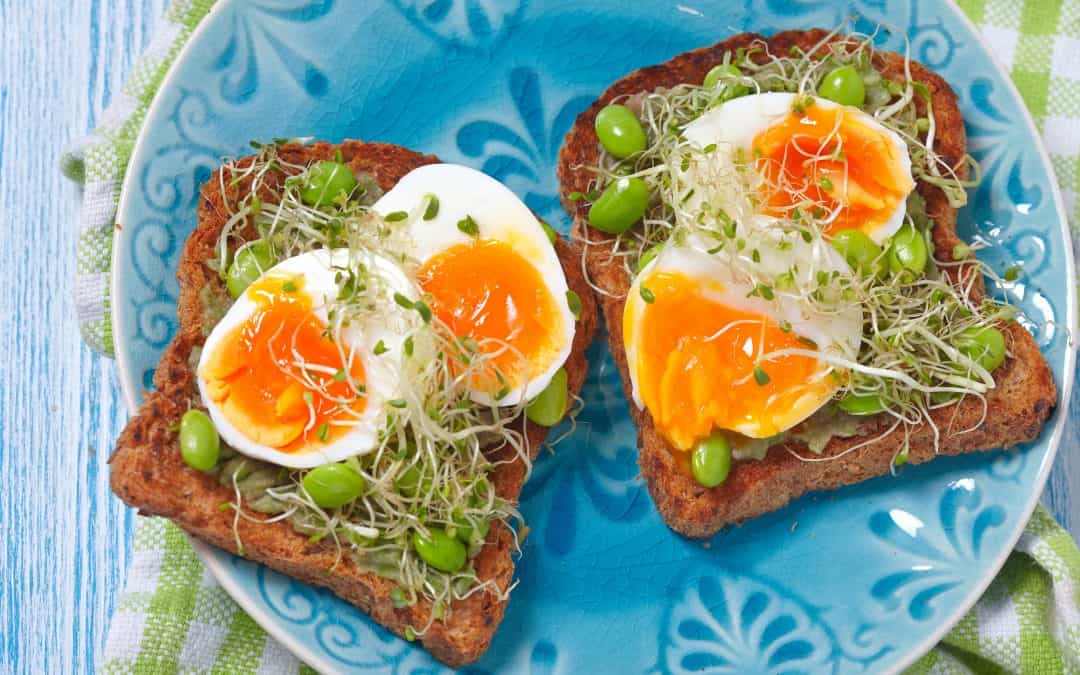
Alfalfa sprouts were the rage in the U.S. in the 1970’s, but with a new millennium comes new options for nutritious early leaves and shoots. Sprouts are the first growth from the seeds of vegetables, grains and beans and are higher in protein per ounce than their full-grown counterparts. While these tiny whole-food powerhouses may be in the back row of your grocer’s produce section, they are at the forefront of nutrition. Here is a guide to what they are, what nutrients they contain, and how to use them.

Sprout: Alfafa

Sprout: Adzuki

Sprout: Broccoli
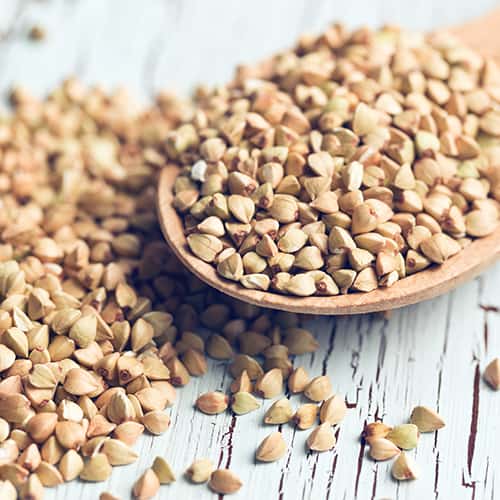
Sprout: Buckwheat
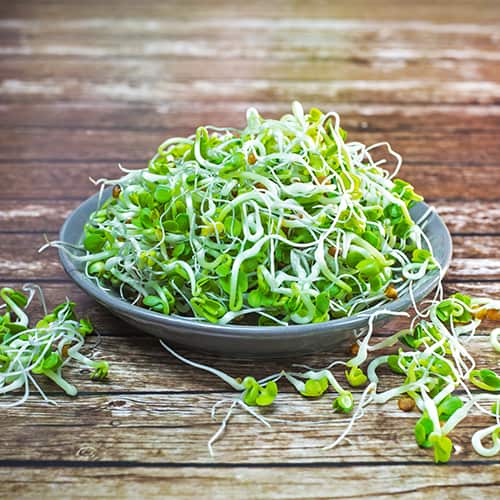
Sprout: Clover

Sprout: Fenugreek

Sprout: Garbanzo (chickpea)
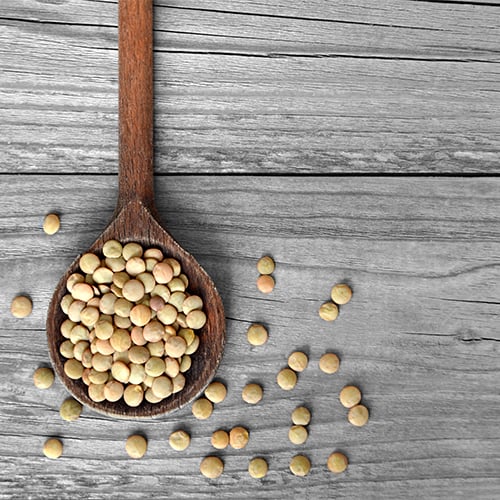
Sprout: Lentil

Sprout: Mung Bean
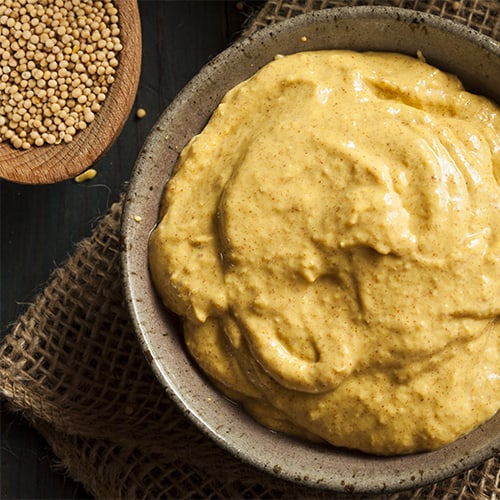
Sprout: Mustard

Sprout: Onion
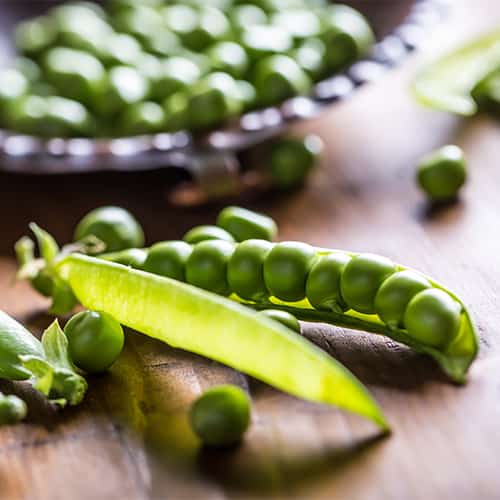
Sprout: Pea

Sprout: Radish

Sprout: Soybean

Sprout: Sunflower

Sprout: Wheat
TIPS:
– Debbie J., MS, RD
Want more? SUBSCRIBE to receive the latest Living Healthy articles right in your inbox!
This article should not replace any exercise program or restrictions, any dietary supplements or restrictions, or any other medical recommendations from your primary care physician. Before starting any exercise program or diet, make sure it is approved by your doctor.
Sources:

Do you have a fitness goal? Let us know here! To learn more about Commit to Fit, click here.
These are our most recent members who have committed to their fitness goals.

Todd S.
“It’s a committed lifestyle.”

Denny T.
Denny’s fitness goal is to stay healthier overall. We are happy to see her stick to her goal at LA Fitness!

Josiah J.
“My fitness goals are:
– 11% body fat (from 19%)
– 160lbs (from 175lbs)
– 3:05 Marathon (or 7min pace, down from 8min)
– 4min handstand (from 1min)”

Ready to make a commitment? Get started here.
**Selected submissions will be featured on the LA Fitness blog and possibly other LA Fitness digital media entities & websites. By making a submission, you hereby grant LA Fitness a non-exclusive, perpetual, worldwide, irrevocable license to use and make copies of the contents of such submission for any purpose and in any medium whatsoever, and you hereby waive and relinquish any copyright or other intellectual property right you may have in the contents of such submission and your right to pursue any claim for LA Fitness’s violation of those intellectual property rights
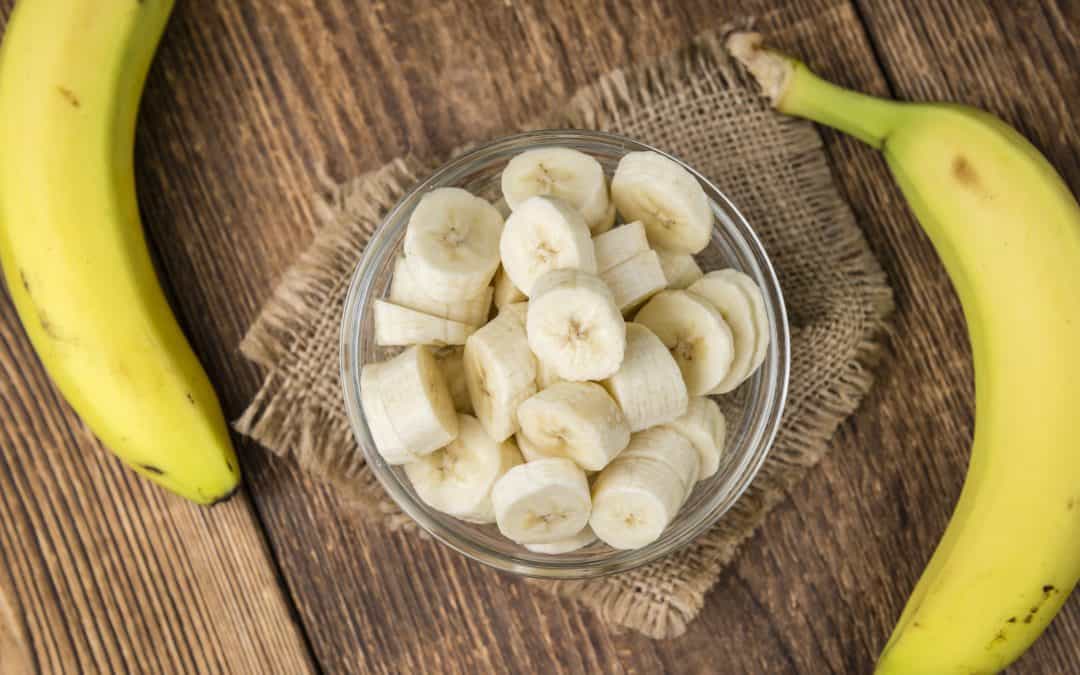
Does eating two bananas a day make my tummy bigger? Which one is healthier to snack on at night – a banana or a sweet potato?
– Christina Y.
It’s doubtful that a single food is causing an increase in your middle. It’s true that bananas are somewhat more concentrated in sugar (14 grams in a medium banana) than some other fruits, but the effect is insignificant relative to a daily caloric input consisting of 1800-2000 calories. Bananas are such a nutritious food! They have much-needed potassium (12% Recommended Daily Allowance or “RDA”) that helps to counter the negative effects of sodium intake. Bananas also have a good amount of fiber (3 grams), vitamins B6 (22% for men, 32% for women) and C (17% RDA), as well as the minerals manganese, biotin, and copper. The issue may be the extra calories if you’re consuming two very large bananas, as they will have about 135 calories each. If you don’t burn off the second banana, it would add 135 calories to your consumption daily.
Which Fruits Contain the Most Sugar?
In a nutrition battle between a banana and sweet potato, the sweet potato would come out ahead. A baked sweet potato has the same calories per gram as a banana, yet has one gram more fiber and five grams less sugar per medium serving. A sweet potato has more calcium, iron, magnesium, phosphorus, potassium, zinc, vitamins C and E than a banana; however, a sweet potato does have more sodium. Also notable is a sweet potato’s vitamin A content, which is nearly three times that of banana and meets your RDA in one serving! The banana leads the sweet potato only in folate and vitamin K.
– Debbie J., MS, RD
Source: USDA National Nutrient Database for Standard Reference Release 28
This article should not replace any exercise program or restrictions, any dietary supplements or restrictions, or any other medical recommendations from your primary care physician. Before starting any exercise program or diet, make sure it is approved by your doctor.
Have a nutrition question? Our registered dietitian is ready to help!
Email nutrition@lafitness.com or submit your question below and it may be featured in an upcoming article!
Want more? SUBSCRIBE to receive the latest Living Healthy articles right in your inbox!