10 Gift Ideas for the Athlete in Your Life

10 Gift Ideas for the Athlete in Your Life

The season of gift giving and resolution making is upon us. Whether the people in your life are active or just starting out, the LA Fitness Online Shop has a lot of cool gifts that cater to their lifestyle. We’ll also be showing off some HyperIce technology that we think deserves a shout out, because with every great workout you need the tools for a solid recovery.  

From cozy sweaters to high-tech equipment, our holiday gift list is here to offer you some truly unique gift ideas. 

LAF Gear and Apparel

01.

The most versatile gift option is one that allows your recipient to use their gift however they’d like. LA Fitness gift cards* can hold $50 to $200 and can be used to pay for Pro Results® Personal Training, HIIT, Pilates, Hot Yoga, and more. Just type choose your design, your amount, and you’re good to go! 

02.

Warm, stylish, and perfect for the upcoming winter months, this Cropped Hoodie makes a great gift. Pair it with a quality gym bag or some headgear and your set is complete. If you don’t like the cropped sweater look, you can find the full-length version here. 

03.

We just celebrated our 35th Anniversary! This Charcoal Heather pullover commemorates 35 years of LA Fitness in a soft, moisture controlling jacket. If you’re planning to gift apparel to someone who overheats easily and rarely wears a sweater, this lightweight jacket is the easy winner! Don’t forget to check out the women’s section for this design as well. 

04.

The Half Dome Duffel is a medium capacity bag that is perfect for carrying your gym essentials. At 18″ wide and 10″ tall, it is easily capable of fitting a pair of gym shoes, your protein shaker, a small towel, and of course your phone, wallet, and keys. 

05.

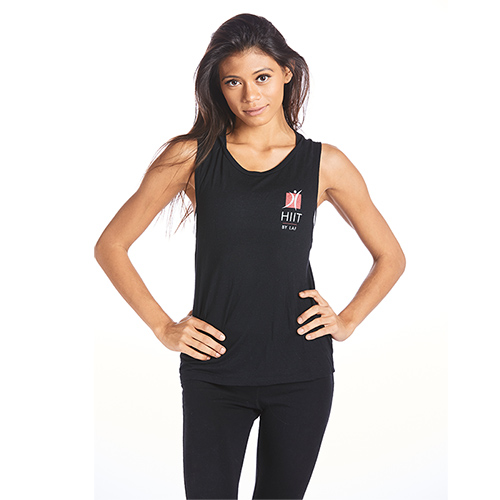
Because of its sleeveless design and relaxed fit, the muscle tank is a comfortable, breathable piece of work out apparel. Represent your commitment to HIIT with this logo tank and show up to the gym to hit your workout hard. Don’t forget to add a water bottle to complete the gift! You can go with aluminum or reusable plastic. 

06.

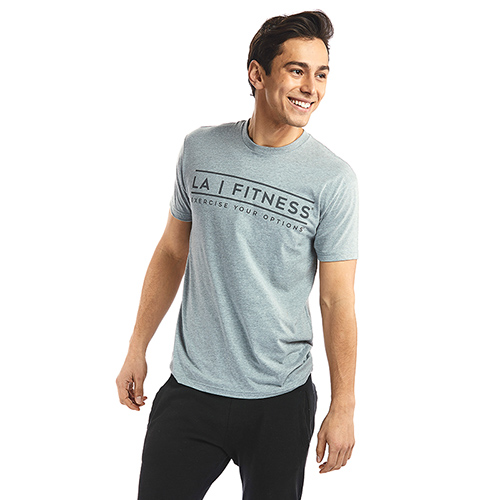
Keep it simple with this t-shirt design. Made with a premium cotton and polyester blend, this fitted shirt is both comfortable and flattering. Complete the gift by adding an LAF or HIIT branded cap. 

07.

These Black Heather tights are a must! We all know the appeal of a good pair of tights. The comfort and flexibility they offer your work out is simply sublime. Grab a pair of these for the tights-lover on your gift list and add the LA Fitness Sport Bra to create the perfect duo. 

High Tech Recovery Tools by HyperIce

Clicking on the Recovery Tab on the Shop LA Fitness website takes you to the HyperIce website. Here you will find lots of cool gadgets and wearable tech that take your workout recovery to the next level! Here are 3 that we think would make a really nice holiday gift! 

Photo credit: HyperIce

08.

This is one impressive piece of tech. Quiet, lightweight, and with an interchangeable head, this massager ramps up your recovery. Similar devices are used in physical therapy offices because they are very good at releasing muscle tension and improving blood circulation. They can even help promote faster muscle recovery. It works by pulsing a controlled pressure to your muscles that you manually guide. This gift is a lifesaver for anyone who works hard in the gym and has the aches and pains to prove it. 

Photo credit: HyperIce

09.

This is no ordinary foam roller. Built into this extraordinary piece of technology is the muscle saving function of high intensity vibration. In addition to the benefits of regular foam rolling, this device vibrates to deliver powerful relief to your muscles, right where you need it. In fact, vibration massage is studied for its potential ability to prevent muscle soreness after exercise, reduce joint pain, and even increase muscle mass.1 That’s why this device makes our gift list! 

Photo credit: HyperIce

10.

The HyperIce ICT is an ultra-thin ice compression device that comes in different shapes and sizes for use on your back, legs, knees, and shoulders. This is a great gift idea for people who need to ice on the go without worrying about melting ice or dripping condensation. The material is also antimicrobial and machine washable! 

For more holiday tips and ideas, check out our blog post, Gearing Up for the Holidays, for 9 tips to help stay in shape this season. To access our monthly blog post highlights, subscribe to our newsletter today! 

* Gift Card Terms and Conditions  

Sources 

  1. Fanous, Summer. “What Is Vibration Therapy?” Healthline, 19 July 2016, www.healthline.com/health/vibration-therapy#benefits. 

What is Body Mass Index and How Should I Use It?

What is Body Mass Index and How Should I Use It?

What is Body Mass Index?

Body Mass Index (BMI) is an indicator of the amount of body fat for the average person. It’s used as a tool to identify if an adult is at a healthy weight and healthy body fat level.

Before we dive into BMI, let’s first review the benefits of maintaining a healthy weight: 

  • More Energy 
  • Less Joint Pain 
  • Better Sleep  
  • Better regulation of blood pressure (better heart health) 
  • Decreased Risk of Diabetes 
  • Longevity 

These are just a few of the benefits of maintaining a healthy weight, but what does BMI have to do with your weight and what does it mean?

For years, BMI has been used by healthcare providers as a measurement to define if a person has too much body fat, and if so, whether it “presents a risk to health.1 

How to Calculate Your BMI

Since we know maintaining a healthy weight is beneficial for your health, let’s take a look at how to calculate body fat by just using your weight and height.

Calculation: Divide a person’s weight in pounds, by their height in inches. Divide the answer by height in inches. Multiply the answer by 703 (703 is the conversion factor to change units from metrics (meters and kilograms) to imperial (inches and pounds).  

Example: Weight is 140lbs and Height is 5’7” or 67in 

140lbs / 67in = 2.089  

2.089 / 67in = .0311 

.0311 x 703 = 21.9 

BMI = 21.9 

Accuracy

BMI is not a perfect measure and everyone’s body composition is different. BMI is a simple tool of weight-for-height and everyone’s height and weight varies. Therefore, this means BMI is not directly measuring body fat.  

Muscle and bone are denser than fat, which means BMI is not accurately addressing body fat. If an athlete or a muscular person calculated their BMI, their BMI might be high because they have more muscle.

According to BMI calculations they would be considered overweight, however, they don’t have too much fat on their body. Since most people are not athletes, BMI might be a good gauge for body fat.  

Healthy BMI Range 

So, what does this mean for you? The World Health Organization states that a healthy BMI range for adults is between 18 and 24.9. Overweight range for BMI is between 25 and 29.9, and obesity range for BMI is 30 or higher.1 These BMI ranges in adults are the same for men and women, regardless of their age. 

How to Use Your BMI

How should you use BMI? Use it as a gauge or a measure. Our very own LA Fitness Registered Dietitian has some helpful tips on lowering BMI; read about it here.   

If you would like to take your health and body composition to the next level, let us help you achieve your goals with our Pro Results® certified personal trainers. Pro Results® trainers can help identify your personal fitness goals and design a customized workout plan to reach those goals.  

When you make an appointment to start your fitness assessment, it will cover:  

  1. Your current fitness levels 
  2. A body composition test (if desired) 
  3. A personalized timeline to achieve your goals 
  4. An overview of cardio and weight equipment 
  5. And, a quick one-on-one workout 

SOURCES 

  1. World Health Organization. Obesity and Overweight Fact sheet detail. February 2018 
How to Add Exercise to Your Busy Lifestyle

How to Add Exercise to Your Busy Lifestyle

Making time to exercise can be a balancing act… work, kids, after school activities, family & friend obligations, just to name a few.

The most common excuse for not exercising: “No time,” says clinical psychologist Lavinia Rodriguez.1

How to make time for exercise

How do you make the time for exercise when you have no time?

Morning Workout. Fitness experts will suggest a morning workout. Why? Because life gets crazier as the day goes on. By getting in a workout first thing in the morning, you have time for other day-to-day stuff without having to think about when you are going to fit in a workout.

Find a Friend. Grab, drag, or bribe a friend to come with you. Having your best bud or accountability partner come with you can make workouts so much fun! Keep one another accountable, set goals, or create challenges with one another. Having someone to go with you means you are less likely to make excuses not to go to the gym.

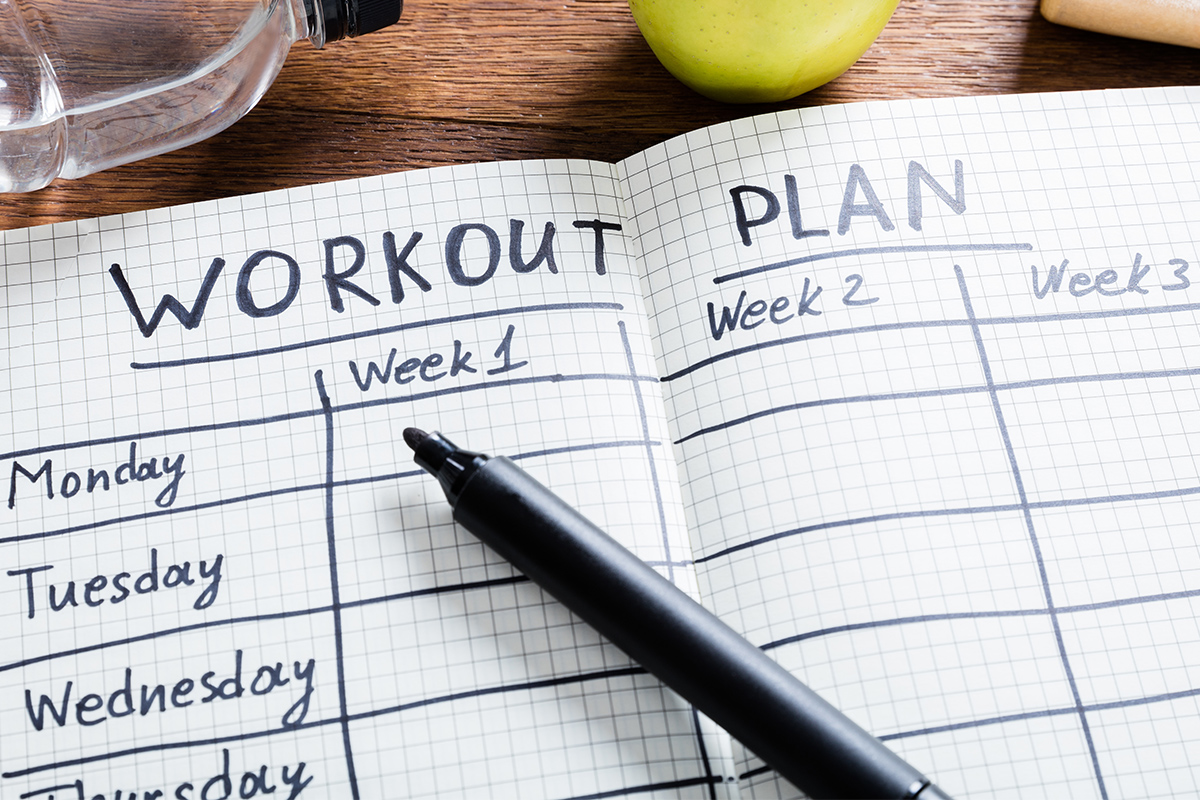
Write it down. Create a schedule for yourself. Take time on Sunday evening before you go to bed and write down your schedule for the week. Then find pockets of time where you can go to the gym and commit to your schedule. Once you’ve committed to your schedule, it’s less likely that you are going to break it and less likely to make excuses.

Set small goals. Small goals can be BIG wins! Start with working out one or two days per week. These small goals will turn into a routine and eventually become a habit.

Decide. You must decide that you are going to make time for exercise. Make the decision and follow through with it. There will be days when you don’t want to go to the gym, that’s when you need to prove your willpower.

Set your alarm. Set your alarm so you don’t forget. If you set your alarm for the morning, it’s not always easy waking up early. Challenge yourself not to hit snooze. Put your feet on the ground, get vertical, and start walking around. If you set your alarm for the afternoon, you may be hurting for time, but everyone needs to take a break. What you will soon realize is that working out helps improve productivity. So, hit the gym!

Don’t stress. Bottom line, any exercise is better than no exercise. Do what you can, when you can. Don’t stress out or put pressure on yourself because you didn’t make it to the gym.

For even more tips on how to add exercise to your schedule, check out these Workout Strategies for a Busy Lifestyle, or, read up on . For all our blog posts, and to get notified when we upload something new, subscribe today!

SOURCES

  1. Lavinia Rodriguez, PhD, clinical psychologist and author of Mind Over Fat Matters: Conquering Psychological Barriers to Weight Management (iUniverse, 2008).


How to Train Like a Football Player

How to Train Like a Football Player

November 5th was American Football Day. This year, the regular football season runs from September 5th to December 29th. Your favorite players have been training hard, and whether you’re a die-hard fan or you watch only for the half-time show in February, it’s easy to appreciate the feats of athleticism that take place in every game. 

Football players need an impressive amount of strength, cardiovascular endurance, stamina, speed, and agility. If you want the physique and athleticism of a football pro, you’ll need to train like one!  

Here are 5 exercises that will work your muscles hard and test your physical limits. 

5 Workouts That Test Your Limits 

Exercise 1 – Sled Push/Pull 

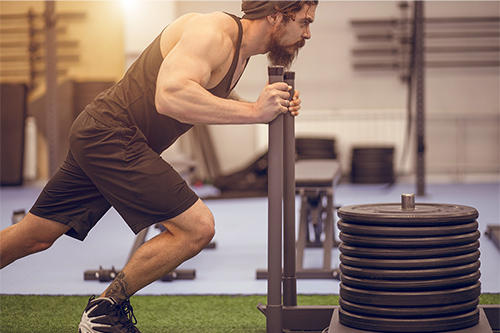
The most recognizable exercise we see football players do in training is the sled tackle. You may not need to be tackling anyone, but the principle of the movement is to learn how to dig deep and use your legs to drive your body forward. A Prowler Sled can be loaded up with weights to intensify your workout and focus your energy without the impact of a tackle. 

Alternatively, you can pull the sled with a rope attachment, much like you would pull on a rope in tug-of-war. This flips the focus from your lower body to your upper body and helps you develop a killer grip-strength. For catching a football, rock climbing, scaling a ladder, or opening a jar, having a solid grip is an indicator of good, overall strength.

Exercise 2 – Rows 

The Golden Rule of Equation Solving, and what should be the golden rule for exercise: What you do to one side, you must do to the other. Many people will focus only on ab workouts thinking that’s how they’ll get a shredded six-pack. Your back muscles, however, are very much a part of your core strength and stability. Having a strong back enables you to perform other exercises more safely and with more strength and power. 

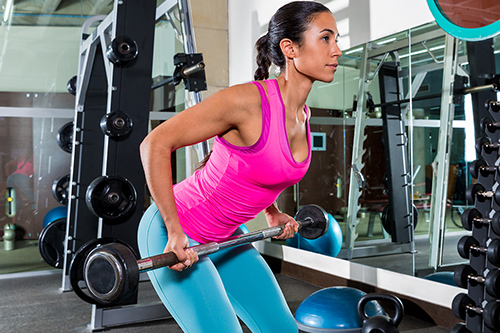
Rows are pretty versatile and can be done with a rowing machine for cardio, or with a barbell or TRX cables for strength building. For total-body fitness, make sure to focus on all the muscles in your body instead of just the ones that receive a lot of hype (like abs, biceps, and glutes). Football athletes don’t want to have any weak points so they can take a fall or a tackle and get back up to go again. Your weekly training regimen should aim for the same comprehensiveness.

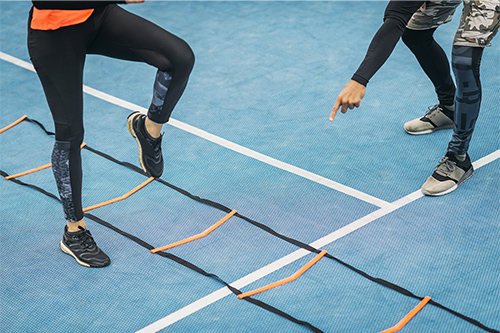
Exercise 3 – Agility Ladders 

Put your speed and agility to the test with agility ladders and do a lot of great things for your ankle strength as well. This is another easily recognizable drill. You may have seen it in training sessions for football, soccer, rugby, and other sports that require quick and precise maneuvering.  

An agility ladder is a flat ladder with evenly spaced rungs. You essentially use it to mark the space on the ground where you will step in, out, and around the lines as quickly and as accurately as possible.

To zero in on the agility component, you’ll need to make a point of targeting your ability to stop, start, and change direction with a high response time. This can make for an interesting and focused workout if you have someone calling out direction changes and various instructions to keep you literally “on your toes.”

Exercise 4 – suicide Sprints 

If you can do a pull-up with added weight, doing a pull-up without it is a whole lot easier, right? Athletes practice under the same principle. In training, they put their bodies through the toughest conditions so that game day feels like child’s play.  

One of their most important assets is their cardiovascular and respiratory endurance. The ability to run up and down that field with the added weight of all the padding and gear, takes a lot of serious conditioning! 

Suicide Sprints involve sprinting to and from a series of spaced markers. The idea is to sprint to the first marker, touch it, and then sprint back to your starting point. You’ll immediately, sprint to touch the second marker, and then back again to your starting point. You continue doing this until you’ve run to and from all the markers. You can increase the difficulty by adding more markers or setting them farther apart. After giving this exercise a try, you’ll understand the reason for its grim naming. 

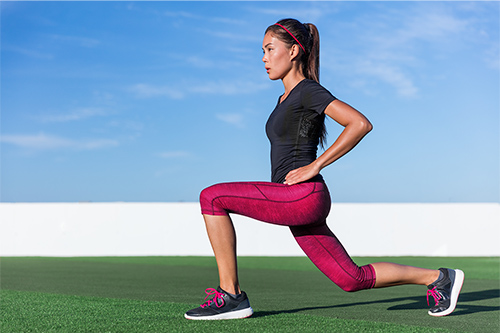
Exercise 5 – Walking Lunges 

Another great cardio exercise is walking lunges. With your legs doing most of the work, the work of this large muscle group will have you sweating in no time. This exercise hones-in on your quads and glutes and will teach them to endure prolonged use.  

To focus more on strengthening your leg muscles, you’ll need to progressively increase the amount of weight they need to move. You can do this by holding dumbbells or wearing a weighted vest as you go. 

For tips on getting your mentality into gear for your workout, read about how you can Approach Your Workout Like an Athlete at Practice. Or, hear from Matt Harrison, LA Fitness member and an elite athlete, on Episode 12 of our Podcast. He shares what changes he made to his lifestyle to go from ordinary to extraordinary. To access our monthly blog post highlights, subscribe to our newsletter today! 

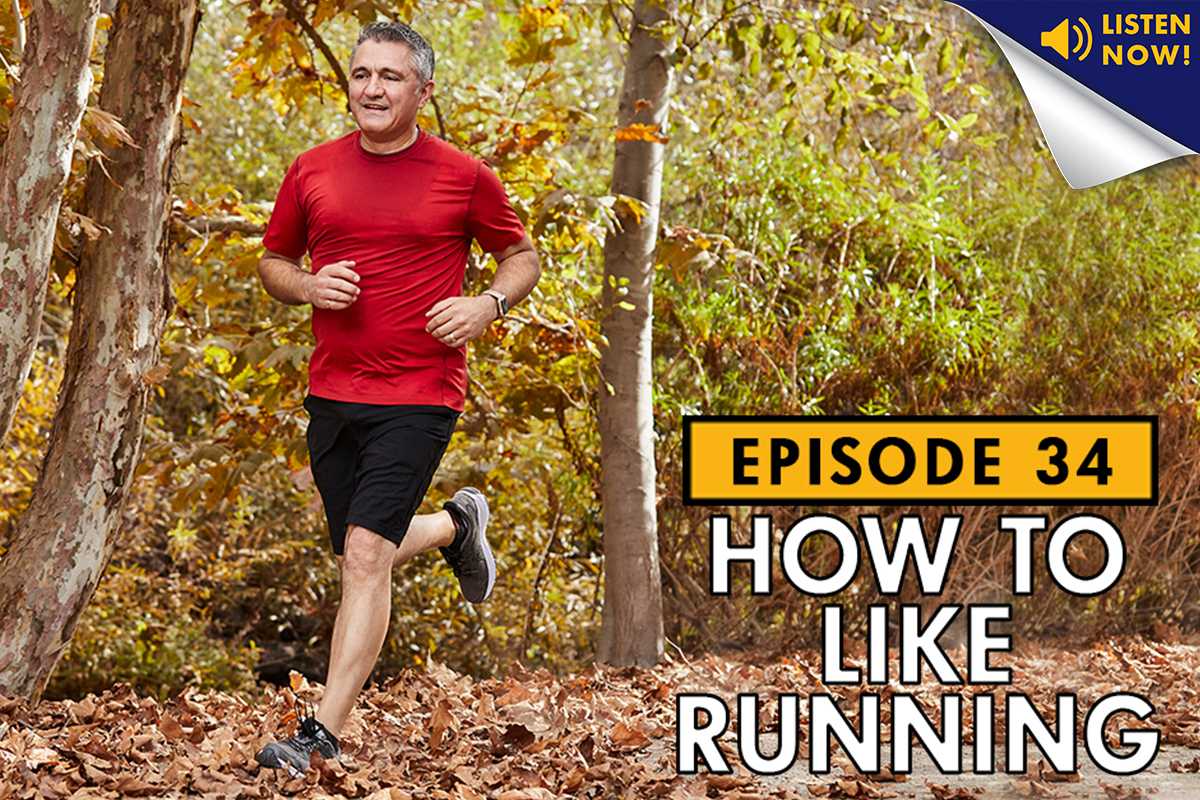
How to Like Running – Podcast Ep. 34

How to Like Running – Podcast Ep. 34


Welcome to the 34th episode of the Living Healthy podcast, presented by LA Fitness.

On this episode of the Living Healthy Podcast, we speak with Greg McMillan, Founder and Head Coach at McMillan Running and former National Trail Marathon Master’s Champion.

Having trained everyone from new runners to Olympians, Greg understands what it takes to run for the first time and what training looks like for those looking to up their game. Listen in to learn some things you may not know about running, to bust some misconceptions about its effects on your joints, and to hear a gross bug story from Andrew. 

How Are We Doing? 


This podcast should not replace any exercise program or restrictions, any dietary supplements or restrictions, or any other medical recommendations from your primary care physician. Before starting any exercise program or diet, make sure it is approved by your doctor.

Timecard Markers – How to Like Running – Podcast Ep. 34  

Intro 

 0:01 

Introduction of Founder and Head Coach at McMillan Running, Greg McMillan, M.S 

2:08 

What Makes You So Passionate About Running? 

2:34 

What are Some Reasons to Add Running to Your Routine? 

3:49 

The Shared Experience Among Runners 

6:07 

What Would Help New Runners Get Started? 

8:21 

Is it Difficult to Get into Running in Baby Steps? 

11:19 

Is it Important to Find Out What Kind of Runner You Are? 

13:42 

Do You Need Special Shoes for Distance Running? 

15:38 

What is a Good Distance to Start with If You’re Training for a 5K? 

16:33 

Stride and Cadence to Increase Pace in Long Distance Running 

17:35 

Recommendations for Hydration Before and During a Run 

19:02 

If You’re Not Well Hydrated, Should You Avoid Running? 

21:43 

What are the Right Shoes for Sprinters? 

22:30 

Are Intervals the Right Way to Train for Sprinting? 

23:19 

What is a Good Starting Routine for Beginners? 

24:17 

What Is Running’s Physical Toll on Your Body? 

25:09 

Is Running Good for Losing Weight? 

26:32 

What is Good or Bad Running Form? 

27:32 

Can Music’s BPM Enhance Your Cadence? 

30:58 

Should You Stretch Before or After Running? 

32:41 

Myth Busting: Will Running Cause Your Skin to Sag Over Time? 

36:36 

Actionable Advice 

39:00 

Outro 

41:19 


Recommended Podcast Episodes