How to Lose Weight on a Vegetarian Diet | QA

How to Lose Weight on a Vegetarian Diet | QA

Question:

I want to follow a daily routine which will help me reduce weight. Currently, I am 129 lbs. I want to reduce it to 120 lbs; however, I am a vegetarian. I don’t eat eggs or meat. Please help. 

– Swapna A.

Answer:

Vegetarian diet or not, the same rules apply for reducing body fat to lose weight: eat less than you burn. Where vegetarians may have trouble is with concentrated sugars (in foods like smoothies, cereals, fruit bars) and excess fats (hidden oils in boxed/frozen foods). Restricting intake of processed foods while focusing on whole plant foods will ensure you control the amount of sugar and fat consumed. Basically, choose foods you need to chew! 

Consider a healthy vegetarian dish of lentils, mushroom, onion, chopped spinach, olive oil and carrot over sweet potatoes. Despite the correct balance of carbohydrates, fats and protein you still need to deal with volume. Do you fill a 10-inch plate, 20 oz. bowl or only a cup? Portion control is important, no matter the diet you follow. Just cutting back 50 calories a day can promote a 5-pound weight loss over a year.  

I wouldn’t advise a daily menu repeated over and over because you need a variety of produce, legumes, nuts and seeds to meet micronutrient requirements and provide beneficial phytochemicals. But, you can start with a few days mapped out for you! EatingWell® has a decent vegan 7 day 1200 calorie plan. For a week’s worth of lacto-ovo Indian meal suggestions, check out this traditional plan from Healthline. Also read the Living Healthy blog’s Ask Our Dietitian post How to Lose Fat as a Vegan for more meal and snack options. 

– Debbie J., MS, RD

This article should not replace any exercise program or restrictions, any dietary supplements or restrictions, or any other medical recommendations from your primary care physician. Before starting any exercise program or diet, make sure it is approved by your doctor.

Some questions have been edited for length and/or clarity.

Ask our Dietitian

Have a nutrition question? Our registered dietitian is ready to help!

Email nutrition@lafitness.com or submit your question below and it may be featured in an upcoming article!

10 + 2 =


Recommended Reading - Q+A

Did I Overdo It? – Signs You Pushed Your Workout Too Hard

Did I Overdo It? – Signs You Pushed Your Workout Too Hard

To get stronger, you need to push your body to certain limits, but how can you know what those limits are? There’s no easy way to define it because everyone is different, and what you are capable of today may not be what you are capable of tomorrow. 

There are some tell-tale signs that your workout is no longer benefiting your body. The farther you push past your limits, the longer your recovery will be, and the longer you’ll need to wait before you can train again. 

Contrary to popular belief, muscle soreness is not required for muscle gain, and you don’t need to feel like a zombie to benefit from your gym session. So, let’s talk about the signs so you can better understand your limits and get the most out of your workouts.  


Pain or Discomfort While Working Out

Because they occur in the moment, these pain signals are easy to identify and are the more obvious warnings of over-exertion. Just a few examples include: 

  • Pain in your side during cardio; also known as a side-stitch 
  • Any sharp, shooting, or stabbing pains  
  • Pain while stretching, especially if your muscles are not warm 
  • Difficulty breathing 
  • Muscle tingling or numbness  
  • Dizziness or feeling faint 
  • Chest Pain or Pressure 
  • Nausea or vomiting 

The more dangerous potential for injury is when we do not feel anything, so we continue to exercise. So, if you experience any of the above symptoms, or any other concerning pain or discomfort, that’s a good sign you should take a break or stop. 

Pain or Discomfort After Working Out

If you didn’t feel anything while working out, and then felt like a train-wreck in the days to follow, this is your body communicating its limits, just differently. 

Take, for example, a person experiencing a sudden adrenaline rush. In fight-or-flight mode, the body is capable of incredible things. Only once the body has settled from the rush does a person finally begin to notice various aches, pains, and even more extreme damage like bone breaks or severed limbs.  

It’s possible that while you’re in the zone, pumping iron to the right song, you may not notice that you’re pushing your body just a little too far. 


What You Can Do

Sometimes, you need to be your own critic. Try to carefully monitor the following things as you work out:

  1. Your Form. Look in the mirror and double check what you know about the correct form for the exercise you’re doing. If you don’t know the correct form, ask a professional or do your research to prevent injury.

  2. Are your muscles starting to tremble? This is a sign they’re getting close to reaching their maximum level of exertion. While a little bit of that can be okay, try not to push much further past this point.


  3. Is your body unwilling to cooperate? If you just did a few great sets of weighted squats, and now your body refuses to squat without any added weight, that’s it. It’s time to call it. If your muscles feel ready to give out, you’ve probably already gone too far. 

Closing Thoughts 

Overdoing your workout doesn’t just mean going full beast-mode and overworking your body. If you’re fighting sickness, or your body is sleep-deprived and exhausted, you may be better off staying home and resting. It’s possible that while your body is trying to manage other ailments, you won’t get much out of your workout anyway. It’s the safer choice to take a break and come back when you’re feeling better.  

Always pay attention to the signs and learn your body’s limitations so you can hit the gym with confidence and energy instead of with dread. 

For some workout nutrition tips, read out article on Pre- and Post-Workout Foods, or our article on What BCAA’s Can Do for Your Workout. To access our monthly blog post highlights, subscribe to our newsletter today! 

Safely Reducing Your Calorie Intake for Weight Loss | QA

Safely Reducing Your Calorie Intake for Weight Loss | QA

Question:

Hi, I wanted to ask a question about dieting. What is the lowest number of daily calories for an adult woman (34 years old, 5’6”, 140 lbs.) that is safe but will also allow for weight loss? I’ve been even eating 1,200 or so per day, but I’m not sure if that’s accurate. Thanks!

– Jess S.

Answer:

First off, 140 pounds for a height of 5’6” makes your BMI 22.6, within a healthy range (18.5-24.9). In general terms, 1,200 calories for women and ,1500 calories for men have long been used as minimum recommended intake levels. Even at these amounts it’s difficult to meet vitamin and mineral requirements unless one’s diet is exceptionally nutrient-rich and balanced. 

Using personalized estimates based on standardized equations is more predictive of actual needs. Using your age, height, weight and gender, your calculated base energy requirement, called basal metabolic rate (BMR), is 1,352-1,376 calories daily*. Your body composition, genetics and physiology, among other factors, determine your true metabolic rate which may be higher or lower than estimated. 

It’s not advised to reduce intake to BMR minimum very long for successful fat loss. Restricting intake to that level creates such an energy deficit that lean mass starts to break down for fuel. The scale may show a weight drop – often significant – from the water released as stored glycogen is used to fill the energy gap. Neither of these conditions foster fat burning or improve body composition.  

My best advice is to increase physical activity which will help retain lean mass and allow you to get sufficient nutrients from a more generous diet. There’s a lot of nutrition you can pack into 150 calories of wholesome foods. A yogurt parfait or bowl of crunchy popcorn is worth a half hour of dancing, recreational biking or swimming in my book! 

*based on MifflinSt. Jeor and WHO equations. 

Suggested further reading: 

Resting Metabolic Rate: Best Ways to Measure It – And Raise It, Too https://www.acefitness.org/certifiednewsarticle/2882/resting-metabolic-rate-best-ways-to-measure-it-and/ 

Calories Burned in 30 Minutes For People of Three Different Weights https://www.health.harvard.edu/diet-and-weight-loss/calories-burned-in-30-minutes-of-leisure-and-routine-activities 

– Debbie J., MS, RD

This article should not replace any exercise program or restrictions, any dietary supplements or restrictions, or any other medical recommendations from your primary care physician. Before starting any exercise program or diet, make sure it is approved by your doctor.

Some questions have been edited for length and/or clarity.

Ask our Dietitian

Have a nutrition question? Our registered dietitian is ready to help!

Email nutrition@lafitness.com or submit your question below and it may be featured in an upcoming article!

14 + 10 =


Recommended Reading - Q+A

Fruits and Veggies – Part 2 – Podcast Ep. 32

Fruits and Veggies – Part 2 – Podcast Ep. 32


Welcome to the 32nd episode of the Living Healthy podcast, presented by LA Fitness.

On this episode of the Living Healthy Podcast, we continue our discussion with Debbie James, RDN, to dish out the details on super-fruits and veggies. We talk about how to incorporate more into your daily diet, whether they can help you bulk up or trim down, and how you can actually alter your taste buds so they taste better!

Listen in now!

How Are We Doing? 


This podcast should not replace any exercise program or restrictions, any dietary supplements or restrictions, or any other medical recommendations from your primary care physician. Before starting any exercise program or diet, make sure it is approved by your doctor.

Timecard Markers – Fruits and Veggies, Part 2 – Podcast Ep. 32   

Intro 

0:01 

Brittany’s Story 

0:34 

Jumping into Part 2 with Debbie James, RDN 

3:41 

Are There Certain Fruits/Veggies That Help You Bulk Up or Lose Weight? 

2:54 

Is it Better to Eat Locally Sourced Fruits and Veggies? 

4:38 

Is There a Better Time of Day to Eat Fruits and Veggies to Bulk Up? 

5:48 

Which Ones Are the Super-Fruits and Super-Veggies? 

8:03 

Can You Change Your Taste buds to Like Veggies? 

10:00 

Are There Any Tips to Get Kids to Eat Veggies? 

12:00 

Cooking with Olive Oil versus Coconut Oil 

15:11 

Does Juicing Hold Long-Term Benefits? 

17:05 

Actionable Advice 

18:20 

Outro 

19:24 


Recommended Podcast Episodes 

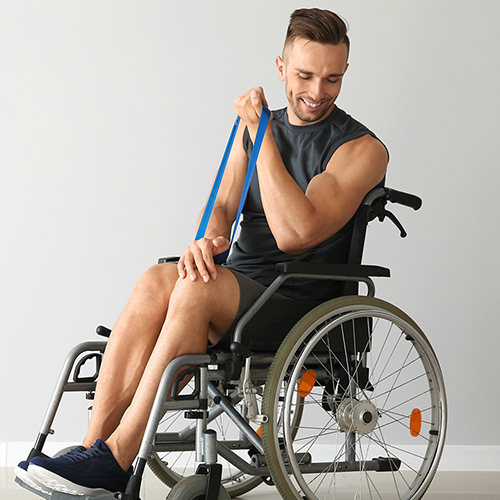
Living an Active Lifestyle – For Adults with Cerebral Palsy

Living an Active Lifestyle – For Adults with Cerebral Palsy

Living an Active Lifestyle With CP

October 6th is World Cerebral Palsy Day

There is no better time than now to talk about this disorder that affects approximately 764,000 children and adults in the U.S.1

Not only will we fill you in on what it is, we’ll also share some great workout information (like how to calculate your target heart rate for cardio) that individuals who are and who are not affected by CP can apply to their routine.  

What is Cerebral Palsy?

The Centers for Disease Control and Prevention (CDC) defines Cerebral Palsy as “a group of disorders that affect a person’s ability to move and maintain balance and posture.”2  There are varying degrees of severity and some variants of the disorder itself. The CDC classifies them in 4 ways: 

A person with Spastic Cerebral Palsy has muscle stiffness which may affect the legs, the legs and arms, one side of the body, or, in severe cases, the whole body. Movement appears rigid and can be labor intensive. 

A person with Dyskinetic Cerebral Palsy has muscle tone that can fluctuate from being too tight and stiff, to too loose. Muscle movement is difficult to control which can make movements slower or faster than what is typical. 

A person with Ataxic Cerebral Palsy has problems with coordination and balance. Quick or precise movements can be difficult to execute. 

Mixed Cerebral Palsy occurs when a person experiences symptoms that come from more than one type of Cerebral Palsy.


Is it Possible to Both Be Active and Have Cerebral Palsy? 

Physical activity is great for the body, the heart, and the mind. This is something most of us have learned and had ingrained in our memory since childhood. With so many obstacles to free movement, you might wonder how someone with CP can exercise. 

The American Academy for Cerebral Palsy and Developmental Medicine (AACPDM) reminds us that the recommended amount of weekly cardio for adults is 150 minutes.3 They go on to say that “there is no evidence to suggest that these requirements should be any different for people with cerebral palsy.”3   

How to Be Active When Living with Cerebral Palsy

The following tips are straight from the Fact Sheet provided by the AACPDM. You can view the full document here.  

Remember that some exercises may not be safe or possible if you are experiencing certain limitations, so be sure to consult your doctor so you understand the right options for you. 

Tip #1: Do Exercises That Build Strength and Endurance 

To build muscle, you’ll need to increase the resistance, or the weight your muscles have to move. To build endurance, you’ll need to increase the repetitions, or the number of times you complete a movement. The AACPDM recommends that you should: 

  • Aim for a maximum of 10 repetitions.  
  • Start with 1 set. With time, as it becomes easier, start to increase your sets. 
  • Take at least 1 day of rest between strength training a single muscle group. 3

Tip #2: Exercise Your Heart 

To exercise your heart, you’ll need to know what your maximum heart rate is and set a goal to exercise at 40 – 85% of that maximum. Your heart rate is the number of times your heart beats per minute. 

To calculate your maximum heart rate, subtract your age from 220. 3 For example, if you are 20 years old, (220 – 20 = 200), your maximum heart rate is 200.  

Now that you have your maximum, you can calculate the heart rate you should aim for when you do cardio. All you have to do is multiply your maximum heart rate by 40% (0.40) and then do a new calculation and multiply by 85% (0.85) instead. Don’t forget to convert the percentage into a decimal by dividing it by 100.  

For example, if your maximum heart rate is 200, you would do the following calculation: 

200 x 0.40 = 80 beats per minute 

200 x 0.85 = 170 beats per minute 

Now you know that, to effectively exercise your heart, you need to get your heart rate between 80 and 170 beats per minute.  

The AACPDM recommends that you start at a rate of 40% and increase your target rate gradually. 3

Tip #3: Work on Improving Your Range of Motion 

Improving your range of motion simply means that you are improving your flexibility. The more flexible you are, the easier it is to do common daily activities like sitting, reaching, and bending. 

The AACPDM reminds us that yoga and stretching are not the only ways to improve flexibility. Using your full range of motion while doing your strength training exercises is also a way to improve the flexibility of your muscles. 3  

They also talk about how dynamic stretches help improve the muscle’s functionality and strength.3 Dynamic stretches get your body moving and warmed-up, so they are often done before you start working out.4


The Takeaways

Living an active lifestyle is not necessarily exclusive to people of a certain level of ability. Even though Cerebral Palsy affects motor function, exercise is still possible if you respect the limitations in your movement and adhere to the guidance of your doctor.  

However, depending on the exact nature of your condition, physical activity simply may not be for you. If this is the case, don’t lose hope! Talk to your doctor to find out what you can do to still care for your health without doing harm to your body. 

For more ideas on how to move more and sit less, read our post, 6 Ways to Decrease the Time You Spend Sitting. If you’re not looking to lose weight and instead, you’re looking to put on some healthy pounds, listen to our podcast on How to Gain Healthy Weight.

To access our monthly blog post highlights, subscribe to our newsletter today!

SOURCES 

  1. “Cerebral Palsy Information.” Cerebral Palsy Guidance, 2019, www.cerebralpalsyguidance.com/cerebral-palsy/research/facts-and-statistics/. 
  2. “What Is Cerebral Palsy? | CDC.” Centers for Disease Control and Prevention, Centers for Disease Control and Prevention, 2019, www.cdc.gov/ncbddd/cp/facts.html. 
  3. “Cerebral Palsy Information.” Cerebral Palsy Guidance, The American Academy for Cerebral Palsy and Developmental Medicine, www.cerebralpalsyguidance.com/cerebral-palsy/research/facts-and-statistics/. 
  4. “The Benefits of Dynamic Stretching and How to Get Started.” Healthline, www.healthline.com/health/exercise-fitness/dynamic-stretching.