Healthy Fiber Options for Your Daily Diet | QA

Healthy Fiber Options for Your Daily Diet | QA

Question:

Hello, my name is Elizabeth. I exercise at least three times a week, but I am more concerned about my nutrition because I know it comes first. I would like to know what the best fiber diet is, or the most important food to eat to get plenty of fiber. I do not eat red meat or pork, only seafood, chicken, and turkey. 

Thank you 🙂

– Elizabeth Z. 

Answer:

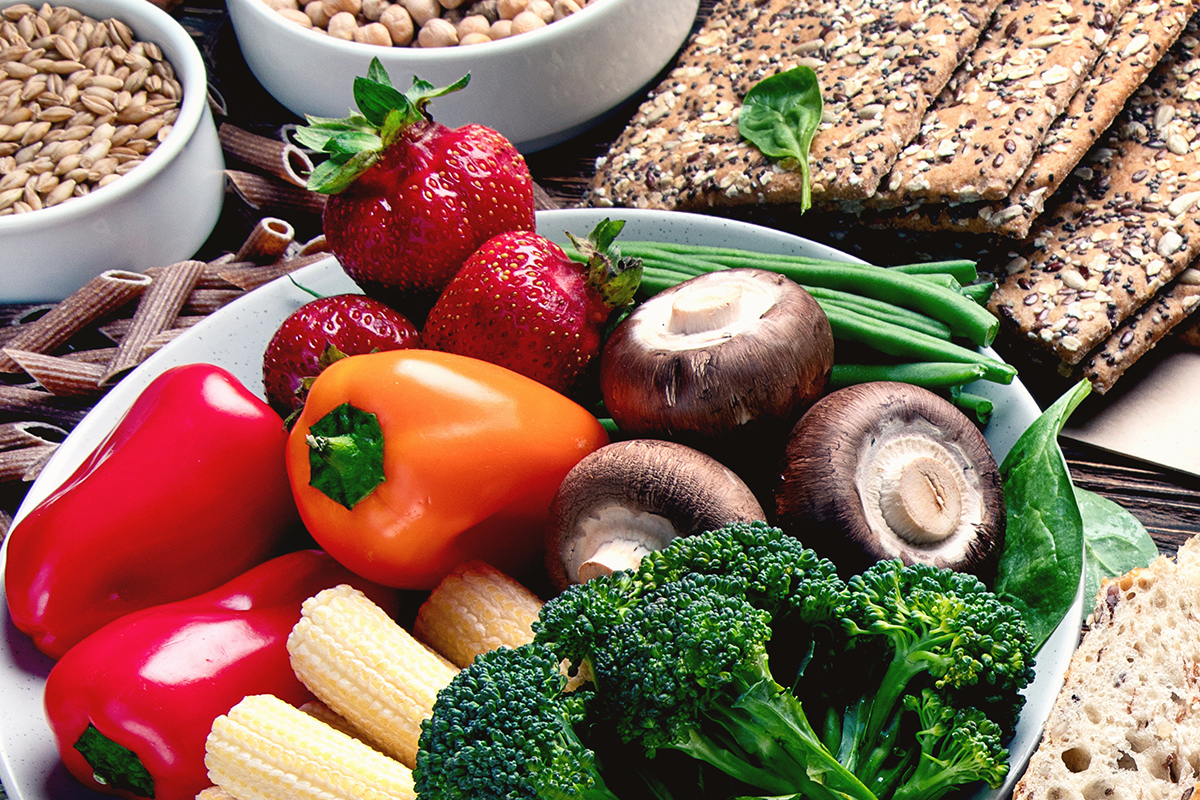
Good news! Your animal protein preferences won’t impact reaching the recommended intake of fiber, since it is only from plant foods. Beans, legumes, whole grains, nuts & sees, and raw fruits and vegetables have the most fiber. Did you know popcorn is naturally a whole grain snack?  

The 2015 U.S. Dietary Guidelines suggests 14 grams of fiber per 1000 calories consumed as an adequate daily intake. For most people that translates to 25-30 grams of dietary fiber per day. The Dietary Guidelines offers a table to see how several foods compare. 

Adding fiber to your diet may be as easy as replacing juices or canned fruits and vegetables with wholesome produce or switching from white flour products to more whole grain ones. Of course, increasing intake through larger portions or adding food is an option if your energy needs allow. On the flip side, if you’re looking to lose weight, check out our recommendations for a low-calorie high fiber diet. 

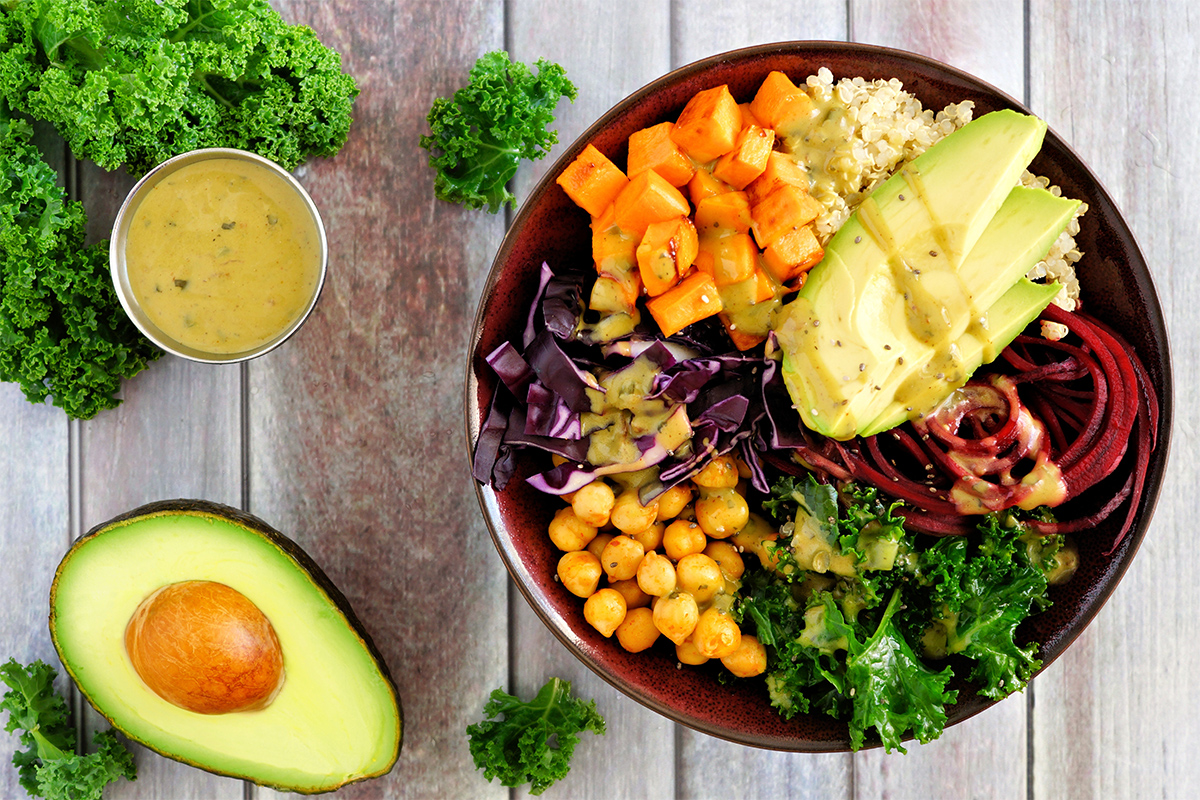
My favorite way to get 15 grams of fiber in one sitting is to have a grain bowl with kale, avocado, chick peas and grated carrot, similar to this recipe from Cooking Light. For breakfast, I’ll opt for rough cut oats, topped with pecans, dried cranberries, chia seed, buckwheat groats and hemp seed to get 12 grams of fiber. 

– Debbie J., MS, RD

This article should not replace any exercise program or restrictions, any dietary supplements or restrictions, or any other medical recommendations from your primary care physician. Before starting any exercise program or diet, make sure it is approved by your doctor.

Some questions have been edited for length and/or clarity.

Ask our Dietitian

Have a nutrition question? Our registered dietitian is ready to help!

Email nutrition@lafitness.com or submit your question below and it may be featured in an upcoming article!

10 + 4 =


Recommended Reading - Q+A

What Happens to Your Body When You Stop Working Out?

What Happens to Your Body When You Stop Working Out?

As a protection mechanism, our brain often convinces us that we are capable of far less than we really are. This is a preservation instinct that is meant to protect your body from over-exertion and from burning through its precious fat-stores.

Our brain relies on its survival skills. It wants your body to expend as little energy as possible to save up for the day when your usual resources are not available. 

If you know that muscles require energy (calories) to sustain themselves, you may already see the picture we’re trying to paint. If your body no longer needs to lift, push, or drag the heavy things, your brain starts to consider your muscles as liabilities instead of assets. They are using more energy than what your activities call for.  

That is why, if you stop working out, your brain responds with “well, we don’t need these anymore!” 

Now, don’t panic. Your muscles won’t completely atrophy as though you’d never seen a day of exercise. In fact, drastic muscle atrophy is really a sign of severe malnutrition, disease, injury, or certain disorders. With less use, your muscles will simply decrease in mass. 

Let’s peer into the details of what really happens to your body when you stop working out. 

Your Cardiovascular Health Is Likely the First to be Affected

At around 2 weeks after stopping exercise, what your body gained from consistent exercise can already start to diminish.  

Several studies, some of which we discuss here, cite cardiovascular endurance and VO2 maximums (how much oxygen your body can process for energy) as the targets of change within the first 2 to 4 weeks of stopping exercise.  

In a study on the effect of training and detraining (a period of no exercise) on heart rate variability, a group of healthy young men completed 12 weeks of intensive training followed by several weeks of not working out.

The participants all saw an increase in their VO2 max and in their heart’s overall power after the 12 weeks of vigorous exercise. Once they started the period of detraining, it took about 2 weeks to see a reduction in both of these areas. It took 8 weeks to completely undo the cardiovascular benefits they built from their 12 weeks of training.1 


Another study found similar results and cited a period of 2-4 weeks to start seeing the decline.2 One spark of hope from this study, however, comes from their comment on current research. This research tells us that the decline can be slowed, and the improvements retained for several months, if training is reduced instead of completely stopped! 2  

Your Strength Takes Longer to Diminish

We found some interesting insights in a study that compared the after-effects of stopping endurance training with the after-effects of stopping resistance training. The first 24 weeks of the study were spent training and another 24 weeks were spent detraining.  

The researchers found that the participants who strength trained maintained their improvements in strength and lean mass for a longer period of time after stopping exercise than those who endurance trained.3 

Another study determined that athletes could take up to 3 weeks off from strength training without suffering loss of strength.4 This is because muscle gain was quickly returned once they resumed strength training after the 3 weeks.

Stopping Exercise May Affect Your Brain

This is a less frequently researched topic, and there are limitations to current literature on the subject, but some of the findings are still worth looking into. One study monitored blood flow to certain parts of the brain in highly athletic older adults.

With the understanding that exercise has positive effects on the structure and function of the hippocampus (the part of the brain that handles emotion and memory), this study wanted to look into what would happen in this area of the brain if exercise was stopped.5 


While the study observed no change in cognitive function, it did find that “training-induced changes in hippocampal blood flow may be reversed with 10 days of exercise cessation.” 5  

What this suggests is that just 10 days after transitioning from an active lifestyle to a suddenly inactive one, you can lose the positive effects that exercise was having on your brain. 

Closing Thoughts

Keep in mind that all these studies focus on a group of people who may be of a different age, sex, fitness level, and on a different workout regimen than you are.

What the results ultimately demonstrate is that changes in physical fitness and body composition have been observed when the participants stopped exercising. The time frame in which it happened, and the extent of the change, was all relative to the specific group that was studied. 

There are also a variety of other potential changes not discussed here, like your percentage of body fat, your blood pressure, your cholesterol levels, and innumerable other pieces of data that can be studied and measured.  

In the end, to avoid losing all of your progress, what can be learned from all this research is this: 

  1. Your cardiovascular endurance and VO2 max can start to diminish at 2-4 weeks


  2. If it’s healthy and safe to do so, try not to stop exercising abruptly. Working out less, or in a different way, can help you maintain the progress you made.


  3. The effects of strength training are harder to lose than the effects of endurance training


  4. In some cases, the positive effects of exercise on the brain can be lost in as little as 10 days 

To learn more about the relationship between cholesterol and exercise, read our article on How to Manage Your Numbers Naturally. For workout tips to help you build your routine, see what our Pro Results® trainer, Kayla V., has to say about leg workouts that won’t disrupt other leg-intensive training. To access our monthly blog post highlights, subscribe to our newsletter today!

SOURCES

  1. Gamelin, F X, et al. “Effect of Training and Detraining on Heart Rate Variability in Healthy Young Men.” International Journal of Sports Medicine, U.S. National Library of Medicine, July 2007, www.ncbi.nlm.nih.gov/pubmed/17373601.

  2. Neufer, P. Darrell. “The Effect of Detraining and Reduced Training on the Physiological Adaptations to Aerobic Exercise Training.” SpringerLink, Springer International Publishing, 25 Nov. 2012, link.springer.com/article/10.2165/00007256-198908050-00004.

  3. Lo, Michael S, et al. “Training and Detraining Effects of the Resistance vs. Endurance Program on Body Composition, Body Size, and Physical Performance in Young Men.” Journal of Strength and Conditioning Research, U.S. National Library of Medicine, Aug. 2011, www.ncbi.nlm.nih.gov/pubmed/21747300.

  4. Ogasawara, Riki & Yasuda, Tomohiro & Sakamaki-Sunaga, Mikako & Ozaki, Hayao & Abe, Takashi. (2011). Effects of periodic and continued resistance training on muscle CSA and strength in previously untrained men. Clinical physiology and functional imaging. 31. 399-404. 10.1111/j.1475-097X.2011.01031.x.

  5. Alfini, Alfonso J., et al. “Hippocampal and Cerebral Blood Flow after Exercise Cessation in Master Athletes.” Frontiers in Aging Neuroscience, Frontiers in Aging Neuroscience, 19 July 2016, www.frontiersin.org/articles/10.3389/fnagi.2016.00184/full. 
How to Gain Weight Healthily on a Vegetarian Diet | QA

How to Gain Weight Healthily on a Vegetarian Diet | QA

Question:

I am trying to gain weight, and knowing what to eat and when to eat it is difficult for me as I am a vegetarian. I prefer to work out late at night around 9:00 PM. Do you have any tips on when to eat and what to eat? 
– Hailey P. 

Answer:

When to eat is a matter of your hunger and routine. Your late exercise schedule offers an opportunity there. If you don’t already consume a post-workout recovery shake, doing so can add a couple hundred calories before you end your day. Try an Orgain® Vegan Organic Nutrition Shake, an OWYN™ Vegan Plant-Based Protein shake, or a Garden of Life Organic Protein Plant-Based Drink. Foods and snacks are fine, but a liquid beverage is quick and delivers nutrients to support immediate muscle repair and synthesis. 

High calorie vegan items include canned coconut milk, nut butters, tahini, sweet potatoes, avocados, oats, soybeans, dried fruit and most tortillas. Lacto/ovo vegetarian choices also include cheese, yogurt and eggs. Don’t forget about adding calories through condiments like pesto, hummus, vinaigrettes, marinara, and vegan mayo. 

You’ll want to incorporate at least one high calorie food each snack and meal. There are so many high calorie dishes you can create on a plant-based diet! Breakfasts suggestions are banana-nut pancakes made with almond milk, chia seed pudding or avocado toast. Lunch and dinner options include butternut squash ravioli with pepitas, meatless chili with cornbread, and coconut curry with tofu, noodle and veggies.  

– Debbie J., MS, RD

Disclaimer: Author is an Orgain® Brand Ambassador and has received product samples.

This article should not replace any exercise program or restrictions, any dietary supplements or restrictions, or any other medical recommendations from your primary care physician. Before starting any exercise program or diet, make sure it is approved by your doctor.

Some questions have been edited for length and/or clarity.

Ask our Dietitian

Have a nutrition question? Our registered dietitian is ready to help!

Email nutrition@lafitness.com or submit your question below and it may be featured in an upcoming article!

9 + 3 =


Recommended Reading - Q+A

The Importance of Sleep – Podcast Ep. 33

The Importance of Sleep – Podcast Ep. 33


Welcome to the 33rd episode of the Living Healthy podcast, presented by LA Fitness.

On this episode of the Living Healthy Podcast, we speak with Dr. Bob Davari to discuss the importance of sleep and what happens when you don’t get enough. We assure you this episode is not one to sleep through. You’ll hear about how your body’s rest time impacts your weight, the health of your brain, your memory, and a lot more. Listen in to hear what Dr. Davari has to say about this important component of your day-to-day life.

How Are We Doing? 


This podcast should not replace any exercise program or restrictions, any dietary supplements or restrictions, or any other medical recommendations from your primary care physician. Before starting any exercise program or diet, make sure it is approved by your doctor.

Timecard Markers – The Importance of Sleep – Podcast Ep. 33   

Intro 

 0:01 

Andrew Shares His Sleep Stories 

0:23 

Introduction of Dr. Bob Davari of Kaiser Permanente Orange County 

3:44 

Why Do We Sleep and What are the Benefits of Sleep? 

4:16 

What Happens (Chemically) in the Body During Sleep? 

6:33 

Impact of Interrupted Sleep on Memory 

7:55 

The Most Important Part of Your Sleep Cycle 

10:04 

Regulating Your Wake-Up Time 

12:28 

Do You Have to Get All Your Sleep Hours at the Same Time? 

13:46 

What to Do if You Can’t Sleep 

14:17 

Do Naps Help? 

15:34 

Chronic Insomnia and Trouble Sleeping 

17:01 

How Does Exercise and Room Temperature Play into Sleep? 

22:31 

What is Sleep Apnea and What are its Challenges?  

25:03 

What Happens to the Mind and Body When Not Getting Enough Sleep? 

29:13 

Can You Age Faster if You’re Losing Sleep? 

32:58 

Can Insufficient Sleep Affect Metabolism? 

35:49 

How Much Does Sleep Affect Mood? 

38:22 

Can You Catch Up on Lost Sleep? 

41:08 

Can You Get Too Much Sleep? 

42:54 

How Long Does It Take to Change Your Sleep Schedule? 

44:01 

How to Manage Jet Lag 

45:39 

As a Nation, Are We Getting Less Sleep? 

46:24 

Actionable Advice 

48:46 

Outro 

50:58 


Recommended Podcast Episodes 

How to Celebrate Sweetest Day Without Undoing Your Diet

How to Celebrate Sweetest Day Without Undoing Your Diet

This year, Sweetest Day falls on October 19th. Hardly 2 weeks from Halloween, another day of sweet treats, this candy-filled holiday is a reminder for many that they are loved, appreciated, and cared for by those who celebrate with them.  

Wait? You haven’t heard of Sweetest Day? Well, don’t feel too out-of-the-loop; this holiday is primarily celebrated in the Midwestern and Northeastern parts of the U.S. It’s even better known in the state where it originated: Ohio!  

In 1922, philanthropist Herbert Birch Kingston started the idea of Sweetest Day by distributing candy and gifts to orphans, the elderly, and the disabled to show kindness to those he felt received it less than others.  

Today, people celebrate their friends and loved ones in this way to express their love, their gratitude, and to spread the kindness. If you’re observing Sweetest Day this year, or now thinking of adding a new tradition, we’d like to offer you some great (and less sugary) ideas to help you celebrate. 

healthier treat ideas

Instead of the pure sugar you’d get in a box of candy, try out some of these delicious ideas. Not only are they more natural and nutritious treats, the fact that you made them yourself will definitely earn you some bonus points. 

01.

Chocolate Peanut Butter Banana Bites 

These sweet treats are super easy. All you need is some banana slices, peanut butter (or almond butter), and dark chocolate. Simply sandwich some peanut butter in between two banana slices and then dip the bite into some melted chocolate. If you like, you can top your creation with crushed peanuts or almonds.  

When using chocolate, we recommend you choose dark because of its lower sugar content. However, if you despise dark chocolate and all that it touches, feel free to use milk chocolate. 

Tips: Freeze the bananas before and after working with them. If you’re using milk chocolate and you’re worried about this treat being too sweet, try dipping only half the bite into the chocolate. 

02.

Watermelon Feta and Mint Skewers 

These skewers are colorful, refreshing, and really tasty, especially if you like to mix sweet and salty flavors. Probably the hardest part of this recipe is figuring out how to cut watermelon into cubes, but really any bite sized shape will do! Simply stack some watermelon, feta, and mint in any order onto some skewers. If you like, you can add a light sprinkle of salt and pepper for a little extra flavor. 

Tips: If you’re cutting mint straight from your yard, try soaking it in a mixture of water and salt for a few minutes to help give the leaves a more thorough clean. 

03.

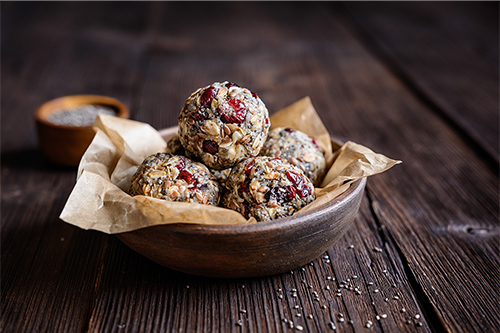
Healthy Oatmeal Balls 

Not only do these look good, they’re also good for you. They’re little rolled packages of oatmeal, chia seeds, cranberries, coconut, flax seeds, and honey. They take little work but will certainly make a mess of your hands as you roll them together. 

Tips: You can use a variety of ingredients according to the flavor profile you’re looking for. You can use peanut butter as the binder instead of honey, raisins instead of cranberries, cinnamon instead of coconut, and experiment with many other variations. 

If you’re not sure you want to make something edible, there are plenty of other ways to celebrate Sweetest Day. In the next section, you’ll see exactly what we mean. 

Nurture Healthier Relationships 

When it comes to communicating our thanks, sometimes we can be pretty good at letting life, work, school, and everything else get in the way. You can use this day to reflect on the people in your life who matter and on who you’d like to acknowledge more often.

Unlike Valentine’s Day, Sweetest Day is not restricted to celebrating your significant other. Think about all the people who are close to you. Do you have a friend who has been there for you and you want to let them know they are appreciated? Are there people you want to make amends with? Who do you want to show your gratitude for?  

Once you’ve identified your crew, you can start hashing out the details. You can keep it simple or go a little nuts with it. It’s entirely up to you! For some ideas, you can: 

01.

Do Something Nice  

A small act of kindness can go a long way. Do the dishes or take out the trash without being asked. Wash your brother’s car. Buy your coworker a cup of coffee. Compliment your classmate’s outfit. A very ordinary act of kindness, done unexpectedly, can go highly appreciated. 

02.

Write a Card 

Some people are great at “doing,” others are great at “saying.” If you know you don’t say certain things enough, or you’re simply better at expressing what you need to say on paper, writing a heartfelt card is another great option. 

03.

Spend the Day Together 

Let’s be honest, we all have a friend or family member that we don’t see as often as we used to or probably haven’t talked to in a while. Spending some time together may be just what you need. It doesn’t have to be anything outrageous. It can be as simple as going for a walk together, hitting the gym, cooking a meal (or going out for one).  

If you liked our sweet treat suggestions but want even more interesting and healthy ideas, check out our dietitian’s response to this question about Sugary and Salty Snack Substitutions. To access our monthly blog post highlights, subscribe to our newsletter today!