Which Fruits Are Best to Eat? | Q+A

Which Fruits Are Best to Eat? | Q+A


Question:

My doctor alerted me this past week that my blood glucose level is borderline pre-diabetes. I already eat what I consider to be a fairly healthy diet, limiting added sugars as much as possible. My question is, when it comes to eating fruit, which ones are good for me and which are not? I like to have a banana and berries in my steel-cut oats many mornings, and several nights a week I will eat a fruit mix of red grapes and fresh-cut pineapple, honeydew, cantaloupe and watermelon.

-Gary S.


Answer:

All fruits are good for you if you keep portions in check. Chances are that other factors might also be pushing up your blood glucose level. Perhaps your overall carbohydrate volume is high or you’re not getting as much fiber as you think. If you’re over 40 and have a history of being overweight, your sensitivity to insulin could be reduced.

Whatever the reason, it’s good that you’re limiting added sugar. The next step is to spread your complex carbohydrates throughout the day and balance them with lean protein or healthy fat at the same meal. Bumping up your activity will also help to burn any extra fuel consumed. Doing these two things should result in lower overall blood glucose levels.

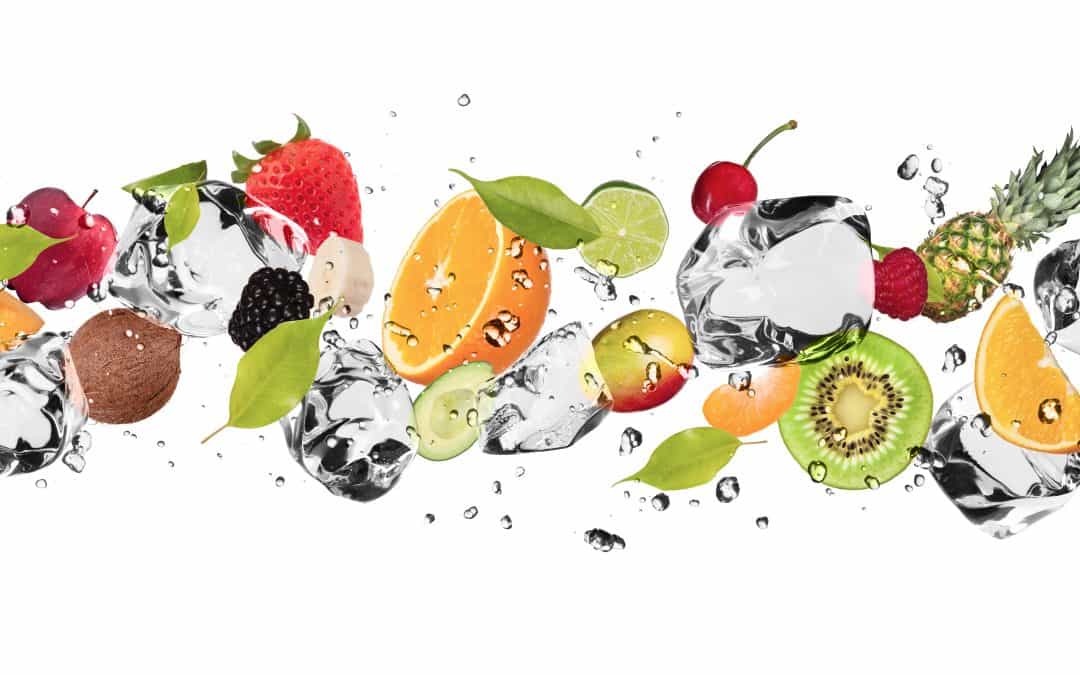
In regards to fruit specifically, look first at the volume you’re eating. Because fruit is refreshing, light and sweet, it’s easy to eat a large quantity before getting full. Twenty grams of carbohydrate from fruit at a sitting is a good amount to enjoy without overwhelming your system with natural fructose sugar. This serving would be equal to about: 1 C. berries, a small 6” banana, 2 C. melon, a 2.5” diameter apple or pear, ¾ C. grapes, 2 medium plums or kiwi, 1 large orange, or 18 sweet cherries. From your description of multiple fruits consumed at once, I’d suspect your portions are nearly double this amount.

Granted, some fruits are higher in sugar than others. But it’s what you eat with them that will create the overall effect on your blood glucose. A fresh apple with peanut butter will not spike blood sugar as much as the same grams of carbohydrate from canned pineapple by itself. Adding cottage cheese to the pineapple will blunt the rise in blood glucose. Munching on grapes instead of popcorn will peak your blood glucose unless you pair the grapes with something like a couple of hard-cooked eggs.

For a breakdown of various fruits’ sugar content, see our previous article Which Fruits Contain the Most Sugar? More on the subject found here: Is it true that I need to limit my fruit consumption because fruits are high in sugar and carbohydrates?

– Debbie J., MS, RD

This article should not replace any exercise program or restrictions, any dietary supplements or restrictions, or any other medical recommendations from your primary care physician. Before starting any exercise program or diet, make sure it is approved by your doctor.


Ask our Dietitian

QA_icon

Have a nutrition question? Our registered dietitian is ready to help!

Email nutrition@lafitness.com or submit your question below and it may be featured in an upcoming article!

7 + 4 =

LA Fitness Living Healthy subscribe button

Want more? SUBSCRIBE to receive the latest Living Healthy articles right in your inbox!

Share In Good Habits To Keep Fit By Dining With A Friend

Share In Good Habits To Keep Fit By Dining With A Friend

SHARE IN GOOD HABITS TO KEEP FIT BY DINING WITH A FRIEND

Workout with a friend & dine with a friend. Good news – if your friend is a healthy eater you may make better food choices, too! Simply put, we use what others eat as a guide for our own eating behavior. People are prone to mimic the behaviors of others that they want to affiliate with, often without conscious awareness. Simply observing others making lower-calorie food choices increases the likelihood that you’ll make similar choices. More than “monkey see, monkey do,” this reflection of action is with intent and direction.

la fitness, la fitness VIP rewards, la fitness rewards

VIP Rewards is here! If you want to share a workout experience with a friend and they are not yet a member, you can have a 14-day VIP Guest Pass sent to them. And if they join LA Fitness within 90 days of using the 14-day Guest Pass, you’ll earn 1,000 points to redeem for rewards.*

Positive messages in your environment work, too. Reading a daily affirmation or reminder about healthy eating can also impact decisions and actions at mealtime. Consider signing up to receive a daily inspirational quote to your phone or email each morning. Subscribe to our blog to be notified of new Living Healthy articles.

So what does that mean if you are a healthy eater, but your meal partner is not? Consider the dining opportunity as your chance to model healthy food choices and intake for him or her. The effect is subtle and can happen over time with repeated occurrences, so no verbal discussion about nutrition or health with your friend is necessary, which may be construed as unwanted “advice” and end up being counter-productive. Just set a good example of eating nutritious foods in appropriate portions, and order first if you are at a restaurant.

If your wider social circle regularly consumes unhealthy foods, don’t conform to the majority! They may unwittingly undermine your intentions to be healthy. Keep in mind that when others ask you to share in their indulgences, they don’t just want you to enjoy that specific food or drink, but may really be looking for your acceptance and approval of their choices by your participation. It generally takes three polite “No, thank you” responses before people quit asking. Your demonstration of self-restraint might be the influence they need to do the same.

This article should not replace any exercise program or restrictions, any dietary supplements or restrictions, or any other medical recommendations from your primary care physician. Before starting any exercise program or diet, make sure it is approved by your doctor.

LA Fitness Living Healthy subscribe button

Want more? SUBSCRIBE to receive the latest Living Healthy articles right in your inbox!

Heart Healthy Month

Heart Healthy Month

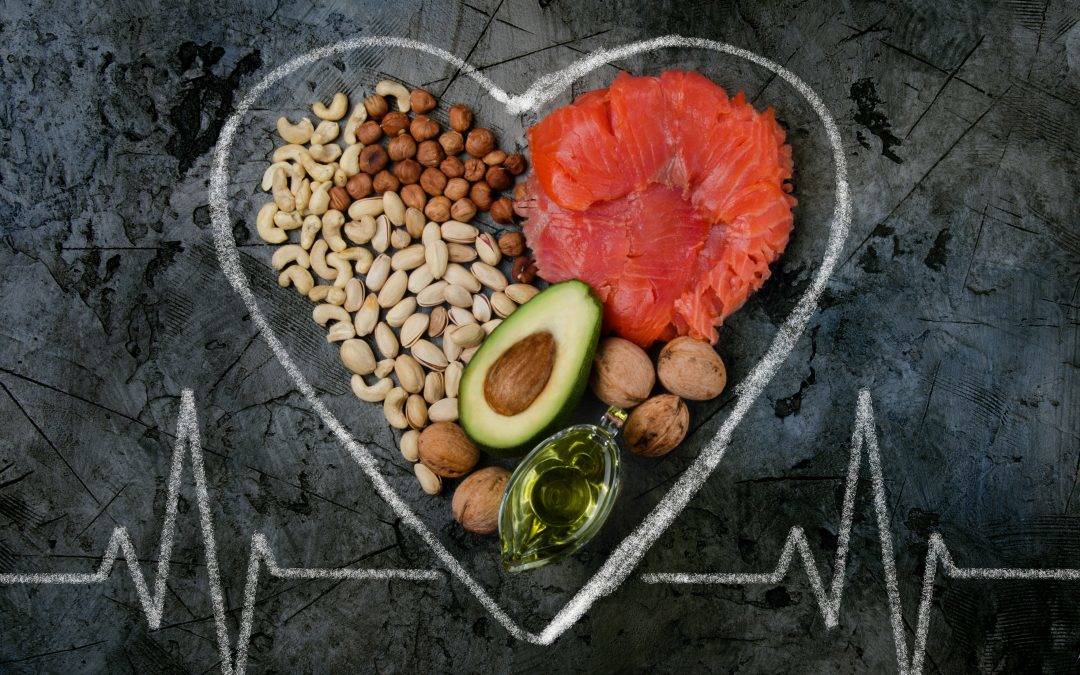
Heart-Healthy Fats for Every Body

Debbie J., MS, RD contributed this article –

We’re on a mission to help Augie Nieto’s nonprofit charity find a cure for ALS (amyotrophic lateral sclerosis), which is a debilitating neurodegenerative disease that can impact anyone. Augie was diagnosed with ALS over 10 years ago and established Augie’s Quest to help find a cure for ALS. For over 5 years, LA Fitness has held an annual fundraiser each February to raise funds for Augie’s Quest. This year’s fundraiser, Action for ALS, will be on Saturday, February 25.

To stay committed to healthy eating & help improve his longevity, Augie focuses on a nutritious diet that includes extra virgin olive oil and good fats. Choosing the best types of fat is indispensable for your heart health and weight management.

You may have heard that a high intake of saturated fat, trans fat and dietary cholesterol raise the risk of cardiovascular disease. But did you know, recent studies show that consuming unsaturated fat as the predominant form of dietary fat, combined with adequate omega-3 fats, actually protects your heart from coronary artery disease1? The impact is even greater in combination with a plant-based diet low in salt and sugar2 and in conjunction with an abundance of fruits, vegetables, and whole grains as the main forms of carbohydrates1.


Augie Nieto, Founder of Augie’s Quest


5 Simple Ways to Improve Your Heart Health

Substituting saturated and trans fats with unsaturated fats lowers LDL (bad) cholesterol production by the liver, meaning less potential for artery-clogging plaque. Keeping the “pipes clear” with healthy fats and adequate fiber is only one piece of the puzzle. Preventing damage to the epithelial cells lining the vascular wall and avoiding high blood pressure are also critical to avoiding stroke and heart attack. Unsaturated fats do both. In particular, olive oil’s polyphenols have anti-inflammatory and anti-oxidant functions3 to protect epithelial cells.

What’s the difference?

Virgin olive oil is result of cold extraction of the fat from olives, resulting in acidity less than 2%. Extra virgin olive oil is a higher quality virgin oil with less than 0.8% acidity.


The Mediterranean diet, of which olive oil is the predominant fat source, is associated with increased longevity3 as well as reduced risk of cardiovascular diseases, improved health, lower mortality, and prevention of cancer and age-related cognitive decline as Parkinson’s and Alzheimer’s. Olive oil has bioactive compounds that alter cells’ gene expression, including those active in pathways of the aging process. In short, cells and tissues live better, longer.

Changing the fat that you eat may also change your body fat. While weight loss is multi-factorial, studies indicate that a high monounsaturated fat diet induces more weight loss compared to one with high saturated fat4. Why so? Olive oil, largely comprised of unsaturated fat, also contains phenolic compounds which have been shown to positively affect insulin sensitivity3 and therefore blood sugar control. These benefits are metabolically beneficial and that translates to better fat burning.

How to maximize your heart-healthy fats without increasing calories:
  • Use virgin olive oil for cooking in place of vegetable oil
  • Replace cream cheese with nut butter on bagels
  • Substitute marinara or pesto for alfredo sauce on pasta
  • Choose fish (omega-3 source) instead of meat three times per week
  • Opt for avocado instead of cheese on sandwiches
  • Try hummus in place of cream-based dips
  • Use an oil-based spread on toast & rolls instead of butter
  • Munch on a handful of nuts instead of a bowlful of chips

Use healthy unsaturated fats to your advantage, and your body will thank you in the long run!

This article should not replace any exercise program or restrictions, any dietary supplements or restrictions, or any other medical recommendations from your primary care physician. Before starting any exercise program or diet, make sure it is approved by your doctor.

References:

  1. Optimal Diets for Prevention of Coronary Heart Disease. Hu, F; Willet, W. Journal of the American Medical Association 2002; 288 (20): 2569-2578.
  2. A Plant-Based Diet, Atherogenesis, and Coronary Artery Disease Prevention. Tuso, P; Stoll, S; Li, W. Permanente Journal 2015 Winter; 19 (1): 62-67.
  3. Olive Oil and the Hallmarks of Aging. Fernández del Río, L.; Gutiérrez-Casado, E.; Varela-López, A.; Villalba, J.M. Molecules2016, 21 (2), 163.
  4. Effect of Dietary Fatty Acid Composition on Substrate Utilization and Body Weight Maintenance in Humans. Krishnan, S and Cooper, J. European Journal of Nutrition 2014 53 (3): 691-710.

Recommended Reading

Good carbs vs bad carbs
Debunking Diet Myths

Debunking Diet Myths

With so many sources offering nutrition advice, it’s hard to know what’s true. Even factual information can become distorted by the time it reaches you. Like a game of telephone, the message often changes as it’s passed along. Here, we debunk 5 common diet myths to...

What Should I Eat While Training for Running? | Q+A

What Should I Eat While Training for Running? | Q+A

Need some advice for training specifically for running?

See what kind of foods may help with your running. No matter if you are training for a marathon or just want to run for fun!


Question:

I am by no means an apex athlete or anything.  However, I would like to start to train for an 8k run next March.  I currently do workout with a trainer at the Mt. Prospect Club (who’s awesome by the way).  Can you recommend an eating plan or point me to some resources to help me make the best decision when it comes to nutrition and my training?  Thanks in advance for your time.

-Robert T.

Answer:

Bravo on planning well ahead of time, Robert.  Let’s say that someone starting out jogs at 12-15 minutes per mile.  Your total jog time also depends on how far your current distance is. Conservatively, let’s say that it’s 2 miles. So perhaps you’re moving 24-30 minutes now.  By March, you’d like to be running faster 10-12 minute miles to complete the 8K (5 mile) race in about an hour. Given the time and energy expended, your training diet will not be much different than that for your current workouts with your trainer, but may be comprised of more carbohydrate and ample fluids.

breakfast

Your initial nutrition plan should be to support your in-gym training & short runs, and to experiment with what foods your gut can tolerate prior to a morning race. Pre-workout nutrition is key so you have the fuel you need to complete an exercise session without feeling drained. Read more about fueling up by clicking here. A bowl of cold cereal with milk might sit well for some individuals but be too slushy for others. An egg white, half an English muffin and half a banana may be all that you need after you wake up to have a successful workout an hour later. Now is the time to try whatever smoothies, protein shakes or bars you might like.

By January, you’ll want to shift your focus to eliminating heavy fats and big meals that make you sluggish, as well as cutting back on alcohol, desserts, and late evening eating. Your muscle cells will be in full training mode to become more efficient aerobically, and they’ll need lots of nutritional support. Balanced lunch and dinner meals mean a plate with 1/2 vegetables, 1/4 starch (potatoes, rice, pasta, etc.), 1/4 lean protein (poultry, fish, lean meats) and a tablespoon of healthy plant fat. Picture a big bowl of shrimp and vegetables stir-fried in oil with just one scoop of rice on the side. For heartier breakfasts on non-run days, you can pick a starch, protein, fruit and milk product such as oatmeal with raisins, nuts and low fat milk. Add a glass of water to your daily fluid intake.

For the few weeks preceding the race, it’s all about ready fuel and recovery as you will probably be running more often and for longer. Read more about recovery nutrition by clicking here. Having adequate glycogen stores will give you sustained energy beyond the blood sugar derived from your most recent meal. The key to muscle glycogen is complex carbohydrate intake, not just before a run, but daily at each meal. Picture the meal balance described in the last paragraph with whole grains, beans, or corn. Then add starch such as pretzels or popcorn at snacks, washed down with another additional glass of water.

You can also read the Academy of Nutrition and Dietetics article “Beginners Guide to Running Your Personal Best” by clicking here.

– Debbie J., MS, RD


This article should not replace any exercise program or restrictions, any dietary supplements or restrictions, or any other medical recommendations from your primary care physician. Before starting any exercise program or diet, make sure it is approved by your doctor.

Ask our Dietitian

QA_icon

Have a nutrition question? Our registered dietitian is ready to help!

Email nutrition@lafitness.com or submit your question below and it may be featured in an upcoming article!

3 + 6 =

LA Fitness Living Healthy subscribe button

Want more? SUBSCRIBE to receive the latest Living Healthy articles right in your inbox!

Suggested Articles

How Much Sugar Should You Have in a Day? | Q+A

How Much Sugar Should You Have in a Day? | Q+A

How much sugar do you consume in a day?

Find out nutrition tips below about sugar intake and where to get the best sugars from.


Question:

What is the high and low for a healthy daily sugar consumption?

-Michael B.


Answer:

“Sugar” includes small carbohydrate compounds, both natural and added. Let’s start with natural…

Natural sugars such as fructose and lactose comprise 50-100% of the calories from fruit and non-fat milk and 25% calories from some vegetables, so they make up a small base portion of the diet. There are minimal sugars in protein sources (egg, meat, fish, poultry) and most unprocessed starches (e.g. rice, oats), while none in pure fats. Natural sugars are not restricted – there are healthy fruitarians – although I will say that traditional strained juices are not recommended, and only endurance/pro athletes can probably balance out their diet while still eating 5+ servings of fruit.

The word sugar written into a pile of white granulated sugar

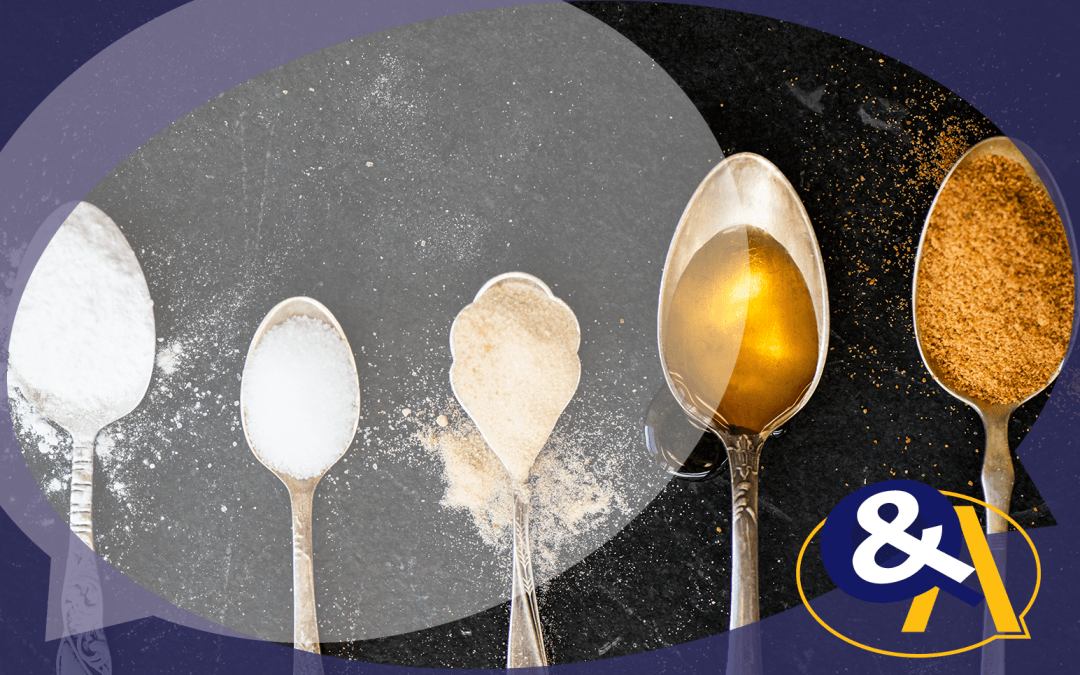
Added sugars, either for flavor or structure, are what we are concerned with. Corn syrup, table sugar, beet or cane sugar, honey, molasses, agave syrup and concentrated fruit juice are from natural sources, but used as sweeteners in food products and recipes. There are many diets that may reflect the newest 2015 US Dietary Guidelines for sugar consumption, including vegetarian, Mediterranean, higher-protein/modest carbohydrate, and medically prescribed patterns. Each one can affect an energy balanced diet with no more than 10% of daily calories coming from added sugars. This would be the high that you refer to in your question.

The limit is not a free license to eat ‘clean’ for a week then splurge on a dessert buffet, sending your body into a blood sugar spike. We’re talking about daily balance. A teaspoon of jam on toast, a drizzle of caramel in coffee, a splash of honey mustard dressing on a salad, and a tablespoon of sweet Thai chili sauce on salmon could hit the 10% mark for added sugar in a smaller diet. The idea is to consume your needed amounts of healthy protein, carbohydrate and fats, then only add sugars to meet your remaining calorie goals if not already met.

On the low end, you can survive without any sugar whatsoever if you eat enough other carbohydrates, but you’d be missing all the benefits from fruits, milk products and several vegetables which would NOT be healthy. No added sugar is certainly possible, though! It just means avoiding most condiments (think ketchup, teriyaki, marinara, BBQ sauce, dressings), sport or soft drinks, and processed foods, while eating wholesome mostly home-prepared foods. The result would not necessarily be bland. For example, oatmeal could be sweetened with dried fruit and cinnamon, meats can be marinated in vinegar or dry-rubbed, plain yogurt can be jazzed up with berries and nuts, and pasta can be dressed with diced tomatoes, garlic and olive oil.

Let us know the successes you’ve had in reducing added sugars by commenting below!

– Debbie J., MS, RD

This article should not replace any exercise program or restrictions, any dietary supplements or restrictions, or any other medical recommendations from your primary care physician. Before starting any exercise program or diet, make sure it is approved by your doctor.

 

LA Fitness Living Healthy subscribe button

Want more? SUBSCRIBE to receive the latest Living Healthy articles right in your inbox!

Suggested Articles

Ask our Dietitian

QA_icon

Have a nutrition question? Our registered dietitian is ready to help!

Email nutrition@lafitness.com or submit your question below and it may be featured in an upcoming article!

2 + 8 =