by Rachel Scruggs | Sep 30, 2024 | All, Fitness, Home, Motivation

As we transition from the warmth of summer to the crispness of autumn, September offers a perfect opportunity to refocus on our health and mental well-being. Here’s a guide to help you embrace wellness this month.
Physical Health: Building a Strong Foundation
Stay Active: With cooler temperatures, it’s a great time to enjoy outdoor activities like hiking, biking, or even a simple walk in the park. Aim for at least 30 minutes of moderate exercise most days of the week.
Balanced Diet: Incorporate seasonal fruits and vegetables into your meals. Think apples, pumpkins, and leafy greens. These are packed with vitamins and nutrients that boost your immune system.
Hydration: Even as the weather cools, staying hydrated is crucial. Aim for at least 8 glasses of water a day.
 Mental Health: Nurturing Your Mind
Mindfulness and Meditation: Start your day with a few minutes of mindfulness or meditation. This can help reduce stress and improve your overall mood.
Connect with Loved Ones: Social connections are vital for mental health. Make time to catch up with friends and family, whether in person or virtually.
Limit Screen Time: With the return of busy schedules, it’s easy to get lost in screens. Set boundaries for your screen time to ensure you have time for other enriching activities.
 Self-Care: Making Time for You
Set Goals: September is a great time to set new goals or revisit existing ones. Whether it’s a fitness goal, a new hobby, or a professional milestone, having something to work towards can be motivating.
Relaxation Techniques: Incorporate relaxation techniques like deep breathing, yoga, or even a warm bath into your routine to help manage stress.
Sleep Hygiene: Ensure you’re getting enough quality sleep. Create a bedtime routine that helps you wind down and stick to a regular sleep schedule.
 Community and Support
Join a Group: Whether it’s a fitness class, a book club, or a volunteer group, being part of a community can provide a sense of belonging and support.
Seek Professional Help: If you’re feeling overwhelmed, don’t hesitate to seek help from a mental health professional. Therapy and counseling can provide valuable tools and support.
–
September is a month of change and renewal. By focusing on both physical and mental health, you can set a positive tone for the rest of the year. Remember, wellness is a journey, not a destination. Take small steps each day, and celebrate your progress along the way.
Note: This blog post is a general guide and should not replace professional advice. Always consult with a fitness professional or personal trainer at LA Fitness for personalized guidance and support.

by Andrew Gabell | Jan 11, 2021 | All, Home, Podcast
Welcome to today’s episode about “Your Relationship to Food.” It’s the 46th episode of the Living Healthy Podcast.
On today’s episode, we are discussing how you can honestly assess your relationship to food and how you can create a positive relationship to food moving forward! Stop reading and start listening!
This podcast should not replace any exercise program or restrictions, any dietary supplements or restrictions, or any other medical recommendations from your primary care physician. Before starting any exercise program or diet, make sure it is approved by your doctor.
Recommended Podcast Episodes

by Sandra Koury | Nov 25, 2019 | All, Home, Wellness
November 25th is the International Day for the Elimination of Violence Against Women.
As a health and fitness blog, our usual focus is on physical health, giving you the resources to feed your body in healthy ways and engage in heart and brain-healthy work outs. To a lesser but equally important extent, we also break into mental, social, and emotional health.
Today we touch each of these elements of total wellbeing by talking about what happens when women are exposed to violence. Not only is it a matter of physical safety, but a matter of psychological, emotional, and social welfare.
Observing this day affords us the opportunity to recognize a problem that affects an alarming number of women worldwide, and to express our solidarity with all victims of violence.
- According to a National Crime Victimization Survey, approximately 500 women in the U.S. were raped every day in 2008.1 That’s 182,500 women over the course of the year.
- In 2016, there were 1,809 women in the U.S. who were murdered in single victim/single offender incidents reported to the FBI and 85% of them were, or had been, romantically linked to their killer.2
- According to a Global report, 51% of all detected trafficking victims are women and 20% are young girls.3
- Worldwide, around 15 million adolescent girls aged 15 to 19 have experienced forced sex in their lifetime.4 Based on data from 30 countries, only 1% of adolescent girls who have experienced forced sex reached out for professional help.4
- Child marriage still exists. Approximately 650 million girls and women alive today were married before their 18th birthday.5
Violence Against Women Affects Everyone
Consider that women who experience violence may need medical care and/or mental health services. Now consider that they may have children who witnessed or were affected in other ways by this violence who are now also in need of care to address trauma, behavior issues, and other potential concerns. This builds a harmful cycle of violence and trauma that can continue for generations.
In addition to perpetuating this cycle, violence against women is significant enough to have an impact on systems like healthcare and social services.
Looking strictly at the economic side of things, the impact on health and social services amounted to over $8.3 billion as a result of domestic violence in 2003.6
What are Some Signs Your Situation is Not Normal?
To help focus our discussion, we will narrow our attention down to domestic violence. It is not strictly violence within an intimate relationship but can also refer to violence within families.
Additionally, because it is not just women who are on the receiving end of domestic violence, we would like to offer information than can benefit everyone by looking into the signs and symptoms of a potentially toxic relationship.
According to PsychCentral, these are some of the potential indicators of psychological abuse within a relationship:
- Gaslighting: False information is presented to you with the intention of making you doubt your own memory, perception, or sanity.
- Example: Complete denial from the abuser that previous abusive incidents ever occurred
- Following abusive behaviors with apologies, gifts, and seemingly loving behaviors, only to repeat the abusive behaviors later on.
- Making you believe that everything (even their anger or poor behavior) is your fault
- Constant put-downs and excessive criticism
- Refusing to communicate
- Mean jokes or constantly making fun of you
- Saying “I love you but…”
- This statement indicates, “I love you now, but if you don’t stop this or that, my love will be taken away.” It is both a criticism and a threat that slowly strips away your self-esteem.
- Saying things like “If you don’t _____, I will_____.”
- Domination and control, especially using money or fear to impose that control
- Withdrawal of affection
- Guilt trips
- Isolating you from friends and family
- Constant calling or texting when you are not with him/her
- Threatening to commit suicide if you leave
Don’t blame the victim, even if they flat out say “It was all my fault.” Remember that signs of abuse often include feelings of guilt or responsibility for the situation. Instead, make sure they know it’s not their fault.
Be a safe space for them. Leave your judgement at the door and simply listen.
Offer to call a helpline with them.
Create a safety plan. A safety plan can consist of a meeting place, agreeing on a safe word, a specific number of phone calls to alert you that something is wrong, and more.
SOURCES
- “Violence Against Women Is A U.S. Problem, Too.” Amnesty International USA, 11 June 2011, www.amnestyusa.org/violence-against-women-is-a-u-s-problem-too/.
- “When Men Murder Women: An Analysis of 2016 Homicide Data.” Www.vpc.org, Violence Policy Center, 2018, vpc.org/studies/wmmw2018.pdf.
- “Global Report on Trafficking in Persons 2016.” Unodc.org, United Nations Office on Drugs and Crime, 2016, www.unodc.org/documents/data-and-analysis/glotip/2016_Global_Report_on_Trafficking_in_Persons.pdf.
- “A Familiar Face: Violence in the Lives of Children and Adolescents.” UNICEF DATA, UNICEF, 17 Jan. 2019, data.unicef.org/resources/a-familiar-face/.
- “Child Marriage: Latest Trends and Future Prospects.” UNICEF DATA, 12 Jan. 2019, https://data.unicef.org/resources/child-marriage-latest-trends-and-future-prospects/.
- “Violence Against Women in the United States: Statistics.” National Organization for Women, 2019, now.org/resource/violence-against-women-in-the-united-states-statistic/#endref14.

by Sandra Koury | Oct 2, 2019 | All, Health, Home, Wellness
October 6th – 12th is Mental Illness Awareness Week. Today, we’re breaking down the finer details of mental health. Our hope is that we can encourage a deeper understanding of what mental health is and start chipping away at the stigma.
Stigma is when you mentally attach shame to a person or group and this perception causes you to devalue or treat them differently. People with a mental health condition are often stigmatized because they are often perceived as different or not within whatever definition of “normal” we each carry.
It’s not uncommon to feel like we need to distance ourselves from what is unfamiliar. Maybe we just aren’t sure how to approach or talk to someone with a mental illness. The hope is that by learning a little more, this unfamiliar territory will become less intimidating and we can start to understand that people with mental health concerns are simply, people.
If, like many others, you find uncertainty in your interactions with those who suffer from a mental illness, consider that mental health does not fit a single definition or appearance.
In fact, there are a lot of mental disorders whose symptoms you can’t see! Even if you can see the symptoms, they can still be expressed differently among people with the same diagnosis.
Let’s consider, for a moment, the loss of a loved one. For some, the grief is relived as though the loss occurred mere days ago. For others, it can be a more peaceful remembrance.
Grief is not typically our first thought when we consider mental health. Often, we’ll think of disorders or illnesses whose names we hear often: ADHD, OCD, Depression, Schizophrenia, Parkinson’s, Autism, and others.1 However, the way we mentally process grief, and the way grief manifests itself in the body, (like physical exhaustion, digestive problems, stomach ulcers, etc.)2 is a great reminder that the experience is very impactful and very real. You do not need to have a diagnosable condition in order to experience the effects of atypical mental health.
Mental health encompasses everything from everyday stress, sadness, and anxiety to diagnosable conditions like Major Depressive Disorder and PTSD. When you consider that everyone has a brain, and that brain has the potential to overreact or underreact, it’s a lot easier to think of fluctuations in mental wellness as a very normal thing.
What About People Who Attend Therapy?
Therapy isn’t only for people with a mental illness, or a specified “problem.” It can be beneficial to almost anyone.
Let’s redefine therapy so it’s not exclusive to the treatment of a disorder and think about it in the sense that it is a way to care for your mental health. We always talk about protecting and healing the body, but our mind is equally in need of care.
For example, therapy can help people address thoughts as simple as these:
- I got a bad grade on a paper this semester. I am a horrible student and should probably quit school.
- My significant other didn’t put an emoji in this text message. He/she/they is angry with me!
- I am bad at basketball; therefore, I am bad at all sports.
These are all examples of cognitive distortions, or irrational thought processes. These thoughts are not so out of the ordinary. We’ve all had a moment of panic at some point and determined we were bound to encounter the worst-case scenario. Moments like these are helpful to remind us that changes in mental health affect everyone.
Ways to Care for Mental Health
Therapy is great when some guidance is preferred. However, caring for your mental health can take many forms. It can be that you do more or less of things like:
- Sleeping
- Exercising
- Getting some sunshine
- Playing video games
- Spending time with people whose company you enjoy
- Taking some time alone
Addressing the stigma starts with taking a moment to examine our own feelings about mental illness. Once you know where you stand, you’ll also know what questions you have and which blank spaces you need filled. Allow yourself some time this week to talk about it with others, to do some research, or to simply do some self-reflection.
To hear from Rachel Robins, Manager of PR and External Relations at the National Alliance on Mental Illness (NAMI), read her post on How Fitness Improved My Mental Health. Or, learn more by listening to our NAMI Podcast or our podcast dedicated to Mental Health Month. To access our monthly blog post highlights, subscribe to our newsletter today!
Sources:
- Grohol, John M. “Mental Disorders & Conditions – DSM5.” Psych Central, 18 July 2019, psychcentral.com/disorders/.
- Byrne, Jennifer. “Biological & Psychological Effects After the Death of a Spouse.” Healthfully, 10 Jan. 2019, healthfully.com/233023-biological-psychological-effects-after-a-death-of-a-spouse.html.

by Sandra Koury | Sep 30, 2019 | All, Home
It’s International Podcast Day! So, for today’s article, we’d like to highlight some of our favorite episodes from 2019!
On this episode of our podcast, our hosts Andrew Gabell and Candice Currie speak with Subbarao Myla, Medical Director at the HOAG Cardiovascular Institute, to talk about the physical, spiritual, and nutritional aspects of heart health.
An interesting, and less commonly discussed, topic in heart health is love and heartbreak. You’ll hear about how the heart reacts to oxytocin, which Myla termed “the hormone of love” and you’ll learn how and why a person can actually die of heartbreak.
Don’t worry, we also discuss the positive side of things like how to help “fix” a broken heart. Myla even gives us some great insight into heart healthy nutrition tips and shares how dark chocolate can help lower your risk for a stroke!
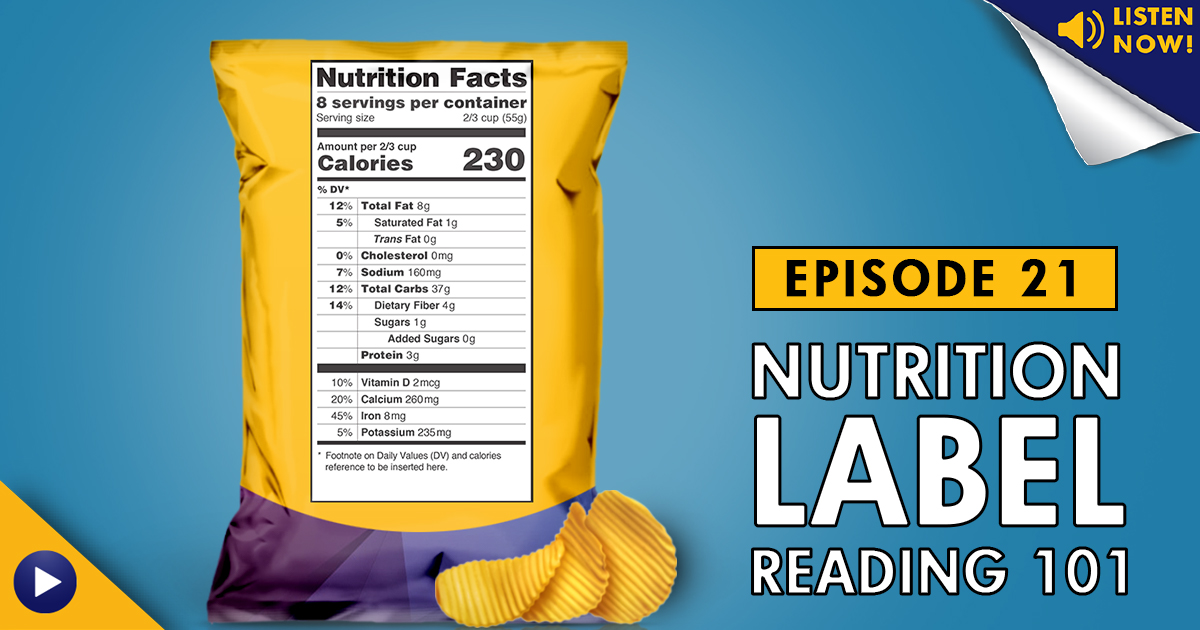
In this episode, you will learn not only how to read the different sections of a nutrition label, you will also learn about macro-nutrients and what they are, which fats you should look out for, and even why popcorn has 2 sets of nutrition facts. Haven’t you ever been curious why anyone would need to know the nutrition facts for both popped AND un-popped popcorn? We’ve been curious, so we found out.
You’ll also hear from Matt to get the History Lesson on Food Labels You Never Knew You Needed, and from our Registered Dietician, Debbie James, to get the full nutrition label breakdown.
Dr. Neel Doshi, certified psychiatrist and our guest for Episode 23, talks about what it means to be mentally healthy. He explains that “mental health is just a state-of-being which takes into account our cognitive, psychological, and emotional health.” Many factors, including our biology, psychology, social lives, and our environment impact our mental well-being.
Listening to this podcast, you will learn just how normative our interactions with each other should be, regardless of whether we are aware or not aware of someone’s mental wellness or illness. You will also learn about how social media, technology, and exercise play a role in your own mental health.
One of the most important things we can do is to start de-stigmatizing mental illness. We hope this episode offers information you never knew and helps you find ways to improve your personal well-being.
Debbie James, RDN and LA Fitness Master Trainer, Geoff Fox compete in a trivia battle on fitness and nutrition.
You’ll get answers to questions like “What type of exercise is proven to improve mood and feel-good chemicals like dopamine, serotonin, and endorphins?” and “Which non-meat-based product contains more protein than a chicken breast?”
Burning questions paired with some light-hearted rivalry make this episode so much fun to listen to. Give it a listen and see for yourself!
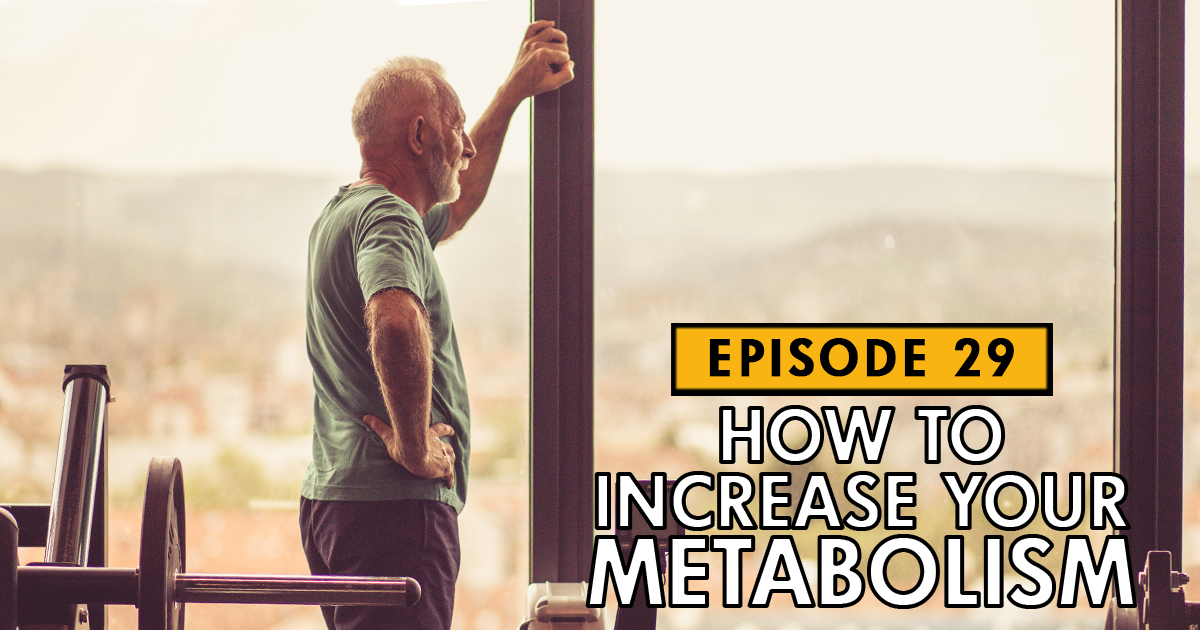
On Episode 29, you’ll hear from our registered dietician, Debbie James, on why metabolism declines with age, when it starts to do so for men and women, and what you can do to help rewind the clock on that decline.
One of our favorite lines from Debbie in this episode is about how we are becoming spectators as we get older instead of participating. If you consider that, as children we would constantly be running and playing, and as adults we’d take our own children or our pets to the park and lounge in the shade as they play, that thought really comes into focus.
We love the idea that we should go back to being participants in life instead of spectators, and it’s this physical activity that is key to reviving our metabolism.
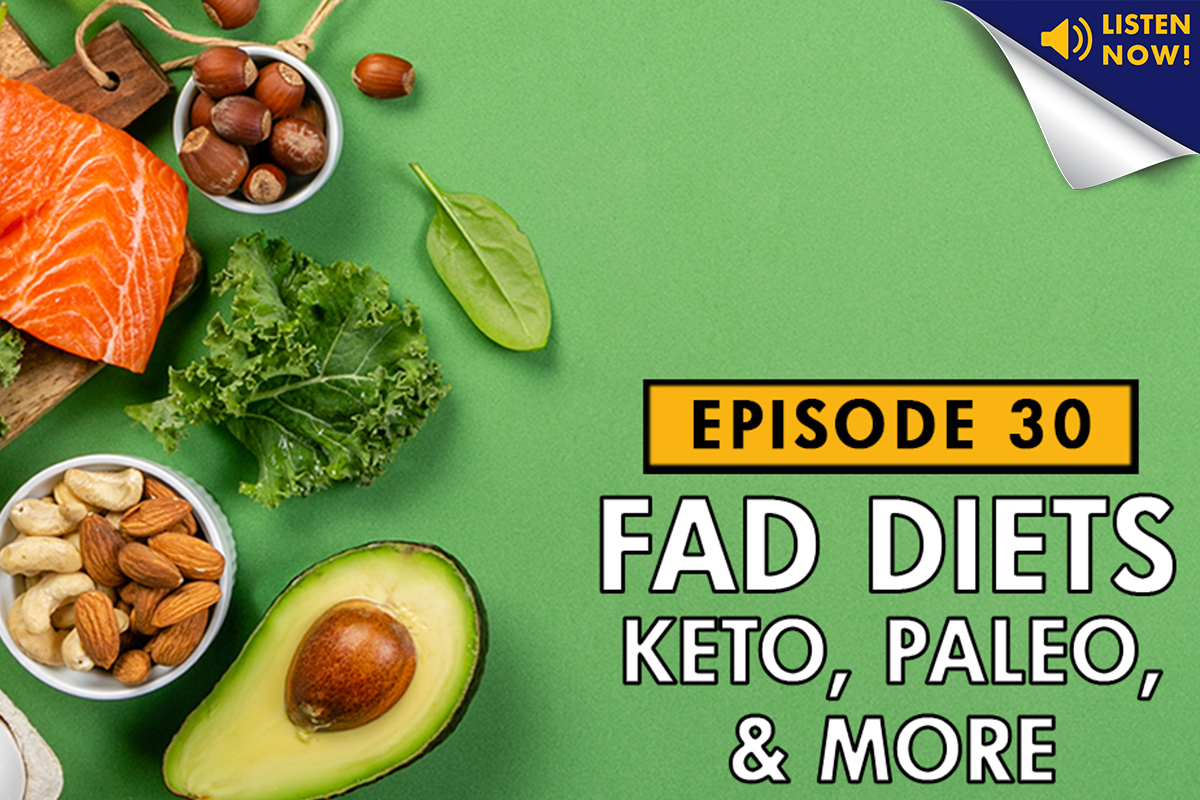
Now last, but by no means least of our favorite episodes, we have our discussion on fad diets. We’re talking about Paleo, Whole 30, Keto, Anti-Inflammatory, and Intermittent Fasting.
We’ve probably all dabbled in some of these diet plans and maybe even found a favorite and stuck to it like glue. If you stop to think about it though, do you really know the effect these diets have on your body? In this episode, you can get informed about the pros and cons of each diet and get a more complete picture of what your nutrition plan might look like if you chose to try one of these popular diets.
We hoped you enjoyed our featured episodes! Feel free to browse our full menu of podcasts to find other interesting and exciting topics. To access our monthly blog post highlights, subscribe to our newsletter today!