Body Types: The Ectomorph, Endomorph, and Mesomorph

Body Types: The Ectomorph, Endomorph, and Mesomorph

In 1954, William H. Sheldon published the book The Atlas of Men. It was a guide for classifying the human body based on its structural features. Today, we still use his classification system to draw a distinction between body types. According to Sheldon, there are 3: The Ectomorph, Endomorph, and Mesomorph. 

The idea behind the different classifications is that they can help you understand if your body is genetically predisposed to excel in some areas of fitness and engineered to do poorly in others. Understanding your body type means you can take advantage of what your body may naturally be good at and learn what you need to avoid or do more of in order to maintain good health.

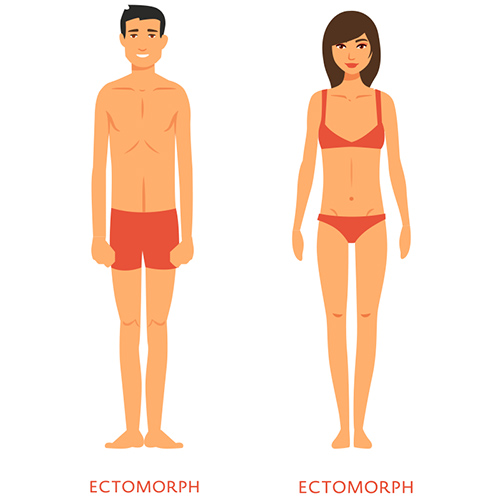
The Ectomorph

The Ectomorphic body type is characterized by: 

  • Small bones 
  • Long, slim muscles  
  • Long arms and legs 
  • Low, narrow shoulders 

Source:  Seyhan, 2019 

Individuals with this body type tend to have low fat storage and find it difficult to gain muscle. These are the people who seem to eat and eat and gain no weight. While this sounds amazing, they also have a hard time putting on muscle. To effectively bulk up, Ectomorphs have to follow a calorie-dense nutrition plan and adhere to plenty of strength training. Cardio may actually make it harder to build muscle if you have the Ectomorph body type. 

Sports and Activities Best Suited for Ectomorphs: 

  • Marathons 
  • Triathlons 
  • Cross-country skiing 
  • Tennis 
  • Cycling 
  • Circuit Training 

Source:  Ruiz, 2017 

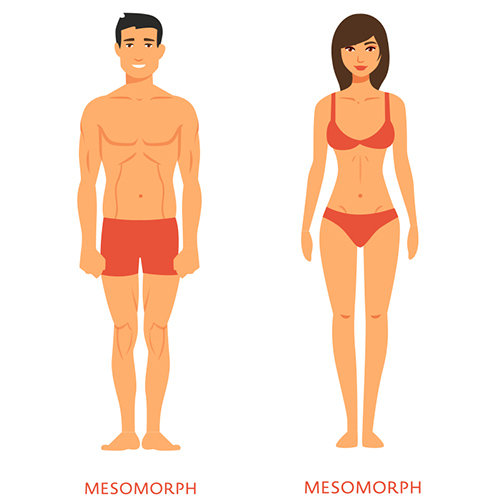
The Mesomorph

The Mesomorphic body type is characterized by: 

  • Noticeable muscularity 
  • Large and thick muscles 
  • Wide shoulders
  • Thick forearms 
  • Large hands, wrists and fingers 

Source:  Seyhan, 2019 

The Mesomorph tends to have lower body fat and is able to gain muscle easily. For this body type, it is easier to bulk up with strength training while cardio exists in the workout regimen mostly to maintain a lean look.  

Sports and Activities Best Suited for Mesomorphs: 

  • Weightlifting 
  • Bodybuilding 
  • Soccer 
  • Hockey 
  • Rugby 

Source:  Ruiz, 2017 

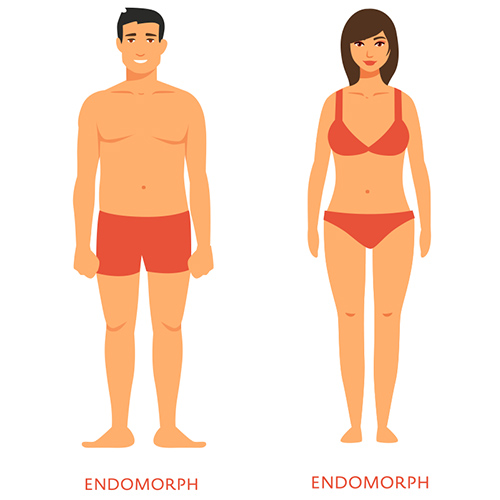
The Endomorph

The Endomorphic body type is characterized by: 

  • A round and soft body 
  • Short neck 
  • High square shoulders  
  • A sagging abdomen 

Source:  Seyhan, 2019 

Individuals with this body type will tend towards having higher body fat and lower muscle mass. Because of this, bulking requires attentiveness to calorie intake, so you don’t consume more than you burn. A combination of cardio and strength training can help you keep calories under control while also working on muscle gain. Cardio is more important for people in this group than it is for others. 

Sports and Activities Best Suited for Endomorphs: 

  • American football 
  • Long-distance swimming 
  • Rowing 
  • Cross-country skiing 
  • Snowshoeing 

Source:  Ruiz, 2017 

Combination Body Types

It’s possible that you may have a combination body type if you identify with elements from multiple categories. Some online calculators claim they can estimate your body type after you’ve answered a series of questions. However, Sheldon’s original method required a lot of measuring and some long equations. So, while they may give you a vague idea, we’re hesitant to believe in the accuracy of questionnaires that don’t consider detailed body measurements.   

If you do learn your unique body type, you’ll better understand your body’s exercise needs and potential physical advantages. That’s not to say, however, that you should consider yourself limited in what you can do. Many Ectomorphs and Endomorphs train their way to a lean, muscular, v-shaped or hourglass build. It’s not impossible, only easier or more difficult based on your individual body type.  

To learn how you can sculpt a v-shaped physique, check out our article on How to Build the Illusion of Broad Shoulders. To learn how to train your way to an hourglass body shape, read our article on How to Create the Hourglass Illusion. For more interesting reads, subscribe to our newsletter to receive monthly highlights from the LA Fitness blog! 

Sources

  1. Seyhan, Sinan. “Examination of Physical Fitness and Somatotype Features of Parkour Practitioners (Traceur) and Gymnasts in University Education.” Journal of Education and Learning, 8 Mar. 2019, www.ccsenet.org/journal/index.php/jel/article/view/0/38799. 
  2. Ruiz, Fernando Pages. “Just Your Type.” Experience Life, 9 June 2017, experiencelife.com/article/just-your-type/. 

What is the Best Beginner’s Diet? | QA

What is the Best Beginner’s Diet? | QA

Question:

What is the best method of dieting for a beginner who began going to a gym and wants to lose weight in a quick but safe fashion that it will stay off?

– Joseph

An “ideal” diet plan for a beginner would depend on his or her lifestyle and commitment level. Some people do well with an extreme change – starting with a clean slate and following strict rules – while others get more results from incremental smaller modifications they can live with long-term. A person can start changing their eating habits for the better by beginning anywhere.   

According to the National Weight Control Registry, people that have successfully lost weight and kept it off mostly report following a low fat, reduced calorie diet with high activity levels. About half did it on their own while half enrolled in some type of weight loss program. Actions that losers often had in common were that they: 1) participate in regular exercise, 2) track weight routinely, 3) eat breakfast daily; and 4) watch less than 10 hours of video/TV per week.  

I’d trim out any extras that you can already identify such as late-night eating, second helpings, alcoholic beverages or desserts. As wholesome fresh food is always best, decide if you can dedicate additional time in the kitchen or need to purchase starter meals that you assemble. Whether or not to follow a specific diet plan, macronutrient ratio or preset menus depends on your interest level and food preferences.   

We’ve lots more beginner weight loss advice in the Living Healthy Blog – check how to create your own meal plan and how to achieve quick weight loss. 

This article should not replace any exercise program or restrictions, any dietary supplements or restrictions, or any other medical recommendations from your primary care physician. Before starting any exercise program or diet, make sure it is approved by your doctor.

Some questions have been edited for length and/or clarity.

Ask our Dietitian

Have a nutrition question? Our registered dietitian is ready to help!

Email nutrition@lafitness.com or submit your question below and it may be featured in an upcoming article!

11 + 14 =


Recommended Reading - Q+A

Beverages and Your Body – Podcast Ep. 36

Beverages and Your Body – Podcast Ep. 36


Welcome to the 36th episode of the Living Healthy podcast, presented by LA Fitness. We’re back and we’re kicking off the new year with a host of fresh new topics! 

When we think about our nutrition plan, we often focus on what we eat. What we drink is just as important! Today we’re talking about everything from your daily water intake to what you drink before and after your workout. We even get into some myth busting during “Brittany’s Mythical Moment.”

Is cow’s milk still a necessary staple? Are recovery drinks actually doing anything for you? What is kombucha and what does it taste like? Tune in now to soak up all the good info! 

How Are We Doing? 


This podcast should not replace any exercise program or restrictions, any dietary supplements or restrictions, or any other medical recommendations from your primary care physician. Before starting any exercise program or diet, make sure it is approved by your doctor.

Timecard Markers – Beverages and Your Body – Podcast Ep. 36   

Intro 

 0:01 

Introduction of Registered Dietitian, Debbie James 

2:54 

WATER 

How Much Water Should We Be Drinking Daily? 

3:34 

How Does Drinking Water Affect Our Health? 

6:05 

What Happens When You Don’t Get Enough Water? 

6:57 

Should You Have Water or Gatorade Before a Workout? 

9:33 

COFFEE 

Can You Fit Coffee into a Healthy Lifestyle? 

11:28 

What are the Best Additives for Your Coffee? 

12:53 

Coffee Later in the Day 

14:37 

TEA 

Is Green Tea a Metabolism Booster? 

16:38 

How to Tell if Your Beverage is Too Hot to Drink 

20:01 

Brittany’s Mythical Moment – Is Carbonation Weakening Your Bones? 

20:54 

MILK 

When are Non-Dairy Milks Good Alternatives to Dairy Milk? 

24:56 

What is the Benefit of Non-Dairy Milk? 

25:45 

Is Cow’s Milk Still Important? 

27:24 
SODA AND ENERGY DRINKS 

What Happens When You Drink Soda Every Day?  

29:10 

Are Diet Soda Additives Bad? 

31:01 

How Do Energy Drinks Work in Our Body? 

34:03 

What are Some Tips to Help Cut Back on Soda and Energy Drinks? 

35:35 

KOMBUCHA 

What’s in Kombucha? 

37:32 

Taste Test 

38:14 

Why Drink It? 

38:37 

Why Drink It? – Recap for Andrew Who Wasn’t Paying Attention 

41:18 

EXERCISE AND HEALTH DRINKS 

42:24 

Pre-workout Drinks – Drink it or Steer Clear? 

42:42 

Is it Bad for You or for Your Heart? 

43:30 

Recovery Drinks – Do They Help or is it Just Marketing? 

44:44 

MEAL REPLACEMENT DRINKS 

46:08 

Which Ingredients to Look for 

 48:25 

Actionable Advice 

49:33 

Outro 

50:27 


Recommended Podcast Episodes 

How to Create the Hourglass Illusion

How to Create the Hourglass Illusion

Strong legs and glutes shape your entire figure. This is partly because your lower body is made up of the largest muscle groups, which means you’ll burn more calories and sweat more quickly when you exercise your lower body. In addition to that, you can build a more proportional figure when you build muscle in your butt and hips! 

The hourglass shape coveted by many women comes from the ratio of the bust, waist, and hips. With this body shape, the bust and hips will typically be the same size, or within a few inches of the same size, while the waist is about 25% smaller than the bust and hips.   

Now, obviously we can’t change the bone structure we’re born with, but we can trick the eye into seeing the hourglass shape. As we mentioned in our post on How to Build the Illusion of Broad Shoulders, we believe healthy bodies are the best bodies! However, many women strive to achieve the hourglass ratio. If this is your goal, we’re sharing how you can create the illusion of curvy hips even if you weren’t born with them. 

Workouts That Sculpt Some Serious Curves

If you read our Broad Shoulders article, you will have learned that building specific upper body muscles will help give the illusion of a larger frame. The opposite is true for a woman’s body; accentuating the hips is the primary target! Building strong glutes gives you a natural butt lift and the toned curves can make your waist look smaller. Not to mention, all the new muscle is certainly no illusion, which means you’ll also be training for strength with these exercises. 

Our Pro Results® Trainer, Kayla V., specifies these 5 exercises for stronger hips and glutes:

Hip Thrusters/Bridges

The hip bridge activates your glutes and is one of the easiest moves to start with. You start by lying on your back with your knees bent and your feet flat on the ground. Without letting your hips rock or sway with the movement, raise your hips up and lower them back down. Squeeze your glutes at the top of each move. When you’re ready, you can add weights by holding dumbbells or a barbell across your hips.

Abductor and Adductor Workout

Abductor muscles are the ones that help you push outwards while the adductors help you pull inwards. When using a machine that targets your inner thighs, you’re using an adductor machine. A machine that works the outside of the thighs and hips is an abductor machine. 

The equipment itself is pretty simple. You just sit down, position your legs on the inside or the outside of the pads (depending on which muscle group you want to work on) and slowly open and close your knees.

Kettle Bell Swings

Despite how it may look, this one is not an arm workout. The movement of the weight comes from the power in your hips. Always start with a light weight when trying out new exercises until you get the hang of it.  

Hold the kettle bell while standing tall and with your feet shoulder-width apart. Your knees will naturally bend as you prepare to swing the weight upwards, but you’ll also want to intentionally squat to aid your momentum. Keep your body weight over your heels and use your hips to send the weight swinging upwards to eye level. Allow the kettlebell to come back down to the starting position between your legs. 

Weighted Squats

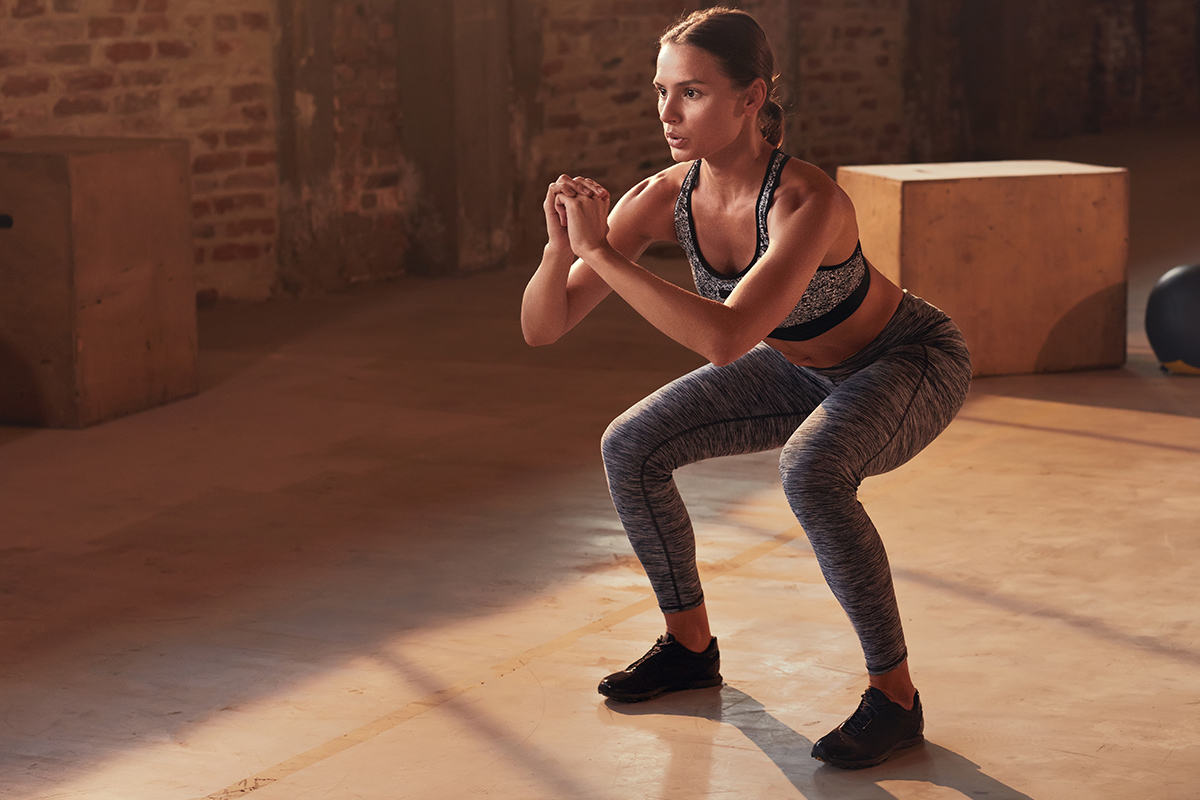
Weighted squats can be done with a barbell, dumbbells, or an assisted squat machine. You can also choose to carry a medicine ball or kettle bell. Before doing a weighted squat, make sure you can execute bodyweight squats with perfect form.  

Once you’ve mastered the bodyweight squat, you’ll be able to tell if you are compromising your form while carrying weights. Noticing poor form should tell you that you may need to decrease the amount of weight you’re holding.  

A good squat should look like you’re sitting in an imaginary chair. Your back should remain straight, and your knees should never come forward past your toes. 

Deadlifts

If you’re not ready to lift larger amounts of weight, dumbbell deadlifts are a great way to progress into heavier weightlifting.  

To do a deadlift with a barbell, stand behind a barbell you’ve placed on the ground. Keep a straight back as you bend to grip the barbell. Push your hips forward to come to a standing position and keep the barbell at arm’s length. Return the bar to the ground by squatting, but make sure you keep your back straight for the whole movement. 

Closing Thoughts

To create the hourglass physique, you must also build strength. Gone are the days when women feared strength training because they were afraid to get bulky. We’ve crushed those myths and now know that You Won’t Get Bulky Unless You Want To. For more information, listen to more strength training tips and QA’s on Episode 19 of our Podcast: Give Me Strength Training. 

As always, pay attention to pain or discomfort when working out, and use your best judgment when moving weights. 

To stay up to date with our content, click to subscribe to our newsletter and receive monthly highlights from the LA Fitness blog! 

How Much Protein Should I be Eating? | QA

How Much Protein Should I be Eating? | QA

Question:

I am a 38 year-old male, 250 pounds, 5’11” and I’ve been steadily working out since June and have lost almost 50 pounds, but I’m curious what is the right amount of protein that I should be taking in daily? I work out 5 or 6 days a week on average and work with a personal trainer six times a month. I usually do about 30-45 minutes of strength training followed up by 30-45 minutes of cardio. I’m currently shooting for somewhere between 130-180 grams of protein a day. Is that enough for my goal of losing weight while building muscle? Thanks.

-Steven M.

Great work on your consistent progress, Steven! For your body weight, goals and activity level your current aim for 130-180 grams of protein daily seems on track. That’s between 1.1 and 1.6 grams of protein per kilogram body weight, ideal for supporting muscle growth with an intensive workout regimen. The range midpoint of 155 grams provides 620 calories which would equate to about 30% of energy if your intake was 2000-2100 calories. 

Though you may be counting protein grams and calories, the quality and timing of what you’re eating has as much impact as – if not more than hitting calculated marks. Remember to support your workouts with some carbohydrate and a little protein in your recovery snack. A high-protein yogurt with fruit or granola works as well as a protein shake. For your main meals, lean proteins, vegetables, whole grains and healthy plant fats will promote efficient metabolism better than typical fare. For example, choose a healthy stir-fry (e.g. chicken, carrots/broccoli, cashews, brown rice) instead of a cheeseburger (regular ground beef, cheese, refined flour bun). 

This article should not replace any exercise program or restrictions, any dietary supplements or restrictions, or any other medical recommendations from your primary care physician. Before starting any exercise program or diet, make sure it is approved by your doctor.

Some questions have been edited for length and/or clarity.

Ask our Dietitian

Have a nutrition question? Our registered dietitian is ready to help!


Email nutrition@lafitness.com or submit your question below and it may be featured in an upcoming article!

12 + 8 =


Recommended Reading - Q+A