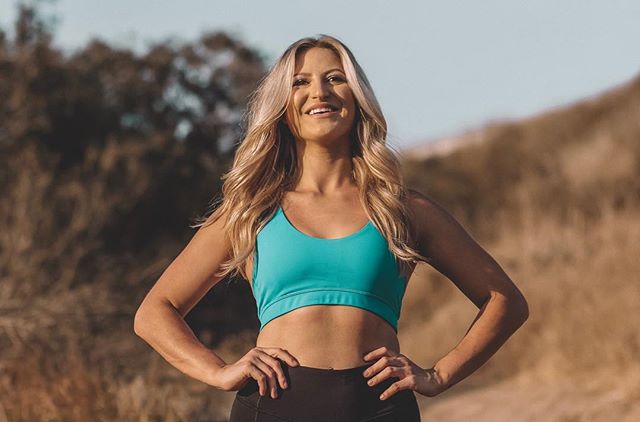
Healthy Tips for Losing Weight for Adolescents

Healthy Tips for Losing Weight for Adolescents

Question:

I have a goal of losing weight from 135 lbs. to 120 lbs. I am 17 years old and I go to LA Fitness every day. According to my calorie tracker, I eat 1,200 calories every day and burn 450. Can you please give me some healthy tips so I can lose weight faster? Because I am not seeing the changes I want to see.

– Rimsha M.

Answer:

At 17 years of age, you need plenty of energy (even if you’re done growing in height). Your tracked 1,200 calories simply are NOT enough for most boys or girls of your age, who should consume at least 1,800 calories. If you are truly overweight, meaning your height is 5’1” or less, then your high level of physical activity should create enough of a deficit for weight loss. Bravo for hitting the gym for daily exercise! Nutritionally, you can make sure your calories are spread out in at least 3 meals comprised of whole grains, fresh fruits and vegetables, lean protein, low-fat dairy and healthy plant fats. Without its snacks or desserts, the 2-week sample weight loss menu from ChooseMyPlate.gov should give you an idea of what to eat. Get plenty of water and sleep, too! Focus on the health habits you are improving, and the scale will eventually follow.

– Debbie J., MS, RD

This article should not replace any exercise program or restrictions, any dietary supplements or restrictions, or any other medical recommendations from your primary care physician. Before starting any exercise program or diet, make sure it is approved by your doctor.

Some questions have been edited for length and/or clarity.

Ask our Dietitian

Have a nutrition question? Our registered dietitian is ready to help!

Email nutrition@lafitness.com or submit your question below and it may be featured in an upcoming article!

10 + 4 =


Recommended Reading - Q+A

Good carbs vs bad carbs
Debunking Diet Myths

Debunking Diet Myths

With so many sources offering nutrition advice, it’s hard to know what’s true. Even factual information can become distorted by the time it reaches you. Like a game of telephone, the message often changes as it’s passed along. Here, we debunk 5 common diet myths to...

Understanding Nutrition for Weight Loss Success

Understanding Nutrition for Weight Loss Success

Question:

What should start with if I want to learn with nutrition? My focus would be weight loss.

– Ricardo E.

Answer:

We already have a primer for you! Our previous post Let’s Talk About the Basics: Carbs, Fats & Proteins includes the nutrients that contain calories. Nutrients are components of food that are vital for life. Water is the fourth major nutrient, but it has no calories. These parts of food are called “macronutrients,” while vitamins and minerals are called “micronutrients.”

What do Macro and Micronutrients Have to do with Weight Loss?

The Academy of Nutrition and Dietetics* has a simple 3-step message for weight loss: 1) Make smart choices from every food group; 2) Get the most nutrition from your diet; and 3) Balance food and physical activity. These are the key nutrition principles applied within almost every weight loss plan.

To learn more about nutrition, of course, you can read through our Living Healthy blog archives! For more in-depth learning consider a mass open online course (MOOC). Several are free (taken as an audit, not for credit) and available from trusted sources like respected U.S. universities.

Source:

Back to Basics for Healthy Weight Loss, The Academy of Nutrition and Dietetics, Oct. 18. 2018. Accessed 11.26.2018.

– Debbie J., MS, RD

This article should not replace any exercise program or restrictions, any dietary supplements or restrictions, or any other medical recommendations from your primary care physician. Before starting any exercise program or diet, make sure it is approved by your doctor.

Some questions have been edited for length and/or clarity.

Ask our Dietitian

Have a nutrition question? Our registered dietitian is ready to help!

Email nutrition@lafitness.com or submit your question below and it may be featured in an upcoming article!

15 + 10 =


Recommended Reading - Q+A

Good carbs vs bad carbs
Debunking Diet Myths

Debunking Diet Myths

With so many sources offering nutrition advice, it’s hard to know what’s true. Even factual information can become distorted by the time it reaches you. Like a game of telephone, the message often changes as it’s passed along. Here, we debunk 5 common diet myths to...

Exercising During Cold and Flu Season

Exercising During Cold and Flu Season

We are in the midst of cold and flu season. Have you taken the precautionary measures to avoid headaches and runny noses looming in every office building, school classroom and store this season?

We spoke with Chris McGilmer, MD, a sports and family medicine specialist at the Kaiser Permanente North Hollywood Medical Offices, who gave his expert advice on how to best protect the immune system this season and whether or not it’s okay to work out when sick.

This is what he shared:

How does exercise support our immune health?

Exercise, along with other healthy habits, can help strengthen our immune system. A healthy immune system protects us from infection and disease, including the viruses that cause colds and flu.

Some research has found that people who exercise regularly are less prone to illness because they have a better immune system response. Plus, exercise can help us manage stress and reduce the release of stress-related hormones. This is important because stress can be detrimental to our immune function. Other studies have found that exercise can help flush bacteria out of the lungs and airways – thus reducing our risk of respiratory illness – and that exercise can boost our number of infection-fighting white blood cells.

Is it okay to work out when you’re sick? When is it safe to exercise?

Exercise is recommended as long as your illness is mild and feel well enough to work out. For example, most people who have a common cold or mild upper respiratory symptoms, like a stuffed or runny nose, are generally able to work out. You’ll very likely have to lower the intensity and you’ll definitely need to monitor your heart rate and breathing. Certain decongestants and cold medications can increase the heart rate. Although some individuals with asthma and other chronic respiratory health conditions can exercise without any issues, it’s best that they reach out to their doctor to see if they can continue being physically active while they are sick.

Please keep in mind that overexertion can make you feel worse and slow down your recovery.

When are you too sick to work out? When is exercise not recommended?

If you’re experiencing a fever of 101.5 degrees or more, body aches, congestion, gastrointestinal issues, or feeling weakness, please wait a few days before working out. Also, drink plenty of fluids while you’re recovering to avoid dehydration both while you’re sick and when you return to your fitness regimen.

When is it okay to return to your exercise routine?

Typically, it’s okay to return to your exercise routine 48 hours after a fever has broken or diarrhea or vomiting has stopped. Your best gauge is your overall well-being. If you feel good, great. If your body is telling you to take another day off, listen to it!


Can you really sweat out a cold?

No. Sweating methods, such as a sauna or steam room, inhaling warm steam and exercise can provide temporary relief by relieving nasal congestion and loosening up mucus, but they will not shorten your recovery time. It normally takes seven to 10 days to fully recover from a common cold. If you choose to incorporate a “sweat out method” as part of your treatment plan, drink plenty of fluids and be on the lookout for possible signs of dehydration. When you sweat, you not only release water; you also release electrolytes.


Prevention Tips
  1. Get an annual flu shot. This is your best line of defense.
  2. Eat a healthy, balanced diet. Our immune system needs a variety of vitamins, nutrients, and minerals to function well.
  3. Get enough sleep. Inadequate sleep has been linked to a weakened immune system.
  4. Wash your hands constantly. A 20-second wash with soap and warm water is the best, but if water isn’t available, use an alcohol-based hand sanitizer.
  5. Avoid touching your face. The most common way germs get into the body is via the face.
  6. Manage your stress levels. Chronic stress can increase your risk of illness.
  7. Avoid overtraining and exerting your body. Listen to your body and give it time to recover.
  8. If you exercise in a gym or fitness club, sanitize the equipment before and after your workout to minimize the spread of germs.

Content contributed by Chris McGilmer, MD, a sports and family medicine specialist at the Kaiser Permanente North Hollywood Medical Offices. 


Recommended Reading

Good carbs vs bad carbs
Debunking Diet Myths

Debunking Diet Myths

With so many sources offering nutrition advice, it’s hard to know what’s true. Even factual information can become distorted by the time it reaches you. Like a game of telephone, the message often changes as it’s passed along. Here, we debunk 5 common diet myths to...

Recommendations for Dietitians and Dietary Books

Recommendations for Dietitians and Dietary Books

Question:

I live in Florida and need a dietician due to cholesterol, triglycerides and other issues. Can you recommend a good dietician or books?

– Myles V.

Answer:

There are several directories for Registered Dietitians in the state of Florida such as www.DietitianCetnral.com and https://www.eatright.org/find-an-expert. You can narrow your search to a specialty such as “cholesterol management” or “heart health,” or to your city.  Even if medical nutrition therapy is not a covered service under your health plan, you may find a list of providers from your insurer.

You can verify a dietitian’s license with the Dietetics and Nutrition Practice Council of Florida through https://appsmqa.doh.state.fl.us/MQASearchServices/HealthCareProviders.

– Debbie J., MS, RD

This article should not replace any exercise program or restrictions, any dietary supplements or restrictions, or any other medical recommendations from your primary care physician. Before starting any exercise program or diet, make sure it is approved by your doctor.

Some questions have been edited for length and/or clarity.

Ask our Dietitian

Have a nutrition question? Our registered dietitian is ready to help!

Email nutrition@lafitness.com or submit your question below and it may be featured in an upcoming article!

8 + 10 =


Recommended Reading - Q+A

Good carbs vs bad carbs
Debunking Diet Myths

Debunking Diet Myths

With so many sources offering nutrition advice, it’s hard to know what’s true. Even factual information can become distorted by the time it reaches you. Like a game of telephone, the message often changes as it’s passed along. Here, we debunk 5 common diet myths to...

Member Spotlight | Understand Your Body and Change Your Life

Member Spotlight | Understand Your Body and Change Your Life

What are your current fitness goals?

My number one fitness goal, now and always, is to keep my autoimmune disease under control. Additionally, it is always a goal of mine to live a healthy and well-balanced lifestyle. I like to find the balance between enjoying my time in the gym and enjoying other activities, like eating out and having popcorn at the movies or a hot dog at a baseball game. It is so important to me to maintain a long-term and sustainable healthy lifestyle. Being too restrictive with my diet does not work for me!

How has training helped shape/change your fitness lifestyle?

Training has changed my mind, body, and soul! I remember how uncomfortable I felt in my body before I began my fitness journey, and before I started lifting weights. I hated the way I looked and I had to change my outfit 500x before leaving the house because I couldn’t stand the way I looked in my own clothes. Through weight training and proper nutrition, I have been able to shape a body that I truly love and enjoy. This has absolutely transformed my mindset. I am more self-confident and comfortable in my own skin. This transformation not only has an impact on my relationship with myself but also has leaked over into other aspects of my life, such as my job and relationships with others.

Left: July 2017 | Right: July 2018

What got you to join LA Fitness? How has it influenced your life?

I had tried different things to try to get in shape and lose weight in my young adult life, from Weight Watchers to diet pills. None of these options worked for me because they were not sustainable long-term. The turning point for me was my diagnosis with an autoimmune disease, Sjogren’s (SHOW-grins) Syndrome in March of 2017. Autoimmune disease is a condition in which the body mistakes its own healthy cells as foreign invaders and attacks them. In my case, Sjogren’s Syndrome mainly affects the moisture-producing glands, such as the nose, mouth, and eyes. I was 23 years old and the doctors told me I had to be on medication for the rest of my life. Fearing the implications of what a long-term medication might do to me, I started seeking out holistic treatment options. First and foremost, I researched foods, proper nutrition and how I could use food to heal. I eliminated gluten and dairy from my diet to see how I would respond. Although I wasn’t eating those “unhealthy” options, I still struggled to lose weight because I didn’t know much about general nutrition and hadn’t learned proper portion control. Within two weeks without dairy, my cystic acne disappeared. I knew that I was on to something with food for healing and eating for health. I reintroduced gluten successfully, with no issues. When I reintroduced dairy, my stomach was very upset and my acne returned. I am still eating a dairy-free diet to this day. It was such an empowering experience to get to know how my body responds to certain foods.

Around the same time, my boyfriend and I decided to join LA Fitness in hopes of getting into shape. We realized we had put on some “relationship weight” in our first year together, but it wasn’t until we started actually getting into the gym that we realized how bad it had gotten. Between his knowledge of weight training and my knowledge of nutrition at that point, we began to learn and share with one another. We decided to start tracking our macronutrient intake and weighing out our foods. It was during this time that we learned the proper portion sizes for our bodies and the nutritional value of different food options. It was the perfect combination and it started to actually work. I have lost a total of 30 pounds and my boyfriend lost a total of 75 pounds, leaving us with over 100 pounds lost between us!


If you could give others one piece of advice, what would it be?

My biggest piece of advice would be to be patient with yourself and stay committed to your overall health. It’s not just about how you look, it’s about how you feel in your body, and how your body is functioning. By staying committed for the long haul, you will experience sustainable, long-term health and fitness. There are no quick fixes. Just keep going to the gym, keep fueling your body with healthy and nourishing options and the rest will follow.

Summer S.

LAF Member

IG: @summersenna 


Recommended Reading