Warm Comfort Foods Made Healthy(ish)
Most comfort foods we turn to are heavily laden with fat, starch and calories. There are healthier ways to enjoy down-home classics by making a few tweaks.


Any good workout plan needs a good nutrition plan. Over the years, we’ve learned a lot from our registered dietitian, Debbie James. Today, we’re compiling pieces of her best advice to help you construct your perfect meal plan.


Many of our readers want to know what they should be eating for weight loss, for healthy weight gain, for muscle gain, and more. To help simplify your search for the right answer, look no further than the article: How to Create a Meal Plan.
Here, you will find Debbie’s step-by-step process to construct a nutrition plan that meets your desired calorie count and macronutrient content. Because you’re making it yourself, you can easily tailor your “menu” to include only the foods you will actually eat. Paired with examples of how to follow each step, and tips for success, this article is a great place to start building your nutrition plan.
If, before getting started, you’d like some general information on carbs, fats, and proteins, you can read her post: Let’s Talk About the Basics.

As you put together your meal plan, you’ll be looking for ideas. What are examples of healthy pairings? Should you go for protein or complex carbs? What are healthy substitutions for foods you’re trying to cut-out? Fortunately, Debbie has explored these types of questions as well.
In her post on Healthy Suggestions for Breakfast, Lunch, and Snacks, Debbie offers a breakdown of potential meals that are about 750 calories each.
Another post on Breakfast and Lunch Options on the Go offers some sample meals that come in at about 600 calories each.
Depending on what your daily caloric needs are, you can add, remove, or swap items with healthy alternatives from the list you made in the first step of creating your meal plan. Keep in mind that sample meal plans are not meant to be repeated every day. The hope is that you will follow the structure but switch up your food choices so you can benefit from the nutritional content in your various food choices.

Vegan – For vegan meals, tasty options abound. Not only does Debbie talk about Vegan Breakfasts, she offers possible food combinations to give any meal more variety and provides readers with a list of the top vegan sources of protein.
Vegetarian – What if your meal plan is leaning towards vegetarian? Here, Debbie lists some high protein and low carb vegetarian foods that you can work into your meal plan. You’ll also find her response to questions about How to Lose Weight on a Vegetarian Diet or How to Gain Healthy Weight on a Vegetarian Diet.
Low-Carb – If you’re trying to go low carb, you might be interested in this piece on Cauliflower Substitutions, the most recent craze in terms of rice and dough alternatives. Or, perhaps you want to know about the Best Time of Day to Eat Starchy Carbs. Yup, there’s a piece on that too!

Snacks are also on our radar when we’re structuring our food for the day. They keep us from getting too hungry before our next meal and can help keep us feeling full and energized throughout the day. What you choose to put on your snack list, however, is just as important as what goes into your meals. Debbie’s Super Snacking Guide offers a nice breakdown of what you should aim for when putting together your snacks.
If you still need some more ideas or feel like your options are limited by your dietary restrictions, you may find her answer to this reader’s question helpful. It offers some insight into healthy substitutions for sugary and salty snacks. Other answers share which snacks will keep hunger at bay and which can help boost your energy. We haven’t forgotten about our readers with gluten sensitivities or intolerances. This list on Gluten-Free Snacks can help guide your decision-making as well.
If this all sounds like just a little too much to read, you can listen to Debbie’s advice in many of our podcasts. Some relevant topics you might enjoy include:
How to Never Fail at a Diet Again
How to Meal Prep the Right Way
What You’ve Been Wanting to Know About Fad Diets (Paleo, Keto, and More)
Your nutrition questions are always welcome and Debbie is ready to help! Simply email nutrition@lafitness.com or submit your question online and it may be featured in an upcoming article! To access our monthly blog post highlights, subscribe to our newsletter, today!

Okay, so this post isn’t for everyone. This one is for the yo-yo dieters and the “I can’t stick to my workout” crew. For many people, setting schedules, making plans, and sticking to routines is near impossible.
We might know exactly what we need to do, exactly how we should eat, or which workouts benefit our bodies. Even if we have all the right information, we still stray from the path to success. Why?
Well, we often forget something we’re commonly told: Everyone functions differently. Just because an approach works for Person A doesn’t mean it’ll work for Person B. So why take–on your health and fitness plan any differently?
If you’re setting up your New Year’s Resolutions and, in the back of your mind, you’re already anticipating the struggle, this one’s for you.
When we struggle to achieve a goal, it’s rarely the goal that’s the problem (unless it’s unrealistic or unattainable). So, instead of setting a different goal let’s focus on setting a different approach.
This is how to do it:

1. Take some time to think about what your reasons are for wanting to make some change. However you do it, make sure it’s memorable. Make a list and keep it accessible, think about them to yourself, say them aloud, tell them to someone, or find some other way to make them easy to remember.
2. Choose more than one! This is so important to do. If one of your motivators ceases to matter, or if you successfully hit a milestone, having more than one helps you keep going towards your ultimate goal.
3. Choose reliable motivators. For example: If you’re losing weight for health reasons, and you choose to motivate yourself with the possibility of fitting into a special outfit, what would happen if one day you decided you no longer cared for that outfit? A reliable motivator could be the sense of accomplishment from taking the stairs without getting winded or when you find you’re able to chase your kids for longer than a few minutes.

If you have a goal like “I want to lose 25 pounds in 3 months,” rewrite that goal to say something like: “In 3 months I want to be able to run a mile without stopping.” When you’re focused on your fitness level instead of on the scale, you’ll lose weight without even realizing it.
You can also take your big goal with the faraway end-date and dice it up into bite-sized pieces with closer end-dates. Doing it this way means you’ll have opportunities to hit more achievements which can do a lot for your motivation!

If you make a mistake, don’t let yourself slip into the idea that you may as well stop trying. If you swore off junk food, and one day you couldn’t help yourself and you had a donut, that doesn’t mean you can have junk food for the rest of the day because you already slipped up. Forgive the moment of weakness and enjoy the heck out of that donut. Then get back on track from there without undoing the rest of your day.
On that note, you should also make allowance for small indulgences here and there. Taking the hard-core “cold turkey” approach doesn’t work for everyone and you may sabotage your chances for long-term success.

Remember when we talked about planning and how it’s easier for some than it is for others? Waiting until the last minute can be the downfall of many. We understand. The end of the year is a really busy time. There’s no reason you can’t start to work towards your resolutions on January 10th instead of the 1st, or an hour from now if that’s what you wanted. The important thing is to set a hard start date. If you waffle back and forth on when you really started your diet, you’ll find reasons why this or that cheat meal is acceptable, because you “didn’t really start yet.”
Trust us on this one, your body doesn’t know the difference between starting your health plan on Monday or Wednesday or at the start of the new year or mid-February. The important thing is to decide when you’re starting and follow-through.
We can help you succeed! Follow our blog for helpful posts on fitness and nutrition topics, and for motivational stories from other LA Fitness members. You’ll find helpful posts like our dietitian’s answer to this question about How to Create a Meal Plan. You’ll also be able to listen to the episodes of our podcast, like this one on How to Like Running. To access our monthly blog post highlights, subscribe to our newsletter, today!
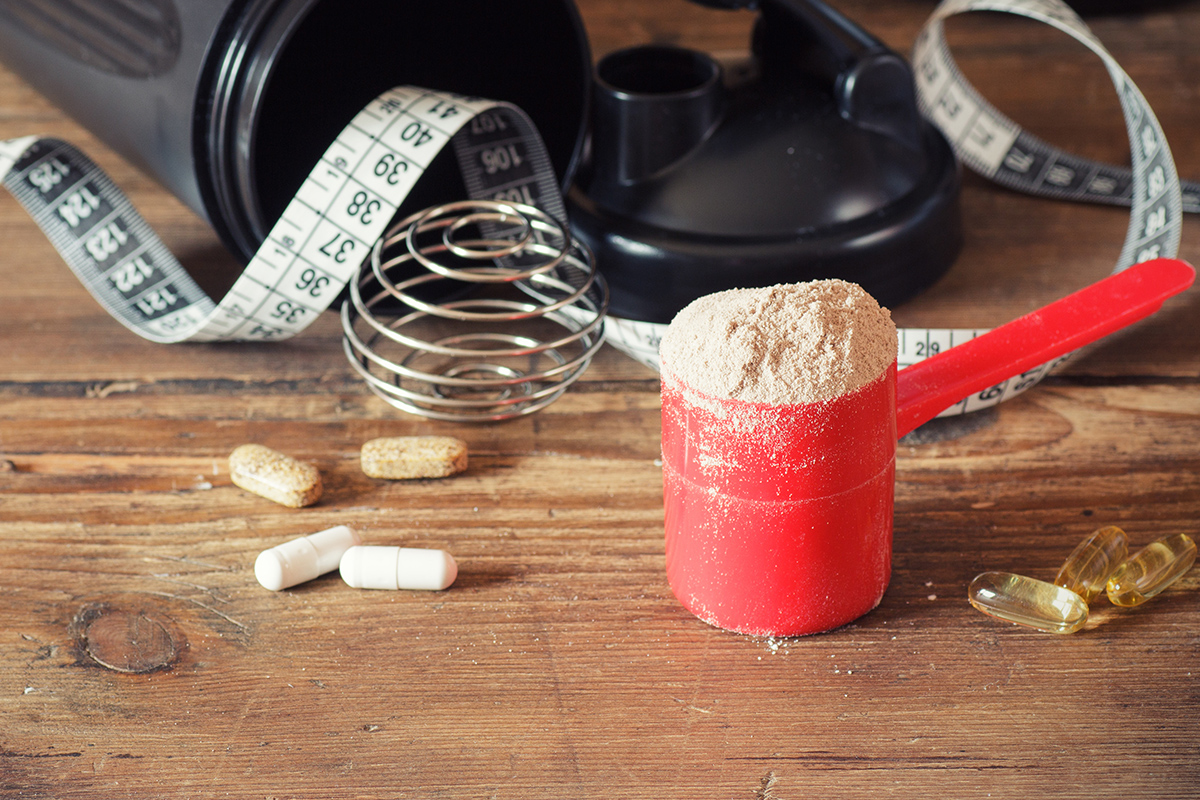

I am a pretty fit, over 50-year-old female. I eat anywhere from 1,200-1,400 calories per day. However, I’ve since learned my real issue is compulsive eating. I keep getting hungry and will crave sugary carbs (something I never really did when younger).
I take Carnitine about twice to three times per day and one to two scoops of Lean 1 fat burning meal replacement per day. I take 1 scoop in the morning at times with 2 wheat bread slices, a banana at times. I take another scoop again after a workout. The Lean 1 is about 95 calories for one scoop (11g carb cal/ 2.2g fat cal /10g prot cal). I started to use a post-workout scoop as a meal replacement generally. I must say the urge to overeat dramatically decreased doing all of this and my sugar levels and carb levels are more balanced in the day (protein and fat also)!
Dinner is the heaviest meal and, by the time I eat, I’m hungry for it. I recently added a microcellular casein protein scoop at night after working or as a snack hoping it will help achieve a more muscular / defined. I tend to crave candies around 11pm and one reason I chose the Casein option as well as for other benefits. I wanted recommendations on how to incorporate these three items into my daily regimen if I’m not doing so appropriately.
– Kina C.

Kina, it sounds like your supplements have had the desired impact on your compulsive eating and carbohydrate cravings. Let me say that, although I normally promote whole food solutions to hunger and other dietary issues, I’m glad these are working for you. Still, I’m curious if you tried a solid option (like half an apple with peanut butter) after workouts to forestall the candy craving?
Your intake of the meal replacement and protein powder total around 300 calories, which is a considerable portion of your day. Not knowing which foods these replaced and if they subsequently added or reduced intake from your previous eating habits, it’s difficult to comment on their use. Plus, “fat burning” supplements have other non-caloric components such as caffeine or other stimulants.
My feedback would also be to follow each products’ limits for use. Know that protein utilization at one time is rather limited (about 30 grams per meal), thus you may not be getting the most out the fat-burning meal replacement shake and micellar casein protein scoop if taken together after your workout. Perhaps moving one to an afternoon snack before dinner is in order. Sounds like your day is relatively low-fat and low-calorie leading up to dinner, therefore it’s no surprise you’re hungry enough to eat a ‘heavy’ meal.
Also, I’d advise sticking to your vegetables and protein dinner, and consider adding a half-cup of brown rice on your workout evenings. Don’t forget to search the Living Healthy blog for related inquiries! Read our previous answers regarding cravings and hunger for more advice.
– Debbie J., MS, RD
This article should not replace any exercise program or restrictions, any dietary supplements or restrictions, or any other medical recommendations from your primary care physician. Before starting any exercise program or diet, make sure it is approved by your doctor.
Some questions have been edited for length and/or clarity.
 Have a nutrition question? Our registered dietitian is ready to help!
Email nutrition@lafitness.com or submit your question below and it may be featured in an upcoming article!

Most comfort foods we turn to are heavily laden with fat, starch and calories. There are healthier ways to enjoy down-home classics by making a few tweaks.

Good nutrition is all about variety! Browse through our list of unusual fruits and veggies and give yourself a chance to try something new.

Does liberally salting your food help you pump more iron in the gym? Registered Dietitian, Debbie James, investigates the claims!

There seems to be this idea that, as we age, frailty and loss of energy are inevitable. However, these can be symptoms of something that is highly preventable: muscle loss.1 What is the primary cause of muscle loss? Inactivity!
Everyday activities like climbing the stairs, carrying groceries, playing with the kids or grandkids, or cleaning the house don’t have to become more difficult! Strength training is the answer to this common problem, and no, it’s not just for the gym buffs.
We’ll be taking you through the many benefits and some sample exercises with the help of Tufts University’s book on the Growing Stronger exercise program. The book is a completely free, accessible, and research-driven guide that can help you regain your strength and your independence.
Because the exercise program offered in Growing Stronger has been tested in its entirety, this article should not serve as a replacement. It simply highlights many key components of the program to showcase how fitness can be an easy and progressive addition to your lifestyle regardless of age.
Strength training can help alleviate the symptoms of many chronic conditions and diseases.1 Seguin and colleagues identify the following benefits for several common conditions:
Arthritis: Reduces pain and stiffness, and increases strength and flexibility
Diabetes: Greater control of your blood sugar levels
Osteoporosis: Builds bone density and reduces the risk of falls
Heart Disease: Reduces cardiovascular risk by improving lipid profile and overall fitness.
Obesity: Increases metabolism, which, in turn, burns more calories and aids long-term weight control.
Back Pain: Strengthens back and abdominal muscles. As a result, stress on the spine is reduced.
As with any new exercise program, it is important to consult with your doctor to make sure that your exercise plan is safe for you and that it aligns with your other health goals. Once you are sure you can proceed, there are still some safety recommendations the Growing Stronger authors would like you to consider:
|
Women |
Men |
|
2 pounds |
3 pounds |
|
3 pounds |
5 pounds |
|
5 pounds |
8 pounds |
They also advise that you choose adjustable ankle weights because you will be able to more freely alter what you’re working with.
3. Store your weights on the ground or at ground-level storage. This eliminates the possibility of the weights falling on you if you are attempting to reach them from a high storage location. You can even leave them in a wheeled cart for easier access.
4. A commonly cited piece of advice (but one still worth mentioning) is that you should aim to exercise every other day to allow your muscles to rest. You can also alternate muscle groups (legs one day, upper body the following day) to avoid overworking a single muscle group.
5. Perhaps the best thing you can do is to be attentive to the aches and pains in your body. Don’t work out if your muscles feel strained or if you feel unable to safely exercise.
The book offers a detailed breakdown of multiple exercises and even plans them in stages. Once you have completed the first stage (about 2 weeks), you will be able to move on to a more difficult set of exercises. Here are just a few of their recommended exercises divided by difficulty level.
Stage 1 exercises should be performed for 2 to 3 weeks before moving on to Stage 2. For each exercise, perform 2 sets of 10 repetitions with a 1-minute rest period in between sets.

You may already know how to do a basic squat; it is essentially the act of sitting down, without actually sitting down. This exercise is great for strengthening the hips, thighs, and glutes.
Placing your body weight into your heels (as opposed to you leaning into your toes), lower into a seated position and rise back up to your standing position. Be careful not to let your knees come forward past your toes. You can choose to actually sit on a sturdy chair as you perform this exercise and to use your hands to guide your motion until you get stronger.

These are just like regular push-ups except your feet are planted on the ground and you are pushing off the wall. This is still a great way to strengthen your arms, chest, and shoulders, without having to get down on the ground.
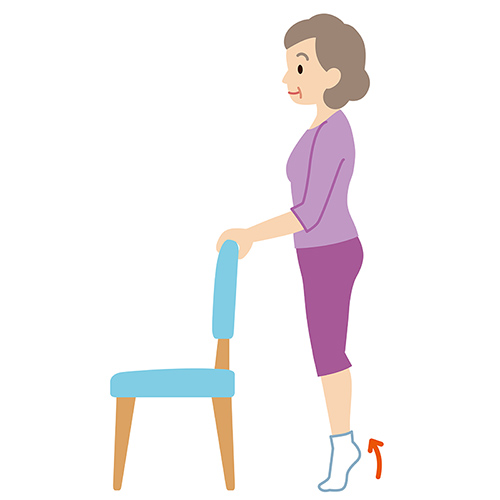
Also known as calf raises, this exercise strengthens your calves and restores your balance. Stand tall and with your feet flat on the ground. Using the back of a chair (or another stable surface) for balance, rise onto your toes and settle back down.
Stage 2 exercises should be performed for 2 to 3 weeks before moving on to Stage 3. For each exercise, perform 2 sets of 10 repetitions with a 1-minute rest period in between sets. If you find yourself able to complete 10 repetitions easily, and with proper form, consider increasing the weight of the dumbbells or ankle weights for your next set.

The biceps curl is a great strengthening exercise that also helps improve your grip strength. Using your lightest set of dumbbells, lift the weights by bending at the elbow and bring the dumbbells towards your shoulders. Your palms should be facing you. You may do this from a seated or standing position.
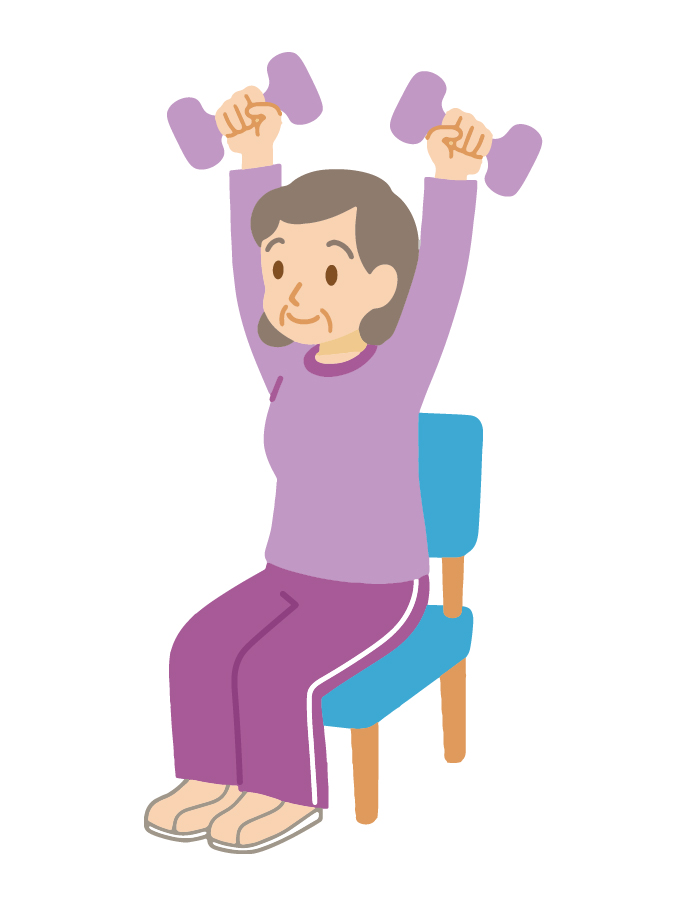
This exercise works the muscles in your arms, upper back, and shoulders. It simplifies tasks like reaching for items in high locations. From a standing or seated position, hold a dumbbell in each hand and bring the weight up towards your shoulders (as though you just did a bicep curl). Rotate your wrists so that your palms face away from you. This is your starting position for the Overheard Press.
With controlled movement, push the dumbbells up above your head until your arms reach full extension. Then return the dumbbells to your shoulders. Do not actually rest the weights on your shoulders.

The muscles in your hips, thighs, and glutes are putting in the work with this exercise. Not only can the Side Hip Raise shape your lower body, it can also strengthen your hip bones which are more vulnerable as you age.
Using a stable surface for balance, stand with your feet slightly apart and your toes facing forward. You may have ankle weights added to increase the difficulty. Without locking your knees, lift your leg out to the side, pause for a moment, and lower your leg back to the floor.
For each exercise, perform 2 sets of 10 repetitions with a 1 to 2-minute rest period in between sets. Again, if you find yourself able to easily and properly complete 10 repetitions, consider increasing the weight of the ankle weights.
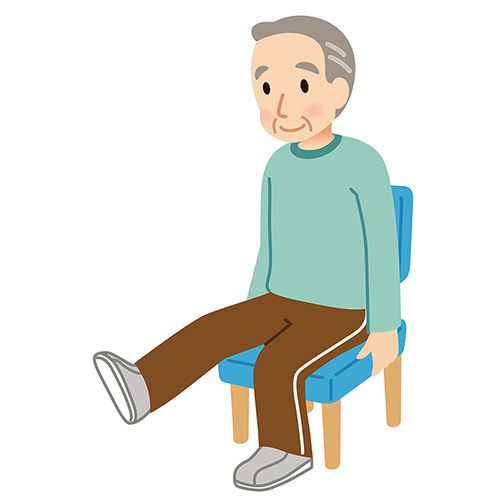

The muscles along the front of your thigh are the target of this exercise. It helps strengthen weak knees.
With your ankle weights fastened, sit all the way back in a sturdy chair with your toes pointing forward. Your feet should barely touch the ground. Flex one foot and extend your leg until your knee is straight. Then, lower your foot back to the ground. After you complete 1 set of 10, do a set with the other leg. Then start over to complete a second set for each leg.

If you strengthen the front of the muscle you should really strengthen the back as well. This exercise targets the hamstrings (the back of the upper leg) and pairing it with the knee extension can make walking and climbing stairs easier.
With your ankle weights fastened, stand behind a stable surface for balance with your feet just less than shoulder–width apart. Keep your foot flexed as you bring your heel towards your butt and pause for a moment before lowering it back to the ground. Do 1 set of 10 with each leg before starting on your second set.
If these exercises were exactly what you’ve been needing, the complete Growing Stronger guide contains even more. Let us know in the comments below if you try it out! If you’re ready to step things up, come check out our Silver Sneakers program. In this group class, you’ll work on total-body conditioning in an instructor-guided setting where you can still go at your own pace.
For more information on healthy living in older adulthood, read our registered dietitian’s answer to this question on Protein Advice for Seniors. Or, for a boost of motivation, read Paul and Karen’s success story who say the gym is like their fountain of youth! To access our monthly blog post highlights, subscribe to our newsletter, today!

I would like to increase my bone density. Do you have any suggestions for me regarding the best vegan foods to eat?
Very respectfully,
– Brenda H.
Congratulations on providing the first bone density inquiry to Living Healthy! Your answer follows. First, here’s a brief primer on bone mineralization for the rest of our audience: Bone is actually a living tissue with blood supply to the marrow and cells that are adding tissue (osteoblasts) while others remove it (osteoclasts). The main structural compound is hydroxyapatite, made from the minerals calcium and phosphorus. Bone also contains small amounts of magnesium, sodium and bicarbonate. Density refers to the mass of the bone mineral material in a certain volume. Peak bone mass occurs around age thirty years. Keeping bones strong and avoiding loss of the matrix helps to prevent a porous condition later in life called osteoporosis.
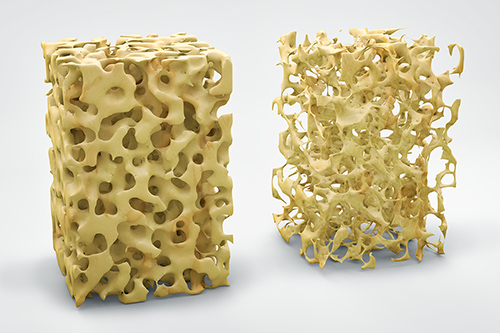
Diet and physical activity are controllable lifestyle factors that account for 10–50% of bone mass and structure. Physical activity stresses the bone to adapt and strengthen. Maintaining an adequate weight allows optimal pressure from gravity against the ground. Not smoking and avoiding heavy alcohol use prevents mineral loss due to tobacco products and drinking.
A well-balanced diet is important for bone health throughout the lifespan though notably significant are calcium and vitamin D. As mentioned previously, calcium is a major mineral component of bone structure while vitamin D assists in calcium absorption and utilization. The majority of the body’s phosphorus and magnesium are found in the skeleton. Other micronutrients that appear to play a positive role in bone health include vitamins B12, C and K, and minerals copper, manganese, zinc, potassium and iron.
Vegan diets abundant in whole grains, legumes, fruits, vegetables, nuts and seeds that are not excessive in sodium or caffeine can promote optimal bone density, but may need to be supplemented in certain areas. The strongest plant sources of the aforementioned nutrients are dark green leafy vegetables, cabbage, broccoli, beans, mushrooms exposed to light, almonds, blackstrap molasses, okra, calcium-set tofu, fortified nut milks, nut butters, brown rice, dried figs, chia seeds, potatoes, citrus fruit, strawberries, tomatoes, dried coconut and cocoa. Supplements of vitamin B12 are advised for vegans since it is not found in plant foods.
Sources:
– Debbie J., MS, RD
This article should not replace any exercise program or restrictions, any dietary supplements or restrictions, or any other medical recommendations from your primary care physician. Before starting any exercise program or diet, make sure it is approved by your doctor.
Some questions have been edited for length and/or clarity.
Have a nutrition question? Our registered dietitian is ready to help!
Email nutrition@lafitness.com or submit your question below and it may be featured in an upcoming article!
Most comfort foods we turn to are heavily laden with fat, starch and calories. There are healthier ways to enjoy down-home classics by making a few tweaks.
Good nutrition is all about variety! Browse through our list of unusual fruits and veggies and give yourself a chance to try something new.
Does liberally salting your food help you pump more iron in the gym? Registered Dietitian, Debbie James, investigates the claims!