Member Spotlight | Lessons from Triathlete, Dave Ruby

Member Spotlight | Lessons from Triathlete, Dave Ruby

“There’s an entry level for everyone…Unless you’ve got doctor’s orders, you’ve got to start with something. Don’t let your head tell you, you can’t.

Dave Ruby

LAF Member and Champion Triathlete

Dave Ruby is a fierce athlete with an impressive drive and an even more impressive attitude. At age 59 and having competed in and conquered Triathlons all over the world, he is certainly a force to be reckoned with.  

To give you some perspective, Dave Ruby has raced in Ironman and Xterra Triathlon Championship Competitions on 6 continents and has earned World and National Champion titles in addition to claiming multiple first place wins.   

While his accomplishments are staggering, Ruby sets his focus on the enjoyment of his lifestyle and the benefits of cultivating a healthy body and mind. We interviewed him to find out how he manages his training and stays physically and mentally dialed in. After all, before he was Dave Ruby the Triathlete, he was a surfer, cyclist, and regular LA Fitness gym-goer. 

To show you that the willingness to put in the work, and the enjoyment of that work, can take you from ordinary to extraordinary, allow us to take you into the life of Triathlete, Dave Ruby. 

Where Ruby’s Fitness Journey Began 

Before he started competing in Triathlons, Ruby enjoyed running, surfing, and cycling. One year, he decided he would enter his first Ironman run. As he ran, his body protested, and his mind told him this was something he should never do again. He has competed every year since. 

We asked Ruby what many of you are probably thinking now. What got you back out there after that first punishing experience?  

He responded that he learned to listen to the aches and pains in his body and take breaks to recover. Yes, that first experience was physically and mentally taxing, but caring for his body is what made the difference. It probably also helps that he is surrounded by others who also love the active lifestyle. In fact, his wife also happens to be a Triathlon champion! 

The Transition to Competitive Training 

Transitioning from training for the sake of living a healthy lifestyle, to competitive training for advanced challenges like Triathlons, was another turning point. Ruby reminds us that this isn’t an overnight change and that the body gets faster and more fit the more you continue to workoutwork out and test your limits. 

There seems to be no active intention to give a little more to each training session because he genuinely enjoys the process. Race day is, in his mind, another (but more challenging) workout. We think this is likely the key to it all. The mindset doesn’t sit in the idea that this is just hard work; it revels in the process and enjoys the moment. 

It’s true that for Ruby, sometimes it’s about setting a personal record and seeing himself outperform his prior abilities, but his favorite thing about competing is actually the travel and comradery! He enjoys the landscapes, the wildlife, and the people wherever he goes. 

“I absolutely love traveling to far off places, seeing a new part of the world, [and experiencing] the heart of the area,” says Ruby. You are sure to find him “wandering like a local and experiencing the heart and soul of the cultures” when he’s not competing. 

Preparing for Competition Day 

All year long, Ruby keeps a base in terms of physical activity. “I put in 5 to 6-mile bike rides to train and do a lot of off-road bike rides,” he says. “While I’m out there, I look for wildlife, and enjoy it too. I enjoy the work. I strength train 3 to 4 times a week at the gym and swim,” he explains. Essentially, he strengthens the swimming, running, and cycling muscles so that they are conditioned for the type of work they need to do in competition. 

His mental preparation looks a little different. There’s really no preparation beforehand because “running is a form of meditation” in and of itself, he says; “you get into a zone.” Perhaps the only thing he does differently, is the way he focuses his mental state before competition. He recognizes that “I’m out there to do the best I can for that day. A win isn’t a guarantee, anything can happen” (like a mechanical issue, an injury, etc.). He acknowledges the lack of control over certain environmental, mechanical, and chance-based circumstances and can simply focus on giving the best he has to offer.  

It’s also important not to overdo your preparation before a big race, he notes. “You’re better off going into a race 10% undertrained than 1% over trained,” Ruby says, and we completely agree.  

Ruby’s Advice 

If you’re skeptical of your own ability to live an active lifestyle or accomplish a challenge you’ve set your eyes on, Ruby reminds us that “there’s an entry level for everyone.” Everyone’s starting point will be different and even the best athletes were beginners at some point.  

Unless you’ve got doctor’s orders, you’ve got to start with something,” says Ruby. “If you think you can’t do it, that’s an excuse. If it’s doctor’s orders that’s different, but don’t let your head tell you that you can’t.” 

Closing Thoughts 

In the end, whether you are a serious athlete, you exercise for your health, or you’ve struggled to get started, what you can take away from Ruby’s story is this: 

  1. Everyone starts somewhere so don’t be afraid to take the first step 
  2. Choose an activity you get enjoyment from and look forward to 
  3. Surround yourself with people who share the same passion for living an active lifestyle 
  4. Come to terms with the possibility that anything can happen to mentally prepare for big challenges 
  5. Don’t let your head tell you that you can’t accomplish something big 

To hear straight from the man himself, listen to Episode 35 of our Podcast and listen to our discussion with Dave Ruby. Do you have an inspirational story you’d like to share with us? Email us at blog@lafitness.com for a chance to be featured in an upcoming post! 


For length, and clarity, minor edits – none of which alter the original or intended meaning – have been made to the quotes provided. 

Recommended Reading

Train Like a Triathlete – Podcast Ep. 35

Train Like a Triathlete – Podcast Ep. 35


Welcome to the 35th episode of the Living Healthy Podcast, presented by LA Fitness.

On this episode of the Living Healthy Podcast, we sit down with Triathlon Champion, Dave Ruby, to learn what it takes to compete among the best. 

Having competed in Ironman and Xterra Triathlon Championship Competitions on 6 continents, earned World and National Champion titles, and taken home multiple first place wins, Dave Ruby is the man to ask about the sustainability of an active lifestyle at almost 60 years old.  

His answers showcase the importance of training and dedication, but more importantly the enjoyment of what you’re doing and the experience of the moment. Listen in to hear Dave’s perspective and take some of his contagious motivation.

How Are We Doing? 


This podcast should not replace any exercise program or restrictions, any dietary supplements or restrictions, or any other medical recommendations from your primary care physician. Before starting any exercise program or diet, make sure it is approved by your doctor.

Timecard Markers – Train Like a Triathlete – Podcast Ep. 35   

Intro 

 0:01 

Introduction of Triathlete, Dave Ruby 

2:42 

How Long Dave Has Been Competing 

3:51 

What is an Ironman Competition? 

4:10 

How Dave Got His Start 

5:11 

How Many Times a Year do You Race? 

6:31 

How Do You Train for an Ironman Competition? 

7:23 

How Does Your Mentality Work in Competition? 

10:08 

What Do You Do in the Gym to Prepare? 

11:55 

What Does Your Gym Routine Look Like? 

13:05 

How Do You Balance Training and Recovery? 

15:12 

What is it Like to Run Such Long Distances? 

17:33 

When the Race Gets Tough, How Do You Push Through? 

19:10 

Have You Ever Had to Stop During a Race? 

21:12 

What Do You Like the Most About Competing? 

23:13 

Racing in Alaska and Hawaii – Moose and Open Waters 

25:06 

What is Your Process for Setting a Goal for Yourself? 

28:00 

Do You Have a Favorite Place or Competition? 

29:13 

Do You Have to Train Differently for Different Climates? 

31:52 

Actionable Advice 

34:49 

Outro 

36:44 


Recommended Podcast Episodes 

Coping with GERD and Its Symptoms

Coping with GERD and Its Symptoms

Statistics show that “more than 60 million American adults experience heartburn at least once a month, and more than 15 million adults suffer daily from heartburn.”1  

This month is GERD awareness month, and while it isn’t a fancy name for heartburn, heartburn is a major symptom of this disease. We’d like to explain what it is and share some ways to help treat and prevent its symptoms.

What is GERD?

Fresh mint leaves
Cup of coffee

GERD, or Gastroesophageal Reflux Disease, is a digestive disorder that causes the contents of your stomach to move back into your esophagus.1

If you are familiar with acid reflux, another way to understand GERD is that it is a more severe and recurring form of acid reflux.  

The most common symptom of GERD is heartburn. With acid reflux, the heartburn may be brought on by certain foods or beverages. With GERD, the triggers are similar, but you may experience heartburn 2 or more times a week!2  

Some GERD triggers include: 

  • Chocolate 
  • Peppermint
  • Fried or fatty foods (this includes cheese and avocado) 
  • Coffee 
  • Alcoholic beverages 
  • Citrus fruits and juices 
  • Tomato products 
  • Peppers 

According to the Mayo clinic, additional symptoms, aside from heartburn, include “regurgitation of food or sour liquid [vomiting], difficulty swallowing, coughing, wheezing, and chest pain — especially while lying down at night.”2 

Grapefruit
Red peppers

Who Can Get It?

Anyone can develop GERD or experience varying degrees of its symptoms. The National Institute of Diabetes and Digestive and Kidney Diseases explains that you are more likely to experience GERD if: 

  • You are overweight, obese, or pregnant: This is because the extra pressure on your abdomen can cause the muscle that separates your esophagus from your stomach to relax or weaken. 
  • You take certain medications like: 
    • Asthma medication 
    • Calcium channel blockers 
    • Antihistamines 
    • Painkillers 
    • Sedatives 
    • Antidepressants 
  • You are a smoker, or you are exposed to secondhand smoke

Natural Remedies

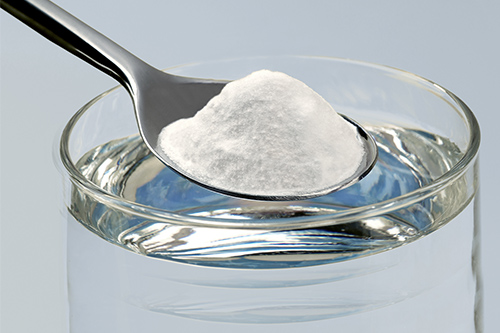
Glass of Water with spoon of baking soda
Girl blowing bubble gum balloon

The Fisher-Titus Healthy Living Team, of the Fisher-Titus Medical Center, composed this list of 7 natural home remedies for GERD. You can view the full details about each remedy on their website here 

  1. Baking Soda: 1 tsp with 8 ounces of water to neutralize stomach acid 
  2. Chewing Gum: Chew sugar-free gum 30 minutes after eating 
  3. Don’t Lie Down After Eating: Eat 3-4 hours before you lie down 
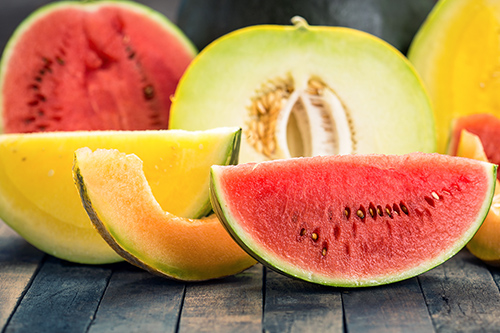
  4. Eat Low or No-Acid Fruits: Fully ripened Bananas, Apples, Honeydew, Cantaloupe, and Watermelon 
  5. Ginger Tea: Consume before meals to prevent symptoms 
  6. Mustard: 1 tablespoon of mustard to ease symptoms 
  7. Chamomile Tea: 1 cup 30 minutes to 1 hour before bedtime 
Assortment of Low Acid Fruits
Cup of Chamomile Tea

Lifestyle Changes Can Help 

In addition to avoiding certain foods and beverages, lifestyle changes can help you mitigate the symptoms and avoid flareups.  

The Mayo Clinic suggests that affected individuals try: 

  • Losing excess weight 
  • Eating smaller meals 
  • Raising the head of the bed 
  • Avoiding tobacco 
  • Not wearing tight fitting clothes around the abdomen 

 Is There a Treatment for GERD? 

Many doctors will prescribe nutrition and lifestyle changes to treat GERD and that’s oftentimes enough for milder cases. Over-the-counter antacids are also commonly recommended.  

For more severe cases, doctors may go a step further and recommend prescription medications to help manage symptoms, order an endoscopy to look for irritation or inflammation in the esophageal tissue, or they may order an upper gastrointestinal x-ray to rule out other potential conditions.1  

If you have any concerns about your gastroesophageal health, talk to your doctor to get personalized information and the most accurate course of action for your unique situation.  

For our registered dietitian’s insights on spicy foods and what they do to your insides, check out her answer to this reader’s question on Hot Peppers! Or, take a look at her answer to this question on Inflammatory Foods and their effects on your GI tract. To access our monthly blog post highlights, subscribe to our newsletter today! 

Sources:

  1. “GERD: Symptoms, Causes, Treatments, Remedies for Relief.” Edited by Minesh Khatri MD, WebMD, 2019, www.webmd.com/heartburn-gerd/guide/reflux-disease-gerd-1#1.


  2. Kashyap, Purna. “Acid Reflux and GERD: The Same Thing?” Mayo Clinic, Mayo Foundation for Medical Education and Research, 31 July 2019, www.mayoclinic.org/diseases-conditions/heartburn/expert-answers/heartburn-gerd/faq-20057894. 

Nutrition for Slow Weight Loss | QA

Nutrition for Slow Weight Loss | QA

Question:

I have been a member at the LA Fitness in Dunedin, Florida for 5 months. I have had very slow progress in losing weight. I am down from 207 lbs. to 194 lbs.; my body fat has remained at about 133 lbs. I eat oatmeal for breakfast, have a whey drink in the middle of the morning, chicken or the like at lunch with green beans and no bread, and yogurt for dinner. Help. I am 5 ft 4 inches tall and work out every other day with a trainer then do 25 mins on a stationary bike at level 8. Do you have a menu to help me lose the pounds?

– Adam F.

Answer:

There are plenty of menus to be found on sites like Men’s Journal, Men’s Health, and FitBit, or you can attempt to create your own. Rather than following a preset menu that has nothing to do with you, consider outlining a meal plan with guidelines for you to follow. You’re better assured to stick by parameters that you identify as being relevant to your dietary habits. See other members’ success stories under the Motivation tab of the Living Healthy blog and check out how one man overcame diet plan indecision here 

My feedback on your described diet thus far is that there is very little detail or diversity and unknown portions. Remember that your body thrives on feeding it adequate nutrition including vitamins, mineral and water, not just macronutrient calories.

Why not try switching it up a bit and have egg-avocado-whole grain toast for breakfast, plain nonfat Greek or Skyr yogurt with fresh fruit for snack, tuna salad and greens for lunch, then stir fried vegetables with mukimame (soybeans) for dinner one day? 

Keep up the consistent exercise, Adam! You’re making progress and your body adapts so remember to continually push yourself by increasing the time, intensity or duration of your workouts. 

– Debbie J., MS, RD

This article should not replace any exercise program or restrictions, any dietary supplements or restrictions, or any other medical recommendations from your primary care physician. Before starting any exercise program or diet, make sure it is approved by your doctor.

Some questions have been edited for length and/or clarity.

Ask our Dietitian

Have a nutrition question? Our registered dietitian is ready to help!
Email nutrition@lafitness.com or submit your question below and it may be featured in an upcoming article!

6 + 2 =


Recommended Reading - Q+A

How to Add Exercise to Your Busy Lifestyle

How to Add Exercise to Your Busy Lifestyle

Making time to exercise can be a balancing act… work, kids, after school activities, family & friend obligations, just to name a few.

The most common excuse for not exercising: “No time,” says clinical psychologist Lavinia Rodriguez.1

How to make time for exercise

How do you make the time for exercise when you have no time?

Morning Workout. Fitness experts will suggest a morning workout. Why? Because life gets crazier as the day goes on. By getting in a workout first thing in the morning, you have time for other day-to-day stuff without having to think about when you are going to fit in a workout.

Find a Friend. Grab, drag, or bribe a friend to come with you. Having your best bud or accountability partner come with you can make workouts so much fun! Keep one another accountable, set goals, or create challenges with one another. Having someone to go with you means you are less likely to make excuses not to go to the gym.

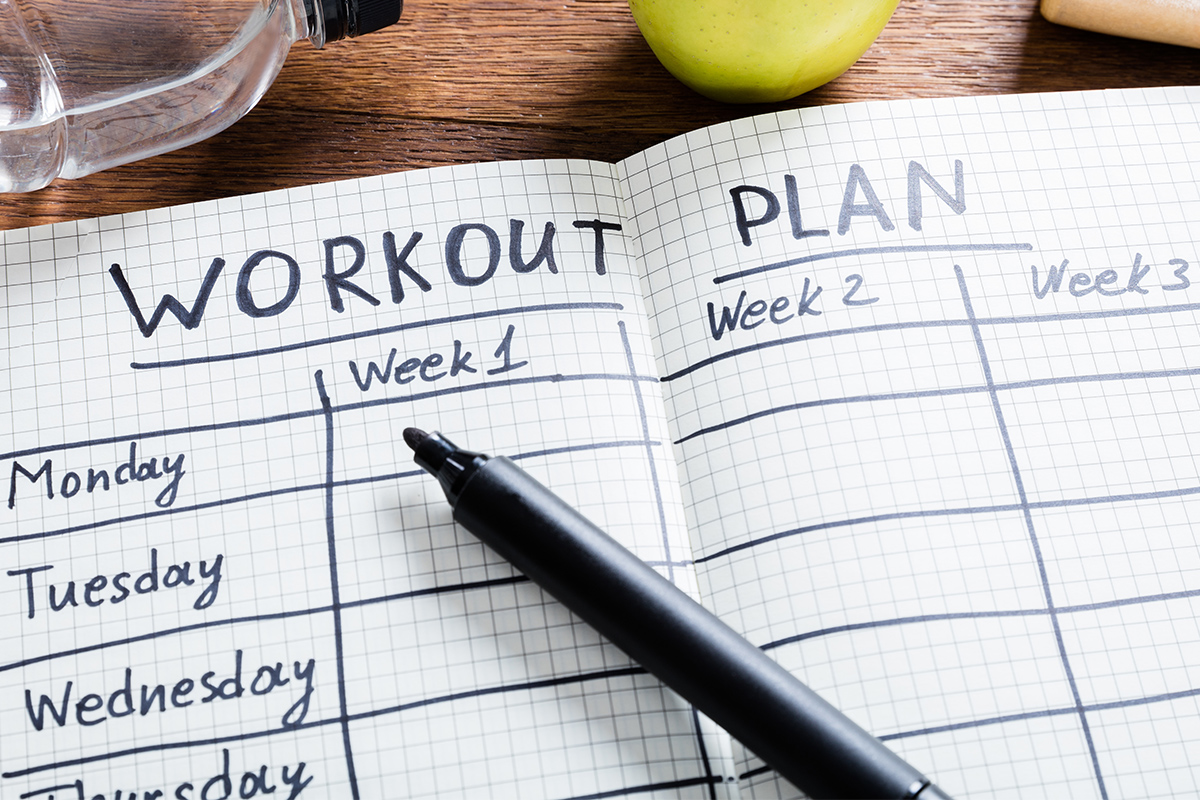
Write it down. Create a schedule for yourself. Take time on Sunday evening before you go to bed and write down your schedule for the week. Then find pockets of time where you can go to the gym and commit to your schedule. Once you’ve committed to your schedule, it’s less likely that you are going to break it and less likely to make excuses.

Set small goals. Small goals can be BIG wins! Start with working out one or two days per week. These small goals will turn into a routine and eventually become a habit.

Decide. You must decide that you are going to make time for exercise. Make the decision and follow through with it. There will be days when you don’t want to go to the gym, that’s when you need to prove your willpower.

Set your alarm. Set your alarm so you don’t forget. If you set your alarm for the morning, it’s not always easy waking up early. Challenge yourself not to hit snooze. Put your feet on the ground, get vertical, and start walking around. If you set your alarm for the afternoon, you may be hurting for time, but everyone needs to take a break. What you will soon realize is that working out helps improve productivity. So, hit the gym!

Don’t stress. Bottom line, any exercise is better than no exercise. Do what you can, when you can. Don’t stress out or put pressure on yourself because you didn’t make it to the gym.

For even more tips on how to add exercise to your schedule, check out these Workout Strategies for a Busy Lifestyle, or, read up on . For all our blog posts, and to get notified when we upload something new, subscribe today!

SOURCES

  1. Lavinia Rodriguez, PhD, clinical psychologist and author of Mind Over Fat Matters: Conquering Psychological Barriers to Weight Management (iUniverse, 2008).