Exercise Safety with Multiple Sclerosis

Exercise Safety with Multiple Sclerosis


What is Multiple Sclerosis?

Multiple Sclerosis (MS) is a disease of the central nervous system. This system is comprised of the brain and spinal cord and, when it is compromised, it can be disabling. Essentially what happens is that the immune system attacks the protective covering on nerve fibers which disrupts the communication between the brain and the rest of the body. The affected nerves will vary from person to person, so not all people with MS will exhibit all of the same symptoms.1  

What Do Symptoms Look Like?

The most impacted function with Multiple Sclerosis is movement. Numbness or weakness in the limbs, tremors, and an unsteady gait are among the most recognizable symptoms. Vision, speech, sexual, bowel, and bladder problems are also known to occur.1

Exercise with MS

Muscle weakness, balance and coordination problems, dizziness, and difficulty breathing can make exercise a significant chore for people with Multiple Sclerosis. However, activity is still very important. Common MS treatments and inactivity can render people with this disease more susceptible to developing osteoporosis, which can make balance and coordination issues an even greater concern. This can be prevented or slowed, however, through physical activity and proper nutrition.2  

A 2004 study found that, even though cases of MS vary across patients, exercise programs designed to increase cardiorespiratory fitness, muscle strength, and mobility can enhance a patient’s quality of life while also reducing the risk of secondary disorders.3 However, it’s important to adhere to exercises that are safe.  


A publication by BMC Neurology identifies a number of practical and beneficial exercises for patients with MS. An important preface to their findings is that each exercise program should be designed to address a patient’s specific goal and should take into account a person’s baseline impairments and capabilities. Only a healthcare professional can provide the appropriate fitness routine for your needs, but generally, these aspects of training are known to hold benefits for patients with MS: 
  

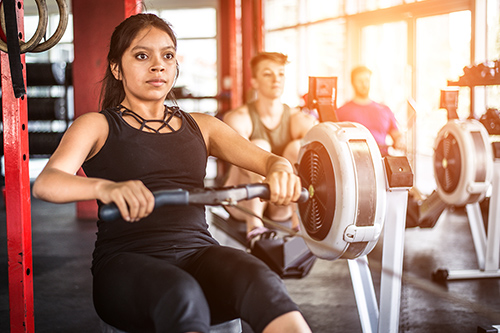
  1. Aerobic Training: Low to moderate intensity aerobic training is effective on cardiovascular fitness, mood, reduction of fatigue, and overall quality of life. Examples include bicycling, aquatic exercise, and treadmill walking. Rowing and running are also potential options but only for patients with proper functioning.4
     
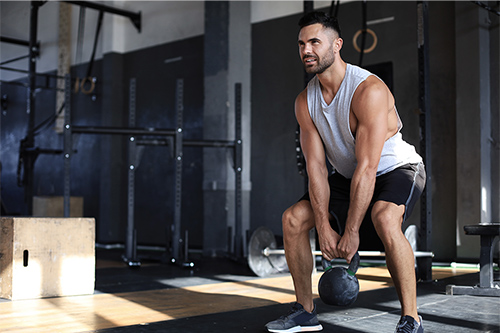
  2. Strength Exercises: For MS patients, supervised resistance training is safer than unsupervised training, and the use of weight-machines is safer than the use of free-weights. It is also important to prioritize the lower body because that is where the strength deficit is usually greater. Examples of strength exercises include the seated leg press, seated hamstring curls, knee extensions, shoulder press, chest press, and lat pull-downs. As a note, seated exercises are the safer option when compared to standing exercises.4
     
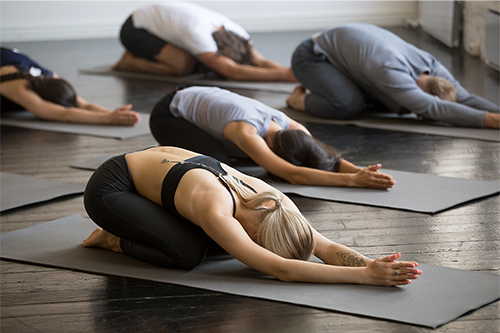
  3. Flexibility Exercises: These types of exercises are important to enhance mobility and improve balance and posture. Slow, gentle, and prolonged stretching is recommended before and after exercise with a particular focus on spastic muscles (tight or stiff muscles). Yoga and tai chi classes may be options for patients with higher functioning.4
     
  4. Balance and Coordination Exercises: Exercises that challenge balance can be very helpful. It is important that a stable support is available or that patients exercise in water. Water exercises provide support that help protect participants from dangerous falls.4  

Common Concerns

As with all new exercise routines, it’s important to know when to stop. You can help protect yourself from injury if you are attentive to how your body is feeling with each movement. When it comes to Multiple Sclerosis, there are a few more things to keep in mind. 

  1. Heat Intolerance: Heat stress caused by exercise can exacerbate the symptoms of MS. For this reason, heat-sensitive patients are encouraged to exercise in air-conditioned rooms, to perform water-based exercises, and to avoid exercising during the hottest part of the day.4
     
  2. Fatigue: Exercise can make symptoms of fatigue worse in MS patients.4 This is part of why it’s important that you don’t push yourself to exhaustion. It can be dangerous to do so, especially if you are using free-weights. In the grand scheme of things, exercise can actually help improve symptoms of fatigue,4 but it is important be aware of your limits during exercise.
     
     
  3. Risk of Falling: It is advised that patients who are at risk of falling be monitored during exercise.4 A fall is a risk not worth taking, so it is important to have non-slip surfaces in areas of aquatic activities and to take precautions during any form of exercise. 

What is your approach to exercise with MS? Share your thoughts in the comments below! For more articles like this one, and to stay in-the-know on important health and nutrition topics, subscribe to our newsletter to receive monthly highlights from the Living Healthy Blog. 

SOURCES 

  1. “Multiple Sclerosis.” Mayo Clinic, Mayo Foundation for Medical Education and Research, 19 Apr. 2019, https://www.mayoclinic.org/diseases-conditions/multiple-sclerosis/symptoms-causes/syc-20350269. 
  2. Pietrangelo, Ann, and Kristeen Cherney. “The Effects of Multiple Sclerosis on Your Body.” Healthline, 2018, https://www.healthline.com/health/multiple-sclerosis/effects-on-the-body#7. 
  3. White, L.J. & Dressendorfer, R.H. Sports Med (2004) 34: 1077. https://doi.org/10.2165/00007256-200434150-00005  
  4. Halabchi, F., Alizadeh, Z., Sahraian, M. A., & Abolhasani, M. (2017). Exercise prescription for patients with multiple sclerosis; potential benefits and practical recommendations. BMC Neurology, 17(1), 185. https://doi.org/10.1186/s12883-017-0960-9  
I’m Not Seeing Progress! What Am I Doing Wrong?

I’m Not Seeing Progress! What Am I Doing Wrong?

When You’re Stuck in Your Weight Loss or Stuck in Your Muscle Gain

Whether you’re hitting a plateau after weeks of steady progress, or you’ve been working hard from day one and have hardly seen a dent of change, something is happening when your body is seemingly stuck.

Is it something you’re doing wrong? Has your body simply adjusted to your routine? Let’s break down some of the reasons why your weight loss or muscle gain progress has hit a standstill. 

Weight Loss Plateau

1. You’re Gaining Muscle 

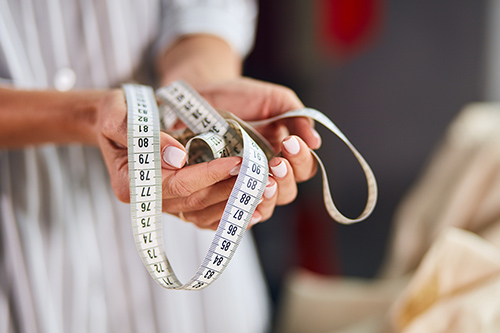
It’s possible that the scale isn’t moving because your body composition is changing. You may still be losing fat, but the scale may not be reflecting it because you’re gaining muscle at the same time. Author of our Body Composition article, Deanna Mercurio, explains that a more accurate way to track your progress is not with the scale but with body measurements and pictures. 

2. You’re Consuming Too Many Calories 

If you haven’t felt the need to track your calories, it might be a good time to start. Too many calories could be the culprit behind your plateau. Your body is smart, and it knows you’ve been depleting those precious fat stores. A study on weight gain found that the body’s internal protection against starvation encourages eating just so you will regain lost weight! Keeping track of what you’ve eaten can help you outsmart this natural response to weight loss. 

3. You’re Eating Too Many Processed Foods 

You might be hitting the right calorie count but turning a blind eye to the nutritional content of your food. Your body needs a variety of macro- and micro-nutrients to keep functioning at its best. Our dietitian recommends that you focus on real, whole foods and that you avoid processed food products.1  

4. Your Sugar Intake is Too High 

Sugar is the enemy in the battle with weight loss, partly because it’s easy to consume too much. The World Health Organization recommends that sugars comprise no more than 10% of your daily calories; that’s about 50 grams per day.2 A single beverage can easily contain more than that. Yes, that also means cutting back on healthier beverages like fruit juice. Our dietitian also warns against seemingly healthy smoothies that contain sherbet or fruit syrups. Those sweet additions, she explains, contain refined sugars that are easily absorbed and metabolized into fat.3 

5. Your Metabolism Has Adapted 

Switching things up can help kickstart your weight loss again. Again, we’ll lean on our dietitian’s recommendation. To switch things up, she suggests adding to or intensifying your existing fitness routine with weight training/resistance, cardio, or HIIT workouts, while adding some nutritious calories to those workout days. Those calories can take the form of vegetables, legumes, and pre-workout shakes or recovery drinks.4  

Muscle Gain Plateau 

1. You’re Not Eating Enough 

As you gain muscle, your energy needs change as well. You’ll need more nutritious calories (from lean proteins, vegetables, whole grains and healthy plant fats)5 and more protein than the average person because your body needs them to repair and build the muscles you’re working. Read our Protein article to learn how to calculate what your body needs (based on your weight and activity level) to help you bulk. 

2. Your Muscles Have Adapted 

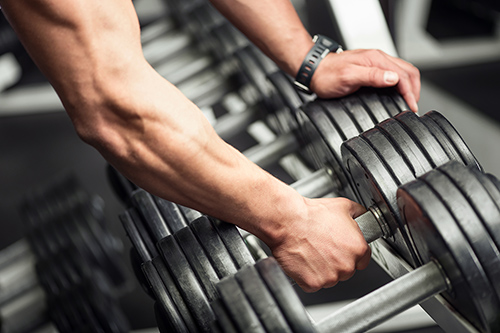
Just like your metabolism, your muscles can adapt to your routine. This is why workout routines should be anything but “routine.” You’ll need to do things differently to break your body out of its comfort zone. Remember when you first started a certain type of workout and you really had to push yourself through your sets? If you no longer feel challenged by your workout, your body has adjusted. Try increasing your working weight or incorporating some more intense training, like drop sets, to get your muscles back into build-mode. Sticking to the same routine may help you maintain muscle, but progressive overload is crucial to building muscle. 

3. You’re Not Drinking Enough Water 

When your body doesn’t have enough water, your muscles must compete with other organs that are also demanding it. As you lose water through sweat, your blood volume is reduced. This slows oxygen delivery to and carbon dioxide removal from your muscle tissue.6 Essentially, you won’t be able to work as hard during training if you’re not giving your body enough water to cope with the physical exertion. It’s important to hydrate before, during, and after exercise.5 

4. You’re Inconsistent 

As we mentioned earlier, progressive overload and variety in your workout is very important to building muscle. Now you have to make sure you’re consistent about how you train. Your body needs to know that this type of exertion isn’t a once-in-a-while thing; that your muscles need to do this job often! Consistency, paired with progressive overload, prompts your body to build muscle because the physical tasks your body is being asked to do are not going away and they’re getting more difficult. 

5. You’re Doing Too Much Cardio 

The right amount of cardio can help you build muscle. Too much can do the opposite. Go back to the first item on this list for a second. To build muscle, you need to eat more calories! Regular cardio can help you consume those extra calories without gaining a lot of fat.7 Cardio also increases your blood flow, which if you remember for item 3, is important for oxygen delivery to and waste removal from your muscle tissue. The increased blood flow also helps deliver fresh nutrients (which your muscles obviously need for recovery and growth)7 

Too much intense cardio, on the other hand, can pull resources away from your muscle tissue. Now instead of those resources going towards building muscle, they’re fueling your cardio. If you’re trying to bulk, keep your cardio at low intensity and low volume.8  

Let us know in the comments below if you’ve learned something new! Will you be adjusting your workout or nutrition regimen? Stay in-the-know on trending health and nutrition topics and subscribe to our newsletter to receive monthly highlights from the Living Healthy Blog! 

Sources  

  1. James, Debbie. “How to Handle a Weight Loss Plateau: QA.” Living Healthy, 25 Jan. 2020, http://bloglafitness.azurewebsites.net/2019/09/19/how-to-handle-a-weight-loss-plateau/ 
  2. “Daily Sugar Intake – How Many Grams of Sugar a Day?” Food Pyramid, http://www.foodpyramid.com/daily-sugar-intake/ 
  3. James, Debbie. “My Weight Loss Has Plateaued… Any Advice?” Living Healthy, 20 Apr. 2018, http://bloglafitness.azurewebsites.net/2018/03/29/weight-loss-plateaued-advice/ 
  4. James, Debbie. “What to Do When Weight Loss Stalls: QA.” Living Healthy, 25 Jan. 2020, http://bloglafitness.azurewebsites.net/2020/01/28/what-to-do-when-weight-loss-stalls/ 
  5. James, Debbie. “How Much Protein Should I Be Eating?: QA.” Living Healthy, 25 Jan. 2020, http://bloglafitness.azurewebsites.net/2020/01/09/how-much-protein-should-i-be-eating/  
  6. Muñoz, Colleen X., and Evan C. Johnson. “Hydration for Athletic Performance.” Nutrition and Enhanced Sports Performance (Second Edition), Academic Press, 12 Oct. 2018, https://www.sciencedirect.com/science/article/pii/B978012813922600045X 
  7. Hitchcock, Heather. “How Much Cardio Should I Do When Bulking?” LIVESTRONG.COM, Leaf Group, 2 Sept. 2019, https://www.livestrong.com/article/437460-how-much-cardio-should-i-do-when-bulking/  
  8. Hartman, Bill. “Will Cardio Keep Me from Gaining Muscle?” Men’s Health, Men’s Health, 25 May 2018, https://www.menshealth.com/fitness/a19540296/will-cardio-keep-me-from-gaining-muscle/ 

Successful Weight Maintenance – How Do People Do It?

Successful Weight Maintenance – How Do People Do It?


It’s hard enough as it is to lose weight, and the more we learn, the more we find how many factors stack up against our efforts to maintain our progress. A review of the literature on weight loss maintenance and weight regain has narrowed down the potential reasons for why keeping the weight off is so difficult. To help us understand why weight maintenance is tough, it helps to consider what makes it successful to begin with. 

What Makes Weight Maintenance Successful? 

According to this literature review, successful weight maintenance is associated with: 


  1. Greater Initial Weight Loss 
    • The more weight you lose at the start of your weight loss efforts correlates with how well you can keep your total weight loss off. 
  2. Reaching a Self-Determined Goal Weight 
    • There is potentially a psychological benefit to setting a goal and achieving it that helps you maintain the results of all your effort. 
  3. Having a Physically Active Lifestyle 
    • This can be understood to mean that those who lose weight strictly by dieting will have a harder time maintaining weight loss than those who also incorporate physical activity into their lifestyle. 
  4. A Regular Meal Rhythm That Includes Breakfast and Healthier Eating 
    • Numerous studies have already determined that individuals who eat breakfast are more likely to control their weight,1 so we’re not at all surprised by this one. 
  5. Control of Over-Eating and Self-Monitoring of Behaviors 
    • The ability to practice self-control and to monitor our own behaviors is not a natural skill. It takes practice and will-power to master our involuntary impulses. 

These 5 items are all things you can do. You can work for greater initial weight loss, you can add physical activity to your lifestyle, you can change your nutrition habits.

The following factors also contribute highly to successfully maintaining weight loss, but they are not as easy to manipulate.

According to the same literature review, part of your success is also owed to:

  1. Your Internal Motivation 
    • This is perhaps the reason most of us struggle to start with or stick to plans that we think will be difficult to accomplish. 
  2. Your Level of Social Support 
    • It’s not just a matter of having a support system but a question of how easily you turn to them when you need support. 
  3. Better Coping Strategies and Your Ability to Handle Life Stress  
    • Poor coping strategies can involve eating in response to negative emotions and stress.2 
  4. Self-Efficacy 
    • This is the belief that you can do the things you set out to do. 
  5. Autonomy  
    • This is the ability to make your own informed decisions. 
  6. Your Ability to Assume Responsibility 
    • How well do you take-on tasks that are presented to you? 
  7. Greater Psychological Strength and Stability 
    • How effectively can you check-in with your emotions, recover from setbacks, and recognize maladaptive behaviors? 

In this list we can see how much our psychological, social, emotional, and environmental situations all contribute to our overall ability to care for our health. We haven’t even touched the biological factors that make our individual endeavors more difficult. The bottom line is, there is never ONE reason why you are struggling with maintaining your weight loss. 

Why We Regain Weight

Now that we can clearly see the common factors among those who are successful, we can easily run through those lists and identify which factors are playing a part in our personal struggle. A lot of it is founded in our ability to adhere to certain routines and to new habits. An equally important piece comes in the form of our emotional and psychological strength and the type of support we have.  

What Can We Do About It?

If all these things are tied together, it seems that a person would need a life that is perfect in all ways in order to achieve and maintain their goals. However, we know that no one has a perfect life, and yet there are successful people everywhere. How do they do it and what can we learn from their success that we can apply to our own approach?  

The answer to that is attempted in “Keep the Weight Off” articles everywhere. Everyone has their own idea of which approach works best. Yes, there is some cross-over, but a lot of the advice typically goes back to something along the lines of “watch what you eat” and “do more exercise.” However, if any of the above factors mean anything, the real answer should be something only you can determine based on your individual circumstances. 

Take some time today to think through areas in your life that, if improved, can help you set a foundation for success. A strong foundation can make the difference you need to get where you’re trying to go. 

We invite you to share what you plan to tackle to increase your total wellness and to establish a stronger base. Let us know in the comments below! To read our dietitian’s advice for Slow Weight-Loss, How to Handle a Weight-Loss Plateau, or How to Calculate Your New Calorie Limits After Weight-Loss, click the links to read the QA’s. For more articles like this one, subscribe to our newsletter to receive monthly highlights from the LA Fitness blog! 

Sources  

  1. Davis, Jeanie Lerche. “Lose Weight: Eat Breakfast.” WebMD, WebMD, 31 Aug. 2010, https://www.webmd.com/diet/obesity/features/lose-weight-eat-breakfast#1  
  2. Elfhag, K., and S. Rössner. “Who Succeeds in Maintaining Weight Loss? A Conceptual Review of Factors Associated with Weight Loss Maintenance and Weight Regain.” Wiley Online Library, John Wiley & Sons, Ltd, 10 Jan. 2005, https://onlinelibrary.wiley.com/doi/abs/10.1111/j.1467-789X.2005.00170.x 

Compound Movements and Why You Should Do Them

Compound Movements and Why You Should Do Them

What are Compound Movements? 

What if I told you that doing compound movements in the gym burned more calories during your workout; would you know which exercises to do?  

What if I also told you that compound movements burn more calories postworkout than any other exercise, would you believe me? 

Imagine learning that this type of movement maximizes your time in the gym, helps you lose weight, and helps you burn more fat; would you do more?  

Compound Movements, also known as Compound Exercises, are multi-joint movements that work several muscle groups at one time, compared to isolation movements that work one muscle at a time.  

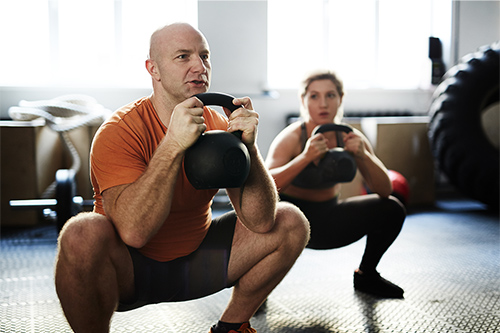
An example of a compound movement would be a squat. A squat works your quadriceps, glutes, hamstrings and core. An example of an isolation movement is a bicep curl, which only works the bicep. See the difference? One muscle versus many muscles. The more muscles you are working at one time the more calories and fat you will burn. Cool, right?  

Compound movements are not only for the gym but also can be a great home workout. You don’t necessarily need heavy weights. You just need a little bit of time and a little bit of space to get in some good compound exercises. 

Benefits of Compound Movements

One of the biggest benefits of compound movements is that they make effective use of your time. When you are short on time but want to put in a quick weighttraining workout, think compound movements. Other benefits include:  

+ more calories burned 

+ improved coordination 

+ improved flexibility and range of motion 

+ gaining more muscle  

+ improved strength

Best Compound Movements 

The following list is derived from an article by the American College of Sports Medicine. While these 7 items are personally my favorite, there are unquestionably other compound movements that might work better for you. It all depends on your level of fitness. Give them a try! 

  1. Squats 
    • Areas of Focus – quadriceps, glutes, hamstrings and core 
  2. Deadlifts 
    • Areas of Focus – almost the entire body but especially the hamstrings, glutes, arms, core, and back (trapezoids)  
  3. Bench Press 
    • Areas of Focus – chest, shoulders and triceps 
  4. Pull-ups 
    • Areas of Focus – entire back region (emphasis on lats), forearms and biceps 
  5. Bent-over barbell rows (reverse grip) 
    • Areas of Focus – back region (emphasis on upper back; rhomboids, trapezoids), and biceps 
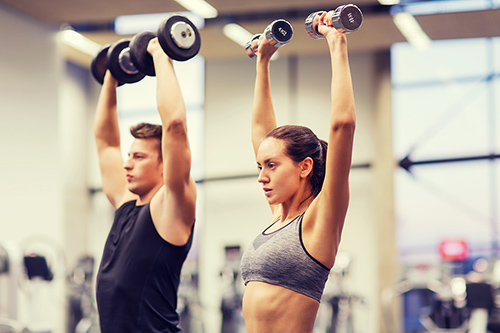
  6. Shoulder Presses 
    • Areas of Focus – entire deltoid region: front, medial and rear (emphasis on front deltoids) 
  7. Lunges (static) 
    • Areas of Focus – entire leg region (emphasis on glutes and hamstrings) 

Combine Compound Movements with Isolation Movements

Combining both types of movement makes for a great workout. For example, a squat to a bicep curl or a squat to a bicep curl to a shoulder press.

It’s important to keep good form while performing exercises. Squatting may seem safe but when weights are added and the exercise is done improperly, it could result in injury.

Always consult your doctor before starting an exercise program. Have an LA Fitness Pro Results® trainer help you with the basic principles of weightlifting and proper form when exercising.  

Bottom Line  

Next time you are in the gym or doing a home workout, incorporate a few compound movements. Get your heartrate up and boost your metabolism. Since compound movements engage several muscles at one time, it requires more energy from you. In turn, you burn more calories by spiking your metabolism and increasing your heart rate, which make you stronger.  

Check out this workout routine “The 2 Week Workout Finale for the Your Best Beach Body Ever!” This 2 week workout routine combines plyometrics, compound movements and integrated intervals so you can strut your stuff with confidence. For more articles like this one, subscribe to our newsletter to receive monthly highlights from the Living Healthy Blog.

Top 10 Positive Health and Fitness Trends for 2020

Top 10 Positive Health and Fitness Trends for 2020

Trends vs Fads

Health and fitness trends sweep the nation every year, and many of them are either a waste of time or, quite contradictory to their intention, are dangerous for your health. Not to be confused with fads, trends indicate a change in behavior that develops gradually among members of a population. Fads seem to crop up out of nowhere and are fueled with a lot of hype, but they don’t last as long. 

We’re looking into the expected trends for 2020, based on a worldwide survey by the American College of Sports Medicine. Over 6,000 participants, 60% of whom have 10+ years of experience in the health and fitness industry, have identified these items as positive trends!  

The survey did not make room for any of these items to be critically evaluated, so that’s up to you, but it does help recognize some new and emerging trends for the coming year. 

That being said, this is what you can expect to be trending in 2020: 

Wearable Tech

Wearable technology can mean a lot of things now. In the fitness industry, one of the first tracking kits came about in 2006 when Nike+ embedded a tracker inside a pair of shoes.1 It measured the things you would expect it to measure: time, distance, pace, and calories burned. You would see your stats on the, then popular, iPod Nano screen. Obviously, people loved the idea of seeing a representation of their hard work. So today, wearable tech continues to increase in popularity.  

High Intensity Interval Training

HIIT involves bursts of high intensity exercise mixed with brief periods of rest. Research has done a lot to prove the effectiveness of HIIT workouts, especially when it comes to improving cardiovascular health and even in its effectiveness in changing your body composition. In fact, in his research on the relationship between HIIT and fat loss, Stephen H. Boutcher explains that HIIT “may be more effective at reducing subcutaneous and abdominal body fat than other types of exercise.”2 

Group Training

Your cycling, Pilates, yoga, swim, and dance classes (to name a few) may see a spike in attendance this year. More people are learning about the benefits of group training! Not only do class members have the advantage of group support, motivation, and accountability, they have the benefit of a certified instructor leading the way. Your group instructor can amp up the energy to help you push harder and knows when to scale things back to give you a chance to catch your breath. You may also get instruction on correct form, so you don’t have to guess whether you’re moving in ways that are safe for your body.

Training with Free-Weights

This method of training is picking up steam. Strength training and functional training have been in the top 10 fitness trends since 2007. Training specifically with free weights, however, now holds the 4th spot in the top 10.3 This includes working out with everything from dumbbells and barbells, to medicine balls and weight plates. Working out with free weights happens to have a lot of benefits. If you’re looking to make the switch, check out our article on how to transition from machines to free weights. 

Personal Training

Because of the customization personal training provides, many people turn to it to reach their health and fitness goals. Clients get one-on-one attention, a personalized workout plan, progress tracking, and plenty of guidance and support as they move towards their goals. It’s no surprise that this one has been a top 10 trend for the last 14 years.3 

Exercise is Medicine® 

This one is a global health initiative that encourages healthcare providers to assess a patient’s physical activity, recommend treatment, and refer patients to exercise professionals.3 As this becomes more commonplace, you may start to notice your provider taking more of an interest in your fitness regimen. This is an exciting development because it further acknowledges the importance of an active lifestyle and can help patients monitor their activity in more than one place. 

Body-Weight Training

Training without (or with minimal) equipment started getting popular around 2013.3 This type of exercise focuses on what you can do using your own weight to train. This involves exercises like lunges, squats, push-ups, planks, crunches, and more. It’s inexpensive, easy on the body, and can be done almost anywhere. It’s a great segue to more involved types of exercise or to help you ease back into things if you’ve been away from the gym for a while. Body weight exercises are also a great way to warm up your muscles before you start doing your weighted reps. 

Fitness Programs for Older Adults

This is an awesome trend to see taking a foothold in the top 10 this year. Coming in at #8 is fitness for older adults! The reason we’re excited is because this trend indicates that people are living longer and remaining healthy and active longer!3 Many healthcare providers now prescribe strength training to older adults as it helps them maintain their independence and more easily perform activities of daily living. Check out our article on Strength Training for Aging Bodies to learn more about how strength training helps older adults, and to view some helpful exercises.

Health/Wellness Coaching

Health and Wellness Coaching is a behavioral approach to achieving health and fitness goals. You can sit down with a coach (one-one-one or in a small group setting) to share your unique health goals. In return, you receive guidance with goal setting, support and encouragement,3 and if you’re in a small group, a sense of community with others who share similar goals or struggles. This is a nice one to see take a place in the top 10 as it focuses more on the mental and emotional process of tackling health-related change.

Certified Fitness Professionals

Last, but not least, a quickly growing trend is in the preference of certified fitness professionals. More and more people are trusting certified professionals over those who are not. We know it’s important to our members which is why our Pro Results® Personal Trainers are all certified! We also seek expert knowledge for our blog posts and podcasts, hosting guests like Registered Dietitian Debbie James, Family Physician Dr. Bob Davari, Master Trainer Geoff Fox, Certified Psychiatrist Dr. Neel Doshi, and more.

Honorable Mentions

The following items made the top 20 and are still pretty awesome trends to see emerging (or sticking around) for 2020.  

  1. Functional Fitness Training 
  2. Yoga 
  3. Circuit Training 
  4. Exercise to Combat Childhood Obesity 

We hope you’ve enjoyed reading about all the up-and-coming trends! Do you plan to commit to anything on this list? Let us know in the comments below! To stay in-the-loop about our fitness and nutrition articles, subscribe to our newsletter to receive monthly highlights from the LA Fitness blog! 

Sources

  1. Rogers, Andrea. “Wearable Technology: A History.” SPLITFIT, 1 Nov. 2018, splitfit.com/fitness-technology/wearable-technology-history/. 
  2. Boutcher, Stephen H. “High-Intensity Intermittent Exercise and Fat Loss.” Journal of Obesity, Hindawi, 24 Nov. 2010, https://www.hindawi.com/journals/jobe/2011/868305/ 
  3. Thompson, Walter R. “WORLDWIDE SURVEY OF FITNESS TRENDS FOR 2020 : ACSM’s Health & Fitness Journal.” LWW, 9 Jan. 2020, https://journals.lww.com/acsm-healthfitness/Fulltext/2019/11000/WORLDWIDE_SURVEY_OF_FITNESS_TRENDS_FOR_2020.6.aspx