Are Protein Supplements Necessary?

Are Protein Supplements Necessary?

Question:

Are protein supplements necessary if you already consume a lot of protein naturally?

Answer:

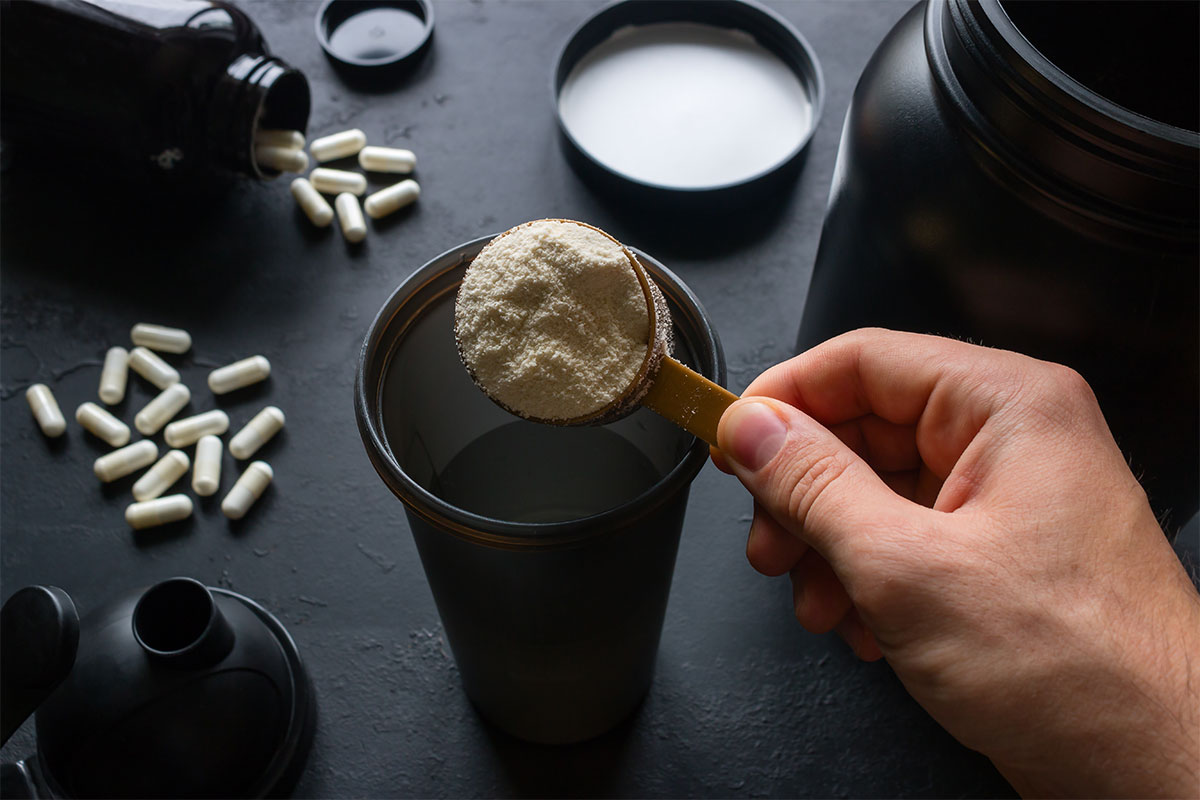
Supplements are intended to fill the gaps missing from dietary intake, whether from food choices or impaired digestion/absorption. If your protein consumption is already high (> 1 gm/kg per body weight) then protein supplements are generally unnecessary. Many people still choose to include supplements instead of real food due to time, cooking or refrigeration restraints. The protein in certain supplements may be concentrated or isolated, but most supplemental protein is part of a bar or meal replacement shake with significant carbohydrates, fat or other nutrients. Consider the whole product when choosing a protein supplement.

– Debbie J., MS, RD

This article should not replace any exercise program or restrictions, any dietary supplements or restrictions, or any other medical recommendations from your primary care physician. Before starting any exercise program or diet, make sure it is approved by your doctor.

Some questions have been edited for length and/or clarity.

Ask our Dietitian

Have a nutrition question? Our registered dietitian is ready to help!

Email nutrition@lafitness.com or submit your question below and it may be featured in an upcoming article!

10 + 13 =


Recommended Reading - Q+A

Understanding Nutrition for Weight Loss Success

Understanding Nutrition for Weight Loss Success

Question:

What should start with if I want to learn with nutrition? My focus would be weight loss.

– Ricardo E.

Answer:

We already have a primer for you! Our previous post Let’s Talk About the Basics: Carbs, Fats & Proteins includes the nutrients that contain calories. Nutrients are components of food that are vital for life. Water is the fourth major nutrient, but it has no calories. These parts of food are called “macronutrients,” while vitamins and minerals are called “micronutrients.”

What do Macro and Micronutrients Have to do with Weight Loss?

The Academy of Nutrition and Dietetics* has a simple 3-step message for weight loss: 1) Make smart choices from every food group; 2) Get the most nutrition from your diet; and 3) Balance food and physical activity. These are the key nutrition principles applied within almost every weight loss plan.

To learn more about nutrition, of course, you can read through our Living Healthy blog archives! For more in-depth learning consider a mass open online course (MOOC). Several are free (taken as an audit, not for credit) and available from trusted sources like respected U.S. universities.

Source:

Back to Basics for Healthy Weight Loss, The Academy of Nutrition and Dietetics, Oct. 18. 2018. Accessed 11.26.2018.

– Debbie J., MS, RD

This article should not replace any exercise program or restrictions, any dietary supplements or restrictions, or any other medical recommendations from your primary care physician. Before starting any exercise program or diet, make sure it is approved by your doctor.

Some questions have been edited for length and/or clarity.

Ask our Dietitian

Have a nutrition question? Our registered dietitian is ready to help!

Email nutrition@lafitness.com or submit your question below and it may be featured in an upcoming article!

1 + 4 =


Recommended Reading - Q+A

Member Spotlight | It’s Worth It

Member Spotlight | It’s Worth It

I moved to Florida from Iowa a year ago. I had really let myself go, health-wise. I was tired of feeling uncomfortable in my own skin and knew, as a nurse, I had to take care of myself. That’s when I joined LA Fitness. At first, I felt really intimidated being at the gym. I started lifting and mixed cardio into my routine. Before I knew it, I was losing weight. A year later, I’m down 45 pounds and feeling great. If I could give others a simple piece of advice I would say this: It’s not easy. We all have to start somewhere and you’re going to have to push yourself hard. Don’t give up and know that it will take time! It will be worth it in the end, trust me.

Ashley L.

LA Fitness Member

Before: November 2017

After: August 2018


Recommended Reading

Gaining More Muscle and Less Belly

Gaining More Muscle and Less Belly

Question:

I am a 50-year-old man. My weight is 154 lbs. and I’m 5’ 10”. When I look at myself I’m not satisfied. I want more muscle and less belly. I go to the gym 5 days a week. I think I have too much fat on my abdomen when I eat a lot.

– @peurn_ma

Answer:

If your weight is acceptable but you’re not satisfied with its composition, you’ll need to change two things: what you’re eating and your workout plan. Though toning your abdomen is largely a result of resistance and cardiovascular work, reducing body fat can show off those new muscles. Belly fat cannot be ‘targeted’ per se, but the type of fat around your midsection should respond to some nutritional tweaks given the right exercise.

The following can help reduce stubborn abdominal fat:

  • Increase your fluid intake, but limit alcohol
  • Get plenty of fiber – whole grains, vegetables, legumes, fruits, and seeds
  • Opt for fish and seafood vs. red meat, pork or dairy products
  • Choose unsaturated fats (and avoid trans fat)

– Debbie J., MS, RD

This article should not replace any exercise program or restrictions, any dietary supplements or restrictions, or any other medical recommendations from your primary care physician. Before starting any exercise program or diet, make sure it is approved by your doctor.

Some questions have been edited for length and/or clarity.

Ask our Dietitian

Have a nutrition question? Our registered dietitian is ready to help!

Email nutrition@lafitness.com or submit your question below and it may be featured in an upcoming article!

10 + 3 =


Recommended Reading - Q+A

Does the Body Burn More Calories in the Cold?

Does the Body Burn More Calories in the Cold?

Winter is here, and red noses are aplenty. Big coats shield us from the icy cold, and boots work their hardest to keep our feet nice and warm. Still, the chill of winter wind sends a shiver through the body every time a breeze blows by just the right way. Logically speaking, it makes sense to think that between our bodies constantly working to keep us warm in the winter months, that the body would obviously burn more calories in cold weather – right?

Not exactly, but kind of.

Cold weather is not the sole deciding factor dictating whether or not our bodies go into calorie-burning mode. It’s more so the process our bodies undergo once we start shivering from a temperature drop. This process is called thermogenesis. One way of this happening is to shiver, which is when the muscles contract involuntarily in order to create warmth and help maintain a healthy body temperature.

Or, your body could go into non-shivering thermogenesis. This is where the body’s brown fat breaks down to release heat and, again, help warm the body up. Both shivering and non-shivering thermogenesis increase the body’s energy expenditure, which helps burn calories. This is why your body may burn more calories in colder weather.

However, those two energy-expending and calorie-burning processes only kick into high gear when the body is truly cold. Once exercise begins, and the body naturally warms up from it, the body isn’t going to burn any extra calories just because of the weather. But don’t use that as an excuse to not exercise this winter season, sitting around and being sedentary is no way to keep the body healthy during the chilly months.

The Caloric Burn Breakdown

  1. BMR: Your basic daily caloric burn, known as BMR, or basal metabolic rate. That’s how many calories your body needs just to function at rest. (~60% – ~80% total energy expenditure)
  2. FOOD BREAKDOWN: The energy needed to break down all that yummy food consumed throughout the day. (~10% total energy expenditure)
  3. EXERCISING: Lastly, the energy needed when engaging in physical activity. (~10% – ~30% total energy expenditure)

The calories burned during thermogenesis plays a substantially small role in overall expenditure, less than 5% – 10% actually.1 In one study where individuals were put in cold rooms for an entire day, subjects burned an additional 150 to 200 calories.2 That’s not ideal or healthy, and not a smart way to burn extra calories.

So, if you’re looking to burn extra calories this winter season, then up your fitness routine rather than your time freezing in the cold. And for those of you looking to take your workout season indoors, get a 5-day LA Fitness guest pass here.

Sources:

  1. Belluz, Julia. “Do You Burn More Calories Exercising in the Cold? Here’s What the Science Says.” Vox, Vox, 6 Feb. 2018, www.vox.com/2017/12/23/16774320/exercise-in-cold-burn-more-calories.
  2. Ibid

Resources:

  1. Praderio, Caroline. “If Your Office Is Freezing This Summer, You Might Be Burning Extra Calories.” INSIDER, INSIDER, 3 July 2018, www.thisisinsider.com/does-being-cold-burn-calories-2017-8.

Recommended Reading