Improving Poor Eating Habits | Q+A

Improving Poor Eating Habits | Q+A

Question:

I am about 5’5 and weigh 160. I’m trying to start my very first diet as I have been noticing that I have been having trouble getting around as easily as before (not too bad). Also I really want to start eating healthy and want to get fit. My stomach is bulgy and I have been having digestive problems which I believe are a result of my poor eating habits. Please help. I really want to start living healthier and fitter. Any advice will help. Thank you.

– Sabrina

Answer:

Not knowing your current eating habits, Sabrina, I’ll point you towards our key recommendations for gut health and weight loss. Read our article on Yoga for Digestion for exercise tips to deal with digestive problems. Here we’ll address nutrition:

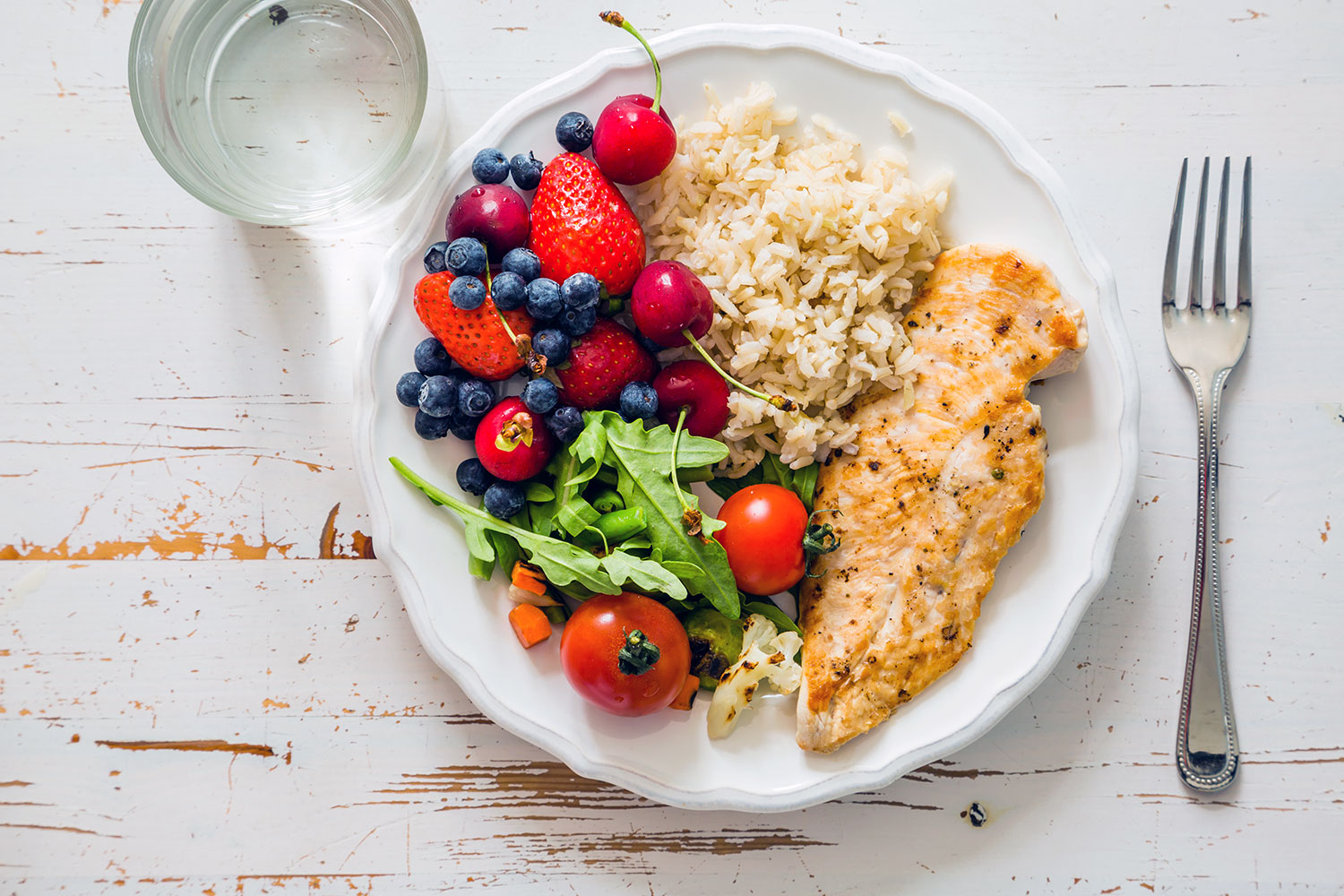
First, get rid of added sugars and extra fat. This means to forgo sweetened coffee drinks, sherbet in smoothies, fried foods and limit cheese and sweet/creamy/oily condiments and sauces. Next, curb alcohol intake to no more than 1 drink per day. Then choose complex carbohydrates like whole grains balanced with lean proteins as the basis for meals and snacks. Vegetables should comprise more of your plate than starches (e.g. potatoes, rice, corn). Portions matter so only eat as much as you need to not feel hungry. Add fresh fruit and low-fat dairy as dessert alternatives. Finally, drink ample water and tea to facilitate digestion, support metabolism and promote satiety.

By acknowledging your current situation and being open to change, you are off to a great start toward new eating habits that should become permanent, not a “first diet.”

– Debbie J., MS, RD

This article should not replace any exercise program or restrictions, any dietary supplements or restrictions, or any other medical recommendations from your primary care physician. Before starting any exercise program or diet, make sure it is approved by your doctor.

Some questions have been edited for length and/or clarity.


Ask our Dietitian

Have a nutrition question? Our registered dietitian is ready to help!

Email nutrition@lafitness.com or submit your question below and it may be featured in an upcoming article!

1 + 15 =


Recommended Reading - Q+A

Macro-nutrients & Bodybuilding | Q+A

Macro-nutrients & Bodybuilding | Q+A

Question:

I have done body building in the past and know that the perfect combination of protein/carbs/fats produce results with respect to giving the body what it needs to develop lean muscle and lose fat. This is done in part by measuring body fat and weight. How would you calculate this because I had someone do it for me in the past and don’t know how to do it myself. It was broken down into total protein, carbs and fats for the  whole day and further broken down per meal. Can you duplicate this process?

– Alisa O.

Answer:

I will admit that I am not sure what “perfect combination” of macro-nutrients you are referring to. One’s individual body composition can be used to help create personal nutritional goals. Actual nutrient needs are much more complex and depend on protein turnover, nitrogen loss and metabolism. Also, nutrient quality, timing and frequency have an impact on developing lean muscle and losing fat.

That said, I like the summary bodybuilding recommendations from an article in the Journal of the International Society of Sports Nutrition*:

Diet component                                     Recommendation

Protein (g/kg of lean body mass)           2.3-3.1

Fat (% of total calories)                          15-30%

Carbohydrate (% of total calories)          remaining

Let’s work through these with a sample 2,000 calorie diet for a 160-pound person with 15% body fat.

  • His or her lean body mass is 62 kg (from 72.73 kg x 0.85).
  • Protein: Recommended range is 142-192 grams (from 62 kg x 2.3-3.1 g/kg). Energy-wise, this amount of protein provides 568-768 calories.
  • Fat: Recommended range is 300-600 calories (from 2,000 x .15-0.3). This equates to 33-67 grams of fat.
  • Carbohydrate energy would be the remainder; we’ll use the range midpoints to get 882 calories (from 2,000 – 668 protein – 450 fat). By grams, this would be 220 grams of carbohydrate.

Apply the recommendations to your own anthropometrics and total energy need to get a possible ideal combination of macro-nutrients for your goals.

*Evidence-based recommendations for natural bodybuilding contest preparation: nutrition and supplementation.  Helms, ER, Aragon AA, Fitschen PJ. Journal of the International Society of Sports Nutrition 201411:20

– Debbie J., MS, RD

This article should not replace any exercise program or restrictions, any dietary supplements or restrictions, or any other medical recommendations from your primary care physician. Before starting any exercise program or diet, make sure it is approved by your doctor.

Some questions have been edited for length and/or clarity.


Ask our Dietitian

Have a nutrition question? Our registered dietitian is ready to help!

Email nutrition@lafitness.com or submit your question below and it may be featured in an upcoming article!

12 + 12 =


Recommended Reading - Q+A

Which Apple is Better For You, Red or Green?

Which Apple is Better For You, Red or Green?

Aristotle questioned human behavior, Einstein questioned the rules of relativity, and Edison questioned electricity. Today, we are questioning nutrition – fruit, to be specific. Are red or green apples healthier for you? Is there a difference? Does having an apple a day really keep the doctor away? We dive headfirst into this important debate.

The apple is a fruit that is often taken for granted. Offered in almost all grocery stores and farmers’ markets year-round, these tasty nutritious treats provide a host of health benefits. Let’s take a closer look.

In general, apples can help with:

  • Weight loss – Apples are high in fiber and water, which can help you feel more full. In a study of obese mice, those that were given a supplement of ground apples and apple juice concentrate not only lost more weight but also had lower levels of “bad” cholesterol, triglycerides and total cholesterol than the control group.1
  • Heart Health – There is a link between consuming apples and a lowered risk of heart disease. Not only are they “high in soluble fiber, which helps lower cholesterol, [but] they also have polyphenols, which are linked to lower blood pressure and stroke risk.”2
  • Lowered Risk of Type 2 Diabetes – Due to the polyphenol antioxidant content of apples, they’re thought to help prevent tissue damage to beta cells in the pancreas.3 These cells produce insulin for the body, and oftentimes they are damaged in people with type 2 diabetes. A deeper look into the study can be found here.
  • Good Tummy Bacteria – The type of fiber found in apples (pectin) acts as a prebiotic, helping to promote good bacteria in the belly.4
  • Better Cognitive Function – Multiple studies conducted have shown that apple juice may help prevent the deterioration of neurotransmitters involved in the memory. This is especially important because low levels of acetylcholine, a type of neurotransmitter, have been linked to Alzheimer’s disease, so drink up that apple juice!


The Great Debate: Red vs. Green

  • Red apples tend to have more antioxidants than green, but the difference is small.5
  • Red apples offer anti-inflammatory benefits.
  • On the other hand, “green apples may contain slightly more fiber and fewer carbohydrates and sugar than red apples.”6
  • Green apples have more of a tart taste. Red apples tend to taste sweeter.

The fact is both red and green apples are a good nutritious option. The differences are very slight, so red apple fans and green apple fans rejoice! The overall health benefits of apples, regardless of color, are many. The age-old saying, “an apple a day,” really may keep the doctor away.

What are your nutrition-related questions? Submit your best by clicking here!

Leave us a comment in the box below with your apple preference! Which will come out on top – red or green?

This article should not replace any exercise program or restrictions, any dietary supplements or restrictions, or any other medical recommendations from your primary care physician. Before starting any exercise program or diet, make sure it is approved by your doctor.


Recommended Reading

Help with Carb Intake Needed

Help with Carb Intake Needed

Many people need to count carbohydrates, often for blood sugar management. We offer three sample meals for those looking to keep their carb counts low.

The 8 Best Foods for Your Heart 

The 8 Best Foods for Your Heart 

Vegetarians, omnivores and paleo-lovers alike can all protect their hearts by including suitable heart healthy foods from the following list more often.

The Connection Between Coconut Oil & Endothelial Cells | Q+A

The Connection Between Coconut Oil & Endothelial Cells | Q+A

Question:

Does coconut oil harm endothelial cells?

– James B.

Answer:

What a curious question!

The endothelial cells lining your blood vessels work to relax and contract the diameter in response to stimuli. They produce nitric oxide, a vasodilator. Stiff or narrow arteries are risk factors for cardiovascular events because they don’t allow the blood to flow through adequately. When the endothelium isn’t working properly, it’s called dysfunction. This can lead to the development of atherosclerosis (plaque deposition).

Coconut oil is 100% cholesterol-free (as are all plant oils), but contains mostly saturated fatty acids. These differ chemically from, and are not as harmful to the vascular system as, animal saturated fats.

In searching the US National Library of Medicine’s database of published research for “coconut” and “endothelial” in human subjects, the search results showed only 3 related articles. One suggested that saturated fats did not affect endothelial function as compared with trans fats1. Another showed no difference between coconut oil and sunflower oil (high in polyunsaturated fatty acids) in cardiovascular risk2. The third showed similar impairment in endothelium-dependent artery dilation from both coconut milk and a Western high-fat meal3.

Leaving no stone unturned, I looked for other studies not in this database. One that compared coconut oil to safflower oil (high in polyunsaturated fatty acids) in a single high fat meal found a “non-significant trend toward impairment of endothelium-dependent vascular reactivity in conduit arteries… after the saturated fat meal.4

All together, the body of research shows that there is not enough evidence to say there is a definitive correlation between consumption of coconut oil and epithelium health. So James, I would say to keep your fat intake at a low to moderate level and from primarily plant sources of unsaturated fat.

– Debbie J., MS, RD


Sources: 

  1. High trans but not saturated fat beverage causes an acute reduction in postprandial vascular endothelial function but not arterial stiffness in humans. Lane-Cordova AD, et al.  Vascular Medicine 2016 Oct; 21(5): 429-436.
  2. A randomized study of coconut oil versus sunflower oil on cardiovascular risk factors in patients with stable coronary heart disease. Vijayakumar M, et al. Indian Heart Journal. 2016 Jul-Aug; 68(4): 498-506.
  3. Impairment of endothelial function–a possible mechanism for atherosclerosis of a high-fat meal intake. Ng CK, Chan AP, Cheng A.  Annals of the Academy of Medicine, Singapore. 2001 Sep; 30(5): 499-502.
  4. Consumption of Saturated Fat Impairs the Anti-Inflammatory Properties of High-Density Lipoproteins and Endothelial Function. Stephen JN, et al.

Journal of the American College of Cardiology

Volume 48, Issue 4, August 2006

This article should not replace any exercise program or restrictions, any dietary supplements or restrictions, or any other medical recommendations from your primary care physician. Before starting any exercise program or diet, make sure it is approved by your doctor.

Some questions have been edited for length and/or clarity.


Ask our Dietitian

Have a nutrition question? Our registered dietitian is ready to help!

Email nutrition@lafitness.com or submit your question below and it may be featured in an upcoming article!

5 + 8 =


Recommended Reading - Q+A

Member Spotlight | Overcoming Heartbreak

Member Spotlight | Overcoming Heartbreak

Have you ever suffered from a heartbreak? Meet Tyler G. of Dallas, TX, who found himself at an all-time low after his 7-year relationship came to a brutal end. He felt completely lost and suffered from overwhelming depression and anxiety. Tyler became so insecure with himself, that he didn’t know what to do – until he came to the point where he knew he had to change, take action, and gain control of his life again. That’s what brought him through the doors of LA Fitness back in December of 2016.

From Negative to Positive

At the start of Tyler’s fitness journey, he weighed in at 250 lbs. with a size 40 waist. Performing everyday tasks started to become challenging, and he was ready to change that. Tyler noticed that the more he stepped into the gym and trained, the more he started to see his body change, and not only that, but his mind started to transform too. He began eating healthier foods and substituted all the negatives he faced with positives. He fell in love with the process and soon found himself going to the store and checking the nutrition facts on everything he was buying. His diet started consisting of high protein, healthy carbs, and plenty of veggies. Not only that, but Tyler cut out all fried foods, fast food, sodas and sugar that he was used to. He had become determined to change the way he looked and felt, and he wasn’t about to give up

“The body is a very fascinating being, and you can literally transform the way you look, by exercising and eating healthy […] once the process starts to unfold you will fall in love with the lifestyle.”

Tyler G.

LA Fitness Member

A Whole New Life

Tyler trains every day now, sometimes even twice a day. He has learned that taking control of his own health and exercising regularly can help benefit so much, both mentally and physically. Since beginning his fitness journey with LA Fitness, Tyler has gained a passion for fitness and healthy living. He hopes to take what he’s learned and use it to help inspire and motivate others to do the same. Every time Tyler steps into the gym, he sees it as a battle he holds against himself. He put it as, “it’s me vs. me and I’m never going to lose, and after my workout I just feel so satisfied.” Tyler now weighs 180 lbs. and says that his size 32 shorts are now a little loose!

“It has totally changed my whole life. I have gained self-confidence in myself to believe I can do anything I set my mind to. The gym has allowed me to overcome so much adversity in my life, and I am so thankful for that. It has given me peace in my life, and for me that is the ultimate achievement.”

Tyler G.

LA Fitness Member

The Future

Tyler plans to keep pushing himself and learning more about himself through a consistent training regimen. He hopes to soon enter a physique competition and perhaps one day become a sponsored athlete. Tyler also hopes to one day become a trainer and use his own personal success story to inspire and help change others for the better.

This article is not meant to be construed as medical or nutritional advice. Consult with your physician before beginning a new fitness or dietary regimen.


Recommended Reading