An Active Lifestyle is Possible at Any Age
Many of us pair the idea of aging with decreased mobility and various aches. Yet, Patricia’s story shows us just how wrong that notion can be.

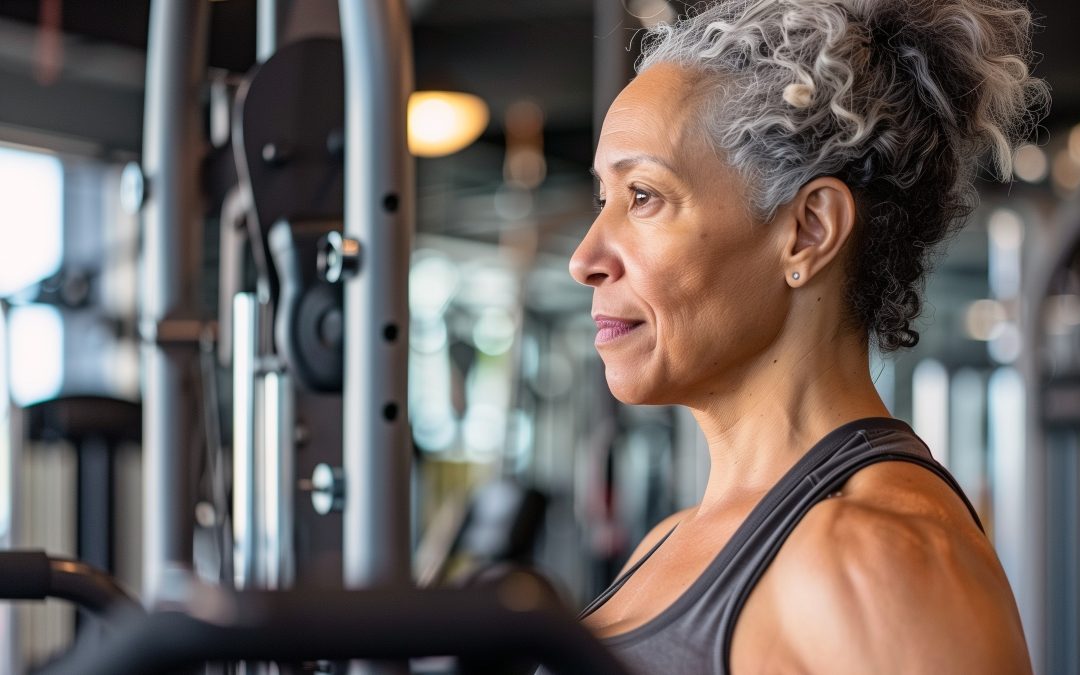

As we age, maintaining a healthy and active lifestyle becomes increasingly important. Trying new fitness routines for women over 40, can help boost energy, improve mood, and enhance overall health. Here’s a comprehensive workout plan tailored specifically for women in this age group.
Start with a gentle warm-up to get your blood flowing and muscles ready. This can include:
Strength training is crucial for maintaining muscle mass and bone density. Focus on compound movements that work multiple muscle groups:
Cardio helps improve heart health and burn calories. Mix up your routine with:
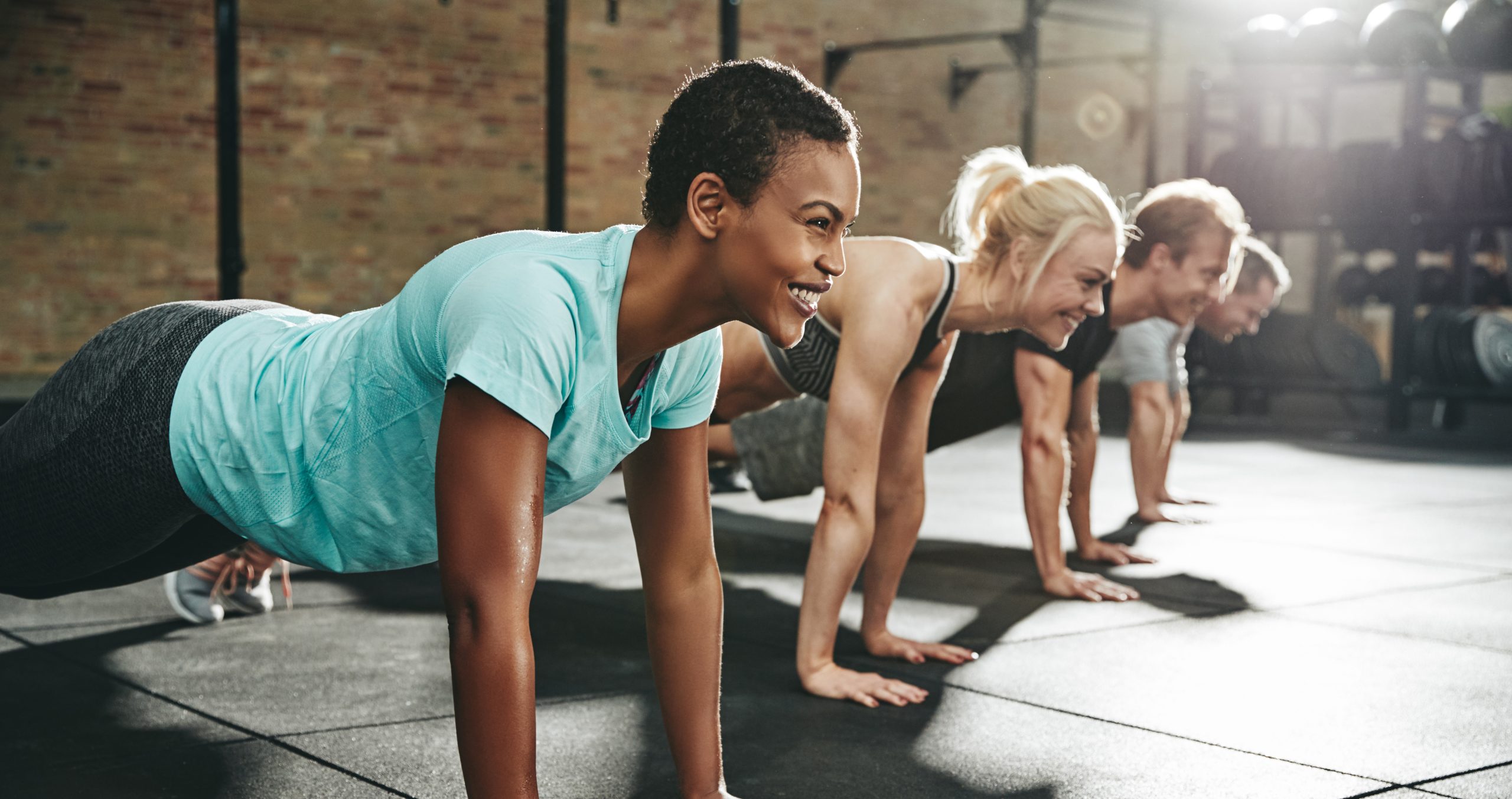
Flexibility and balance exercises help prevent injuries and improve mobility:
End your workout with a cool-down to help your body recover:
Staying active and fit after 40 is not only possible but can be incredibly rewarding. By incorporating strength training, cardio, flexibility, and balance exercises into your weekly routine, you can enjoy a healthier, more vibrant life. Remember, the goal is to find activities you enjoy and make them a regular part of your lifestyle.
Feel free to share your progress and any tips you have found helpful in your fitness journey! 💪
Note: This blog post is a general guide and should not replace professional advice. Always consult with a fitness professional or personal trainer at LA Fitness for personalized guidance and support.
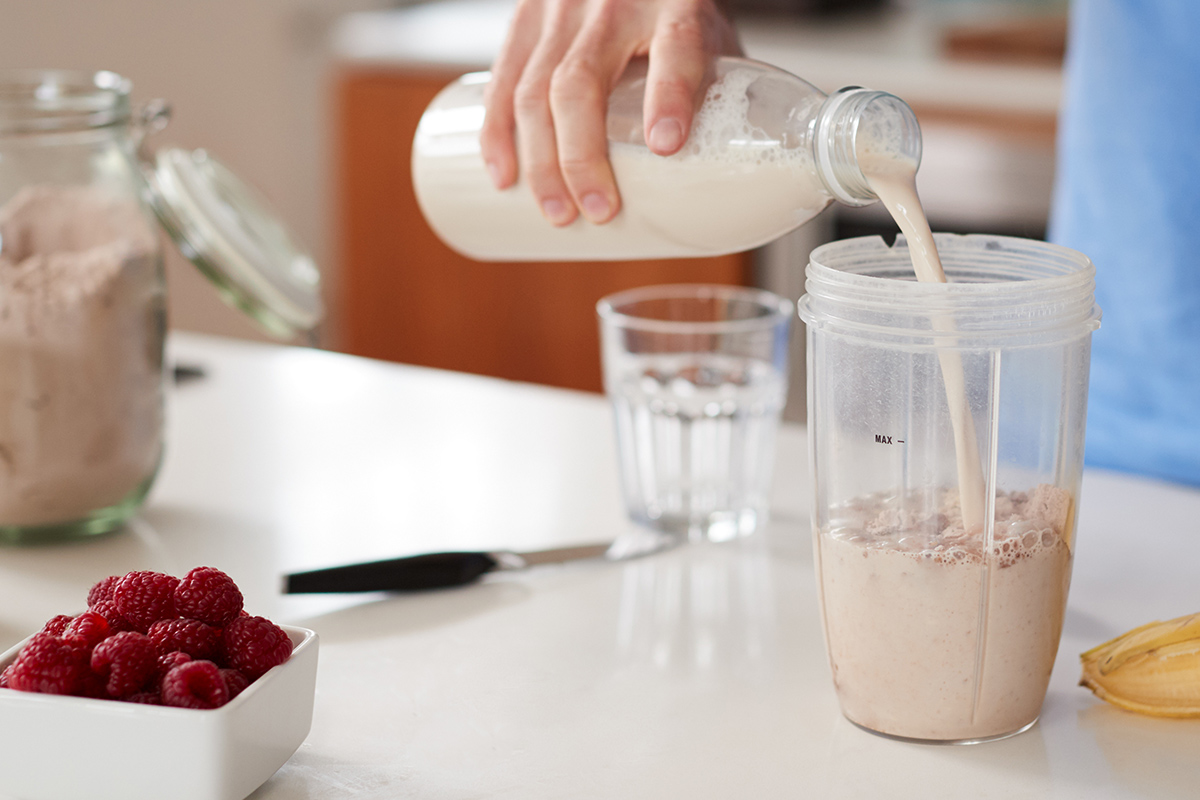
This is a popular question that often comes from people trying to bulk or maintain muscle mass, and even from people just looking to keep their bodies healthy. In general, if you are at a healthy weight and your exercise habits are minimal, your protein intake should sit somewhere in the range of 0.36–0.6 grams per pound (0.8–1.3 grams per kilogram).1 The lower end of this range is considered the Recommended Dietary Allowance (RDA), or the amount needed to meet a person’s basic nutritional needs. For men, this is approximately 56-91 grams per day; for women, it’s about 46-75 grams per day.1 However, you can calculate a more accurate number for your individual needs.
Despite the fact that we have some guidelines on how to determine your protein requirements, it really isn’t an exact science. Each individual should consult with a specialist to determine what is best for their body.
According to the recommendations above, the math behind this is quite simple. Let’s do a quick example to demonstrate how it’s done. Again, this is using the most basic protein recommendation.
If you are 130 pounds, if this is a healthy weight for you, and if your exercise habits are minimal, you would want to multiply by the lower end of the range we mentioned above (0.36 grams of protein per pound of bodyweight).
| 130lbs x 0.36g = 46.8g |
This quick calculation shows that your protein consumption should amount to approximately 47 grams of protein per day.
If you like, you can go a step further. Since protein has 4 calories per gram,2 you can multiply 47 by 4 to get the total number of calories you should consume from protein.
| 47g x 4 = 188 |
Now you know that 188 of your daily calories should come from protein.

Endurance athletes need significantly more protein than sedentary individuals, about 0.5-0.65 grams per pound of bodyweight (1.2–1.4 grams per kilogram).1
The calculation here would follow the same process, only you would replace 0.36 with a number within the new range. Of course, the more intense your endurance workouts are, the greater this number will be. Generally, a number within the range of 0.5 to 0.65 helps endurance athletes meet their protein requirements.
Let’s do a quick example using kilograms instead of pounds.
If you took your weight in pounds, you would first need to divide your weight by 2.2 to get your weight in kilograms. Let’s use 130 pounds again to demonstrate how this works:
| 130 ÷ 2.2 = 59.09 |
Next, multiply your weight in kilograms by a number within the new range. Keep in mind that this range changed too. It’s 0.5-0.65 grams of protein per pound, but 1.2-1.4 grams of protein per kilogram. Let’s use the lower end of the range which is 1.2.
| 59.09 x 1.2 = 70.91 |
This calculation shows that, if you are an endurance athlete, your minimum protein consumption should amount to approximately 71 grams of protein per day.
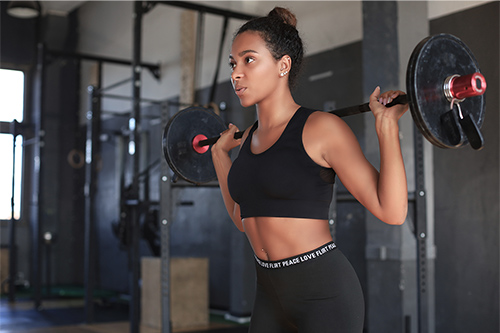
Athletes looking to increase muscle mass are advised to consume at least 0.55 and up to 0.91 grams of protein per pound of bodyweight (1.21-2.0 grams per kilogram).3 Athletes who strength train regularly (and at an intense level) need just a little bit more. The recommendation is at least 0.68 and up to 0.91 grams of protein per pound of bodyweight (1.5 to 2.0 grams per kilogram) every day.3

Older adults have increased protein needs as well, about 0.45–0.6 grams per pound of bodyweight (1–1.3 grams per kilogram).1 According to our registered dietitian, the increased intake recommendation is partly to help maintain lean mass and partly to compensate for a slightly diminished ability to digest and absorb protein.2 Healthline explains that increasing protein can also help prevent osteoporosis in older adults.1

People recovering from serious injuries may also need more protein. The assumption is that, because traumatic injury induces hypermetabolism, protein requirements increase.4 While more work needs to be done to develop accurate energy requirements, some suggest that about 0.68 grams of protein per pound of bodyweight (1.5 grams per kilogram) is an appropriate amount.4
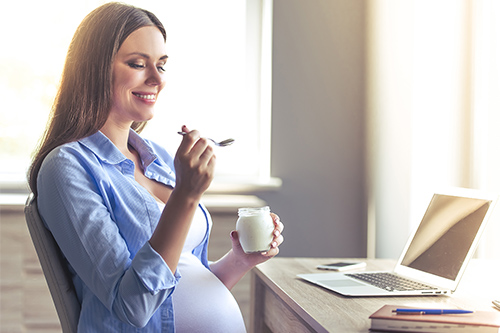
A 2015 study found that the recommended protein intake for pregnant women is in fact lower than previously thought. Still, the overall amount is similar to the needs of a high performing endurance athlete! According to this study, these are the appropriate amounts of protein for the average pregnant woman:
During Early Pregnancy – 0.55 grams of protein per pound of bodyweight (1.22 grams per kilogram).
During Late Pregnancy – 0.69 grams of protein per pound of bodyweight (1.52 grams per kilogram).
The short answer is yes. According to a review from the International Journal of Sport Nutrition and Exercise Metabolism, the maximum safe protein intake is 1.14 grams of protein per pound of bodyweight, or 2.5 grams of protein per kilogram.2
Medical News Today identifies the following symptoms associated with too much protein:
How do you reach and manage your protein intake goals? Share your ideas in the comments below! To stay in-the-know on trending health and nutrition topics, subscribe to our newsletter to receive monthly highlights from the Living Healthy Blog.
This article should not replace any medical or nutritional recommendations from your primary care physician. Before starting any exercise program or diet, make sure it is approved by your doctor.
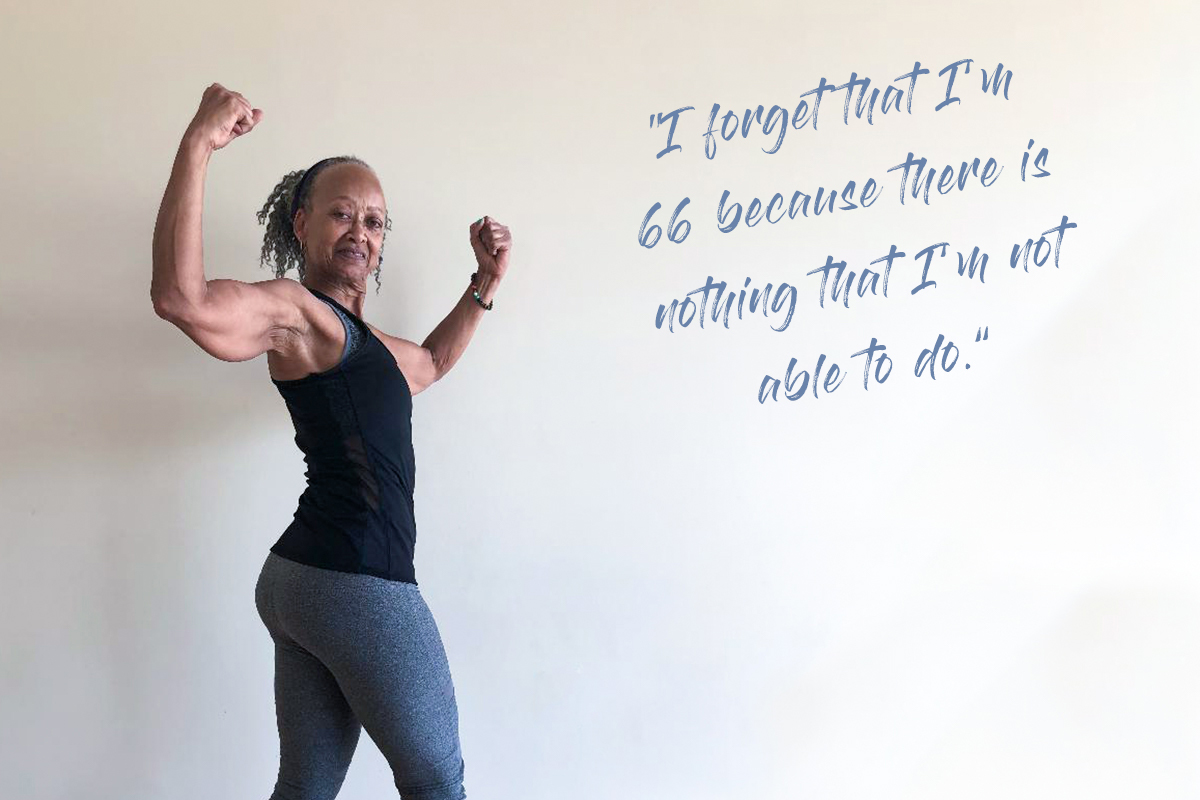
“I think we really get down on ourselves when we mess up and then we backslide all the way. Try to find something positive. It doesn’t matter what your starting point is, you need to be ready to say, ‘I am done with doing this to myself.’”
Patricia Ebaire is not just a success story; she is an inspiration to others who believe that older age must certainly translate to struggle. Many of us pair the idea of aging with stiff joints, loss of flexibility, and general aches and pains. Yet, Patricia is here to show us how wrong that notion can be.
Patricia shared her story with us with the hope of encouraging and motivating others to believe in what they can do. “It’s never too late and you’re never too late,” she says.
We believe in her message and are grateful for the opportunity to share it. This is her story:
Up until about 4 years ago, Patricia was sure that her health was fine. She had always been fairly active and at a healthy weight, so it never seemed of critical importance to monitor her weight very closely. “I thought everything was going great and didn’t think much about having gained 5 pounds a year over the course of the last 10 years.” That’s 50 pounds over the total time period. However, when thinking about it on a yearly basis, 5 pounds hardly seems worth noting. Yet, a few years ago, the results of her blood work told her it was time to make some changes. That was her wake–up call.

With the guidance of her doctor, Patricia adopted some new health goals. Ideally, she hoped to exercise 40 minutes a day. Her actual routine looks more like 2-3 days a week. “It’s an ongoing challenge,” she says. She knows what her ideal fitness regimen would be, but she puts in her best and is satisfied knowing that she does everything she can.
This is perhaps where most people begin to give up. If they are unable to maintain the very specific regimen they had in mind, they begin to feel a sense of failure that drives them away from their goal. Patricia’s optimism tells her she can just try again the next day! Despite her fitness plan looking different from the initial goal, her progress continues because she does her best to exercise every single day, even if that only amounts to 10 minutes of brisk walking.
To be fair, her Tuesdays and Thursdays are highly active. On Tuesdays she can be found taking a strength and toning class, teaching yoga, and then playing Pickleball, a sport that merges the elements of ping pong, tennis, and badminton. On Thursdays, she swaps her strength and toning class for weight training and then goes on to yoga and Pickleball.
“At first, I didn’t think my food choices made an impact because I wasn’t feeling bad.”
“The other thing I needed to adjust was my diet,” Patricia explains. “I knew I had to change how I ate carbs, veggies, and protein. What I wasn’t into was balancing it all.” Incorporating the new changes meant “giving up things I was eating too much of. At first, I didn’t think my food choices made an impact because I wasn’t feeling bad. I never used to count carbs and calories in my whole life, but I decided I was NOT going to take a medication. I added fiber, ate less salt, and ate foods with fewer preservatives. Once I did that, eating enough became a challenge because carbs used to be a huge part of my caloric intake and I had to cut that down. But I tell myself every day that each day is a new start. So, even if I backslide a bit, I feel like I can try again the next day.”
We know that, for many people, adjusting nutrition can be a serious effort. We like to ask people who have done it successfully, what their biggest challenges were and how they overcame them. This was Patricia’s answer:
“Balancing the whole thing was my biggest challenge. I started carrying all my snacks with me so I would never be at the mercy of what food was available at the time. I also always used to look at nutrition labels, but I look at them with a different eye now. I think to myself, ‘Do I want one piece of cake or do I want a couple of meals?’ If I really get a craving, for example with pound cake, I cut one piece of cake into 8 pieces and I call them “Patricia bites,” so I take a nibble and I SAVOR it.”
Patricia’s favorite thing about being active was not the weight loss of 54 pounds. “That wasn’t even intentional,” she says. “I just wanted to do what was better for my health.” Her favorite thing was the newfound energy!
“I feel like I can do anything any time. I forget that I’m 66 because there is nothing that I’m not able to do. I live on a second-floor apartment and I can carry 6-8 grocery bags up those stairs at a time. I love the energy! Before I lost the weight, I didn’t even realize how low–energy I was.”
It’s easy to fall into the habit of thinking that a person succeeded because they have something in them that you don’t. To that, Patricia says “I think we really get down on ourselves when we mess up and then we backslide all the way. Try to find something positive. It doesn’t matter what your starting point is; you need to be ready to say, ‘I am done with doing this to myself.’”
When it comes to sticking to a new routine, Patricia reminds us that “there are so many choices in terms of exercise and food! Choose an exercise you like by trying many of them until you find one that makes you smile. “It’s the same with food. “Maybe you do not like cabbage, so try spinach, or kale, or other greens. The fact that there are so many choices, means that you can find healthy foods that you like and build a healthy diet around those choices.”
When you experience a moment of doubt, Patricia shares that it’s important that you don’t beat yourself up over what other people are doing. “Pat yourself on the back for what you’re doing. Wherever you are is a great place. Don’t ever make your place a bad place. Your effort means so much more than what the other person is doing because their muscles have been doing that for years. Your muscles are trying to get there!”
Ultimately, her message to any generation is that “it’s never too late and you’re never too late. It’s okay to start over the next day, so it’s okay to mess up because you can start over.”
Do you have an inspirational story you’d like to share with us? Email us at blog@lafitness.com for a chance to be featured in an upcoming post!
For grammatical correctness, length, and clarity, minor edits – none of which alter the original or intended meaning – have been made to the quotes provided.
Many of us pair the idea of aging with decreased mobility and various aches. Yet, Patricia’s story shows us just how wrong that notion can be.
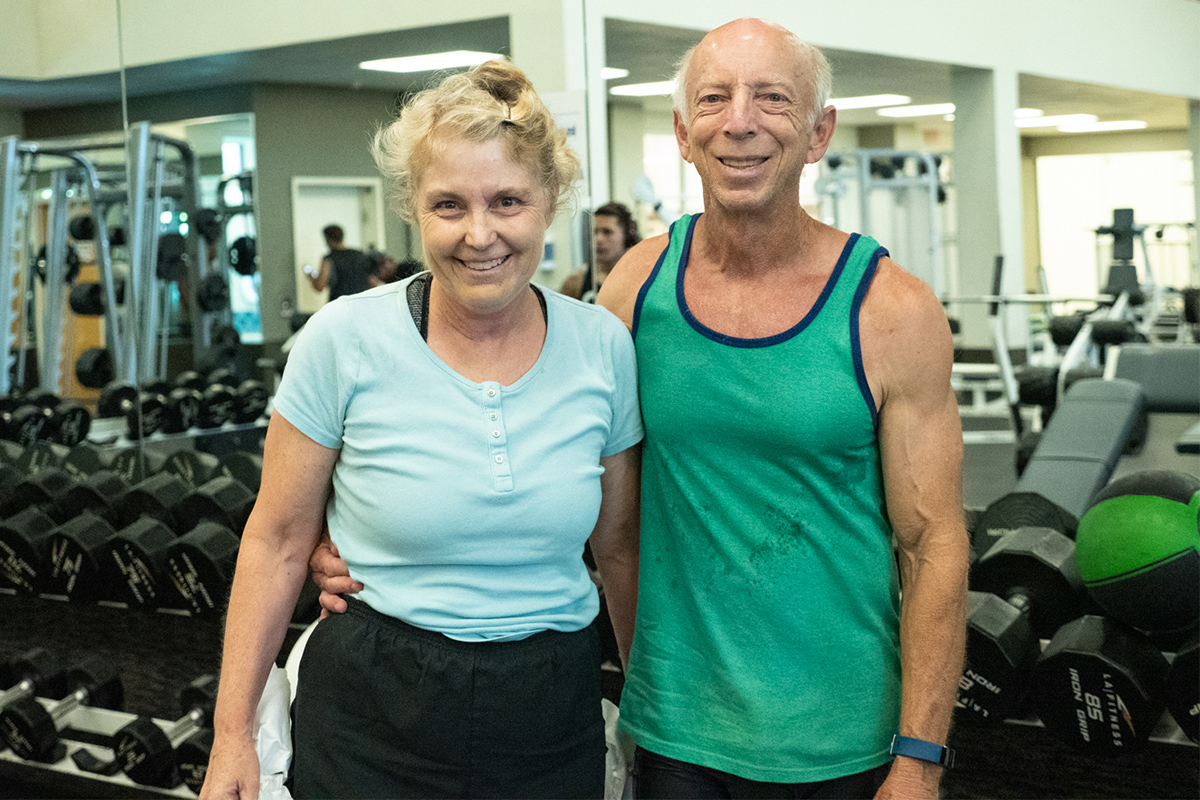
Paul and Karen share how they have maintained a lifelong commitment to living an active lifestyle and break down their weekly gym routine.
Our bodies manage a lot. They bear a lifetime of stress, fall into and recover from illness, battle chronic ailments, take bruises, breaks, falls, and burns, and power through long workdays on 2 hours of sleep. Our bodies take it all, and eventually, our system tells us it’s time to take it easy.
When does the body really start to experience physical limitations, and how does our age affect our fitness endeavors? Let’s find out and talk about some ways to keep your body going strong.

By age 30, and despite the fact that we just barely made it out of our 20’s, many of us get a head start on the “I’m getting old” complaints. Perhaps jokingly and perhaps not. According to a study on aerobic capacity in aging adults, fitness levels begin to decline 3% to 6% every decade starting around age 20.1 So, by age 30, you may technically have experienced a mild age-related change in your physical fitness, but not enough to make a noticeable difference.
However, age is not the only factor. Our reduced physical fitness often has to do with changes to our lifestyle habits or diseases.2 As we age, we encounter life changes and assume responsibilities we never had, which can potentially lead to a lot more sedentary time. Naturally, the less active you are, the more difficult many physical activities will feel.
That being said, Tip #1 is to take a moment to recognize any decrease in physical activity and to commit to reintroducing some of it into your life.

Here, we embark on that part of our lifetime we know as “middle age.” Commonly associated with mid-life crises, hair loss, and a slowing metabolism, it’s not typically a very welcome stage. Allow us to assuage your fears.
This study examined the performance of marathon runners ranging from the ages of 20 to 79. The results show that “no significant age-related decline in performance appears before age 55.”2 This is about halfway through your period of middle age.
Once you hit 55, you don’t suddenly begin to struggle. The same study reveals that only a moderate decline is observable in their runners after this age. In fact, “25% of the 65- to 69-year-old runners were faster than 50% of the 20- to 54-year-old runners.”2 Even more impressive is the fact that the same percentage of 65- to 69-year-old runners began marathon training within the previous 5 years.2 This should prove that their success was not a result of a lifetime of conditioning. Despite starting their training around age 60 or later, their bodies were capable of outperforming younger runners.
Tip #2: It’s never too late to start, so start! Need more incentive? Another study found that even untrained individuals, who had never taken up sports until after reaching the age of 50, “were able to halve their mortality risk compared with their non-active peers.”2

Now we enter older adulthood where our aerobic capacity declines more quickly. Most older adults will see a decline of about 20% every 10 years starting around age 70.1 Fear not, however. Even if your maximal oxygen uptake is reduced, you are still capable of improving your aerobic fitness and of improving your muscle strength, balance, and flexibility.
For example, this study on balance training in older adults found that regular balance and strength training was capable of restoring performance to a level like that of someone 3 to 10 years younger.3
Not to mention, the power of exercise remains highly beneficial for the body and is often prescribed to older adults. In fact, this study found that “the life expectancy of active seniors was 3.8 years longer than that of their non-active peers.”2
Tip #3: Don’t allow yourself to believe that your age means you cannot be physically active. Many of our older members are living proof that age is just a number. Check out #3 of our Workout Excuses article to see exactly what we mean. Additionally, many workouts are tailored specifically to older adults who need a safe and gradual starting point. A doctor can help you make the right activity choices if you’re looking to take up exercise but have felt unable to do so.
For more articles like this one, click to subscribe to our newsletter and receive monthly highlights from the LA Fitness blog!
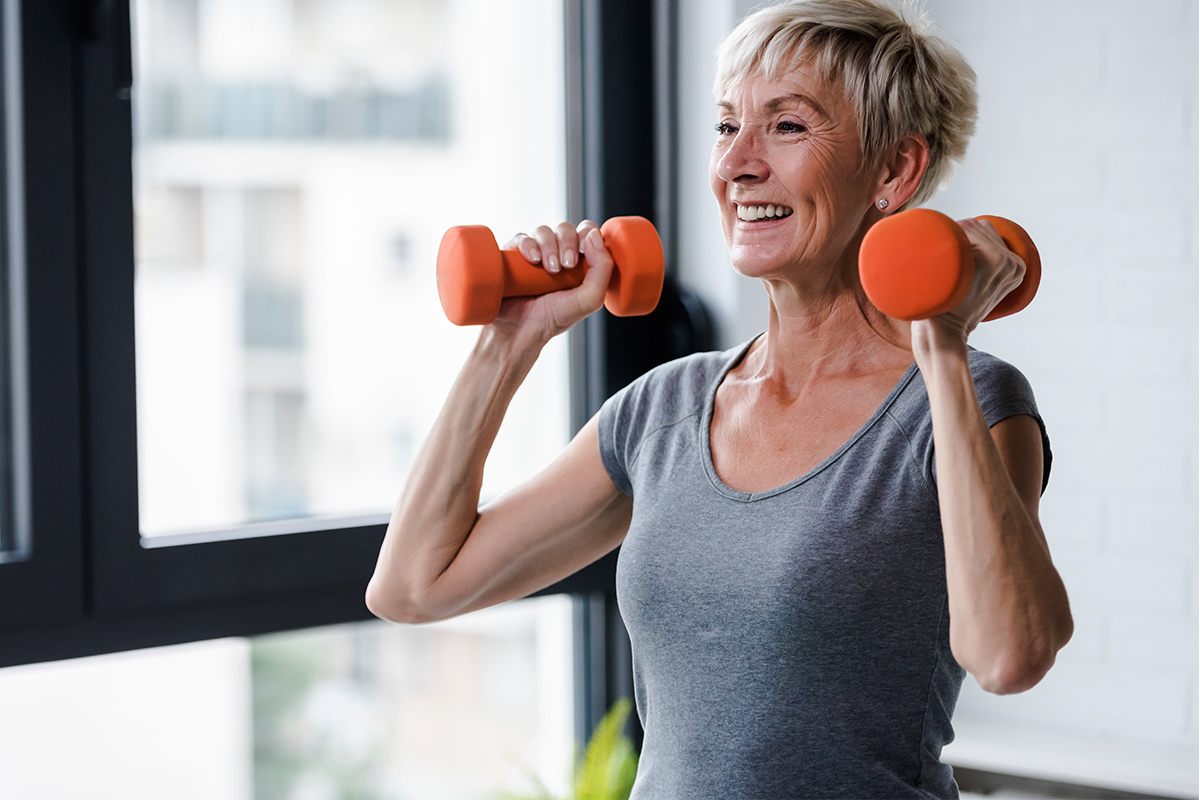
There seems to be this idea that, as we age, frailty and loss of energy are inevitable. However, these can be symptoms of something that is highly preventable: muscle loss.1 What is the primary cause of muscle loss? Inactivity!
Everyday activities like climbing the stairs, carrying groceries, playing with the kids or grandkids, or cleaning the house don’t have to become more difficult! Strength training is the answer to this common problem, and no, it’s not just for the gym buffs.
We’ll be taking you through the many benefits and some sample exercises with the help of Tufts University’s book on the Growing Stronger exercise program. The book is a completely free, accessible, and research-driven guide that can help you regain your strength and your independence.
Because the exercise program offered in Growing Stronger has been tested in its entirety, this article should not serve as a replacement. It simply highlights many key components of the program to showcase how fitness can be an easy and progressive addition to your lifestyle regardless of age.
Strength training can help alleviate the symptoms of many chronic conditions and diseases.1 Seguin and colleagues identify the following benefits for several common conditions:
Arthritis: Reduces pain and stiffness, and increases strength and flexibility
Diabetes: Greater control of your blood sugar levels
Osteoporosis: Builds bone density and reduces the risk of falls
Heart Disease: Reduces cardiovascular risk by improving lipid profile and overall fitness.
Obesity: Increases metabolism, which, in turn, burns more calories and aids long-term weight control.
Back Pain: Strengthens back and abdominal muscles. As a result, stress on the spine is reduced.
As with any new exercise program, it is important to consult with your doctor to make sure that your exercise plan is safe for you and that it aligns with your other health goals. Once you are sure you can proceed, there are still some safety recommendations the Growing Stronger authors would like you to consider:
|
Women |
Men |
|
2 pounds |
3 pounds |
|
3 pounds |
5 pounds |
|
5 pounds |
8 pounds |
They also advise that you choose adjustable ankle weights because you will be able to more freely alter what you’re working with.
3. Store your weights on the ground or at ground-level storage. This eliminates the possibility of the weights falling on you if you are attempting to reach them from a high storage location. You can even leave them in a wheeled cart for easier access.
4. A commonly cited piece of advice (but one still worth mentioning) is that you should aim to exercise every other day to allow your muscles to rest. You can also alternate muscle groups (legs one day, upper body the following day) to avoid overworking a single muscle group.
5. Perhaps the best thing you can do is to be attentive to the aches and pains in your body. Don’t work out if your muscles feel strained or if you feel unable to safely exercise.
The book offers a detailed breakdown of multiple exercises and even plans them in stages. Once you have completed the first stage (about 2 weeks), you will be able to move on to a more difficult set of exercises. Here are just a few of their recommended exercises divided by difficulty level.
Stage 1 exercises should be performed for 2 to 3 weeks before moving on to Stage 2. For each exercise, perform 2 sets of 10 repetitions with a 1-minute rest period in between sets.

You may already know how to do a basic squat; it is essentially the act of sitting down, without actually sitting down. This exercise is great for strengthening the hips, thighs, and glutes.
Placing your body weight into your heels (as opposed to you leaning into your toes), lower into a seated position and rise back up to your standing position. Be careful not to let your knees come forward past your toes. You can choose to actually sit on a sturdy chair as you perform this exercise and to use your hands to guide your motion until you get stronger.

These are just like regular push-ups except your feet are planted on the ground and you are pushing off the wall. This is still a great way to strengthen your arms, chest, and shoulders, without having to get down on the ground.
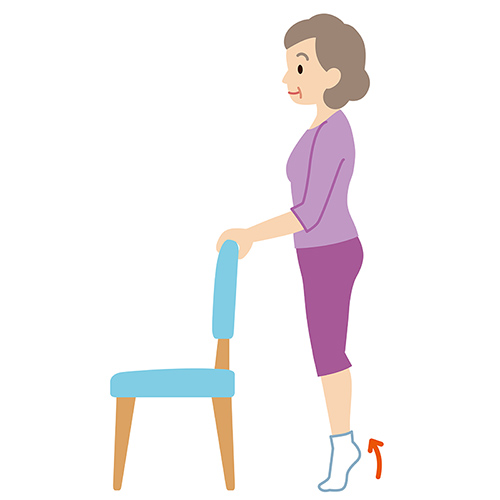
Also known as calf raises, this exercise strengthens your calves and restores your balance. Stand tall and with your feet flat on the ground. Using the back of a chair (or another stable surface) for balance, rise onto your toes and settle back down.
Stage 2 exercises should be performed for 2 to 3 weeks before moving on to Stage 3. For each exercise, perform 2 sets of 10 repetitions with a 1-minute rest period in between sets. If you find yourself able to complete 10 repetitions easily, and with proper form, consider increasing the weight of the dumbbells or ankle weights for your next set.

The biceps curl is a great strengthening exercise that also helps improve your grip strength. Using your lightest set of dumbbells, lift the weights by bending at the elbow and bring the dumbbells towards your shoulders. Your palms should be facing you. You may do this from a seated or standing position.
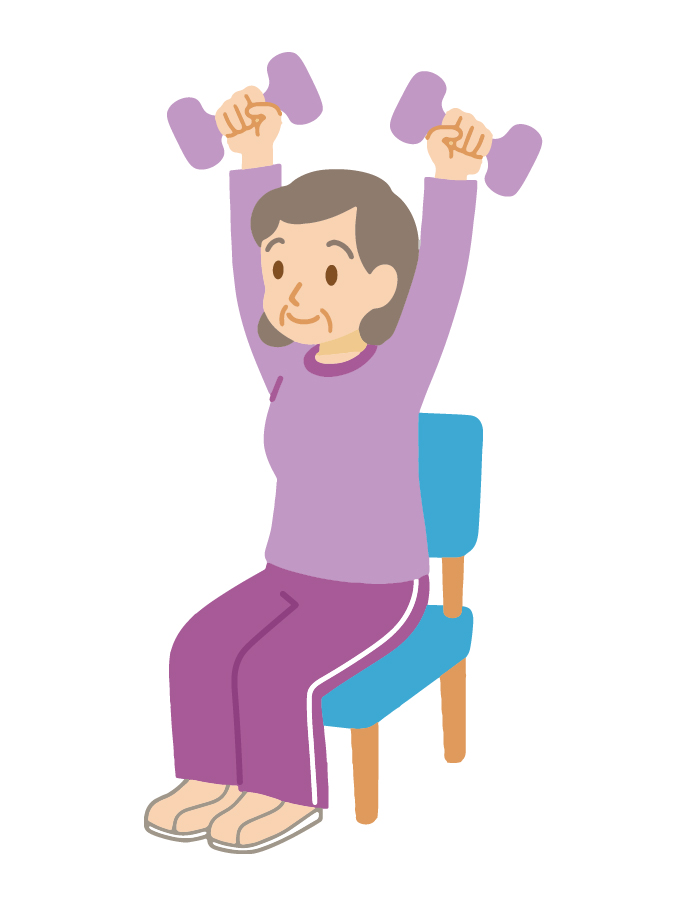
This exercise works the muscles in your arms, upper back, and shoulders. It simplifies tasks like reaching for items in high locations. From a standing or seated position, hold a dumbbell in each hand and bring the weight up towards your shoulders (as though you just did a bicep curl). Rotate your wrists so that your palms face away from you. This is your starting position for the Overheard Press.
With controlled movement, push the dumbbells up above your head until your arms reach full extension. Then return the dumbbells to your shoulders. Do not actually rest the weights on your shoulders.

The muscles in your hips, thighs, and glutes are putting in the work with this exercise. Not only can the Side Hip Raise shape your lower body, it can also strengthen your hip bones which are more vulnerable as you age.
Using a stable surface for balance, stand with your feet slightly apart and your toes facing forward. You may have ankle weights added to increase the difficulty. Without locking your knees, lift your leg out to the side, pause for a moment, and lower your leg back to the floor.
For each exercise, perform 2 sets of 10 repetitions with a 1 to 2-minute rest period in between sets. Again, if you find yourself able to easily and properly complete 10 repetitions, consider increasing the weight of the ankle weights.
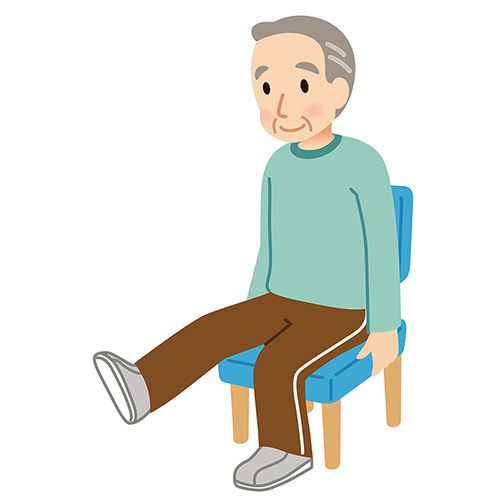

The muscles along the front of your thigh are the target of this exercise. It helps strengthen weak knees.
With your ankle weights fastened, sit all the way back in a sturdy chair with your toes pointing forward. Your feet should barely touch the ground. Flex one foot and extend your leg until your knee is straight. Then, lower your foot back to the ground. After you complete 1 set of 10, do a set with the other leg. Then start over to complete a second set for each leg.

If you strengthen the front of the muscle you should really strengthen the back as well. This exercise targets the hamstrings (the back of the upper leg) and pairing it with the knee extension can make walking and climbing stairs easier.
With your ankle weights fastened, stand behind a stable surface for balance with your feet just less than shoulder–width apart. Keep your foot flexed as you bring your heel towards your butt and pause for a moment before lowering it back to the ground. Do 1 set of 10 with each leg before starting on your second set.
If these exercises were exactly what you’ve been needing, the complete Growing Stronger guide contains even more. Let us know in the comments below if you try it out! If you’re ready to step things up, come check out our Silver Sneakers program. In this group class, you’ll work on total-body conditioning in an instructor-guided setting where you can still go at your own pace.
For more information on healthy living in older adulthood, read our registered dietitian’s answer to this question on Protein Advice for Seniors. Or, for a boost of motivation, read Paul and Karen’s success story who say the gym is like their fountain of youth! To access our monthly blog post highlights, subscribe to our newsletter, today!