An Active Lifestyle is Possible at Any Age
Many of us pair the idea of aging with decreased mobility and various aches. Yet, Patricia’s story shows us just how wrong that notion can be.

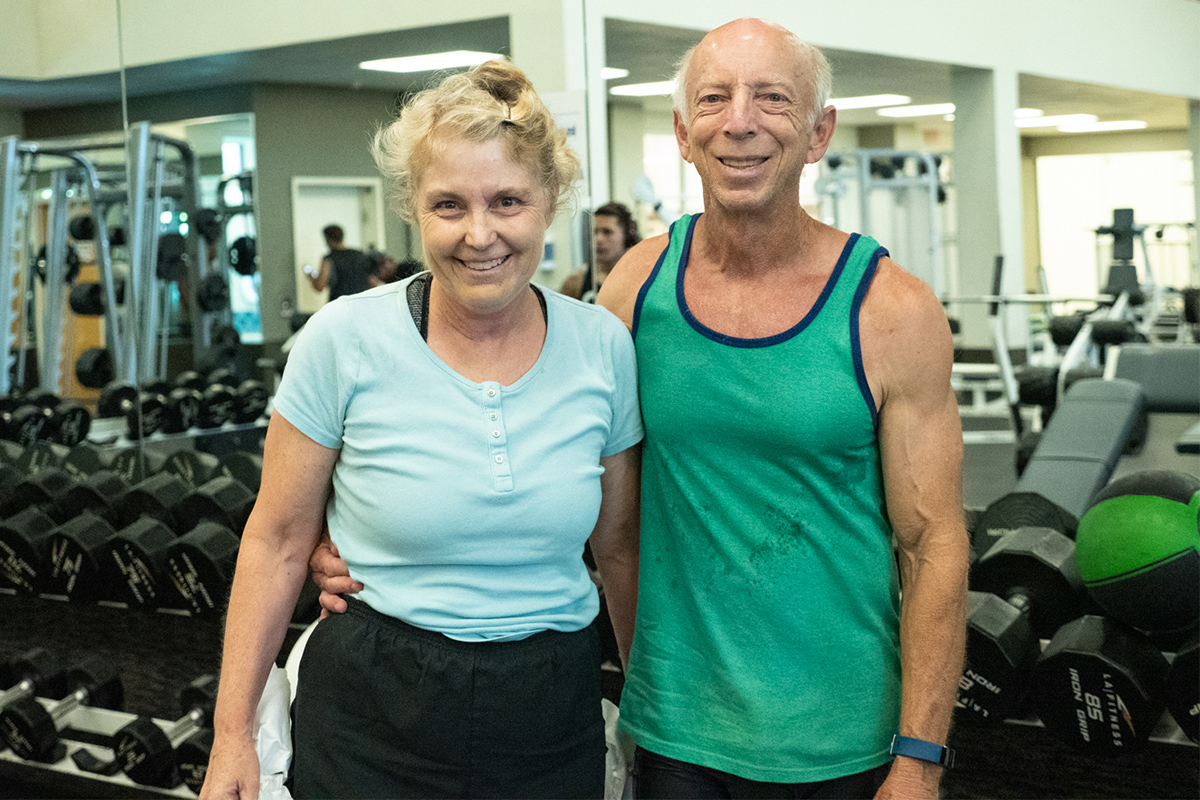
“If there is a fountain of youth, there’s a good chance it can be found (after a certain amount of sweating) within the walls of the gym.”
Paul and Karen have been members of LA Fitness for over 25 years and have lived an active lifestyle for even longer than that. We reached out to this inspiring couple to hear first-hand how they made fitness a priority and managed to maintain it as a lifelong standard.
Well before these two even met, they each enjoyed activities like swimming, jogging, cross-country running, and long bike rides in the city and by the river.
These weren’t any ordinary activities, however. Karen started swimming at age 6 and eventually joined her high school swim team, while Paul’s bike rides would typically be around 20 miles long!
In 1978, Paul was hit by a car on his bike ride home from work. He had his eyes set on a 10K that was merely a month from then, and though he had stopped running due to a cross country injury 7 years prior, he promised himself he would recover from the accident in order to run the 10K. He has been running ever since.

“Karen and I met at UCR where I had noticed her swimming and found out about a team triathlon coming up,” explains Paul. “She said she’d do the one-mile ocean swim in Baja on our team…We won that triathlon in 1982. Ever since, we have inspired each other to keep going and shared and traded our fitness ideas and commitments.”
Winning the triathlon was clearly only the beginning of a lifetime of setting and hitting fitness goals together, but it was never just about training for the races. Paul reminds us that together, they “have looked at fitness as a very important part of life in the very long run.”
“Probably the most unusual thing about both of us,” he says, “is that we both value health and fitness very highly and have for a long time, long enough ago that we can’t say when this commitment began.”
Over the years, Karen adopted some of Paul’s fitness routines, like lifting weights, and he adopted some of hers, like swimming. “In 1994, Karen had an opportunity to join LA Fitness (in Upland, CA) and she got me to join then too,” says Paul. “There was no LA Fitness near our home (in San Diego County) for another 8 years, but we used the Upland gym whenever possible, in hopes that someday one would open closer to us.”
To put this information into perspective, consider this very rough estimate: San Diego is about 116 miles from Upland. This means that in moderate California traffic, that drive can take over 2 hours!
To keep his exercise routine consistent, Paul continued to work out at UC Riverside. In the ‘70s, he took a weight class that utilized an old Universal all-in-one station. “My current routine may still have echoes of those early days,” he says.
“Later, when I had access to free weights and separate weight stations, I observed others and developed a routine that focused on my weaknesses and mixed up lifts so different muscle groups wouldn’t get overused. I added or modified lifts and the order I did things to get the most out of my time.”
When Karen graduated, she found a job and utilized her lunch times to swim or run. “Later, she attended various gyms (that are no longer in existence) near home when she had the chance. She has expanded and adjusted her weight program as well, finding a routine that fits her best.”

“Once our local LA Fitness opened in Vista, we were in heaven. Our formerly limited routine could be infinitely enlarged because of all the machines and range of weights and cardio equipment available. Karen found much more suitable machines for her and continues to add or adjust her program. I have done the same.”
At this point, Paul and Karen were able to add a core weight and a core cardio routine to their gym sessions. They complete their weight circuits twice a week and do various cardio workouts 4 days a week. “We don’t do cardio and weights on the same day,” clarifies Paul, because that would mean “we would have to reduce the intensity of both if we had to do both in one session.”
“Here is where we might be different than most people,” says Paul. “We like cardio and we push hard. We attend one spin class each week and run once a week. Karen likes the different elliptical machines and will use the pool, while I will go between the stationary bike, rowing machine, and elliptical machines.”
For the most part, Paul and Karen work out 6 times a week and have been doing so for years. Still, “we look forward to our trips to the gym as much as ever.”
As regular gym-goers, Paul and Karen have come to know many people at the gym who they’ve become close friends with over the years. “Even the maintenance guy at our gym often seeks us out to ask how the machines are doing,” Paul says.
“Having been doing fitness for so long, age has become a slight modifier as well. Neither of us can run or swim as fast as we could in our invincible 20s, but surprisingly we can do just about everything we ever have, with little change over time. We still challenge ourselves and will increase a weight every now and then. Karen and I do bench press together, and have fun encouraging each other (and now our sons, who also are members).”
If there was one thing these two enjoy most about working out, “it would probably be the satisfaction of knowing that we are doing the most important thing we can do to maintain a high level of health. We are evading a lot of problems people acquire as they get older mainly because we are serious about staying as fit as we can. If there is a fountain of youth, there’s a good chance it can be found (after a certain amount of sweating) within the walls of the gym.”
Perhaps a great advantage is in the fact that they share the same love for fitness and healthy living. “We have met a lot of people at the gym who wish their significant other was there with them,” explains Paul. “Without that encouragement it must be a lot harder to maintain what should be a lifelong commitment. We both willingly set aside the time to work out and understand how important it is for both of us.”
In addition to working out together, they also work out alone. They make sure to do what they individually need to do in the gym and will help each other on certain equipment throughout their exercise.
“If there could only be one piece of advice, it would be: Make fitness an essential part of life.
The unsaid corollaries of that statement would be ‘Don’t quit, ever!’ and ‘Do a lot of cardio, and a lot of sweating.’”
It may be easier said than done, but Paul and Karen have proven that despite injury, regardless of age, and with the support of like-minded support systems, maintaining an active lifestyle is possible and enjoyable! You just need to find what works for you and keep driving yourself forward.
Do you have an inspirational story you’d like to share with us? Email us at blog@lafitness.com for a chance to be featured in an upcoming post!
For length and clarity, minor edits – none of which alter the original or intended meaning – have been made to the quotes provided.
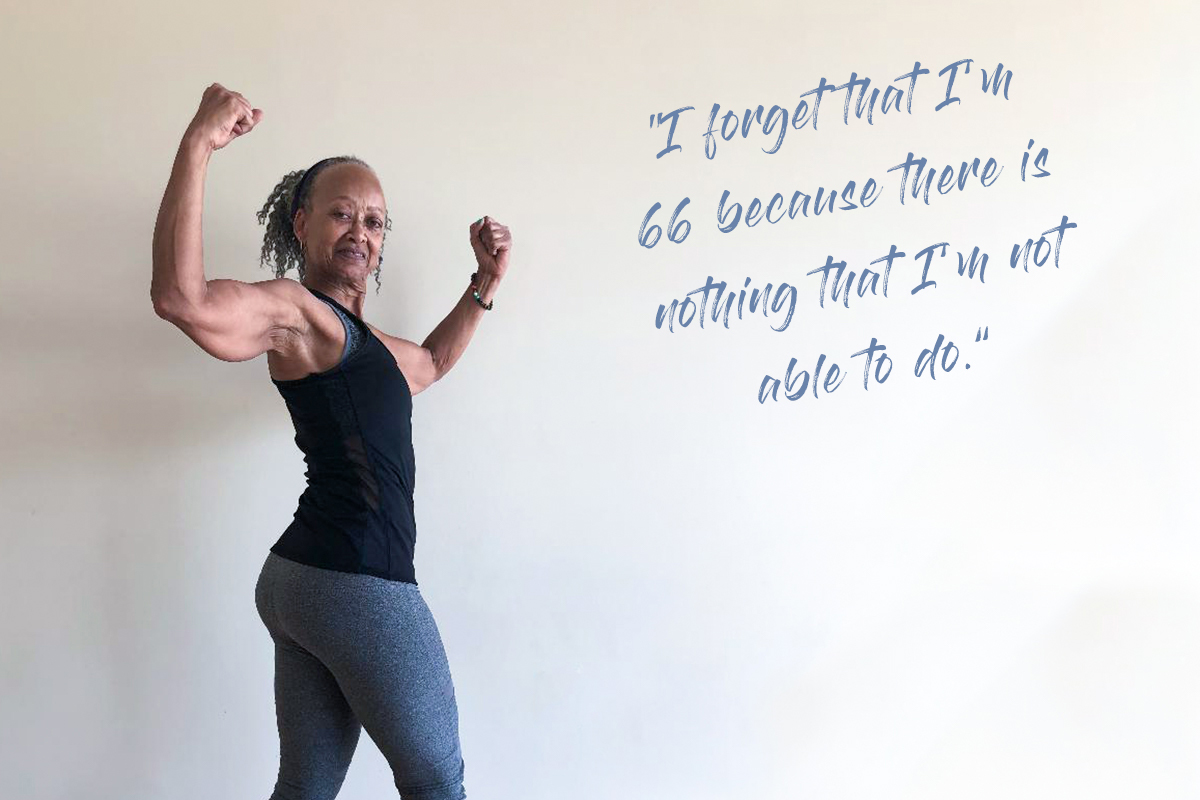
Many of us pair the idea of aging with decreased mobility and various aches. Yet, Patricia’s story shows us just how wrong that notion can be.
Paul and Karen share how they have maintained a lifelong commitment to living an active lifestyle and break down their weekly gym routine.


My wife is 86. She has lost a lot of weight. How do I get her weight back? Are there any super foods in terms of calorie count? Are there any additives, like whey powder, that can help her gain weight? She always says she can’t eat another bite! I give her Nutrament and ice cream to get some calories in her, but this is liquid. She has been given an appetite enhancing pill (Dronabinol 2.5 mg) but it has not shown any effect.
– John

Thanks for reaching out John. Glad that you are on top of her nutrition and have sought medical attention first. Certainly, there are very high calorie foods to incorporate I’ll address below. However, I must say in my experience with geriatric nutrition and long-term care residents, the body’s ability to process and assimilate the calories consumed is often the limiting factor. There may be impairments anywhere from gut digestion and absorption to cellular uptake and utilization.
You’re right to focus on solid foods as weight gain supplements should be given between meals not as a replacement. Nutrament by the way, is marketed as an energy drink for active persons and it’s half sugar1! [360 Cals, 10 g Fat, 47 g Sugar, 16 g Protein] If you’re trying to stay away from medical weight gain supplements, then a comparable 12 fl. oz. of Carnation Instant Breakfast High Protein2 would be more suitable (330 Cals, 9 g Fat, 18 g Sugar, 22 g Protein).
Cheese, avocado, fatty fish (salmon, trout, sardines, herring), full-fat yogurt, nut butters, olives and coconut (meat and milk, not the water) are the richest in calories. Incorporating eggs, beans, olive oil, potatoes and whole-grain starches will provide additional protein and energy. Meal and snack suggestions include: eggs benedict, pudding, nachos with guacamole, mashed potatoes, potatoes au gratin, pumpkin mousse, yogurt + fruit smoothies, shepherd’s pie, avocado on toast, peanut butter on crackers, bisques and chowders, olive tapenade with crostini, granola, and trail mix.
Several condiments can be used to supplement additional calories and protein, such as: syrups, gravies, cheese sauces, creams, spreads, butter, icing/frosting, honey, jelly/jam, pesto, tahini, hummus, and tamari. Use these to coat, cover, top and soak into the main foods (e.g. whipped cream and maple syrup on French toast). Additional food preparation tips are available from the Institute on Aging, the Dietitians of Canada, and the Cleveland Clinic.
Regarding medications2–4: Dronabinol has been available for three decades and is effective for stimulating appetite in the majority of elderly HIV and cancer patients who take it, although some don’t respond to it. The liquid solution form is showing promise over the capsule form for a quicker onset of action. For people experiencing loss of weight and lack of appetite in the absence of conditions like HIV or cancer, Megace is the drug typically prescribed, though it has limited effectiveness.
References:
– Debbie J., MS, RD
This article should not replace any exercise program or restrictions, any dietary supplements or restrictions, or any other medical recommendations from your primary care physician. Before starting any exercise program or diet, make sure it is approved by your doctor.
Some questions have been edited for length and/or clarity.
 Have a nutrition question? Our registered dietitian is ready to help!
Email nutrition@lafitness.com or submit your question below and it may be featured in an upcoming article!

One frequently asked question is about the recommended intake of protein. We hear you! Here is everything you need to know.