Intra-workout Drinks and Protein Recommendation | QA

Intra-workout Drinks and Protein Recommendation | QA

Question:

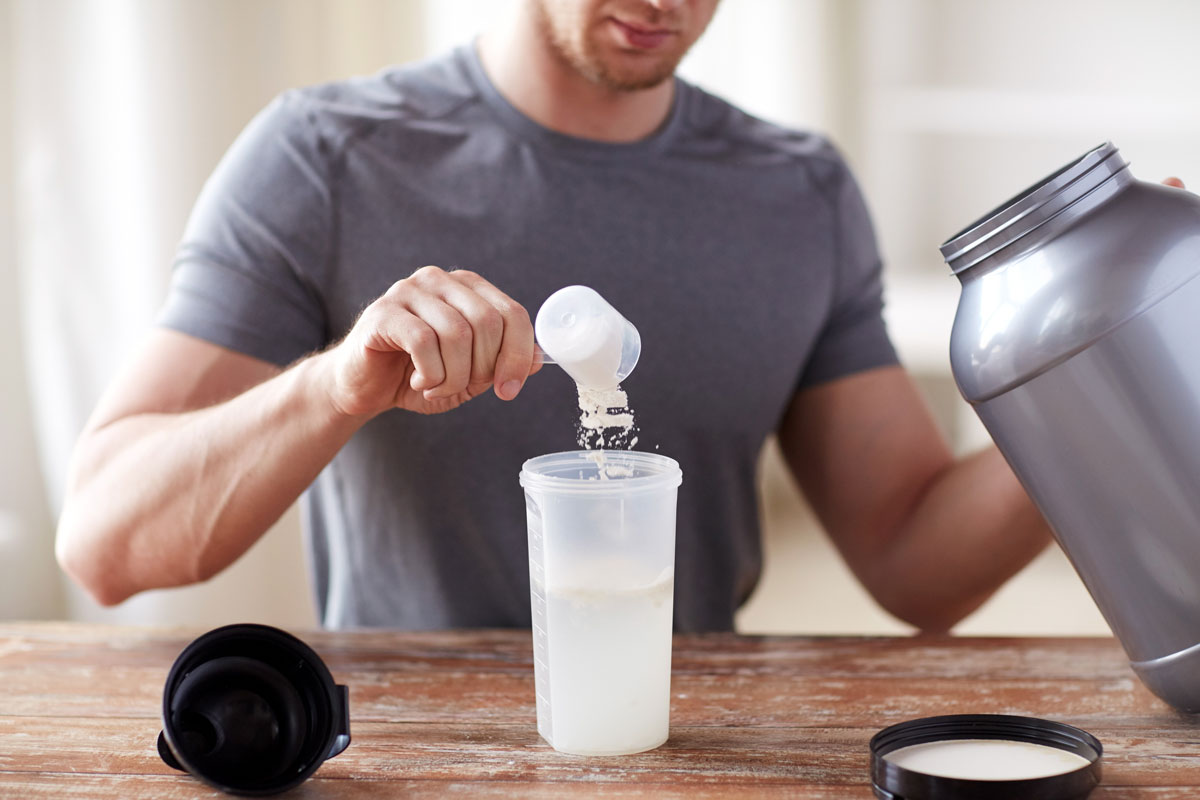
My focus has largely been on muscle growth, though I do plan on switching my routine a bit later in the summer to incorporate more cardio. I would like to be more mindful about the supplements I use and am hoping you can provide advice on this front. I shop at GNC and I normally get a powder for intra-workout drinks and I also get tubs of protein. Do you have products that you would recommend that are both effective and healthy? There are so many different products in the market, as you know, but there really isn’t much oversight of those products when it comes to quality, effectiveness, and, to some degree, legality. I think it would be good for me to hear from an expert on what intra-workout drinks and protein shakes are best rather than relying on blogs, etc.

– Deb S.

Answer:

You’re absolutely right that all consumers have to go on is mostly user reviews and manufacturer advertising – how frustrating! With thousands of products on the market for an industry that draws billions of dollars in sales each year, it’s impossible to even keep up a list of what sport nutrition supplements are available. Turning to the experts is excellent. To be completely unbiased, I don’t endorse a particular brand or products. Rather I look at the individual ingredients for their safety and efficacy.

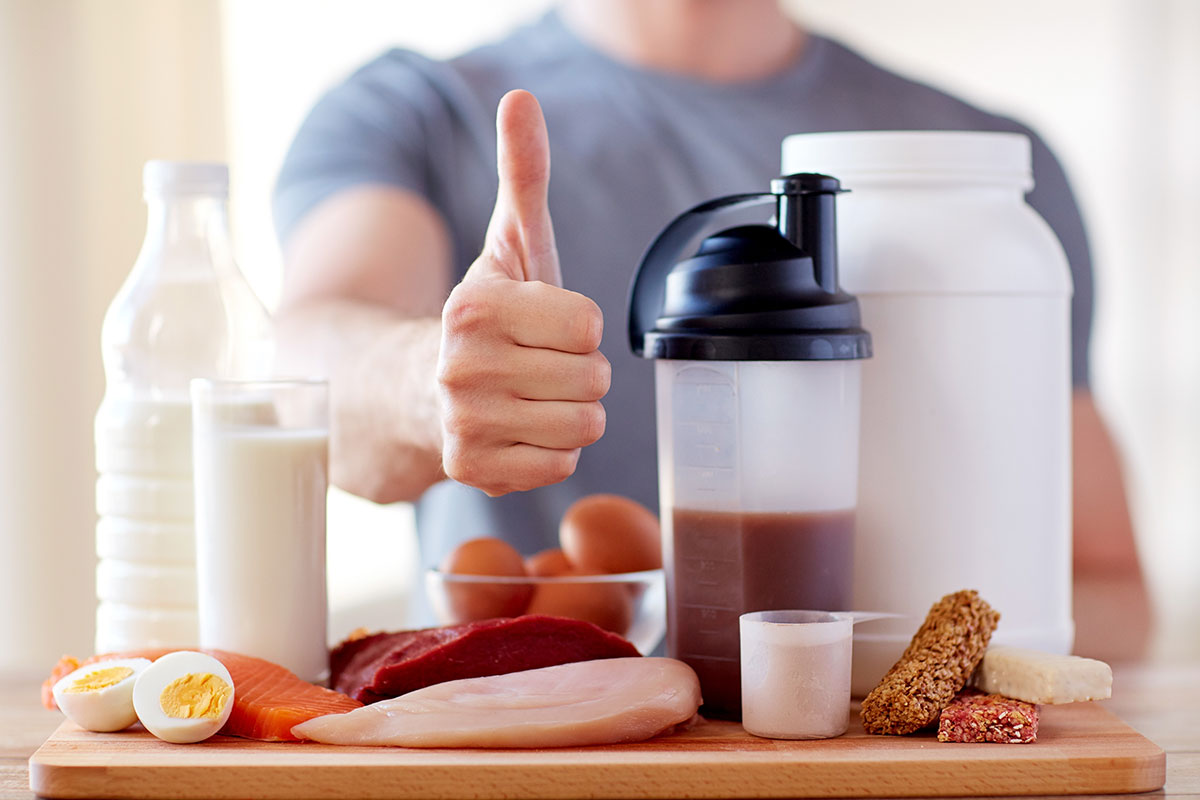
Protein powders that only contain other macronutrients, amino acids and flavors tend to be safe and effective as solid proteins. They really are a substitute for whole food for convenience, portability and ease of digestion. A reasonable guide is to spend no more than one dollar ($1) per 20-25 gram protein serving; even less if you buy in bulk.

Some active compounds that have scientific evidence behind them are creatine, caffeine, Beta-alanine, nitrate and sodium bicarbonate1.  You can look up ingredients on www.Examine.com but can’t research a certain product by name or brand. The National Institutes of Health’s Office of Dietary Supplements has a helpful table of selected ingredients’ efficacy, safety and dosages that also indicates the type of exercise that they may benefit.

Even when there are studies on effectiveness of an ingredient, the next step is determining whether a particular product has an active amount of that compound. In addition, I look for those that not only say they have 3rd party (“independent laboratory”) testing for potency but offer the report as well. In addition, consumer sites such as Labdoor.com and ConsumerLab.com allow you to search their review/analysis by product name.

Remember, supplements are of best value when they complement a well-chosen high-quality eating plan!

Resources:

  • Position of the Academy of Nutrition and Dietetics, Dietitians of Canada, and the American College of Sports Medicine: Nutrition and Athletic Performance. Journal of the Academy of Nutrition and Dietetics. 2016;116:501-528.

– Debbie J., MS, RD

This article should not replace any exercise program or restrictions, any dietary supplements or restrictions, or any other medical recommendations from your primary care physician. Before starting any exercise program or diet, make sure it is approved by your doctor.

Some questions have been edited for length and/or clarity.

Ask our Dietitian

Have a nutrition question? Our registered dietitian is ready to help!

Email nutrition@lafitness.com or submit your question below and it may be featured in an upcoming article!

3 + 3 =


Recommended Reading - Q+A

Good carbs vs bad carbs
Debunking Diet Myths

Debunking Diet Myths

With so many sources offering nutrition advice, it’s hard to know what’s true. Even factual information can become distorted by the time it reaches you. Like a game of telephone, the message often changes as it’s passed along. Here, we debunk 5 common diet myths to...

Meats, Fruits, and Vegetables to reach 100% Daily Value of Vitamins and Minerals

Meats, Fruits, and Vegetables to reach 100% Daily Value of Vitamins and Minerals

Question:

Which unprocessed meats, vegetables, and fruits should I eat each day to get 100% daily value of vitamins and minerals without supplements?

– Charles E.

Answer:

Great question, Charles! There are over 20 vitamins and minerals which need to be obtained in the diet because the human body cannot make them. The Reference Daily Intake levels – either Recommended Dietary Allowance (RDA) or Adequate Intake (AI) – for each micronutrient show how much is needed for men, women and children of various age groups. Your question’s wording refers to the Daily Values, which are not so specific.

According to the National Institutes of Health, “one value for each nutrient, known as the Daily Value (DV), is selected for the labels of dietary supplements and foods. A DV is often, but not always, similar to one’s RDA or AI for that nutrient.” The Daily Values are set by the U.S. FDA for labeling so that consumers can see how much of a nutrient is provided in a serving of a food compared to their approximate requirement for it. The Nutrition Facts panel shows the percent DV for certain vitamins and minerals. Readers – if you’re interested in more about food labels, check out our Living Health Podcast Episode 21!

Okay, so on to whether it’s possible to plan a 100% micronutrient complete day from whole foods. Yes! Though the amount of produce may not be realistic for a person to consume on a daily basis, or the energy provided may be inadequate or excessive for you. That’s one reason why a variety of food selected across several days is best for meeting one’s nutritional needs.

If you’re looking for a list of what to eat in one day that meets 100% DV, the best one could do would be to construct a day using nutrient analysis software which would still be compared to the RDA or AI for your age and gender, not DV. The following list shows how you can meet the DV for about half the essential micronutrients:

Vitamin C: 1 large orange

Vitamin D: 3 1/2-ounces salmon

Vitamin E:  1 cup raw broccoli, plus 2 ounces almonds

Vitamin K: raw broccoli from above

Folic Acid: 1 cup peas, 1 cup cooked spinach, and 5 long asparagus

B12 and B6: 1 cup plain yogurt and a banana, 1 ounce sunflower seeds, and 3 ounces roast beef

Calcium: cooked spinach and yogurt from above plus an 8-ounce glass skim milk, and 1 fig

Iron: red meat from above plus a large spinach salad, and 1 cup lentil soup

Magnesium: almonds from above plus 2 slices of whole-wheat bread, 1 ounce raisins, a baked potato, and 4 ounces grilled halibut

Zinc: whole wheat bread from above plus a burger patty, and 1 slice cheese


Restricting intake to only the three food groups you mentioned is more work, so you are on your own there. If you are adamant about doing so, I’d suggest using a sample menu as a template for starters then substituting for foods you won’t eat. Truly a personalized custom menu!


References:

  • “Daily Values.” NIH Office of Dietary Supplements, U.S. Department of Health and Human Services, ods.od.nih.gov/HealthInformation/dailyvalues.aspx.
  • Harvard Health Publishing. “Getting Your Vitamins and Minerals through Diet.” Harvard Health, Harvard Medical School, July 2009, www.health.harvard.edu/womens-health/getting-your-vitamins-and-minerals-through-diet.
  • “How to Eat Your Vitamins.” Real Simple, www.realsimple.com/health/nutrition-diet/vitamins/eat-vitamins.

– Debbie J., MS, RD

This article should not replace any exercise program or restrictions, any dietary supplements or restrictions, or any other medical recommendations from your primary care physician. Before starting any exercise program or diet, make sure it is approved by your doctor.

Some questions have been edited for length and/or clarity.


Recommended Reading - Q+A

Good carbs vs bad carbs
Debunking Diet Myths

Debunking Diet Myths

With so many sources offering nutrition advice, it’s hard to know what’s true. Even factual information can become distorted by the time it reaches you. Like a game of telephone, the message often changes as it’s passed along. Here, we debunk 5 common diet myths to...

Struggling with Food? Try the “Un-diet” Approach

Struggling with Food? Try the “Un-diet” Approach

Question:

I just started to go to LA Fitness. I’m a 23-year-old female, I weigh 205 lbs., and I’m 5’4″. I struggle with food. I’ve been on multiple diets, lost weight, restricted myself and end up giving up because it wasn’t sustainable, gaining it back. Calorie counting just seems very tedious and writing things down as well. Is there a way of eating that doesn’t involve measuring out everything in order to lose weight? Or any advice/suggestions?

– Marissa R.

Answer:

I agree that you should remove the focus on portions and calorie restriction. For chronic dieters, experts in weight management recommend making permanent lifestyle changes the goal. Creating realistic goals and developing healthy habits that last are key to an “un-diet” approach. No mention of calories or measurements in The National Weight Control Registry’s summary of its registrants’ four most common habits*: eat breakfast every day, weigh themselves once a week, watch less than 10 hours of TV per week and exercise about 1 hour daily.

Knowledge is power! I believe that a simple foundational understanding of nutrition can help frame your outlook and shift your thinking away from weight, towards nourishing your body. Have you read our Living Healthy articles on nutrition basics, weight loss tips, a Mediterranean style of eating, mindfulness, and social support? For more in-depth learning consider a mass open online course (MOOC) on nutrition fundamentals. Several are free (taken as an audit, not for credit) and available from trusted sources like respected U.S. universities with credentialed instructors.

*The NWCR is the largest prospective investigation of long-term successful weight loss maintenance. http://www.nwcr.ws/Research/default.htm  accessed 6/4/2019

Resources:

– Debbie J., MS, RD

This article should not replace any exercise program or restrictions, any dietary supplements or restrictions, or any other medical recommendations from your primary care physician. Before starting any exercise program or diet, make sure it is approved by your doctor.

Some questions have been edited for length and/or clarity.

Ask our Dietitian

Have a nutrition question? Our registered dietitian is ready to help!

Email nutrition@lafitness.com or submit your question below and it may be featured in an upcoming article!

14 + 8 =


Recommended Reading - Q+A

Good carbs vs bad carbs
Debunking Diet Myths

Debunking Diet Myths

With so many sources offering nutrition advice, it’s hard to know what’s true. Even factual information can become distorted by the time it reaches you. Like a game of telephone, the message often changes as it’s passed along. Here, we debunk 5 common diet myths to...

Metabolism Advice for Those Over 50+

Metabolism Advice for Those Over 50+

Question:

I am a member at LA Fitness in San Antonio Texas, just signed up! Ever since I turned 50 I have been gaining weight with the same diet. I don’t drink sodas and I eat at home most of the time; lean poultry, tilapia, quinoa and sometimes rice. I try not to add too much salt to food. I have a busy life and I don’t have time to cook complicated meals or eat 8 times a day. Even though I hardly eat bread, I do like corn tortillas. Obviously, my metabolism has slowed down. 

– Rosa T.

Answer:

Sounds like the “same diet” you’ve followed isn’t working for you now. From what you describe, the lean protein and plain grains are okay if the volume is appropriate. Check your portions as you should target 3-4 oz. poultry/fish and ½-1 C quinoa/rice (or 2-3 corn tortillas) per meal. Look at all the other foods that make up your diet and compare to recommended serving sizes.

Consider filling up on fruits and vegetables which provide bulk with fewer calories. Great that you avoid soda, but make sure other beverages aren’t loaded with sugar either – particularly coffee drinks or juices/smoothies. Regarding your metabolism, remember that reductions in activity and lean body mass are usually to blame. Use your new membership by getting in both calorie-burning aerobic exercise and muscle-retaining strength workouts.

– Debbie J., MS, RD

This article should not replace any exercise program or restrictions, any dietary supplements or restrictions, or any other medical recommendations from your primary care physician. Before starting any exercise program or diet, make sure it is approved by your doctor.

Some questions have been edited for length and/or clarity.

Ask our Dietitian

Have a nutrition question? Our registered dietitian is ready to help!

Email nutrition@lafitness.com or submit your question below and it may be featured in an upcoming article!

7 + 7 =


Recommended Reading - Q+A

Good carbs vs bad carbs
Debunking Diet Myths

Debunking Diet Myths

With so many sources offering nutrition advice, it’s hard to know what’s true. Even factual information can become distorted by the time it reaches you. Like a game of telephone, the message often changes as it’s passed along. Here, we debunk 5 common diet myths to...

Advice from an RDN on How to Gain Healthy Weight

Advice from an RDN on How to Gain Healthy Weight

Question:

My name is Patrick. I am a new member to the gym since in January. Since joining, I go 4 times a week (Monday – Thursday) and want to optimize my results. I work out for about an hour and fifteen minutes each time, mostly focusing on the upper body and abdomen. I drink a protein shake every day and try to also eat an avocado. I have trouble it seems gaining weight even though I’m consuming 2,500+ calories a day usually. I also drink a Gatorade every time I go to the gym and try to eat a lot of nuts with my turkey at every meal. I don’t have a lot of time to prep food so like buying pre-packaged cold turkey. I can eat straight out of the package or pre-packed snack mixes of dried fruit and nuts. I have gained about 10 pounds in the last 5 months, but results are slow to come. I do the same workout every time hitting nearly every muscle group in my body sometime during my workout. What are the best workouts/machines to use for upper bodybuilding and what should I be eating?

– Patrick

Answer:

Ten pounds gained is a testament to your efforts thus far! Based on the loose description of your intake it sounds like you’re getting dense foods like nuts, dried fruit, and avocado in. You say you drink 500 calories worth and I’ll assume that is from the two beverages you’ve mentioned – a protein shake and Gatorade. Not bad. Hopefully, you are drinking other fluids! Make sure they also have calories like milk (alternatives) and juice.

For solid foods – even quick/packaged items – maximize every bite by making sure it’s topped, soaked or loaded with condiments. For instance, make instant oatmeal with milk instead of water and use extra mayo packets on a turkey sandwich or wrap. High-calorie ready to eat food includes cheese cubes, full-fat sweetened yogurt, potato salad, bars suitable for hiking, and shelf-stable meal pouches (though they may taste better heated).

Not fixing your own food is a disadvantage to healthier eating, as most other energy-rich items are loaded with sugar, salt and fat or contain few fruits and vegetables: canned chili, fried chips, fruit strips/leather, jerky, burritos, egg rolls, etc. Try to take time the night before to pack a small cooler of a few healthier staples. For example, hard-cooked eggs or a single-serve peanut butter tub with a bagel, raw apples or celery sticks as snacks.

– Debbie J., MS, RD

This article should not replace any exercise program or restrictions, any dietary supplements or restrictions, or any other medical recommendations from your primary care physician. Before starting any exercise program or diet, make sure it is approved by your doctor.

Some questions have been edited for length and/or clarity.

Ask our Dietitian

Have a nutrition question? Our registered dietitian is ready to help!
Email nutrition@lafitness.com or submit your question below and it may be featured in an upcoming article!

10 + 2 =


Recommended Reading - Q+A

Good carbs vs bad carbs
Debunking Diet Myths

Debunking Diet Myths

With so many sources offering nutrition advice, it’s hard to know what’s true. Even factual information can become distorted by the time it reaches you. Like a game of telephone, the message often changes as it’s passed along. Here, we debunk 5 common diet myths to...