Warm Comfort Foods Made Healthy(ish)
Most comfort foods we turn to are heavily laden with fat, starch and calories. There are healthier ways to enjoy down-home classics by making a few tweaks.



How many egg yolks are allowed per week when trying to lower my LDL cholesterol?
– Theresa D.
Based on my friend’s advice, I’m eating one boiled egg at each meal, that’s three times a day for me. But now I fear about the effects on cholesterol. So far, I’m good. But what is your advice about eating three eggs each day, every day. I do work out on the treadmill for 30 minutes and weight lift for 30 minutes every day. Regards,
– Abdu K.

Egg consumption in relation to high cholesterol levels was a much debated topic 30 years ago, but confusion still remains. On the whole, eggs are healthy – they contain many nutrients and are good sources of vitamins A and D. One egg yolk contains 5 grams of fat, including 1.5 grams of saturated fat, and approximately 186 mg of cholesterol. Though eggs are high in cholesterol, it’s the saturated fat that has greater impact on your blood cholesterol.
“Eating foods that contain saturated fats raises the level of cholesterol in your blood.” – American Heart Association
Prominent dietary sources of saturated fat are bacon, sausage, meat, eggs, butter, cheese and processed foods containing palm, palm kernel and coconut oils. It’s often how eggs are prepared (in butter) or served (with bacon, sausage, cheese, muffins, or scones) that’s the culprit in affecting dietary cholesterol.
Most people can eat an egg daily without increasing their risk for heart disease. If you have diabetes, are at high risk for heart disease, or already have heart disease then it’s wise to limit egg consumption to no more than three per week. Remember that only the yolk contains the egg’s saturated fat, so these guidelines refer to whole eggs, not egg whites or egg substitute.
Sources:
– Debbie J., MS, RD
This article should not replace any exercise program or restrictions, any dietary supplements or restrictions, or any other medical recommendations from your primary care physician. Before starting any exercise program or diet, make sure it is approved by your doctor.
Some questions have been edited for length and/or clarity.
 Have a nutrition question? Our registered dietitian is ready to help!
Email nutrition@lafitness.com or submit your question below and it may be featured in an upcoming article!

Most comfort foods we turn to are heavily laden with fat, starch and calories. There are healthier ways to enjoy down-home classics by making a few tweaks.

Good nutrition is all about variety! Browse through our list of unusual fruits and veggies and give yourself a chance to try something new.

Does liberally salting your food help you pump more iron in the gym? Registered Dietitian, Debbie James, investigates the claims!

Spring is rapidly approaching and, with it, those longer days of sunshine! With the exception of Hawaii, a large majority of Arizona, and a handful of U.S. territories like Puerto Rico and Guam, the clock will shift forward by one hour this Sunday, March 8th.
With more daylight, you can do a lot more with your evening hours. To enjoy that benefit, you’ll have to exchange your crisp blue morning for a darker one. Here are some tips for how to adjust to the darker morning, and how to make the most of your longer evening.

Your sleep schedule is getting thrown off again, when it seems you’ve only just gotten used to the new routine. Your circadian rhythm regulates your alertness or sleepiness, and it accomplishes this by assessing the light levels in your environment. Because your mornings will now be darker, you may notice greater difficulty with waking up. You might also have more trouble getting sleepy as your usual bedtime approaches because it won’t get dark until later.
Turn on some lights when your alarm goes off in the morning to help you feel more awake and be mindful of the time in the evening so you can give yourself time to wind down before bed.

The best thing about extra light in the evening, is that you can actually tackle your to-do list. With the extra daylight, these items no longer have to wait for the weekend.

Your to-do list isn’t the only thing that can benefit from extra daylight. You can finally enjoy the outdoors again as the weather warms. Here are some ways to add a little more fresh air to your week.
How will you use your extra daylight? Share your thoughts in the comments below! Stay in-the-know on trending health and nutrition topics and subscribe to our newsletter to receive monthly highlights from the Living Healthy Blog!

Hi my name is Alex, I am a 22–year–old male, about 5’5” in height, and I weigh about 123 pounds. I recently have changed my diet from regular eating to plant–based food which seems to give me more energy and better sleep. I was curious about how many macronutrients I should be getting and how many calories I should eat. I work out about 5-6 times a week, do cardio first for about 20-30 minutes, and then do about 45-60 minutes of intense cardio and weightlifting.
Thank you,
– Alex
Using a predictive energy calculation* it seems your total energy expenditure (TEE) falls in the range of 2600-2800 calories per day based on resting energy need + physical activity where the PA factor is 1.27 for active men. To determine macronutrient amounts, you could allocate 50-60% of energy to carbohydrates, 15-20% to protein and the remaining 20-35% to fat given your exercise level and reliance on plant foods. From 2700 calories and the midpoint of each macro range, this would calculate to about 370 gm Carb., 122 gm Prot., and 81 gm Fat daily.
Your macronutrient needs and goals shouldn’t really change much based on the source of your food. However, switching to eating all plants (strictly vegan) may mean getting fewer micronutrients if not done properly. So amping up your consumption of iron, zinc, magnesium and calcium may necessitate an adjustment in diet to increase plant sources of those minerals. Please see the Institute of Medicine’s Dietary Reference Intake tables of vitamins and minerals for your micronutrient intake targets.
*TEE for men = 864 − 9.72 × age (years) + PA × [(14.2 x weight (kg) + 503 × height (meters)]
Equation source:
Gerrior S, Juan W, Basiotis P. An easy approach to calculating estimated energy requirements. Prev Chronic Dis [serial online] 2006 Oct [date cited]. Available from: http://www.cdc.gov/pcd/issues/2006/
oct/06_0034.htm. Accessed 1.24.2020
– Debbie J., MS, RD
This article should not replace any exercise program or restrictions, any dietary supplements or restrictions, or any other medical recommendations from your primary care physician. Before starting any exercise program or diet, make sure it is approved by your doctor.
Some questions have been edited for length and/or clarity.
Have a nutrition question? Our registered dietitian is ready to help!
Email nutrition@lafitness.com or submit your question below and it may be featured in an upcoming article!
Most comfort foods we turn to are heavily laden with fat, starch and calories. There are healthier ways to enjoy down-home classics by making a few tweaks.
Good nutrition is all about variety! Browse through our list of unusual fruits and veggies and give yourself a chance to try something new.
Does liberally salting your food help you pump more iron in the gym? Registered Dietitian, Debbie James, investigates the claims!

Whether you’re hitting a plateau after weeks of steady progress, or you’ve been working hard from day one and have hardly seen a dent of change, something is happening when your body is seemingly stuck.
Is it something you’re doing wrong? Has your body simply adjusted to your routine? Let’s break down some of the reasons why your weight loss or muscle gain progress has hit a standstill.
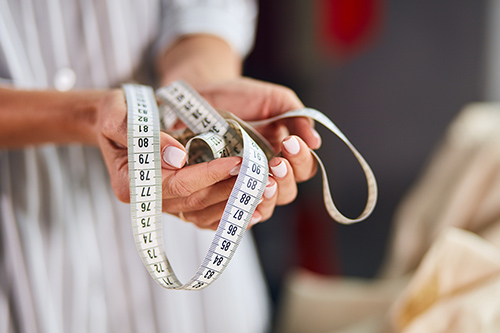
It’s possible that the scale isn’t moving because your body composition is changing. You may still be losing fat, but the scale may not be reflecting it because you’re gaining muscle at the same time. Author of our Body Composition article, Deanna Mercurio, explains that a more accurate way to track your progress is not with the scale but with body measurements and pictures.
If you haven’t felt the need to track your calories, it might be a good time to start. Too many calories could be the culprit behind your plateau. Your body is smart, and it knows you’ve been depleting those precious fat stores. A study on weight gain found that the body’s internal protection against starvation encourages eating just so you will regain lost weight! Keeping track of what you’ve eaten can help you outsmart this natural response to weight loss.
You might be hitting the right calorie count but turning a blind eye to the nutritional content of your food. Your body needs a variety of macro- and micro-nutrients to keep functioning at its best. Our dietitian recommends that you focus on real, whole foods and that you avoid processed food products.1
Sugar is the enemy in the battle with weight loss, partly because it’s easy to consume too much. The World Health Organization recommends that sugars comprise no more than 10% of your daily calories; that’s about 50 grams per day.2 A single beverage can easily contain more than that. Yes, that also means cutting back on healthier beverages like fruit juice. Our dietitian also warns against seemingly healthy smoothies that contain sherbet or fruit syrups. Those sweet additions, she explains, contain refined sugars that are easily absorbed and metabolized into fat.3
Switching things up can help kickstart your weight loss again. Again, we’ll lean on our dietitian’s recommendation. To switch things up, she suggests adding to or intensifying your existing fitness routine with weight training/resistance, cardio, or HIIT workouts, while adding some nutritious calories to those workout days. Those calories can take the form of vegetables, legumes, and pre-workout shakes or recovery drinks.4
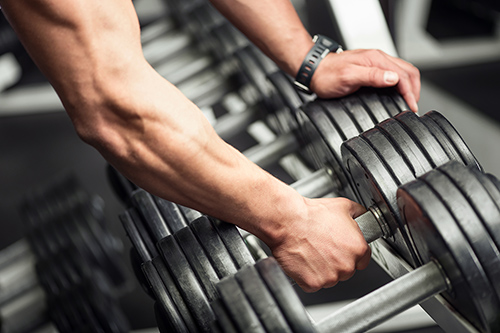
As you gain muscle, your energy needs change as well. You’ll need more nutritious calories (from lean proteins, vegetables, whole grains and healthy plant fats)5 and more protein than the average person because your body needs them to repair and build the muscles you’re working. Read our Protein article to learn how to calculate what your body needs (based on your weight and activity level) to help you bulk.
Just like your metabolism, your muscles can adapt to your routine. This is why workout routines should be anything but “routine.” You’ll need to do things differently to break your body out of its comfort zone. Remember when you first started a certain type of workout and you really had to push yourself through your sets? If you no longer feel challenged by your workout, your body has adjusted. Try increasing your working weight or incorporating some more intense training, like drop sets, to get your muscles back into build-mode. Sticking to the same routine may help you maintain muscle, but progressive overload is crucial to building muscle.
When your body doesn’t have enough water, your muscles must compete with other organs that are also demanding it. As you lose water through sweat, your blood volume is reduced. This slows oxygen delivery to and carbon dioxide removal from your muscle tissue.6 Essentially, you won’t be able to work as hard during training if you’re not giving your body enough water to cope with the physical exertion. It’s important to hydrate before, during, and after exercise.5
As we mentioned earlier, progressive overload and variety in your workout is very important to building muscle. Now you have to make sure you’re consistent about how you train. Your body needs to know that this type of exertion isn’t a once-in-a-while thing; that your muscles need to do this job often! Consistency, paired with progressive overload, prompts your body to build muscle because the physical tasks your body is being asked to do are not going away and they’re getting more difficult.
The right amount of cardio can help you build muscle. Too much can do the opposite. Go back to the first item on this list for a second. To build muscle, you need to eat more calories! Regular cardio can help you consume those extra calories without gaining a lot of fat.7 Cardio also increases your blood flow, which if you remember for item 3, is important for oxygen delivery to and waste removal from your muscle tissue. The increased blood flow also helps deliver fresh nutrients (which your muscles obviously need for recovery and growth)7.
Too much intense cardio, on the other hand, can pull resources away from your muscle tissue. Now instead of those resources going towards building muscle, they’re fueling your cardio. If you’re trying to bulk, keep your cardio at low intensity and low volume.8
Let us know in the comments below if you’ve learned something new! Will you be adjusting your workout or nutrition regimen? Stay in-the-know on trending health and nutrition topics and subscribe to our newsletter to receive monthly highlights from the Living Healthy Blog!
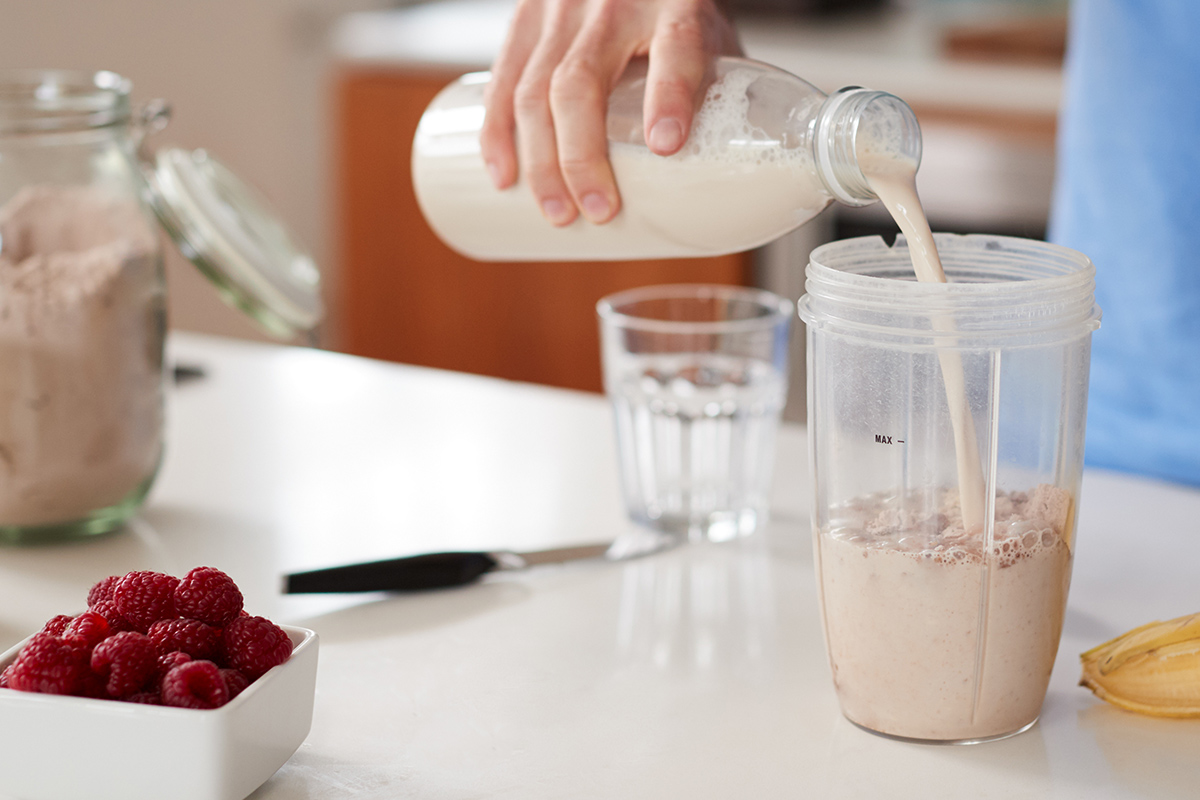
This is a popular question that often comes from people trying to bulk or maintain muscle mass, and even from people just looking to keep their bodies healthy. In general, if you are at a healthy weight and your exercise habits are minimal, your protein intake should sit somewhere in the range of 0.36–0.6 grams per pound (0.8–1.3 grams per kilogram).1 The lower end of this range is considered the Recommended Dietary Allowance (RDA), or the amount needed to meet a person’s basic nutritional needs. For men, this is approximately 56-91 grams per day; for women, it’s about 46-75 grams per day.1 However, you can calculate a more accurate number for your individual needs.
Despite the fact that we have some guidelines on how to determine your protein requirements, it really isn’t an exact science. Each individual should consult with a specialist to determine what is best for their body.
According to the recommendations above, the math behind this is quite simple. Let’s do a quick example to demonstrate how it’s done. Again, this is using the most basic protein recommendation.
If you are 130 pounds, if this is a healthy weight for you, and if your exercise habits are minimal, you would want to multiply by the lower end of the range we mentioned above (0.36 grams of protein per pound of bodyweight).
| 130lbs x 0.36g = 46.8g |
This quick calculation shows that your protein consumption should amount to approximately 47 grams of protein per day.
If you like, you can go a step further. Since protein has 4 calories per gram,2 you can multiply 47 by 4 to get the total number of calories you should consume from protein.
| 47g x 4 = 188 |
Now you know that 188 of your daily calories should come from protein.

Endurance athletes need significantly more protein than sedentary individuals, about 0.5-0.65 grams per pound of bodyweight (1.2–1.4 grams per kilogram).1
The calculation here would follow the same process, only you would replace 0.36 with a number within the new range. Of course, the more intense your endurance workouts are, the greater this number will be. Generally, a number within the range of 0.5 to 0.65 helps endurance athletes meet their protein requirements.
Let’s do a quick example using kilograms instead of pounds.
If you took your weight in pounds, you would first need to divide your weight by 2.2 to get your weight in kilograms. Let’s use 130 pounds again to demonstrate how this works:
| 130 ÷ 2.2 = 59.09 |
Next, multiply your weight in kilograms by a number within the new range. Keep in mind that this range changed too. It’s 0.5-0.65 grams of protein per pound, but 1.2-1.4 grams of protein per kilogram. Let’s use the lower end of the range which is 1.2.
| 59.09 x 1.2 = 70.91 |
This calculation shows that, if you are an endurance athlete, your minimum protein consumption should amount to approximately 71 grams of protein per day.

Athletes looking to increase muscle mass are advised to consume at least 0.55 and up to 0.91 grams of protein per pound of bodyweight (1.21-2.0 grams per kilogram).3 Athletes who strength train regularly (and at an intense level) need just a little bit more. The recommendation is at least 0.68 and up to 0.91 grams of protein per pound of bodyweight (1.5 to 2.0 grams per kilogram) every day.3

Older adults have increased protein needs as well, about 0.45–0.6 grams per pound of bodyweight (1–1.3 grams per kilogram).1 According to our registered dietitian, the increased intake recommendation is partly to help maintain lean mass and partly to compensate for a slightly diminished ability to digest and absorb protein.2 Healthline explains that increasing protein can also help prevent osteoporosis in older adults.1

People recovering from serious injuries may also need more protein. The assumption is that, because traumatic injury induces hypermetabolism, protein requirements increase.4 While more work needs to be done to develop accurate energy requirements, some suggest that about 0.68 grams of protein per pound of bodyweight (1.5 grams per kilogram) is an appropriate amount.4

A 2015 study found that the recommended protein intake for pregnant women is in fact lower than previously thought. Still, the overall amount is similar to the needs of a high performing endurance athlete! According to this study, these are the appropriate amounts of protein for the average pregnant woman:
During Early Pregnancy – 0.55 grams of protein per pound of bodyweight (1.22 grams per kilogram).
During Late Pregnancy – 0.69 grams of protein per pound of bodyweight (1.52 grams per kilogram).
The short answer is yes. According to a review from the International Journal of Sport Nutrition and Exercise Metabolism, the maximum safe protein intake is 1.14 grams of protein per pound of bodyweight, or 2.5 grams of protein per kilogram.2
Medical News Today identifies the following symptoms associated with too much protein:
How do you reach and manage your protein intake goals? Share your ideas in the comments below! To stay in-the-know on trending health and nutrition topics, subscribe to our newsletter to receive monthly highlights from the Living Healthy Blog.
This article should not replace any medical or nutritional recommendations from your primary care physician. Before starting any exercise program or diet, make sure it is approved by your doctor.