Corporate Fitness Challenge – Podcast Ep. 39

Corporate Fitness Challenge – Podcast Ep. 39


Welcome to the 39th episode of the Living Healthy podcast, presented by LA Fitness.  

Today we’re talking about an awesome challenge that we do every year at the LA Fitness corporate office. It’s become a way to get active during the workday and to meet people throughout the company we otherwise would never have known!  

Our hope is that, in sharing a bit about our corporate culture, we can shed some light on our passion for what we do and help you find new ways to add more activity to your workplace as well!  

Tune in now to hear how we get up, get moving, and get acquainted at the office.

How Are We Doing? 


This podcast should not replace any exercise program or restrictions, any dietary supplements or restrictions, or any other medical recommendations from your primary care physician. Before starting any exercise program or diet, make sure it is approved by your doctor.

Timecard Markers – Corporate Fitness Challenge – Podcast Ep. 39

Intro 

 0:01 

Sneak Peek into the Corporate Volleyball Tournament 

1:33 

Introduction of Today’s Guest: Deanna Mercurio 

2:27 

Deanna’s Fitness Background 

6:08 

What is the Corporate Fitness Challenge? 

8:37 

What are Some of the Events That Make Up the Challenge? 

10:37 

Which are the Crowd Favorites? 

18:09  

What Kind of Issues Does Sedentary Living Cause? 

20:44 

What are Some Examples of Week-Long Challenges? 

25:46 

What are a Few Exercises That People Can Do at Their Desk? 

28:10 

Are People Competitive with the Challenge? 

32:25 

How the Challenge Helps Develop Friendships 

34:42 

Actionable Advice – How to Start a Fitness Challenge at Your Workplace 

39:35 

Outro 

42:38 


Recommended Podcast Episodes 

Fitness Changes: By Age

Fitness Changes: By Age

Our bodies manage a lot. They bear a lifetime of stress, fall into and recover from illness, battle chronic ailments, take bruises, breaks, falls, and burns, and power through long workdays on 2 hours of sleep. Our bodies take it all, and eventually, our system tells us it’s time to take it easy.  

When does the body really start to experience physical limitations, and how does our age affect our fitness endeavors? Let’s find out and talk about some ways to keep your body going strong. 

In Your 30’s

By age 30, and despite the fact that we just barely made it out of our 20’s, many of us get a head start on the “I’m getting old” complaints. Perhaps jokingly and perhaps not. According to a study on aerobic capacity in aging adults, fitness levels begin to decline 3% to 6% every decade starting around age 20.1 So, by age 30, you may technically have experienced a mild age-related change in your physical fitness, but not enough to make a noticeable difference.  

However, age is not the only factor. Our reduced physical fitness often has to do with changes to our lifestyle habits or diseases.2 As we age, we encounter life changes and assume responsibilities we never had, which can potentially lead to a lot more sedentary time. Naturally, the less active you are, the more difficult many physical activities will feel.  

That being said, Tip #1 is to take a moment to recognize any decrease in physical activity and to commit to reintroducing some of it into your life.  

From Age 40 to 69

Here, we embark on that part of our lifetime we know as “middle age.” Commonly associated with mid-life crises, hair loss, and a slowing metabolism, it’s not typically a very welcome stage. Allow us to assuage your fears.  

This study examined the performance of marathon runners ranging from the ages of 20 to 79. The results show that “no significant age-related decline in performance appears before age 55.”2 This is about halfway through your period of middle age.  

Once you hit 55, you don’t suddenly begin to struggle. The same study reveals that only a moderate decline is observable in their runners after this age. In fact, “25% of the 65- to 69-year-old runners were faster than 50% of the 20- to 54-year-old runners.”2 Even more impressive is the fact that the same percentage of 65- to 69-year-old runners began marathon training within the previous 5 years.2 This should prove that their success was not a result of a lifetime of conditioning. Despite starting their training around age 60 or later, their bodies were capable of outperforming younger runners.  

Tip #2: It’s never too late to start, so start! Need more incentive? Another study found that even untrained individuals, who had never taken up sports until after reaching the age of 50, “were able to halve their mortality risk compared with their non-active peers.”2 

Age 70 and Up

Now we enter older adulthood where our aerobic capacity declines more quickly. Most older adults will see a decline of about 20% every 10 years starting around age 70.1 Fear not, however. Even if your maximal oxygen uptake is reduced, you are still capable of improving your aerobic fitness and of improving your muscle strength, balance, and flexibility.  

For example, this study on balance training in older adults found that regular balance and strength training was capable of restoring performance to a level like that of someone 3 to 10 years younger.3  

Not to mention, the power of exercise remains highly beneficial for the body and is often prescribed to older adults. In fact, this study found that “the life expectancy of active seniors was 3.8 years longer than that of their non-active peers.2 

Tip #3: Don’t allow yourself to believe that your age means you cannot be physically active. Many of our older members are living proof that age is just a number. Check out #3 of our Workout Excuses article to see exactly what we mean. Additionally, many workouts are tailored specifically to older adults who need a safe and gradual starting point. A doctor can help you make the right activity choices if you’re looking to take up exercise but have felt unable to do so. 

For more articles like this one, click to subscribe to our newsletter and receive monthly highlights from the LA Fitness blog! 

Sources

  1. Fleg, Jerome L., et al. “Accelerated Longitudinal Decline of Aerobic Capacity in Healthy Older Adults.” Circulation, 25 July 2005, https://www.ahajournals.org/doi/10.1161/CIRCULATIONAHA.105.545459 
  2. Leyk, Dieter, et al. “Physical Performance in Middle Age and Old Age: Good News for Our Sedentary and Aging Society.” Deutsches Arzteblatt International, Deutscher Arzte Verlag, Nov. 2010, www.ncbi.nlm.nih.gov/pmc/articles/PMC2999945/. 
  3. Wolfson, Leslie, et al. “Balance and Strength Training in Older Adults: Intervention Gains and Tai Chi Maintenance – Wolfson – 1996 – Journal of the American Geriatrics Society – Wiley Online Library.” Journal of the American Geriatrics Society, John Wiley & Sons, Ltd (10.1111), 27 Apr. 2015, https://onlinelibrary.wiley.com/doi/abs/10.1111/j.1532-5415.1996.tb01433.x 
8 Common Workout Excuses and How to Crush Them

8 Common Workout Excuses and How to Crush Them

It’s the start of the new year and the start of many new resolutions. If health and fitness are on your list, you’ll need these excuse busters for the time when your dedication starts to wane. It happens. We start off strong, but as keeping our commitments gets more challenging, we start to make “exceptions.” Don’t let excuses derail you. Keep pushing for your goals with these reasons to ditch some common workout excuses. 

1. I Don’t Have Time

You may have encountered them by now; the workout plans promising results in 30, 20, 10 minutes a day, or less. These workout plans crop up because having time to work out is a real concern for many people. While we don’t know if those particular routines are effective, we do know that working out for some time is better than nothing at all. It has long been recommended that if you don’t have long breaks in your day, you can break up and disperse your workout into shorter sessions.  

Kick this excuse to the curb and start adding more movement to your day. Get some ideas for how you can do that by reading these Quick and Easy Workouts for a Busy Morning, or read some tips on How to Add Exercise to Your Busy Lifestyle. 

2. I’m Too Tired 

Okay, who’s still using this one? Science has proven that working out boosts our energy and releases all kinds of feel-good chemicals. You may start your workout feeling a bit out-of-sorts, but you’ll gain energy as you move and leave your workout more energized than when you started. So, it’s time to put this excuse to bed! For some nutrition tips to fuel your energy-stores, check out this article on Snacks to Help Boost Energy.

3. I’m Too Old

We have success stories that prove without a doubt that age is just a number. These LA Fitness members have overcome adversity, defied the odds, and achieved their goals, regardless of their age. You’ll toss this excuse once you’ve read these inspiring stories: 

Dave R. is 59 years old and still competing and placing in triathlons! For years, he has been running, swimming, and cycling his way to health.  

Ed B. is a 67-year-old with a history of knee issues and even a knee replacement. He works hard at LAF’s High Intensity Interval Training class and has never felt better.  

Peter B. is 82 years old and he cycles and does yoga 3 days a week. He also takes the opportunity to hike, swim, run, and lift weights! 

Jerry and Marilyn are 88 and 87, and they have been playing Raquetball together for the past 30 years!  

These are just a few of our successful older members! Browse our Member Spotlight page for more motivational stories. 

4. It Doesn’t Work for Me


Do you feel like you’ve tried to stick to an exercise routine before, and it doesn’t work or it’s hard to keep it going? You’re not alone. The key to reaping the benefits of exercise is consistency and commitment, and yes those are both easier said than done. 
 

Fortunately, studies show that you’re more likely to achieve your goal if you record it. Write it down or tell someone, and it’ll be easier for you to keep yourself accountable. If this sounds like something you’d like to try, you can share your goal on our Commit to Fitness page. 

5. It Feels Like a Chore


 Add the word “chore” to anything and it seems to zap your energy for it. If you are walking into your workout already expecting to have a terrible time, it’s more likely that you will. Though, if you’re dreading your workout you probably haven’t chosen your exercise type wisely. There are so many ways to exercise, from heavy weightlifting to smooth and steady Pilates. It’s important to find something you’ll actually look forward to.  


You have the power to choose, even if a specific type of workout has been prescribed to you. If you have to do cardio for your health, look up all the different types of cardiovascular workouts. You’ll see the dreaded treadmill, but you’ll also see boxing, cycling, dancing, swimming, hiking, rowing, step aerobics, and more. Choose what speaks to you and you’ll find it easy to sweep this excuse out the door.  

6. I’m Too Sore From My Previous Workout


This one is an acceptable excuse if working out will do more harm than good. If you’re just a little sore, however, working out can help ease those aches by increasing blood flow to your muscles. The extra blood helps flush out the chemicals responsible for your pain.1 So, “I’m too sore” should never be an excuse unless you’re in danger of injuring yourself or overusing your muscles, because a light workout out is a remedy! 

7. I’m On My Period


The cramps, the fatigue, the bloating, and all the discomfort of that time of the month can really make your workout day look more like crawl-into-bed-and-hibernate-for-a-week day. However, like the argument for #6, working out can actually be really good for you (and your workout) while you’re on your period.  

In fact, one study found that working out in the first 2 weeks of the menstrual cycle (the week of your period and up to a week after), helped women perform better during their workouts! The study recorded results like “significant increase in jump height, peak torque values in hamstrings, increased lean body mass of the legs,” and overall positive training experiences.2  

In addition to potentially benefitting your strength and power, exercising while on your period can help relieve pain! The endorphins released during your workout are natural pain killers!3 We know that each body is different, so if you’re able, it’s time to put this excuse to rest and take advantage of Aunt Flow’s monthly gift.

8. I’m Feeling Under the Weather


If you’re feeling under the weather for other reasons, you might be off-the-hook. It’s definitely okay to let your body rest and recover from illness and probably better that you do in many cases. However, if you’re past the worst of it and mostly recovered, you’re probably safe to exercise.  

WebMD cites their interview with Dr. Lewis G. Maharam who says that having a fever is essentially the deciding factor.4 It’s possible that you can dangerously increase your internal body temperature if you exercise while running a fever.4  

Let your body tell you what it feels capable of when you’re sick and, if you can, do a light workout to help keep your routine on track. 

Like what you’ve been reading? Stay in-the-loop and subscribe to our newsletter to receive monthly highlights from the LA Fitness blog! 

Sources

  1. Sarnataro, Barbara Russi. “Coping With Sore Muscles After Physical Activity.” WebMD, WebMD, 2003, https://www.webmd.com/fitness-exercise/features/sore-muscles-dont-stop-exercising#3. 
  2. Wikström-Frisén, Lisbeth. “Training and Hormones in Physically Active Women: with and without Oral Contraceptive Use.” DIVA, Umeå Universitet, 2 Sept. 2016, umu.diva-portal.org/smash/record.jsf?pid=diva2%3A955835&dswid=6643. 
  3. Lindberg, Sara. “Can You Exercise on Your Period?” Healthline, 24 Aug. 2018, www.healthline.com/health/exercise-during-period#benefits. 
  4. Mann, Denise. “Exercising When Sick: A Good Move?” WebMD, WebMD, 23 Oct. 2007, https://www.webmd.com/cold-and-flu/features/exercising-when-sick#1. 

Your 2020 Fitness Bucket List!

Your 2020 Fitness Bucket List!

This year, your fitness plan needs one of these Bucket List items! It’s easier to achieve a goal when it’s specific. So, pick out an item that aligns with your overall health goals, and work towards it!  

You may need to already be in a certain state of fitness for some of these. We don’t expect a beginner to sign up for their first marathon today, but we’re challenging you to work your way up to accomplishing something new! 

1. Learn a New Swim Stroke

If all you’ve got is the dogpaddle, it’s time. Ask the advice of an experienced swimmer and maybe don’t go alone if you’re new to swimming. If you’re comfortable in the water, you can read a guide like this one to apply techniques to accomplish strokes like the freestyle, butterfly, backstroke, breaststroke, and sidestroke. 

2. Try Open-Water Swimming

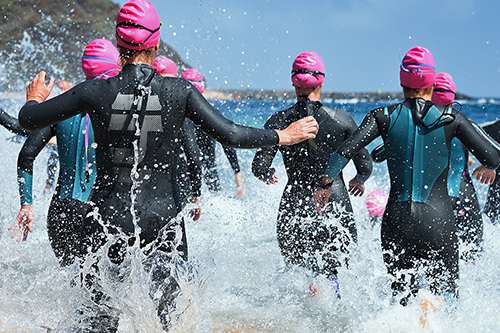
Face your fear of sharks and try a long-distance swim! Again, not to be attempted alone! Search for training and open-water race opportunities near you, and dive into the exhilarating experience of open-water swimming. You can also train in the pool at your local LA Fitness like Triathlete Champion, Dave Ruby. What you’re looking for is a way to condition your muscles for the type of work a long-distance swim requires! 

3. Do a Wall-Free Handstand

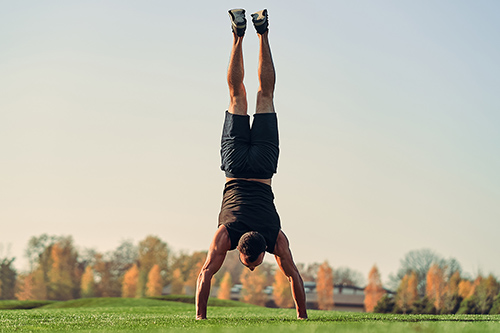
To hold a handstand, you need strong shoulders, arms, and wrists to hold you up, and a strong core to keep you balanced. Taking this challenge means you’ll need to do some strengthening work. Are you up for it?  

If you’re already handstanding your way through life, we challenge you to try a new kind of handstand! One-handed, maybe? Try learning to walk on your hands or holding it for one minute. Can you do a handstand pushup? There are limitless ways to push the boundaries of what you can do!

4. Complete at Least 5 Unassisted Pullups

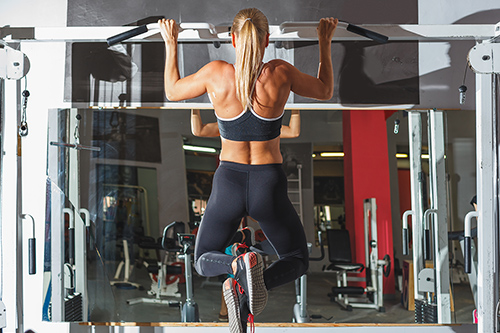
You may have seen or used the assisted pullup machine at the gym. It’s a great way to slowly increase the amount of weight you can pull until you are able to lift your full body weight into the pullup. If you’re completely new, aim for 5 pullups to start. If you’re seasoned, your next step might be a one-arm pullup, or maybe a muscle up!  

5. Complete at Least 5 Pushups

Easy pushups usually start with your knees on the ground to help support your weight. Just because it’s the “easy” version doesn’t mean your muscles aren’t working hard. New movement will always challenge your muscles. Try to get to 5 if you’re brand new, but don’t stop there! Shoot for 10 and then 15.  

If you’re already a master at pushups, add a new one to your repertoire. Unlock some new skills like a clap pushup, diamond pushup, try one with a hand behind your back, or go for a superman pushup! 

6. Accomplish a Planche

You’ll need a lot of body strength to successfully hold a planche. Those who can accomplish this move have stable wrists, strong arms and shoulders, a strong back and core, and perhaps even an understanding of physics. It is typically done on the ground or with paralletes, and you’ll need to be fairly strong to begin with. That doesn’t mean that you can’t learn some progressions to get to a fully extended straight-arm planche.

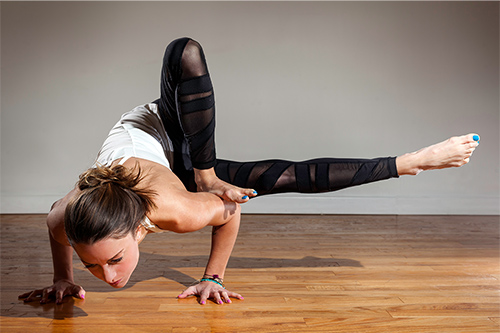
7. Master a Difficult Yoga Pose

Yoga isn’t just about achieving a calm, meditative state. You can build some serious muscle through many of the more challenging poses. If you’ve never taken a yoga class, give yourself an opportunity to learn more or find a class near you to try it out. You may find that you enjoy it more than you anticipated.  

If you’re not just looking to build strength and stability, performing yoga for the enjoyment of some tranquility is another great reason to add even just a few minutes of it to your day. 

8. Run a 5k or 10k

With so many themed 5k’s and 10k’s, running has never been more enjoyable. Many courses have a special theme, a unique reward at the finish line, surprises at each checkpoint, and sometimes even zombies to keep you running. Not to mention these events often support a charitable cause.  

If the distance looks daunting, keep in mind that there’s no pressure to run. You can go your own pace and all the festivities are a great distraction. In many cases, you’ll go home with a medal no matter when you cross the finish line. So, add this one to your list this year and let us know how it went! 

9. Train for or Compete in a Marathon or Triathlon

If you’re looking for a more intense test of your abilities, it may be time to train for or compete in your first marathon or triathlon. Real feats of endurance, physical fitness, and mental strength, these competitions are terrific goals to work towards. The only way you’ll survive is if you train smart and feed your body what it needs. Not only are you accomplishing something big, you’re practicing self-discipline and restraint to reach this bucket list item.

10. Learn to Ride a Tandem Bicycle

Bouncing back to a more easily achievable item, this one takes you back to your childhood. Didn’t think you’d need to learn to ride a bike again, did you? A tandem bike can be a lot of fun once you’ve figured out how to get it going. You’ll need some good teamwork skills and perhaps a bit of determination to power through your first tandem bike ride!

11. Compete in a Bike Race

Cyclists, it’s time to take it to the next level! Train in the gym or take it outside but a bike race needs to be on your bucket list. Not only is it great for building your endurance and for improving your cardiovascular health, your cycling route can show you miles of breathtaking natural scenery. You can do it for fun or do it to win, but make sure this experience is not missed! 

12. Try a Bike Friendly Mountain Trail

Make sure you have the right gear for this one. A mountain trail can be thrilling or leisurely depending on where you go and which trail you choose. Start out with something simple, as you would with anything new, and work your way up to more advanced trails. Take-in a stunning sunrise, bask in the stretches of land you can only see from a mountaintop, and maybe even stop to watch the wildlife.

13. Hike a 5-Mile Trail or Longer

A good long hike can take several hours to several days, but above all else, go prepared! Being well-supplied isn’t only safer, it puts your mind at ease. You’ll find you’re able to simply be in the moment instead of feeling antsy to return to civilization because you’re hungry or your socks got wet and you didn’t bring a spare. Also, the satisfaction of looking out over some beautiful vista, with nothing but the power of your body to get you there, is really, really, good. 

14. Learn to Ski or Snowboard

Snow sports are a whole new world if you’re not accustomed to those frozen flakes descending from the clouds. Simply walking in your gear can be a workout.

Despite the huffing and puffing just to get to the lifts, both of these winter sports are exhilarating once you get the hang of them! A tip for beginners: take a cabin for a few days to adjust to the altitude, and spend some time taking classes! Practice your skills and stick to the bunny slope until you’re more comfortable moving to the next level. 

If you’re already comfortable with one or both of these, your challenge is to learn a trick! Ski tricks and snowboard tricks add a new level of excitement and accomplishment when you go out to hit the slopes, not to mention you’ll get a lot of awed attention.

15. Try Rock Climbing

Rock climbing is a great way to build your upper body and increase your grip strength. Aside from the physical benefits, there’s a lot of adrenaline to be enjoyed from this activity. It is not for the feint hearted. Of course, you can start with the much safer option of indoor rock climbing where you’re strapped-in to a harness and spotted from below. As you get stronger and more confident in your climbing you can progress to bouldering, which is essentially climbing without a harness but to limited heights.

16. Join the 1,000-Pound Club

No, you don’t get to just sign up for this club, you earn your way in. The 1,000-pound club refers to your power lifting total. The sum of the weight you can move by Deadlift, Weighted Squat, and Bench Press must make up 1,000-pounds. Depending on your body weight, and other factors, this can be a little easier or more difficult to achieve. The idea is to challenge yourself to increase what you are capable of because the human body is incredible and can do a lot more than we think.

17. Take a Dance Class

Either you’ve never considered it because it sounds boring or uncool, or you’ve been meaning to do it for a long time. Dancing is not just a great form of fitness it has actually been shown to benefit your mental acuity and memory. Browse through our selection of classes and find something that sparks your interest! You’ll torch calories and it’ll feel more like fun than it will like a workout.  

18. Compete in a Team Competition

Basketball, Raquetball, Volleyball, Football, and more. Start your own team with your friends or join one of our club leagues. Getting involved in some healthy competition is really good for your motivation and your athleticism. That’s partly because being on a team drives you to push harder than you normally would if you were working out alone. Join a team and see how it fuels your fitness goals! 

19. Improve Your Flexibility

Being flexible is great for your overall health and fitness. You don’t have to be able to bend over backwards but improving your flexibility protects you from injury and can help you perform other exercises more easily and effectively. Take skiing, for example. More flexibility helps you bend into your knees and hips a little deeper and change direction more easily. Or consider swimming. Better flexibility will improve your shoulder extension and rotation. Many athletes now take up yoga for precisely this reason. 

20. Give Personal Training a Try

You may not know exactly what your body can do until you’ve tested it in the right ways. If you aren’t sure where to begin, or if you love the sound of these bucket list items but don’t feel ready to tackle them, a personal trainer can help you. You’ll learn new exercises to add to your arsenal and reap the benefits of one-on-one attention and guidance.  

Don’t stumble through your fitness plans with trial and error, zero in on your goals with the help of a professional who knows how to get you where you need to go. Book a complimentary fitness assessment and get matched with one of our ProResults® Personal Trainers! 

Which of these challenges are you planning to take on this year? Share your goals in the comments below! Then, stay in-the-loop and subscribe to our newsletter to receive monthly highlights from the LA Fitness blog! 

Own Your Cold Weather Workout

Own Your Cold Weather Workout

The start of the winter season is on Saturday, December 21st this year and we’re gearing up for a cold season. Many states have already seen record lows! If, like us, you don’t plan to slow down your fitness endeavors, you need to be prepared for working out in the cold.  

 We’ll be covering the warning signs of frostbite and hypothermia and giving you some useful information for your next winter workout! 

Warning Signs  

Frostbite

Frostbite occurs when your skin and the underlying tissue are damaged by freezing. Exposed skin (especially on your nose, ears, and fingers) is most vulnerable, but you can still get it even if you’re covered up. If you plan to be out in cold weather, especially where the wind temperature is below 5° Fahrenheit (or -15° Celsius), these are some important precautions recommended by the Mayo Clinic: 

  1. Limit your time in cold, wet, and windy weather conditions 
  2. Wear loose, warm layers of clothing 
  3. Cover your ears completely 
  4. Wear mittens because they provide better protection than gloves 
  5. Wear insulating socks and sock liners that wick moisture and fit snugly 
  6. Tell others that you’ll be out and give an expected return date 
  7. Avoid alcohol as it can actually cause your body to lose heat more quickly 
  8. Stay hydrated 

Additionally, they identify these symptoms as warning signs of frostbite: 

  1. Cold skin and a prickling sensation 
  2. Numbness in the affected area 
  3. Red skin in milder forms of frostbite, and white, bluish-white or grayish-yellow skin as it becomes more severe 
  4. Hard or waxy-looking skin 
  5. Joint and muscle stiffness 
  6. After rewarming, the appearance of blisters on the skin 

If you go out prepared and know the signs, you can head into your workout with confidence. Frostbite, however, is not the only worrisome condition you have to watch out for in cold weather. While the former can lead to loss of limb, hypothermia can cause death. Here is what you should know about hypothermia: 

Hypothermia

Your body’s normal temperature is 98.6° F (or 37° C). According to the Mayo Clinic, Hypothermia starts when your body loses heat faster than it can produce it; and, will start to show its effects once your temperature falls to 95° F (35° C) or lower. 

In their article on Hypothermia, the Mayo Clinic identifies the following symptoms you should look out for: 

  1. Shivering 
  2. Slurred speech or mumbling 
  3. Slow, shallow breathing 
  4. Weak pulse 
  5. Clumsiness; lack of coordination 
  6. Drowsiness; low energy 
  7. Confusion; memory loss 
  8. Losing consciousness 
  9. In infants, you would notice bright red, cold skin 

Perhaps the easiest way to enter a hypothermic state is if you are wet from rain, snow, or if you fell into a body of water. Wind, on its own, whisks away your body heat. Add the fact that your clothes are wet, and the effect is amplified. It’s extremely important to change out of wet clothes and find a warm dry place when you are caught in cold weather. 

Things to Consider Before Heading Out

Warm the Air Before You Breathe It – Breathing heavily in cold weather can make your lungs feel like they’re about to freeze over. Wearing a face scarf over your nose and mouth can help warm the air you’re breathing and make your workout more comfortable. 

Map Your Route – You should know if you’re likely to encounter flooded areas, frozen patches of water, slick icy roads, or fallen plant life and debris. Stick to areas you’re familiar with so you can re-route if needed and still find your way. Choosing areas with more cover (like buildings, trees, etc.) will also help protect you from wind and other sporadic weather conditions. 

Plan by Time of Day – Leave for your workout when you know the temperature will be at its warmest for the day. Going too early in the morning or too late in the evening will expose you to colder temperatures and, if it’s cold enough, icy roads and frozen slush. 

Keep Hydrated – Hydrate before you leave and bring some with you if you plan to be out for a while. You may not notice that you’re sweating, but you probably are. Putting back what your body loses is important to a safe cold weather workout. 

Protect Your Skin – Sunblock is still important in the wintertime, and the brisk winter air can dry out anything that’s exposed to it. Moisturize your lips, your face, and your hands if you don’t plan to wear gloves. 

You can read up on the calorie burn of cold weather workouts by reading our post on Thermogenesis. For information on how to protect your eyes from the dryness of winter air, check out our blog on Eye Health. To access our monthly blog post highlights, subscribe to our newsletter today!