Clean Eating: Salad Dressing Choices | Q+A

Clean Eating: Salad Dressing Choices | Q+A

Question:

Are there any clean commercial salad dressings that don’t have soybean oil or other bad oils? I also want a better mayo sub.

– Judy Y.

Answer:

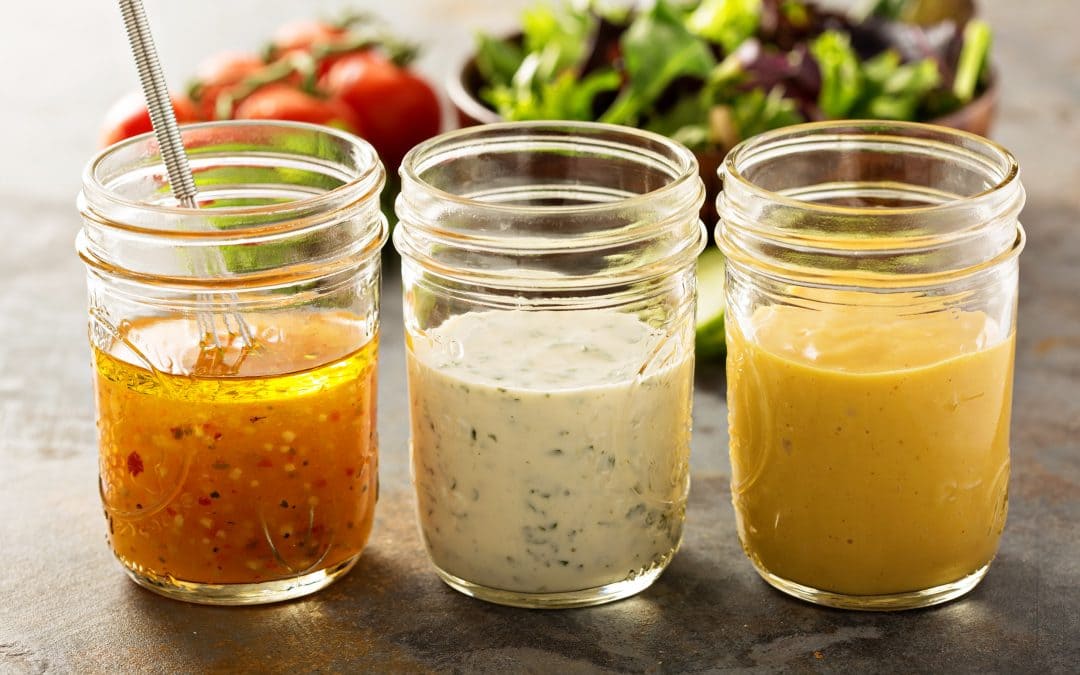
The only 100% clean (raw or minimally processed) salad dressing would be to mix your own oil, vinegar and seasoning at the time of use. This is the way my family did it in the 80’s, with a spice mix in a glass shaker. Now you can get an organic, low-sodium spice mix or use an herb mix to do the same.

For a single serving, mix about 1 Tbsp. oil and 2 tsp vinegar in a small container with a tight lid by shaking vigorously. For lighter flavors use vegetable or canola oil and rice wine vinegar. For robust flavor use olive oil and red wine vinegar. Soybean oil has a fatty acid profile (high in polyunsaturates) similar to cottonseed or safflower oil  and is fine to use. Mix in 1 tsp of an herb seasoning blend. I like Italian Seasoning, Herbes de Provence or Lemon Herb mixes with no sodium added.

For a creamy dressing, I suggest substituting Greek yogurt and/or pureed avocado to avoid the harmful saturated fat from the cream used in traditional versions. Check out this recipe from the March/April 2011 issue of Eating Well magazine:

  • ½ ripe avocado
  • ¾ cup packed fresh cilantro
  • ½ cup nonfat plain yogurt
  • 2 scallions, chopped
  • 1 clove garlic, quartered
  • 1 tablespoon lime juice
  • ½ teaspoon sugar
  • ½ teaspoon salt

Blend all ingredients together in a food processor or blender until smooth.

Makes 16 Tablespoons at 16 calories each; 1 g fat (0 g sat); 0 mg cholesterol; 2 g carbohydrates (0 gm fiber, 1 g sugar); 1 g protein; 80 IU vitamin A; 2 mg vitamin C; 18 mg calcium; 0 mg iron; 8 mcg folate; 80 mg sodium; 61 mg potassium.

While I’d recommend hummus in place of mayonnaise on sandwiches, for tuna, pasta and potato salads you’ll need a mayo substitute that mimics the white, creamy original. If you’re looking for a mayo substitute without eggs or soybean oil, you’ll need to find one with grapeseed oil or coconut oil, which will often include rice as a binder. Vegetarian mayonnaise substitutes are still processed products, most with preservatives.  In the refrigerated section you might find preservative-free versions, which last about 2 weeks.

– Debbie J., MS, RD

This article should not replace any exercise program or restrictions, any dietary supplements or restrictions, or any other medical recommendations from your primary care physician. Before starting any exercise program or diet, make sure it is approved by your doctor.


Recommended Reading - Q+A

Good carbs vs bad carbs
Debunking Diet Myths

Debunking Diet Myths

With so many sources offering nutrition advice, it’s hard to know what’s true. Even factual information can become distorted by the time it reaches you. Like a game of telephone, the message often changes as it’s passed along. Here, we debunk 5 common diet myths to...

What’s The Best Way to Calculate RMR? | Q+A

What’s The Best Way to Calculate RMR? | Q+A

Question:

What is the best way to calculate RMR?

– Mark B.

Answer:

The best measurement of resting (awake/alert) metabolic rate is to conduct an indirect calorimetry test using metabolic equipment, as done in a research laboratory or hospital setting. In lieu of a physical test, the second best way to predict resting metabolic rate is to calculate/estimate using a validated equation. I recommend the Mifflin-St. Jeor equation or the one used by the World Health Organization. For your computational pleasure here they are:

The Mifflin St. Jeor equations are used often in the medical and weight loss fields because of their accuracy, and are recommended by the Academy of Nutrition and Dietetics.

  • Women:          (10 x weight in kg) + (6.25 x height in cm) – (5 x age in years) – 161
  • Men:                (10 x weight in kg) + (6.25 x height in cm) – (5 x age in years) + 5

The World Health Organization, as well as the United Nations University and Food and Agricultural Organization, use the following equations, which were derived based off a large database, reflecting many countries over several decades.

  • 18-30 yrs:        kcal/d = 13.3 × weight (kg) + 334 × height (m) + 35
  • 30-60 yrs:        kcal/d = 8.7 × weight (kg) – 25 × height (m) + 865
  • >60 yrs:           kcal/d = 9.2 × weight (kg) + 637 × height (m) – 302

As is true with any equation, these equations are only estimations of your needs, so you might want to try both and obtain a range that your true RMR probably falls within. Neither of the above take into consideration lean mass versus fat mass, so they aren’t practical for extremely muscled or morbidly obese individuals. For teens, the Schofield method (previously used by the World Health Organization and the US government to formulate the RDAs) has different equations for various age groups.

– Debbie J., MS, RD

This article should not replace any exercise program or restrictions, any dietary supplements or restrictions, or any other medical recommendations from your primary care physician. Before starting any exercise program or diet, make sure it is approved by your doctor.

LA Fitness Living Healthy subscribe button

Want more? SUBSCRIBE to receive the latest Living Healthy articles right in your inbox!

Recommended Reading

Bulking on a Clean Diet | QA

Bulking on a Clean Diet | QA

Registered Dietitian, Debbie James, helps answer a reader’s question about how to put on muscle while eating a clean diet.

Elimination Diets – Podcast Ep. 38

Elimination Diets – Podcast Ep. 38

The Elimination Diet is not what it sounds like! We’re sitting down with Debbie James, RDN, to bring you what you need to know about this interesting diet!

Ask our Dietitian

Have a nutrition question? Our registered dietitian is ready to help!
Email nutrition@lafitness.com or submit your question below and it may be featured in an upcoming article!

2 + 3 =

How Do I Add More Protein Into My Diet? | Q+A

How Do I Add More Protein Into My Diet? | Q+A

Question:

I’m on a low-carb, high protein diet but I’m having trouble eating enough protein and too many carbs. How do I get more protein into my diet without adding any more carbs?

– Emma P.

Answer:

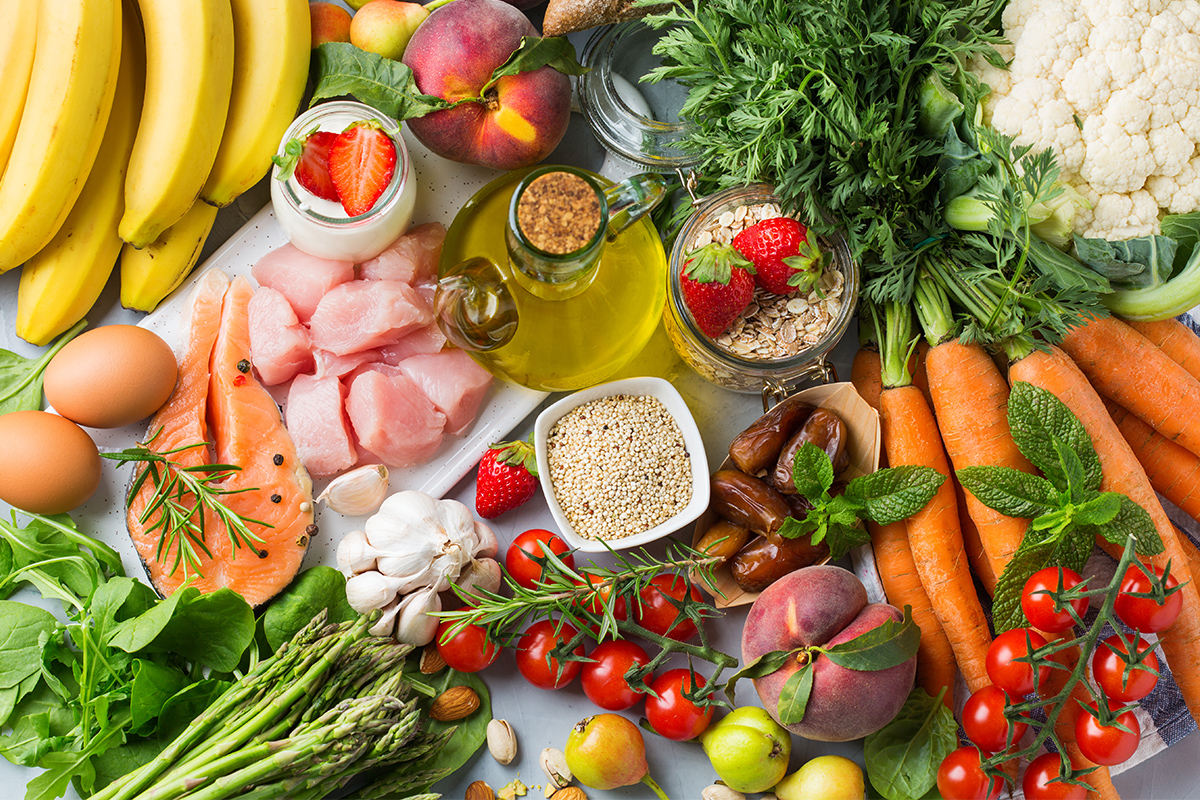
For fewer carbs, you may need to adjust traditional starchy meals that are typically carbohydrate rich and shift intake to typically animal or vegetable -based foods. For example, skip all traditional pizza, pastas, and sandwiches and instead substitute cauliflower crust pizza, meat/vegetable primavera, and lettuce wraps with healthier ingredients as toppings/filling.

These have negligible carbohydrate, and offer 5-8 gms protein per ounce:

  • Boneless, skinless chicken and turkey
  • Trimmed beef and pork
  • Eggs
  • Skinless fish
  • Scallops, shrimp, real crabmeat, lobster
  • Lamb
  • Brie, cheddar, mozzarella and Monterey Jack cheese

These offer at least 1 gram of protein for every gram of carbohydrate:

  • Almonds
  • Greek yogurt
  • Hazelnuts
  • Soybeans
  • Sunflower seeds
  • Walnuts
  • Ultra-filtered milk

These have 3-5 grams carbohydrate, yet offer 2-6 grams protein per serving:

  • Asparagus (½ C)
  • Broccoli (½ C)
  • Macadamia nuts (1 oz.)
  • Mushrooms (½ C)
  • Peanuts (1 oz.)
  • Pecans (1 oz.)
  • Spinach (½ C)

These provide 3-5 grams carbohydrate with about 1 gram protein per ½ C serving:

  • Lettuce
  • Cabbage
  • Carrot
  • Cauliflower
  • Celery
  • Cucumber
  • Green Beans
  • Tomatoes
  • Zucchini


By focusing on the above foods as the base of your diet, you should have enough wiggle room to work in a daily serving of nutrient-rich carbohydrates like beans and fruit, which are both good fiber sources.

– Debbie J., MS, RD

This article should not replace any exercise program or restrictions, any dietary supplements or restrictions, or any other medical recommendations from your primary care physician. Before starting any exercise program or diet, make sure it is approved by your doctor.

LA Fitness Living Healthy subscribe button

Want more? SUBSCRIBE to receive the latest Living Healthy articles right in your inbox!

Recommended Reading

Ask our Dietitian

Have a nutrition question? Our registered dietitian is ready to help!
Email nutrition@lafitness.com or submit your question below and it may be featured in an upcoming article!

7 + 12 =

Are Natural Sweeteners Better For You? | Q+A

Are Natural Sweeteners Better For You? | Q+A

Question:

After reading about some issues with artificial sweeteners, I have been trying to stop using them. Are natural sweeteners like Stevia or Monk Fruit, regarded as being better for you?

– Mary W.

Answer:

Yes, natural sweeteners are believed to be better for you than those synthesized in a lab. However, there are no long-term studies to date to support or contradict this notion. Research has tended to focus on blood sugar, insulin secretion and cellular responses to sweeteners. In regards to artificial sweeteners compared to sugar, the bulk of research tends to support benefits such as lowering the risk of diabetes type 2 and coronary heart disease and decreasing body weight.

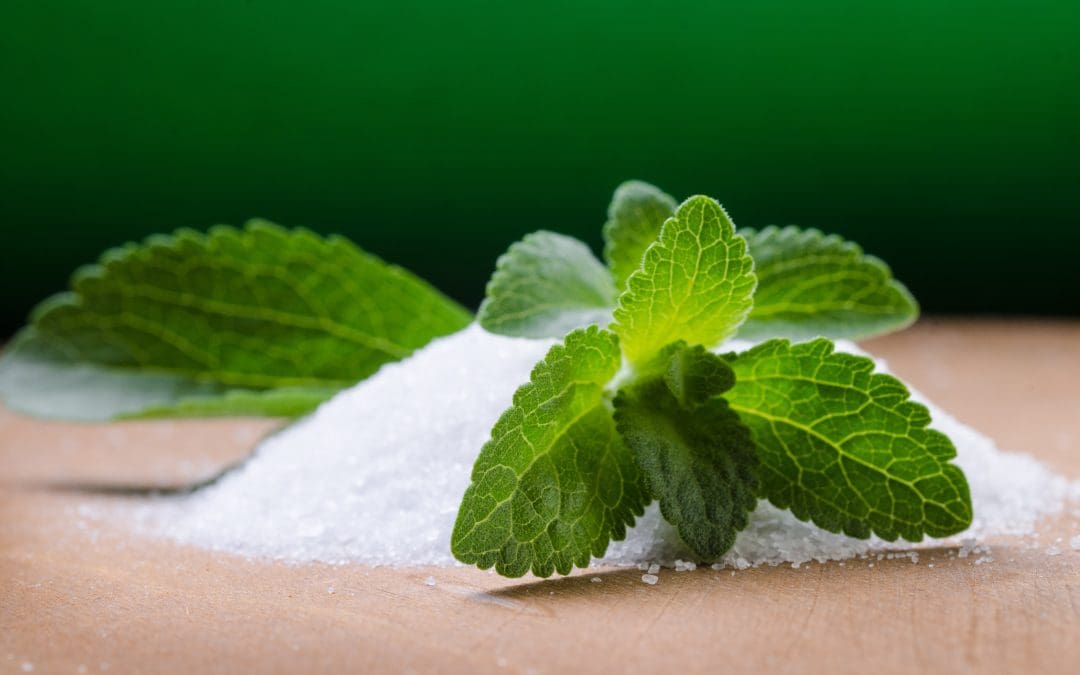
The two main types of plant/fruit based sweeteners on the market are stevia and monk fruit. According to the FDA, stevia is comprised of “certain steviol glycosides obtained from the leaves of the stevia plant (Stevia rebaudiana Bertoni),” and monk fruit sweetener is an “extract obtained from Siraitia grosvenorii Swingle fruit, also known as Luo Han Guo or monk fruit.”

Since we posted our article “Is monk fruit extract a natural sweetener, and is it better for you than sugar? three years ago, not much has changed in the world of natural sugar replacements. In addition to stevia and monk fruit, there is now allulose (also called psicose). Its chemical structure is similar to fructose, the sugar in fruit. Launched in 2015, it is sold as Dolcia Prima® in North America. In most cases, these “natural” sweeteners are naturally derived, meaning that the identified natural compound is somehow produced from its origin or another source. Not surprisingly, even raw sugar is actually a byproduct of sugarcane processing. Oh, and honey and maple syrup may exist in the same form as found in nature, but are both pasteurized for safety.

– Debbie J., MS, RD

This article should not replace any exercise program or restrictions, any dietary supplements or restrictions, or any other medical recommendations from your primary care physician. Before starting any exercise program or diet, make sure it is approved by your doctor.

LA Fitness Living Healthy subscribe button

Want more? SUBSCRIBE to receive the latest Living Healthy articles right in your inbox!

Ask our Dietitian

Have a nutrition question? Our registered dietitian is ready to help!

Email nutrition@lafitness.com or submit your question below and it may be featured in an upcoming article!

15 + 8 =

Recommended Reading

Bulking on a Clean Diet | QA

Bulking on a Clean Diet | QA

Registered Dietitian, Debbie James, helps answer a reader’s question about how to put on muscle while eating a clean diet.

Elimination Diets – Podcast Ep. 38

Elimination Diets – Podcast Ep. 38

The Elimination Diet is not what it sounds like! We’re sitting down with Debbie James, RDN, to bring you what you need to know about this interesting diet!

I’m a Vegetarian: How Much Protein Do I Need a Day? | Q+A

I’m a Vegetarian: How Much Protein Do I Need a Day? | Q+A

Question:

I’m a vegetarian and concerned that I may not be getting enough protein in my diet (now getting around 50 grams a day). I lift weights and do cardio 6 days a week but feel I’ve stalled and am not making new progress. Can you please confirm how much protein I need a day and provide suggestions on how to achieve that goal?

– Sara M.

Answer:

Your question centers around a popular subject on Living Healthy!

  1. Can I replace chicken, seafood or turkey with tofu to get my protein? (2015)
  2. What are vegetarian things I can eat that contain a lot of protein? (2014)
  3. 5 Foods with the Most Protein (2014)
  4. Is Protein an Issue for Vegans? (2013)
  5. What are vegetarian things I can eat that contain a lot of protein? (2013)
  6. The Benefits and Basics of Going Vegetarian (2013)

How much protein you need depends on your age and weight, as well as your overall caloric intake. In general, people’s base requirements are 0.8 gm protein per kilogram body weight and at least 1.0 gm/kg if over the age of 65. To gain lean mass, the need increases to 1.2-1.6 gm/kg for resistance training. With an energy-balanced diet, protein should provide about 15% of calories. But for those that are restricting calories, a greater proportion of energy should come from protein, about 20-30%.

To reach 60-70 grams of protein, I’d suggest the following daily servings – 2 servings of beans, 4 servings of vegetables, 1-2 servings of dairy if lacto-vegetarian, 6-8 servings of grains, 1 egg if ovo-vegetarian, and any remaining energy from fruit and fat (not protein sources). If whole foods are an obstacle for whatever reason, you can always supplement with a protein powder as a last resort. Most vegetarian plant-based ones provide at least 10 grams protein per 20 grams powder.

– Debbie J., MS, RD

This article should not replace any exercise program or restrictions, any dietary supplements or restrictions, or any other medical recommendations from your primary care physician. Before starting any exercise program or diet, make sure it is approved by your doctor.

Recommended Reading

Bulking on a Clean Diet | QA

Bulking on a Clean Diet | QA

Registered Dietitian, Debbie James, helps answer a reader’s question about how to put on muscle while eating a clean diet.

Elimination Diets – Podcast Ep. 38

Elimination Diets – Podcast Ep. 38

The Elimination Diet is not what it sounds like! We’re sitting down with Debbie James, RDN, to bring you what you need to know about this interesting diet!

LA Fitness Living Healthy subscribe button

Want more? SUBSCRIBE to receive the latest Living Healthy articles right in your inbox!

Ask our Dietitian

Have a nutrition question? Our registered dietitian is ready to help!

Email nutrition@lafitness.com or submit your question below and it may be featured in an upcoming article!

12 + 9 =