Debunking Diet Myths

Debunking Diet Myths

LA Fitness, LAF, Living Healthy, Stress Awareness Day, foods that combat stress, wellness, nutritional tips, nutrition advice, stress fighters, how to cope with stress, foods that fight stress, health tipsWith so many sources offering nutrition advice, it’s hard to know what’s true. Even factual information can become distorted by the time it reaches you. Like a game of telephone, the message often changes as it’s passed along. Here, we debunk 5 common diet myths to guide you toward the truth.

Gluten/wheat is fattening

People with celiac disease are allergic to gluten, a protein found in wheat, and should avoid gluten in their diet. Otherwise, wheat and wheat protein are no more inherently fattening or harmful to metabolism than any other grain or component. The problem is all the flour products (bread/rolls, buns, crackers, muffins/cupcakes, pancakes/waffles, pasta, pretzels) made from wheat—those products are refined and lack the fiber and full nutrients that wheat kernels have. We can thrive perfectly well without the flour products (from any grain)!

The verdict – only those with an allergy need to avoid gluten. Whole grains of various kinds are better for everyone.

Cut out fat to lose weight

Too much of any macronutrient can provide excess calories and lead to obesity and metabolic disorder. Fat is high in calories (providing twice as many calories as carbohydrates or proteins per gram), however, it is an essential nutrient. You need some dietary fat for basic survival and body processes like hormone production and digestion. Several fat sources provide other nutrients such as fat-soluble vitamins (A, D, E, K) or essential fatty acids. Enough fat in a meal satisfies so you feel fuller longer, helping to stave off hunger. It also slows digestion a little to limit spikes in blood sugar.

The verdict – you shouldn’t cut out fat completely but could stand to reduce if your intake is high.

Don’t eat after 8pm

An external clock shouldn’t dictate eating if you are hungry. Absolutely, shift your calorie intake to the morning to fuel your daily activities. If you’re up until midnight, a healthy 9pm snack (around 150 calories) is fine. However, most late-night eating involves unhealthy options like ice cream and chips, rather than grilled fish and salad. Extra calories at any time can hinder weight loss efforts. Large volumes before reclining in bed can exacerbate heartburn.

The verdict – it’s not the clock but the choice of food in context of your day’s intake and activity pattern that matters.

It takes a lot of protein to build muscle

Individual muscle fibers are made of contractile proteins, namely actin and myosin. Making new cells does take some additional protein, but only to the tune of 10-15 additional grams per day. In comparison, a tall glass of milk (1.5 Cups) provides 12 grams of protein and two eggs provide 14 grams. Research shows that there is no anabolic benefit to increasing protein beyond 35% calories when energy is adequate for growth. You really need an increase in overall fuel to support muscle growth with increased resistance training. As your total caloric consumption rises, so should your protein as a normal proportion of that intake.

The truth is that muscle growth requires carbohydrate and fat, too. Here’s why: Whether it’s for your skin, liver or muscle, each cell is made up of the elements carbon, nitrogen, oxygen, and hydrogen. Only amino acids from protein provide all four components, but carbohydrate and fat contribute three of them and act as fuel allowing the physical work that’s required for growth.

The verdict – it’s a very small raise in protein necessary to provide a critical building block for muscle growth.

Stimulant drinks give you energy

Energy to supply our cells and muscles with fuel only comes from the macronutrient sources carbohydrate, fat, protein, (as well as the non-nutrient alcohol) which may get converted to ATP if not stored as reserves. ATP stands for Adenosine Tri Phosphate and is the compound that ultimately allows muscles to contract.

‘Energy drinks’ that are low-calorie and sugar-free don’t have significant macronutrients to turn into fuel. Instead, they have compounds like caffeine and taurine which trigger the nervous system, making one feel more alert or awake. Really, they are BUZZ drinks that hype you up, like when your body produces the neurotransmitter adrenaline when you are in danger.

The verdict – energy drinks do provide stimulation, but not necessarily fuel.

Sugar causes Type 2 Diabetes

Adult onset diabetes is a condition with several factors contributing to its development, namely an excess of calories which leads to obesity and insulin resistance. A calorie surplus can come from too little physical activity as well as too much of any energy-contributing compound (carbohydrate, protein, fat, alcohol). Most sugary foods come with a lot of fat and therefore calories, and added sugars usually mean the food lacks fiber, protein and other nutrients.

Natural sugars in fruit and milk don’t increase the risk for Type 2 Diabetes. It’s a lot easier to drink a 16-ounce soft drink than to eat its sugar equivalent of 3 oranges! The American Diabetes Association notes that research points to sugary drinks being linked to Type 2 Diabetes risk and recommends people avoid drinking sugar-sweetened beverages.

The verdict – sugars, especially in liquid form, do contribute to extra calories and fat production which influence insulin resistance but don’t directly cause adult onset diabetes.

Note: This blog post is a general guide and should not replace professional advice. Always consult with a healthcare professional for personalized guidance and support.

Why am I Gaining Weight Despite Diet and Exercise? │ QA

Why am I Gaining Weight Despite Diet and Exercise? │ QA

Question:

I’m 69 years old, I work out 3 times a week for 2 hours, 2 of those days are dedicated to upper/lower weight workout and the 3rd day strictly cardio on the treadmills and bike. I had a personal trainer for 6 months and I learned a lot of methods to workout. I’m careful with my intake and do not overindulge with high calorie or fatty foods, I’m frustrated when I get on the scale at the gym and at home, I gain pounds vs. seeing the numbers go down. It could be my metabolism (as one ages it drops drastically), just looking for answers, tips, suggestions. Thanks! 

– Lydia C.

Answer:

I understand your frustration, Lydia. Total pounds are easy to measure but won’t reflect body composition improvements. Ideally, you’d have tracked body fat percentage over the last 6 months. A tilt toward lower fat and more lean body mass indicates your metabolism should keep up. As body fat is reduced and muscle is gained the scale may not change (or go up). There is water stored with every pound of muscle, due to increased glycogen capacity. 

Another approach is to monitor waist, hip, and thigh circumferences by breaking out the tape measure. Reflect on how your clothes fit. If you’ve got any more wiggle room than 6 months ago – success! Also note progress in fitness level… strength, endurance, and intensity level. All these observations are better indicators of improvement than total weight.  

It makes a difference whether your weight workouts are focused on heavy weight with lower repetitions or more repetitions with less weight. The latter helps develop strength and muscles’ functional output while the former is intended to build up muscle (thus may increase weight). Once you tolerate a level of cardio (time, intensity, duration, or frequency) you’ve adapted to it and need further increases to promote greater fat burning. In the same regard, if your diet is good, but no better than before, then physique change is less likely.  

In summary: focus on body composition, not scale weight, and look to where you can refine your diet and exercise regimen. Keep up that dedication! 

– Debbie J., MS, RD

This article should not replace any exercise program or restrictions, any dietary supplements or restrictions, or any other medical recommendations from your primary care physician. Before starting any exercise program or diet, make sure it is approved by your doctor.

Some questions have been edited for length and/or clarity.

Ask our Dietitian

Have a nutrition question? Our registered dietitian is ready to help!

Email nutrition@lafitness.com or submit your question below and it may be featured in an upcoming article!

13 + 3 =


Recommended Reading - Q+A

Good carbs vs bad carbs
Debunking Diet Myths

Debunking Diet Myths

With so many sources offering nutrition advice, it’s hard to know what’s true. Even factual information can become distorted by the time it reaches you. Like a game of telephone, the message often changes as it’s passed along. Here, we debunk 5 common diet myths to...

How to Eat When You Have Type II Diabetes | QA

How to Eat When You Have Type II Diabetes | QA

Question:

My name is Martin and I have Type 2 Diabetes. My A1C is very high and I struggle with a good diet plan or what to eat. Do you have any advice for me? Thank you

– Martin 

Answer:

So glad you realize the importance of controlling your diabetes, Martin. The best advice will be directly from a Registered Dietitian that you can sit down with and go over your particular diet and daily blood sugar levels, not only your Hemoglobin A1C. Preferably that person should also be a Certified Diabetes Educator® (carries the CDE® credential) who is a health professional who possesses comprehensive knowledge of and experience in diabetes prevention, prediabetes, and diabetes management. 

Top recommendations for Type 2 Diabetes from such experts address weight control and balanced meals, including the following advice* 

  • Research supports the use of a low-fat, plant-based meal plan as therapy for Type 2 Diabetes success. 
  • Eat vegetarian all day, one to two times per week. 
  • Each meal should contain healthy carbohydrates, fat, protein and ideally vegetables. Healthy carbohydrates are those that are rich in fiber (contain at least 3 grams of fiber per serving) like whole grains, legumes and fruit.  
  • Eat protein first, add some vinegar to your food twice a day and have a good helping (about 15 gm) of resistant starch. 
  • Make the right snack choices (fruits and vegetables), reserving starches for your main meals. 
  • Prepare (even if simply assembling) meals at home as much as possible. You’ll generally eat more vegetables, smaller portions, less fat, fewer total calories. 
  • Use weekend or evening time to chop; chop fruits and vegetables in bulk. You’ll be more likely to eat more servings of these healthy foods.  
  • When you eat restaurant meals, practice portion control from the point when you order. Get less food placed in front of you to eat less and to consume fewer calories.  

*taken from Burns, J. “Lifestyle & Healthy Eating Tips For Diabetes Type 2” The Diabetes Council (2018, Oct. 17) https://www.thediabetescouncil.com/lifestyle-dietary-tips-for-diabetes-type-2/ 

– Debbie J., MS, RD

This article should not replace any exercise program or restrictions, any dietary supplements or restrictions, or any other medical recommendations from your primary care physician. Before starting any exercise program or diet, make sure it is approved by your doctor.

Some questions have been edited for length and/or clarity.
Ask our Dietitian

Have a nutrition question? Our registered dietitian is ready to help!

Email nutrition@lafitness.com or submit your question below and it may be featured in an upcoming article!

10 + 6 =


Recommended Reading - Q+A

Good carbs vs bad carbs
Debunking Diet Myths

Debunking Diet Myths

With so many sources offering nutrition advice, it’s hard to know what’s true. Even factual information can become distorted by the time it reaches you. Like a game of telephone, the message often changes as it’s passed along. Here, we debunk 5 common diet myths to...

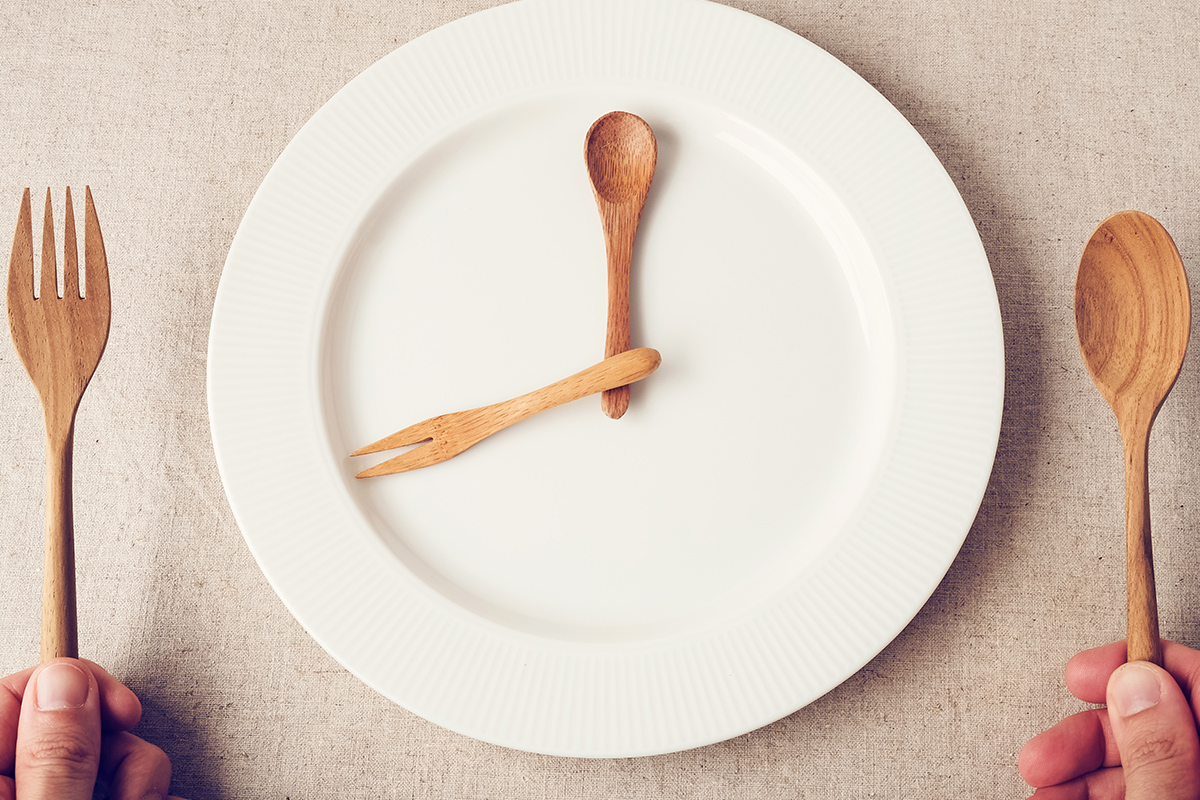
Intermittent Fasting: How to Hit Your Protein Goals | QA

Intermittent Fasting: How to Hit Your Protein Goals | QA

Question:

I’m wanting to start intermittent fasting for the numerous benefits it has… yes, including a little fat loss as well! The only issue is that I’m also trying to add muscle at the same time. Subscribing to the 1-2 grams of protein per body pound theory, is that enough time in the IF window to ingest that much protein? (I weigh 230 now, that’s a lot in a short window of time! ? What are the recommendations in order to achieve this with IF and low-carb/high protein? Is it even possible? Thanks!

– Chris T. 

Answer:

First, I’d modify your protein goal to the lower end of the range you proposed: 1 gram per pound goal body weight. That’s still over the 1.7 gm protein/kg recommended by the American College of Sports Medicine to increase muscle mass. Since there is no physical storage of amino acids in the body, consuming large quantities of protein at once doesn’t mean you’ll use all of what you eat.  

For intermittent fasting, I’d advise breaking down your total so that you’re consuming 30-40 grams of protein* every 2-3 hours for the span of time you do eat. Remember to support your workouts with protein before, during and after to provide your muscles with amino acids when it needs them most and to promote muscle protein synthesis. 

* Amount of protein generally supported in the literature as that which can be utilized at one sitting. 

Schoenfeld, B.J., Aragon, A.A. How Much Protein Can the Body Use in a Single Meal for Muscle-Building? Implications for Daily Protein Distribution. Journal of the International Society of Sports Nutrition; 15,10 (2018). https://doi.org/10.1186/s12970-018-0215-1 

– Debbie J., MS, RD

This article should not replace any exercise program or restrictions, any dietary supplements or restrictions, or any other medical recommendations from your primary care physician. Before starting any exercise program or diet, make sure it is approved by your doctor.

Some questions have been edited for length and/or clarity.

Ask our Dietitian

Have a nutrition question? Our registered dietitian is ready to help!

Email nutrition@lafitness.com or submit your question below and it may be featured in an upcoming article!

3 + 4 =


Recommended Reading - Q+A

Good carbs vs bad carbs
Debunking Diet Myths

Debunking Diet Myths

With so many sources offering nutrition advice, it’s hard to know what’s true. Even factual information can become distorted by the time it reaches you. Like a game of telephone, the message often changes as it’s passed along. Here, we debunk 5 common diet myths to...

Eggs and Cholesterol: How Much is Too Much? | QA

Eggs and Cholesterol: How Much is Too Much? | QA

Question:

How many egg yolks are allowed per week when trying to lower my LDL cholesterol?

– Theresa D. 

Based on my friend’s advice, I’m eating one boiled egg at each meal, that’s three times a day for me. But now I fear about the effects on cholesterol. So far, I’m good. But what is your advice about eating three eggs each day, every day. I do work out on the treadmill for 30 minutes and weight lift for 30 minutes every day. Regards,

– Abdu K. 

Answer:

Egg consumption in relation to high cholesterol levels was a much debated topic 30 years ago, but confusion still remains. On the whole, eggs are healthy – they contain many nutrients and are good sources of vitamins A and D. One egg yolk contains 5 grams of fat, including 1.5 grams of saturated fat, and approximately 186 mg of cholesterol. Though eggs are high in cholesterol, it’s the saturated fat that has greater impact on your blood cholesterol.  

Eating foods that contain saturated fats raises the level of cholesterol in your blood.” – American Heart Association 

Prominent dietary sources of saturated fat are bacon, sausage, meat, eggs, butter, cheese and processed foods containing palm, palm kernel and coconut oils. It’s often how eggs are prepared (in butter) or served (with bacon, sausage, cheese, muffins, or scones) that’s the culprit in affecting dietary cholesterol. 

Most people can eat an egg daily without increasing their risk for heart disease. If you have diabetes, are at high risk for heart disease, or already have heart disease then it’s wise to limit egg consumption to no more than three per week. Remember that only the yolk contains the egg’s saturated fat, so these guidelines refer to whole eggs, not egg whites or egg substitute. 

Sources: 

  1. American Heart Association (n.d.) “Saturated Fat” https://www.heart.org/en/healthy-living/healthy-eating/eat-smart/fats/saturated-fats  Accessed 2.7.2020 
  2. Komaroff, Anthony, MD. (2019, June 24) “Are Eggs Risky for Heart Health?” Harvard Health Letter.  https://www.health.harvard.edu/heart-health/are-eggs-risky-for-heart-health  Accessed 2.7.2020 
  3. Lopez-Jimenez, Francisco, MD. (2020, Jan. 9) “Eggs: Are They Good or Bad for My Cholesterol?” Mayo Clinic. https://www.mayoclinic.org/diseases-conditions/high-blood-cholesterol/expert-answers/cholesterol/faq-20058468  Accessed 2.7.2020 
  4. Vannice, G and Rasmussen, H. (2014, Jan.) Position of the Academy of Nutrition and Dietetics: Dietary Fatty Acids for Healthy Adults. Journal of the Academy of Nutrition and Dietetics, 114(1): 136-153. Doi: https://doi.org/10.1016/j.jand.2013.11.001 

– Debbie J., MS, RD

This article should not replace any exercise program or restrictions, any dietary supplements or restrictions, or any other medical recommendations from your primary care physician. Before starting any exercise program or diet, make sure it is approved by your doctor.

Some questions have been edited for length and/or clarity.

Ask our Dietitian

Have a nutrition question? Our registered dietitian is ready to help!


Email nutrition@lafitness.com or submit your question below and it may be featured in an upcoming article!

4 + 5 =


Recommended Reading - Q+A

Good carbs vs bad carbs
Debunking Diet Myths

Debunking Diet Myths

With so many sources offering nutrition advice, it’s hard to know what’s true. Even factual information can become distorted by the time it reaches you. Like a game of telephone, the message often changes as it’s passed along. Here, we debunk 5 common diet myths to...