Is Vegetarianism a Good Move for Distance Athletes?

Is Vegetarianism a Good Move for Distance Athletes?

Question:

I’m a 23-year-old, 150lb, male triathlete that trains pretty heavily, about 20 hours on a normal week, and when in Ironman training it’s around 25+. I’ve read several books that cite vegetarianism as a good move for distance athletes, and I want to give it a try for a couple of months after my next race. How much protein do I need daily? I read some sources that state 60 grams daily, others state 140+.

– Chis C.

Answer:

I am glad you are doing your research before embarking on your endeavor! Vegetarian athletes can meet their protein needs exclusively with plant foods*. Estimated daily protein needs for a 150-pound male triathlete that trains four hours five times a week are 1.7-2.0 grams/kg body weight. This equates to 116-136 grams protein per day.

Although it’s possible, you shouldn’t get all of that from one source. Protein quality matters – it’s important to consume adequate essential amino acids. Since plant proteins may be limited in one of those amino acids, eat a variety of grains, beans, legumes, and vegetables. Here is a sample vegan day with approximately 120 grams of protein and 3500 calories, divided into 3 meals and 3 snacks:

  • 2 vegan sausage patties
  • Medium waxy potato with onion and peppers cooked in tablespoon oil
  • Banana
    • Multigrain bagel with tablespoon peanut butter
    • 1.5 cups of soymilk
  • ½ cup whole beans, two 8” wheat tortillas, 2 oz cheese substitute, ½ avocado, unlimited salsa
  • 1 cup broccoli
  • Orange
    • 6 oz. plain non-fat Greek-style soy yogurt with ¼ cup dried fruit and ¼ cup granola
  • 1 cup mixed vegetables and 3 oz meat substitute, stir-fried in teaspoon oi
  • 1 cup quinoa
  • Apple
    • One bag of low-fat microwave popcorn

* Lacto-ovo vegetarians may include some milk, yogurt, and eggs.

Sources:

  1. Nutrition for Triathletes: Adding Protein Into A Vegetarian Diet. Triathlete.com, 7.30.2010. https://www.triathlete.com/2010/07/nutrition/accomplishing-the-feat-of-being-a-vegeterian-triathlete_11093
  2. The Triathlete’s Guide to Protein. Ironman.com, 1.19.2016. http://www.ironman.com/triathlon/news/articles/2016/01/triathletes-guide-to-protein.aspx#axzz5S2QQPAa1

– Debbie J., MS, RD

This article should not replace any exercise program or restrictions, any dietary supplements or restrictions, or any other medical recommendations from your primary care physician. Before starting any exercise program or diet, make sure it is approved by your doctor.

Some questions have been edited for length and/or clarity.

Ask our Dietitian

Have a nutrition question? Our registered dietitian is ready to help!

Email nutrition@lafitness.com or submit your question below and it may be featured in an upcoming article!

14 + 5 =


Recommended Reading - Q+A

Blender with fresh ingredients to making healthy detox smoothie with glass of green prepared drink with a straw. Vegan cooking concept
Healthy Smoothie Recipes

Healthy Smoothie Recipes

Cue the sound of a revving engine… running your blender at home can bring goodness with that whirring noise! Creating your own smoothies is a great way to get in some nutrients and plant phytochemicals you otherwise wouldn’t during the day. It allows you to prepare...

Good carbs vs bad carbs
Debunking Diet Myths

Debunking Diet Myths

With so many sources offering nutrition advice, it’s hard to know what’s true. Even factual information can become distorted by the time it reaches you. Like a game of telephone, the message often changes as it’s passed along. Here, we debunk 5 common diet myths to...

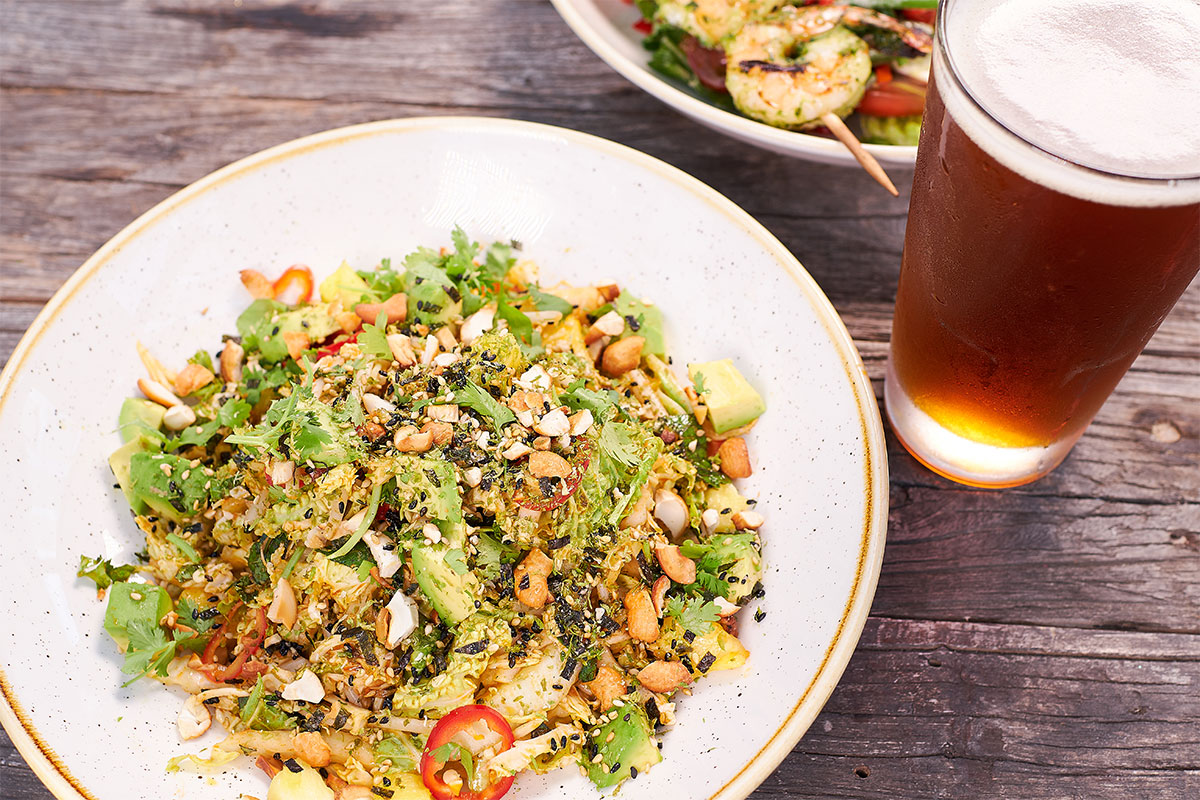
Korean Picnic Salad & BBQ Shrimp from Brian Malarkey’s Green Acre

Korean Picnic Salad & BBQ Shrimp from Brian Malarkey’s Green Acre

“Making everyday meals memorable is something that excites me, so at Green Acre being able to provide elevated farm-focused breakfast, lunch, and happy hour options provides our guests to have delicious, simple food. The menu makes it easy to come back each day for the favorite dishes they trust and love. We utilize ingredients from our onsite organic garden at the Campus Pointe location to create fresh, local food.”

Chef Brian Malarkey

Brian Malarkey's Green Acre

Photography provided by: Katalyst PR


Brian Malarkey’s Green Acre (Campus Pointe) is located at the following location:

Brian Malarkey's Green Acre

Distance to closest LA Fitness: 6.5 miles to 4984 Shawline St., SD, CA 92111 LA Fitness

Brian Malarkey’s Green Acre Campus Pointe is located at 10300 Campus Point Drive SD, CA 92121. Open Monday through Friday from 7am to 3pm. For the menu and additional details, please visit greenacresd.com/campus-pointe/.

Photography by: Katalyst PR


Korean Picnic Salad & BBQ Shrimp from Brian Malarkey’s Green Acre

Ingredients

For the Salad

  • 1 Large Head of Napa Cabbage – Sliced Thin
  • 1 Large Handful Bean Sprouts
  • 1 Each Pineapple – Diced
  • 1 Each Fresno Chili – Sliced Thin and Rinsed
  • 1 Bunch Cilantro – Rough Chopped
  • 1/2 Bunch Mint – Leaves Picked and Rough Chopped
  • 1/2 Bunch Thai Basil or Regular Basil – Leaves Picked and Rough Chopped
  • 1/2 Cup Cashews – Toasted – Salted – Rough Chopped
  • 2 Tablespoons – Furikake – Japanese Sesame/ Nori Seasoning

For the Dressing

  • ¼ Cup GoChuJang – Korean Chili Condiment
  • 2 Tablespoons – Lime Juice
  • 2 Tablespoons – Soy Sauce
  • 1/3 Cup Avocado Oil
  • 1 Tablespoon Ginger – Peeled and Chopped

For the BBQ Shrimp

  • 4 Wooden Skewers – Soaked in water for a few hours
  • 16 Shrimp (16/20) 4 on each Skewer
  • 2 Tablespoons – GoChuJang
  • Salt and Pepper to taste


Method

Step 1:

For the Shrimp

  • Rub the Skewered Shrimp with the GoChuJang
  • Grill until the shrimp are cooked all the way through, 2 to 3 minutes on each side.

Step 2: Toss in salad mixture and enjoy!


Featured Recipes

Blender with fresh ingredients to making healthy detox smoothie with glass of green prepared drink with a straw. Vegan cooking concept
Healthy Smoothie Recipes

Healthy Smoothie Recipes

Cue the sound of a revving engine… running your blender at home can bring goodness with that whirring noise! Creating your own smoothies is a great way to get in some nutrients and plant phytochemicals you otherwise wouldn’t during the day. It allows you to prepare...

Good carbs vs bad carbs
Debunking Diet Myths

Debunking Diet Myths

With so many sources offering nutrition advice, it’s hard to know what’s true. Even factual information can become distorted by the time it reaches you. Like a game of telephone, the message often changes as it’s passed along. Here, we debunk 5 common diet myths to...

How to Lower Triglycerides to Normal Levels

How to Lower Triglycerides to Normal Levels

Question:

In my recent blood test, my triglycerides were borderline high. How do I get my triglycerides down to acceptable levels?

– Anthony C.

Answer:

Triglycerides in the blood are basically free-floating fats that are not bound to cholesterol. A lab value showing hypertriglyceridemia is an indication of increased risk for stroke, heart attack, and heart disease, or maybe a sign of other medical conditions. Dietary factors that increase triglyceride levels include alcohol, excess carbohydrate, sugars, and calories.

Here are tips for lowering blood triglycerides:

  • Avoid sugar and refined carbohydrates – Limit starchy foods, sugary drinks, and caloric sweeteners. Avoid added sugars and desserts. Choose whole grains over white flour products. Consider limiting calories from carbohydrates to 60% of all calories.
  • Choose healthier fats – Reduce saturated and trans-fat. Eat the lowest-fat dairy and animal proteins available. Instead of cheese or eggs, choose plant proteins. Snack on nuts and seeds versus fried pork skins. Instead of fatty meats containing saturated fat, choose fish with omega-3 unsaturated fat. Opt for oil-based dressing and sauces over cream-based ones.
  • Limit alcohol – Consume fewer alcoholic beverages.
  • Exercise regularly – A healthy minimum for physical activity is 150 minutes (30 mins x 5 times) of moderate-intensity exercise per week.
  • Lose weight – If you are overweight, losing just 5% body weight can lower triglycerides.

Sources:

  1. Foods to Avoid If You Have High Triglycerides. Web MD.  https://www.webmd.com/cholesterol-management/ss/slideshow-triglyceride-foods-to-avoid
  2. Triglycerides: Frequently Asked Questions. American Heart Association.  www.my.americanheart.org/idc/groups/ahamah-public/@wcm/@sop/@smd/documents/downloadable/ucm_425988.pdf
  3. Triglycerides: Why Do They Matter? The Mayo Clinic, 9.13.2018 https://www.mayoclinic.org/diseases-conditions/high-blood-cholesterol/in-depth/triglycerides/art-20048186

– Debbie J., MS, RD

This article should not replace any exercise program or restrictions, any dietary supplements or restrictions, or any other medical recommendations from your primary care physician. Before starting any exercise program or diet, make sure it is approved by your doctor.

Some questions have been edited for length and/or clarity.

Ask our Dietitian

Have a nutrition question? Our registered dietitian is ready to help!

Email nutrition@lafitness.com or submit your question below and it may be featured in an upcoming article!

10 + 7 =


Recommended Reading - Q+A

Blender with fresh ingredients to making healthy detox smoothie with glass of green prepared drink with a straw. Vegan cooking concept
Healthy Smoothie Recipes

Healthy Smoothie Recipes

Cue the sound of a revving engine… running your blender at home can bring goodness with that whirring noise! Creating your own smoothies is a great way to get in some nutrients and plant phytochemicals you otherwise wouldn’t during the day. It allows you to prepare...

Good carbs vs bad carbs
Debunking Diet Myths

Debunking Diet Myths

With so many sources offering nutrition advice, it’s hard to know what’s true. Even factual information can become distorted by the time it reaches you. Like a game of telephone, the message often changes as it’s passed along. Here, we debunk 5 common diet myths to...

Understanding Basic Nutrient Needs

Understanding Basic Nutrient Needs

Question:

Hi, my name is Allison and I joined LA Fitness this summer. My very basic question is, what ARE the nutrient needs of a basic adult?  (I’m female, 5’4″, 135 lbs. and trying to shed 5 -10 lbs., work out 3-4x/ week and walk on off days). I just want to know what the basic categories of things are a person needs. I’ve heard about nutrients being macros (fat protein carb) and micro (vitamins and minerals) but I’ve also heard nutritionists online say to get fiber and leafy greens and antioxidants and others say lots of veggies and lean meat – and I know they’re all related and many of them overlap- so I guess I’m just confused about what to seek out in my diet. Thank you SO much.

– Allison T.

Answer:

Allison, based on your anthropometrics and level of exercise your daily nutrient needs may fall into the following ranges (provided for a 30-year-old woman):

  •                 1,900-2,400 Calories
  •                 63-80 gms Fat (30% calories)
  •                 61-92 gms Protein (1.0-1.5 gram/kg)
  •                 240-300 gms Carbohydrate (50% calories) including 25 gms Fiber (standard daily value)

Please see the Institute of Medicine’s Dietary Reference Intake tables for vitamins and minerals for your intake targets of 29 micronutrients. Antioxidant action is an important function of certain micronutrients and phytochemicals (beneficial compounds found in plants), so we call those antioxidants.

As far as basic nutrients, you just need to add one thing to your list of fat, protein, carbohydrate, vitamins, and minerals – water! It is a macronutrient since we need such large volumes of it. Since it doesn’t provide calories, water is not often regarded the same as the 3 energy-yielding macronutrients. Exact requirements are not specified by the Institute of Medicine’s Food and Nutrition Board, but the adequate intake of water is 3.7 liters per day for men and 2.7 liters per day for women, including beverages and water derived from solid food.

You can look at nutrient numbers specifically now and then, but to ease the confusion just focus on your dietary habits and overall consumption to obtain sources of those nutrients. What you should seek out in your diet are plant-based protein sources, raw produce of every color, the most wholesome grains, the leanest animal foods, and unsweetened beverages… in amounts that just satisfy you. Those recommendations can be suited to every culture and worldly food belief. Sounds a lot simpler to me!

– Debbie J., MS, RD

This article should not replace any exercise program or restrictions, any dietary supplements or restrictions, or any other medical recommendations from your primary care physician. Before starting any exercise program or diet, make sure it is approved by your doctor.

Some questions have been edited for length and/or clarity.

Ask our Dietitian

Have a nutrition question? Our registered dietitian is ready to help!

Email nutrition@lafitness.com or submit your question below and it may be featured in an upcoming article!

7 + 5 =


Recommended Reading - Q+A

Blender with fresh ingredients to making healthy detox smoothie with glass of green prepared drink with a straw. Vegan cooking concept
Healthy Smoothie Recipes

Healthy Smoothie Recipes

Cue the sound of a revving engine… running your blender at home can bring goodness with that whirring noise! Creating your own smoothies is a great way to get in some nutrients and plant phytochemicals you otherwise wouldn’t during the day. It allows you to prepare...

Good carbs vs bad carbs
Debunking Diet Myths

Debunking Diet Myths

With so many sources offering nutrition advice, it’s hard to know what’s true. Even factual information can become distorted by the time it reaches you. Like a game of telephone, the message often changes as it’s passed along. Here, we debunk 5 common diet myths to...

Low Carb and Fat for Cholesterol

Low Carb and Fat for Cholesterol

Question:

Hello. Both of my cholesterols are borderline, and my doctor and I agreed not to start on any medication. Instead, a low-carb, low-fat diet is what I’m looking forward to doing. What should I look for in food labels? Fat grams? Total fat? Carbs? Trans fat? There’s so much info. I’m confused. How much do I need of what? Thanks.

– Patricia D.

Answer:

Hi Patricia! Exact nutrition targets would depend on your full lipid profile, so you should consider taking your lab results to a Registered Dietitian Nutritionist for a personalized prescription. You’re right that there is so much information – because it is such a complex situation with multiple factors. While I can’t clarify how much YOU need, I can explain which fats and carbs impact each lipid, and what are the major sources of those macronutrients.

  • If total cholesterol is too high AND it is due to the low-density lipoprotein (LDL) or other undesirable components being elevated, then take action to reduce those measures. Having a very high level of the desirable high-density lipoprotein (HDL) could push total cholesterol to a high number, but that situation may not be a concern.
  • If the LDL cholesterol is high, then decreasing total fat, saturated fat, and trans fat while increasing fiber may help reduce LDL.
  • If HDL cholesterol is low, then decreasing trans fat, opting for unsaturated fats, consuming alcohol in moderation, quitting smoking, increasing exercise, and losing extra weight may raise HDL levels.
  • If triglycerides are too high, then decreasing refined carbohydrates and saturated fat, limiting alcohol and increasing omega-3 fat, losing excess weight, and exercising may improve triglycerides.

TOTAL FAT – The daily reference value for total fat in a 2,000-calorie diet is 65 grams per day, representing a limit of 30% calories. Major sources are fried foods, animal products including dairy products, nuts, seeds, avocados, and olives. Oils and butter and pure fat. Some desserts and condiments are nearly all fat calories.

SATURATED FAT – The daily reference value for saturated fat in a 2,000-calorie diet is 20 grams, representing a limit of 10% calories. Saturated fat is the type which is solid at room temperature. Mainly from animal sources, palm and coconut. Major sources include cheese, butter, cream, ground beef, bacon, fatty cuts of meat and foods fried in lard or sautéed in butter.

TRANS FAT – Created during the hydrogenation of vegetable oils, this very harmful fat is found primarily in processed foods and animal products. No known safe amount. In 2015 the FDA stated, “…there is no longer a consensus among qualified experts that partially hydrogenated oils, which are the primary dietary source of industrially-produced trans fatty acids are generally recognized as safe (GRAS) for any use in human food.

UNSATURATED FAT – Monounsaturated and polyunsaturated fats are liquid at room temperature and are predominantly found in plant foods. Avocados, olives, vegetable oils, nuts, and seeds are major sources.

OMEGA-3 FAT – A particular kind of polyunsaturated fat that is predominantly from mackerel, herring, tuna, salmon and trout. Notable sources include other fish and seafood, walnuts, flaxseed, and canola oil.

FIBER – The daily reference value for dietary fiber in a 2,000 calorie diet is 25 grams, representing a minimum of 1.5 grams per 100 calories. Soluble fibers are the type that directly help to reduce cholesterol. Major sources include oats, beans, peas, lentils, apples, pears, barley, and prunes.

REFINED CARBOHYDRATES – Albeit from natural sources, white flour and added sugars are not the same as their wholesome counterparts. Refined carbs include pastries, many cereals, flour tortillas, breading on fried foods, regular pasta, pretzels, and the ingredient maltodextrin.  Added sugars should comprise no more than 10% calories according to the 2015 Dietary Guidelines for Americans. Added sugars can come from sugars (any kind; usually end in “ose”), syrups, glazes, honey, fruit juice concentrate, and molasses in products such as candy, desserts, soft drinks, and sweetened cereals.

ALCOHOL – A moderate consumption of ethanol-containing beverages means 1 drink per day for men and no more than 2 drinks per day for women. A serving size depends on the beverage’s alcohol percentage: 1.5 oz liquor (80 proof = 40% alcohol); 5 oz wine (12% alcohol); 12 fl oz beer (5% alcohol).

Sources:

American Heart Association

  1. http://heartinsight.heart.org/Summer-2015/How-Do-I-Increase-My-Good-Cholesterol/
  2. http://www.my.americanheart.org/idc/groups/ahamah-public/@wcm/@sop/@smd/documents/downloadable/ucm_425988.pdf

Web MD

  1. https://www.webmd.com/heart/how-to-boost-your-good-cholesterol
  2. https://www.webmd.com/cholesterol-management/lowering-triglyceride-levels#1

Mayo Clinic

  1. https://www.mayoclinic.org/diseases-conditions/high-blood-cholesterol/in-depth/hdl-cholesterol/art-20046388
  2. https://www.mayoclinic.org/diseases-conditions/high-blood-cholesterol/in-depth/triglycerides/art-20048186
  3. https://www.mayoclinic.org/diseases-conditions/high-blood-cholesterol/in-depth/cholesterol/art-20045192

– Debbie J., MS, RD

This article should not replace any exercise program or restrictions, any dietary supplements or restrictions, or any other medical recommendations from your primary care physician. Before starting any exercise program or diet, make sure it is approved by your doctor.

Some questions have been edited for length and/or clarity.

Ask our Dietitian

Have a nutrition question? Our registered dietitian is ready to help!

Email nutrition@lafitness.com or submit your question below and it may be featured in an upcoming article!

7 + 7 =


Recommended Reading - Q+A

Blender with fresh ingredients to making healthy detox smoothie with glass of green prepared drink with a straw. Vegan cooking concept
Healthy Smoothie Recipes

Healthy Smoothie Recipes

Cue the sound of a revving engine… running your blender at home can bring goodness with that whirring noise! Creating your own smoothies is a great way to get in some nutrients and plant phytochemicals you otherwise wouldn’t during the day. It allows you to prepare...

Good carbs vs bad carbs
Debunking Diet Myths

Debunking Diet Myths

With so many sources offering nutrition advice, it’s hard to know what’s true. Even factual information can become distorted by the time it reaches you. Like a game of telephone, the message often changes as it’s passed along. Here, we debunk 5 common diet myths to...