It’s an Acquired Taste – How to Love the Taste of Health Foods

It’s an Acquired Taste – How to Love the Taste of Health Foods

As children, we don’t have much choice in the foods we are provided and the habits we are taught to cultivate. This is why changing our diet is so difficult; you have to retrain your taste buds. Fortunately, this is completely doable, even if it’s a bit difficult.  

We’re taking things step-by-step to help you transition to a healthier style of eating. Read on for your complete guide on how to love the taste of health foods!

Your Step-by-Step Guide 

01.

Decide on which changes you’d like to start with

Before you can build new habits, you need to look at your current eating patterns. Make a food log and, over the course of a week, write down everything you eat and when you eat it. If you like, color-code your information so you know which foods were meals, which were snacks, and maybe even which ones you ate when you knew you weren’t hungry.  

02.

Pick out certain foods, maybe just one or two at first, and decide to replace them with a healthier alternative  

The reason we’re going through this step first is because we’re planning on introducing new foods. To avoid adding additional calories to your day, it’s probably a good idea to replace calories that you would have typically eaten anyway. 

03.

Decide on the health foods you want to learn to love

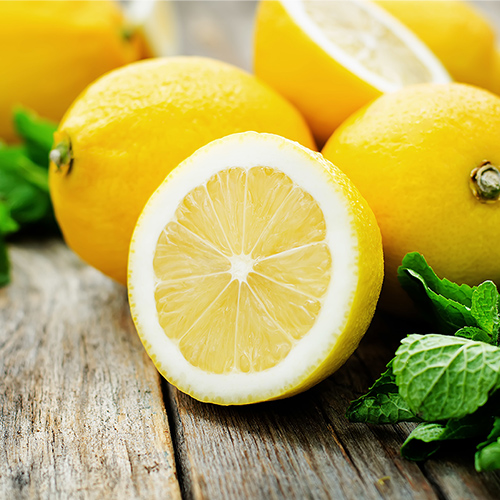
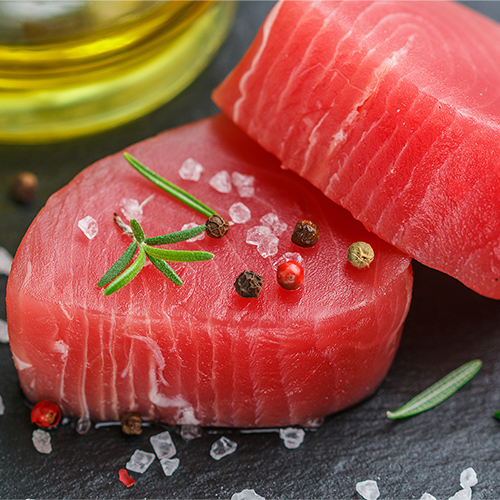
There are a lot of options here and many of them are shunned for their acidic, bitter, pungent, or seemingly tasteless profiles. Examples include: Lemon, vinegar, kale, spinach, arugula, quinoa, plain yogurt, and fatty fish. 

04.

Start chipping away at your aversion

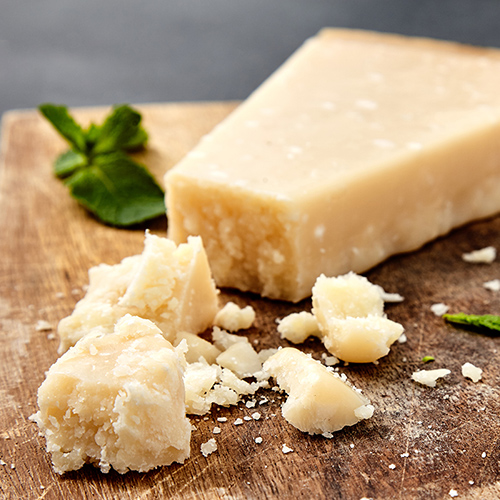
Instead of forcing yourself through a plateful of kale, start training your taste buds to like the type of flavors in your chosen foods. For example, introduce more sour, bitter, and umami flavors into your diet. If you’re unfamiliar with umami, it’s the distinct taste you can find in foods like seaweed, miso, salmon, and hard cheeses like parmesan.1 

How to Like Sour Foods


Start adding sour foods that you do enjoy to your diet. 

If you want to eventually enjoy vinaigrette on your salad but you don’t like the acidity and sourness of it, regularly eating sour foods that you do like can build your tolerance for sour flavors. Here is a list of nutritious sour foods: 2,3  


  1. Grapefruit 
  2. Oranges 
  3. Kumquats 
  4. Kiwi 
  5. Strawberries 
  6. Green grapes 
  7. Green apples 
  8. Lemon 
  9. Lime 
  10. Tamarind 
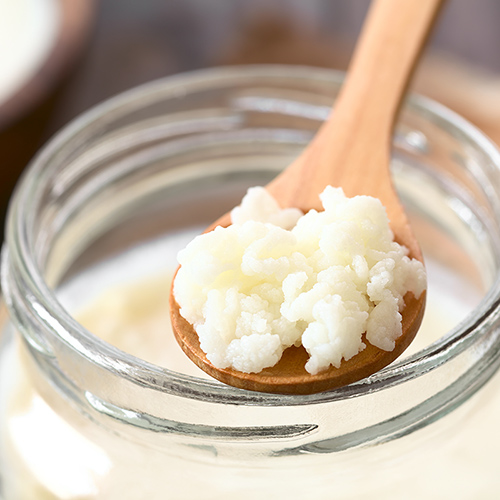
  11. Kefir 
  12. Plain Yogurt 
  13. Tomatoes 
  14. Vinegar  

How to Like Bitter Foods


Following the same principle as before, start incorporating bitter flavors that you do enjoy. 

Here is a list of nutritious bitter foods.3,4 Choose one you’re comfortable with and slowly push the boundaries of what you’d normally eat until you arrive at a tolerance (and hopefully enjoyment) for the level of bitterness you want to achieve. 

  1. Arugula 
  2. Broccoli 
  3. Cauliflower 
  4. Cabbage 
  5. Watercress 
  6. Bok choy 
  7. Bitter Melon 
  8. Brussels sprouts 
  9. Kale 
  10. Radishes 
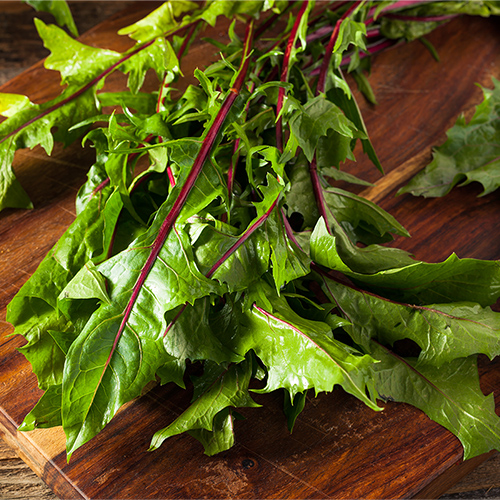
  11. Dandelion greens 
  12. Citrus Peel 
  13. Green Tea 
  14. Dark chocolate 

How to Like Umami Foods


 Start Incorporating umami flavors 

The umami flavor comes from a compound extracted from dry kelp.3 It is this flavor, and others like it, that have the savory taste you’ll find in many Oriental dishes. Here is a list of nutritious umami foods5 that you can add to your diet. 


  1. Seaweed 
  2. Soybeans 
  3. Tofu 
  4. Miso 
  5. Parmigiano Reggiano 
  6. Cheddar 
  7. Gouda 
  8. Kimchi 
  9. Sardines 
  10. Tuna 
  11. Yellowtail 
  12. Cod 
  13. Shrimp 
  14. Scallops 
  15. Anchovies 
  16. Mushrooms 

Don’t Cut it Out, Change the Recipe

Another tactic is to learn to make your favorite dishes in ways that are healthier. Slowly substitute an ingredient or two, each time you make it, until you’ve crafted a healthier version of the same recipe! Here are some substitutions, straight from the Mayo Clinic, for commonly used recipe ingredients. For the full list, visit their post on Healthy recipes: A guide to ingredient substitutions. 


Original Ingredient 

Substitution 

Breadcrumbs 

Rolled Oats/Crushed Bran Cereal 

Butter/Margarine/Shortening/Oil 

Applesauce/Prune Puree 

White Rice 

Brown Rice/Bulgur/Pearl Barley/Wild Rice 

Whole Milk 

Reduced Fat Milk/Fat Free Milk 

Ground Beef 

Lean Ground Beef/Ground Chicken/Ground Turkey 


Food is Fuel

Ultimately, you have to change your mind-set before you can change your taste buds. Food is what fuels your body. The more nutritious that fuel is, the better your body will feel and the more easily it can process what you put in. Gradually learning to enjoy flavors found in health foods is the key. So, take it slow, and work your way to a more nutritious lifestyle. 

For help creating a meal plan, read our registered dietitian’s post on How to Create a Meal Plan. If you need help catering to picky kids and teens, read her post on How to Get Your Kids to Eat Right. To access our monthly blog post highlights, subscribe to our newsletter today! 

Sources 

  1. MasterClass. “What Is Umami? Learn About Umami and How to Incorporate Umami Flavors in Your Cooking – 2019.” MasterClass, MasterClass, 2 July 2019, www.masterclass.com/articles/what-is-umami-learn-about-umami-and-how-to-incorporate-umami-flavors-in-your-cooking#what-foods-are-good-example-of-umami. 
  2. Reino, Nicole. “11 Sour Foods That Boost Endurance and Power.” ACTIVE.com, Active.com, 27 Oct. 2016, www.active.com/nutrition/articles/11-sour-foods-that-boost-endurance-and-power. 
  3. Roper, Stephen D. “Signal Transduction and Information Processing in Mammalian Taste Buds.” SpringerLink, Springer-Verlag, 28 Apr. 2007, link.springer.com/article/10.1007/s00424-007-0247-x. 
  4. Julson, Erica. “9 Bitter Foods That Are Good for You.” Healthline, 3 Sept. 2018, www.healthline.com/nutrition/bitter-foods. 
  5. Raman, Ryan. “16 Healthy Foods Packed with Umami Flavor.” Healthline, 21 Jan. 2019, www.healthline.com/nutrition/umami-foods. 
  6. Mayo Clinic Staff. “Your Guide to Healthy Ingredient Substitutions.” Mayo Clinic, Mayo Foundation for Medical Education and Research, 16 Oct. 2019, www.mayoclinic.org/healthy-lifestyle/nutrition-and-healthy-eating/in-depth/healthy-recipes/art-20047195. 

Should You Exercise on an Empty Stomach?

Should You Exercise on an Empty Stomach?

The Truth About Fasting and Exercise

Evidence Based 

There are a lot of reasons a person would consider exercising on an empty stomach. Many people simply like to exercise first thing in the morning. Then we have trending diet plans like Intermittent Fasting that make it difficult to schedule exercise around food consumption. Others incorporate fasting into their lifestyle for faith-based reasons. All the while, our exercise routines continue according to or despite our nutritional timing.  

So, what happens when you exercise on an empty stomach? Is it good or bad for weight loss? Does it help you burn more fat or does fasting negatively impact your workout? 

Let’s tackle these questions one by one. Here’s what you need to know if you’re considering working out while fasting: 

What Happens to Your Body When You Fast? 

When we say “fasting” we typically mean you’ve gone 8 to 12 hours without food. This would be like waking up in the morning after a good night’s sleep and deciding to work out before you have your first meal. If you participate in Intermittent or Prolonged Fasting, you may be going without (or with very little) food for 12, 16, 48, or even 72 hours.1 Here’s what’s happening in your body when you fast: 

By 6-8 Hours –  Your body is still  burning through its glycogen supply. This is the most readily available form of energy. 

By 12 Hours – You enter the metabolic state called ketosis in which your body begins to break down fat.1  

By 18 Hours – You’re now in “fat-burning mode.” Your body is generating more ketones which tell your body to reduce inflammation and to make repairs to damaged DNA.1  

By 24 Hours – Your body starts a process called autophagy. This means your cells work harder to recycle old components and to break down misfolded (damaged) proteins. Misfolded proteins are connected to Alzheimer’s and other diseases.1 

If you’re interested in learning what happens once you hit 48, 54, and 72 hours of fasting, check out this article on the 5 Stages of Intermittent Fasting. For the purpose of this article, we don’t need to delve that far. 

What Happens if You Exercise While Fasting? 


Now that we know what’s happening on a biological level while fasting, let’s take a look at what happens when exercise is added to the equation.  

As you exercise, your body starts by using glycogen for energy. You typically have enough stored up to last you about 24 hours.3 If you manage to deplete your glycogen stores (say you’re an endurance athlete running a triathlon and you haven’t been replenishing your energy as you go), you’ll hit exhaustion. Your body still has plenty of energy stored as fat, why doesn’t it use it when glycogen levels are low? 

The body is not adapted to this. However, it can be trained! Following a low-carb diet or exercising while fasting can teach your body to draw energy from your fat-stores.3 Before this all starts to sound too good to be true, let’s define what we mean by “drawing energy from your fat-stores.”   

A terrific example by Dr. Jason Fung in his article on Fasting and Exercise, starts to illustrate this concept pretty well: Imagine that your glycogen supply is like energy stored in the refrigerator. It is ready to use but the supply is limited. Your fat is like energy stored in the freezer; it takes a greater process to make it usable but you can store a larger supply.  

Over time, exercising while fasting increases the production of fat-metabolizing proteins.3 Our muscles essentially become more efficient at breaking down fat in order to use the energy. It’s all part of how the body adapts to its circumstances.

What Other Studies Say


So, what does other research have to say about this? An article from the Strength and Conditioning Journal reviewed the results of multiple studies on the subject.  

The review found that endurance trained individuals who performed moderate to high-intensity cardio (while fasting) break down significantly more fat than the body can actually use.4 So, yes, the body does break down that fat, but what isn’t immediately used goes back to its original form.4 The ultimate conclusion was that the net effect of exercising while fasting was negligible and may even have negative effects on muscle strength and growth.4 

Another study examined body composition changes between a group that fasted before exercise and a group that did not. Their findings showed no difference between the two groups! They both lost significant amounts of weight and fat mass but fasting seemed to have no implication on the results.5 

So, the evidence seems to lean in two directions. The body is clearly responding to the need for energy but there are split conclusions on whether this response is beneficial. Until more research is done, fasting before exercise may come down to a matter of preference. If you’re still seeking some answers and still interested in giving it a try for yourself, let’s find out a little bit more. 

Will Fasting Before Exercise Cause You to Eat More? 


A study on exercising in the fasted state hypothesized that exercising on an empty stomach would increase calorie intake throughout the day. They were surprised to find that not only did their participants eat less, they were also more motivated to work out.6 These results are promising if you’re worried about your hunger causing you to overeat on days you both fast and exercise.  

Does Fasting Decrease Your Ability to Effectively Work Out? 


Well, it depends what you’re doing. If you’re working out on an empty stomach, keep in mind that your body has been running on its glycogen stores while you fasted. It will pull from those same stores when you exercise, at least until you run out. If you’re doing steady cardio, you’re likely to be just fine.

High-intensity exercises, however, rely on glucose for muscle contraction.7 If your energy stores are low because you’ve been fasting, your body might break down your lean muscle to get you through your workout.7 If you recall, this was the same concern that came up in the article from the Strength and Conditioning Journal. 

Closing Thoughts 

Clearly, this subject merits further research before any definitive conclusions can be drawn. Evidence can be found to back both sides of the argument. Some athletes swear by it, and there is science to prove that something is in fact happening to release and utilize your fat stores, but is it all enough to make a difference and are there significant adverse effects?  

With the research at your fingertips, it remains up to you to decide whether you want to fast or feast before your workout. Which do you prefer? Let us know in the comments below! 

For more thought provoking posts, check out What Happens to Your Body When You Stop Working Out, or, read this post to debunk some big Muscle Building and Fat Burning Myths. To access our monthly blog post highlights, subscribe to our newsletter, today! 

Sources

  1. Jarreau, Paige. “The 5 Stages of Intermittent Fasting – LIFE Apps: LIVE and LEARN.” LIFE Apps | LIVE and LEARN, 22 May 2019, https://lifeapps.io/fasting/the-5-stages-of-intermittent-fasting/ 
  2. “4 BIG Health Benefits of 12 Hour Intermittent Fasting.” Clean Cuisine, 5 Dec. 2019, https://cleancuisine.com/12-hour-intermittent-fasting/ 
  3. Fung, Jason. “Fasting and Exercise.” Diet Doctor, 14 Sept. 2018, https://www.dietdoctor.com/fasting-and-exercise 
  4. Schoenfeld, Brad. “Does Cardio After an Overnight Fast Maximize Fat Loss? : Strength & Conditioning Journal.” LWW, Strength and Conditioning Journal, 2011, https://journals.lww.com/nsca-scj/Fulltext/2011/02000/Does_Cardio_After_an_Overnight_Fast_Maximize_Fat.3. 
  5. Schoenfeld, Brad Jon, et al. “Body Composition Changes Associated with Fasted versus Non-Fasted Aerobic Exercise.” Journal of the International Society of Sports Nutrition, BioMed Central, 18 Nov. 2014, https://jissn.biomedcentral.com/articles/10.1186/s12970-014-0054-7 
  6. Bachman, Jessica L, et al. “Exercising in the Fasted State Reduced 24-Hour Energy Intake in Active Male Adults.” Journal of Nutrition and Metabolism, Hindawi Publishing Corporation, 2016, https://www.ncbi.nlm.nih.gov/pmc/articles/PMC5050386/
  7. Niedziocha, Laura. “What Happens If I Workout Without Eating?” LIVESTRONG.COM, Leaf Group, 24 Mar. 2019, https://www.livestrong.com/article/501975-what-happens-if-i-workout-without-eating/ 

Own Your Cold Weather Workout

Own Your Cold Weather Workout

The start of the winter season is on Saturday, December 21st this year and we’re gearing up for a cold season. Many states have already seen record lows! If, like us, you don’t plan to slow down your fitness endeavors, you need to be prepared for working out in the cold.  

 We’ll be covering the warning signs of frostbite and hypothermia and giving you some useful information for your next winter workout! 

Warning Signs  

Frostbite

Frostbite occurs when your skin and the underlying tissue are damaged by freezing. Exposed skin (especially on your nose, ears, and fingers) is most vulnerable, but you can still get it even if you’re covered up. If you plan to be out in cold weather, especially where the wind temperature is below 5° Fahrenheit (or -15° Celsius), these are some important precautions recommended by the Mayo Clinic: 

  1. Limit your time in cold, wet, and windy weather conditions 
  2. Wear loose, warm layers of clothing 
  3. Cover your ears completely 
  4. Wear mittens because they provide better protection than gloves 
  5. Wear insulating socks and sock liners that wick moisture and fit snugly 
  6. Tell others that you’ll be out and give an expected return date 
  7. Avoid alcohol as it can actually cause your body to lose heat more quickly 
  8. Stay hydrated 

Additionally, they identify these symptoms as warning signs of frostbite: 

  1. Cold skin and a prickling sensation 
  2. Numbness in the affected area 
  3. Red skin in milder forms of frostbite, and white, bluish-white or grayish-yellow skin as it becomes more severe 
  4. Hard or waxy-looking skin 
  5. Joint and muscle stiffness 
  6. After rewarming, the appearance of blisters on the skin 

If you go out prepared and know the signs, you can head into your workout with confidence. Frostbite, however, is not the only worrisome condition you have to watch out for in cold weather. While the former can lead to loss of limb, hypothermia can cause death. Here is what you should know about hypothermia: 

Hypothermia

Your body’s normal temperature is 98.6° F (or 37° C). According to the Mayo Clinic, Hypothermia starts when your body loses heat faster than it can produce it; and, will start to show its effects once your temperature falls to 95° F (35° C) or lower. 

In their article on Hypothermia, the Mayo Clinic identifies the following symptoms you should look out for: 

  1. Shivering 
  2. Slurred speech or mumbling 
  3. Slow, shallow breathing 
  4. Weak pulse 
  5. Clumsiness; lack of coordination 
  6. Drowsiness; low energy 
  7. Confusion; memory loss 
  8. Losing consciousness 
  9. In infants, you would notice bright red, cold skin 

Perhaps the easiest way to enter a hypothermic state is if you are wet from rain, snow, or if you fell into a body of water. Wind, on its own, whisks away your body heat. Add the fact that your clothes are wet, and the effect is amplified. It’s extremely important to change out of wet clothes and find a warm dry place when you are caught in cold weather. 

Things to Consider Before Heading Out

Warm the Air Before You Breathe It – Breathing heavily in cold weather can make your lungs feel like they’re about to freeze over. Wearing a face scarf over your nose and mouth can help warm the air you’re breathing and make your workout more comfortable. 

Map Your Route – You should know if you’re likely to encounter flooded areas, frozen patches of water, slick icy roads, or fallen plant life and debris. Stick to areas you’re familiar with so you can re-route if needed and still find your way. Choosing areas with more cover (like buildings, trees, etc.) will also help protect you from wind and other sporadic weather conditions. 

Plan by Time of Day – Leave for your workout when you know the temperature will be at its warmest for the day. Going too early in the morning or too late in the evening will expose you to colder temperatures and, if it’s cold enough, icy roads and frozen slush. 

Keep Hydrated – Hydrate before you leave and bring some with you if you plan to be out for a while. You may not notice that you’re sweating, but you probably are. Putting back what your body loses is important to a safe cold weather workout. 

Protect Your Skin – Sunblock is still important in the wintertime, and the brisk winter air can dry out anything that’s exposed to it. Moisturize your lips, your face, and your hands if you don’t plan to wear gloves. 

You can read up on the calorie burn of cold weather workouts by reading our post on Thermogenesis. For information on how to protect your eyes from the dryness of winter air, check out our blog on Eye Health. To access our monthly blog post highlights, subscribe to our newsletter today! 

Achieving a Calorie Deficit with Hypoglycemia | QA

Achieving a Calorie Deficit with Hypoglycemia | QA

Question:

Hi, I’d like to know some good ways to cut calories for people with low blood sugar issues (hypoglycemia). It can be hard to cut caloric intake with approaches like intermittent fasting and meal replacement shakes because that causes blood sugar levels to drop. So, I’d like to know the best way to obtain a calorie deficit when there are limitations like hypoglycemia in play. Thank you for your help!

– Michael B.

Answer:

When people experience hypoglycemia it’s usually as a drop after elevated blood sugar following a meal (called reactive hypoglycemia), rather than waking up with low blood sugar (fasting hypoglycemia). The best approach to restricting intake while avoiding a hypoglycemic event would be to modestly reduce intake throughout the day, particularly of refined carbohydrate. 

Retaining protein, fiber and fat at an eating session will help slow carbohydrate absorption and blunt the initial spike in blood sugar. The analogy I like to provide is to consider a roller coaster – the greater the incline/peak, the greater the fall. Fun for a ride, but disaster for blood sugar stability. Keeping blood sugar steady is the goal, so consuming foods that minimize a spike to begin with is part of the approach. Stick to complex carbohydrates from starches along with your protein foods, vegetables, fruit, dairy and nuts/seeds. 

Consider cutting down portions slightly at each meal and snack. You’ll hardly notice a difference in satiety from eating three-quarters of your normal volume. And leave the side of bread/rolls/tortillas, only eating those that are the main part of the entrée. For example, no garlic bread necessary if you’re eating pasta and skip the side of toast with your omelet and home fries.  

– Debbie J., MS, RD

This article should not replace any exercise program or restrictions, any dietary supplements or restrictions, or any other medical recommendations from your primary care physician. Before starting any exercise program or diet, make sure it is approved by your doctor.

Some questions have been edited for length and/or clarity.

Ask our Dietitian

Have a nutrition question? Our registered dietitian is ready to help!

Email nutrition@lafitness.com or submit your question below and it may be featured in an upcoming article!

15 + 2 =


Recommended Reading - Q+A

5 Winter-Inspired Nice Cream Blends

5 Winter-Inspired Nice Cream Blends

Nice Cream has gained popularity in the health food world over the last few years, and for good reason! As a dairy free, added-sugar free, vegan, and all-natural alternative to ice cream, it’s easy to see why. 

Yes, we know it’s December, but is there ever a wrong time to enjoy nice cream? Besides, there are plenty of holiday foods this time of year that are anything but nice to your healthy eating efforts. It’s not a bad idea to have some healthy sweets in your freezer for the days when baked goods and buttery bread rolls are challenging you to a face-off. 

So, what’s in this magical frozen delight? The answer is fruit! Plain, frozen fruit; typically, with banana as the base ingredient for that craveable creaminess.  

How to Make Your Own Nice Cream 

The one thing better than the taste of fresh fruit in nice cream, is how easy it is to craft your own. There are almost no limitations to what you can create when all you have to do is freeze some fruit and blend it together! Any flavor combination in the world is open to you. 

The How-To Breakdown

  1. Cut up some fresh fruit of your choice into pieces that will easily fit into a standard blender or food processor. We recommend freezing over-ripe bananas whenever possible because adding them is what gets you closer to the creamy texture of real ice cream, but you can leave them out if you prefer.

  2. Pop your fruit pieces into the freezer and wait impatiently for them to freeze. Alternatively, freeze them in advance so they’re ready to go whenever the craving hits.

  3. Toss your frozen fruits into a blender or food processor and hit the magic button. If you like, you can add some sugar-free non-dairy milk for an even smoother texture and an easier blending process.

  4. Scoop your masterpiece into a bowl and top it off with nuts, granola, coconut, dark chocolate crumbles, fresh fruit pieces, or even a drizzle of honey. Don’t forget to freeze the rest (if there’s any left to freeze). 

The process itself is really that simple. Now, depending on how creative you want to get, your flavor profiles can add some extra time and effort.

Here are some fun (and in-season) flavor combinations for you to try with your Nice Cream: 

01.

Pumpkin Pie 

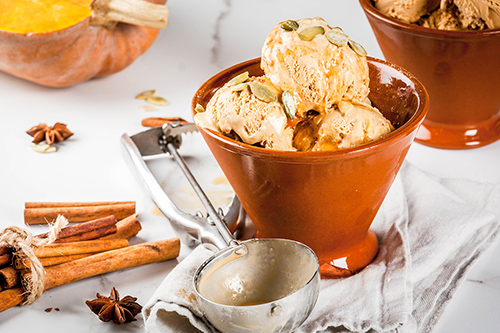
Bananas, pumpkin puree, and some pumpkin spice give you this guilt-free treat. Feel free to add ingredients like Medjool dates for sweetness, and vanilla extract, cinnamon, or nutmeg to add some winter-time flare. Toppings like sunflower seeds or crushed almonds will also go nicely with these warm and spicy flavors. 

02.

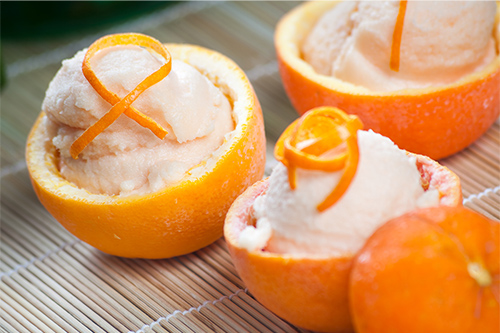
Zesty Orange 

Clementines, Mandarins, and Tangerines are in season during the winter months. You may have heard them called by all these names but Clementines and Tangerines are really just classifications of Mandarin oranges. Match the tart orange flavors with some sweet pineapple or even strawberries, blueberries, and bananas to create a party of fruity flavors. 

03.

Apple Cinnamon 

This is a frosty take on the festive classic: apple pie. You may need some non-dairy milk to help the ingredients blend smoothly for this one. Feel free to experiment with the flavors of Flax milk, soymilk, walnut milk, almond milk, and others. All you need to add is banana, apple, cinnamon, and perhaps some vanilla extract to close in on that apple pie flavor. You can also substitute the apples for blueberries or cherries to achieve a different fruit pie profile. 

04.

Banana Pecan

If we’re going for an apple pie flavor, we can’t leave out pecan pie! You’ll follow the same procedure of blending pecans into your frozen bananas, and you can add some dates to mimic the sweetness of caramelization. If you don’t want crunchy bits of pecan, blend them into a “butter” first, the same way you’d blend peanuts to make peanut butter. This will help them blend more smoothly with the rest of your nice cream. 

05.

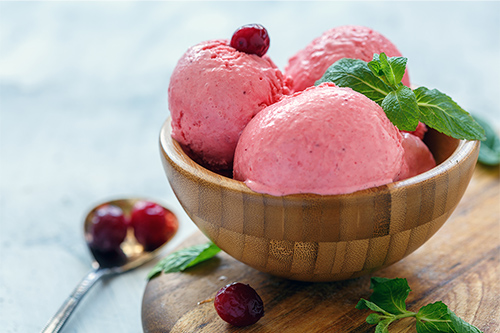
Cranberry Walnut

Cranberries are also very much in season and they can add a lip-smacking tart to your nice cream. Because of their tartness, it would be a good idea to add some sugar substitute to help sweeten this mix. Other fruits that pair well with cranberry include oranges, apples, peaches, and even pears. Again, blend your walnuts into a paste before adding them into your mixture. You can also add cinnamon, nutmeg, and cloves to give it the zing of seasonal spices. 

For more happiness-inducing holiday treats, read our registered dietitian’s article on Nutritious, Mood Boosting Holiday Foods. To learn about fruit, its sugars, and the time of day to eat or avoid it, check out the answer to this reader’s question. To access our monthly blog post highlights, subscribe to our newsletter today!