Relationship to Food – Living Healthy Podcast Ep. 46

Relationship to Food – Living Healthy Podcast Ep. 46


Welcome to today’s episode about “Your Relationship to Food.” It’s the 46th episode of the Living Healthy Podcast.  

On today’s episode, we are discussing how you can honestly assess your relationship to food and how you can create a positive relationship to food moving forward! Stop reading and start listening!

How Are We Doing? 


This podcast should not replace any exercise program or restrictions, any dietary supplements or restrictions, or any other medical recommendations from your primary care physician. Before starting any exercise program or diet, make sure it is approved by your doctor.


Recommended Podcast Episodes 

Why am I Gaining Weight Despite Diet and Exercise? │ QA

Why am I Gaining Weight Despite Diet and Exercise? │ QA

Question:

I’m 69 years old, I work out 3 times a week for 2 hours, 2 of those days are dedicated to upper/lower weight workout and the 3rd day strictly cardio on the treadmills and bike. I had a personal trainer for 6 months and I learned a lot of methods to workout. I’m careful with my intake and do not overindulge with high calorie or fatty foods, I’m frustrated when I get on the scale at the gym and at home, I gain pounds vs. seeing the numbers go down. It could be my metabolism (as one ages it drops drastically), just looking for answers, tips, suggestions. Thanks! 

– Lydia C.

Answer:

I understand your frustration, Lydia. Total pounds are easy to measure but won’t reflect body composition improvements. Ideally, you’d have tracked body fat percentage over the last 6 months. A tilt toward lower fat and more lean body mass indicates your metabolism should keep up. As body fat is reduced and muscle is gained the scale may not change (or go up). There is water stored with every pound of muscle, due to increased glycogen capacity. 

Another approach is to monitor waist, hip, and thigh circumferences by breaking out the tape measure. Reflect on how your clothes fit. If you’ve got any more wiggle room than 6 months ago – success! Also note progress in fitness level… strength, endurance, and intensity level. All these observations are better indicators of improvement than total weight.  

It makes a difference whether your weight workouts are focused on heavy weight with lower repetitions or more repetitions with less weight. The latter helps develop strength and muscles’ functional output while the former is intended to build up muscle (thus may increase weight). Once you tolerate a level of cardio (time, intensity, duration, or frequency) you’ve adapted to it and need further increases to promote greater fat burning. In the same regard, if your diet is good, but no better than before, then physique change is less likely.  

In summary: focus on body composition, not scale weight, and look to where you can refine your diet and exercise regimen. Keep up that dedication! 

– Debbie J., MS, RD

This article should not replace any exercise program or restrictions, any dietary supplements or restrictions, or any other medical recommendations from your primary care physician. Before starting any exercise program or diet, make sure it is approved by your doctor.

Some questions have been edited for length and/or clarity.

Ask our Dietitian

Have a nutrition question? Our registered dietitian is ready to help!

Email nutrition@lafitness.com or submit your question below and it may be featured in an upcoming article!

11 + 3 =


Recommended Reading - Q+A

healthy snacks to go
Super Snacking Guide

Super Snacking Guide

Eating healthy between meals is easier than you think! LA Fitness registered dietitian, Debbie James, offers solutions to common obstacles for snacking right with ideas for on-the-go snacks and overall tips.

How to Eat When You Have Type II Diabetes | QA

How to Eat When You Have Type II Diabetes | QA

Question:

My name is Martin and I have Type 2 Diabetes. My A1C is very high and I struggle with a good diet plan or what to eat. Do you have any advice for me? Thank you

– Martin 

Answer:

So glad you realize the importance of controlling your diabetes, Martin. The best advice will be directly from a Registered Dietitian that you can sit down with and go over your particular diet and daily blood sugar levels, not only your Hemoglobin A1C. Preferably that person should also be a Certified Diabetes Educator® (carries the CDE® credential) who is a health professional who possesses comprehensive knowledge of and experience in diabetes prevention, prediabetes, and diabetes management. 

Top recommendations for Type 2 Diabetes from such experts address weight control and balanced meals, including the following advice* 

  • Research supports the use of a low-fat, plant-based meal plan as therapy for Type 2 Diabetes success. 
  • Eat vegetarian all day, one to two times per week. 
  • Each meal should contain healthy carbohydrates, fat, protein and ideally vegetables. Healthy carbohydrates are those that are rich in fiber (contain at least 3 grams of fiber per serving) like whole grains, legumes and fruit.  
  • Eat protein first, add some vinegar to your food twice a day and have a good helping (about 15 gm) of resistant starch. 
  • Make the right snack choices (fruits and vegetables), reserving starches for your main meals. 
  • Prepare (even if simply assembling) meals at home as much as possible. You’ll generally eat more vegetables, smaller portions, less fat, fewer total calories. 
  • Use weekend or evening time to chop; chop fruits and vegetables in bulk. You’ll be more likely to eat more servings of these healthy foods.  
  • When you eat restaurant meals, practice portion control from the point when you order. Get less food placed in front of you to eat less and to consume fewer calories.  

*taken from Burns, J. “Lifestyle & Healthy Eating Tips For Diabetes Type 2” The Diabetes Council (2018, Oct. 17) https://www.thediabetescouncil.com/lifestyle-dietary-tips-for-diabetes-type-2/ 

– Debbie J., MS, RD

This article should not replace any exercise program or restrictions, any dietary supplements or restrictions, or any other medical recommendations from your primary care physician. Before starting any exercise program or diet, make sure it is approved by your doctor.

Some questions have been edited for length and/or clarity.

Ask our Dietitian

Have a nutrition question? Our registered dietitian is ready to help!

Email nutrition@lafitness.com or submit your question below and it may be featured in an upcoming article!

3 + 13 =


Recommended Reading - Q+A

healthy snacks to go
Super Snacking Guide

Super Snacking Guide

Eating healthy between meals is easier than you think! LA Fitness registered dietitian, Debbie James, offers solutions to common obstacles for snacking right with ideas for on-the-go snacks and overall tips.

The Fact and Fiction of Gluten-Free

The Fact and Fiction of Gluten-Free

What is Gluten? 

Gluten is a common term for the proteins found in wheat, rye, barley, triticale, malt, and brewer’s yeast.1 It is what helps maintain the shape and texture of foods made with these grains. The list looks simple enough, but we have not yet considered the various products made from these grains that are then used in various foods. This can make it difficult to really know which consumables contain gluten. 

For example, products like semolina, farina, spelt, farro, bulgar, emmer, and more, are all products made from wheat. If you see one on a food item’s ingredient list, you may not immediately know that it contains gluten.

What is the Problem with Consuming Gluten?

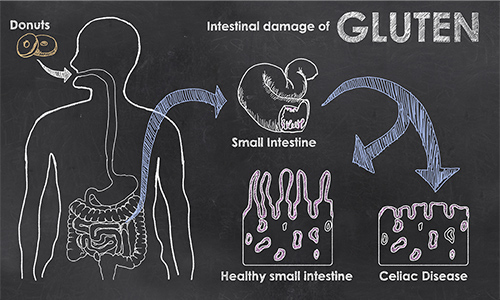
Consuming gluten typically isn’t a problem unless you have a sensitivity to or intolerance for it. People diagnosed with Celiac Disease experience the more serious side-effects because the intake of gluten actually causes damage to the small intestine. Not only does this hinder nutrient absorption, it can also result in symptoms like weight loss and diarrhea.2 For these reasons, malnutrition is a serious concern for individuals with this condition.  

Non-celiac gluten sensitivity essentially means that, even though a person tests negative for Celiac Disease and negative for a wheat allergy, they still experience some of the milder side-effects. Typically, this means they may experience some intestinal symptoms, headaches, fatigue, and joint pain if they consume gluten.2 

Busting the Myths About Gluten

Gluten-Free Diets Aid Weight LossMYTH 

How surprised would you be to learn that the opposite can actually be true? Gluten-free foods can contribute to weight gain because food manufacturers will often add fat and sugar to help recreate the qualities that gluten gives to food.3 In fact, there is no evidence that supports the idea that gluten-free foods can help someone lose weight.3   

The reason gluten-free diets are perceived as beneficial for weight loss probably comes from the fact that going “gluten free” can simply mean sticking to unprocessed foods. For example, avoiding glutinous foods (like cake, pasta, etc.) can mean a lower daily calorie count which is potentially what helps gluten free dieters lose weight. 

Gluten-Free Labels Mean Zero Gluten Content – MYTH 

Research has determined that there is a safe threshold in terms of gluten consumption. So, if a food is labeled as “gluten free,” what that really means is that it contains less than 20 parts per million of gluten.4 Okay, but what does that even mean? We rarely quantify things this way. Parts per million refers to how much gluten there is in relation to all the other ingredients. This is not a fixed number. Some foods have a little more and some have a little less.  

Each low-gluten food item adds to your overall daily intake. This means that if you consume too many “gluten-free” foods, you can accidentally consume more than the safe amount. Individuals with Celiac Disease are advised to consume no more than 10-50 milligrams per day.4  

Gluten-Free Diets are Easy to Follow – MYTH 

Following a gluten-free diet is actually pretty tough to adhere to, and if you don’t pay attention to what you’re eating (or if you stick to the same foods every single day), you may put yourself at risk for nutrient deficiencies. Not to mention that gluten-free foods typically aren’t enriched with the nutrients you’re already missing by avoiding gluten-containing foods.3 

According to an article by the Gluten Intolerance Group, some of the most common nutrients that are difficult to obtain on a gluten-free diet include: 

  • Thiamin 
  • Riboflavin 
  • Niacin 
  • Folate 
  • Iron 
  • Calcium 
  • Vitamin D 
  • Magnesium 
  • Fiber 
  • Zinc 

Which Foods You Should Avoid

If you need to go gluten-free, Healthline explains that the easiest way to avoid gluten is to eat unprocessed, single-ingredient foods. This means you should avoid foods like bread, pasta, cereal, cookies, muffins, pizza, crackers, and certain beverages like beer. You should also avoid foods made or topped with soy sauce, teriyaki sauce, hoisin sauce, certain broths or marinades, and even some salad dressings.1  

If you are going to consume grains, you are encouraged to stick to foods like quinoa, rice, buckwheat, tapioca, corn, and gluten-free oats.1 To be extra-safe, check the packaging for a “gluten-free” label on these items because many foods that are naturally gluten-free (like oats) may still be contaminated with gluten because they are processed or packaged in the same facility as gluten-containing products.  

The lists go on for both the do’s and don’ts of gluten-friendly dieting, so be sure to check with a reputable source for a more complete list of foods. 

Do you have any tips or tricks for gluten-free dieters? Share your thoughts in the comments below! For more articles like this one, subscribe to our newsletter to receive monthly highlights from the Living Healthy Blog. 

Sources  

  1. Raman, Ryan. “The Gluten-Free Diet: A Beginner’s Guide With Meal Plan.” Healthline, 12 Dec. 2017, https://www.healthline.com/nutrition/gluten-free-diet.  
  2. Kubala, Jillian. “Is Gluten Bad for You? A Critical Look.” Healthline, 6 Mar. 2019, https://www.healthline.com/nutrition/is-gluten-bad#who-benefits  
  3. Fontenot, Beth. “Gluten: Fact and Fiction.” The Doctor Will See You Now, 28 Dec. 2011, http://www.thedoctorwillseeyounow.com/content/nutrition/art3542.html  
  4. Spector Cohen, Inna, et al. “Gluten in Celiac Disease-More or Less?” Rambam Maimonides Medical Journal, 2019, https://www.rmmj.org.il/issues/40/articles/897  

What is the Best Beginner’s Diet? | QA

What is the Best Beginner’s Diet? | QA

Question:

What is the best method of dieting for a beginner who began going to a gym and wants to lose weight in a quick but safe fashion that it will stay off?

– Joseph

An “ideal” diet plan for a beginner would depend on his or her lifestyle and commitment level. Some people do well with an extreme change – starting with a clean slate and following strict rules – while others get more results from incremental smaller modifications they can live with long-term. A person can start changing their eating habits for the better by beginning anywhere.   

According to the National Weight Control Registry, people that have successfully lost weight and kept it off mostly report following a low fat, reduced calorie diet with high activity levels. About half did it on their own while half enrolled in some type of weight loss program. Actions that losers often had in common were that they: 1) participate in regular exercise, 2) track weight routinely, 3) eat breakfast daily; and 4) watch less than 10 hours of video/TV per week.  

I’d trim out any extras that you can already identify such as late-night eating, second helpings, alcoholic beverages or desserts. As wholesome fresh food is always best, decide if you can dedicate additional time in the kitchen or need to purchase starter meals that you assemble. Whether or not to follow a specific diet plan, macronutrient ratio or preset menus depends on your interest level and food preferences.   

We’ve lots more beginner weight loss advice in the Living Healthy Blog – check how to create your own meal plan and how to achieve quick weight loss. 

This article should not replace any exercise program or restrictions, any dietary supplements or restrictions, or any other medical recommendations from your primary care physician. Before starting any exercise program or diet, make sure it is approved by your doctor.

Some questions have been edited for length and/or clarity.

Ask our Dietitian

Have a nutrition question? Our registered dietitian is ready to help!


Email nutrition@lafitness.com or submit your question below and it may be featured in an upcoming article!

12 + 11 =


Recommended Reading - Q+A

healthy snacks to go
Super Snacking Guide

Super Snacking Guide

Eating healthy between meals is easier than you think! LA Fitness registered dietitian, Debbie James, offers solutions to common obstacles for snacking right with ideas for on-the-go snacks and overall tips.