The Point of Pilates (and How It Differs from Yoga)
For people that love to work out but running around the block or hitting the elliptical aren’t their favorite activities, yoga and Pilates can be go-to exercise programs.

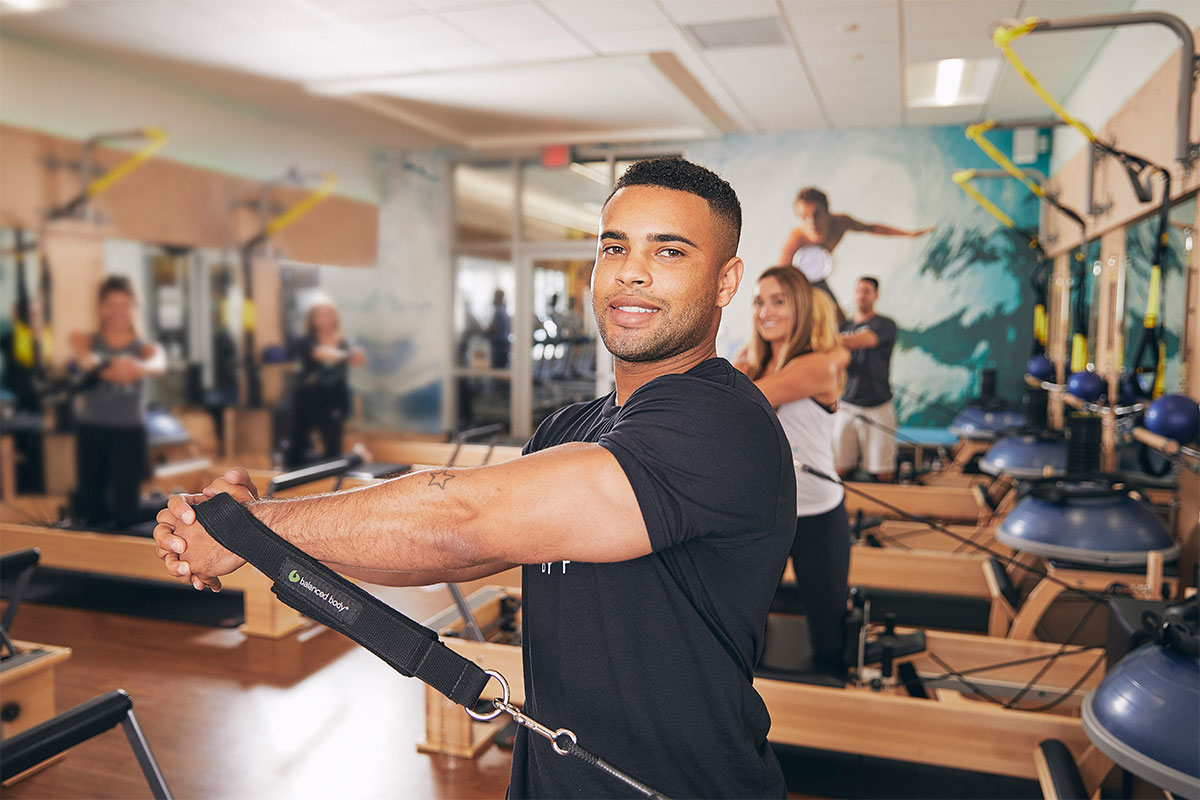
For people that love to work out but running around the block or hitting the elliptical aren’t their favorite activities, yoga and Pilates can be go-to exercise programs. Both programs take a gentler approach when toning the body and stress the importance of specific breathing patterns. Some fitness classes will combine the two activities, a hybrid of aerobic and non-aerobic exercises. But there is a difference in the way the two programs approach their objectives.
The biggest difference between yoga and Pilates is the spiritual element incorporated into yoga practices. Yoga brings the body and mind together with three main elements: exercise, breathing, and meditation. Structured, static poses are designed to put pressure on glandular systems, promoting overall body efficiency and total health. Yoga was originally designed as a path toward spiritual enlightenment but today has become popular as a gentle form of exercise and stress management.
Pilates was inspired by yoga, calisthenics, and ballet and was originally developed to help injured athletes and dancers. An emphasis is placed on the quality of posture in each exercise rather than the amount of reps. There are 500 Pilates exercises, each designed to put your body in an unstable posture and then challenging you by moving your limbs.There are two different types of Pilates: mat Pilates which consists of exercises performed on the floor using gravity to your body weight to provide resistance, and equipment-based Pilates which uses a spring-loaded machine that you push and pull along tracks. Dumbbell weights can be used in Pilates exercises as well for more resistance.
The lack of spirituality certainly doesn’t take away from the effectiveness of Pilates. Its main objective is core strengthening, requiring intense concentration and breathing techniques. Workouts tend to run in the 45-90-minute range, with 5-10 reps per exercise, incorporating precise ranges of motion, rhythm, and breathing. Like yoga, it can help improve muscular and postural strength, but because of the focus on the core has the added benefit of toning abdominals more quickly. Although it is more active than yoga, muscles are never worked to exhaustion and Pilates lengthens and stretches all of your major muscle groups in a balanced way.
Compare them yourself! LA Fitness offers both yoga and mat Pilates classes all week. Check out the schedule here.
Schedule a complimentary Pilates by LAF workout today!
Sources:
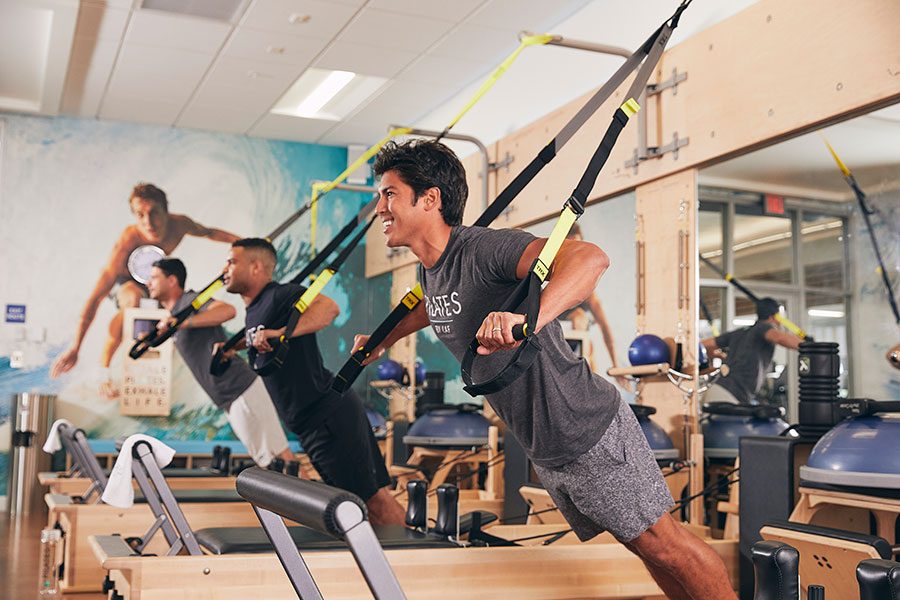

For people that love to work out but running around the block or hitting the elliptical aren’t their favorite activities, yoga and Pilates can be go-to exercise programs.
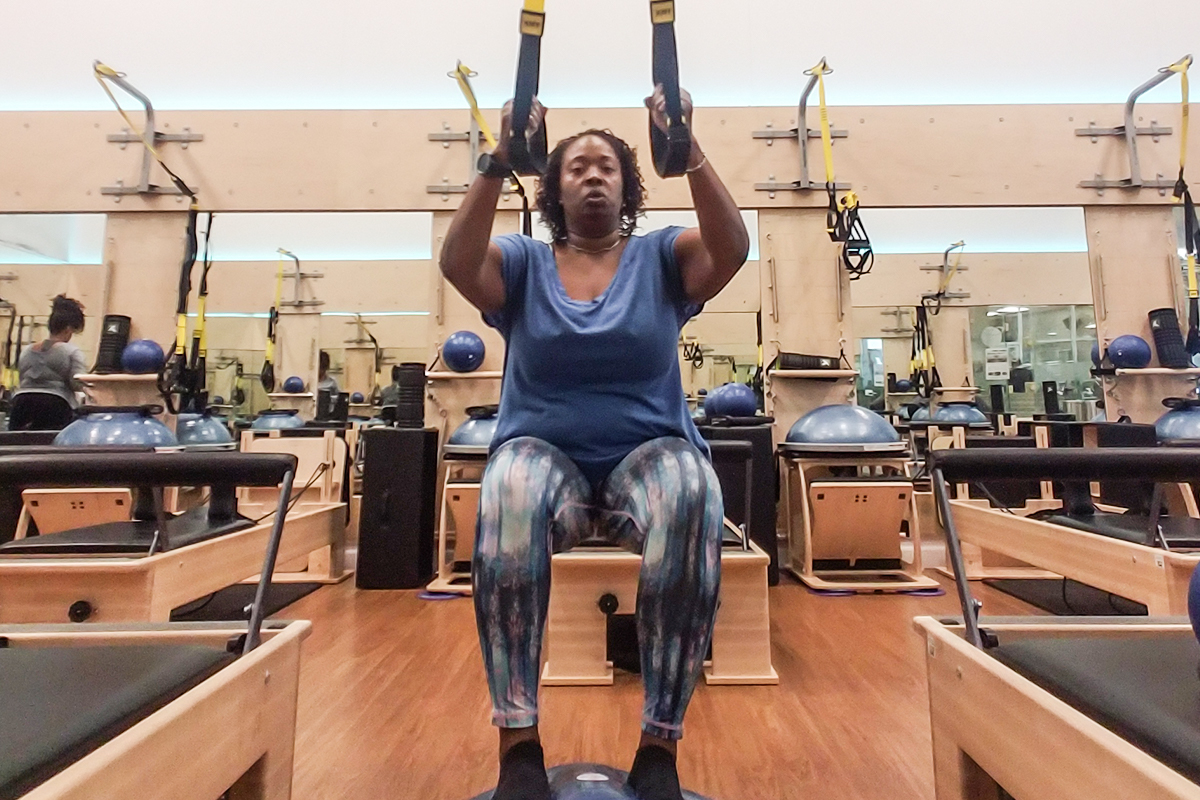
Find the exercise routine that’s right for you! Shayla W. struggled with finding a program that helped deliver the results she was looking for until she found Pilates by LAF®. This is her success story.

Welcome to the “everyman’s” way to train for everyday tasks. We dive into the world of functional fitness and offer suggestions of how you can train this way at the gym.
The idea of exercise being a chore or challenge to get done is sadly a common consensus among many, but it doesn’t have to be that way.
Meet Shayla W. of Riverside, CA who wanted to be healthy but was struggling with finding the drive to maintain the healthy lifestyle she wanted to live.
You see, six years ago Shayla wanted to be healthy by her 40th birthday.
She missed that mark by well over 100 lbs.
Between 2012 and 2016, Shayla lost 80 pounds and then regained 102 lbs. She struggled with feelings of being a failure. Her doctor referred her for bariatric surgery.
At first, she was not convinced that the surgery was necessary. Instead, she buckled down and changed her eating habits and started exercising regularly.
It didn’t work.

Shayla had gastric sleeve surgery in May of 2017. While most people believe that bariatric surgery is an easy way to lose weight, that’s not necessarily the case. The surgery does help with reducing the amount of food your body wants to eat, but it’s imperative that you are consuming the correct foods.
While every person’s own nutrition needs vary, Shayla is currently consuming 5 – 6 small meals daily. She eats about every 3 hours. The mornings are typically started with a green smoothie, and she makes sure to have at least one salad a day.
Exercising also plays into a big part of the equation, especially after bariatric surgery when you can lose fat and muscle. Wanting to build her muscle, increase core strength, and correct her posture, Shayla was searching for a Pilates studio. She learned about Pilates by LAF® studios from her co-workers who had attended an introductory workout and enjoyed it.
She decided to give the introductory workout a chance herself, and she loved it! She was also impressed with the small class set up and decided to join.
“It is the highlight of my day. I leave work and go straight to the classes. It has become my stress reliever. I am so glad that LA Fitness added Pilates by LAF workouts.”
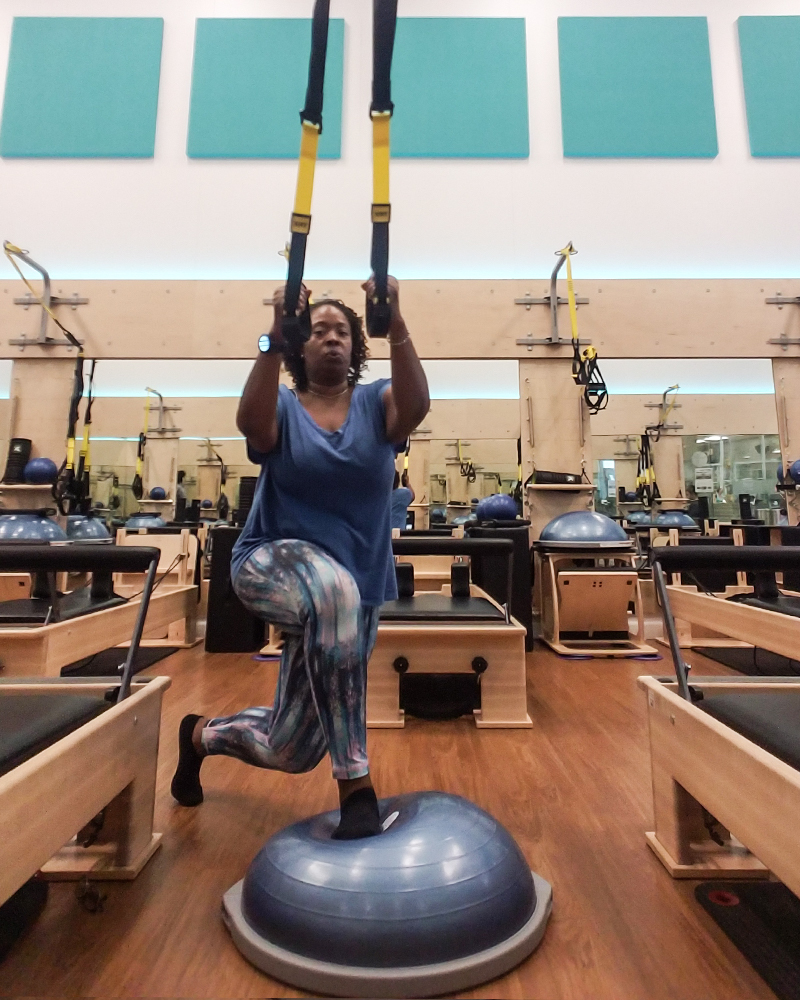
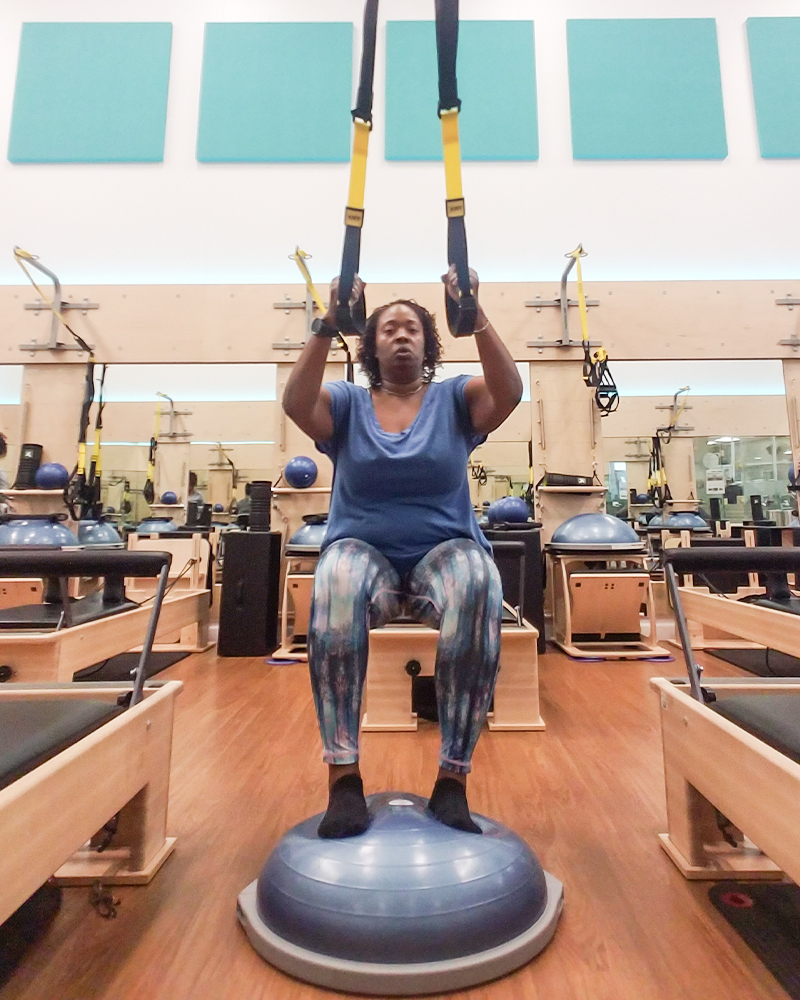


Shayla’s current goal mirrors the same one of her past, and that’s staying healthy. “I firmly believe that being healthy is not one size or someone’s visual perception of what is healthy or attractive,” says Shayla.
Shayla’s Advice?
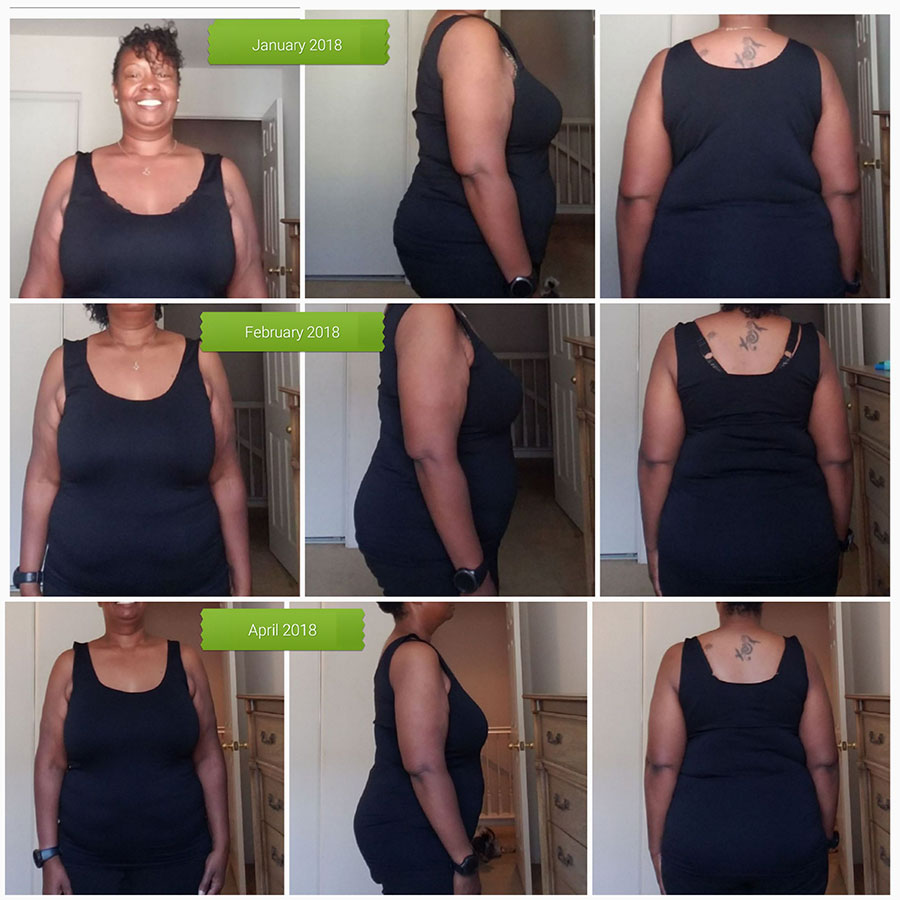
“Take pictures as you drop and tone. It will document your journey to good health.”
Exercise doesn’t have to be so difficult. If you find yourself lacking the motivation to get moving, try switching up your routine until you find something you truly enjoy doing. If Pilates isn’t for you, consider participating in group fitness classes, playing in club leagues, or perhaps booking a session with a Pro Results® personal trainer to help figure out just what it is you like to do.
Get moving to get healthy! We believe in you, you just have to believe in yourself – and we can help!
Pilates by LAF is available to individuals 18 years of age or older (or at least 14 years of age and accompanied by a parent or legal guardian). Paid-in-Full Pilates by LAF memberships are only available to LA Fitness members. Non-LA Fitness members must provide valid I.D. and sign a waiver of liability to use Pilates by LAF studios. Separate membership agreement and fees required to access Pilates by LAF services. Please visit a Pilates by LAF studio for more information, including membership options and pricing.
Find the exercise routine that’s right for you! Shayla W. struggled with finding a program that helped deliver the results she was looking for until she found Pilates by LAF®. This is her success story.
What is Functional Fitness?
Cardio and strength training usually dominate fitness talk, but what about the often-overlooked concept of functional fitness? At its core, functional fitness is really about focusing on building your body so that it can better handle everyday tasks such as bending over to tie your shoes, playing catch with your dog, or chasing after your kids without the added exhaustion, aches or pains.

Real Life Samples
Let’s think about this from a practical standpoint. Our daily habits cause us to turn, twist, bend, climb and lean to get things done. We’re using our whole bodies, so why not focus on exercises that use multiple muscle groups? Isolated weight training is great, but it doesn’t always help prevent strained backs or pulled muscles.
Exercises like kettlebell squats are a great way to stimulate a real-life scenario – you’re bending down (squatting) using your lower body, and at the same time picking something up (great with the added weight of the kettlebell) using your upper body. Try forward lunges with a twist to help work the lower body, upper body and help stabilize the core. Bent over rows can also help with upper and lower body strength. Bosu balls can also help aid in stability training!
Think about which muscle groups are actively being engaged when performing your desired exercise. If it feels like a move that mirrors real life movements, most likely you’re engaging in functional fitness.

The Benefits
To put it simply – fewer aches and pains! Less strain on your body, less worries about not being able to perform day-to-day activities and more confidence in moving around with a stronger body. If this all sounds like what regular or “normal” exercise does to improve the body, you’re right… sort of.
Functional fitness focuses on movements, rather than muscles.1 In your ordinary day-to-day routine, chances are you’re not doing an activity that focuses on the same muscle repeatedly. Think of lifting a semi-heavy grocery bag, similar to a bicep curl. Sure, you may do this a few times, but realistically you’re not going to be standing in your kitchen doing biceps curls with your grocery bags.
Depending on age and activity level of your life, the functional fitness exercises you’ll want to focus on will vary. If you’re uncertain what’s right for you or where to begin with this type of training, reach out to a representative in the personal training department.
Another alternative is sending your fitness related question to us for a chance for it to be one of our featured ‘Ask A Trainer’ questions on our LA Fitness YouTube channel or Living Healthy blog!
A better life starts with a decision that you deserve more for yourself. LA Fitness is here to help, and functional fitness is a great way to begin your training for the everyday!
Sources:
For people that love to work out but running around the block or hitting the elliptical aren’t their favorite activities, yoga and Pilates can be go-to exercise programs.
Find the exercise routine that’s right for you! Shayla W. struggled with finding a program that helped deliver the results she was looking for until she found Pilates by LAF®. This is her success story.
Welcome to the “everyman’s” way to train for everyday tasks. We dive into the world of functional fitness and offer suggestions of how you can train this way at the gym.