Warm Comfort Foods Made Healthy(ish)
Most comfort foods we turn to are heavily laden with fat, starch and calories. There are healthier ways to enjoy down-home classics by making a few tweaks.



I would like to know what is the optimum amount of daily protein intake to add muscle and strength?
– David S.

With an adequate weight training regimen to demand the growth of new muscle tissue, protein in the amount of 1.4-2.0 grams per kilogram body weight1, 2 can be used for hypertrophy. Beyond this, the excess protein is converted to fat or burned as fuel and no further benefits in muscle development or body composition are observed. The American College of Sports Medicine uses 1.7gm/kg/day as the maximum amount3. Taking all this into account, I would recommend that you use a protein range of 1.5-1.8 gm/kg/day.
Here are some values for various body weights:
| Weight | Daily protein need in grams |
| 140 lbs = 63.5 kg | 95 – 114 |
| 150 lbs = 68 kg | 102 – 122 |
| 160 lbs = 72.6 kg | 109 – 131 |
| 170 lbs = 77.1 kg | 116 – 139 |
| 180 lbs = 81.6 kg | 122 – 147 |
| 190 lbs = 86.2 kg | 129 – 155 |
| 200 lbs = 90.7 kg | 136 – 163 |
| 210 lbs = 95.3 kg | 143 – 172 |
Use the lower end of the protein range if you are of ideal weight or trained and the higher end if you are underweight or new to working out. Protein intake should be distributed throughout the day in modest practical amounts2 (i.e. no more than 40 gm at one sitting).
References:
1) International Society of Sports Nutrition position stand: protein and exercise. B Campbell, et al. Journal of the International Society of Sports Nutrition. 2007, 4:8.
2) Position of the Academy of Nutrition and Dietetics, Dietitians of Canada, and the American College of Sports Medicine: Nutrition and Athletic Performance. Journal of the Academy of Nutrition and Dietetics. 2016; 116: 501-528.
3) “Protein Intake for Optimal Muscle Maintenance” brochure. American College of Sports Medicine. 2015
– Debbie J., MS, RD

Want more? SUBSCRIBE to receive the latest Living Healthy articles right in your inbox!
This article should not replace any exercise program or restrictions, any dietary supplements or restrictions, or any other medical recommendations from your primary care physician. Before starting any exercise program or diet, make sure it is approved by your doctor.
Some questions have been edited for length and/or clarity.
 Have a nutrition question? Our registered dietitian is ready to help!
Email nutrition@lafitness.com or submit your question below and it may be featured in an upcoming article!

Most comfort foods we turn to are heavily laden with fat, starch and calories. There are healthier ways to enjoy down-home classics by making a few tweaks.
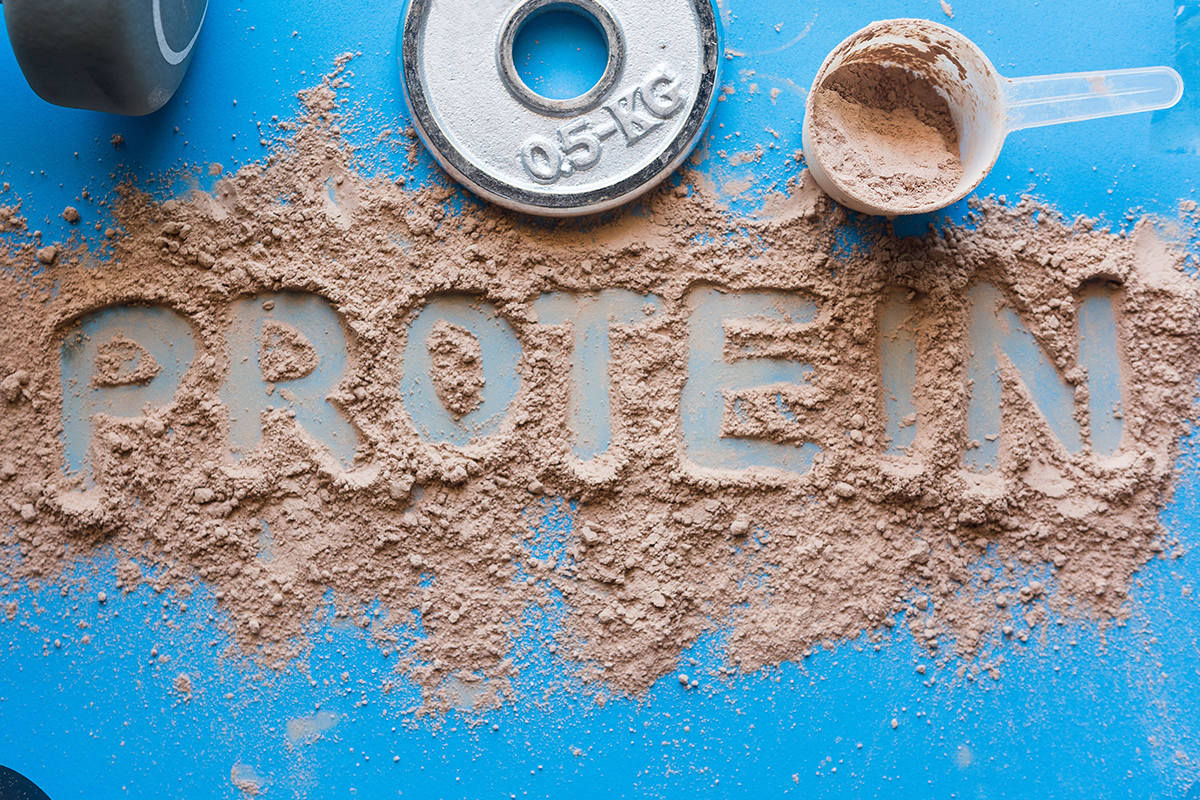
Debbie James, RDN, helps answer a reader’s question about how much protein is too much for the body to process.
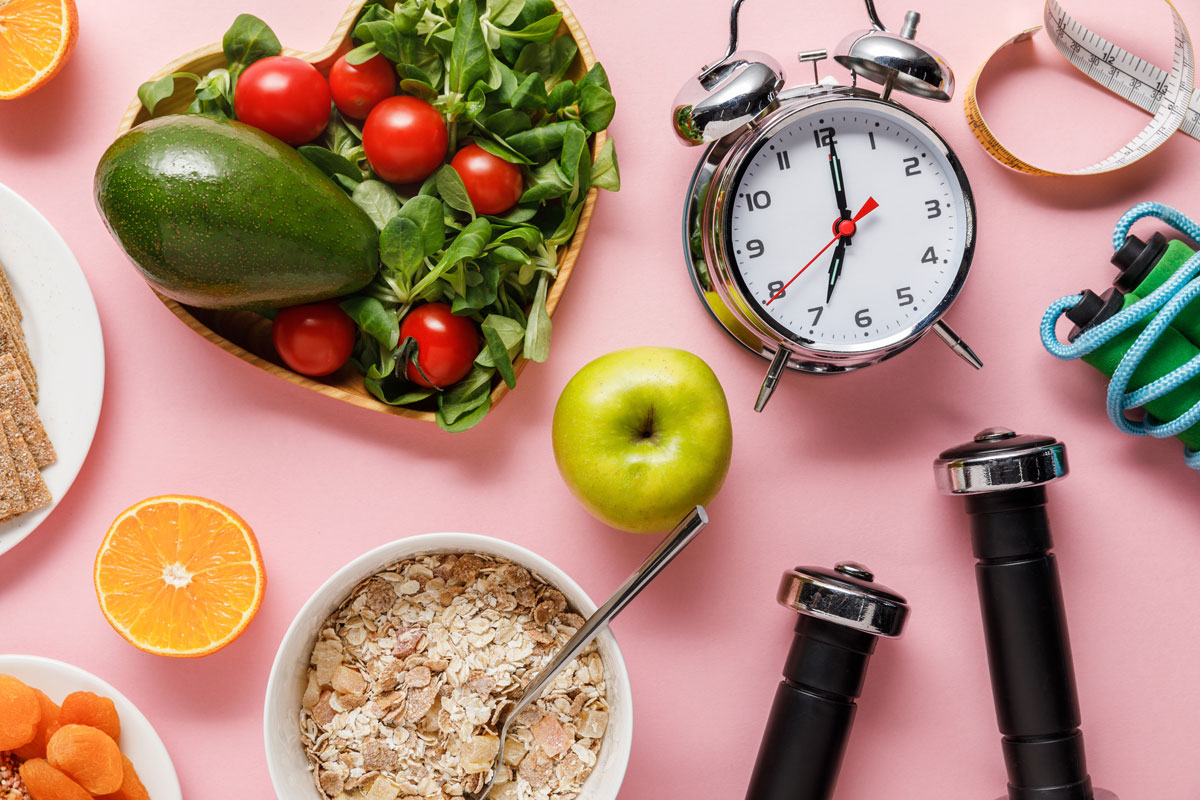
Debbie James, RDN, helps answer a reader’s question on breakfast and working out.

Hi, I am an LA Fitness Member for more than 10 years. I have a question regarding my health. Just recently I was diagnosed with prediabetes. I do not know how to control my sugar level. What do you think should I eat, how much sugar should I eat everyday, how do I know if I’m having enough sugar in my body? Your feedback would save my life because I am really losing a lot of weight. Thank you.
– Jo
Thanks for reaching out, Jo. It’s great that you’re addressing your prediabetes (aka. impaired glucose tolerance) right away.
Though your diagnosis reflects higher than normal blood sugar, it will take balancing ALL your food to manage it. Here’s why: foods have a combination of macronutrients (carbohydrate, fat, protein) that all impact blood sugar. Unless they have certain bonds which make them fibers, carbohydrate molecules directly break down into sugar through digestion. So even a sugar-free baked potato will raise blood sugar. The presence of protein and fat in the stomach will somewhat slow the digestion of carbohydrate at the same meal, thus reducing the rate of absorption and subsequent blood sugar rise. Adding sour cream and cheese to the potato will have a desirable blunting effect.
A meal of pasta and marinara is carbohydrate-rich and therefore a blood sugar booster. Reducing portions and adding a couple of meatballs or Parmesan cheese and fibrous broccoli makes for a more balanced meal that is likely to have a milder effect on blood sugar. That’s not to say that if you just load up on fat it will counteract sugar (sorry, ice cream). I’d stick with starches, fruit and fluid milk for the healthiest carbohydrates and avoid refined sugars. There is no minimum need for sugar, only for carbohydrates, and it’s recommended your daily intake is at least 130 grams.
Your take-home message is to avoid added sugars, balance your meals (complex carbohydrate/protein/fat) and increase activity to lower your blood sugar levels.
– Debbie J., MS, RD
Want more? SUBSCRIBE to receive the latest Living Healthy articles right in your inbox!
This article should not replace any exercise program or restrictions, any dietary supplements or restrictions, or any other medical recommendations from your primary care physician. Before starting any exercise program or diet, make sure it is approved by your doctor.
Some questions have been edited for length and/or clarity.
Have a nutrition question? Our registered dietitian is ready to help!
Email nutrition@lafitness.com or submit your question below and it may be featured in an upcoming article!

Today’s episode is all about Busting Gym Myths! Does spot training really work? Is Cardio the best way to burn fat? We talk to Master Trainer Jordan Jones to find out the answers, so buckle up because you might just get your bubble popped. Sorry about that!

On this week’s episode of the Living Healthy Podcast, we ask Registered Dietician Debbie James the question “Is sugar bad for you?”

WE’RE BACK!!! On today’s episode of the Living Healthy Podcast, we’re talking about Cancer Screening and Prevention with Dr. Rick Van Etten!

Salads, by nature, are supposed to be healthy, right? Many times they are, like a side house salad of lettuce, tomato and cucumber with light vinaigrette meant to compliment a meal. Yet entrée salads can top 1000 calories and include a full day’s supply of fat and sodium! The mixed greens and vegetables aren’t to blame. And while the healthy plant fats (nuts, olives and avocado) can add significant calories, these are preferable to the real culprits* – bacon, cheese, dressing and fried toppings. Sugar can be hidden in there, too! In most cases, it’s the fat that pushes the calories up over a desirably-sized meal of around 600-800 calories.
Menu descriptions are a good indication of where you might find salad surprises. Words like crispy, creamy, glazed and savory are red flags to watch out for. Portion sizes make a difference, too. While you might fill a bowl with 2 cups of salad at home, a dinner plate piled high could give you twice that much. Note that the quantity of dressing served on a salad is typically 2 fl. oz. and provides 150-200 calories of the below totals.
Let’s take a look at a few examples you might find nationally (from restaurant chains with over 1000 locations in the U.S.). In all cases only the grilled meat option is discussed, as breaded and fried proteins are just a no-no. Notable high values are underlined. *Can you find these culprits and others below?
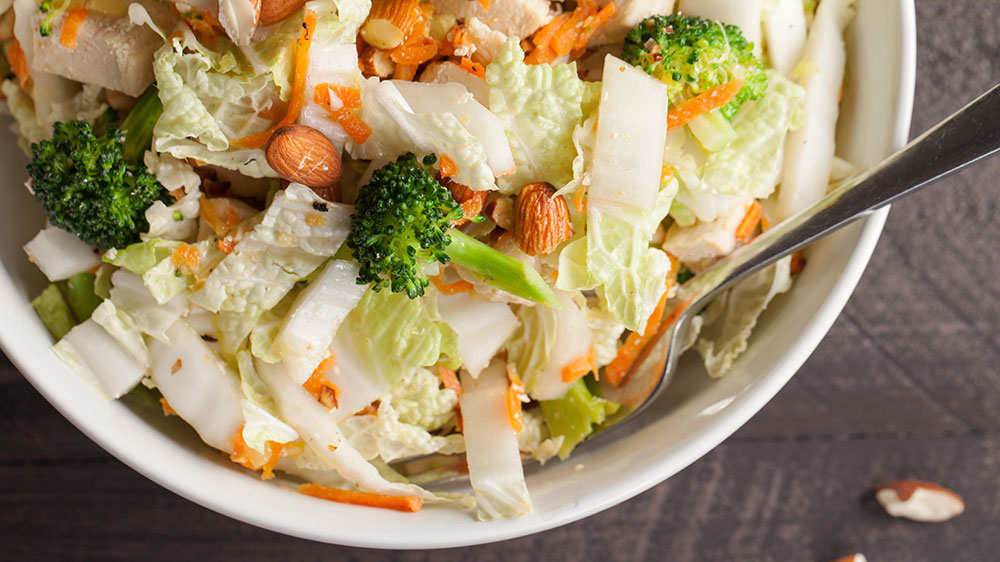
Asian-Inspired Chicken Salad
Greens tossed in a sweet vinaigrette and topped with crispy noodles, toasted almonds and grilled chicken.
1290 calories, 85 gm Fat (59% cals), 2300 mg sodium, 52 gm sugar
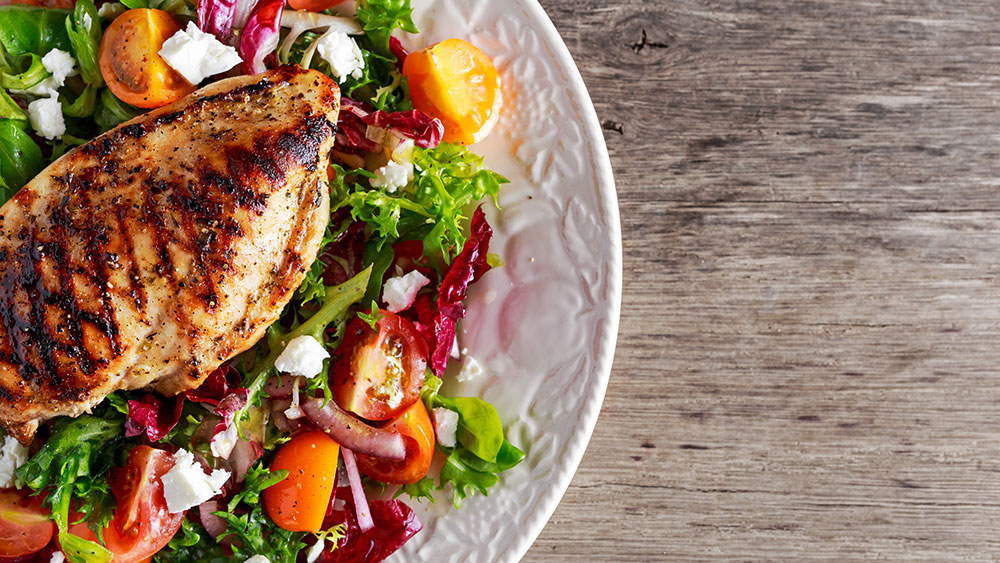
Southwestern, BBQ, or Santa Fe Salad
w/ steak — mixed greens, sirloin w/ chimichurri, corn & black bean salsa, cheddar cheese and tortilla strips w/ creamy cilantro ranch dressing.
990 calories, 64 gm fat (58% cals), 2970 mg sodium, 8 gm sugar
w/ chicken (deluxe) – grilled BBQ chicken, romaine and kale, green onion, tomato, black beans and corn, cucumber, red onion, cilantro, cheddar cheese, avocado, bacon and tortilla strips, tossed in BBQ ranch dressing and topped with onion strings.
910 calories, 48 gm fat (47% cals), 2390 mg sodium, 24 gm sugar
w/ chicken (simple) – grilled chicken, pico de gallo, avocado, cilantro, tortilla strips w/ ranch & Santa Fe sauce.
630 calories, 44 gm fat (62% cals), 1680 mg sodium, 8 gm sugar

Specialty Salads
Crispy pecan-crusted chicken breast, romaine and kale, celery, dried sweet cranberries, orange slices, glazed pecans, blue cheese, tossed in balsamic vinaigrette.
1220 Calories, 84 gm fat (62% cals) 1770 mg sodium, 52 gm sugar
Grilled chicken, mixed greens, jalapeno cornbread croutons, tomatoes, cheddar cheese, bacon and green onions w/ ranch dressing.
1090 calories, 70 gm Fat (58% cals), 2620 mg sodium, 17 gm sugar
Grilled chicken, pineapple, mandarin oranges, dried cranberries, diced red bell peppers, chopped green onions, cilantro & sesame seeds w/ a honey-lime dressing.
710 calories, 27 gm fat (34% cals), 1140 mg sodium, 70 gm sugar
How to get a healthier salad:
*Culprits listed in order of appearance are: sweet vinaigrette, crispy noodles, cheddar cheese, tortilla strips, cheddar cheese, creamy cilantro ranch dressing, BBQ, cheddar cheese, bacon, tortilla strips, BBQ ranch dressing, onion strings, tortilla strips, ranch, santa fe sauce, dried sweet cranberries, glazed pecans, blue cheese, balsamic vinaigrette, cornbread croutons, cheddar cheese, bacon, ranch dressing, dried cranberries, honey-lime dressing.
Want more? SUBSCRIBE to receive the latest Living Healthy articles right in your inbox!
Sources as of 7/7/2017:
www.Applebees.com/nutritional-info
www.tgifridays.com/pdf/nutrition.pdf
www.chilis.com/docs/Chilis-Nutrition-Menu-Generic.pdf
Most comfort foods we turn to are heavily laden with fat, starch and calories. There are healthier ways to enjoy down-home classics by making a few tweaks.

Debbie James, RDN, helps answer a reader’s question about how to eat healthily on vacation while still enjoying the local flavors.
Debbie James, RDN, helps answer a reader’s question about nutrition advice for muscle gain and healthy body weight.
I am a male 6-foot tall and 180lbs. I upped my protein to 180 grams a day and lowered my fat intake to 35 grams a day but I am gaining more weight now than I was before dieting or eating clean with no change in diet. Any advice on eating habits I should have or why this is happening?
– Taylor F.
Sorry, Taylor – My crystal ball is a little foggy since your full diet and exercise routine aren’t described. So many things could be coming into play… alcohol, low physical activity, less sleep, undereating, and/or poor meal timing and volume. Perhaps make a list of the changes you’ve made to identify what you might have been doing before that was helpful and prevented gain.
I suspect your intake of 35 grams of fat may be a bit low. Fat at meals slows digestion and increases satiety, helping to reduce appetite. For reference, with a 2000 calorie diet, 60 grams of fat provides 27% of your total energy, well within a desirable heart-healthy weight-maintenance diet.
Look at where your calories are distributed. Giving up snacks between meals might make sense to reduce calories, but not if eating larger meals from rebound hunger is the result. Breakfast should be a larger meal than dinner unless you work out at night or keep late hours. I’d also suggest you look at how you eat, not just the grams you eat. See our article on Think Your Way Thin.
– Debbie J., MS, RD
This article should not replace any exercise program or restrictions, any dietary supplements or restrictions, or any other medical recommendations from your primary care physician. Before starting any exercise program or diet, make sure it is approved by your doctor.
Some questions have been edited for length and/or clarity.
Want more? SUBSCRIBE to receive the latest Living Healthy articles right in your inbox!
Have a nutrition question? Our registered dietitian is ready to help!
Email nutrition@lafitness.com or submit your question below and it may be featured in an upcoming article!
Today’s episode is all about Busting Gym Myths! Does spot training really work? Is Cardio the best way to burn fat? We talk to Master Trainer Jordan Jones to find out the answers, so buckle up because you might just get your bubble popped. Sorry about that!
On this week’s episode of the Living Healthy Podcast, we ask Registered Dietician Debbie James the question “Is sugar bad for you?”
WE’RE BACK!!! On today’s episode of the Living Healthy Podcast, we’re talking about Cancer Screening and Prevention with Dr. Rick Van Etten!


My friend suggested that I avoid all the sugary foods for 3 months to heal my osteoarthritis knee. It has been over 5 months and still slightly swell and painful. Can you list everyday sugary foods? Are apples, bananas, oranges, watermelon and blueberries considered sugary foods?
– Harold H.

My clinical understanding is that osteoarthritis is not curable but symptoms are manageable. Since you’ve not had success, it seems you need another tactic. Though I agree with eliminating added sugar, you’ll want the antioxidants from fruits and vegetables to decrease inflammation*.
Sugary foods to avoid include regular sodas, lemonade, smoothies, most energy drinks, sweetened dried cranberries or shredded coconut, desserts, confections, sweetened yogurt, granola bars, breakfast bars, cereals with more than 5 grams sugar per serving, prepared coleslaw, French dressing, glazed ham, sauced meats (e.g. orange chicken), barbeque sauce, most pasta sauce and Chinese fast food.
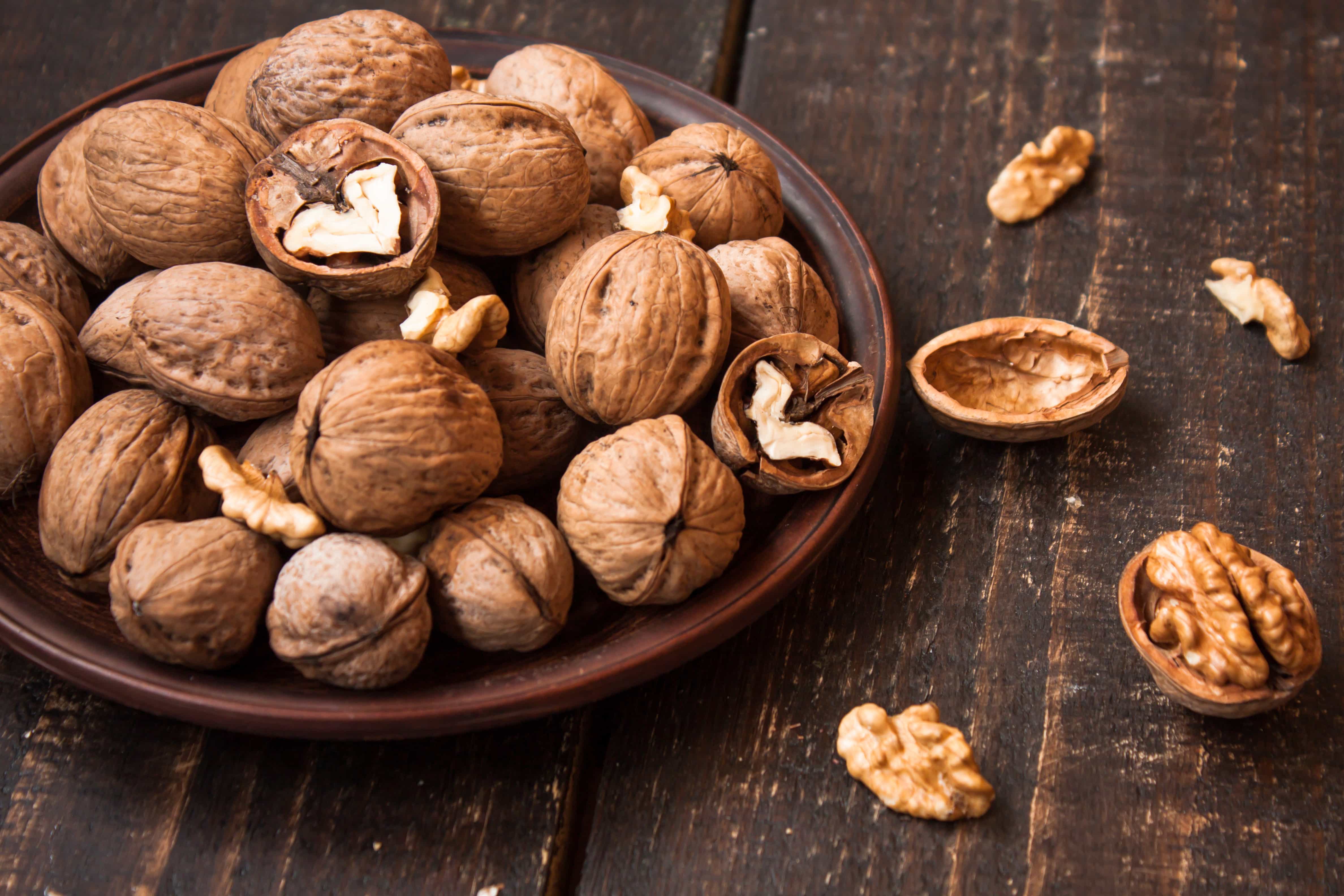
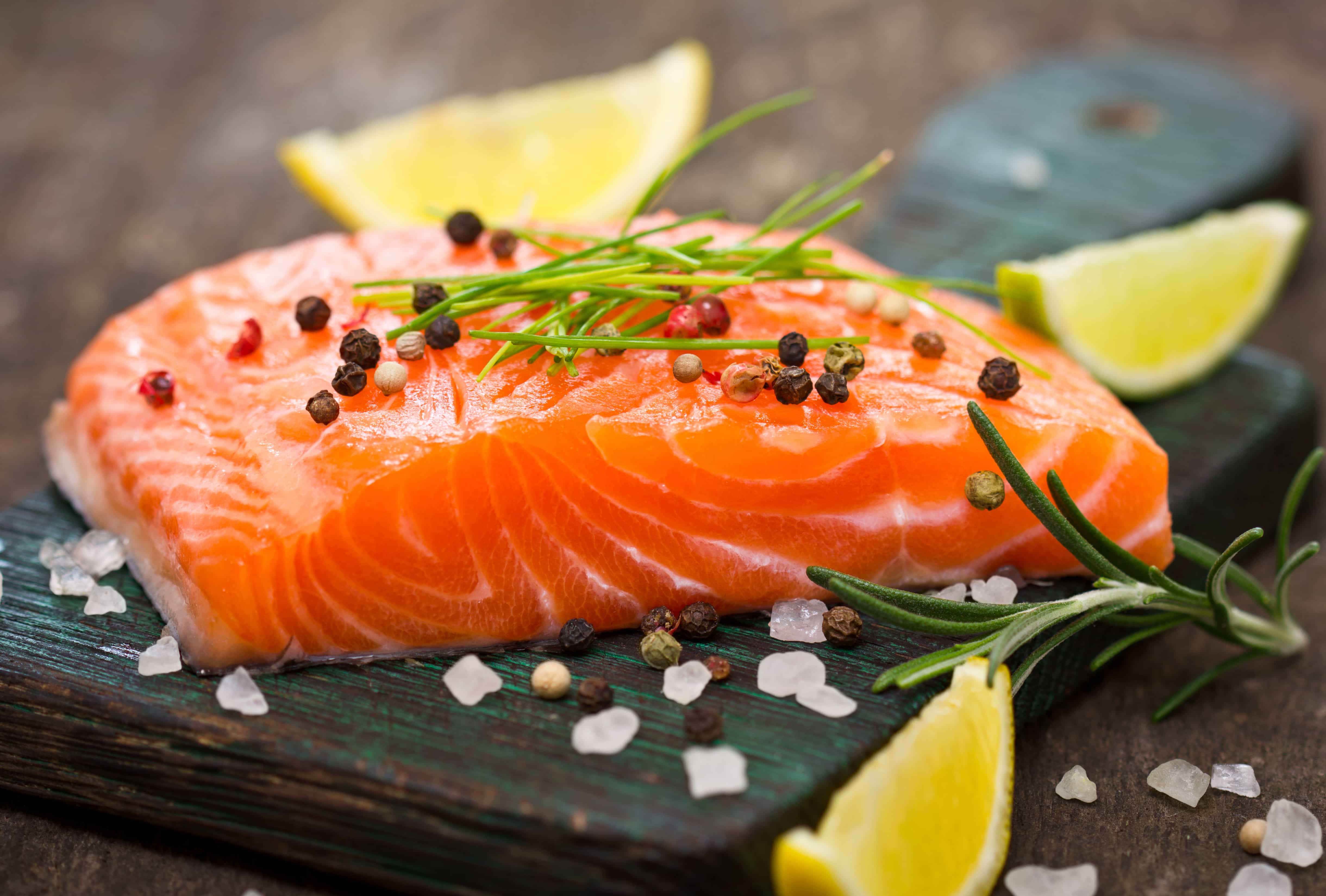
Other recommendations for osteoarthritis include getting daily ginger, turmeric, and omega-3 rich food – such as fatty fish (salmon), walnuts or flax seed. In addition to diet, supplements such as SAM-e, glucosamine w/ chondroitin, and capsaicin are promoted for reducing osteoarthritis pain.
– Debbie J., MS, RD

This article should not replace any exercise program or restrictions, any dietary supplements or restrictions, or any other medical recommendations from your primary care physician. Before starting any exercise program or diet, make sure it is approved by your doctor.
Some questions have been edited for length and/or clarity.
Want more? SUBSCRIBE to receive the latest Living Healthy articles right in your inbox!
Have a nutrition question? Our registered dietitian is ready to help!
Email nutrition@lafitness.com or submit your question below and it may be featured in an upcoming article!
Today’s episode is all about Busting Gym Myths! Does spot training really work? Is Cardio the best way to burn fat? We talk to Master Trainer Jordan Jones to find out the answers, so buckle up because you might just get your bubble popped. Sorry about that!
On this week’s episode of the Living Healthy Podcast, we ask Registered Dietician Debbie James the question “Is sugar bad for you?”
WE’RE BACK!!! On today’s episode of the Living Healthy Podcast, we’re talking about Cancer Screening and Prevention with Dr. Rick Van Etten!