Your Guide to Creating Your Own Meal Plan
Any good workout plan needs a good nutrition plan. We've compiled the best advice from our RDN, Debbie James, to help you construct your perfect meal plan.



If fish oil is taken in the morning, how soon afterwards can a fiber supplement be taken without absorbing the fish oil?
– Gary J.

My, my, someone is thinking ahead and looking to get the most bang for their supplement bucks! Shouldn’t we all? Seems that you’ve implied fiber absorbs fat present in the gut. …And you’d be right! Soluble fiber is known for binding with liver-created cholesterol (put out via bile secretion) and passing it through the gut. Fiber supplements usually contain psyllium, providing 5-10 grams soluble fiber per serving.
Now, to answer your question we would need to know the clearance time of a fish oil supplement. Hmm. That would depend on whether it’s straight oil, an emulsified liquid form, or a capsule. Whether food or beverage is also being consumed at the same time makes a difference. Therefore, I could not accurately say how long that process takes from mouth to large intestine.
The soundest advice would be to consume your fish oil and fiber supplement hours apart to prevent any interplay affecting digestion or absorption.
– Debbie J., MS, RD
This article should not replace any exercise program or restrictions, any dietary supplements or restrictions, or any other medical recommendations from your primary care physician. Before starting any exercise program or diet, make sure it is approved by your doctor.
Some questions have been edited for length and/or clarity.
 Have a nutrition question? Our registered dietitian is ready to help!
Email nutrition@lafitness.com or submit your question below and it may be featured in an upcoming article!

Any good workout plan needs a good nutrition plan. We've compiled the best advice from our RDN, Debbie James, to help you construct your perfect meal plan.
Debbie James, RDN, helps answer a reader’s question about how much protein is too much for the body to process.

Debbie James, RDN, helps answer a reader’s question on breakfast and working out.

Hi there, I work out at the Richmond Hill LA Fitness location. I was wondering if you could tell me about BCAA powders… what are the benefits of consuming these during workouts? Also, many of them contain Taurine which I heard is harmful. Is that true?
Thanks in advance!!
– Josh M.
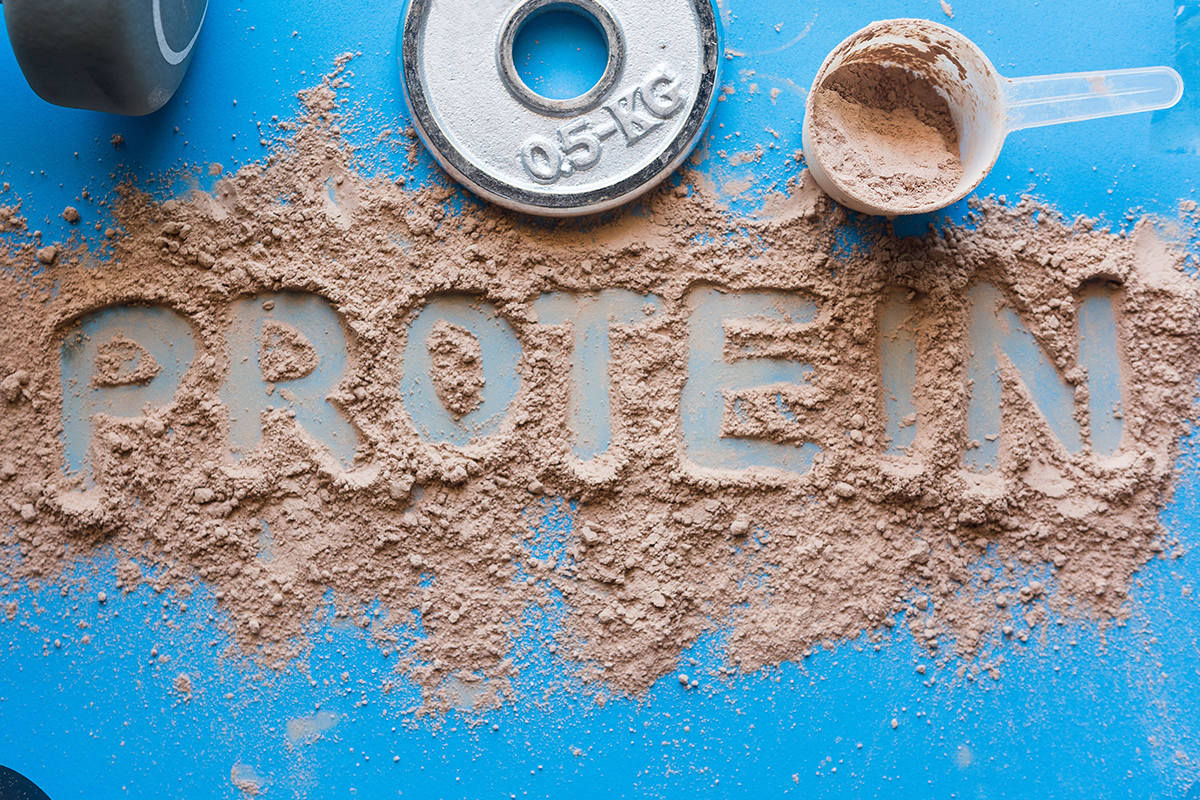
Branched chain amino acids (BCAAs) are a group of three essential amino acids (leucine, isoleucine and valine) required for creating new muscle, along with the other six essential and eleven non-essential amino acids. Muscle protein constantly turns over, meaning that protein breakdown is occurring simultaneous to protein synthesis.1
Supplemental BCAAs may reduce the amount of protein breakdown and notably leucine signals the synthesis process. However, this doesn’t necessarily equate to direct muscle building or growth, termed “anabolism.” Most studies compared BCAAs to taking non-protein placebo.
It’s important to note that the availability of the other essential amino acids can limit synthesis1, thus BCAAs don’t act alone. Due to the nature of protein construction, complete protein strands (found in solid food) contain not only BCAAs but other amino acids. Not surprisingly, research including whole proteins post-workout show similar gains in muscle protein synthesis2.
In summary, it makes sense to eat full proteins (such as whey, casein or soy) with additional BCAAs rather than ingest BCAAs exclusively to promote anabolism.
Supplemental BCAA powders generally offer 5 grams BCAA per serving, while capsules may offer as little as 1.5 grams BCAA. In regards to the amino acid taurine, I advise limiting supplemental intake to 3000 mg (3gm) daily, consistent with research3. That level is not likely to be found in strictly BCAA supplements but may be found in pre-workout formulas with other compounds.
Resources:
– Debbie J., MS, RD
This article should not replace any exercise program or restrictions, any dietary supplements or restrictions, or any other medical recommendations from your primary care physician. Before starting any exercise program or diet, make sure it is approved by your doctor.
Some questions have been edited for length and/or clarity.
Have a nutrition question? Our registered dietitian is ready to help!
Email nutrition@lafitness.com or submit your question below and it may be featured in an upcoming article!
Any good workout plan needs a good nutrition plan. We've compiled the best advice from our RDN, Debbie James, to help you construct your perfect meal plan.
Debbie James, RDN, helps answer a reader’s question about how much protein is too much for the body to process.
Debbie James, RDN, helps answer a reader’s question on breakfast and working out.

Hi, I was wondering on how to select the correct macro grams for my diet.
I am a member of team Canada world baton team and train for the sport 4 days a week for about 5 hours. I also attend weekly yoga classes and do cardio workouts 3x a week along with some basic weight training 3x a week. I am 24 years old, 5 foot 6 inches, 160 lbs. and eat between 1,500-1,800 calories.
Thank you
– Lindsay B.
You are undereating calories compared to your estimated energy needs* given your age, anthropometrics and stated workout routine making your first priority to meet minimum recommended protein amounts.
Based on your stated level of exercise, protein requirements will fall in the range of 1.2-1.5gm/kg, which calculates to 87-110 grams of protein per day (<26% energy intake). However, because you’re possibly not meeting energy needs with adequate carbohydrate and fat, it’s safe to increase protein to 2.0gm/kg daily.
Carbohydrate should comprise about 50-60% of your energy intake. For your stated caloric consumption, that would calculate to 225 grams carbohydrate daily (1800 x 0.5 ÷ 4cals/gm). Remember, that is a baseline amount given my suspicion that your energy intake is low.
A healthy fat intake may range from 20-35% of energy consumed. If we take the average of your recommended protein plus the carbohydrate total above, that’s 1292 calories (323gms x 4cals/gm) leaving you with 508 calories for fat. Those 56 fat grams should be from healthy unsaturated sources, preferably plant foods like avocado, oils and coconut.
* Energy needs calculated from Harris-Benedict or IOM equations are 2600-2800 calories per day.
Resources:
Kerksick, CM and Kulovitz, M. (2013) Requirements of Energy, Carbohydrates, Proteins and Fats for Athletes. In Nutrition and Enhanced Sport Performance Chapter 36, (pp. 355-366).
Webb D. Athletes and Protein Intake. Today’s Dietitian June 2014; 16 (6): 22.
– Debbie J., MS, RD
This article should not replace any exercise program or restrictions, any dietary supplements or restrictions, or any other medical recommendations from your primary care physician. Before starting any exercise program or diet, make sure it is approved by your doctor.
Some questions have been edited for length and/or clarity.
Have a nutrition question? Our registered dietitian is ready to help!
Email nutrition@lafitness.com or submit your question below and it may be featured in an upcoming article!
Any good workout plan needs a good nutrition plan. We've compiled the best advice from our RDN, Debbie James, to help you construct your perfect meal plan.
Debbie James, RDN, helps answer a reader’s question about how much protein is too much for the body to process.
Debbie James, RDN, helps answer a reader’s question on breakfast and working out.

Hello. I have a couple of questions on diet and nutrition if I may ask. I’m an 18-year-old male. I currently weigh ~143-146 lbs. I want to take on bulking but I’m not sure on what meal plan to use. Would you be able to help me out or point me in the right direction?Currently I have a full-time job with overtime, but I still manage to go to the gym almost every day even though I’m tired. I eat breakfast around 4am before work, pack myself 2 lunches, and also eat dinner around 6-8pm. I greatly appreciate any advice I can get from you guys. Couldn’t be happier with the gyms and the sauna by the way. Thanks
– Joshua A.
Thanks for the compliment! A specific meal plan would depend on your lifestyle and food preferences in addition to your anthropometrics and weight gain goals. Working up a meal plan from scratch isn’t daunting – see our article How to Create a Meal Plan. You’d want to focus on increased calories and protein. That said, I realize following an already set list is desirable. If you’re set on that, I’d suggest a mass-building meal plan developed by a sports nutritionist such as a Certified Specialist in Sports Dietetics (CSSD).
My top diet tips for bulking include:
Time it right. Fuel your muscles properly pre- and post-workout to capitalize on the surge of hormones driving anabolism. The nutrition window to boost protein synthesis is considered about 30 minutes before and after weight training. Easy to digest lean proteins and low-fiber carbohydrates are the prime choices. Examples are whey shakes, egg whites, poultry breast, bagels, and pretzels.
Resources:
– Debbie J., MS, RD
This article should not replace any exercise program or restrictions, any dietary supplements or restrictions, or any other medical recommendations from your primary care physician. Before starting any exercise program or diet, make sure it is approved by your doctor.
Some questions have been edited for length and/or clarity.
Have a nutrition question? Our registered dietitian is ready to help!
Email nutrition@lafitness.com or submit your question below and it may be featured in an upcoming article!
Any good workout plan needs a good nutrition plan. We've compiled the best advice from our RDN, Debbie James, to help you construct your perfect meal plan.
Debbie James, RDN, helps answer a reader’s question about how much protein is too much for the body to process.
Debbie James, RDN, helps answer a reader’s question on breakfast and working out.

What should I eat to help me lose back fat?
– Nicole V.
I hear you, sister! Fat that bulges around the bra line or waistband on the backside is uncomfortable to say the least. The fat beneath the skin along the lumbar region isn’t always in proportion to the rest of the body’s subcutaneous fat and may create rolls if thick enough. Bodies with greater overall body fat tend to show more back fat, though it’s possible for someone with an acceptable body mass index (BMI) to be “skinny fat.” Remember that fat distribution among men and women is largely dictated by genetics and hormones.
Most research has been on reducing belly fat since it’s tied to a greater risk of chronic disease. A diet to specifically lose back fact does not exist. Targeting one area of fat, termed “spot reducing,” has long been deemed a fallacy. Dietary interventions will only have effect on back fat if accompanied by exercise. Together they produce metabolic changes in tissues all over the body. Along with a weight reduction diet, greater physical activity and specific exercises for the lumbar region may improve toning and definition.
These top diet tips work to improve body composition and overall health:
Resources:
– Debbie J., MS, RD
This article should not replace any exercise program or restrictions, any dietary supplements or restrictions, or any other medical recommendations from your primary care physician. Before starting any exercise program or diet, make sure it is approved by your doctor.
Some questions have been edited for length and/or clarity.
Have a nutrition question? Our registered dietitian is ready to help!
Email nutrition@lafitness.com or submit your question below and it may be featured in an upcoming article!
Any good workout plan needs a good nutrition plan. We've compiled the best advice from our RDN, Debbie James, to help you construct your perfect meal plan.
Debbie James, RDN, helps answer a reader’s question about how much protein is too much for the body to process.
Debbie James, RDN, helps answer a reader’s question on breakfast and working out.