The Right Recovery Drink for Your Workout | QA

The Right Recovery Drink for Your Workout | QA

Question:

What is the best type of recovery drink that can help my muscles recover quicker from exercising?

– David A.

Answer:

The optimum content of your recovery drink depends on the type of exercise, intensity and duration.  

  • For heavy resistance training you’ll want 10 to 20 grams quick-delivery protein, such as from concentrated whey, casein, albumin or soy in powdered or liquid form to prevent muscle breakdown and enhance repair. Micro-fractionated isolated protein, peptides or amino acids might be suitable after an extended weights workout. Still, some carbohydrate helps ‘push’ that protein into muscle cells where it’s needed. 
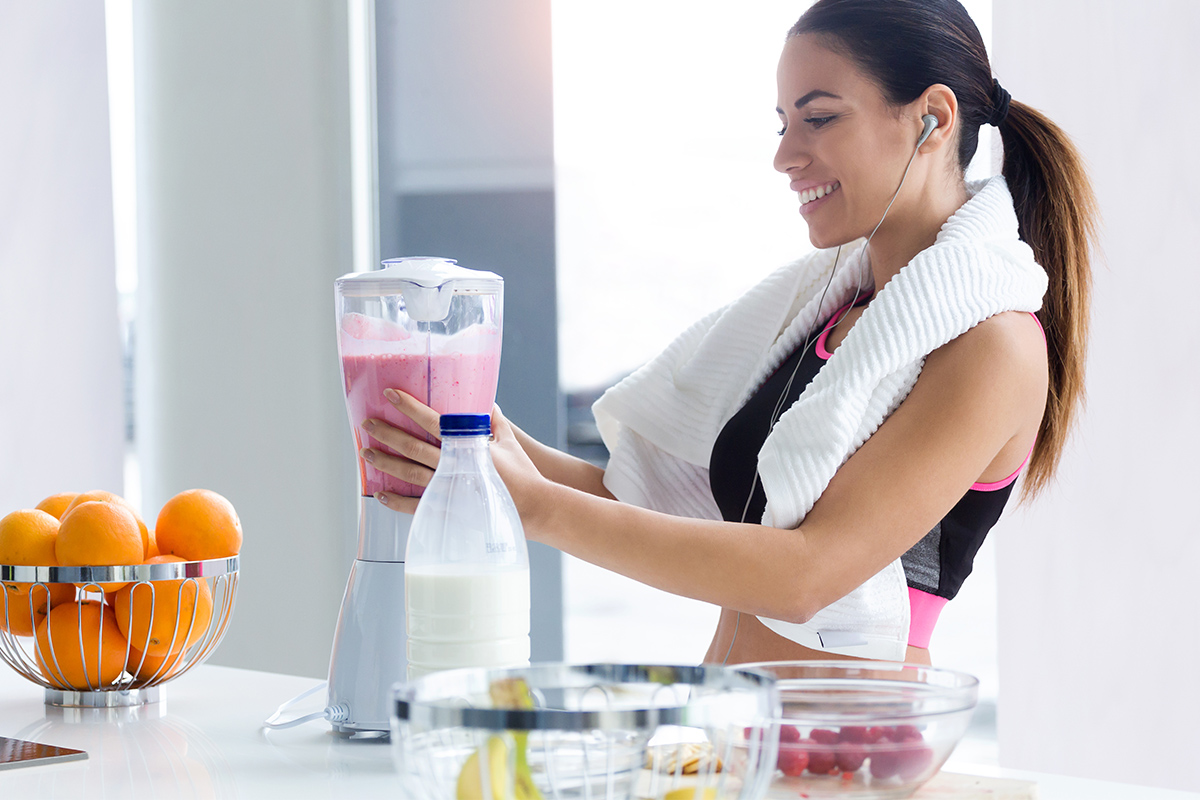
  • For an hour’s worth of high intensity interval training (HIIT) or circuit training which incorporate both aerobic work and strength, a diluted yogurt and fruit smoothie might be suitable. It has carbohydrates to replete, plus some protein and electrolytes to combat muscle soreness. 
  • For exercise that is lower intensity, such as for fitness or endurance, a glass of chocolate milk or protein-enhanced juice will help replenish electrolytes and glycogen stores

Stop by your club’s juice bar to see what’s likely to fit into your recovery nutrition. No matter what you choose, remember to consider portion/energy since some shakes can contain over 300 calories and may surpass what was burned during the exercise

– Debbie J., MS, RD

This article should not replace any exercise program or restrictions, any dietary supplements or restrictions, or any other medical recommendations from your primary care physician. Before starting any exercise program or diet, make sure it is approved by your doctor.

Some questions have been edited for length and/or clarity.

Ask our Dietitian

Have a nutrition question? Our registered dietitian is ready to help!

Email nutrition@lafitness.com or submit your question below and it may be featured in an upcoming article!

11 + 9 =


Recommended Reading - Q+A

How to Press-On with Your New Year’s Resolutions

How to Press-On with Your New Year’s Resolutions

Help! My Resolve is Slipping!

It happens to the best of us! We get tired of the way things are and decide we’re going to make some big changes that we tackle all at once. We go strong for weeks, maybe even months, but suddenly we’re struggling to keep up. When this starts to happen, we need to step back and look at a few things. Why are we struggling, and what can we do about it?

Allow us to walk you through it. Plug in your own answers and see where the process takes you. Let’s begin:

Why am I Struggling?

  1. I’m always physically tired. 
  2. I’ve started coming up with excuses. 
  3. I’m starting to doubt that I can do it. 
  4. The goal looks too big now. 
  5. I don’t have any more time in my day for other things. 
  6. Meal prepping is frustrating. 
  7. The cravings have gotten really bad. 
  8. I’m just going through the motions in my workouts, I may as well not be doing them. 
  9. A fraction of my goal feels like enough. I already feel better than before. 
  10. Too much change is overwhelming. 
    1. Do any of these sound like your reason? Perhaps you’ve identified with more than one. The important thing is that you identify what started to slow your forward momentum. Once you know the reason for your struggle, you can actually start to do something about it. If your reason isn’t up there, you can still move to the next step. Just bear in mind the specific reason why maintaining your resolution has become more difficult. 

    Break it Down

    The next step is to take your reason and break it down even further. You want to start detailing all of its bits and pieces. This helps you take a broad concept and make it more specific; and we know it’s easier to work with more specific thoughts. Let’s do a couple examples together. Say your reason is #3, that you’re experiencing doubt and you’re no longer sure you can accomplish your goal. You would break it down like this: 

    I’m starting to doubt that I can do it because: 

    1. My progress is slow or stalled 
    2. I wanted to accomplish this in 2 months and now I’m running out of time 
    3. I can’t maintain the number of days a week I planned to commit 

    Another example could be #6: Meal prepping is frustrating. Your breakdown might include items like: 

    1. It takes too long 
    2. I miss the simplicity of eating out 
    3. I hate doing dishes 

    Once you have your items listed out, you can probably see some areas that you can work on. Let’s move on to step 3. 

    Take Informed Action

    Now that you’re more informed about why you’re feeling like your resolution may not stick, you can take action. Action looks like this: make a logical statement about each of the items on your breakdown list. This is a technique employed in certain cognitive behavioral therapies. The idea is that you are recognizing a distorted thought process and giving yourself very reasonable explanations for why that thought doesn’t actually make sense. It helps break through the walls that you mentally set up for yourself. Let’s do an example together: 

    1. My progress is slow or stalled 

    If you let your thoughts go from “my progress is slowing down” to “what if I never achieve my fitness goals?” or “what if this is all I’m capable of?” you’re slipping into a cognitive distortion called Catastrophizing. This is what happens when a person takes a single unpleasant event and imagines it will undeniably lead to the worst-case scenario.

    This is what you do to reason your way through this kind of thought: 

    First, remember that our bodies are living and breathing, and it doesn’t matter if we actively help the process, they adapt to change. So, you started working out? Great! Your body struggled at first but now it’s really good at getting you through your 20 minutes on the treadmill. Your body thinks “that’s enough muscle building and cardiac improvement. I can do what’s being asked of me now.” So, your progress starts to slow.  

    As long as you keep your routine, your cardiac health and running muscles will stick around, but if you push yourself to sprint or to hang out on the treadmill for 30 minutes instead of 20, your body will need to adapt again to meet those demands. It’s natural; a slowdown in your progress doesn’t necessarily mean you’re doing anything wrong; it most likely means that your body has adapted to the change.  

    Now that you’ve thought logically about it, a slowdown in your resolution should no longer look like a critical failure. You can repeat that logic to yourself every time doubt starts to creep back in. 

    Rinse and Repeat

    Go through this process for each and every one of the thoughts that holds you back from your goals. Even if it’s something that has a seemingly simple answer. For example, you might hate doing the dishes involved in meal prep. How can you reason your way through that one? Well, take a moment to look at the bigger picture. Is it worth giving up on your goal because of dishes? Is the trade-off worth it?  

    Alternatively, you can think of ways to make the chore of doing dishes more manageable. For example, you can make a habit of rinsing dishes as soon as they’ve been dirtied so you don’t have to spend more time scrubbing dried-on food. Mentally compare the difficulty of that task with your overall goal, and it probably looks quite doable.  

    The general thought is this: when we have trouble with our goals it often feels like we’re hitting obstacles we’ll never overcome. The trick is to recognize the flaws in our thought process and then reason our way out of it. 

    To stay informed with our fitness and nutrition articles, subscribe to our newsletter to receive monthly highlights from the LA Fitness blog! 

    Note: The author has a master’s degree in Social Work and is versed in various cognitive and behavioral therapies. Advice presented is based on an understanding of human behavior but should not replace the guidance of a licensed practitioner or that of one operating under licensed supervision. 

    Micronutrients: How Much Do I Need? | QA

    Micronutrients: How Much Do I Need? | QA

    Question:

    Good evening. I am a 53-year-old male and I was hearing that I should be taking fish oil, a multivitamin, B-12, vitamin D, magnesium, and creatine. Do you agree? And what do you recommend in terms of dosage for the fish oil, vitamin d, magnesium and creatine? Do you recommend any others as well? 

    Thank you for your time.

    – Jeff 

    Answer:

    If your multivitamin (usually has minerals too) supplement provides close to 100% of the Daily Value for micronutrients, then you probably don’t need additional vitamin B12 or D. Most “once daily” multi’s are meant to cover the bases of micronutrient needs, but they vary greatly. A quick glance at a few widely available products (Centrum for Men, One a Day Men’s Formula, Nature Made Multi for Him) reveals they are rather low in magnesium, which is on purpose because the risk of toxicity is greater from supplemental magnesium than from foods. Though the Daily Value for magnesium is 420 mg for men, the maximum advised from supplements is only 350 mg daily1. Get the remainder of your magnesium intake from good sources such as almonds, spinach, cashews, peanuts, shredded wheat cereal, soymilk, black beans, edamame, peanut butter, wheat bread, avocado, baked potato, brown rice and plain yogurt1. 

    Fish oil contains the omega-3 fatty acids, eicosapentaenoic acid (EPA) and docosahexaenoic acid (DHA). There is no set Adequate Intake for EPA and DHA, only for another omega-3: alpha lipoic acid (ALA) from plant sources2. It’s recommended to eat fish twice per week and walnuts, chia seed or flaxseed daily to obtain omega-3 naturally from the diet. Generally, a combined EPA+DHA dose of 300-500 mg per day is suggested for anti-inflammation but higher levels may be warranted for certain health conditions. For cardio protection there may be benefit for African-Americans and non-fish eaters to take 1,000 mg supplemental omega-3 daily3, and higher doses by prescription. 

    Creatine works by providing ready energy for muscle contractions in the form of ATP. Whether or not you’d benefit from a creatine supplement depends on your exercise routine and goals. About 3-6 grams pre-workout has been shown to increase creatine stores and affect strength gains accompanying weight training4, and is relatively safe to take. You can get creatine from protein-rich foods and your body makes some, thus it’s not worth supplementing if you don’t participate in short duration high-intensity resistance exercise.  

    References: 

    1. Magnesium – Health Professional’s Fact Sheet. (October 11, 2019) Retrieved from https://ods.od.nih.gov/factsheets/Magnesium-HealthProfessional/  Accessed 12.30.2019
    2. Omega 3 Fatty Acids – Health Professional’s Fact Sheet. (October 17, 2019) Retrieved from https://ods.od.nih.gov/factsheets/Omega3FattyAcids-HealthProfessional/ Accessed 12.30.2019 
    3. Harvard Women’s Health Watch (April, 2019) Should You Be Taking An Omega-3 Supplement? https://www.health.harvard.edu/staying-healthy/should-you-be-taking-an-omega-3-supplement  Accessed 12.30.2019 
    4. Hall, M and Trojian, TH. Creatine Supplementation. Current Sports Medicine Reports. July/August 2013; 12(4): 240–244.  doi: 10.1249/JSR.0b013e31829cdff2 

    – Debbie J., MS, RD

    This article should not replace any exercise program or restrictions, any dietary supplements or restrictions, or any other medical recommendations from your primary care physician. Before starting any exercise program or diet, make sure it is approved by your doctor.

    Some questions have been edited for length and/or clarity.

    Ask our Dietitian

    Have a nutrition question? Our registered dietitian is ready to help!

    Email nutrition@lafitness.com or submit your question below and it may be featured in an upcoming article!

    6 + 15 =


    Recommended Reading - Q+A

    Cheat Day Regret: How to Make a Comeback

    Cheat Day Regret: How to Make a Comeback

    How to Recover from Your Cheat Day

    The big game calls for big snacks with some equally big numbers on their nutrition label. We all allow ourselves a little room for our favorite foods sometimes, and major events usually take credit for this. However, there’s no need to forfeit your goals if you’ve strayed from the path.  

    There is a way to recover from your splurge, and it’s not a crash diet. Here are 5 healthy ways to get yourself back on track: 

    1. Don’t Panic

    Food cravings are natural and there are a lot of reasons for them. Often, they are linked to common physical and emotional triggers like a lack of sleep, PMS, stress, nutrient deficiencies, and more.1 So, even if your cheat day wasn’t game day, it’s good to understand that our bodies often fight with our brains when it comes to cravings.  

    The good news? There is evidence to indicate that the occasional cheat day can help you stay on track for long-term goals.1 True, the excess calories or getting kicked out of ketosis can make your progress slow-going, but, having an outlet to occasionally enjoy your guilty pleasures can make the mental battle a bit more bearable. 

    The other tips come in no particular order but it’s a good idea to check-in with yourself first to make sure you’re not beating yourself up for the cheat. It’s healthy to acknowledge that cheat days are a good thing in moderation, and if you really overdid it, that you are capable of making a comeback.

    2. Drink Water

    Water helps your body do what it’s already doing, better. Drink water to help your liver and kidneys do what they do best, which is to help process and flush out toxins.2 It’ll also benefit your digestive tract and help move things along. If you ate something your body was no longer accustomed to receiving, you may start to feel a little “backed up.” Water will help get things back to normal. 

    In addition to helping your bodily processes, drinking water can help you eat less. Cheat days usually involve sugar and carbs, the food items most people are cutting from their daily diets. Sugar and carbs do a great job of lighting up your craving for more! Chances are, the day after your cheat day, you’ll be craving just a few more nibbles. Drinking water can help you feel more satiated which helps fight additional cravings.

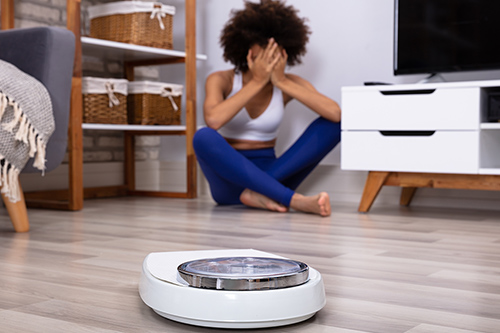
    3. Stay Off the Scale

    You might be tempted to weigh yourself to assess the damage but doing so will not help you at all. The scale will almost certainly tell you that you’ve gained weight. Seeing a higher-than-normal number can be really discouraging, but the good news is that the weight you gained is not fat. It takes much longer to gain fat than you might think. The extra weight is most likely water.3  

    Here’s the thing: carbohydrates are a good source of glycogen, an easy-to-process energy source. Glycogen happens to bond very well with water,3 a readily available molecule in your body. This is why the scale says you are heavier, because for every gram of carbohydrates, you have 3 or 4 molecules of water bonded to it.3 Your body retains this water and the scale reflects the added weight. Keep your sanity by staying off the scale and take comfort in the fact that you can still bounce back from water-weight.  

    You might think, “well, #2 was to drink water; won’t that add to water-weight?” It really won’t. Drinking water is actually cited as a method to help lose water weight.4 When your body feels dehydrated, it will cling to the water it has. Conversely, if you over-hydrate, your body will retain water as well. Just keep a balance.

    4. Take Advantage of Your Refueled Glycogen Stores

    Speaking of glycogen, if your body has some fresh stores, use them! When you eat carbs, your body breaks them down into glucose. That glucose is either used up for immediate energy or converted into glycogen and saved for later.5 Your body has limited glycogen storage and unlimited fat storage, so if your glycogen stores get full, your body converts glycogen into triglycerides (a type of fat). Triglycerides can be used for energy or get stored in your body fat.5 


    Get a solid workout in to help use up the stored energy and limit your carb intake to help your body use what you put in on your cheat day. 

    5. Resume Your Healthy Eating Habits

    Make sure your cheat day doesn’t turn into a cheat week. Remember that a single day or meal isn’t going to undo weeks or months of hard work, that the scale is most likely reflecting water-weight, and that you can help your body get back to healthy habits. Look back fondly on how delicious your cheat meal was and then zero back in on healthy eating. 

    For information on how train your taste buds to love the taste of health foods, read our article: It’s an Acquired Taste. If you’re still thinking about how the body uses glycogen and when it starts burning fat, read our article about Exercising on an Empty Stomach. 

    To stay informed with our fitness and nutrition articles, subscribe to our newsletter to receive monthly highlights from the LA Fitness blog! 

    Sources

    1. Penney, Stacey. “Do Cheat Meals Make Diet Sense?” NASM Blog, 11 Oct. 2018, https://blog.nasm.org/nutrition/cheat-meals-make-diet-sense/ 
    2. Chandler, Brynne. “The Best Way to Clean Out Your Body Naturally.” Healthfully, 24 Dec. 2019, https://healthfully.com/the-best-way-to-clean-out-your-body-naturally-5350801.html. 
    3. “Does A Cheat Day Undo A Week at the Gym?” InBody USA, 21 Sept. 2018, https://inbodyusa.com/blogs/inbodyblog/88406017-does-a-cheat-day-undo-a-week-at-the-gym/ 
    4. Mawer, Rudy. “13 Ways to Lose Water Weight (Fast and Safely).” Healthline, 9 Aug. 2018, https://www.healthline.com/nutrition/13-ways-to-lose-water-weight#section8 
    5. Boyers, Lindsay. “Burning Fat Vs. Glycogen.” LIVESTRONG.COM, Leaf Group, 16 May 2019, https://www.livestrong.com/article/331651-burning-fat-vs-glycogen/.

    February Flu Prevention: At the Gym and at Home

    February Flu Prevention: At the Gym and at Home


    Flu season reaches its peak right around February,1 and February is almost here! Some of us have already fallen victim to the sneezing, the aching, and the overall misery of the flu. Before it strikes (or strikes again), you can prepare yourself for a good fight. First, let’s differentiate between some easily confusable symptoms so you know what you’re up against. 

    Flu Symptoms vs Cold Symptoms 

    The Centers for Disease Control and Prevention (CDC) breaks it down quite simply. The flu is different from a cold because: 

    • It comes on abruptly (as opposed to a cold which comes on gradually) 
    • You’ll usually have a fever that lasts 3-4 days 
    • It’s common to experience the chills 
    • You may have a headache 

    A cold typically won’t involve these four symptoms unless you have a rare case. Symptoms commonly shared between the cold and flu include: 

    • Aches 
    • Fatigue/Weakness 
    • Sneezing 
    • Stuffy Nose 
    • Sore Throat 

    Now that we know what we’re trying to protect ourselves from, let’s get into some prevention tips. Here are some measures you can take to help ward of the flu this February: 

    Take Precautions in Crowded Places 

    You don’t need to boycott your favorite theme parks or stay home from the store, hockey game, or the gym to protect yourself from the flu. You just need to be mindful of where your hands have been. If you’ve touched something contaminated with flu germs, you’re probably going to be okay unless you got those germs into an open wound. Avoid touching your eyes, nose, or mouth until you’ve washed your hands. If you don’t have access to water and soap, an alcohol-based hand sanitizer will do the trick until you can wash up.  

    >> At the gym, wash your hands before and after your workout. Avoid touching your eyes, nose, or mouth during your workout. 


    Keep Commonly Used Surfaces Clean

    The kids are bringing home everything they touched while they were at school, and you’re bringing home everything you touched at work, at the grocery store, and everywhere else you’ve been. Encourage handwashing at home and keep commonly touched surfaces, like doorknobs, the television remote, game controllers, and refrigerator doors, clean and disinfected.  

    >> At the gym, use the available sanitizing foam and paper towels to wipe down your equipment before and after use. 

    Prepare Your Immune System for Battle

    Your nutrition, hydration, sleep, and exercise habits all factor into your immune system’s preparedness. Even your stress levels have a part to play. Fortunately, sleeping enough, exercising, and eating healthily all help reduce stress levels and keep your body strong against germy invaders. To help your system further, read our registered dietitian’s article on Spices That Boost Immunity and Fight Inflammation.  

    >> At the gym, incorporate moderate exercise a few times a week to boost your immunity. Studies show that doing so can drastically reduce the number of colds you catch each year. 

    If it All Fails, Stay Home Until Your Fever Breaks

    You may take every precaution and somehow still get sick, because life is unpredictable that way. If you catch the flu, the CDC recommends staying home for at least 24 hours after your fever has gone away. You can help stop the spread of the flu and take some much-needed rest and recovery time at home. Of course, if you need to see a doctor, you should go. 

    >> At the gym, consider that your flu (or your child’s) can spread quickly in a public setting like the gym or Kids’ Club.

    For more immune boosting foods, check out this article on Fermented Foods. To stay in-the-loop about our fitness and nutrition articles, subscribe to our newsletter to receive monthly highlights from the LA Fitness blog! 

    Sources

    1. “The Flu Season.” Centers for Disease Control and Prevention, Centers for Disease Control and Prevention, 12 July 2018, www.cdc.gov/flu/about/season/flu-season.htm.