


How to Have a Good Diet on a Low Budget | Q+A

How to Have a Good Diet on a Low Budget | Q+A

Question:

How can I have a good diet on very low budget? I work two jobs and I am a reservist in the Marine Corps.

– Joseph E.

Answer:

It just takes a little planning and perhaps your local grocer’s weekly savings guide for a low-cost healthy diet. Not wasting food is key. If you can buy more, cook it once, then make leftovers, you’ll not only spend less but save on preparation time later. Casseroles, stir fries and crock pot meals are simple one dish meals that you can make in a large quantity and have less to clean after.

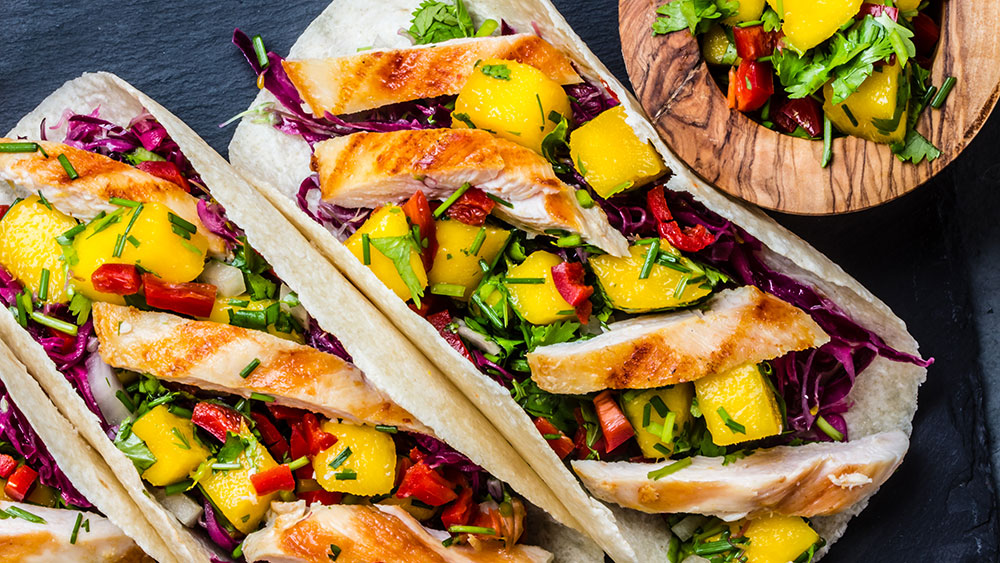
Sample savings: A $8 whole chicken can make 3-4 servings for an active man: roast chicken on day 1; chicken tacos on day 2; and cold chicken salad on day 3. Compare with $3-6/lb for precooked, skinless chicken breast.

Dry starches are cheap! Get larger bags of beans, rice and pasta to cook 1-2 cups at a time. By purchasing shelf-stable or frozen goods on sale and stocking up, you’ll spend less. Getting produce in season (e.g. stone fruit like peaches, plums and apricots in summer) saves dough. When it makes sense, it’s fine to use canned (rinsed) or frozen produce without sauce.

Your real challenge will be to cut back on prepared foods since I assume you’re tight on time with working two jobs. But it can be done! Pencil out your weekly meal plan, grab those coupons & your grocery list and shop smart.

– Debbie J., MS, RD

LA Fitness Living Healthy subscribe button

Want more? SUBSCRIBE to receive the latest Living Healthy articles right in your inbox!

This article should not replace any exercise program or restrictions, any dietary supplements or restrictions, or any other medical recommendations from your primary care physician. Before starting any exercise program or diet, make sure it is approved by your doctor.

Some questions have been edited for length and/or clarity.

Ask our Dietitian

Have a nutrition question? Our registered dietitian is ready to help!

Email nutrition@lafitness.com or submit your question below and it may be featured in an upcoming article!

12 + 8 =

Recommended Reading - Q+A

Good carbs vs bad carbs
Debunking Diet Myths

Debunking Diet Myths

With so many sources offering nutrition advice, it’s hard to know what’s true. Even factual information can become distorted by the time it reaches you. Like a game of telephone, the message often changes as it’s passed along. Here, we debunk 5 common diet myths to...

I Tore My Meniscus – What Supplements Should I Be Taking? | Q+A

I Tore My Meniscus – What Supplements Should I Be Taking? | Q+A

Question:

I tore my meniscus in March and it is healing. My cartilage is thin on one side. What supplements should I be taking and for how long?

– Barbara H.

Answer:

Barbara, your question intrigued me. Glucosamine chondroitin was the first thing that came to mind for joint health. Glucosamine chondroitin or glucosamine sulfate/chondroitin sulfate is known to stimulate cartilage regeneration, improve joint function and reduce pain. It is generally used for osteoarthritis, the breakdown of the articulate cartilage. A meniscus is a C-shaped pad made of fibrous cartilage that absorbs shock in the knee. Each knee has two menisci. Articular cartilage is present at the end of the femur.

Theoretically knee injuries may benefit from higher levels of antioxidants, anti-inflammatory agents and compounds involved in cartilage formation. According to the International Cartilage Repair Society (who knew?), “glucosamine, chondroitin, S-adenosylmethionine (SAMe) and avocado soybean unsaponifiables (ASU) have been the most carefully assessed with considerable amount of scientific and clinical usage data, as well as safety profile.” Suggested beneficial food compounds and supplements also include: olive oil, fish oil (for EPA + DHA), undenatured type II collagen, MSM (methylsulfonylmethane), curcumin, flavonoids, and ginger.

For selection and dosing recommendations, be sure to discuss with your physician what treatment is appropriate for you.

References:

Nutraceutical Supplements in the Management and Prevention of Osteoarthritis. P Castrogiovanni, et al. International Journal of Molecular Sciences 2016 Dec 6; 17(12): pii E2042

– Debbie J., MS, RD

LA Fitness Living Healthy subscribe button

Want more? SUBSCRIBE to receive the latest Living Healthy articles right in your inbox!

This article should not replace any exercise program or restrictions, any dietary supplements or restrictions, or any other medical recommendations from your primary care physician. Before starting any exercise program or diet, make sure it is approved by your doctor.

Some questions have been edited for length and/or clarity.

Ask our Dietitian

Have a nutrition question? Our registered dietitian is ready to help!

Email nutrition@lafitness.com or submit your question below and it may be featured in an upcoming article!

1 + 7 =

Recommended Reading

Good carbs vs bad carbs
Debunking Diet Myths

Debunking Diet Myths

With so many sources offering nutrition advice, it’s hard to know what’s true. Even factual information can become distorted by the time it reaches you. Like a game of telephone, the message often changes as it’s passed along. Here, we debunk 5 common diet myths to...

Health Advice For Pre-Diabetics | Q+A

Health Advice For Pre-Diabetics | Q+A

Question:

Hi, I am an LA Fitness Member for more than 10 years. I have a question regarding my health. Just recently I was diagnosed with prediabetes. I do not know how to control my sugar level. What do you think should I eat, how much sugar should I eat everyday, how do I know if I’m having enough sugar in my body? Your feedback would save my life because I am really losing a lot of weight. Thank you.

– Jo

Answer:

Thanks for reaching out, Jo. It’s great that you’re addressing your prediabetes (aka. impaired glucose tolerance) right away.

Though your diagnosis reflects higher than normal blood sugar, it will take balancing ALL your food to manage it. Here’s why: foods have a combination of macronutrients (carbohydrate, fat, protein) that all impact blood sugar. Unless they have certain bonds which make them fibers, carbohydrate molecules directly break down into sugar through digestion. So even a sugar-free baked potato will raise blood sugar. The presence of protein and fat in the stomach will somewhat slow the digestion of carbohydrate at the same meal, thus reducing the rate of absorption and subsequent blood sugar rise. Adding sour cream and cheese to the potato will have a desirable blunting effect.

A meal of pasta and marinara is carbohydrate-rich and therefore a blood sugar booster. Reducing portions and adding a couple of meatballs or Parmesan cheese and fibrous broccoli makes for a more balanced meal that is likely to have a milder effect on blood sugar. That’s not to say that if you just load up on fat it will counteract sugar (sorry, ice cream). I’d stick with starches, fruit and fluid milk for the healthiest carbohydrates and avoid refined sugars. There is no minimum need for sugar, only for carbohydrates, and it’s recommended your daily intake is at least 130 grams.

Your take-home message is to avoid added sugars, balance your meals (complex carbohydrate/protein/fat) and increase activity to lower your blood sugar levels.

– Debbie J., MS, RD

LA Fitness Living Healthy subscribe button

Want more? SUBSCRIBE to receive the latest Living Healthy articles right in your inbox!

This article should not replace any exercise program or restrictions, any dietary supplements or restrictions, or any other medical recommendations from your primary care physician. Before starting any exercise program or diet, make sure it is approved by your doctor.

Some questions have been edited for length and/or clarity.

Ask our Dietitian

Have a nutrition question? Our registered dietitian is ready to help!

Email nutrition@lafitness.com or submit your question below and it may be featured in an upcoming article!

5 + 1 =

Recommended Reading

The Fact and Fiction of Gluten-Free

The Fact and Fiction of Gluten-Free

Many sufferers of Celiac Disease need to live a gluten-free life, but countless others are also adopting a gluten-free diet. Is there an advantage? Let’s find out.

What Can I Do to Gain Weight Fast? | Q+A

What Can I Do to Gain Weight Fast? | Q+A

Question:

What can I do to gain weight fast? I am trying to gain at least 10 pounds in a month or two and I need any advice on what to eat to gain weight.

– Rosalinda V.

Answer:

Your best bets for maximum healthy calories are nuts, avocado, cheese, oils, and pesto, followed by ground beef, tortillas, pudding, au gratin or scalloped potatoes, bisque soups and chowders. Choose dense produce such as winter squash, peas, carrots, corn and bananas, and rich cereals like granola and muesli. To maximize calories, add 1 Tbsp. powdered milk or juice concentrate to each Cup of fluid milk or juice, respectively.  Fried foods and any bakery goods saturated with butter, cream or sauce certainly have more calories per bite than their plain counterparts. Whole-fat dairy foods contain nearly double the calories than the fat-free versions. And, of course, if you are able, simply increase the volume of what you already eat.

– Debbie J., MS, RD

This article should not replace any exercise program or restrictions, any dietary supplements or restrictions, or any other medical recommendations from your primary care physician. Before starting any exercise program or diet, make sure it is approved by your doctor.

Some questions have been edited for length and/or clarity.

LA Fitness Living Healthy subscribe button

Want more? SUBSCRIBE to receive the latest Living Healthy articles right in your inbox!

Ask our Dietitian

Have a nutrition question? Our registered dietitian is ready to help!

Email nutrition@lafitness.com or submit your question below and it may be featured in an upcoming article!

13 + 4 =

Recommended Reading - Q+A

Good carbs vs bad carbs
Debunking Diet Myths

Debunking Diet Myths

With so many sources offering nutrition advice, it’s hard to know what’s true. Even factual information can become distorted by the time it reaches you. Like a game of telephone, the message often changes as it’s passed along. Here, we debunk 5 common diet myths to...
Building Ab Muscles | Q+A

Building Ab Muscles | Q+A

Question:

Hi! I am asking about approximate caloric intake. I am a 5’4″ female and weigh about 115, active with workouts (4-5 times per week, 45-minute workouts. Cardio + strength + abs training). My goal is to build muscles, especially the abs. I normally do not eat too much. What is your recommendation according to the information above?

– Victoria

Answer:

Your current estimated energy needs are in the range of 1800-2000, depending on your age. Those numbers are from equations. Your personal body chemistry is unique so your actual calorie requirement may be different. Normally I’d say increase calories to build muscle, but for abs it’s usually a matter of definition and toning. Since you say you don’t eat too much, packing on calories isn’t a good idea. Focus on those workouts and supporting them with adequate nutrition. See our articles Fuel your Workouts to Maximize Your Results and Eat Like This to Help Maximize your Recovery and Results for more on eating right for your exercise bouts.

– Debbie J., MS, RD

This article should not replace any exercise program or restrictions, any dietary supplements or restrictions, or any other medical recommendations from your primary care physician. Before starting any exercise program or diet, make sure it is approved by your doctor.

Some questions have been edited for length and/or clarity.

LA Fitness Living Healthy subscribe button

Want more? SUBSCRIBE to receive the latest Living Healthy articles right in your inbox!

Ask our Dietitian

Have a nutrition question? Our registered dietitian is ready to help!

Email nutrition@lafitness.com or submit your question below and it may be featured in an upcoming article!

14 + 8 =

Recommended Reading

The Fact and Fiction of Gluten-Free

The Fact and Fiction of Gluten-Free

Many sufferers of Celiac Disease need to live a gluten-free life, but countless others are also adopting a gluten-free diet. Is there an advantage? Let’s find out.