Reaching Macronutrient Goals | QA
Debbie James, RDN, helps answer a reader’s question on how to properly approach macronutrient target goals.



Greetings Nutrition: I am trying to get back in shape. I have a trainer at LA Fitness, and I think that I need to eat better. Could you give me some ideas of how I should be eating? Or a good meal plan that I can follow? I have been given a 1,416 calorie per day limit. Macros are: Carbs 203 grams, Fat 84 grams Protein 65 grams. I am having a hard time finding good breakfast options and making my protein of 65 grams daily. I don’t eat eggs so that cause problems for breakfast. I pretty much eat everything else. Any help that you can provide would be greatly appreciated.
– Eric H.

First and foremost, your provided macronutrient targets provide 1,828 total calories (812 calories carbohydrate, 756 calories fat, 260 calories protein), a considerable difference from your caloric limit. If the goal is qualitative, then the approach should be more precise. Not knowing which is more important for you, I’d go with the higher caloric target as you are working out and 1,400 calories may only be appropriate for significant weight loss, older or smaller-framed men.
We don’t provide meal plans, though several sample meals can be found throughout our Living Healthy blog. Since breakfast is the most challenging meal for you, here are some breakfast suggestions that provide roughly 550 calories.* I’ve broken that down as approximately 60 gram carb, 25 gram fat and 20 gram protein.
By working on your own lunch and dinner options, you can get close to the remainder macronutrients for the day. Quality can’t be overlooked, though! Foods with high micronutrient, fiber and unsaturated fat content will make a big difference even if you’re slightly off your gram or calorie goals.
* Calculated by Registered Dietitian Nutritionist using Fitday.com’s food log function. Findings were used along with RDN’s professional judgment.
– Debbie J., MS, RD
This article should not replace any exercise program or restrictions, any dietary supplements or restrictions, or any other medical recommendations from your primary care physician. Before starting any exercise program or diet, make sure it is approved by your doctor.
Some questions have been edited for length and/or clarity.
 Have a nutrition question? Our registered dietitian is ready to help!
Email nutrition@lafitness.com or submit your question below and it may be featured in an upcoming article!
Debbie James, RDN, helps answer a reader’s question on how to properly approach macronutrient target goals.

Debbie James, RDN, helps answer a reader’s question on what supplements help burn fat and grow muscle.

Debbie James, RDN, helps answer a reader’s question on how to consume 100% daily value of vitamins and minerals without supplements.
Hi, what would be the best supplement to become leaner and cut muscle?
– Lito J.
The leanest, most cut people are generally considered bodybuilders. They most commonly use arginine, beta-alanine, branched chain amino acids (BCAAs), caffeine, citrulline malate, creatine monohydrate, glutamine, and beta-hydroxy-methylbutyrate (HMB). Among these, creatine has been shown to be effective for muscle size and strength when added to a weight training program.1,2 The International Society of Sports Nutrition (ISSN) states that “creatine monohydrate is the most effective ergogenic nutritional supplement currently available to athletes in terms of increasing high-intensity exercise capacity and lean body mass during training.”2 Beta-alanine further improves lean mass gains and body fat loss in conjunction with creatine supplementation.1
Arginine and citrulline malate may have ergogenic effects but do not conclusively alter body composition. The BCAAs (leucine, isoleucine and valine) decrease muscle protein breakdown and increase skeletal muscle protein synthesis though these have not translated to increased lean mass. The stimulant caffeine, taken pre-workout, increases strength training performance which allows you to do more muscle-building work.
Read about related topics on our Living Healthy blog – overall supplements and nitric oxide boosters.
Resources:
– Debbie J., MS, RD
This article should not replace any exercise program or restrictions, any dietary supplements or restrictions, or any other medical recommendations from your primary care physician. Before starting any exercise program or diet, make sure it is approved by your doctor.
Some questions have been edited for length and/or clarity.
Have a nutrition question? Our registered dietitian is ready to help!
Email nutrition@lafitness.com or submit your question below and it may be featured in an upcoming article!
Debbie James, RDN, helps answer a reader’s question on how to properly approach macronutrient target goals.
Debbie James, RDN, helps answer a reader’s question on what supplements help burn fat and grow muscle.
Debbie James, RDN, helps answer a reader’s question on how to consume 100% daily value of vitamins and minerals without supplements.
Which unprocessed meats, vegetables, and fruits should I eat each day to get 100% daily value of vitamins and minerals without supplements?
– Charles E.
Great question, Charles! There are over 20 vitamins and minerals which need to be obtained in the diet because the human body cannot make them. The Reference Daily Intake levels – either Recommended Dietary Allowance (RDA) or Adequate Intake (AI) – for each micronutrient show how much is needed for men, women and children of various age groups. Your question’s wording refers to the Daily Values, which are not so specific.
According to the National Institutes of Health, “one value for each nutrient, known as the Daily Value (DV), is selected for the labels of dietary supplements and foods. A DV is often, but not always, similar to one’s RDA or AI for that nutrient.” The Daily Values are set by the U.S. FDA for labeling so that consumers can see how much of a nutrient is provided in a serving of a food compared to their approximate requirement for it. The Nutrition Facts panel shows the percent DV for certain vitamins and minerals. Readers – if you’re interested in more about food labels, check out our Living Health Podcast Episode 21!
Okay, so on to whether it’s possible to plan a 100% micronutrient complete day from whole foods. Yes! Though the amount of produce may not be realistic for a person to consume on a daily basis, or the energy provided may be inadequate or excessive for you. That’s one reason why a variety of food selected across several days is best for meeting one’s nutritional needs.
If you’re looking for a list of what to eat in one day that meets 100% DV, the best one could do would be to construct a day using nutrient analysis software which would still be compared to the RDA or AI for your age and gender, not DV. The following list shows how you can meet the DV for about half the essential micronutrients:
Vitamin C: 1 large orange
Vitamin D: 3 1/2-ounces salmon
Vitamin E: 1 cup raw broccoli, plus 2 ounces almonds
Vitamin K: raw broccoli from above
Folic Acid: 1 cup peas, 1 cup cooked spinach, and 5 long asparagus
B12 and B6: 1 cup plain yogurt and a banana, 1 ounce sunflower seeds, and 3 ounces roast beef
Calcium: cooked spinach and yogurt from above plus an 8-ounce glass skim milk, and 1 fig
Iron: red meat from above plus a large spinach salad, and 1 cup lentil soup
Magnesium: almonds from above plus 2 slices of whole-wheat bread, 1 ounce raisins, a baked potato, and 4 ounces grilled halibut
Zinc: whole wheat bread from above plus a burger patty, and 1 slice cheese
Restricting intake to only the three food groups you mentioned is more work, so you are on your own there. If you are adamant about doing so, I’d suggest using a sample menu as a template for starters then substituting for foods you won’t eat. Truly a personalized custom menu!
References:
– Debbie J., MS, RD
This article should not replace any exercise program or restrictions, any dietary supplements or restrictions, or any other medical recommendations from your primary care physician. Before starting any exercise program or diet, make sure it is approved by your doctor.
Some questions have been edited for length and/or clarity.
Debbie James, RDN, helps answer a reader’s question on how to properly approach macronutrient target goals.
Debbie James, RDN, helps answer a reader’s question on what supplements help burn fat and grow muscle.
Debbie James, RDN, helps answer a reader’s question on how to consume 100% daily value of vitamins and minerals without supplements.
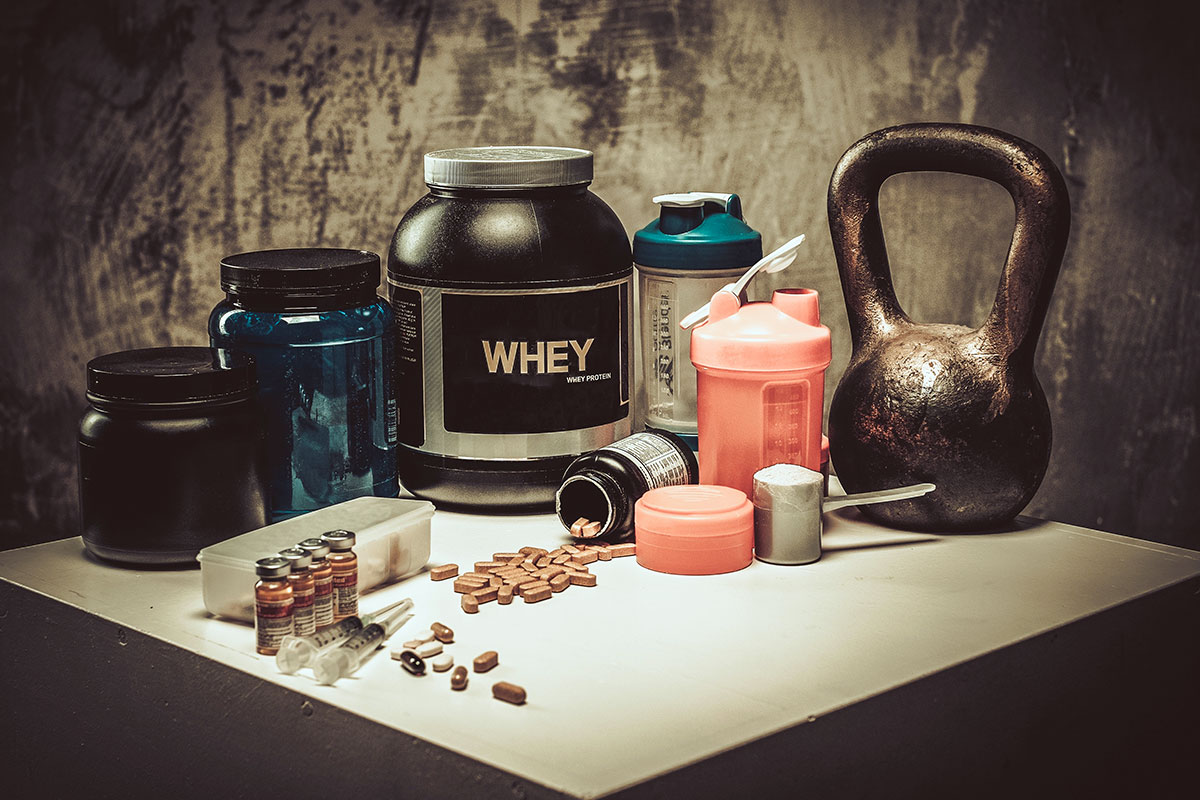
During my time as a writer for LA Fitness, my knowledge of nutrition, fitness, and health topics has grown considerably. As a certified personal trainer, I usually feel comfortable sharing my insights on fitness topics. Yet, there are still questions that I need help answering. My latest query is this:
Are supplements really necessary in order to be successful in the gym?
Personally, I do not take any supplements, and I live a very active lifestyle both inside and outside of the gym. Instead, I choose to focus on maintaining a fairly balanced diet. I choose to eat foods that help fuel me while also allowing myself some “cheat days” – which I know some people disagree with – however, that’s what works best for me.
Because everyone is wired differently, my approach may not be what works for you. When it comes to creating a personalized fitness or nutrition plan, it’s best to speak with a personal trainer or registered dietitian. However, supplements are one of those things that I have found very confusing to educate myself on, mainly because I think of them like vitamins and I get my vitamins naturally, rather than taking a vitamin supplement.
Needless to say, I wanted to reach out to a few experts on the matter.
“Supplements are the elephant in the room when it comes to the gym scene. The first thing you should always do is to check with your physician and have them do the proper testing to see if you have any deficiencies. Depending on those results or documented family history, you may need to add certain vitamins or mineral supplements to your daily caloric intake. A common example would be pregnant women, who typically get put on prenatal vitamins along with additional iron supplements as they go through their pregnancy. However, if your diet consists of the proper amount of lean meats, fruits, and vegetables, most people should be in a position where additional supplements are not needed to keep up with the individual’s active lifestyle.
The more commonly thought of supplements in our gym world are the performance-enhancing types, such as steroids, creatine, and other performance-enhancing drinks, pills, or injections. While these supplements have been documented to show immediate improvements in one’s overall strength and performance gains, they traditionally result in long term negative effects such as hormonal deficiencies. I never recommend any member or client take these types of supplements unless they have been prescribed by their doctor. For instance, these supplements are sometimes prescribed by surgeons as part of the rehabilitation program after undergoing some kind of major surgery where the supplement will aid in the rapid growth and strength of muscles, which aids in the healing process. Again, these supplements should be avoided as much as possible, generally speaking. You can get all the ‘amp’ and ‘steam’ you need from a proper diet.” – LA Fitness Master Trainer, Geoff Fox
“Just as you can get in a good workout without ever lifting up a free weight or stepping on a treadmill, you can get good exercise performance without having to take supplements. A sound diet balanced in nutrients with good hydration supports general exercise goals for non-athletes just fine. Now, healthy adults that are already fit and toned, who fuel right and would like to take it to the next level may benefit from that extra push a sports supplement can provide. They might utilize creatine, glutamine or a protein powder high in branched-chain amino acids to start. Also, caffeine can be a boost to those training for endurance.” – Debbie James, RDN
“Supplements are a highly unregulated area with few randomized, placebo-controlled trials to warrant their effectiveness. For supplements in which we do have good quality data, they have been found to rarely live up to the hype. Furthermore, we want to be cautious and consider what medications one is taking because supplements can sometimes interact and change the effectiveness of medication. Always follow the directions of your doctor, particularly when it comes to taking supplements when you’re also taking medications. The big concern around supplements is that the label may not always reflect what is in the product. When it comes to “being successful at the gym”, everyone is looking for the edge. The thought is that supplements may help in getting to the goal faster. However, healthy eating and exercise should not be a goal but a lifestyle. Habits are what create lasting change and success. Unfortunately, there are no shortcuts in this journey. At Kaiser Permanente, we believe the key to healthy living is to sleep more, move more, stress less and consider increasing how many greens you eat, such as a plant-based diet. That’s it. This is what research has repeatedly shown to optimize our health.” – Sean Hashmi, M.D., nephrologist and adult weight management lead, Kaiser Permanente Woodland Hills Medical Center
From our three experts, it looks like the overall answer is that supplements are not necessary in order to be successful in the gym, but they could be helpful for certain people, depending on your fitness lifestyle and goals.
However, supplements can be dangerous if you’re taking the wrong type. So, before you choose to take any supplement, be sure to fully understand what’s in it and how it affects your body.
A healthy diet combined with a balanced nutrition plan should give you the nutrients and energy you need to build a healthy body for yourself. However, this generalized advice may not apply to those with certain medical conditions, so always follow the recommendations of your doctor.
Debbie James, RDN, helps answer a reader’s question on how to properly approach macronutrient target goals.
Debbie James, RDN, helps answer a reader’s question on what supplements help burn fat and grow muscle.
Debbie James, RDN, helps answer a reader’s question on how to consume 100% daily value of vitamins and minerals without supplements.
I am so confused about reading so much information on which multivitamin to take or not to take. Is there a multivitamin that you would recommend for a woman 50+ years older? I am in menopause and did look at a vitamin for women 50+ and older.
– Mary F.
I agree – there are so many brands for so many concerns! Age is one factor to consider. Diseases you’re at risk for are another aspect. What micronutrients* might be lacking in your diet is another. Menopausal women should focus on adequate B-complex vitamins, Vitamin D3, and magnesium. If you eat well, it’s possible you get enough of these from natural sources and fortified foods daily. But if you just want to cover the bases as an insurance, then a multivitamin/mineral that includes these would be fine. If your diet is all over the place with no consistency and poor nutrient quality, I’d go for a higher potency multivitamin/mineral. And if you’re taking other supplements that include vitamins or minerals (such as a calcium-enriched protein drink), you may want to adjust how much of those nutrients to target from your multi.
No matter the brand, I’d recommend splitting the tablets between morning and night for optimal utilization. More constant delivery best mimics how your body uses micronutrients throughout the day. It would also be the most cost-effectiven use of your supplement so you’re not losing (in urine) what you’ve paid for. I’d choose one with a USP Verified mark, which indicates the company has followed good manufacturing processes to ensure their product contains the micronutrient levels stated on the package.
*Phytonutrients, probiotics, coenzyme Q10 and omega-3s are not vitamins or minerals, and can be supplemented separately.
– Debbie J., MS, RD
This article should not replace any exercise program or restrictions, any dietary supplements or restrictions, or any other medical recommendations from your primary care physician. Before starting any exercise program or diet, make sure it is approved by your doctor.
Some questions have been edited for length and/or clarity.
Have a nutrition question? Our registered dietitian is ready to help!
Email nutrition@lafitness.com or submit your question below and it may be featured in an upcoming article!
Debbie James, RDN, helps answer a reader’s question on how to properly approach macronutrient target goals.
Debbie James, RDN, helps answer a reader’s question on what supplements help burn fat and grow muscle.
Debbie James, RDN, helps answer a reader’s question on how to consume 100% daily value of vitamins and minerals without supplements.