How to Lose Back Fat | QA
Debbie James, RDN, helps answer a reader’s question on how to lose back fat.

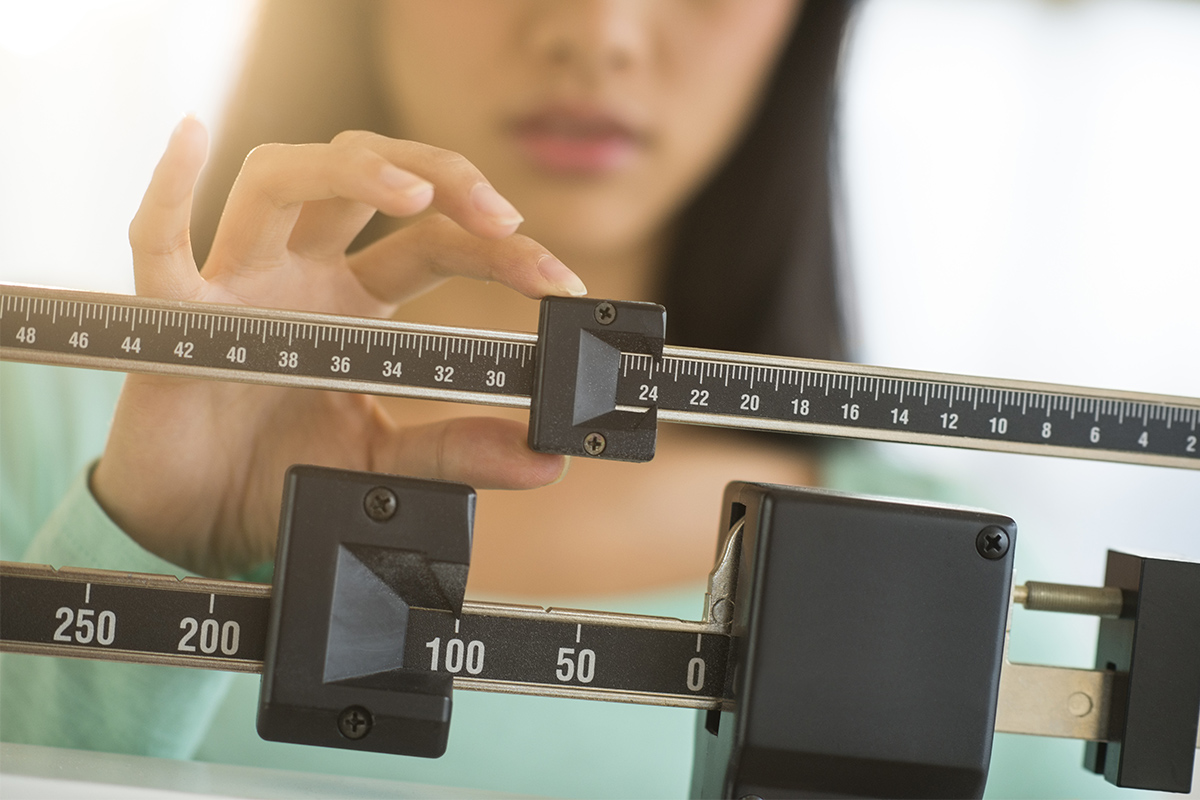

Body Mass Index (BMI) is an indicator of the amount of body fat for the average person. It’s used as a tool to identify if an adult is at a healthy weight and healthy body fat level.
Before we dive into BMI, let’s first review the benefits of maintaining a healthy weight:
These are just a few of the benefits of maintaining a healthy weight, but what does BMI have to do with your weight and what does it mean?
For years, BMI has been used by healthcare providers as a measurement to define if a person has too much body fat, and if so, whether it “presents a risk to health.”1
Since we know maintaining a healthy weight is beneficial for your health, let’s take a look at how to calculate body fat by just using your weight and height.
Calculation: Divide a person’s weight in pounds, by their height in inches. Divide the answer by height in inches. Multiply the answer by 703 (703 is the conversion factor to change units from metrics (meters and kilograms) to imperial (inches and pounds).
Example: Weight is 140lbs and Height is 5’7” or 67in
140lbs / 67in = 2.089
2.089 / 67in = .0311
.0311 x 703 = 21.9
BMI = 21.9

BMI is not a perfect measure and everyone’s body composition is different. BMI is a simple tool of weight-for-height and everyone’s height and weight varies. Therefore, this means BMI is not directly measuring body fat.
Muscle and bone are denser than fat, which means BMI is not accurately addressing body fat. If an athlete or a muscular person calculated their BMI, their BMI might be high because they have more muscle.
According to BMI calculations they would be considered overweight, however, they don’t have too much fat on their body. Since most people are not athletes, BMI might be a good gauge for body fat.

So, what does this mean for you? The World Health Organization states that a healthy BMI range for adults is between 18 and 24.9. Overweight range for BMI is between 25 and 29.9, and obesity range for BMI is 30 or higher.1 These BMI ranges in adults are the same for men and women, regardless of their age.
How should you use BMI? Use it as a gauge or a measure. Our very own LA Fitness Registered Dietitian has some helpful tips on lowering BMI; read about it here.
If you would like to take your health and body composition to the next level, let us help you achieve your goals with our Pro Results® certified personal trainers. Pro Results® trainers can help identify your personal fitness goals and design a customized workout plan to reach those goals.
When you make an appointment to start your fitness assessment, it will cover:
SOURCES
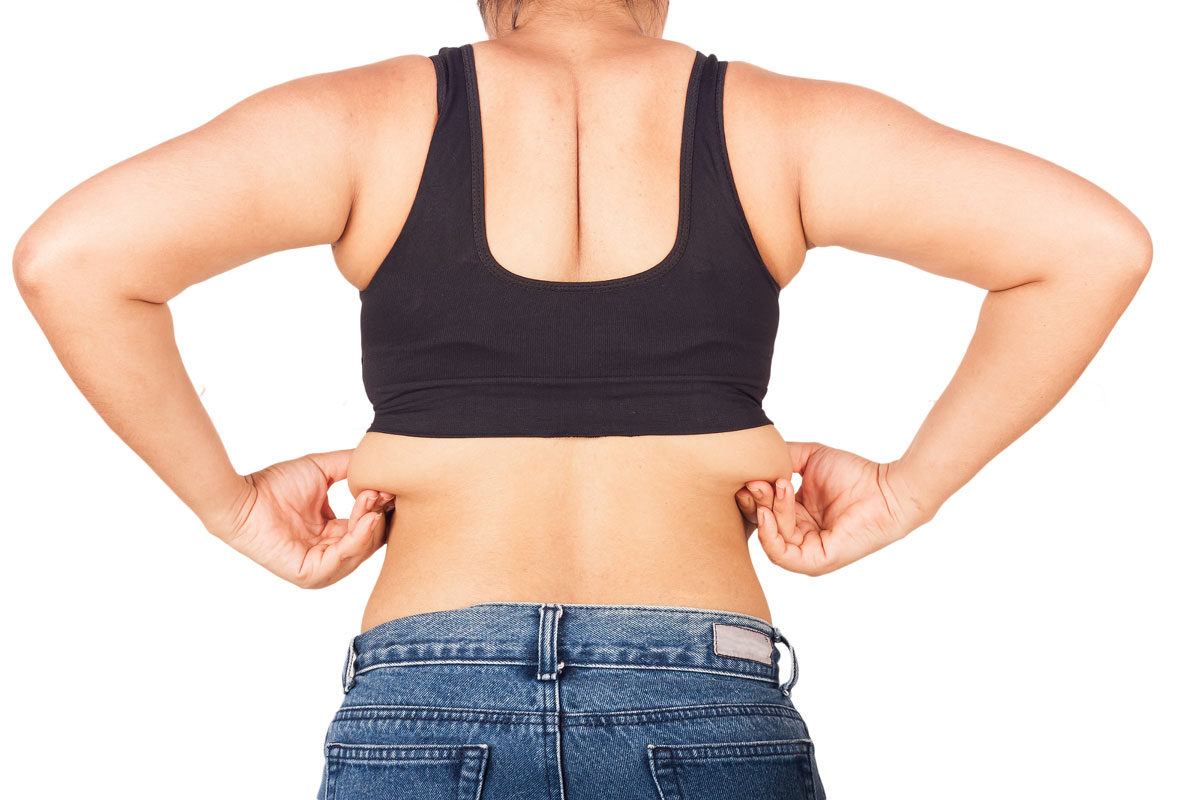

What should I eat to help me lose back fat?
– Nicole V.

I hear you, sister! Fat that bulges around the bra line or waistband on the backside is uncomfortable to say the least. The fat beneath the skin along the lumbar region isn’t always in proportion to the rest of the body’s subcutaneous fat and may create rolls if thick enough. Bodies with greater overall body fat tend to show more back fat, though it’s possible for someone with an acceptable body mass index (BMI) to be “skinny fat.” Remember that fat distribution among men and women is largely dictated by genetics and hormones.
Most research has been on reducing belly fat since it’s tied to a greater risk of chronic disease. A diet to specifically lose back fact does not exist. Targeting one area of fat, termed “spot reducing,” has long been deemed a fallacy. Dietary interventions will only have effect on back fat if accompanied by exercise. Together they produce metabolic changes in tissues all over the body. Along with a weight reduction diet, greater physical activity and specific exercises for the lumbar region may improve toning and definition.
These top diet tips work to improve body composition and overall health:
Resources:
– Debbie J., MS, RD
This article should not replace any exercise program or restrictions, any dietary supplements or restrictions, or any other medical recommendations from your primary care physician. Before starting any exercise program or diet, make sure it is approved by your doctor.
Some questions have been edited for length and/or clarity.
 Have a nutrition question? Our registered dietitian is ready to help!
Email nutrition@lafitness.com or submit your question below and it may be featured in an upcoming article!
Debbie James, RDN, helps answer a reader’s question on how to lose back fat.
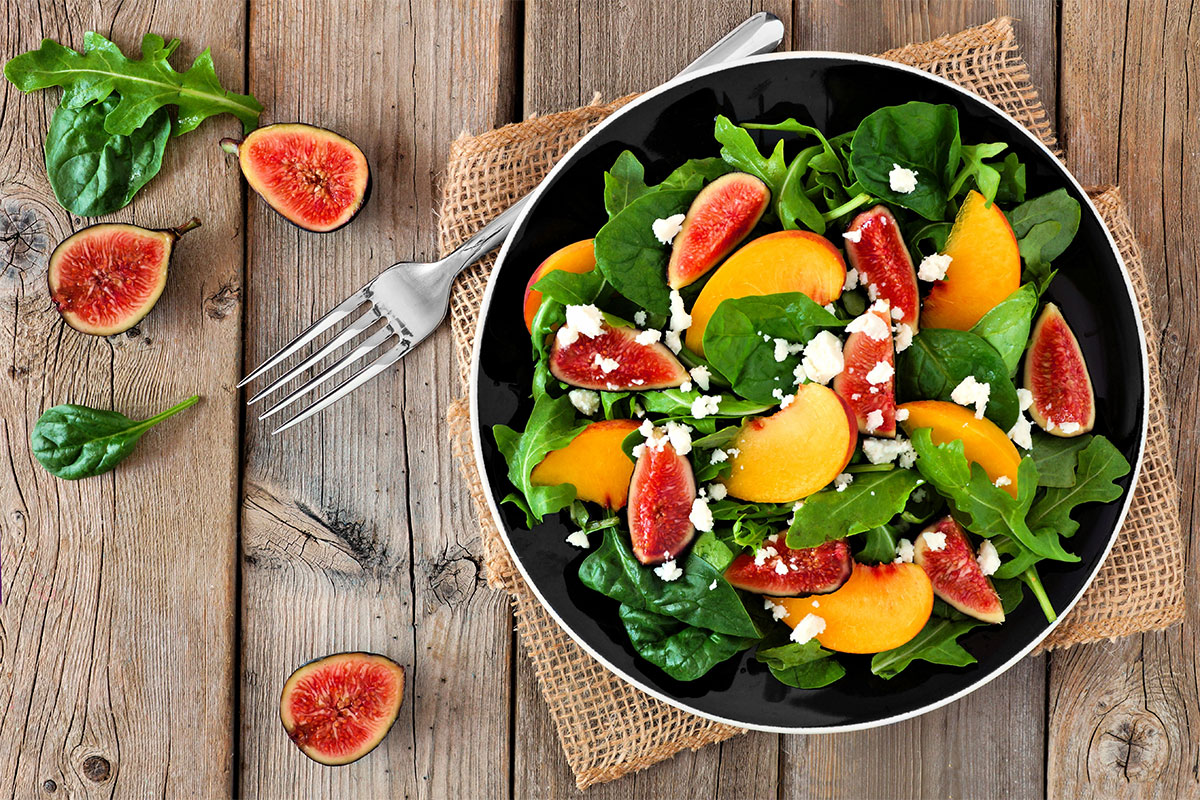
Generalities of “eat fewer calories”, “reduce fat” and “increase fruits and vegetables” can apply to the vast majority of people looking to become leaner. Find out what works best for you.
Hello my name is Lateshia S., I am 5’6” and weigh 170 pounds. I was trying to figure out how many calories a day would I need to eat, and what foods should and shouldn’t eat in order to achieve my goal of becoming leaner. When I did my fitness assessment I believe my BMI was about 27% and so I’m trying to get down to about 20-22% and I already exercise for an hour, 3 days a week since starting my membership in late June. So as far as dieting goes what should I do to see a change?
– Lateshia S.
As far as calories go, you can use the base of 1,800-2,100 calories per day for a 5’6”, 170 lb., 30-year-old woman with your activity level to lose weight and adjust by 70 calories for every decade your actual age differs from thirty.
Some people have success by shifting to smaller portions or lower-calorie options of what they currently eat. Others do better with a more drastic change by eliminating fried items, fast food, and pre-packaged meals while adopting fresh wholesome salads, grilled poultry, and home-cooked meals. Even shifting calories to earlier in the day by eating a bigger breakfast and foregoing anything after a certain hour (say, 8 PM) can help prevent excess calorie storage.
Generalities of “eat fewer calories”, “reduce fat” and “increase fruits and vegetables” can apply to the vast majority of people looking to become leaner. What you need to eat depends on what you are currently eating. Only you know what and how much you are consuming. If you don’t know – find out by recording your intake and examine a few days’ worth with a decent diet analysis program. You might identify areas in which you need to improve.
– Debbie J., MS, RD
This article should not replace any exercise program or restrictions, any dietary supplements or restrictions, or any other medical recommendations from your primary care physician. Before starting any exercise program or diet, make sure it is approved by your doctor.
Some questions have been edited for length and/or clarity.
Have a nutrition question? Our registered dietitian is ready to help!
Email nutrition@lafitness.com or submit your question below and it may be featured in an upcoming article!
Debbie James, RDN, helps answer a reader’s question on how to lose back fat.
Generalities of “eat fewer calories”, “reduce fat” and “increase fruits and vegetables” can apply to the vast majority of people looking to become leaner. Find out what works best for you.