MCT Oil for Keto – Yay or Nay?

MCT Oil for Keto – Yay or Nay?

Fat has long been regarded as the foe of the weight conscious, except for those on a ketogenic diet. The goal for keto diets is to consume enough fat to force the body into ketosis and use fat for fuel instead of carbohydrate (glucose). Can a supplement of a certain type of fat also promote a shift in body composition? Fingers point to MCT (medium chain triglyceride) oil as the magic bullet that can boost metabolism, burn fat and build muscle. 

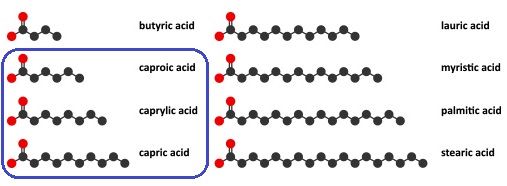
What a Triglyceride is: Most fats we eat are triglycerides which have three fatty acid chains (if you must know — one attached to each hydrocarbon of a glycerol backbone). Mainly we eat triglycerides with long fatty acid chains (12-18 carbons), which may be saturated or unsaturated. Short chain fatty acids (4 carbons), on the other hand, are predominantly produced by gut bacteria. 

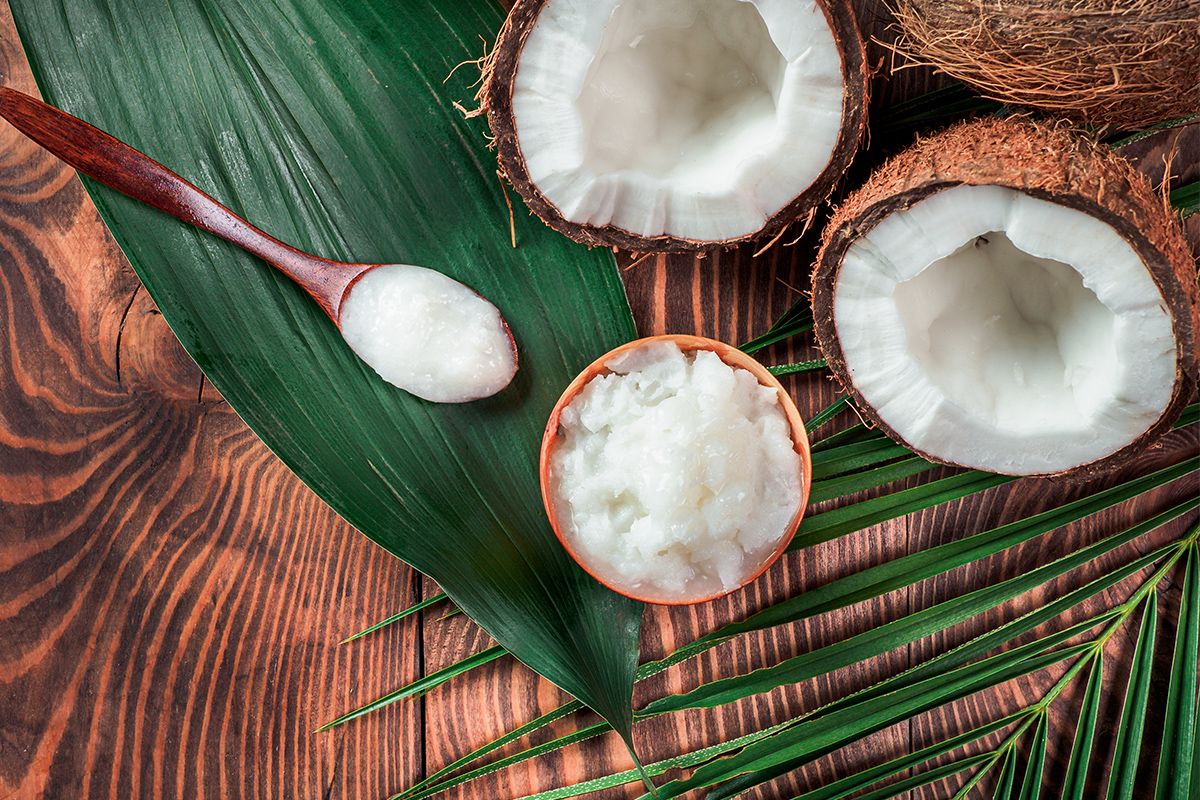
So, what exactly are MCTs? Medium chain fatty acids have 6-10 carbons in length. They are found in coconut (16%) and palm (8%) oils, and to a lesser extent in dairy products. When they are cleaved off and reassembled to glycerol in a lab — Voila! — a medium chain triglyceride (MCT) without long fatty acids is made. So isolated MCT isn’t found in nature but is man-made. MCT oils generally contain either caprylic acid (C8), capric acid (C10) or a combination of the two, and to a lesser extent, caproic acid. 

How They May Be Beneficial

MCTs are metabolized differently than the long chain triglycerides found in most foods. MCTs are digested more rapidly (and transported to liver for oxidation) than long chain triglycerides, which take longer to metabolize and get stored as fat in the process. Providing 10% fewer calories compared to other fats, MCT oil is a lactose-free, gluten-free, vegan, pareve rapid fuel. Weak evidence supports replacement of LCTs with MCTs for promoting weight loss while there’s insufficient research on other metabolic effects and Alzheimer’s disease. 

What are MCT Oil’s Limitations?

Because it’s man-made and lacks long chain fatty acids found in natural foods, MCT oil does not provide essential fatty acids (linoleic an omega-6 fatty acid, linolenic an omega-3). Medium chain fatty acids are always saturated, a concern for cholesterol levels and heart health. Ingestion of large doses of MCT oil may cause significant gastrointestinal distress. As one major manufacturer indicates: “Use of MCT as part of a ketogenic diet requires medical supervision.” Supplementing can get costly with an average MCT oil price of $1 per fluid ounce, compared with coconut oil at 50¢ per fl. oz. 

How Much MCT Oil to Include

Doses of 5 to 48 grams per day (as much as 9 teaspoons) were shown in clinical studies to yield enhanced results. For best tolerance, start with 1 teaspoon (5 mL) 3 to 4 times a day. Slowly (over a week or more), increase to a maximum of 1 Tablespoon (15 mL) 3 to 4 times a day. Food products with MCTs will show “modified coconut and/or palm kernel oil (medium chain triglycerides)” in the ingredients list – check the Nutrition Facts panel for grams of saturated fat. 

Using MCT Oil and Alternative Fats

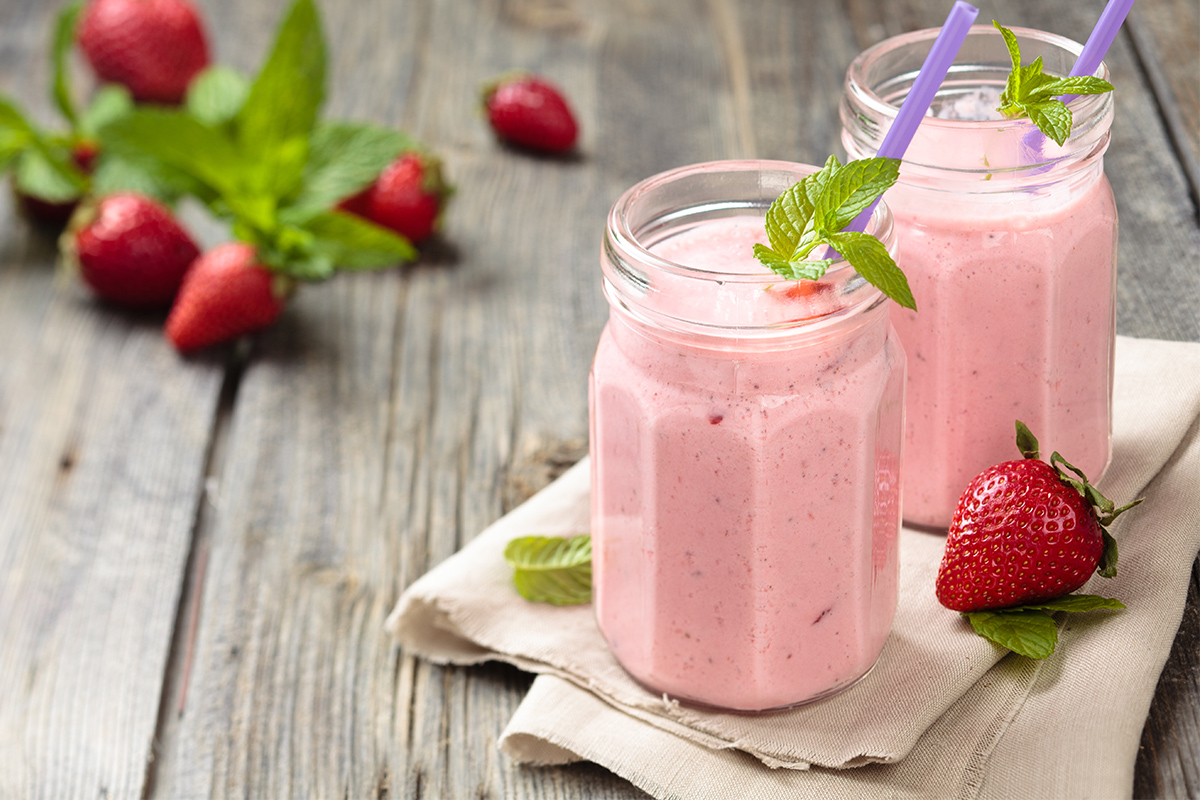
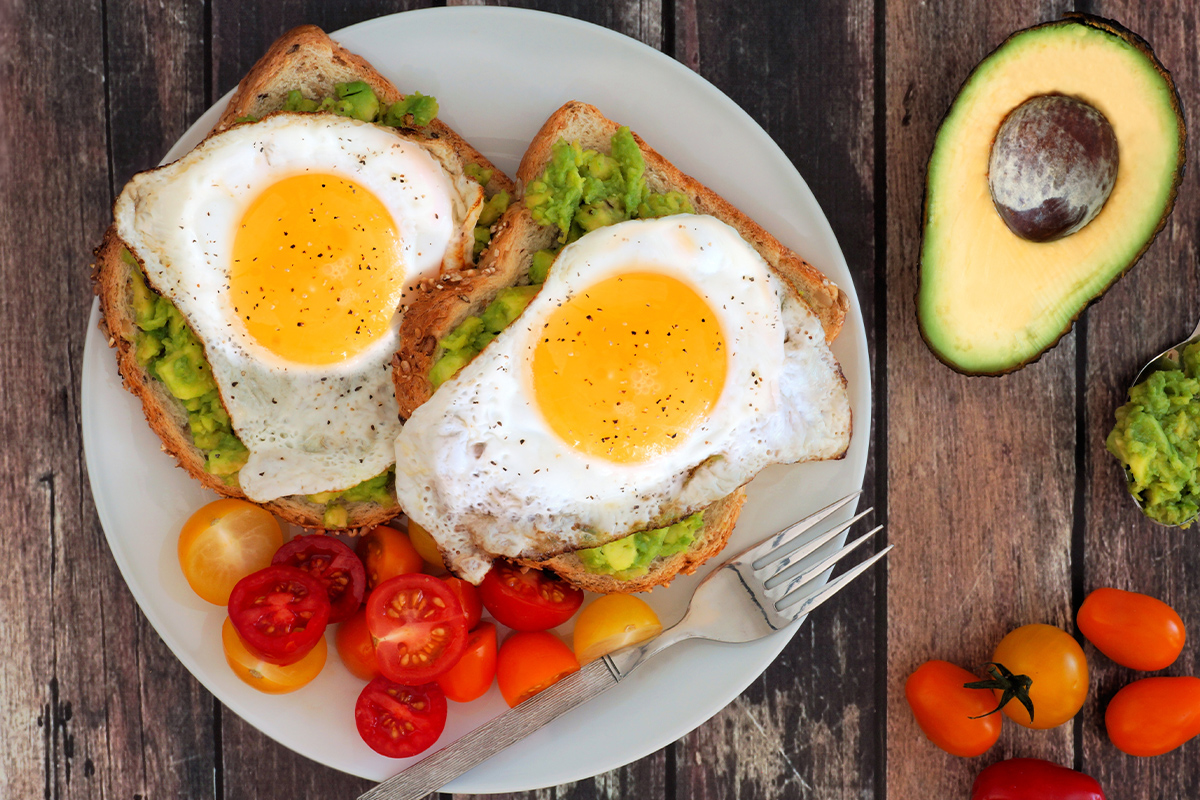
Don’t take MCT oil on an empty stomach. Like other oils, MCT oil may be mixed into beverages such as juice or milk, or into sauces, salad dressings, and other foods. Colorless, flavorless and odorless, MCT oil is easy to incorporate into dishes but won’t impart more taste. Because of its low smoke point, you shouldn’t cook with MCT oil in high heat. Wholesome fats for Keto diets include coconuts and unrefined coconut oil, avocados and avocado oil, nuts, nut and seed butters, flax seeds, hemp hearts, chia seeds, olives and cold pressed olive oil, cacao nibs, full fat Greek yogurt, fatty fish, whole eggs, butter, and cheese. 

The Bottom Line

For a ketogenic diet that’s already based on an extremely high percentage of calories from fat, substituting MCT oil for other oils in cold food preparation may provide a slight body composition benefit. As an oral supplement, taking undiluted MCTs without food may not be tolerated. You’ll still need to incorporate healthy whole plant fats in your diet for essential fatty acids. 

Sources

  1. G Hultin. MCT Oil – Miracle Supplement or Just Another Fad? Food & Nutrition Magazine. Jan/Feb 2016, 5(1): 16. 
  2. J Thalheimer. Coconut Oil – What’s Behind its “Health Halo,” and Does the Latest Science Back It Up? Today’s Dietitian. October 2016, 18(10): 32-35. 
  3. “Medium Chain Triglycerides (MCT) in Your Diet.” Cdha.nshealth.ca, Capital Health, 2014, www.cdha.nshealth.ca/patientinformation/nshealthnet/0354.pdf. Accessed 9.23.2019 
  4. Hill, Ansley. “14 Healthy Fats for the Keto Diet (Plus Some to Limit).” Healthline, 2019, www.healthline.com/nutrition/healthy-fats-for-keto#section15. Accessed 9.17.2019 

How to Remedy Constipation Naturally | QA

How to Remedy Constipation Naturally | QA

Question:

It’s a little awkward to talk about but I need some remedies for constipation. We all have it at some point but for me it seems ongoing! What can I do? I’ve heard that papaya enzymes can help. Thank you for your time.

– Andre F.

Answer:

What goes in must come out! Even people on temporary liquid diets still create poop. For chronic constipation be sure to get checked by your physician to rule out any underlying medical cause. Home remedies for constipation include: 

Drink adequate fluids – target 0.5 fluid ounces per pound of body weight minimum per day. Strains from both Lactobacillus and Bifidobacterium genuses are employed for constipation relief, as are Activia® yogurt and Yakult® drink. Consuming adequate fiber, both soluble and insoluble, helps to promote regularity.1  

Aim for 25-30 grams total dietary fiber per day from vegetables, fruits, whole grains, legumes and nuts/seeds. Exercises that may benefit the gut include yoga, squats, lunges and aerobic workouts. Reducing stress may also help improve intestinal flow. 

Enzymes such as in papaya and pineapples, help to break down amino acid strands thus promote efficient digestion of proteins. Theoretically digestive enzymes would reduce the amount of waste to your large intestines, but they’ve not been proven effective to relieve constipation. 

Resources: 

  1. International Foundation for Gastrointestinal Disorders. “Overview of Constipation Treatments.” https://www.aboutconstipation.org/treatment-overview.htmlSeptember 29, 2017. Accessed 10.25.2019 

– Debbie J., MS, RD

This article should not replace any exercise program or restrictions, any dietary supplements or restrictions, or any other medical recommendations from your primary care physician. Before starting any exercise program or diet, make sure it is approved by your doctor.

Some questions have been edited for length and/or clarity.

Ask our Dietitian

Have a nutrition question? Our registered dietitian is ready to help!
Email nutrition@lafitness.com or submit your question below and it may be featured in an upcoming article!

10 + 8 =


Recommended Reading - Q+A

Blender with fresh ingredients to making healthy detox smoothie with glass of green prepared drink with a straw. Vegan cooking concept
Healthy Smoothie Recipes

Healthy Smoothie Recipes

Cue the sound of a revving engine… running your blender at home can bring goodness with that whirring noise! Creating your own smoothies is a great way to get in some nutrients and plant phytochemicals you otherwise wouldn’t during the day. It allows you to prepare...

Good carbs vs bad carbs
Debunking Diet Myths

Debunking Diet Myths

With so many sources offering nutrition advice, it’s hard to know what’s true. Even factual information can become distorted by the time it reaches you. Like a game of telephone, the message often changes as it’s passed along. Here, we debunk 5 common diet myths to...

What’s Good for Gut Health? | QA

What’s Good for Gut Health? | QA

Question:

I have a question about gut health. How good are probiotics and is it safe to take Acidophilus every day? How does it help the body? Is it better than taking a laxative? Thanks!

– Myra

Answer:

I count lots of questions, so we’ll tackle them one at a time! 

1. Probiotics’ benefit: True probiotic microorganisms are very beneficial, provided that they are in adequate amounts of verified strains shown to have effect. That means certain probiotic sources/foods are good1, while others might be duds whose bacterial colonies simply don’t form significantly stable populations in the human gut2. The term “probiotic” is often misapplied to products.  

Positive effects on health may include immune stimulation, prevention of infection, promotion of regularity, relief of inflammatory bowel disease, cancer suppression, and modulation of brain activity, promoting mental wellness2,3. See www.USProbioticGuide.com for a list of commercial products and the level of evidence for their probiotic strains’ application in certain conditions. 

2. Acidophilus safety: Lactobacillus acidophilus is a type of bacteria found in your intestines and in several fermented foods such as yogurt, keifer, sauerkraut and tempeh. As a supplement, daily consumption is considered generally safe1,4, but may contribute to constipation4 and other digestive complaints, so monitor for side effects. 

3. Acidophilus effectiveness: L. acidophilus supplementation may protect against traveler’s diarrhea, have anti-fungal activity, and prevent bacterial UTI and vaginal infections3,4. Those wishing to take this probiotic in supplement form should find one with at least one billion CFUs per serving 

References: 

  1. National Center for Complementary and Integrative Health. “Probiotics: What You Need to Know.” https://nccih.nih.gov/health/probiotics/introduction.htm August 22, 2019. Accessed 10.25.2019
  2. Fijan S. Microorganisms with claimed probiotic properties: an overview of recent literature. Int J Environ Res Public Health. 2014;11(5):4745–4767. Published 2014 May 5. doi:10.3390/ijerph110504745 
  3. Zawn Villines. “Is Lactobacillus acidophilus good for health?” https://www.medicalnewstoday.com/articles/324194.php January 12, 2019. Accessed 10.25.2019  
  4. Mayo Clinic. “Acidophilus” www.mayoclinic.org/drugs-supplements-acidophilus/art-20361967 October 13, 2017. Accessed 10.25.2019

– Debbie J., MS, RD

This article should not replace any exercise program or restrictions, any dietary supplements or restrictions, or any other medical recommendations from your primary care physician. Before starting any exercise program or diet, make sure it is approved by your doctor.

Some questions have been edited for length and/or clarity.

Ask our Dietitian

Have a nutrition question? Our registered dietitian is ready to help!

Email nutrition@lafitness.com or submit your question below and it may be featured in an upcoming article!

1 + 14 =


Recommended Reading - Q+A

Blender with fresh ingredients to making healthy detox smoothie with glass of green prepared drink with a straw. Vegan cooking concept
Healthy Smoothie Recipes

Healthy Smoothie Recipes

Cue the sound of a revving engine… running your blender at home can bring goodness with that whirring noise! Creating your own smoothies is a great way to get in some nutrients and plant phytochemicals you otherwise wouldn’t during the day. It allows you to prepare...

Good carbs vs bad carbs
Debunking Diet Myths

Debunking Diet Myths

With so many sources offering nutrition advice, it’s hard to know what’s true. Even factual information can become distorted by the time it reaches you. Like a game of telephone, the message often changes as it’s passed along. Here, we debunk 5 common diet myths to...

Is it Healthy to Replace a Meal with a Shake? | QA

Is it Healthy to Replace a Meal with a Shake? | QA

Question:

Hello, I have breakfast (almond milk, walnuts, pecans, almonds, banana and oats) and dinner (salad of tomato, onion, potatoes, pepper, cilantro, rice puffs). Can I replace my everyday lunch with meal replacement shakes? I work out in the gym 3 times a week and run twice a week. I have been in good shape but can’t get a 6-pack. I would like to get there in 3 months before my vacation. Thanks in advance for your help. 

-Dean

Answer:

You certainly can replace your lunch with a meal replacement shake, although I don’t know if that would help you with your goal. Dinner already sounds super light and you’ve not described your current lunch so it’s hard to tell what’s missing from your day. The items you described are all plant-based so I’ll stick with like foods in recommending quinoa, cabbage, broccoli, asparagus, berries, flax & chia seeds, spinach, lentils, and green tea for your mid-day meal. It’s best to chew your calories, allowing your digestive system to do its job over time, thus allowing a slower uptake of energy than from a shake. 

Be sure your workouts include lots of ab-defining exercises as highlighted elsewhere on our Living Healthy Blog. 

Resources: 

  1. Brazier, Brendan. “Best Foods for Building Abs, Six-Packs.” Men’s Journal, 5 Apr. 2018,
    www.mensjournal.com/health-fitness/best-foods-for-building-your-abs-20130910/green-tea/.
  2. Willitts, Chris. “Build Muscle with Whole Food, Plant Based Diet.” Muscle and Fitness,
    www.muscleandfitness.com/nutrition/gain-mass/build-muscle-whole-food-plant-based-diet.
  3. Says:, Moonlit. “Vegan Foods That Can Help Give You Great Abs in No Time!” One Green Planet, 31 Mar. 2015,
    www.onegreenplanet.org/natural-health/vegan-foods-that-help-give-you-great-abs-in-no-time/%C2%A0.
  4. Willitts, Chris. “How to Get Abs Fast – Just Eat These 10 Fat-Burning Plant Foods.” Vegetarian Bodybuilding, 18 Sept. 2017,
    www.vegetarianbodybuilding.com/how-to-get-abs-fast/%C2%A0.

– Debbie J., MS, RD

This article should not replace any exercise program or restrictions, any dietary supplements or restrictions, or any other medical recommendations from your primary care physician. Before starting any exercise program or diet, make sure it is approved by your doctor.

Some questions have been edited for length and/or clarity.

Ask our Dietitian

Have a nutrition question? Our registered dietitian is ready to help!

Email nutrition@lafitness.com or submit your question below and it may be featured in an upcoming article!

7 + 10 =


Recommended Reading - Q+A

Blender with fresh ingredients to making healthy detox smoothie with glass of green prepared drink with a straw. Vegan cooking concept
Healthy Smoothie Recipes

Healthy Smoothie Recipes

Cue the sound of a revving engine… running your blender at home can bring goodness with that whirring noise! Creating your own smoothies is a great way to get in some nutrients and plant phytochemicals you otherwise wouldn’t during the day. It allows you to prepare...

Good carbs vs bad carbs
Debunking Diet Myths

Debunking Diet Myths

With so many sources offering nutrition advice, it’s hard to know what’s true. Even factual information can become distorted by the time it reaches you. Like a game of telephone, the message often changes as it’s passed along. Here, we debunk 5 common diet myths to...

Nutrition for Slow Weight Loss | QA

Nutrition for Slow Weight Loss | QA

Question:

I have been a member at the LA Fitness in Dunedin, Florida for 5 months. I have had very slow progress in losing weight. I am down from 207 lbs. to 194 lbs.; my body fat has remained at about 133 lbs. I eat oatmeal for breakfast, have a whey drink in the middle of the morning, chicken or the like at lunch with green beans and no bread, and yogurt for dinner. Help. I am 5 ft 4 inches tall and work out every other day with a trainer then do 25 mins on a stationary bike at level 8. Do you have a menu to help me lose the pounds?

– Adam F.

Answer:

There are plenty of menus to be found on sites like Men’s Journal, Men’s Health, and FitBit, or you can attempt to create your own. Rather than following a preset menu that has nothing to do with you, consider outlining a meal plan with guidelines for you to follow. You’re better assured to stick by parameters that you identify as being relevant to your dietary habits. See other members’ success stories under the Motivation tab of the Living Healthy blog and check out how one man overcame diet plan indecision here 

My feedback on your described diet thus far is that there is very little detail or diversity and unknown portions. Remember that your body thrives on feeding it adequate nutrition including vitamins, mineral and water, not just macronutrient calories.

Why not try switching it up a bit and have egg-avocado-whole grain toast for breakfast, plain nonfat Greek or Skyr yogurt with fresh fruit for snack, tuna salad and greens for lunch, then stir fried vegetables with mukimame (soybeans) for dinner one day? 

Keep up the consistent exercise, Adam! You’re making progress and your body adapts so remember to continually push yourself by increasing the time, intensity or duration of your workouts. 

– Debbie J., MS, RD

This article should not replace any exercise program or restrictions, any dietary supplements or restrictions, or any other medical recommendations from your primary care physician. Before starting any exercise program or diet, make sure it is approved by your doctor.

Some questions have been edited for length and/or clarity.

Ask our Dietitian

Have a nutrition question? Our registered dietitian is ready to help!
Email nutrition@lafitness.com or submit your question below and it may be featured in an upcoming article!

6 + 9 =


Recommended Reading - Q+A

Blender with fresh ingredients to making healthy detox smoothie with glass of green prepared drink with a straw. Vegan cooking concept
Healthy Smoothie Recipes

Healthy Smoothie Recipes

Cue the sound of a revving engine… running your blender at home can bring goodness with that whirring noise! Creating your own smoothies is a great way to get in some nutrients and plant phytochemicals you otherwise wouldn’t during the day. It allows you to prepare...

Good carbs vs bad carbs
Debunking Diet Myths

Debunking Diet Myths

With so many sources offering nutrition advice, it’s hard to know what’s true. Even factual information can become distorted by the time it reaches you. Like a game of telephone, the message often changes as it’s passed along. Here, we debunk 5 common diet myths to...