What is the Best Beginner’s Diet? | QA

What is the Best Beginner’s Diet? | QA

Question:

What is the best method of dieting for a beginner who began going to a gym and wants to lose weight in a quick but safe fashion that it will stay off?

– Joseph

An “ideal” diet plan for a beginner would depend on his or her lifestyle and commitment level. Some people do well with an extreme change – starting with a clean slate and following strict rules – while others get more results from incremental smaller modifications they can live with long-term. A person can start changing their eating habits for the better by beginning anywhere.   

According to the National Weight Control Registry, people that have successfully lost weight and kept it off mostly report following a low fat, reduced calorie diet with high activity levels. About half did it on their own while half enrolled in some type of weight loss program. Actions that losers often had in common were that they: 1) participate in regular exercise, 2) track weight routinely, 3) eat breakfast daily; and 4) watch less than 10 hours of video/TV per week.  

I’d trim out any extras that you can already identify such as late-night eating, second helpings, alcoholic beverages or desserts. As wholesome fresh food is always best, decide if you can dedicate additional time in the kitchen or need to purchase starter meals that you assemble. Whether or not to follow a specific diet plan, macronutrient ratio or preset menus depends on your interest level and food preferences.   

We’ve lots more beginner weight loss advice in the Living Healthy Blog – check how to create your own meal plan and how to achieve quick weight loss. 

This article should not replace any exercise program or restrictions, any dietary supplements or restrictions, or any other medical recommendations from your primary care physician. Before starting any exercise program or diet, make sure it is approved by your doctor.

Some questions have been edited for length and/or clarity.

Ask our Dietitian

Have a nutrition question? Our registered dietitian is ready to help!

Email nutrition@lafitness.com or submit your question below and it may be featured in an upcoming article!

13 + 1 =


Recommended Reading - Q+A

Blender with fresh ingredients to making healthy detox smoothie with glass of green prepared drink with a straw. Vegan cooking concept
Healthy Smoothie Recipes

Healthy Smoothie Recipes

Cue the sound of a revving engine… running your blender at home can bring goodness with that whirring noise! Creating your own smoothies is a great way to get in some nutrients and plant phytochemicals you otherwise wouldn’t during the day. It allows you to prepare...

Good carbs vs bad carbs
Debunking Diet Myths

Debunking Diet Myths

With so many sources offering nutrition advice, it’s hard to know what’s true. Even factual information can become distorted by the time it reaches you. Like a game of telephone, the message often changes as it’s passed along. Here, we debunk 5 common diet myths to...

How Much Protein Should I be Eating? | QA

How Much Protein Should I be Eating? | QA

Question:

I am a 38 year-old male, 250 pounds, 5’11” and I’ve been steadily working out since June and have lost almost 50 pounds, but I’m curious what is the right amount of protein that I should be taking in daily? I work out 5 or 6 days a week on average and work with a personal trainer six times a month. I usually do about 30-45 minutes of strength training followed up by 30-45 minutes of cardio. I’m currently shooting for somewhere between 130-180 grams of protein a day. Is that enough for my goal of losing weight while building muscle? Thanks.

-Steven M.

Great work on your consistent progress, Steven! For your body weight, goals and activity level your current aim for 130-180 grams of protein daily seems on track. That’s between 1.1 and 1.6 grams of protein per kilogram body weight, ideal for supporting muscle growth with an intensive workout regimen. The range midpoint of 155 grams provides 620 calories which would equate to about 30% of energy if your intake was 2000-2100 calories. 

Though you may be counting protein grams and calories, the quality and timing of what you’re eating has as much impact as – if not more than hitting calculated marks. Remember to support your workouts with some carbohydrate and a little protein in your recovery snack. A high-protein yogurt with fruit or granola works as well as a protein shake. For your main meals, lean proteins, vegetables, whole grains and healthy plant fats will promote efficient metabolism better than typical fare. For example, choose a healthy stir-fry (e.g. chicken, carrots/broccoli, cashews, brown rice) instead of a cheeseburger (regular ground beef, cheese, refined flour bun). 

This article should not replace any exercise program or restrictions, any dietary supplements or restrictions, or any other medical recommendations from your primary care physician. Before starting any exercise program or diet, make sure it is approved by your doctor.

Some questions have been edited for length and/or clarity.

Ask our Dietitian

Have a nutrition question? Our registered dietitian is ready to help!

Email nutrition@lafitness.com or submit your question below and it may be featured in an upcoming article!

3 + 1 =


Recommended Reading - Q+A

Blender with fresh ingredients to making healthy detox smoothie with glass of green prepared drink with a straw. Vegan cooking concept
Healthy Smoothie Recipes

Healthy Smoothie Recipes

Cue the sound of a revving engine… running your blender at home can bring goodness with that whirring noise! Creating your own smoothies is a great way to get in some nutrients and plant phytochemicals you otherwise wouldn’t during the day. It allows you to prepare...

Good carbs vs bad carbs
Debunking Diet Myths

Debunking Diet Myths

With so many sources offering nutrition advice, it’s hard to know what’s true. Even factual information can become distorted by the time it reaches you. Like a game of telephone, the message often changes as it’s passed along. Here, we debunk 5 common diet myths to...

Should You Go High-Protein on Days You Don’t Exercise? | QA

Should You Go High-Protein on Days You Don’t Exercise? | QA

Question:

Hi there! I am an LA Fitness member and would love to get some advice from a dietitian regarding my exercise/nutrition plan. 

I’m 31-year-old female and have always been lean – genetics/high metabolism I guess. While I know this is what many women want, my problem is that I feel “too skinny.”  I’m starting to try heavier weight training and increasing my protein intake, while striving to maintain a balanced diet. I have young kids and can only make it to the gym 1-2 days per week. So, my main question is: on days that I don’t exercise, should I still try to eat higher protein? Or is that only on gym days? 

Also, if you could verify my calculations… I’m currently around 120lbs and would like to be closer to 130lbs. So, I’m aiming for roughly 2,100-2,200 calories/day and about 125 grams of protein per day. 

Any other advice is greatly appreciated!  Thanks,  

– Shannon

Answer:

Lucky for you Shannon, carrying and lifting growing tykes is like having a built in progressive resistance program! Well… for a few years at least, until it becomes unnecessary and impractical. While it still works, you should pick up and carry toddlers with proper posture and body mechanics. According to physical therapists and chiropractors, don’t balance your child on one hip but hold him/her in front of you with his/her legs wrapped around your waist.  

In regards to your calculations: functional and structural protein use tops out at around 2.0 gm/kg/day with any excess being used for energy. Consuming about 110 gms protein daily should be sufficient, with a little less on rest days and more on workout days. Following the correct protein timing surrounding your weight training workouts is as important to help stimulate muscle growth. 

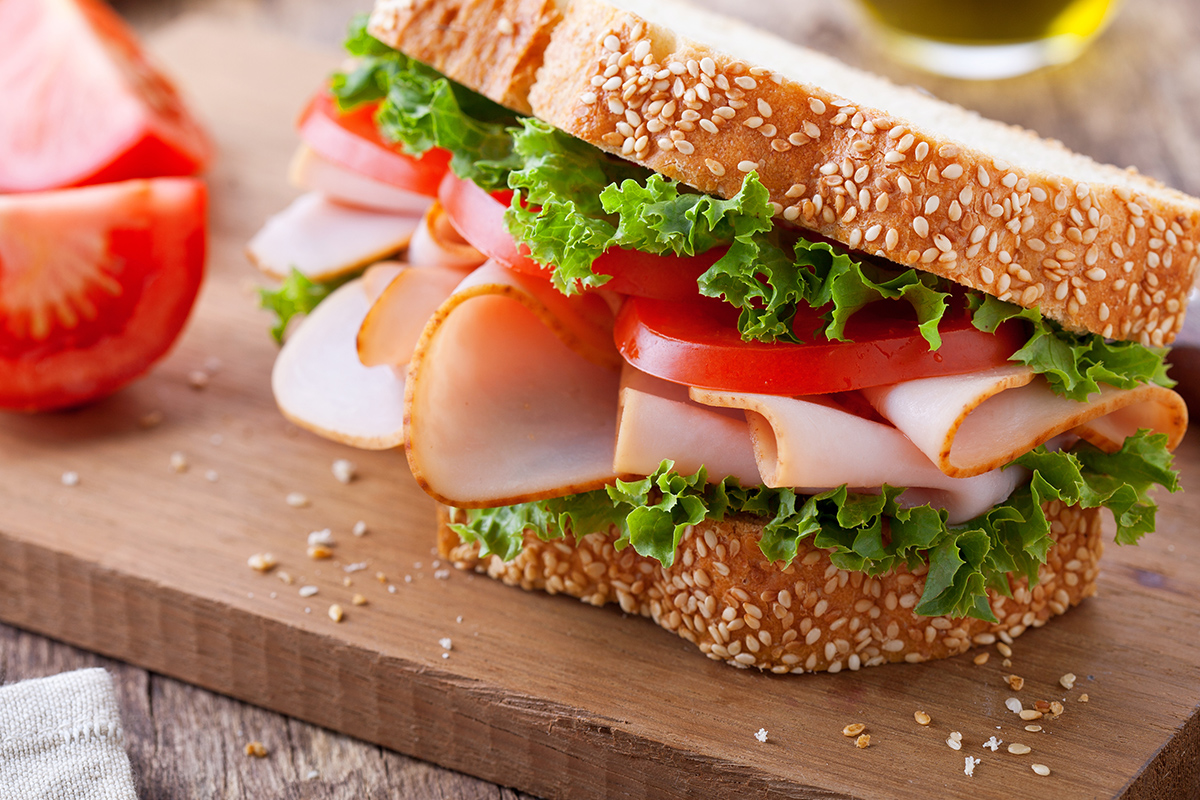
You actually need a good amount of carbohydrate and fat to provide the fuel for muscle building. Your total energy goal seems realistic, though your actual metabolism doesn’t follow an equation so your true calorie need may be higher or lower. Why not simply try to add 300-500 calories daily rather than keep track of five times that much? Simple foods like a turkey sandwich or apple with graham crackers and peanut butter could provide this energy. 

If you’re still having difficulty gaining lean mass, focus on energy dense foods (with little moisture or air) to get the most in every bite and consider adding a weight gainer shake. Cleaning your kids’ plates is also a great way to get extra calories! 

– Debbie J., MS, RD

This article should not replace any exercise program or restrictions, any dietary supplements or restrictions, or any other medical recommendations from your primary care physician. Before starting any exercise program or diet, make sure it is approved by your doctor.

Some questions have been edited for length and/or clarity.

Ask our Dietitian

Have a nutrition question? Our registered dietitian is ready to help!

Email nutrition@lafitness.com or submit your question below and it may be featured in an upcoming article!

4 + 1 =


Recommended Reading - Q+A

Blender with fresh ingredients to making healthy detox smoothie with glass of green prepared drink with a straw. Vegan cooking concept
Healthy Smoothie Recipes

Healthy Smoothie Recipes

Cue the sound of a revving engine… running your blender at home can bring goodness with that whirring noise! Creating your own smoothies is a great way to get in some nutrients and plant phytochemicals you otherwise wouldn’t during the day. It allows you to prepare...

Good carbs vs bad carbs
Debunking Diet Myths

Debunking Diet Myths

With so many sources offering nutrition advice, it’s hard to know what’s true. Even factual information can become distorted by the time it reaches you. Like a game of telephone, the message often changes as it’s passed along. Here, we debunk 5 common diet myths to...

Skin-Saving Nutrients You Need Now

Skin-Saving Nutrients You Need Now

Why Do We Get Wrinkles?

Nourishing your skin from the inside out often means focusing on collagen production (vs. consuming collagen supplements) since it’s the major component of connective tissue in tendons, skin and ligaments1,2.  Your dermis layer’s collagen serves to provide skin with structure, allowing skin to rebuild and repair, and to withstand stretching1, providing skin elasticity and tone2. Although it’s the most abundant protein in the body, as we age our natural production of collagen wanes3. Collagen fibers break down or no longer regenerate, which lead to dreaded wrinkles2. 

Collagen

Collagen is made up of several amino acids, predominantly the non-essential amino acids glycine, proline, hydroxyproline1,2, as well as alanine and arginine. Varying amino acid combinations make different types of collagen, so the collagen in skin (types I & III) is not the same as that in your joints (type II) or gut. In theory, boosting collagen production means furnishing your body with an adequate supply of amino acids from any protein source. However, the body prioritizes protein production to where it’s needed, say wound healing or antibodies for immunity, so it’s impossible to determine in advance where possible collagen peptides will be used in the body2. 

Still, consuming dietary sources of collagen ensures getting adequate amounts of hydroxyproline – the one amino acid not found in other proteins. Since collagen is concentrated in connective tissues, such as muscle, animal flesh (meat, fish, poultry, eggs) is a good source of collagen. Spirulina algae also contains collagen. Bone broth (which is simmered much longer than stock) also provides the amino acids necessary to build collagen2. 

Overall, dermatologists recommend a diet rich in nutrients and antioxidants to preserve skin health. Several play a key role in the production and maintenance of collagen to keep skin smooth and firm, while others protect against sun-induced skin aging and free radical damage in skin cells. Specifically, the skin-saving nutrients and phytochemicals to include regularly in your diet should be:  

Vitamin C

This antioxidant is a necessary cofactor in collagen synthesis and protects existing collagen from degradation2,4 and subsequent skin damage. Good food sources include citrus fruit, kiwifruit, peppers, strawberries, papaya, tomato juice, kale, cabbage, Brussel sprouts and broccoli4.

Vitamin E

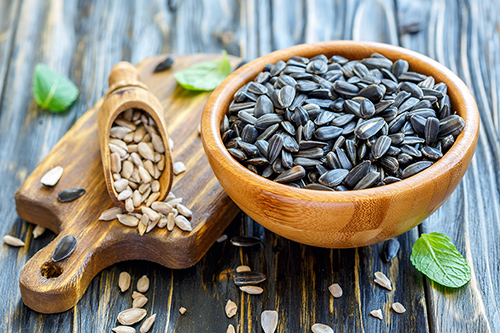
As with vitamin C, this antioxidant helps fights free radicals produced from sun exposure4. Sunflower seeds, almonds, avocado, wheat germ, sunflower oil and grapeseed oil are good sources.

Linoleic Acid

An essential fatty acid used in making ceramides to build a strong skin barrier4. Research also suggests that higher intakes may reduce skin aging4. It’s found in nuts and seeds, grapeseed oil, sunflower oil, safflower oil and canola oil.

Omega-3 Fats

This type of fat from fatty fish (such as salmon, trout and sardines) and certain plant oils (flaxseed, soybean, and canola) preserves collagen and reduces inflammation caused by ultraviolet rays4. 

Selenium

Found in Brazil nuts, mushrooms, wheat germ, sunflower seeds, turkey and seafood, this antioxidant mineral protects skin cells from free radical damage and guards against skin cancer4. 

Sulfur

A mineral commonly found in eggs, broccoli, onions, and garlic2 that’s needed for the structural formation of collagen.

Zinc

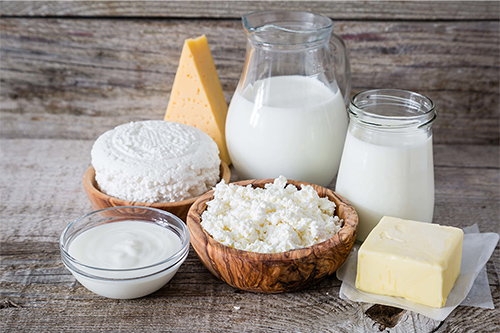
Foods such as red meat, poultry, beans, nuts, certain types of seafood, whole grains, and dairy products provide this necessary mineral co-factor for collagen production2. 

Flavenoids

These compounds in foods such as green tea, berries, beans and cocoa powder may reduce inflammation, improving skin elasticity and reducing wrinkles4. 

Water

The liquid of life helps maintain skin moisture, delivers nutrients to your skin, and flushes out toxins. 

Besides thinking about producing new collagen, it’s equally important to consider protecting existing collagen from damage and subsequent skin sagging. Lifestyle factors that negatively affect collagen integrity include smoking and sun and pollution exposure2.

Quitting smoking, wearing sunscreen and avoiding microscopic contaminants help to save your skin. A big dietary factor in skin aging is high sugar intake2 because the binding of sugar molecules to collagen fibers forms advanced glycation endproducts5, causing permanent damageTo prevent wrinkles, include only natural sugars in whole foods like fruit and milk, and avoid added sugars.

Sources

  1. WH Freeman and Company. Collagen: The Fibrous Proteins of the Matrix. Molecular Cell Biology, 4th Edition. ©2000 https://www.ncbi.nlm.nih.gov/books/NBK21582/ Accessed 11/15/2019 
  2. J Santa Cruz. Dietary Collagen — Should Consumers Believe the Hype? Today’s Dietitian, March 2019. Issue Vol. 21, No. 3, P. 26 
  3. Varani J, Dame MK, Rittie L, et al. Decreased collagen production in chronologically aged skin: roles of age-dependent alteration in fibroblast function and defective mechanical stimulation. American Journal of Pathology. 2006;168(6):1861–1868. doi:10.2353/ajpath.2006.051302 
  4. L Beck. “Can taking supplements or certain nutrients actually improve your skin?” The Globe And Mail. August 8, 2015. https://www.theglobeandmail.com/life/health-and-fitness/article-can-taking-supplements-or-certain-nutrients-actually-improve-your-skin/?cmpid=rss Accessed 11/15/2019. 
  5. Gkogkolou P, Böhm M. Advanced glycation end products: Key players in skin aging?. Dermatoendocrinology. 2012;4(3):259–270. doi:10.4161/derm.22028 

Nutrition Planning with GERD and an Unhappy Thyroid | QA

Nutrition Planning with GERD and an Unhappy Thyroid | QA

Question:

Hi, I was wondering if you would be able to help my girlfriend with her diet.  We’re both LA Fitness members.  She’s an avid swimmer and eats pretty healthy (usually eating far less than what I normally intake). She has a thyroid issue and suffers from GERD, acid reflux. She was swimming several times a week and doing weights, yet not really losing any weight. And, if she can keep food down it’s a good day for her. She takes stuff for GERD but stopped taking her thyroid medication as she wasn’t getting any change. She was going to try one of the app diets, but her mom passed away this year and canceled on that. So, I was wondering if there’s a diet you would recommend for her, to first get her stomach back on track and possibly help her to lose the weight she wants to drop. Thank you for your help. 

– John B 

Answer:

It’s imperative that your girlfriend follow up with her physician on an appropriate course of action regarding her thyroid condition since she stopped taking her medication. Thyroid function determines cellular metabolism and doctors test hormone levels, not body weight, to indicate medication effectiveness. 

I’ll assume she requested your assistance, otherwise advice offered by you regarding her diet and weight may not be accepted! (Always a good idea to be clear on a significant other’s intent in sensitive matters.) If she already eats healthy and has had a recent stress, then simply reducing portions may be reasonable versus following a structured diet plan.  

For gastroesophageal reflux disease (GERD), the International Foundation for Intestinal Disorders* recommends a diet that includes non-citrus fruits, lean proteins, complex carbohydrates, and vegetables except tomatoes and onions. Low-fat dairy foods, non-mint chewing gum, and small amounts of oils, avocado and nut butters are generally well tolerated. Avoid alcohol, caffeine, carbonated beverages and chocolate.  

There is no specific menu plan to follow for losing weight with acid reflux. If your girlfriend is absolutely ready to begin new eating habits, then she may resume her intention of using an app and make adjustments for GERD accordingly. Consumer Affairs recently posted their top 10 weight loss apps of 2019 based on user ratings. And last year Kaiser Permanente shared their reviews of 10 nutrition and diet apps of 2018. That’s twenty apps for her to choose from though not all offer meal plans. 

Best of luck to both of you for 2020 from Living Healthy! 

* https://www.aboutgerd.org/diet-lifestyle-changes/diet-changes-for-gerd.html Accessed 11/22/2019 

– Debbie J., MS, RD

This article should not replace any exercise program or restrictions, any dietary supplements or restrictions, or any other medical recommendations from your primary care physician. Before starting any exercise program or diet, make sure it is approved by your doctor.

Some questions have been edited for length and/or clarity.

Ask our Dietitian

Have a nutrition question? Our registered dietitian is ready to help!
Email nutrition@lafitness.com or submit your question below and it may be featured in an upcoming article!

4 + 2 =


Recommended Reading - Q+A

Blender with fresh ingredients to making healthy detox smoothie with glass of green prepared drink with a straw. Vegan cooking concept
Healthy Smoothie Recipes

Healthy Smoothie Recipes

Cue the sound of a revving engine… running your blender at home can bring goodness with that whirring noise! Creating your own smoothies is a great way to get in some nutrients and plant phytochemicals you otherwise wouldn’t during the day. It allows you to prepare...

Good carbs vs bad carbs
Debunking Diet Myths

Debunking Diet Myths

With so many sources offering nutrition advice, it’s hard to know what’s true. Even factual information can become distorted by the time it reaches you. Like a game of telephone, the message often changes as it’s passed along. Here, we debunk 5 common diet myths to...