How to Eat When You Have Type II Diabetes | QA

How to Eat When You Have Type II Diabetes | QA

Question:

My name is Martin and I have Type 2 Diabetes. My A1C is very high and I struggle with a good diet plan or what to eat. Do you have any advice for me? Thank you

– Martin 

Answer:

So glad you realize the importance of controlling your diabetes, Martin. The best advice will be directly from a Registered Dietitian that you can sit down with and go over your particular diet and daily blood sugar levels, not only your Hemoglobin A1C. Preferably that person should also be a Certified Diabetes Educator® (carries the CDE® credential) who is a health professional who possesses comprehensive knowledge of and experience in diabetes prevention, prediabetes, and diabetes management. 

Top recommendations for Type 2 Diabetes from such experts address weight control and balanced meals, including the following advice* 

  • Research supports the use of a low-fat, plant-based meal plan as therapy for Type 2 Diabetes success. 
  • Eat vegetarian all day, one to two times per week. 
  • Each meal should contain healthy carbohydrates, fat, protein and ideally vegetables. Healthy carbohydrates are those that are rich in fiber (contain at least 3 grams of fiber per serving) like whole grains, legumes and fruit.  
  • Eat protein first, add some vinegar to your food twice a day and have a good helping (about 15 gm) of resistant starch. 
  • Make the right snack choices (fruits and vegetables), reserving starches for your main meals. 
  • Prepare (even if simply assembling) meals at home as much as possible. You’ll generally eat more vegetables, smaller portions, less fat, fewer total calories. 
  • Use weekend or evening time to chop; chop fruits and vegetables in bulk. You’ll be more likely to eat more servings of these healthy foods.  
  • When you eat restaurant meals, practice portion control from the point when you order. Get less food placed in front of you to eat less and to consume fewer calories.  

*taken from Burns, J. “Lifestyle & Healthy Eating Tips For Diabetes Type 2” The Diabetes Council (2018, Oct. 17) https://www.thediabetescouncil.com/lifestyle-dietary-tips-for-diabetes-type-2/ 

– Debbie J., MS, RD

This article should not replace any exercise program or restrictions, any dietary supplements or restrictions, or any other medical recommendations from your primary care physician. Before starting any exercise program or diet, make sure it is approved by your doctor.

Some questions have been edited for length and/or clarity.

Ask our Dietitian

Have a nutrition question? Our registered dietitian is ready to help!

Email nutrition@lafitness.com or submit your question below and it may be featured in an upcoming article!

14 + 7 =


Recommended Reading - Q+A

Blender with fresh ingredients to making healthy detox smoothie with glass of green prepared drink with a straw. Vegan cooking concept
Healthy Smoothie Recipes

Healthy Smoothie Recipes

Cue the sound of a revving engine… running your blender at home can bring goodness with that whirring noise! Creating your own smoothies is a great way to get in some nutrients and plant phytochemicals you otherwise wouldn’t during the day. It allows you to prepare...

Good carbs vs bad carbs
Debunking Diet Myths

Debunking Diet Myths

With so many sources offering nutrition advice, it’s hard to know what’s true. Even factual information can become distorted by the time it reaches you. Like a game of telephone, the message often changes as it’s passed along. Here, we debunk 5 common diet myths to...

Salt Grains for Muscle Gains?

Salt Grains for Muscle Gains?

Looking into the Potential Strength Benefits of Sodium

Salt has been called the “secret weapon in the gym” and “the newest workout supplement1.” The white granules known as table salt (also sea, kosher, or Himalayan salt) in your kitchen are simply sodium and chloride put together. By itself, sodium is one of several critical electrolytes which are minerals that affect the body’s fluid balance, muscle and nerve impulses, blood pressure and acidbase balance.  

Though human requirements are only 300-500 milligrams of sodium daily, the average American consumes ten times that – over 3,400 mg2! It’s well known that athletes have a higher need for sodium, mainly due to sweat losses. However, competitive athletes also train hours a day (and the majority not resistance work) compared to the average person in the weight room. So then, we wondered where the hype about extra sodium came from. Does liberally salting nearly everything you put in your mouth help you pump more iron in the gym?

The Strength Training Community 

Reading through three online sources3,4,5 touting the benefits of salt for size and strength it would appear that we’ve missed out on the key to bodybuilding success! Sodium increases blood volume and intracellular water retention. True, but sodium just doing its job for fluid status and muscle contraction doesn’t mean more salt enhances power and strength for greater gains. None of those articles provide evidence-based references or citations to support these supposed enhancements. (Sodium phosphate is a different molecule that is mentioned as an intracellular buffer that can increase aerobic and anaerobic performance when supplemented3.) The authors do agree that although you shouldn’t limit sodium, you don’t need supplemental salt for strength gains, just ample dietary consumption. A fourth bodybuilding source6 advises not to add excessive sodium to meals and shares that it’s more important to have potassium in balance with sodium intake.  

Sports Nutrition Experts  

We asked Jennifer McDaniel, RDN, a Certified Specialist in Sports Dietetics (CSSD), in the St. Louis, Missouri area if strength athletes and power lifters need additional sodium beyond that in the typical American diet. She informed us that sodium requirements vary significantly based on intensity and time of training session, sweat rate and acclimation to the training environment. “Based on the current research available, strength-based athletes do not need more than the average intake of sodium from the typical Western diet,” McDaniel said. She explained that most athletes’ eating habits far exceed the recommended limit of 2,300 mg sodium* per day making it unlikely that strength trained athletes would need an increase in daily sodium for the average hourlong training bout.  

* for the general public, from the 2015-2020 US Dietary Guidelines7.  

Also, nationally known, Marie Spano, RD, CSSD and Certified Strength and Conditioning Specialist®, gave us her input regarding athletes’ sodium needs. She shared that dehydration can decrease strength and power. “Your muscles need sodium to hold on to more fluid and for muscular contractions, so consume adequate sodium to cover sodium losses through sweat,” Spano advises.  She previously wrote, “To achieve proper hydration, athletes may want to add sodium to their sports drinks or preworkout meals to help retain the fluid they’re consuming.8 The amount depends on total dietary sodium intake and sodium losses through sweat while training in a particular environment.  

Professional Organizations  

American College of Sports Medicine’s (ACSM) 2016 position stand and The International Society of Sport Nutrition’s (ISSN) 2018 research and recommendation update both addressed sodium. Regarding hydration, the ACSM indicated, “Sodium consumed in pre-exercise fluids and foods may help with fluid retention, and advised ingesting sodium during exercise when large sweat losses occur9. The ISSN stated that inadequate sodium would impair performance and advised replacing adequate amounts due to sweat losses10. In regard to extra sodium the Society indicated it was beneficial for hydration in the early days of training in the heat10.  

Neither ACSM or ISSN directly mentioned sodium involved in strength, power, weight training or muscle mass. In fact, the ISSN didn’t list any sodium compounds as “muscle building supplements” based on available literature but did name sodium bicarbonate and sodium phosphate under the “performance enhancement” category, noting there was strong evidence to support their efficacy10. The Society also indicated limited or mixed evidence to support the efficacy of [sodium] nitrates to improve aerobic work performance and endurance exercise10. 

Evidence from Scientific Research 

Being that salt is everywhere in our diet, research on supplemental sodium chloride solely for muscle strength or growth is lacking. Sodium bicarbonate, on the other hand, is not easily obtained from food and has evidence as a modestly effective sports nutrition supplement for short-term, high intensity exercise (anaerobic work) performance11,12. Benefits are most likely due to its action as an extracellular (blood) buffer11. Sodium citrate is a potential alternative buffer, but with unknown effectiveness. For endurance work, sodium phosphate may enhance performance12.  

The Final Word 

So, it seems the hype surrounding salt for strength comes from the importance of sodium for hydration and muscular contraction. Most people generally get enough of it in the form of sodium chloride, more of which doesn’t help strength gains as long as dehydration is prevented, particularly for training sessions that are very long or in the heat. Other sodium molecules consumed as sports nutrition supplements may offer ergogenic effects that can’t be derived from table salt, namely sodium bicarbonate for anaerobic work. The consensus is not to limit salt if you’re intensely resistance training, but you don’t need to intentionally use the saltshaker everywhere either. Consider just drinking a higher sodium fluid electrolyte beverage pre-workout. 

Intermittent Fasting: How to Hit Your Protein Goals | QA

Intermittent Fasting: How to Hit Your Protein Goals | QA

Question:

I’m wanting to start intermittent fasting for the numerous benefits it has… yes, including a little fat loss as well! The only issue is that I’m also trying to add muscle at the same time. Subscribing to the 1-2 grams of protein per body pound theory, is that enough time in the IF window to ingest that much protein? (I weigh 230 now, that’s a lot in a short window of time! ? What are the recommendations in order to achieve this with IF and low-carb/high protein? Is it even possible? Thanks!

– Chris T. 

Answer:

First, I’d modify your protein goal to the lower end of the range you proposed: 1 gram per pound goal body weight. That’s still over the 1.7 gm protein/kg recommended by the American College of Sports Medicine to increase muscle mass. Since there is no physical storage of amino acids in the body, consuming large quantities of protein at once doesn’t mean you’ll use all of what you eat.  

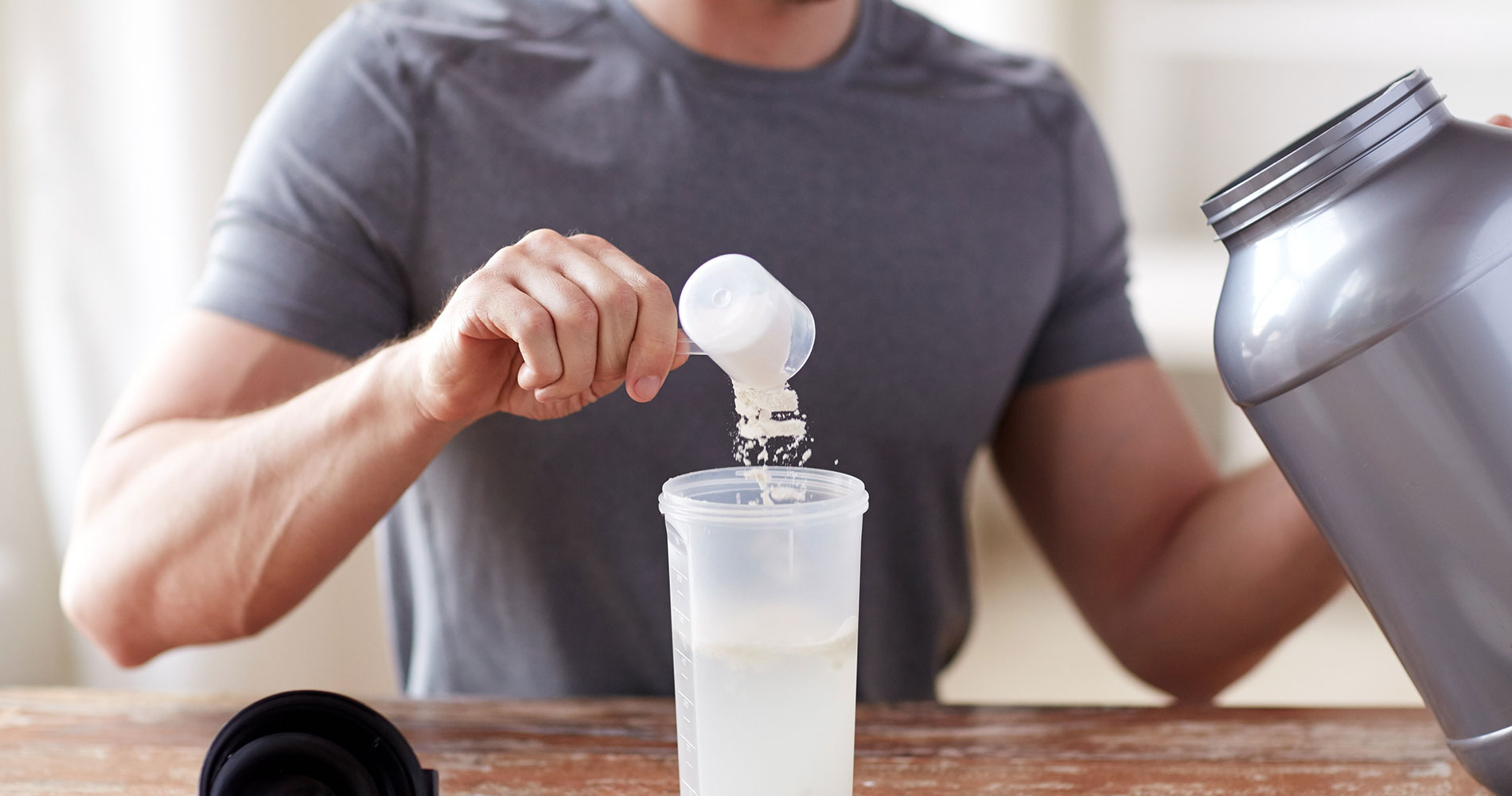
For intermittent fasting, I’d advise breaking down your total so that you’re consuming 30-40 grams of protein* every 2-3 hours for the span of time you do eat. Remember to support your workouts with protein before, during and after to provide your muscles with amino acids when it needs them most and to promote muscle protein synthesis. 

* Amount of protein generally supported in the literature as that which can be utilized at one sitting. 

Schoenfeld, B.J., Aragon, A.A. How Much Protein Can the Body Use in a Single Meal for Muscle-Building? Implications for Daily Protein Distribution. Journal of the International Society of Sports Nutrition; 15,10 (2018). https://doi.org/10.1186/s12970-018-0215-1 

– Debbie J., MS, RD

This article should not replace any exercise program or restrictions, any dietary supplements or restrictions, or any other medical recommendations from your primary care physician. Before starting any exercise program or diet, make sure it is approved by your doctor.

Some questions have been edited for length and/or clarity.

Ask our Dietitian

Have a nutrition question? Our registered dietitian is ready to help!
Email nutrition@lafitness.com or submit your question below and it may be featured in an upcoming article!

1 + 1 =


Recommended Reading - Q+A

Blender with fresh ingredients to making healthy detox smoothie with glass of green prepared drink with a straw. Vegan cooking concept
Healthy Smoothie Recipes

Healthy Smoothie Recipes

Cue the sound of a revving engine… running your blender at home can bring goodness with that whirring noise! Creating your own smoothies is a great way to get in some nutrients and plant phytochemicals you otherwise wouldn’t during the day. It allows you to prepare...

Good carbs vs bad carbs
Debunking Diet Myths

Debunking Diet Myths

With so many sources offering nutrition advice, it’s hard to know what’s true. Even factual information can become distorted by the time it reaches you. Like a game of telephone, the message often changes as it’s passed along. Here, we debunk 5 common diet myths to...

Eggs and Cholesterol: How Much is Too Much? | QA

Eggs and Cholesterol: How Much is Too Much? | QA

Question:

How many egg yolks are allowed per week when trying to lower my LDL cholesterol?

– Theresa D. 

Based on my friend’s advice, I’m eating one boiled egg at each meal, that’s three times a day for me. But now I fear about the effects on cholesterol. So far, I’m good. But what is your advice about eating three eggs each day, every day. I do work out on the treadmill for 30 minutes and weight lift for 30 minutes every day. Regards,

– Abdu K. 

Answer:

Egg consumption in relation to high cholesterol levels was a much debated topic 30 years ago, but confusion still remains. On the whole, eggs are healthy – they contain many nutrients and are good sources of vitamins A and D. One egg yolk contains 5 grams of fat, including 1.5 grams of saturated fat, and approximately 186 mg of cholesterol. Though eggs are high in cholesterol, it’s the saturated fat that has greater impact on your blood cholesterol.  

Eating foods that contain saturated fats raises the level of cholesterol in your blood.” – American Heart Association 

Prominent dietary sources of saturated fat are bacon, sausage, meat, eggs, butter, cheese and processed foods containing palm, palm kernel and coconut oils. It’s often how eggs are prepared (in butter) or served (with bacon, sausage, cheese, muffins, or scones) that’s the culprit in affecting dietary cholesterol. 

Most people can eat an egg daily without increasing their risk for heart disease. If you have diabetes, are at high risk for heart disease, or already have heart disease then it’s wise to limit egg consumption to no more than three per week. Remember that only the yolk contains the egg’s saturated fat, so these guidelines refer to whole eggs, not egg whites or egg substitute. 

Sources: 

  1. American Heart Association (n.d.) “Saturated Fat” https://www.heart.org/en/healthy-living/healthy-eating/eat-smart/fats/saturated-fats  Accessed 2.7.2020 
  2. Komaroff, Anthony, MD. (2019, June 24) “Are Eggs Risky for Heart Health?” Harvard Health Letter.  https://www.health.harvard.edu/heart-health/are-eggs-risky-for-heart-health  Accessed 2.7.2020 
  3. Lopez-Jimenez, Francisco, MD. (2020, Jan. 9) “Eggs: Are They Good or Bad for My Cholesterol?” Mayo Clinic. https://www.mayoclinic.org/diseases-conditions/high-blood-cholesterol/expert-answers/cholesterol/faq-20058468  Accessed 2.7.2020 
  4. Vannice, G and Rasmussen, H. (2014, Jan.) Position of the Academy of Nutrition and Dietetics: Dietary Fatty Acids for Healthy Adults. Journal of the Academy of Nutrition and Dietetics, 114(1): 136-153. Doi: https://doi.org/10.1016/j.jand.2013.11.001 

– Debbie J., MS, RD

This article should not replace any exercise program or restrictions, any dietary supplements or restrictions, or any other medical recommendations from your primary care physician. Before starting any exercise program or diet, make sure it is approved by your doctor.

Some questions have been edited for length and/or clarity.

Ask our Dietitian

Have a nutrition question? Our registered dietitian is ready to help!

Email nutrition@lafitness.com or submit your question below and it may be featured in an upcoming article!

14 + 11 =


Recommended Reading - Q+A

Blender with fresh ingredients to making healthy detox smoothie with glass of green prepared drink with a straw. Vegan cooking concept
Healthy Smoothie Recipes

Healthy Smoothie Recipes

Cue the sound of a revving engine… running your blender at home can bring goodness with that whirring noise! Creating your own smoothies is a great way to get in some nutrients and plant phytochemicals you otherwise wouldn’t during the day. It allows you to prepare...

Good carbs vs bad carbs
Debunking Diet Myths

Debunking Diet Myths

With so many sources offering nutrition advice, it’s hard to know what’s true. Even factual information can become distorted by the time it reaches you. Like a game of telephone, the message often changes as it’s passed along. Here, we debunk 5 common diet myths to...

Calculating Macros on a Plant-Based Diet | QA

Calculating Macros on a Plant-Based Diet | QA

Question:

Hi my name is Alex, I am a 22yearold male, about 5’5 in height, and I weigh about 123 pounds. I recently have changed my diet from regular eating to plantbased food which seems to give me more energy and better sleep. I was curious about how many macronutrients I should be getting and how many calories I should eat. I work out about 5-6 times a week, do cardio first for about 20-30 minutes, and then do about 45-60 minutes of intense cardio and weightlifting.   

Thank you, 

– Alex 

Answer:

Using a predictive energy calculation* it seems your total energy expenditure (TEE) falls in the range of 2600-2800 calories per day based on resting energy need + physical activity where the PA factor is 1.27 for active men. To determine macronutrient amounts, you could allocate 50-60% of energy to carbohydrates, 15-20% to protein and the remaining 20-35% to fat given your exercise level and reliance on plant foods. From 2700 calories and the midpoint of each macro range, this would calculate to about 370 gm Carb., 122 gm Prot., and 81 gm Fat daily. 

Your macronutrient needs and goals shouldn’t really change much based on the source of your food. However, switching to eating all plants (strictly vegan) may mean getting fewer micronutrients if not done properly. So amping up your consumption of iron, zinc, magnesium and calcium may necessitate an adjustment in diet to increase plant sources of those minerals. Please see the Institute of Medicine’s Dietary Reference Intake tables of vitamins and minerals for your micronutrient intake targets. 

*TEE for men = 864 − 9.72 × age (years) + PA × [(14.2 x weight (kg) + 503 × height (meters)] 

Equation source: 

Gerrior S, Juan W, Basiotis P. An easy approach to calculating estimated energy requirements. Prev Chronic Dis [serial online] 2006 Oct [date cited]. Available from: http://www.cdc.gov/pcd/issues/2006/ 
oct/06_0034.htm
. Accessed 1.24.2020 

– Debbie J., MS, RD

This article should not replace any exercise program or restrictions, any dietary supplements or restrictions, or any other medical recommendations from your primary care physician. Before starting any exercise program or diet, make sure it is approved by your doctor.

Some questions have been edited for length and/or clarity.

Ask our Dietitian

Have a nutrition question? Our registered dietitian is ready to help!

Email nutrition@lafitness.com or submit your question below and it may be featured in an upcoming article!

12 + 14 =


Recommended Reading - Q+A

Blender with fresh ingredients to making healthy detox smoothie with glass of green prepared drink with a straw. Vegan cooking concept
Healthy Smoothie Recipes

Healthy Smoothie Recipes

Cue the sound of a revving engine… running your blender at home can bring goodness with that whirring noise! Creating your own smoothies is a great way to get in some nutrients and plant phytochemicals you otherwise wouldn’t during the day. It allows you to prepare...

Good carbs vs bad carbs
Debunking Diet Myths

Debunking Diet Myths

With so many sources offering nutrition advice, it’s hard to know what’s true. Even factual information can become distorted by the time it reaches you. Like a game of telephone, the message often changes as it’s passed along. Here, we debunk 5 common diet myths to...