Calculating Macros for an Athlete | QA
Debbie James, RDN, helps answer a reader’s question on macros.



Hi, I was wondering on how to select the correct macro grams for my diet.
I am a member of team Canada world baton team and train for the sport 4 days a week for about 5 hours. I also attend weekly yoga classes and do cardio workouts 3x a week along with some basic weight training 3x a week. I am 24 years old, 5 foot 6 inches, 160 lbs. and eat between 1,500-1,800 calories.
Thank you
– Lindsay B.

You are undereating calories compared to your estimated energy needs* given your age, anthropometrics and stated workout routine making your first priority to meet minimum recommended protein amounts.
Based on your stated level of exercise, protein requirements will fall in the range of 1.2-1.5gm/kg, which calculates to 87-110 grams of protein per day (<26% energy intake). However, because you’re possibly not meeting energy needs with adequate carbohydrate and fat, it’s safe to increase protein to 2.0gm/kg daily.
Carbohydrate should comprise about 50-60% of your energy intake. For your stated caloric consumption, that would calculate to 225 grams carbohydrate daily (1800 x 0.5 ÷ 4cals/gm). Remember, that is a baseline amount given my suspicion that your energy intake is low.
A healthy fat intake may range from 20-35% of energy consumed. If we take the average of your recommended protein plus the carbohydrate total above, that’s 1292 calories (323gms x 4cals/gm) leaving you with 508 calories for fat. Those 56 fat grams should be from healthy unsaturated sources, preferably plant foods like avocado, oils and coconut.
* Energy needs calculated from Harris-Benedict or IOM equations are 2600-2800 calories per day.
Resources:
Kerksick, CM and Kulovitz, M. (2013) Requirements of Energy, Carbohydrates, Proteins and Fats for Athletes. In Nutrition and Enhanced Sport Performance Chapter 36, (pp. 355-366).
Webb D. Athletes and Protein Intake. Today’s Dietitian June 2014; 16 (6): 22.
– Debbie J., MS, RD
This article should not replace any exercise program or restrictions, any dietary supplements or restrictions, or any other medical recommendations from your primary care physician. Before starting any exercise program or diet, make sure it is approved by your doctor.
Some questions have been edited for length and/or clarity.
 Have a nutrition question? Our registered dietitian is ready to help!
Email nutrition@lafitness.com or submit your question below and it may be featured in an upcoming article!
Debbie James, RDN, helps answer a reader’s question on macros.
LA Fitness registered dietitian, Debbie James, educates readers on the best time to eat starchy carbs, and staying active plays a key role in her answer.

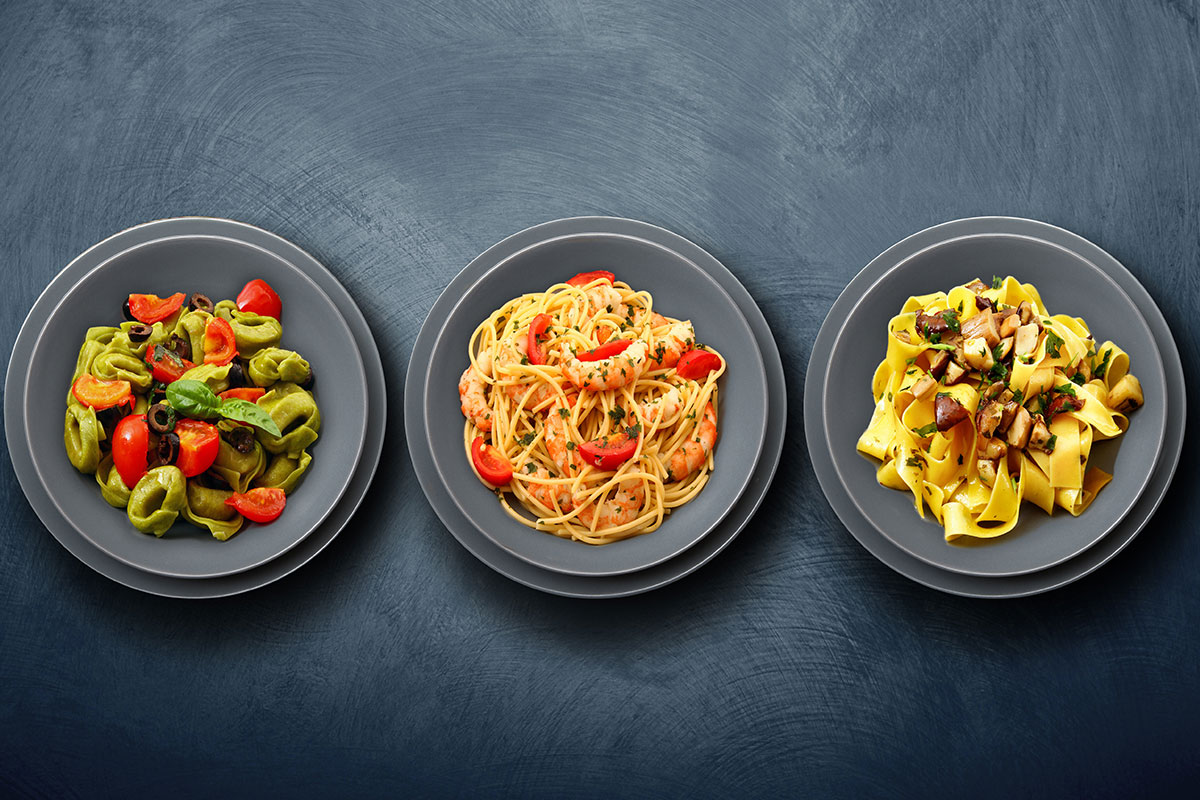
Many people need to count carbohydrates, often for blood sugar management. We offer three sample meals for those looking to keep their carb counts low.
I have a question about starchy carbs. I was reading an article online that said to eat starchy carbs (i.e. brown rice, sweet potatoes) only on days when I lift weights or do cardio. It said to avoid them on rest days and stick with veggies for carbs on those days. What’s your opinion on this?
– James B.
Thanks for asking my opinion, James. There is no nutritional minimum for starches as a source, only for the carbohydrates they contain (at least 130 grams daily*). So, if a person can meet his/her carbohydrate needs – which may still be quite high on rest days – I’m all for maximizing vegetables along with fruit and milk products for carbs. Although it would provide lots of micronutrients, consuming 300 grams of carbohydrate only from vegetables would probably overwhelm your gastrointestinal system.
Starch (complex carbohydrate) from grains, tubers, legumes and seeds, and products made from them (like pasta, cereals, bread and fries) provides a concentrated source of extended energy suitable for physical activity. Although I follow the logic to reduce carbs on non-workout days, there is no evidence that replacing starches intermittently will benefit your performance or physique. Besides, you’re still physically active outside the gym, right? If you’re completely sedentary in bed all day but not sick, then feel free to skip them on your off days.
* Institute of Medicine, Food and Nutrition Board. Dietary Reference Intakes: energy, carbohydrates, fiber, fat, fatty acids, cholesterol, protein, and amino acids. Washington: National Academies Press; 2002
– Debbie J., MS, RD
This article should not replace any exercise program or restrictions, any dietary supplements or restrictions, or any other medical recommendations from your primary care physician. Before starting any exercise program or diet, make sure it is approved by your doctor.
Some questions have been edited for length and/or clarity.
Have a nutrition question? Our registered dietitian is ready to help!
Email nutrition@lafitness.com or submit your question below and it may be featured in an upcoming article!
Debbie James, RDN, helps answer a reader’s question on macros.
LA Fitness registered dietitian, Debbie James, educates readers on the best time to eat starchy carbs, and staying active plays a key role in her answer.
Many people need to count carbohydrates, often for blood sugar management. We offer three sample meals for those looking to keep their carb counts low.
I need help with my carbs, please. I only allow 45 gm of carbs at each meal.
– Laura B.
You are in company with other people who may need to count carbohydrates, often for blood sugar management. The focus would be on low glycemic choices. For a limit of 45 grams carbohydrate per meal you could roughly plan on 25 gm from grain/starch, 10 gm from fruit or milk, and 10 gm from non-starchy vegetables. Remember that use of certain condiments will necessitate corresponding reduction from your food total.
Here’s one example providing approx. 45 gm carbohydrate meals:
Analysis on www.FitDay.com by a Registered Dietitian Nutritionist = 135 gm total carbohydrate (42 breakfast, 47 lunch, 42 dinner) in 1850 calories. Findings were used along with RDN’s professional judgment.
– Debbie J., MS, RD
This article should not replace any exercise program or restrictions, any dietary supplements or restrictions, or any other medical recommendations from your primary care physician. Before starting any exercise program or diet, make sure it is approved by your doctor.
Some questions have been edited for length and/or clarity.
Have a nutrition question? Our registered dietitian is ready to help!
Email nutrition@lafitness.com or submit your question below and it may be featured in an upcoming article!
Debbie James, RDN, helps answer a reader’s question on macros.
LA Fitness registered dietitian, Debbie James, educates readers on the best time to eat starchy carbs, and staying active plays a key role in her answer.
Many people need to count carbohydrates, often for blood sugar management. We offer three sample meals for those looking to keep their carb counts low.

Can you provide me with a basic understanding of carbs, fats, and proteins?
– Mandeep P.
Carbohydrate, fat, and protein are the three macronutrients (needed in large quantities) that give us energy. Alcohol also provides calories but is not a nutrient. Water is the other macronutrient but is calorie-free.
Carbohydrates are compounds that are predominantly used for energy in the body to fuel our brain, nervous system, organs, metabolic processes, and muscles. We get 4 calories per gram from carbohydrate molecules that reach our cells. Some carbohydrates aren’t even digested or absorbed – namely dietary fiber. It is specifically identified on a food’s Nutrition Facts panel, as are sugars. Carbohydrates can be simple or complex in structure. Simple carbohydrates are single or double sugar units, while complex carbohydrates are starchy. Sugars are naturally found in fruits, milk and yogurt, some vegetables, but can be added to just about any packaged or processed food. Starches include foods like potatoes, pasta, bread, rice, corn and cereal grains.
Fats that we eat are triglyceride compounds, the same type we store in our bodies. We get 9 calories per gram of fat, making fat the most energy-rich macronutrient. In addition to long-term energy, we use fat for insulation and protecting our internal organs. Each triglyceride has 3 fatty acid strands. Some of the bonds in a fatty acid are doubled-up making them unsaturated. Mono-(single) and poly-(multiple) unsaturated fats are healthier for us than saturated fat. Trans fat is produced unintentionally when in food processing, and unsaturated fat (typically plant oil) is hydrogenated to become solid. These are the worst fats that negatively impact health, even more so than saturated fat. The highest sources of beneficial unsaturated fats are fatty fish and plant foods like nuts, olives, and avocados.
Proteins are chains of nitrogen-containing amino acids that we break down and reuse to form our own protein in cell membranes, antibodies, and enzymes. These are functions neither fats nor carbohydrates can perform, and we don’t have amino acid reserves, so it’s important to get enough protein. We get 4 calories per gram of protein. Some of the amino acids we can’t form ourselves and so are considered essential to our bodies. Protein sources with the most essential amino acids include eggs, poultry, beef, pork, and dairy products. With an adequate amount of a wide variety of legumes, vegetables, whole grains, nuts and seeds, vegans can get enough essential amino acids from plant foods alone.
Did you know?… If you eat too many calories from any energy source, your body can convert it to stored fat.
– Debbie J., MS, RD
This article should not replace any exercise program or restrictions, any dietary supplements or restrictions, or any other medical recommendations from your primary care physician. Before starting any exercise program or diet, make sure it is approved by your doctor.
Some questions have been edited for length and/or clarity.
Have a nutrition question? Our registered dietitian is ready to help!
Email nutrition@lafitness.com or submit your question below and it may be featured in an upcoming article!
Debbie James, RDN, helps answer a reader’s question on macros.
LA Fitness registered dietitian, Debbie James, educates readers on the best time to eat starchy carbs, and staying active plays a key role in her answer.
Many people need to count carbohydrates, often for blood sugar management. We offer three sample meals for those looking to keep their carb counts low.

Shakespeare may have once famously written, ”For never was a story of more woe than this of Juliet and her Romeo.” Clearly,he never knew of the tragic love story between carbs and the waistline.
Carbohydrates. What are they? Why are they so delicious? And why do they get a bad rap?
Let’s break it down. A carbohydrate is defined as “any large group of organic compounds occurring in foods and living tissues and including sugars, starch, and cellulose.”1 An easier way to explain this is that “carbohydrates are the sugars, starches and fibers found in fruits, grains, vegetables and milk products.”2
These compounds can be grouped into two different categories: simple and complex.

Simple Carbohydrates (a.k.a. The “Bad” Carbohydrates)
Simple carbohydrates, also known as refined carbs, can be found naturally in milk products, fruits and vegetables. However, they are also found in foods containing processed and refined sugars such as soft drinks, baked goods, and cereal. The latter is what gives carbs a bad reputation, as those type of foods can be unhealthy for your body and lead to disease if too many are consumed. This is because refined and processed sugars are considered “empty calories”, meaning they do not have vitamins, minerals or fiber, which can lead to weight gain.3

Complex Carbohydrates (a.k.a. The “Good” Carbohydrates)
Complex carbohydrates, also known as polysaccharides, are known to digest slower than simple carbs and are packed full of nutrients for your body. That makes these foods more filling, which helps aid in weight control.4 It also helps in providing the body more energy over longer periods of time.5 A few examples of complex carbohydrates are broccoli, grains, and beans.

If you’re still unsure what makes certain carbs “good” versus “bad”, some helpful distinctions are as follows:6
Bad carbs are:
Good carbs are:
While not all carbs are created equal, our bodies do need them to function. In fact, the right type of carbs can help benefit our bodies in multiple ways.
1. Heart Health
Carbohydrates high in fiber help lower LDL-cholesterol (low-density lipoprotein) levels7, which can contribute to a plaque-like deposit that clogs arteries and makes them less flexible.
2. Weight Loss
Again, the right type of carbohydrates can help with weight loss due to fiber. Dietary fiber helps the body feel full8. Therefore, you’re less likely to over eat.
3. Mental Health
This is tricky because there have been studies showing both positive and negative effects of carbohydrates on the brain. It’s not exactly about carbs in general, but the type of carbs you’re consuming – do you see a trend here? Stick with complex carbohydrates over simple.
The important thing to keep in mind is that there are three different types of carbohydrates: starch, sugar and fiber. Furthermore, carbohydrates can be broken down into two categories known as simple and complex. Depending on your own unique body composition and health history, it may be best to consult your doctor before deciding what changes to make in your diet.
Interested in finding out more about carbohydrates and their effect on the body? Check out some other Living Healthy articles on the topic below!
When Cutting Carbs Becomes Extreme | Q+A
‘Healthy’ Carbohydrates for Weight Loss – fact or fiction?
No Carb Diet? Think Twice, You Need Carbohydrates to Survive!
Sources:
Debbie James, RDN, helps answer a reader’s question on macros.
LA Fitness registered dietitian, Debbie James, educates readers on the best time to eat starchy carbs, and staying active plays a key role in her answer.
Many people need to count carbohydrates, often for blood sugar management. We offer three sample meals for those looking to keep their carb counts low.