Member Spotlight | Understand Your Body and Change Your Life
Meet Summer S., LA Fitness Member and fitness advocate whose journey to better health and fitness truly began after she was diagnosed with an autoimmune disease.

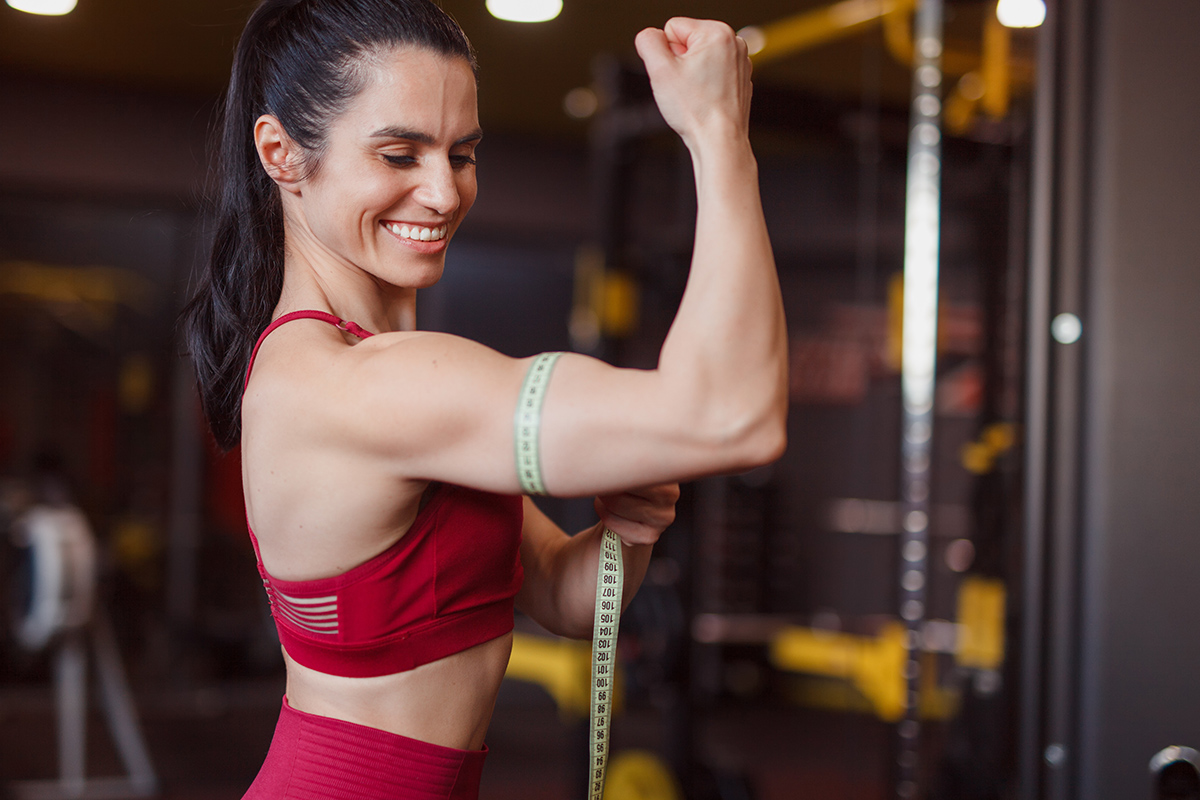
Have you ever compared your body to your best friend’s body? You may wonder how your best friend is tall and thin and you are short and round, but you weigh the exact same. How can that be? How can two people, same gender, look completely different but weigh the same? That’s because humans all have different body compositions.
It’s best described as what bodies are made of. Human bodies are made up of varying percentages of water, fat, bone and muscle. Don’t let body composition be confused with body mass index (BMI). Body mass index is a measurement of weight-for-height.
When you step on a scale, the number tells you how much you weigh, but it doesn’t tell you what your body is made up of. Body composition refers to everything in your body and how much you have of each component. For example, a person’s body could be composed of 36% muscle, 12% essential fat, 15% non-essential fat, 12% bone and 25% other (organs, etc.) Let’s take this breakdown and work our way up to make it easier to understand, taking the five example percentages and putting them into two groups; fat mass and fat-free mass1.
|
>> Fat mass refers to fat tissue in your body and fat-free mass includes everything else (like muscle, bone, fluid and organs). |
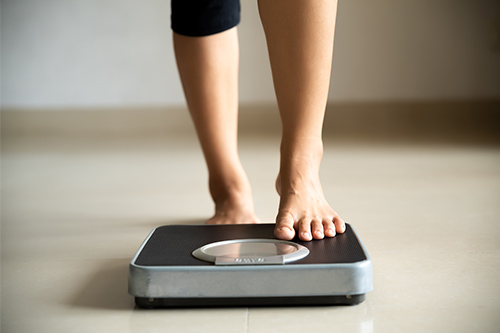
Stepping on the scale will show you one number, your weight. What you don’t see are the other numbers in your body and how they affect your body composition.
For example, if you start an exercise program you may gain one pound of muscle and lose one pound of fat. Since your fat mass decreased and your fat-free mass increased at the same time, your body weight won’t change. See how frustrating this can be for someone who thinks they are putting in a lot of effort at the gym and eating healthy but not seeing the weight change on the scale? This is why the scale is misleading and that’s why knowing your body composition is much more useful than knowing your body weight.

So, what can you use to measure your body composition? The first way would be to track and measure different body parts2. Purchase a flexible tape measure and track the circumference of your waist, hips, arms, legs and chest.
If you track your measurements for a period of six months, for example, and your waist circumference decreases, it’s a sign that you are probably losing belly fat. Here’s another example: if your exercise program involves weights and your arm circumference is increasing, it’s a sign that you are probably gaining muscle in your arms. The second way to track your body composition would be to take pictures.
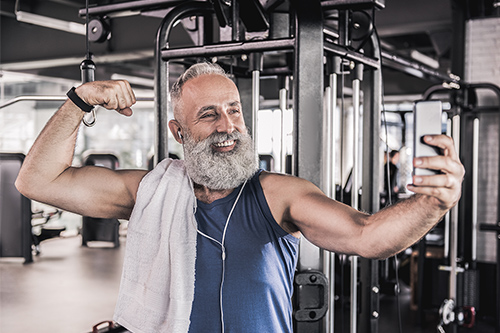
Progress pictures are a very popular way to physically see the changes in your body over time. These pictures are typically known as ‘transformation pictures’ and can be very helpful when looking at your body composition. We often do not notice changes in our body from day to day, but we do notice changes in our body when looking at progress pictures.
There are devices that measure body composition, like a bioelectrical impedance analysis (BIA). BIA sends small electrical currents through your body to see how much the body resists the current. This information is used to predict your body fat percentage3 but these devices are not always accurate.
If you’re interested in knowing your body fat mass percentage, have an LA Fitness ProResults® Trainer help you. A ProResults® trainer can help you with basic principles of physical activity and nutrition to help you improve your body composition.
It’s nothing new; exercise and good nutrition are critical for improving body composition. Exercise and weight training help with fat loss and increased muscle mass. Stepping on the scale will only tell you how much you weigh but there are other factors that need to be considered, like age and genetics. Before you start an exercise and nutrition program, please consult your doctor.
What’s the bottom line? We are all different. No two people are the same, therefore, we all lose and gain (fat, muscle or both) differently. Don’t just step on the scale. The best ways to track body composition is by measuring the circumference of different body parts and taking progress pictures. Grab a notebook and write down your measurements and take your pictures at regular intervals. Give yourself patience and time to see changes.
If you would like to learn more about Body Mass Index (BMI) and the difference between BMI and Body Composition, you can read about it here.
What are your current fitness goals?
My number one fitness goal, now and always, is to keep my autoimmune disease under control. Additionally, it is always a goal of mine to live a healthy and well-balanced lifestyle. I like to find the balance between enjoying my time in the gym and enjoying other activities, like eating out and having popcorn at the movies or a hot dog at a baseball game. It is so important to me to maintain a long-term and sustainable healthy lifestyle. Being too restrictive with my diet does not work for me!
How has training helped shape/change your fitness lifestyle?
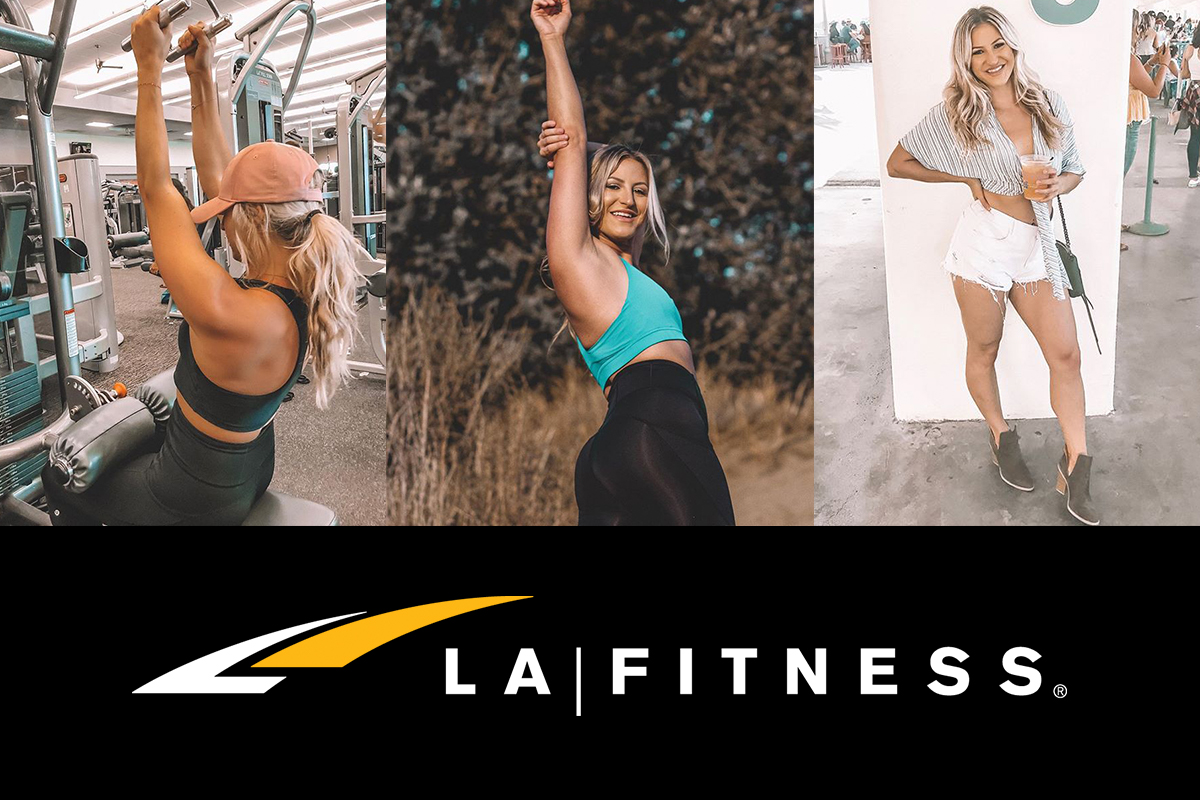
Training has changed my mind, body, and soul! I remember how uncomfortable I felt in my body before I began my fitness journey, and before I started lifting weights. I hated the way I looked and I had to change my outfit 500x before leaving the house because I couldn’t stand the way I looked in my own clothes. Through weight training and proper nutrition, I have been able to shape a body that I truly love and enjoy. This has absolutely transformed my mindset. I am more self-confident and comfortable in my own skin. This transformation not only has an impact on my relationship with myself but also has leaked over into other aspects of my life, such as my job and relationships with others.

Left: July 2017 | Right: July 2018

What got you to join LA Fitness? How has it influenced your life?
I had tried different things to try to get in shape and lose weight in my young adult life, from Weight Watchers to diet pills. None of these options worked for me because they were not sustainable long-term. The turning point for me was my diagnosis with an autoimmune disease, Sjogren’s (SHOW-grins) Syndrome in March of 2017. Autoimmune disease is a condition in which the body mistakes its own healthy cells as foreign invaders and attacks them. In my case, Sjogren’s Syndrome mainly affects the moisture-producing glands, such as the nose, mouth, and eyes. I was 23 years old and the doctors told me I had to be on medication for the rest of my life. Fearing the implications of what a long-term medication might do to me, I started seeking out holistic treatment options. First and foremost, I researched foods, proper nutrition and how I could use food to heal. I eliminated gluten and dairy from my diet to see how I would respond. Although I wasn’t eating those “unhealthy” options, I still struggled to lose weight because I didn’t know much about general nutrition and hadn’t learned proper portion control. Within two weeks without dairy, my cystic acne disappeared. I knew that I was on to something with food for healing and eating for health. I reintroduced gluten successfully, with no issues. When I reintroduced dairy, my stomach was very upset and my acne returned. I am still eating a dairy-free diet to this day. It was such an empowering experience to get to know how my body responds to certain foods.
Around the same time, my boyfriend and I decided to join LA Fitness in hopes of getting into shape. We realized we had put on some “relationship weight” in our first year together, but it wasn’t until we started actually getting into the gym that we realized how bad it had gotten. Between his knowledge of weight training and my knowledge of nutrition at that point, we began to learn and share with one another. We decided to start tracking our macronutrient intake and weighing out our foods. It was during this time that we learned the proper portion sizes for our bodies and the nutritional value of different food options. It was the perfect combination and it started to actually work. I have lost a total of 30 pounds and my boyfriend lost a total of 75 pounds, leaving us with over 100 pounds lost between us!
If you could give others one piece of advice, what would it be?
My biggest piece of advice would be to be patient with yourself and stay committed to your overall health. It’s not just about how you look, it’s about how you feel in your body, and how your body is functioning. By staying committed for the long haul, you will experience sustainable, long-term health and fitness. There are no quick fixes. Just keep going to the gym, keep fueling your body with healthy and nourishing options and the rest will follow.
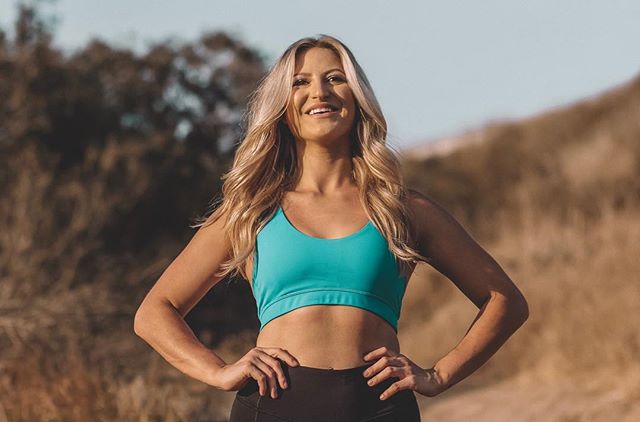
IG: @summersenna
Meet Summer S., LA Fitness Member and fitness advocate whose journey to better health and fitness truly began after she was diagnosed with an autoimmune disease.