An RDN’s Advice on Isolate Protein and Monohydrate Creatine
Debbie James, RDN, helps answer an LA Fitness member’s question regarding protein supplements to help build bigger muscles.



Hi, I’m a member of LA Fitness. I’ve been working out for a few years and I’m in very good shape. I’m 37 years old, 5’8″, 142 pounds, and cut. I don’t want to put on more weight or look bulky but want bigger muscles. I have 2 questions: 1) Do I need to change isolate protein every once in a while, as the body may get used to the same brand? 2) Do you recommend taking monohydrate creatine? I don’t know if I should take creatine, please comment. Thanks.
– Mo L.

Hi Mo, here are your answers!
1) If it’s not in combination with vitamins/minerals or other compounds, then it isn’t necessary to cycle the brand of isolate protein supplement. It’s not like you build up a tolerance to peptides. If you’re consuming the same isolate day in and day out, then I’d say to switch it up with REAL FOOD protein to provide amino acid and nutrient variety as well as solids to digest. Protein supplements are great for convenience and to save time but shouldn’t be relied upon for the basics, like meeting daily needs.
2) If someone is already following excellent workout and dietary plans to support muscle growth but wants more results, then creatine supplementation may be an intervention to try. Although your body makes some, additional creatine is useful for increasing creatine phosphate reserves to improve exercise performance and strength during heavy resistance training. Creatine monohydrate is the form most studied and shown to be safe and effective at 0.1 g creatine/kg of body weight. (Protocols for loading dose and maintenance vary.)
– Debbie J., MS, RD
This article should not replace any exercise program or restrictions, any dietary supplements or restrictions, or any other medical recommendations from your primary care physician. Before starting any exercise program or diet, make sure it is approved by your doctor.
Some questions have been edited for length and/or clarity.
 Have a nutrition question? Our registered dietitian is ready to help!
Email nutrition@lafitness.com or submit your question below and it may be featured in an upcoming article!
Debbie James, RDN, helps answer an LA Fitness member’s question regarding protein supplements to help build bigger muscles.
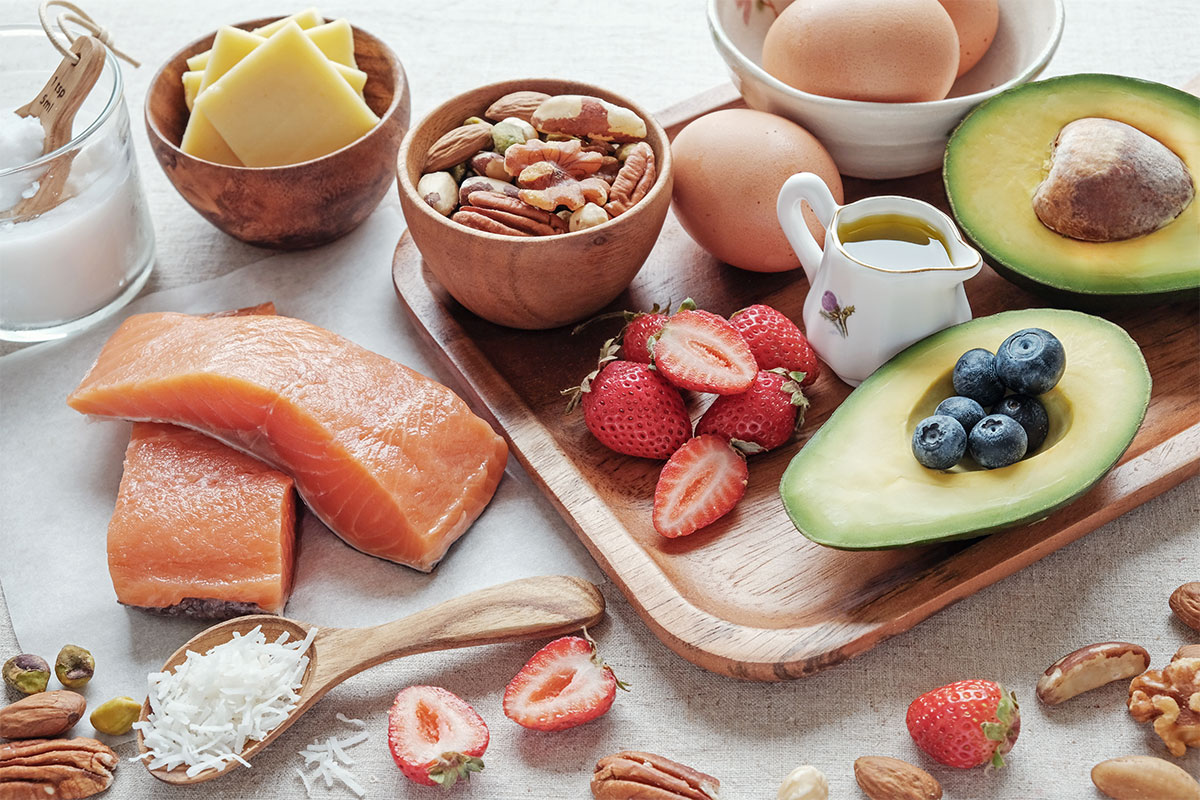
In order to better understand bigger nutritional ideas, it’s best to have a clear and concise understanding of the basics. LA Fitness registered dietitian, Debbie J., helps explain carbs, fats, and proteins.
Can you provide me with a basic understanding of carbs, fats, and proteins?
– Mandeep P.
Carbohydrate, fat, and protein are the three macronutrients (needed in large quantities) that give us energy. Alcohol also provides calories but is not a nutrient. Water is the other macronutrient but is calorie-free.
Carbohydrates are compounds that are predominantly used for energy in the body to fuel our brain, nervous system, organs, metabolic processes, and muscles. We get 4 calories per gram from carbohydrate molecules that reach our cells. Some carbohydrates aren’t even digested or absorbed – namely dietary fiber. It is specifically identified on a food’s Nutrition Facts panel, as are sugars. Carbohydrates can be simple or complex in structure. Simple carbohydrates are single or double sugar units, while complex carbohydrates are starchy. Sugars are naturally found in fruits, milk and yogurt, some vegetables, but can be added to just about any packaged or processed food. Starches include foods like potatoes, pasta, bread, rice, corn and cereal grains.
Fats that we eat are triglyceride compounds, the same type we store in our bodies. We get 9 calories per gram of fat, making fat the most energy-rich macronutrient. In addition to long-term energy, we use fat for insulation and protecting our internal organs. Each triglyceride has 3 fatty acid strands. Some of the bonds in a fatty acid are doubled-up making them unsaturated. Mono-(single) and poly-(multiple) unsaturated fats are healthier for us than saturated fat. Trans fat is produced unintentionally when in food processing, and unsaturated fat (typically plant oil) is hydrogenated to become solid. These are the worst fats that negatively impact health, even more so than saturated fat. The highest sources of beneficial unsaturated fats are fatty fish and plant foods like nuts, olives, and avocados.
Proteins are chains of nitrogen-containing amino acids that we break down and reuse to form our own protein in cell membranes, antibodies, and enzymes. These are functions neither fats nor carbohydrates can perform, and we don’t have amino acid reserves, so it’s important to get enough protein. We get 4 calories per gram of protein. Some of the amino acids we can’t form ourselves and so are considered essential to our bodies. Protein sources with the most essential amino acids include eggs, poultry, beef, pork, and dairy products. With an adequate amount of a wide variety of legumes, vegetables, whole grains, nuts and seeds, vegans can get enough essential amino acids from plant foods alone.
Did you know?… If you eat too many calories from any energy source, your body can convert it to stored fat.
– Debbie J., MS, RD
This article should not replace any exercise program or restrictions, any dietary supplements or restrictions, or any other medical recommendations from your primary care physician. Before starting any exercise program or diet, make sure it is approved by your doctor.
Some questions have been edited for length and/or clarity.
Have a nutrition question? Our registered dietitian is ready to help!
Email nutrition@lafitness.com or submit your question below and it may be featured in an upcoming article!
Debbie James, RDN, helps answer an LA Fitness member’s question regarding protein supplements to help build bigger muscles.
In order to better understand bigger nutritional ideas, it’s best to have a clear and concise understanding of the basics. LA Fitness registered dietitian, Debbie J., helps explain carbs, fats, and proteins.