
Successful Weight Maintenance – How Do People Do It?

Successful Weight Maintenance – How Do People Do It?


It’s hard enough as it is to lose weight, and the more we learn, the more we find how many factors stack up against our efforts to maintain our progress. A review of the literature on weight loss maintenance and weight regain has narrowed down the potential reasons for why keeping the weight off is so difficult. To help us understand why weight maintenance is tough, it helps to consider what makes it successful to begin with. 

What Makes Weight Maintenance Successful? 

According to this literature review, successful weight maintenance is associated with: 


  1. Greater Initial Weight Loss 
    • The more weight you lose at the start of your weight loss efforts correlates with how well you can keep your total weight loss off. 
  2. Reaching a Self-Determined Goal Weight 
    • There is potentially a psychological benefit to setting a goal and achieving it that helps you maintain the results of all your effort. 
  3. Having a Physically Active Lifestyle 
    • This can be understood to mean that those who lose weight strictly by dieting will have a harder time maintaining weight loss than those who also incorporate physical activity into their lifestyle. 
  4. A Regular Meal Rhythm That Includes Breakfast and Healthier Eating 
    • Numerous studies have already determined that individuals who eat breakfast are more likely to control their weight,1 so we’re not at all surprised by this one. 
  5. Control of Over-Eating and Self-Monitoring of Behaviors 
    • The ability to practice self-control and to monitor our own behaviors is not a natural skill. It takes practice and will-power to master our involuntary impulses. 

These 5 items are all things you can do. You can work for greater initial weight loss, you can add physical activity to your lifestyle, you can change your nutrition habits.

The following factors also contribute highly to successfully maintaining weight loss, but they are not as easy to manipulate.

According to the same literature review, part of your success is also owed to:

  1. Your Internal Motivation 
    • This is perhaps the reason most of us struggle to start with or stick to plans that we think will be difficult to accomplish. 
  2. Your Level of Social Support 
    • It’s not just a matter of having a support system but a question of how easily you turn to them when you need support. 
  3. Better Coping Strategies and Your Ability to Handle Life Stress  
    • Poor coping strategies can involve eating in response to negative emotions and stress.2 
  4. Self-Efficacy 
    • This is the belief that you can do the things you set out to do. 
  5. Autonomy  
    • This is the ability to make your own informed decisions. 
  6. Your Ability to Assume Responsibility 
    • How well do you take-on tasks that are presented to you? 
  7. Greater Psychological Strength and Stability 
    • How effectively can you check-in with your emotions, recover from setbacks, and recognize maladaptive behaviors? 

In this list we can see how much our psychological, social, emotional, and environmental situations all contribute to our overall ability to care for our health. We haven’t even touched the biological factors that make our individual endeavors more difficult. The bottom line is, there is never ONE reason why you are struggling with maintaining your weight loss. 

Why We Regain Weight

Now that we can clearly see the common factors among those who are successful, we can easily run through those lists and identify which factors are playing a part in our personal struggle. A lot of it is founded in our ability to adhere to certain routines and to new habits. An equally important piece comes in the form of our emotional and psychological strength and the type of support we have.  

What Can We Do About It?

If all these things are tied together, it seems that a person would need a life that is perfect in all ways in order to achieve and maintain their goals. However, we know that no one has a perfect life, and yet there are successful people everywhere. How do they do it and what can we learn from their success that we can apply to our own approach?  

The answer to that is attempted in “Keep the Weight Off” articles everywhere. Everyone has their own idea of which approach works best. Yes, there is some cross-over, but a lot of the advice typically goes back to something along the lines of “watch what you eat” and “do more exercise.” However, if any of the above factors mean anything, the real answer should be something only you can determine based on your individual circumstances. 

Take some time today to think through areas in your life that, if improved, can help you set a foundation for success. A strong foundation can make the difference you need to get where you’re trying to go. 

We invite you to share what you plan to tackle to increase your total wellness and to establish a stronger base. Let us know in the comments below! To read our dietitian’s advice for Slow Weight-Loss, How to Handle a Weight-Loss Plateau, or How to Calculate Your New Calorie Limits After Weight-Loss, click the links to read the QA’s. For more articles like this one, subscribe to our newsletter to receive monthly highlights from the LA Fitness blog! 

Sources  

  1. Davis, Jeanie Lerche. “Lose Weight: Eat Breakfast.” WebMD, WebMD, 31 Aug. 2010, https://www.webmd.com/diet/obesity/features/lose-weight-eat-breakfast#1  
  2. Elfhag, K., and S. Rössner. “Who Succeeds in Maintaining Weight Loss? A Conceptual Review of Factors Associated with Weight Loss Maintenance and Weight Regain.” Wiley Online Library, John Wiley & Sons, Ltd, 10 Jan. 2005, https://onlinelibrary.wiley.com/doi/abs/10.1111/j.1467-789X.2005.00170.x 

Why You Should Practice Some Self-Love

Why You Should Practice Some Self-Love

We often write about how to achieve your fitness goals, how to eat well, and how to keep motivated through it all. Today we’re pausing to recognize how amazing you are for keeping the fight. It’s not always easy to maintain a healthy and active lifestyle and there are a lot of temptations out there that aim to tear us away from our goals.  

With so much love floating around, Valentine’s Day is the perfect reminder to love ourselves and the bodies we’re in. 

This Valentine’s Day show yourself some love and remember that: 

Your Body is Beautiful

Your body is beautiful, and your nutrition and fitness goals exist to keep it healthy. Regardless of why you hit the gym, the track, the pool, or the nature trail, the fact that you show up deserves applause. It doesn’t matter if you’re there to get shredded, to feel amazing in your swimwear, to regain mobility after injury, or to improve your ability to carry out everyday tasks. You are looking after your body and that’s what makes your effort worth it! 

You are Trying Your Best

We all skip work out days from time to time and we all have cheat days when it comes to our nutrition. We know we can do better and we try again. Sometimes we don’t believe we can, and we give up. It’s only human to experience self-doubt and to falter, especially when the road is long or difficult. Even if it takes a while, you eventually try again. That’s the part that matters! If you’re struggling with thoughts that tell you “I can’t do it,” read our article on How to Stick to Your Resolutions to learn how to combat destructive thought processes. 

Slip-Ups Aren’t Always Your Choice

Sometimes life happens. We get ill, we receive a diagnosis that affects how we can eat or exercise, we can’t afford to buy the healthier food option, we must dedicate our energy to care for others, or we just don’t have enough time. It’s good to recognize that sometimes external factors are imposing their will. Your best option may be to establish “a new normal,” and build a routine with, instead of around, your environment.  

It’s also good to take up new ways to care for yourself. It isn’t all about eating right and exercising. Caring for yourself also means that you:

Take Time to Yourself

We don’t realize how necessary this is until we desperately need to rest and recharge. If you commit some time to yourself every so often, you can significantly reduce the buildup of stress and tension. This can be as little as 10 minutes a day. Silence or turn off your phone and disconnect from the world briefly. It feels amazing when you know your time is protected and for this piece of your day, no one gets to ask anything of you.

Make Sure You’re Sleeping Enough

Our mood, energy, and patience all rely on our sleep. It can be a lot harder to manage small inconveniences, let alone larger problems, when we haven’t slept enough. Now add the fact that our circadian rhythm tends to fluctuate naturally with the changing seasons, and our sleep cycles are thrown even further off course. If you pay more attention to your sleep, you might find that your willpower is stronger along with your ability to stick to your goals. 

Set Boundaries

Setting boundaries is a big deal! Do you ever feel taken advantage of, like your kindness is used, or like others know you can’t turn down a request? So, you’re always the one driving the carpool, always the one picking up the tab, always the one taking the tasks or shifts no one else wants at work (this is assuming you would rather not do all these things).

Without boundaries, your physical and emotional energy can drain fast! It’s good practice to start saying “no,” or to work on not feeling obligated to give a full-length essay with MLA citations explaining why you need to say “no.” Setting healthy boundaries can improve relationships with others and can really benefit your own mental and emotional health, making you more capable of devoting your energy towards your personal wellness goals.  

Don’t Compare Yourself to Others

By now we should be well-aware that everyone is different and that this is a good thing. Imagine if we were all the same; how incredibly frightening. It’s understandable why we imagine a standard of what’s attractive, what’s beautiful, what’s fashionable, and what’s socially acceptable. Every group of people will construct their own ideals.

However, there is a reason we ask for personalized nutrition and personalized fitness advice. Our bodies are naturally different, and what works for one person may not work for another. Differences in body type alone can mean that even if two people follow the exact same fitness and nutrition regimen that their bodies will look completely different, even at their healthiest. So, don’t compare yourself to anyone else, because the healthiest version of you may not look like the healthiest version of someone else! 

Share your thoughts on how you practice self-care in the comments below! For more articles like this one, subscribe to our newsletter to receive monthly highlights from the LA Fitness blog! 

How Baking Can Help You Build Good Habits

How Baking Can Help You Build Good Habits

February is Bake for Family Fun Month! Aside from yielding delicious baked goods, baking can help families build stronger relationships, improve communication, and teach valuable lifelong skills. You might be wondering, how?  

Well, building healthy skills and habits is a process that starts at home. Group activities, like baking, easily involve family members of all ages and skill-levels and create a space for productive teamwork. All it takes to get started is a quick web search for a healthy recipe, and the willingness to clean up a few spills. 

Here is how baking with the family (or with friends who may as well be family) can be good for teaching and learning healthy habits and goal-setting skills: 

Relationship Building 

Baking allows for creative expression, and you’d be surprised by what you can learn from observing a person’s artistry. In fact, certain types of therapy use art as a way to help children and even adults express emotions, fears, and internal struggles when they’re too difficult to put into words. Working on something that channels our creative side helps us relax, and a relaxed state-of-mind is great for bonding and relationship building. 

A good support system is key when setting goals or developing new habits. Learning to bond with others can help establish new and nurture existing support systems. 

Improving Communication 

“Pass the salt please!” Remember what we said about modeling positive behaviors? It helps others understand what we mean when we say “please be polite” or “please be considerate” if they have an example of what that looks like. When you’re baking, you might say something like “I know your hands are full, but when you have a second can you help me pour the flour?” A statement like this one considers the other person’s current position and gives them room to respond when they are ready. Imagine if the statement was “help me with the flour.” You might get a response like “Can’t you see my hands are full?!” 

Good communication helps us consider how others might receive the things we say. Being able to listen to how our words come across can help us reflect on goals we set and recognize when they sound unrealistic. 

Teaching Lifelong Skills

Baking is a science and it’s often precise down to the minute. It’s great for learning and mastering concepts like: 

  • Timing – Each recipe will vary and one additional or missing ingredient can affect baking time. 
  • How to Estimate – How much is a pinch, really? 
  • How to Follow Instructions – Have you ever missed a step and had to improvise? 
  • Mathematics – Maybe the instructions will feed 8 but you only want to feed 4. Now you need to divide the amount of each ingredient in half. 
  • Chemistry – Food changes when it’s exposed to heat, and that’s all Chemistry! 

When it comes to setting goals, these concepts come into play too! Imagine you have a weight loss goal. You’ll be considering the timing of your meals, recovery drinks, and workouts and altering them to match your changing schedule. You may need to estimate a meal’s calorie count or follow a prescribed nutrition plan or workout regimen. You’ll probably also do plenty of math to track calories, inches lost, and to calculate your BMI. All of this becomes easier when you practice with activities that incorporate these skills. 

Ready, Set, Bake!

Next time you’re stumped for activities to do as a family, unpack your aprons and pull up a good recipe. Your baking day can lead to some positive and healthy skill-building! For some healthy cookie recipes, check out these 8 Waistline Friendly Cookie Ideas. To stay informed with our fitness and nutrition articles, subscribe to our newsletter to receive monthly highlights from the LA Fitness blog! 

How to Press-On with Your New Year’s Resolutions

How to Press-On with Your New Year’s Resolutions

Help! My Resolve is Slipping!

It happens to the best of us! We get tired of the way things are and decide we’re going to make some big changes that we tackle all at once. We go strong for weeks, maybe even months, but suddenly we’re struggling to keep up. When this starts to happen, we need to step back and look at a few things. Why are we struggling, and what can we do about it?

Allow us to walk you through it. Plug in your own answers and see where the process takes you. Let’s begin:

Why am I Struggling?

  1. I’m always physically tired. 
  2. I’ve started coming up with excuses. 
  3. I’m starting to doubt that I can do it. 
  4. The goal looks too big now. 
  5. I don’t have any more time in my day for other things. 
  6. Meal prepping is frustrating. 
  7. The cravings have gotten really bad. 
  8. I’m just going through the motions in my workouts, I may as well not be doing them. 
  9. A fraction of my goal feels like enough. I already feel better than before. 
  10. Too much change is overwhelming. 
    1. Do any of these sound like your reason? Perhaps you’ve identified with more than one. The important thing is that you identify what started to slow your forward momentum. Once you know the reason for your struggle, you can actually start to do something about it. If your reason isn’t up there, you can still move to the next step. Just bear in mind the specific reason why maintaining your resolution has become more difficult. 

    Break it Down

    The next step is to take your reason and break it down even further. You want to start detailing all of its bits and pieces. This helps you take a broad concept and make it more specific; and we know it’s easier to work with more specific thoughts. Let’s do a couple examples together. Say your reason is #3, that you’re experiencing doubt and you’re no longer sure you can accomplish your goal. You would break it down like this: 

    I’m starting to doubt that I can do it because: 

    1. My progress is slow or stalled 
    2. I wanted to accomplish this in 2 months and now I’m running out of time 
    3. I can’t maintain the number of days a week I planned to commit 

    Another example could be #6: Meal prepping is frustrating. Your breakdown might include items like: 

    1. It takes too long 
    2. I miss the simplicity of eating out 
    3. I hate doing dishes 

    Once you have your items listed out, you can probably see some areas that you can work on. Let’s move on to step 3. 

    Take Informed Action

    Now that you’re more informed about why you’re feeling like your resolution may not stick, you can take action. Action looks like this: make a logical statement about each of the items on your breakdown list. This is a technique employed in certain cognitive behavioral therapies. The idea is that you are recognizing a distorted thought process and giving yourself very reasonable explanations for why that thought doesn’t actually make sense. It helps break through the walls that you mentally set up for yourself. Let’s do an example together: 

    1. My progress is slow or stalled 

    If you let your thoughts go from “my progress is slowing down” to “what if I never achieve my fitness goals?” or “what if this is all I’m capable of?” you’re slipping into a cognitive distortion called Catastrophizing. This is what happens when a person takes a single unpleasant event and imagines it will undeniably lead to the worst-case scenario.

    This is what you do to reason your way through this kind of thought: 

    First, remember that our bodies are living and breathing, and it doesn’t matter if we actively help the process, they adapt to change. So, you started working out? Great! Your body struggled at first but now it’s really good at getting you through your 20 minutes on the treadmill. Your body thinks “that’s enough muscle building and cardiac improvement. I can do what’s being asked of me now.” So, your progress starts to slow.  

    As long as you keep your routine, your cardiac health and running muscles will stick around, but if you push yourself to sprint or to hang out on the treadmill for 30 minutes instead of 20, your body will need to adapt again to meet those demands. It’s natural; a slowdown in your progress doesn’t necessarily mean you’re doing anything wrong; it most likely means that your body has adapted to the change.  

    Now that you’ve thought logically about it, a slowdown in your resolution should no longer look like a critical failure. You can repeat that logic to yourself every time doubt starts to creep back in. 

    Rinse and Repeat

    Go through this process for each and every one of the thoughts that holds you back from your goals. Even if it’s something that has a seemingly simple answer. For example, you might hate doing the dishes involved in meal prep. How can you reason your way through that one? Well, take a moment to look at the bigger picture. Is it worth giving up on your goal because of dishes? Is the trade-off worth it?  

    Alternatively, you can think of ways to make the chore of doing dishes more manageable. For example, you can make a habit of rinsing dishes as soon as they’ve been dirtied so you don’t have to spend more time scrubbing dried-on food. Mentally compare the difficulty of that task with your overall goal, and it probably looks quite doable.  

    The general thought is this: when we have trouble with our goals it often feels like we’re hitting obstacles we’ll never overcome. The trick is to recognize the flaws in our thought process and then reason our way out of it. 

    To stay informed with our fitness and nutrition articles, subscribe to our newsletter to receive monthly highlights from the LA Fitness blog! 

    Note: The author has a master’s degree in Social Work and is versed in various cognitive and behavioral therapies. Advice presented is based on an understanding of human behavior but should not replace the guidance of a licensed practitioner or that of one operating under licensed supervision. 

    Cheat Day Regret: How to Make a Comeback

    Cheat Day Regret: How to Make a Comeback

    How to Recover from Your Cheat Day

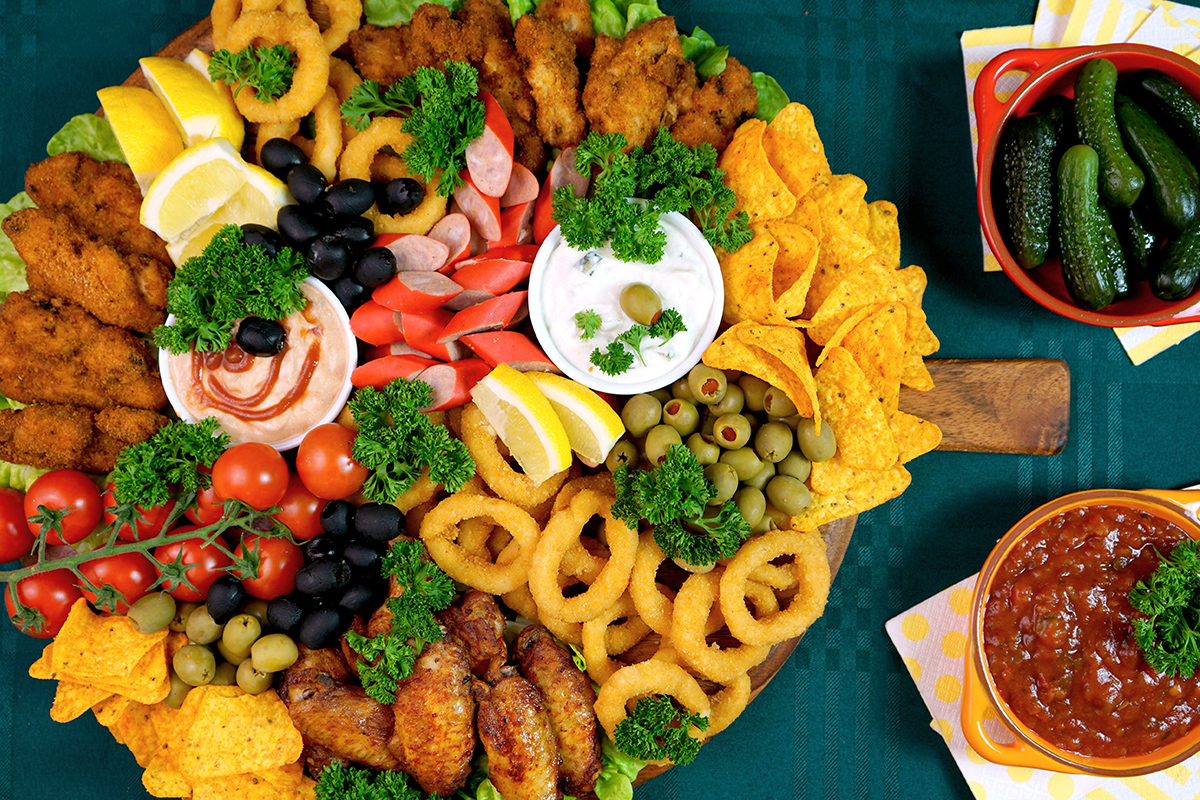
    The big game calls for big snacks with some equally big numbers on their nutrition label. We all allow ourselves a little room for our favorite foods sometimes, and major events usually take credit for this. However, there’s no need to forfeit your goals if you’ve strayed from the path.  

    There is a way to recover from your splurge, and it’s not a crash diet. Here are 5 healthy ways to get yourself back on track: 

    1. Don’t Panic

    Food cravings are natural and there are a lot of reasons for them. Often, they are linked to common physical and emotional triggers like a lack of sleep, PMS, stress, nutrient deficiencies, and more.1 So, even if your cheat day wasn’t game day, it’s good to understand that our bodies often fight with our brains when it comes to cravings.  

    The good news? There is evidence to indicate that the occasional cheat day can help you stay on track for long-term goals.1 True, the excess calories or getting kicked out of ketosis can make your progress slow-going, but, having an outlet to occasionally enjoy your guilty pleasures can make the mental battle a bit more bearable. 

    The other tips come in no particular order but it’s a good idea to check-in with yourself first to make sure you’re not beating yourself up for the cheat. It’s healthy to acknowledge that cheat days are a good thing in moderation, and if you really overdid it, that you are capable of making a comeback.

    2. Drink Water

    Water helps your body do what it’s already doing, better. Drink water to help your liver and kidneys do what they do best, which is to help process and flush out toxins.2 It’ll also benefit your digestive tract and help move things along. If you ate something your body was no longer accustomed to receiving, you may start to feel a little “backed up.” Water will help get things back to normal. 

    In addition to helping your bodily processes, drinking water can help you eat less. Cheat days usually involve sugar and carbs, the food items most people are cutting from their daily diets. Sugar and carbs do a great job of lighting up your craving for more! Chances are, the day after your cheat day, you’ll be craving just a few more nibbles. Drinking water can help you feel more satiated which helps fight additional cravings.

    3. Stay Off the Scale

    You might be tempted to weigh yourself to assess the damage but doing so will not help you at all. The scale will almost certainly tell you that you’ve gained weight. Seeing a higher-than-normal number can be really discouraging, but the good news is that the weight you gained is not fat. It takes much longer to gain fat than you might think. The extra weight is most likely water.3  

    Here’s the thing: carbohydrates are a good source of glycogen, an easy-to-process energy source. Glycogen happens to bond very well with water,3 a readily available molecule in your body. This is why the scale says you are heavier, because for every gram of carbohydrates, you have 3 or 4 molecules of water bonded to it.3 Your body retains this water and the scale reflects the added weight. Keep your sanity by staying off the scale and take comfort in the fact that you can still bounce back from water-weight.  

    You might think, “well, #2 was to drink water; won’t that add to water-weight?” It really won’t. Drinking water is actually cited as a method to help lose water weight.4 When your body feels dehydrated, it will cling to the water it has. Conversely, if you over-hydrate, your body will retain water as well. Just keep a balance.

    4. Take Advantage of Your Refueled Glycogen Stores

    Speaking of glycogen, if your body has some fresh stores, use them! When you eat carbs, your body breaks them down into glucose. That glucose is either used up for immediate energy or converted into glycogen and saved for later.5 Your body has limited glycogen storage and unlimited fat storage, so if your glycogen stores get full, your body converts glycogen into triglycerides (a type of fat). Triglycerides can be used for energy or get stored in your body fat.5 


    Get a solid workout in to help use up the stored energy and limit your carb intake to help your body use what you put in on your cheat day. 

    5. Resume Your Healthy Eating Habits

    Make sure your cheat day doesn’t turn into a cheat week. Remember that a single day or meal isn’t going to undo weeks or months of hard work, that the scale is most likely reflecting water-weight, and that you can help your body get back to healthy habits. Look back fondly on how delicious your cheat meal was and then zero back in on healthy eating. 

    For information on how train your taste buds to love the taste of health foods, read our article: It’s an Acquired Taste. If you’re still thinking about how the body uses glycogen and when it starts burning fat, read our article about Exercising on an Empty Stomach. 

    To stay informed with our fitness and nutrition articles, subscribe to our newsletter to receive monthly highlights from the LA Fitness blog! 

    Sources

    1. Penney, Stacey. “Do Cheat Meals Make Diet Sense?” NASM Blog, 11 Oct. 2018, https://blog.nasm.org/nutrition/cheat-meals-make-diet-sense/ 
    2. Chandler, Brynne. “The Best Way to Clean Out Your Body Naturally.” Healthfully, 24 Dec. 2019, https://healthfully.com/the-best-way-to-clean-out-your-body-naturally-5350801.html. 
    3. “Does A Cheat Day Undo A Week at the Gym?” InBody USA, 21 Sept. 2018, https://inbodyusa.com/blogs/inbodyblog/88406017-does-a-cheat-day-undo-a-week-at-the-gym/ 
    4. Mawer, Rudy. “13 Ways to Lose Water Weight (Fast and Safely).” Healthline, 9 Aug. 2018, https://www.healthline.com/nutrition/13-ways-to-lose-water-weight#section8 
    5. Boyers, Lindsay. “Burning Fat Vs. Glycogen.” LIVESTRONG.COM, Leaf Group, 16 May 2019, https://www.livestrong.com/article/331651-burning-fat-vs-glycogen/.