Answer:
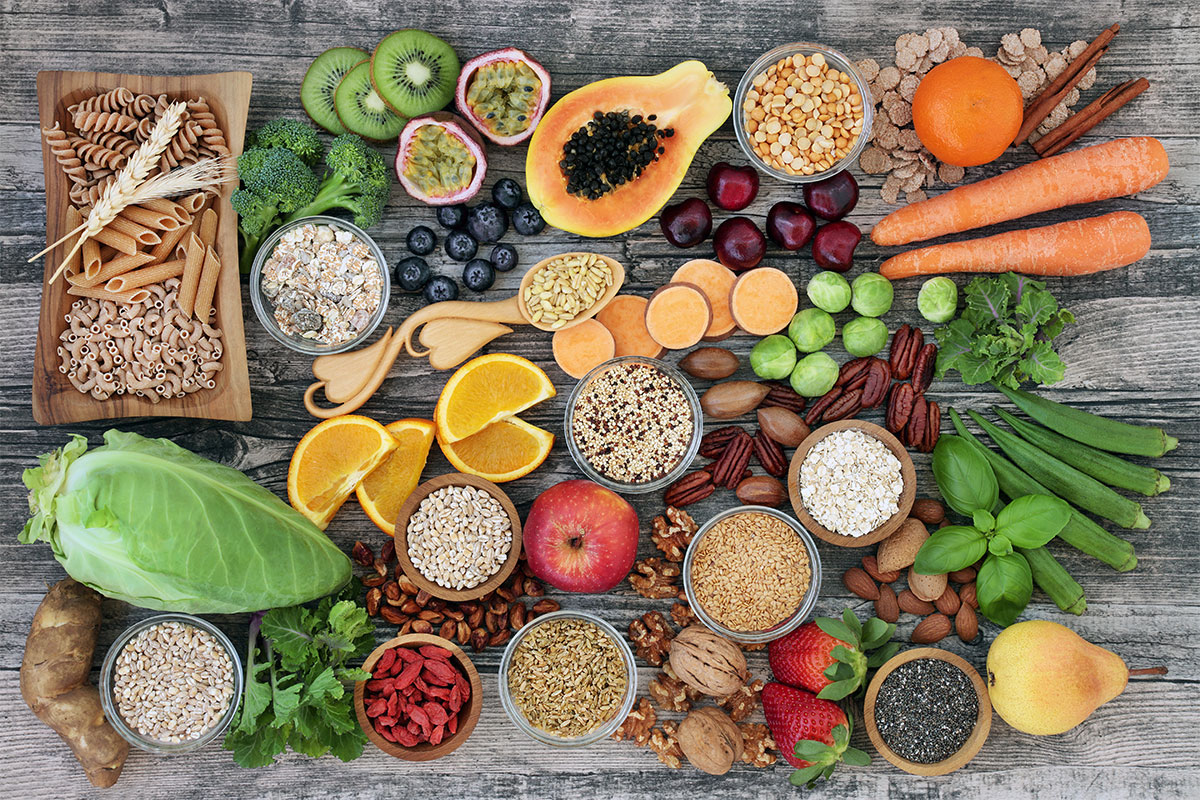
Great question, Darin! Fibers are non-digestible carbohydrates from plant sources that may be fermented in the large intestine. Considered a subset of the total carbohydrate, dietary fiber is listed under carbohydrates on a Nutrition Facts panel. It includes both soluble and insoluble fiber, as well as lignin, whether naturally occurring or added.
Yes, since fiber is not digested (thus not used for energy or stored), it’s known to have less than the 4 calories per gram than other carbohydrates do. In fact, certain fibers offer almost 0 calories, while others provide only a smidge of energy after their fermentation by colonic bacteria. The Food and Drug Administration estimates that fermentable fibers provide about 2 calories per gram. Manufacturers may subtract the insoluble fibers when calculating energy, but not soluble fiber grams. Half of your stated 140 calories calculated from the fiber may already have been considered on food labels, leaving only 70 calories or 4% of your daily target of 1,700.
My recommendation would be to not compensate for any “missing” fiber calories, as people, in general, tend to under-report food intake when tracking and diet analysis calculations are already inaccurate by 10%. Maintain your protein intake when restricting calories and I’d suggest bumping your pre- or post-exercise nutrition up by 100 calories on your workout days.
Rather than focus on fiber in calorie-counting accuracy, readers should instead focus on getting the recommended amount of fiber each day, which has recently increased. As of 2016, the FDA the daily reference value of fiber was raised from 25 grams to 28 grams.
Resource
- Carbohydrate Issues: Type and Amount. ML Wheeler and FX Pi-Sunyer. Journal of the American Dietetic Association, April 2008; Suppl 1, 108(4): s34-39.
– Debbie J., MS, RD




 Have a nutrition question? Our registered dietitian is ready to help!