10 Thanksgiving Ideas to Revive Your Celebrations
The Holiday Season can get stressful, so we may stick to a routine for the sake of easy planning. Try any of these 10 simple ideas to bring new life to your Thanksgiving celebrations.

When a championship or trophy is on the line, every opportunity for an athlete to practice makes a difference. The same is true of exercise sessions in preparation toward achieving a physical goal. Too many people run through their workout just to check it off as done instead of utilizing the workout to its full potential. Instead, treat the session like elite athletes do – as a rehearsal for the biggest physical performance they’ll do that season.
“Make each day your masterpiece“ – John Wooden
Effort, drive and determination are often attributes associated with athletes pushing through tough practices. Hence, the “no pain, no gain” exercise motto. But enthusiasm, purpose and intense focus may be just as important for progress1. For successful workouts, having a positive attitude, a goal for that session and focused attention are key.

Three Key Factors You Need


01.
Enthusiasm is a cornerstone of the late basketball coach John Wooden’s famous Pyramid of Success2. He described enthusiasm as that “which infuses hard work with inspired power.” Without the passion and joy for what you are doing, you can easily slip into worker bee mode to get your workout over with. Enthusiasm is a spark that ignites the willingness to proceed. It’s characterized by feelings of excitement and high levels of enjoyment3. If you’re not loving what you are doing, find another way of doing it or switch up your workouts.

02.
Purpose Personal meaning powers action – it’s caring enough about what you’re doing. Finding your purpose goes beyond the outcome you seek, but the “why” you are striving for it to begin with. Putting your personal values as top priority can lead you to perform better4. Nothing else can take precedent during your exercise session. Purpose is supported by the belief that you are responsible for your own success. Having an identified purpose helps you overcome pressure and stress and to bounce back from losses.
“The successful warrior is the average man, with laser-like focus.“ – Bruce Lee

03.
Intense Focus With digital distractions it’s easy for one’s mind to wander off course. Sport psychologists say that being in the moment is crucial for effective practice5. Worry about what you can execute in the present instead of dwelling on the past. Pay greater attention to the action you’re doing instead of smartphone alerts, the environment around you or thoughts of the outcome. Whereas you might get away with reading while doing some low-intensity steady-state cardio, strength-training requires focus6.
Definition: Practice is the repetition of an action with the goal of improvement.
All that is not to say that the treadmill setting or weights have to be different or more than your last workout. On the contrary, repetition with good form allows you to improve on quantity or speed later. The TED-Ed video entitled “How to practice effectively…for just about anything” by Annie Bosler and Don Greene has an expanded explanation for the reasons why repeated practice works — one of them is neural processing. You actually create the neural pathway to do an action unconsciously by repeating it until the action becomes reflexive.
Treating your workout like a household chore to get done will likely make the session, well, …a chore. Consider each exercise session a rehearsal – a chance to fix mistakes and move forward toward a winning performance, even if you are the only audience. Embrace what you’re doing, make your purpose a priority and narrow your attention to your present action.
References
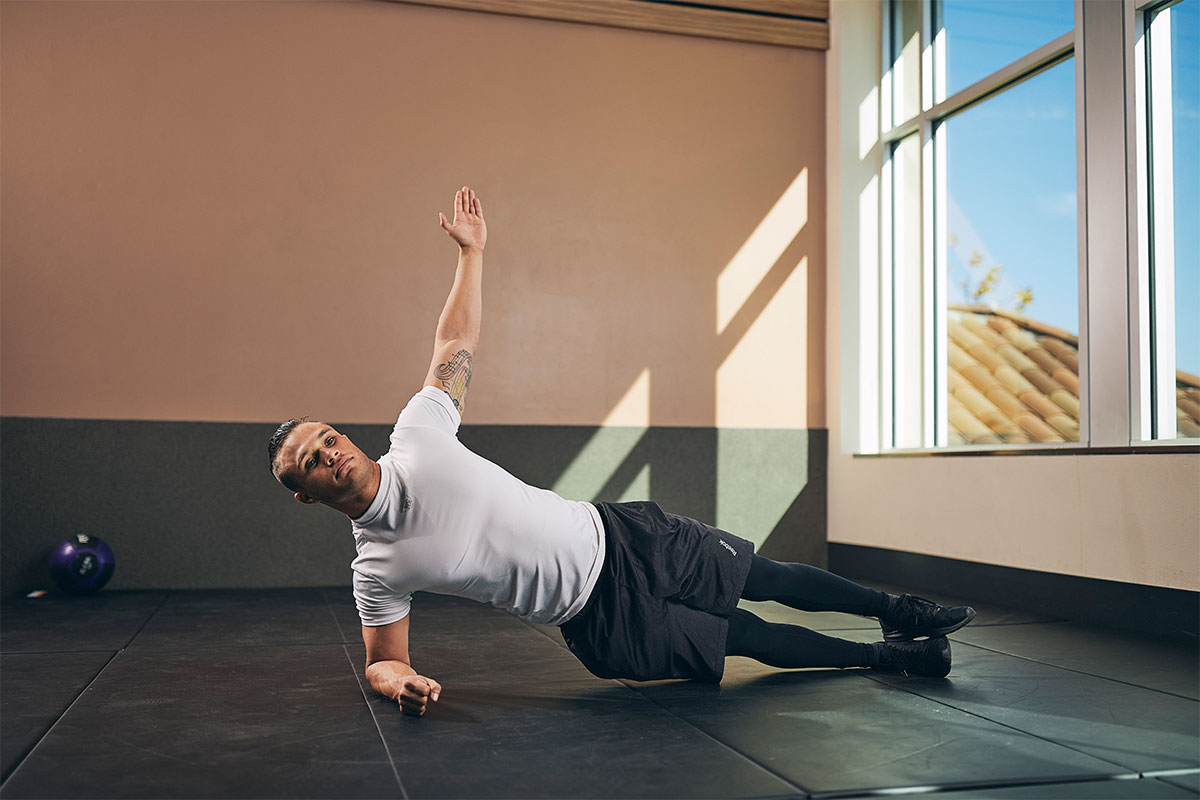
Instead of thinking of this as your one-stop-shop gym guide, think of it as an intro to some of the top most popular exercises, and how to perform them properly. Once you have a handle on the basic exercises below, try out some of the advanced alternatives to step up your exercise game!
#1 Burpee



#2 Bodyweight Squat


#3 Lunges
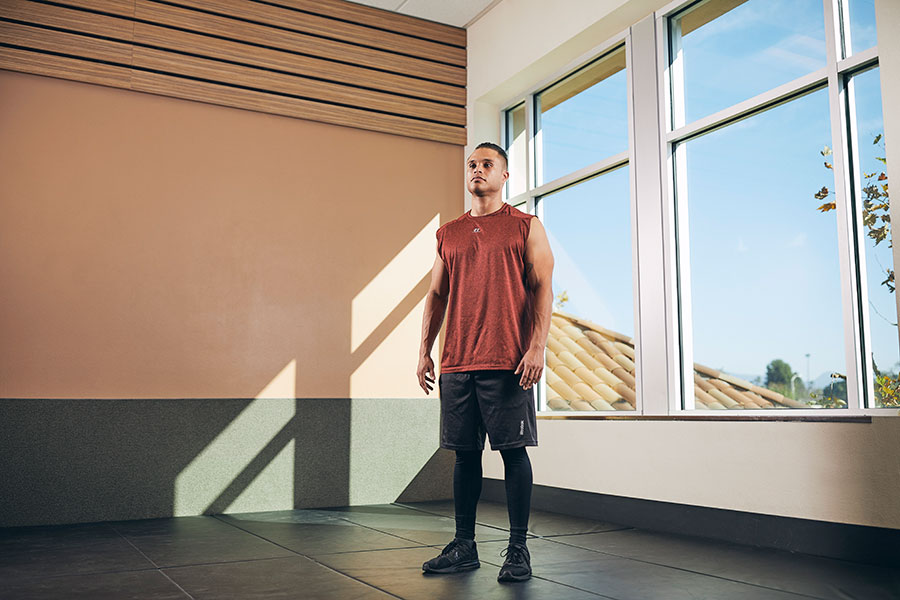

#4 Plank


Shown: Advanced movement. Side plank.
#5 Bench Press


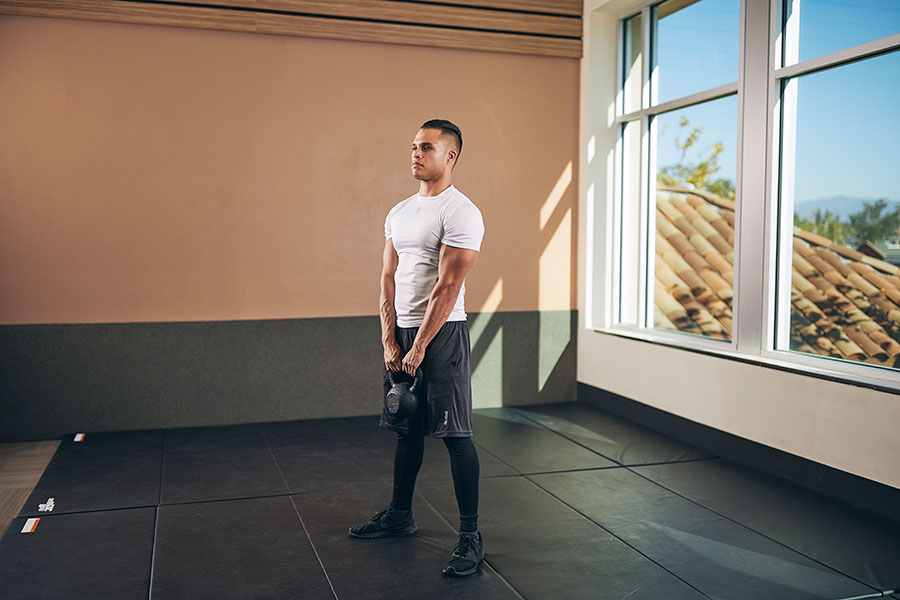
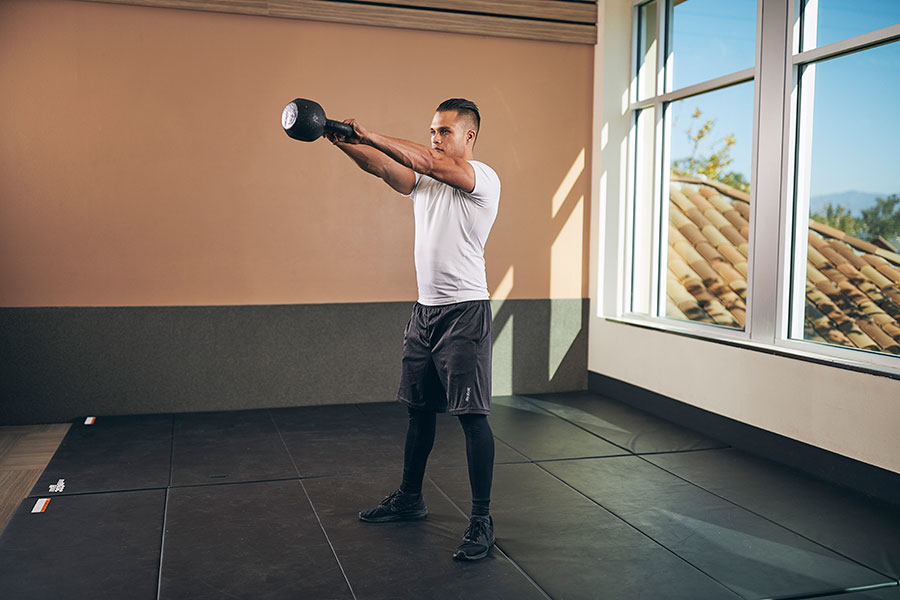
#6 Kettlebell Swing*
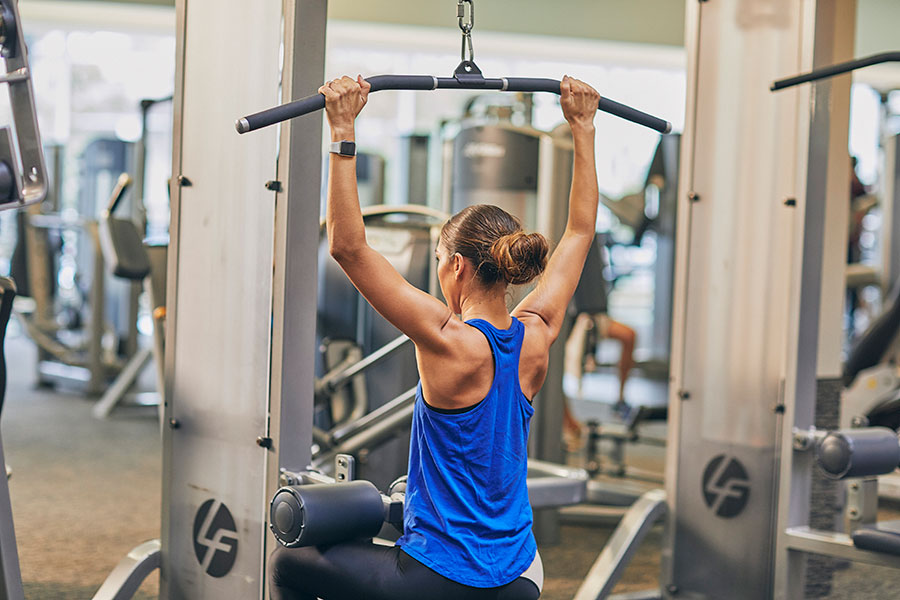
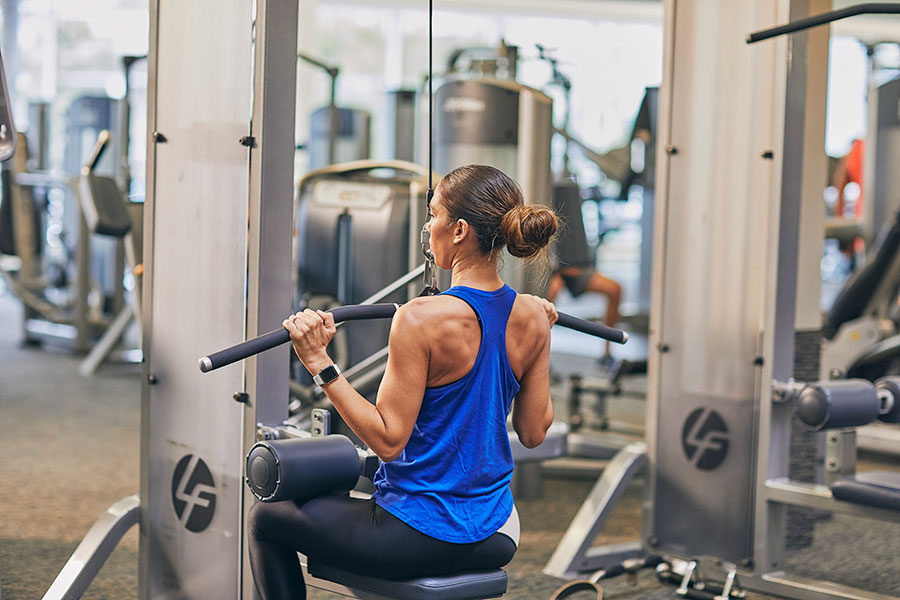
#7 Lat Pulldown
#8 Russian Twist


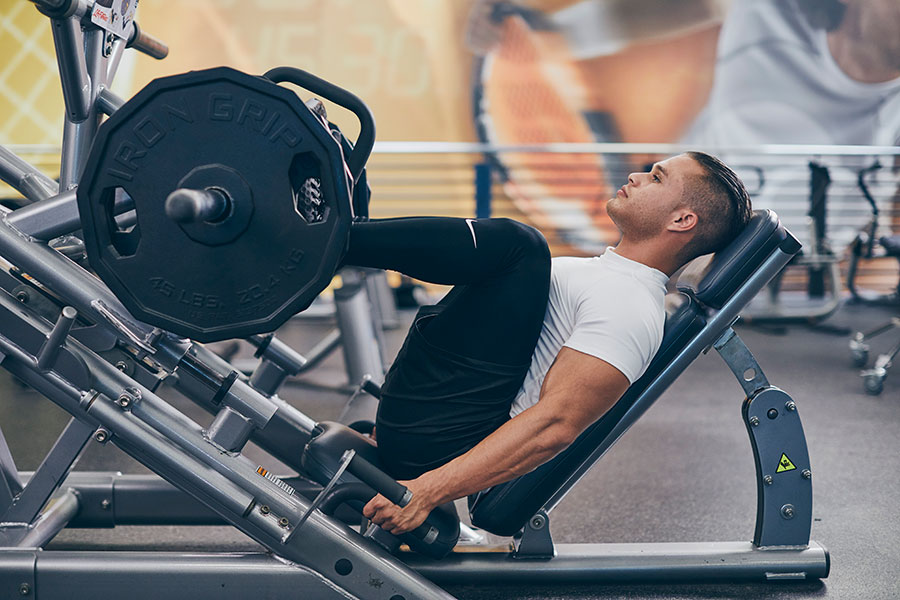
#9 Leg Press

#10 Curl


Sources:

The Holiday Season can get stressful, so we may stick to a routine for the sake of easy planning. Try any of these 10 simple ideas to bring new life to your Thanksgiving celebrations.

In today’s fast-paced world, finding balance and maintaining mental and physical health can be challenging. However, combining exercise and mindfulness offers a powerful approach to achieving holistic well-being. Let’s explore how these practices complement each...

If you’re careful with your nutrition, working out weekly, and still experiencing problems with your weight, take a moment to read this QA.


While no one likes to be in pain, the slight aches are a good indication that your body is benefiting from the new workout routine. When your body adjusts to the exercise, you’ll experience less pain, but this may be a sign it’s time to switch to a new exercise routine in order to keep your muscles guessing and not getting used to doing the same movements. A shock to the system will help increase muscle awareness and help contribute to continued muscle growth.
Minor discomfort is considered normal, but if your aches and pains are preventing you from doing everyday tasks, this could be an indicator that you’ve strained a muscle too far. In that case, focus on another muscle group in order to give your sore muscles enough time to heal. A good way to help prevent muscle soreness (or at least minimize it) is to properly stretch after each workout session. Some articles on the benefits of stretching can be found here and here.
Additional ways to help the body recover from DOMS is ice, rest, pain medication, massage, heat, and of course, stretching.1 Some people may even benefit from a post-workout cooldown, which would be about 10 minutes of light cardio, followed by stretching. This works because “when muscle temperature is increased, blood flow increases, bringing fresh oxygen and healing nutrients to the injured site.”2 It’s also important that you switch up the muscle groups you’re targeting at the gym, in order to build overall muscle and avoid over trained muscles. This is where injury can occur.
What if you don’t experience soreness after a workout? Well, that doesn’t necessarily mean that you’re not working out hard enough. Different body types handle pain and exercise differently. It could just mean that you’re one of the lucky ones not experiencing as much inflammation as others might. Another way to help decrease DOMS is staying properly hydrated.3 Drinking enough water helps prevent dehydration and assists with circulation.

Sources:
The Holiday Season can get stressful, so we may stick to a routine for the sake of easy planning. Try any of these 10 simple ideas to bring new life to your Thanksgiving celebrations.
In today’s fast-paced world, finding balance and maintaining mental and physical health can be challenging. However, combining exercise and mindfulness offers a powerful approach to achieving holistic well-being. Let’s explore how these practices complement each...
If you’re careful with your nutrition, working out weekly, and still experiencing problems with your weight, take a moment to read this QA.
LA Fitness invites you to trot off the turkey with us this season!
Thanksgiving is the perfect time of year to give thanks to all that is good in our lives – including giving thanks to our bodies. Before sitting down with friends and family, try challenging yourself to this 2-week pre-Thanksgiving dinner workout!
But first, a fun fact.
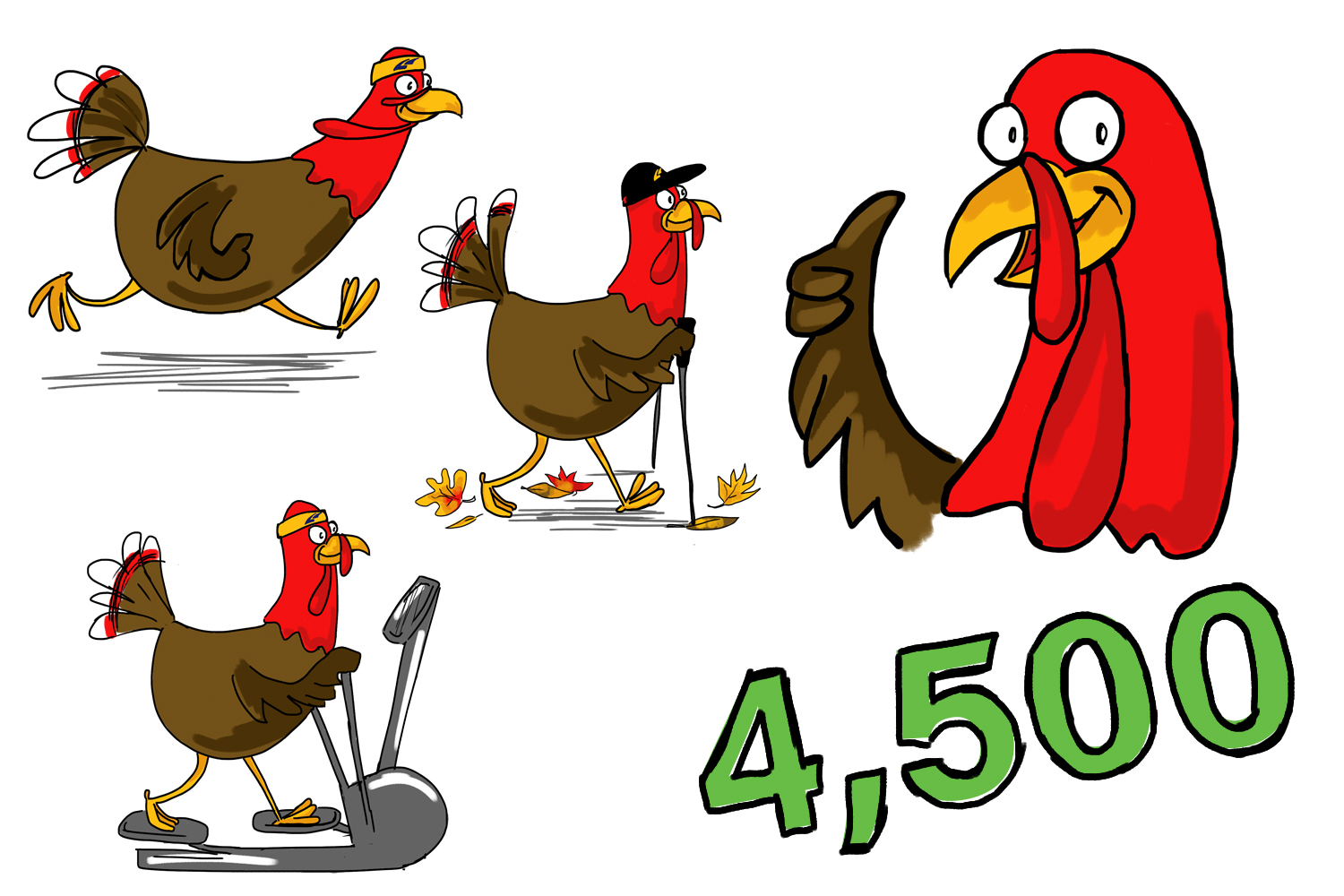
Did you know the average number of calories that a person consumes at Thanksgiving dinner is a whopping 4,500!?1 That’s a whole lot more than the daily recommended amount (over double for some!), and that’s just one meal.
But fear not, let yourself splurge for the holiday by burning off the 4,500 calories in the next 15 days leading up to the big event.
The Turkey Trot Challenge is designed to increase in difficulty as we get nearer the holiday, but make sure you go at your own pace and never push yourself to the point of exhaustion. Remember, this should be fun!
Share your journey with us using the hashtags #LAFitness #TurkeyTrotChallenge.
Starting Point: 4,500 calories to burn.
DAY 1 – Starting off slow
Calories Burned: 240
Calories Remaining: 4,260

DAY 2
Calories Burned: 247
Calories Remaining: 4,013

DAY 3 – Time to up the training!
Calories Burned: 645
Calories Remaining: 3,368
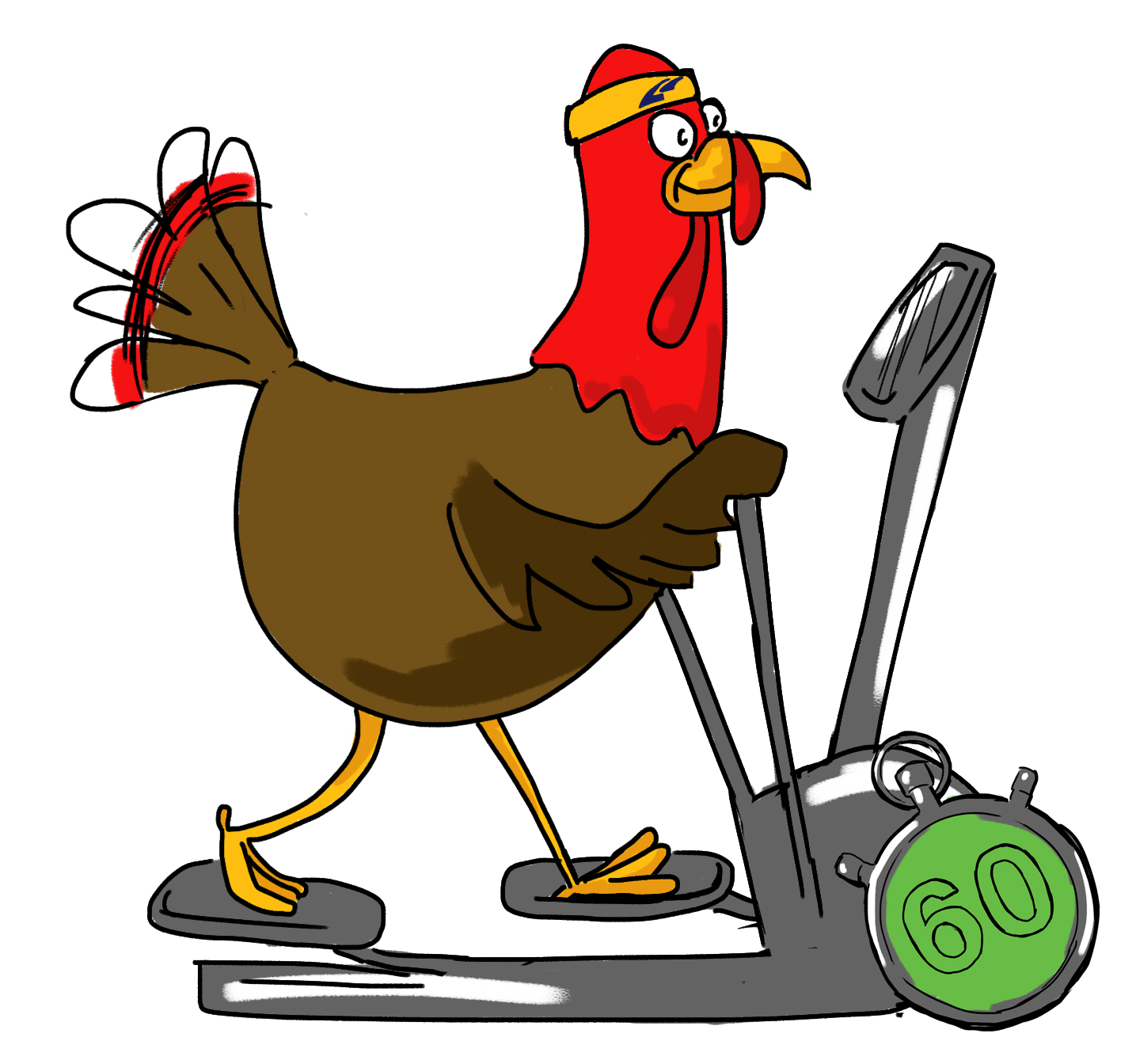
DAY 4
Calories Burned: 298
Calories Remaining: 3,070
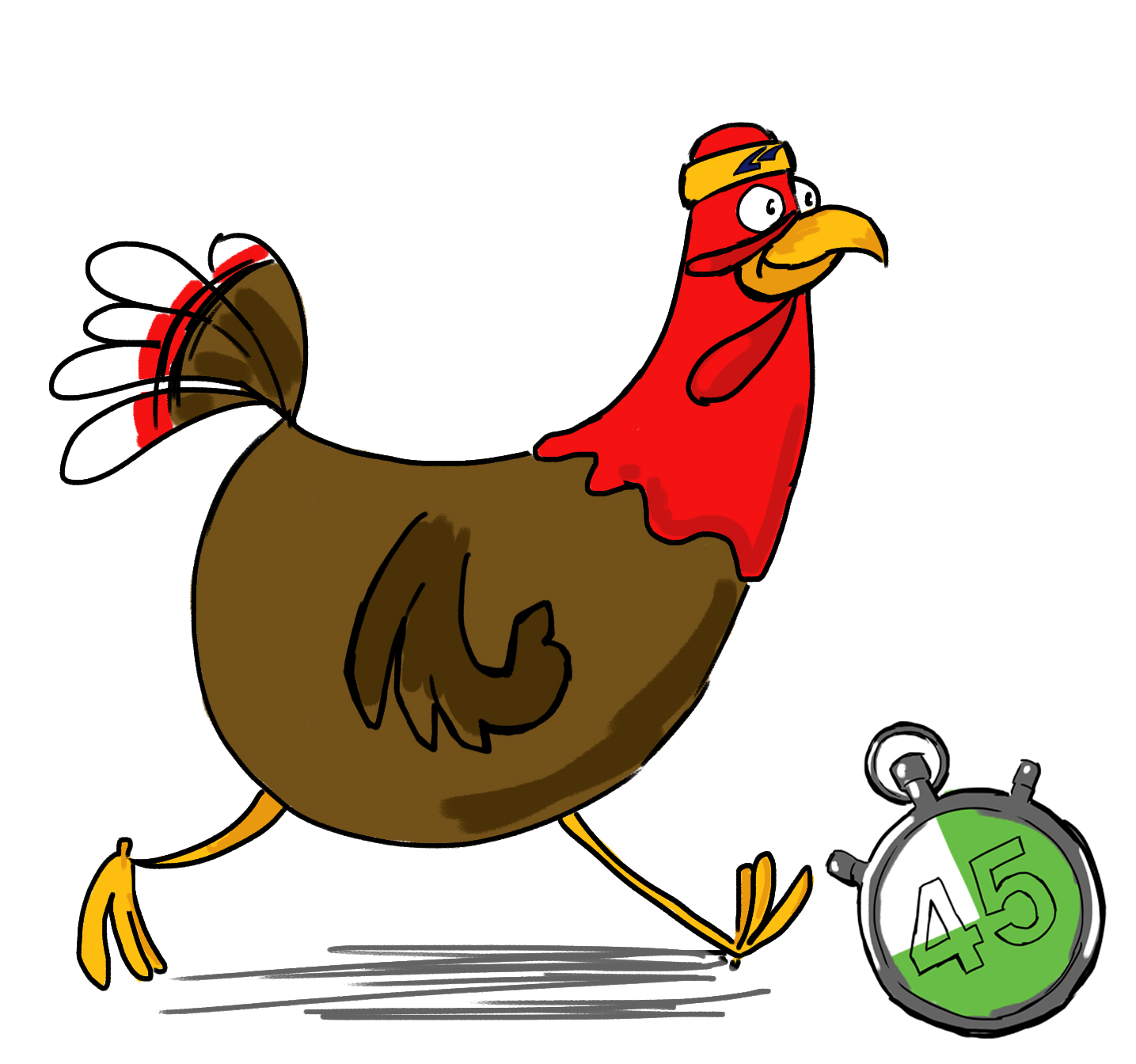
DAY 5
Calories Burned: 427
Calories Remaining: 2,643
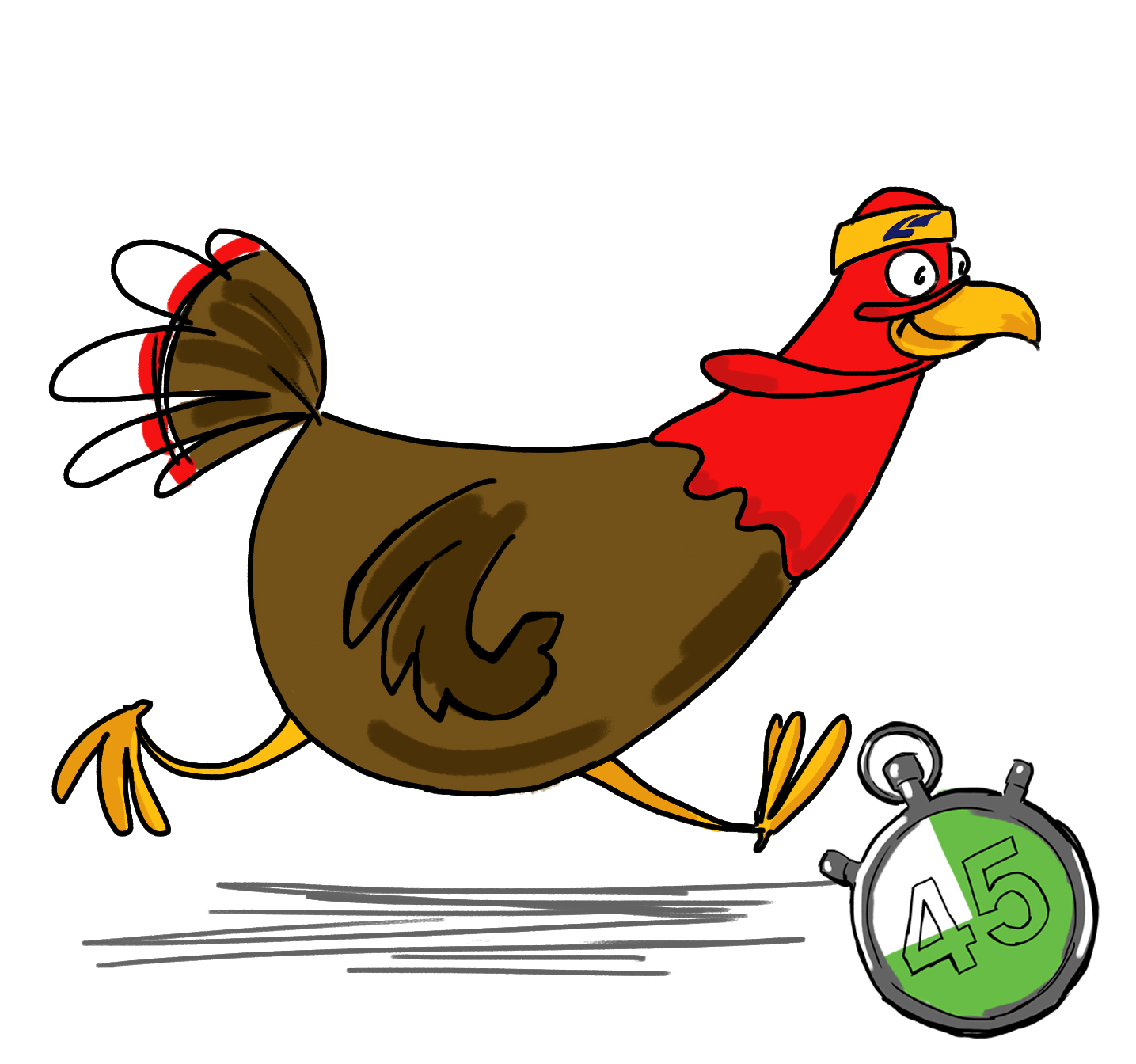
DAY 6 – We’re in the home stretch!
Workout #1
AND
Workout #2
Total Calories Burned: 937
Calories Remaining: 1,706
DAY 7
Workout #1
AND
Workout #2
Calories Burned: 832
Calories Remaining: 874
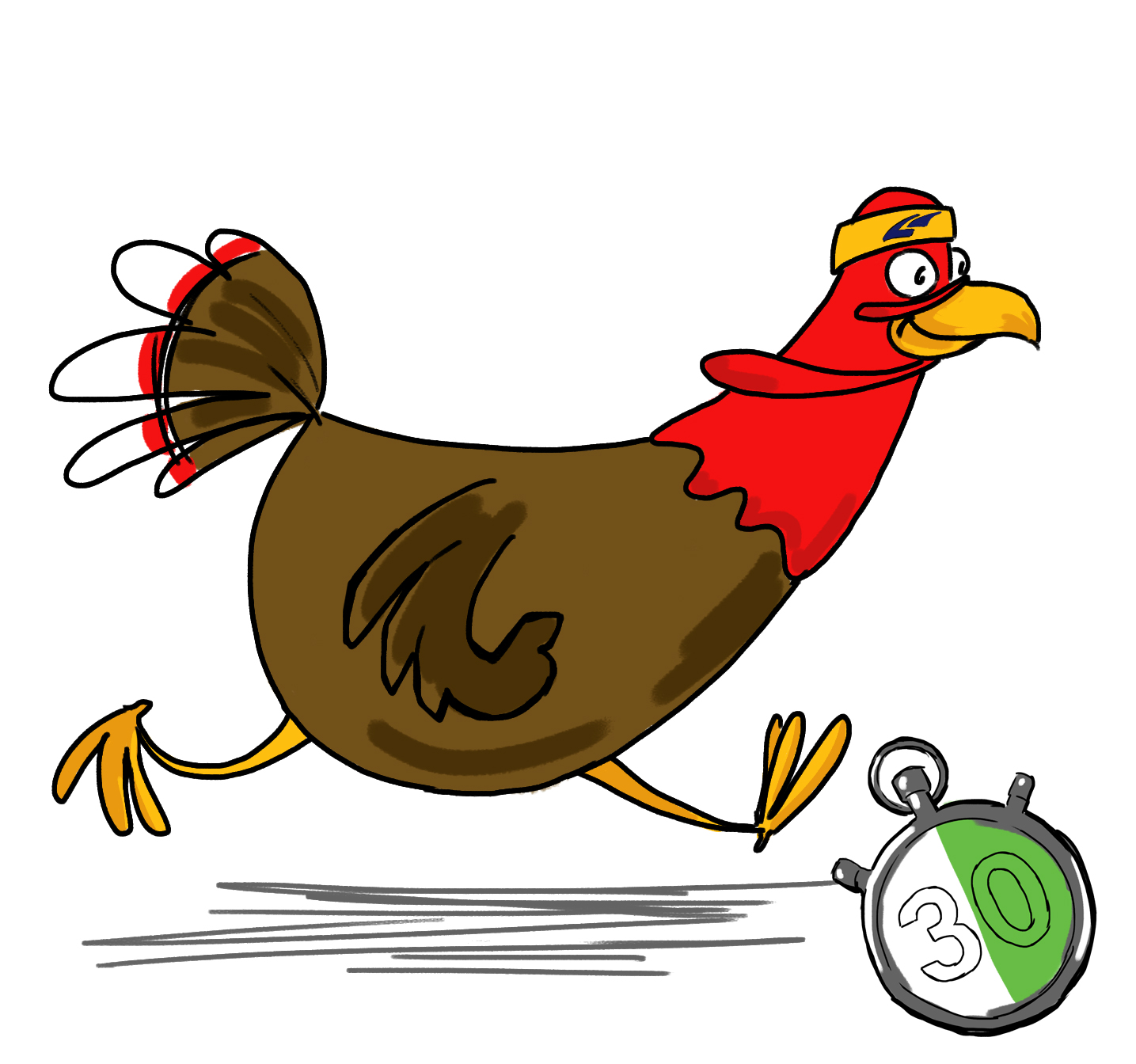
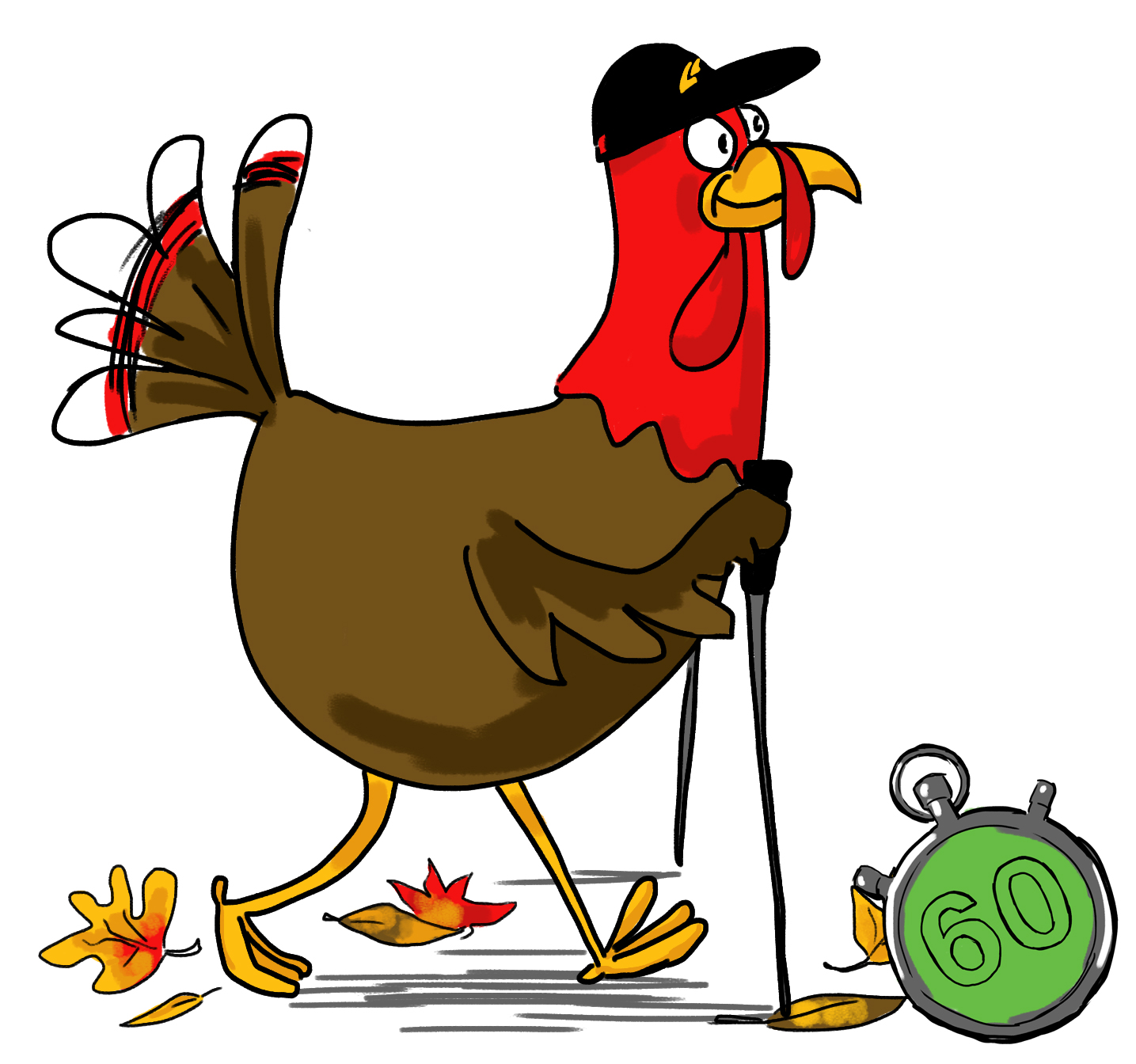
DAY 8 – One day out from Turkey Day (The cool down.)
Calories Burned: 247
Calories Remaining: 627
DAY 9 – GOOBLE GOOBLE DAY (Thanksgiving!)
Calories Burned: 645
Calories Remaining: -18
Yay! 18 extra calories burned!

A Special Message from the Writer:
In the spirit of the holiday season, I would like to take this time to thank all of our Living Healthy readers and subscribers. Each of you is such an inspiration to our community. I hope this holiday season brings you an abundance of love and gratitude and a desire to keep working towards all your health and fitness goals!
Now it’s time for the moment we’ve all been waiting for… Thanksgiving dinner!
Disclaimer: Calories burned are approximate and based off a weight category of 125lbs. In order to calculate calories burned using your own weight, click here.
Separately, a healthy balanced exercise program should consist of a mixture of both strength training and cardio. Do not use this as an exercise training program. This challenge is simply designed to be a fun addition to your normal workout routine.
The Holiday Season can get stressful, so we may stick to a routine for the sake of easy planning. Try any of these 10 simple ideas to bring new life to your Thanksgiving celebrations.
In today’s fast-paced world, finding balance and maintaining mental and physical health can be challenging. However, combining exercise and mindfulness offers a powerful approach to achieving holistic well-being. Let’s explore how these practices complement each...
If you’re careful with your nutrition, working out weekly, and still experiencing problems with your weight, take a moment to read this QA.
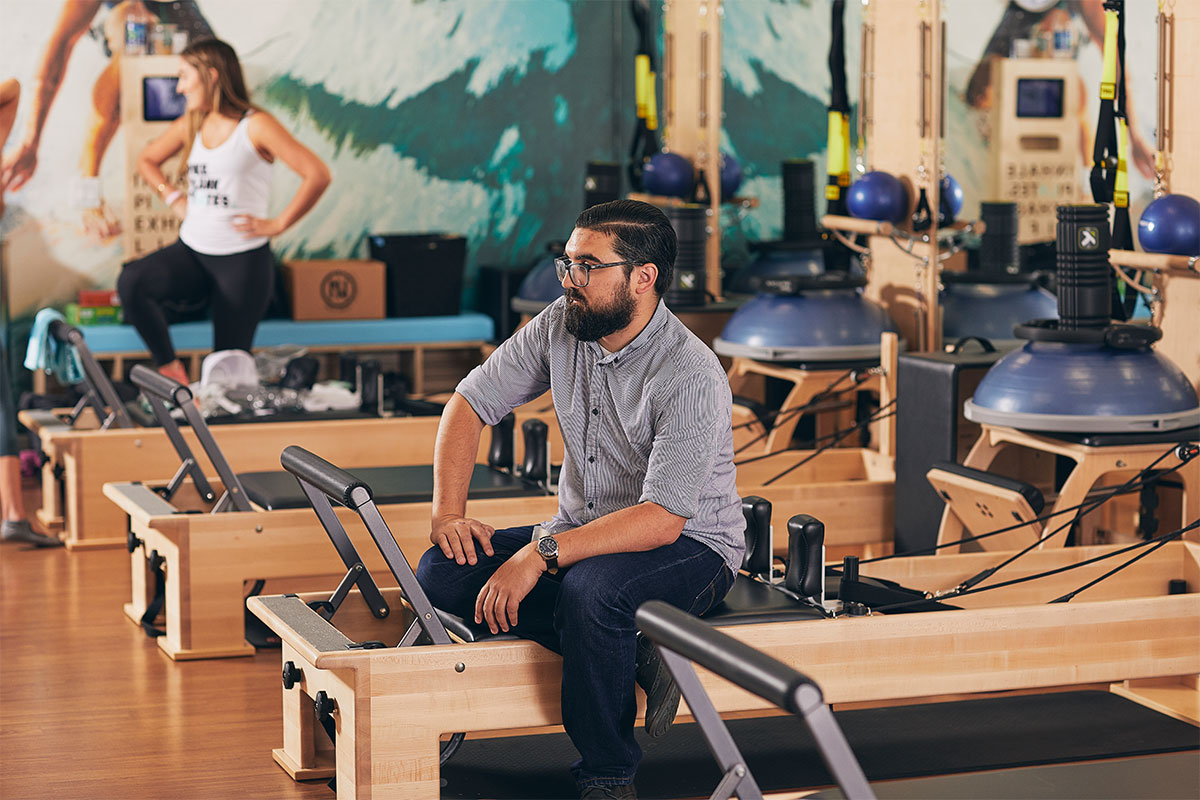
I’ve always had a strong academic and metaphysical fascination with what makes us human. So much so that while studying digital video and audio production in college, I also majored in Anthropology- the study of human beings. Fast forward five or six years after graduation and I find myself sitting behind a desk well into the “cushy corporate gig” phase of my career, still making videos and producing a wide range of audio projects for LA Fitness; feeling like I’m only using half of my education; that question still relatively unanswered and still burning.
What makes us human?
If asking that question is ultimately asking, “What makes us unique from other mammals or creatures with whom we share the condition of possessing vertebrae?”, then the answer is simple: Bipedal ambulation (walking on two feet) and our brains ability to create and operate abstractions (imagine a cat composed of various citrus fruits with a baby shark for a tail. That thing you see in your head, that’s what I mean. So far as we know, only humans can conjure that up).
After a few existential breakdowns into my job here at LA Fitness, I had resigned myself to the reality that these partial answers to such a big question would have to suffice. There was no sense in pursuing them further. I worked for a gym. The place people go to get fit, not answer big questions. In my mind, those two things were forever incongruous.
Then a few important things happened that changed my mind quite profoundly:
I think the most magnificent abstraction we’ve created as humans is linear time. The idea of seconds begetting minutes begetting hours begetting days and so on as if a series of incremental points on a timeline. None of this existed until the 14th century, whence the clock prevailed as a timekeeper. It’s from the invention of the clock and the hours and seconds contained within it that we have this perception of time. What makes this seem like such grand ruse of an abstraction is that: it wasn’t until I fit into some jeans yesterday that I realized or felt like all these things happened FOR something. I mean, of course, I knew sequentially when I had read and finished the book; what made me fall in love with my girlfriend and when; why I had agreed to do the spotlight series; when I walked into the gym and started forming that habit; when I fit into the jeans; and in what order these all occurred. But some genie was released from the bottle when I clasped the top button and didn’t feel like I should face away from the mirror out of fear of that button bursting off and shattering my reflection. A genie that couldn’t be returned after I needed a belt to fasten those same jeans to my waist.
All at once past, present and future, happened to me; The book I read piqued my interest in long-distance running; it taught me about our adaptation to sweat and endure beyond that of any other vertebrate. I was standing at the finish line of her marathon, the first one I attended, filled with pride as she caught her breath. I was walking into the gym for the first time at 29 running a 5k on the treadmill to see if I could (I could). I was poised and excited to pounce on this opportunity at work to serve my (until now unadmitted) vanity. I was attaining the great sense of accomplishment after fitting into three older pairs of jeans. And I was standing there, at the end of my own first race, dead tired but proud beyond comprehension.
The last of these events hasn’t happened yet. But it will. Past, present, future: All at once. I intend to explore the depth of the answers to my initial question. Though, presently, I find myself in a familiar dilemma: exploring and challenging the nature of human abstraction is only one part of the answer. If I’m to truly dive into this journey, I must do one more thing. That thing will require me to not just push myself, but figure out how to push myself, and what it means to push myself to do it. It’s no big reveal, you see, I’ve already told you what it is. It all happened at once, remember?
I. Must. Run.
And I will. A half marathon at first, a full marathon at last, and I’ll tell you all about it.
*Matt is a current employee of LA Fitness. While the opinions herein are Matt’s own, Matt receives a free membership in connection with his employment.
Meet Matt M., an LA Fitness employee, who never stepped foot into a gym until recently. This is the beginning of his story, and quite the story it is.

It’s never too late to start taking better care of yourself, and that’s what LA Fitness Instructor Marilou E., hopes she can help teach others. Read more about her full journey to health.

When the cards are stacked against you, and your health isn’t looking good, how do you find the motivation to begin again? This is Tyler I.’s story.