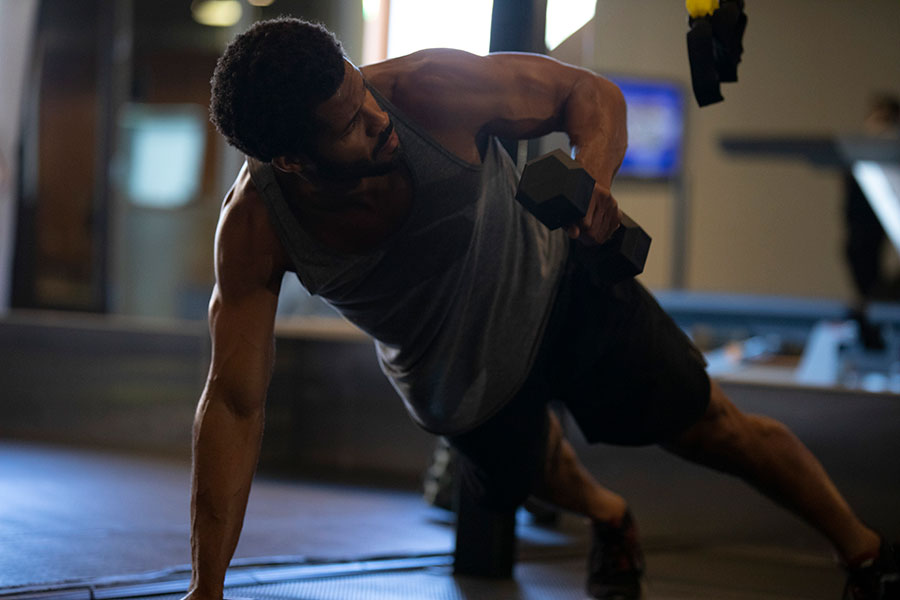
Approach Your Workout Like An Athlete At Practice

Approach Your Workout Like An Athlete At Practice

When a championship or trophy is on the line, every opportunity for an athlete to practice makes a difference. The same is true of exercise sessions in preparation toward achieving a physical goal. Too many people run through their workout just to check it off as done instead of utilizing the workout to its full potential. Instead, treat the session like elite athletes do – as a rehearsal for the biggest physical performance they’ll do that season.

“Make each day your masterpiece“ – John Wooden

Effort, drive and determination are often attributes associated with athletes pushing through tough practices. Hence, the “no pain, no gain” exercise motto. But enthusiasm, purpose and intense focus may be just as important for progress1. For successful workouts, having a positive attitude, a goal for that session and focused attention are key.

Three Key Factors You Need

01.

Enthusiasm is a cornerstone of the late basketball coach John Wooden’s famous Pyramid of Success2. He described enthusiasm as that “which infuses hard work with inspired power.” Without the passion and joy for what you are doing, you can easily slip into worker bee mode to get your workout over with. Enthusiasm is a spark that ignites the willingness to proceed. It’s characterized by feelings of excitement and high levels of enjoyment3. If you’re not loving what you are doing, find another way of doing it or switch up your workouts.

02.

Purpose Personal meaning powers action – it’s caring enough about what you’re doing. Finding your purpose goes beyond the outcome you seek, but the “why” you are striving for it to begin with. Putting your personal values as top priority can lead you to perform better4. Nothing else can take precedent during your exercise session. Purpose is supported by the belief that you are responsible for your own success. Having an identified purpose helps you overcome pressure and stress and to bounce back from losses.

“The successful warrior is the average man, with laser-like focus.“ – Bruce Lee

03.

Intense Focus With digital distractions it’s easy for one’s mind to wander off course. Sport psychologists say that being in the moment is crucial for effective practice5. Worry about what you can execute in the present instead of dwelling on the past. Pay greater attention to the action you’re doing instead of smartphone alerts, the environment around you or thoughts of the outcome. Whereas you might get away with reading while doing some low-intensity steady-state cardio, strength-training requires focus6.

Definition: Practice is the repetition of an action with the goal of improvement.

All that is not to say that the treadmill setting or weights have to be different or more than your last workout. On the contrary, repetition with good form allows you to improve on quantity or speed later. The TED-Ed video entitled “How to practice effectively…for just about anything” by Annie Bosler and Don Greene has an expanded explanation for the reasons why repeated practice works — one of them is neural processing. You actually create the neural pathway to do an action unconsciously by repeating it until the action becomes reflexive.

Treating your workout like a household chore to get done will likely make the session, well, …a chore. Consider each exercise session a rehearsal – a chance to fix mistakes and move forward toward a winning performance, even if you are the only audience. Embrace what you’re doing, make your purpose a priority and narrow your attention to your present action.

References

  1. Developing the Practice Intensity Habit by Larry Lauer, PhD, Institute for the Study of Youth Sports, Michigan State University. AppliedSportPsych.org Accessed July 11, 2019
  2. Accessed July 11, 2019
  3. Athlete Engagement in Elite Sport: An Exploratory Investigation of Antecedents and Consequences. K Hodge, C Lonsdale, SA Jackson. The Sport Psychologist, Dec. 2009, 23(4): 186-202
  4. Purpose Based Identity: Why The Right Mindset Will Determine Your Athletic Success, With Sports Psychologist Ben Houltberg. https://www.hopesports.org/purpose-based-identity/ Accessed July 18, 2019
  5. Sports: Focus Control by Jim Taylor, PhD, www.PscyhologyToday.com Posted Sept. 3, 2010. Accessed July 11, 2019
  6. 11 Things I Learned From 20 Years Of Lifting By Dean Somerset. https://www.menshealth.com/fitness/a19547707/lifting-lessons/ Posted Sept. 16, 2015. Accessed July 18, 2019.

Muscle Building and Fat Burning Myths Debunked

Muscle Building and Fat Burning Myths Debunked

Muscle Building and Fat Burning Myths Debunked

Most of us have been told a lie in the gym at some point. The real question is, did you believe it? If someone has helped you or given you tips, did you ever research what they said or did to see if it was true? There’s a chance that it was completely wrong.

We’re going to go over and debunk a handful of myths surrounding the ideas of muscle building and fat burning.

01.

MYTH: We burn more fat during extended moderate exercise compared to shorter high intensity exercise.

When we exercise moderately, it’s true that more fat can burn compared to carbohydrates. However, this type of training burns fewer total calories and takes significantly longer. High intensity exercises like HIIT (high intensity interval training) can burn more calories in a shorter amount of time and can cause an “after-burn” effect fueled by fat that can last a day or longer. I personally found success with HIIT training.  HIIT by LAF is great for those interested in high intensity workouts looking to burn some calories!

02.

MYTH: Don’t eat after a certain *time at night*.

“Don’t eat late at night.” “Eat dinner earlier.” “No carbs before bed.” These seem to be some common statements we hear for losing weight and they couldn’t be more inaccurate. Calories are calories and if you eat too many of them you’ll gain weight, regardless of what time it is. According to a  , overweight people lost more weight eating carbohydrates at night compared to throughout the day. The late-night eaters had better hormone levels that control satiety and hunger. The Human Growth Hormone (HGH) is a powerful hormone produced by the human body that regulates the amount of body fat you burn and the amount of muscle you build. HGH levels peak while you’re sleeping so if you eat right before bed, your body could utilize those nutrients to build muscle and burn fat at the same time.

03.

MYTH: We must do cardio for at least 20 minutes to burn fat.

What’s going to burn more fat calories in 20 minutes: watching TV, walking, or interval sprinting? If you think it’s TV or walking, you’re wrong. Just because you burn a higher percentage of fat from moderate exercise doesn’t mean you’ll burn as many total fat calories. Interval sprinting burn a less percentage of fat but a much higher total calorie loss, which actually results in more fat calories burned than walking for 20 minutes.

04.

MYTH: When you eat more protein, you build more muscle.

A family member of mine went on a diet a while ago to try and lose weight. She was told to double her protein intake and eat less carbohydrates. She ended up miserable and weighing more than she did before her diet. We’re not saying protein doesn’t build muscle, but there’s a point where protein can hurt compared to help. For every pound of body weight, consuming about Any protein consumption over the 1.25g per pound of bodyweight can get broken down in to amino acids and nitrogen which can either store in your body or excrete your body.

If someone is trying to give you a fitness tip, listen to what they have to say but do your own research and come up with your own opinion. Everybody has a different body and genetic makeup. What works for one person might not work for another. Know what works best for you and own your workouts!


References


Recommended Reading

Should You Try Fasting Before Your Next Morning Swim?

Should You Try Fasting Before Your Next Morning Swim?

Question:

I have been swimming for 30 minutes, 4 days a week, at 6AM. Is it best to not eat a sensible breakfast until after I swim? My son is a varsity state swimmer and says not to eat until mid or late morning so that my fat is burned as fuel first.

– Lorin and Diana S.

Answer:

Tristen Alleman, one of our Pro Results® Personal Training Directors, shared that it’s best to do your morning aerobic work while fasted in order to burn more fat. Theoretically, since the body has been using glycogen overnight (fasted) while insulin levels drop, it shifts toward greater fat utilization in subsequent exercise. Most research supports this notion, though it may not be the case during energy restriction. There is also a lack of evidence showing resultant changes in body composition.

I’d advise eating your breakfast just after your morning workout and not waiting until mid-morning, both for your muscle recovery as well as for convenience – it’s easier to eat your sensible meal before getting to early work.

Resources:

  1. Beneficial metabolic adaptations due to endurance exercise training in the fasted state. K Van Proeyen , et al. Journal of Applied Physiology. 2011;110(1):236–245.
  2. Body composition changes associated with fasted versus non-fasted aerobic exercise. BJ Schoenfeld, et al. Journal of the International Society of Sports Nutrition. 2014; 11:54.
  3. Training in the fasted state improves glucose tolerance during fat-rich diet. K Van Proeyen K, et al. The Journal of Physiology. 2010; 588(Pt 21): 4289–4302.

– Debbie J., MS, RD

This article should not replace any exercise program or restrictions, any dietary supplements or restrictions, or any other medical recommendations from your primary care physician. Before starting any exercise program or diet, make sure it is approved by your doctor.

Some questions have been edited for length and/or clarity.

Ask our Dietitian

Have a nutrition question? Our registered dietitian is ready to help!

Email nutrition@lafitness.com or submit your question below and it may be featured in an upcoming article!

13 + 3 =


Recommended Reading - Q+A

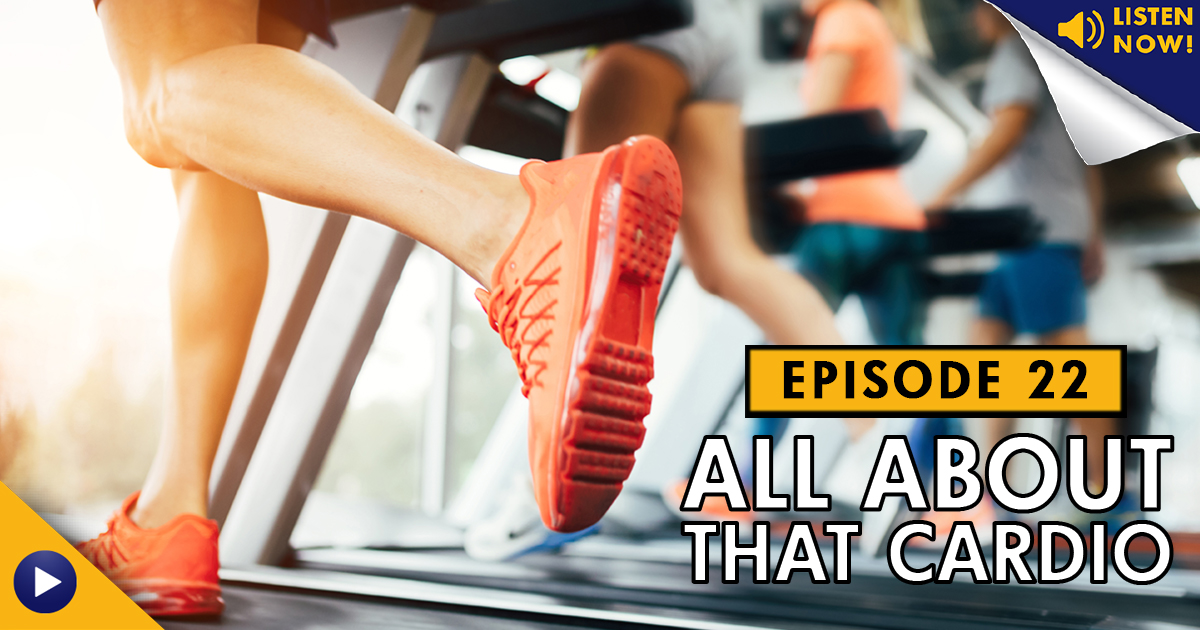
All About That Cardio – Podcast Ep. 22

All About That Cardio – Podcast Ep. 22


Welcome to the 22nd episode of the Living Healthy Podcast, presented by LA Fitness.

On this episode of Living Healthy, we bring back to the show LA Fitness, Personal Training Director, Tristen Alleman and, as always, listener favorite Dietitian Debbie James! They help explain the importance of establishing and maintaining a balanced workout routine and how nutrition plays an important part in this. 

How Are We Doing? 


This podcast should not replace any exercise program or restrictions, any dietary supplements or restrictions, or any other medical recommendations from your primary care physician. Before starting any exercise program or diet, make sure it is approved by your doctor.


Timecard Markers – All About That Cardio – Podcast Ep. 22 

Introduction

Begins at 0:01   

Cardio Bunny Song 

Begins at 0:42 

What is a Cardio Bunny? 

0:57 

LAF Personal Training Director, Tristen Allemanand LAF Registered Dietitian, Debbie James, Join the Show  

1:23 

Why is Cardio So Important? 

1:43 

What Exercises Are Considered Cardio? 

2:51 

What About Cardio Affects the Heart? 

3:33 

What Foods Are Good to Eat on Cardio-Focused Work Out Days? 

4:16 

Are Protein Shakes Needed on Cardio Days? Or Should They Be Saved for Strength Training Days? 

6:00 

Why Do Cardio Workouts Tend to Burn More Calories in Shorter Amounts of Time? 

8:36 

How Often Should You Include Cardio Workouts into Your Routine?  

10:23 

What’s Better: Cardio Before or After a Workout?  

12:01 

Is One Type of Cardio Better Than Another? HIIT? Cycle? Treadmill? Zumba®?  

12:41 

Is Caffeine Before an Aerobic Workout a Good Thing? What About Fruit Juice? 

13:32 

Can Too Much Cardio Damage Your Body? 

15:16 

NEW SEGMENT: Rapid Fire Social Media Questions from Our Listeners! 

18:04 

Actionable Advice 

23:02 

Outro 

24:37 


Recommended Podcast Episodes 

HIIT Results in Weight Loss

HIIT Results in Weight Loss

Watch out because we’re about to HIIT you with some facts (that’s the only pun, I swear).

HIIT, otherwise known as high-intensity interval training, is a fast yet challenging way to get your workout in and continue burning calories afterward your workout as well. This is due to the Afterburn Effect” caused by EPOC, or post-exercise oxygen consumption. EPOC can help HIIT enthusiasts burn calories for up to 36 hrs. after their workout!*

Shorter workout periods and longer calorie-burning times? It sounds too good to be true.

(But it’s not.)

HIIT incorporates functional exercises, core training, cardio interval training, and strength training. The key is focusing on different heart rate training zones. Each zone uses a different percentage of max heart rate, allowing for different types of burns. While there are different types of HIIT workouts ranging from 10 minutes, all the way to an hour, HIIT by LAF uses the full hour so you get the best workout to help maximize your endurance, calorie burn, and fat loss.


In order to achieve the “Afterburn Effect”, you should maintain staying within 80% to 89% of your max heart rate for 15-25 minutes throughout your workout. This is when carbohydrates and fats go through supply variances and help contribute to the burn. Due to HIIT being based around heart rate, a heart rate monitor is suggested in order to properly monitor your workout.

In a HIIT by LAF class, MYZONE Heart Rate monitors are worn. MYZONE uses the HUNT formula to calculate max HR.

HUNT Formula

Max HR = 211 – (0.64 x age)

For example, a 28-year-old female would calculate her max HR like this –

Step 1: Multiple 0.64 x 28 (person’s age), which equals 17.92.

Step 2: Subtract that number (17.92) from 211, which equals a maximum heart rate of 193.08.

0.64 x 28 = 17.92

211 – 17.92 = 193.08

HIIT and Weight Loss

The whole purpose of interval training is to help increase calorie burn and build more lean muscle mass. With HIIT, the body may be burning through more calories than it’s used to, depending on your old routine. Because of this, it’s super important that you’re giving your body the nutrition it needs in order to sustain a high-intensity workout – and that means plenty of protein.

Check out our list of protein suggestions you may want to add to your diet!

Try HIIT by LAF

Thinking about giving HIIT by LAF a try? Find out more by checking out some FAQs here.

The Living Healthy Podcast recently published an episode that dives further into what HIIT training encompasses, who HIIT training benefits the most, and why it may be worth adding to your exercise routine. LA Fitness Master Trainer, Geoff F., is our expert on the matter. Listen to the full episode, here.

Visit one of the following LA Fitness locations and try out a HIIT by LAF class today!*

Illinois

Tinley Park (Signature Club)

Coming Soon!

Arizona

PHOENIX BELL RD, AZ

California

AGOURA HILLS (SIG), CA
NORWALK IMPERIAL HWY, CA
MISSION VIEJO – ALICIA PKWY, CA
SANTA ANA – 17TH STREET, CA

Texas

DALLAS MOCKINGBIRD @ LEMON (DALLAS), TX
FRISCO MARKETPLACE/ PARKWAY (DALLAS), TX
MCKINNEY CUSTER (DALLAS), TX
SACHSE (DALLAS), TX
SPRING-KUYKENDAHL (SIG), TX

Canada

NORTH YORK-YONGE ST (SIG), ONT

*Results may vary. HIIT by LAF is available to LA Fitness members 16 years of age or older (or at least 13 years of age and accompanied by a parent or legal guardian) who have purchased Spectrum-branded programming, as indicated on such members’ membership agreements. A parent or legal guardian must sign membership agreement on behalf of members under 18 years of age. Non-LA Fitness members must provide valid I.D. and sign a waiver of liability to use HIIT by LAF studios. Please visit a HIIT by LAF studio for more information, including membership options and pricing.


Recommended Reading