Muscle Building and Fat Burning Myths Debunked
Debunking fitness myths surrounding the ideas of muscle building and fat burning.


Whether you’re hitting a plateau after weeks of steady progress, or you’ve been working hard from day one and have hardly seen a dent of change, something is happening when your body is seemingly stuck.
Is it something you’re doing wrong? Has your body simply adjusted to your routine? Let’s break down some of the reasons why your weight loss or muscle gain progress has hit a standstill.
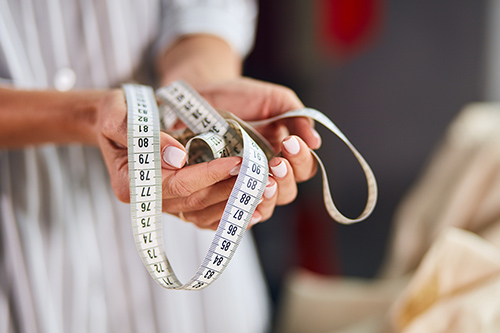
It’s possible that the scale isn’t moving because your body composition is changing. You may still be losing fat, but the scale may not be reflecting it because you’re gaining muscle at the same time. Author of our Body Composition article, Deanna Mercurio, explains that a more accurate way to track your progress is not with the scale but with body measurements and pictures.
If you haven’t felt the need to track your calories, it might be a good time to start. Too many calories could be the culprit behind your plateau. Your body is smart, and it knows you’ve been depleting those precious fat stores. A study on weight gain found that the body’s internal protection against starvation encourages eating just so you will regain lost weight! Keeping track of what you’ve eaten can help you outsmart this natural response to weight loss.
You might be hitting the right calorie count but turning a blind eye to the nutritional content of your food. Your body needs a variety of macro- and micro-nutrients to keep functioning at its best. Our dietitian recommends that you focus on real, whole foods and that you avoid processed food products.1
Sugar is the enemy in the battle with weight loss, partly because it’s easy to consume too much. The World Health Organization recommends that sugars comprise no more than 10% of your daily calories; that’s about 50 grams per day.2 A single beverage can easily contain more than that. Yes, that also means cutting back on healthier beverages like fruit juice. Our dietitian also warns against seemingly healthy smoothies that contain sherbet or fruit syrups. Those sweet additions, she explains, contain refined sugars that are easily absorbed and metabolized into fat.3
Switching things up can help kickstart your weight loss again. Again, we’ll lean on our dietitian’s recommendation. To switch things up, she suggests adding to or intensifying your existing fitness routine with weight training/resistance, cardio, or HIIT workouts, while adding some nutritious calories to those workout days. Those calories can take the form of vegetables, legumes, and pre-workout shakes or recovery drinks.4
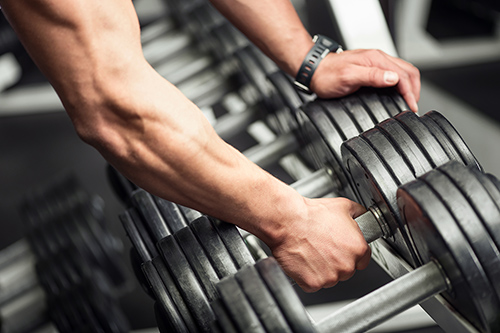
As you gain muscle, your energy needs change as well. You’ll need more nutritious calories (from lean proteins, vegetables, whole grains and healthy plant fats)5 and more protein than the average person because your body needs them to repair and build the muscles you’re working. Read our Protein article to learn how to calculate what your body needs (based on your weight and activity level) to help you bulk.
Just like your metabolism, your muscles can adapt to your routine. This is why workout routines should be anything but “routine.” You’ll need to do things differently to break your body out of its comfort zone. Remember when you first started a certain type of workout and you really had to push yourself through your sets? If you no longer feel challenged by your workout, your body has adjusted. Try increasing your working weight or incorporating some more intense training, like drop sets, to get your muscles back into build-mode. Sticking to the same routine may help you maintain muscle, but progressive overload is crucial to building muscle.
When your body doesn’t have enough water, your muscles must compete with other organs that are also demanding it. As you lose water through sweat, your blood volume is reduced. This slows oxygen delivery to and carbon dioxide removal from your muscle tissue.6 Essentially, you won’t be able to work as hard during training if you’re not giving your body enough water to cope with the physical exertion. It’s important to hydrate before, during, and after exercise.5
As we mentioned earlier, progressive overload and variety in your workout is very important to building muscle. Now you have to make sure you’re consistent about how you train. Your body needs to know that this type of exertion isn’t a once-in-a-while thing; that your muscles need to do this job often! Consistency, paired with progressive overload, prompts your body to build muscle because the physical tasks your body is being asked to do are not going away and they’re getting more difficult.
The right amount of cardio can help you build muscle. Too much can do the opposite. Go back to the first item on this list for a second. To build muscle, you need to eat more calories! Regular cardio can help you consume those extra calories without gaining a lot of fat.7 Cardio also increases your blood flow, which if you remember for item 3, is important for oxygen delivery to and waste removal from your muscle tissue. The increased blood flow also helps deliver fresh nutrients (which your muscles obviously need for recovery and growth)7.
Too much intense cardio, on the other hand, can pull resources away from your muscle tissue. Now instead of those resources going towards building muscle, they’re fueling your cardio. If you’re trying to bulk, keep your cardio at low intensity and low volume.8
Let us know in the comments below if you’ve learned something new! Will you be adjusting your workout or nutrition regimen? Stay in-the-know on trending health and nutrition topics and subscribe to our newsletter to receive monthly highlights from the Living Healthy Blog!


Are you able to help me with calorie recommendations? In the last 8 months I have lost almost 60 pounds through diet. I started going to the gym 4-5 days a week and seeing a trainer 1 day a week. My weight loss has virtually stalled in the past month. I don’t know if my calories are too high or too low.
I am a 57-year-old male and I currently weigh 254 pounds. I am eating between 1,400 and 1,800 calories a day. Based on the online diet calculations I should be eating 1,900 calories a day to lose 2 pounds a week. I use Apple Watch to track calories and usually burn between 400 and 800 calories a day more in exercise calories. I never eat back the exercise calories. Thanks for your thoughts.
– Doug S.

A brief month stall is a blink in your profound progress over the last year, Doug. It sounds like your metabolism has adapted to the diet and exercise routine you’ve set up. Time to shake things up!
What your calories are comprised of makes a big difference in whether you’ll store or burn fat. Since you’ve already done the math and determined your intake is lower than suggested, I’d say try adding a couple hundred calories in vegetables, legumes and pre-workout shakes or recovery drinks on exercise days. Don’t add more if you feel satisfied at your present intake.
Assuming your training workouts are progressing, focus on amping up your gym visits on the other days. You may benefit from a new exercise like a high intensity interval training (HIIT) class, harder weights/resistance, or increased cardio duration. Also look at your daily activity outside the gym and try to increase movement whenever possible.
Remember that weight loss and body composition change aren’t linear, but usually occur with ups and downs. The fact that you are consistent in your exercise routine and dietary tracking means you’re very likely to see results again soon. Read more about overcoming plateaus in the Living Healthy blog, here and here.
– Debbie J., MS, RD
This article should not replace any exercise program or restrictions, any dietary supplements or restrictions, or any other medical recommendations from your primary care physician. Before starting any exercise program or diet, make sure it is approved by your doctor.
Some questions have been edited for length and/or clarity.
 Have a nutrition question? Our registered dietitian is ready to help!
Email nutrition@lafitness.com or submit your question below and it may be featured in an upcoming article!

Debunking fitness myths surrounding the ideas of muscle building and fat burning.

Foods that promote weight loss are rich in micronutrients, low in saturated fat and full of phytochemicals and fiber. Vegetables are perfect!

For structure, you could follow a moderate diet plan providing no fewer than 1500 calories a day. We offer a sample daily diet plan.
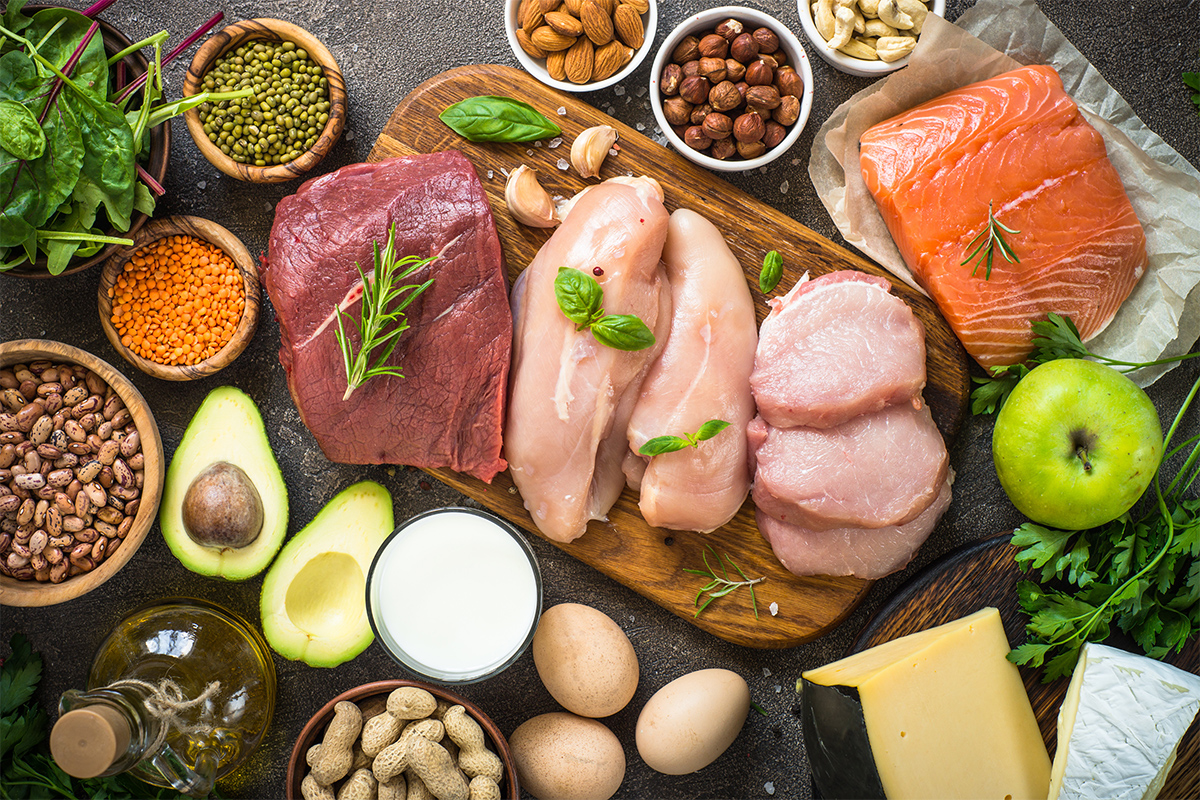
I am a 38 year-old male, 250 pounds, 5’11” and I’ve been steadily working out since June and have lost almost 50 pounds, but I’m curious what is the right amount of protein that I should be taking in daily? I work out 5 or 6 days a week on average and work with a personal trainer six times a month. I usually do about 30-45 minutes of strength training followed up by 30-45 minutes of cardio. I’m currently shooting for somewhere between 130-180 grams of protein a day. Is that enough for my goal of losing weight while building muscle? Thanks.
-Steven M.
Great work on your consistent progress, Steven! For your body weight, goals and activity level your current aim for 130-180 grams of protein daily seems on track. That’s between 1.1 and 1.6 grams of protein per kilogram body weight, ideal for supporting muscle growth with an intensive workout regimen. The range midpoint of 155 grams provides 620 calories which would equate to about 30% of energy if your intake was 2000-2100 calories.
Though you may be counting protein grams and calories, the quality and timing of what you’re eating has as much impact as – if not more than – hitting calculated marks. Remember to support your workouts with some carbohydrate and a little protein in your recovery snack. A high-protein yogurt with fruit or granola works as well as a protein shake. For your main meals, lean proteins, vegetables, whole grains and healthy plant fats will promote efficient metabolism better than typical fare. For example, choose a healthy stir-fry (e.g. chicken, carrots/broccoli, cashews, brown rice) instead of a cheeseburger (regular ground beef, cheese, refined flour bun).
This article should not replace any exercise program or restrictions, any dietary supplements or restrictions, or any other medical recommendations from your primary care physician. Before starting any exercise program or diet, make sure it is approved by your doctor.
Some questions have been edited for length and/or clarity.
Have a nutrition question? Our registered dietitian is ready to help!
Email nutrition@lafitness.com or submit your question below and it may be featured in an upcoming article!
Debunking fitness myths surrounding the ideas of muscle building and fat burning.
Foods that promote weight loss are rich in micronutrients, low in saturated fat and full of phytochemicals and fiber. Vegetables are perfect!
For structure, you could follow a moderate diet plan providing no fewer than 1500 calories a day. We offer a sample daily diet plan.

Hi, I’d like to know some good ways to cut calories for people with low blood sugar issues (hypoglycemia). It can be hard to cut caloric intake with approaches like intermittent fasting and meal replacement shakes because that causes blood sugar levels to drop. So, I’d like to know the best way to obtain a calorie deficit when there are limitations like hypoglycemia in play. Thank you for your help!
– Michael B.
When people experience hypoglycemia it’s usually as a drop after elevated blood sugar following a meal (called reactive hypoglycemia), rather than waking up with low blood sugar (fasting hypoglycemia). The best approach to restricting intake while avoiding a hypoglycemic event would be to modestly reduce intake throughout the day, particularly of refined carbohydrate.
Retaining protein, fiber and fat at an eating session will help slow carbohydrate absorption and blunt the initial spike in blood sugar. The analogy I like to provide is to consider a roller coaster – the greater the incline/peak, the greater the fall. Fun for a ride, but disaster for blood sugar stability. Keeping blood sugar steady is the goal, so consuming foods that minimize a spike to begin with is part of the approach. Stick to complex carbohydrates from starches along with your protein foods, vegetables, fruit, dairy and nuts/seeds.
Consider cutting down portions slightly at each meal and snack. You’ll hardly notice a difference in satiety from eating three-quarters of your normal volume. And leave the side of bread/rolls/tortillas, only eating those that are the main part of the entrée. For example, no garlic bread necessary if you’re eating pasta and skip the side of toast with your omelet and home fries.
– Debbie J., MS, RD
This article should not replace any exercise program or restrictions, any dietary supplements or restrictions, or any other medical recommendations from your primary care physician. Before starting any exercise program or diet, make sure it is approved by your doctor.
Some questions have been edited for length and/or clarity.
Have a nutrition question? Our registered dietitian is ready to help!
Email nutrition@lafitness.com or submit your question below and it may be featured in an upcoming article!
Debunking fitness myths surrounding the ideas of muscle building and fat burning.
Foods that promote weight loss are rich in micronutrients, low in saturated fat and full of phytochemicals and fiber. Vegetables are perfect!
For structure, you could follow a moderate diet plan providing no fewer than 1500 calories a day. We offer a sample daily diet plan.
Evidence Based
Dancing is not just a form of expression, not just reserved for the artistically inclined, and not as difficult to start as you might think. We invite you to challenge your thoughts of “I can’t do it” or “it’s not for me,” so you too can enjoy the benefits of this versatile form of exercise.
Dancing extends across the boundaries of physical movement. You can dance for your fitness, for physical therapy, for cognitive therapy, to enjoy a social activity, or to take time alone. Today we will focus on the physical and cognitive benefits of dancing.
If you already have the dance bug and just want to dive in, browse our website to learn about our many dance style Group Fitness Classes. We host a variety of classes like Belly Dancing, Cardio Jam, Hip Hop, Latin Heat, Zumba, and Yogabeat. Be sure to search by zip code to learn which classes are available at the LA Fitness clubs closest to you.
Without further ado, let’s take a look at some of the physical and cognitive benefits of dancing!


Every move you make as you dance is deliberate; there’s no laziness here. You need to engage your legs and core to keep your body stable, and your back and shoulders to carry your posture. As your muscles learn to move your weight in new ways as you step, lift, drag, kick, and flick to the beat, they will get stronger. This functional strengthening is what promotes better balance and overall posture.1
You may still be thinking of dance as just another cardio type exercise, and it can be excellent for your heart, but did you know dancing also benefits your bone strength? Think about it this way: your muscles are attached to your bones; and when you strengthen your muscles, it’s like you’re reinforcing the bones.
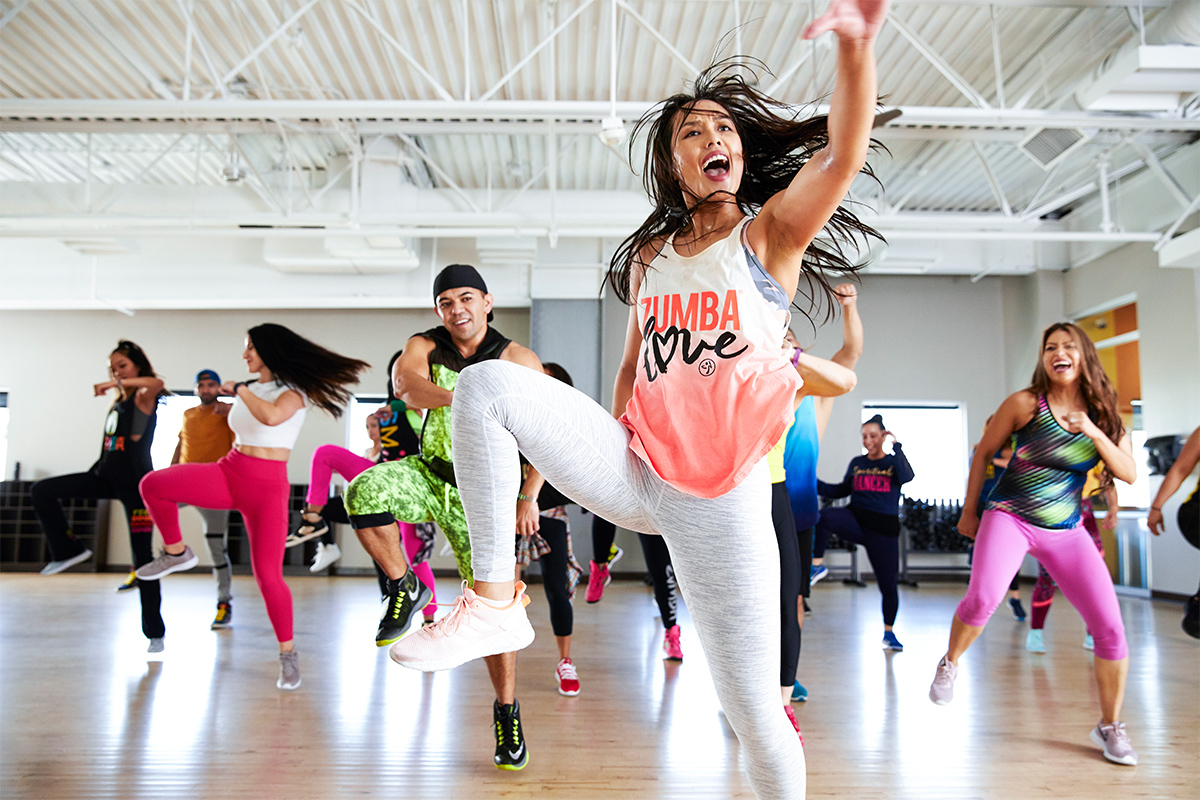
One article on The Health Benefits of Dance states that “the side-to-side movements of most dance steps help to strengthen the weight-bearing bones such as the femur, tibia, and fibula.”2 That sounds a lot like the steps you would see in Latin dances like the Cha-Cha-Cha, Merengue, or Salsa. If you’re looking to add some focus on your lower body, our Latin Heat or Zumba classes might be just what you’re looking for!
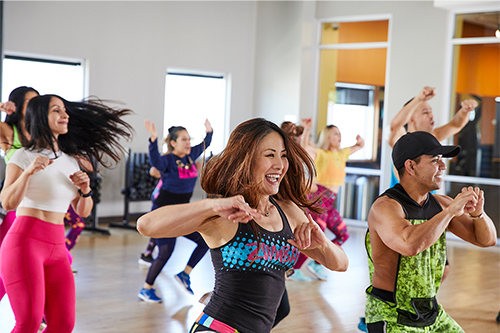
When it comes to heart health, “dance can be as beneficial as jogging around a track, biking, swimming, or running on the treadmill.”2 We know that cardio is excellent for exercising your heart, and that when you exercise your heart you benefit your whole body. One study confirmed that Zumba participants who had high blood pressure, effectively and significantly lowered their blood pressure after only 2 months of Zumba!3
Not only are you benefiting your heart and improving your blood pressure, you are burning calories with every step. Burning calories can help you shed the pounds, especially if you are also mindful of your nutrition.
Depending on the level of intensity, your range of motion, your physical condition, and more, “the continuous motion of dance… [will allow you to] burn anywhere from 200 to 500 calories during a 1-hr session.”2

Because dancing is a total body exercise, you can expect some total body toning. “Some dance forms,” like Belly Dancing and Hip Hop, “have repetitive movements such as hip drips, figure eights, circles, and shimmies, which can put the lower back and hip joints and ligaments through full range of motion that increases muscle tone and improves posture.”2 Strengthening these particular parts of your body can aid in the prevention of lower back problems.2
Now that you know about the physical benefits, let’s get into how great dancing is for your brain.

Neuroplasticity is your brain’s ability to form and optimize synaptic connections. This basically means that it is capable of growing, adapting, and changing. This is a very good thing because it means your brain can adapt to new situations and recover from old ones.
Consider that most dancing requires you to learn a specific series of movements in a specific order for a specific amount of time. This prompts your brain to develop new neural pathways to allow this complex learning to take place.
In fact, research has found that expert dancers have structural differences in their sensorimotor networks and in physical parts of the brain like the hippocampus (the part of brain responsible for emotion, memory, and your autonomic nervous system).1
In general, physical exercise, especially aerobic exercise, has been shown to decrease the risk for neurological disorders, especially for cognitive decline, dementia and Alzheimer’s.1 To a lesser extent, there is also evidence to support that physical exercise can reduce your risk for Parkinson’s Disease and Strokes.1,4,5
Dancing, however, has more benefits for the brain than repetitive physical exercise.6 A study on neuroplasticity in older adults found that, because dance requires constant cognitive and motor learning, it can counteract age-related cognitive decline.4 When it comes to brain health and function, the complexity of dance beats plain physical exercise.
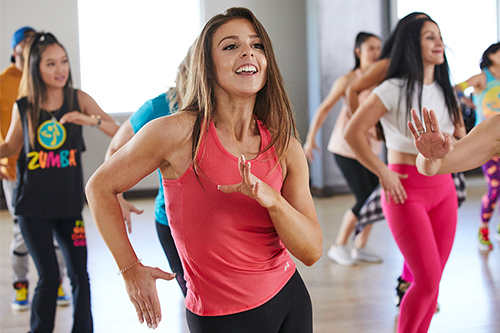
Never get called a clutz again. Dancing can improve your coordination because it, itself, requires a great deal of coordination. Have you ever tried to rub your belly with one hand and tap the top of your head with the other hand? It takes a certain amount of concentration, doesn’t it?
With dancing, not only do you need to coordinate between the different limbs of your body, but you must do the same between other dancers on the floor, and hone-in on your timing and spatial awareness.7
Coordination exercises have actually been shown to improve attention and concentration, even more so than simple aerobic exercises.1
We know there’s a lot of research here so let us leave you with some simple takeaways:
For more on brain health, read our registered dietitian’s article on These 7 Foods That Promote Brain Health. Or, check out her article on The 8 Best Foods for Your Heart. To access our monthly blog post highlights, subscribe to our newsletter today!